

Denver’s streets have transformed into a dynamic canvas where culinary creativity and automotive enthusiasm collide. The food truck movement is no longer a novelty; it is a growing, culturally rich phenomenon that energizes local economies, prompts regulatory dialogue, and nudges the city’s automotive culture into exciting new directions. Each chapter examines how this food-on-wheels trend influences street life, entrepreneurship, community identity, and even the way people experience moving spaces—whether they’re savoring a meal or admiring a custom ride.
Rolling Into Denver: The Expanding Ecosystem of Mobile Kitchens and What It Signals for Urban Dining
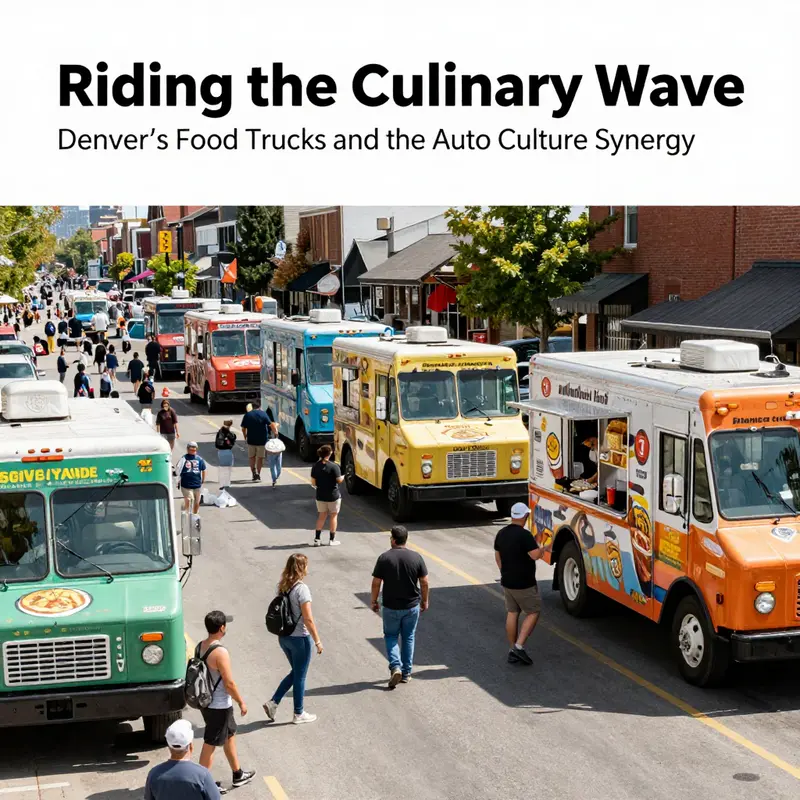
Denver is not simply adding more food trucks to its streets; it is cultivating a dynamic, evolving ecosystem where mobility, gastronomy, community, and policy intersect in ways that reshape how residents and visitors experience urban dining. In the years since the city began openly embracing the mobile kitchen model as a legitimate and valuable thread in its economic fabric, the number of licensed food trucks has risen steadily. Recent data from the National Food Truck Association for 2025 shows a 7.1 percent year-over-year increase in licensed food trucks since 2023, a growth rate that outpaces the national average of 6.3 percent. This statistic is more than a ledger entry; it reflects a city that has codified a pragmatic philosophy: food trucks are not threats to brick-and-mortar restaurants but complementary partners in a broader, more inclusive culinary economy. The rise is not happening by accident. It is the result of deliberate alignment among entrepreneurial ambition, consumer appetite for convenience and variety, and a public sector that has chosen to invest in pathways rather than roadblocks. The effect is visible in neighborhoods across Denver—from thriving district centers near business hubs to park fronts where crowds gather to sample ever-shifting menus and to listen to the rhythm of live events. The weekly cadence of events such as Denver Food Truck Fridays stands as a cultural barometer, drawing thousands of attendees who view the trucks as a portable extension of the city’s social life rather than as a marginal economy on the edge of the urban core. The phenomenon, in short, is a city learning to optimize the advantages of mobility for taste, commerce, and community, and the numbers are catching up with the narrative: Denver’s food truck scene is expanding because it has found fertile ground in demand, design, and policy.
What is driving this expansion beyond simple appetite? At its core, the momentum rests on three intertwined strands. The first is the rise of themed and specialty offerings. Food trucks are increasingly defined not by generic menus but by distinctive, often niche, culinary identities. Plant-based options, globally inspired street foods, and locally sourced, sustainable menus offer a way for new ventures to differentiate themselves quickly in a crowded market. Think of trucks that lean into plant-forward bowls and wraps, or those that reimagine traditional street foods through a modern lens while prioritizing locally sourced ingredients. These niche offerings do more than satisfy specific dietary preferences—they create a storytelling arc that resonates on social media, attracts a loyal following, and invites repeat patronage from curious urban diners who want to taste the city’s evolving palate in a single afternoon or evening. The second driver is the embrace of technology and social media as a frontline tool for discovery, engagement, and revenue generation. Operators increasingly rely on real-time location sharing, daily specials, and seasonal menu drops to keep customers in the loop. A simple post or live stream can spark a line that extends beyond a neighborhood block, helping a truck reach audiences far beyond its traditional footprint. The medium has become as important as the meal itself. Customers no longer plan visits to a single curbside spot; they choreograph a micro-tour of the city’s mobile kitchens, following posts, checking updates, and coordinating with friends to chase a truck that offers a much-anticipated dish or a limited-time collab. The third strand lies in the supportive city infrastructure that Denver has progressively built to reduce friction and expand opportunity. Designated food truck zones near parks, event venues, and business districts provide clear, legal pathways for operation and growth. Grants and training programs delivered through the Denver Office of Economic Development are designed to help aspiring operators translate vision into viable businesses. In this environment, a food truck is not merely a vehicle with a griddle; it is a small enterprise in a city that has chosen to invest in culinary entrepreneurship as a form of local economic development. Taken together, these factors create a virtuous cycle: as demand grows, operators innovate; as innovation occurs, the city strengthens its framework; and as the framework strengthens, public confidence and participation increase, generating more customers and more opportunities.
To understand the shape of this growth, it helps to look at the everyday experiences that define urban food culture in Denver. The city’s neighborhoods have become laboratories for how mobile dining can fit within a broader urban fabric. The trucks move through the grid with regularity, yet their itineraries are fluid—shaped by the weather, by pop-up collaborations with local farms, by the rhythms of nearby events, and by the often improvisational nature of street food culture. This flexibility is not a quirk of the format; it is a strategic advantage that lets operators respond quickly to changing consumer demands and to the constraints and opportunities of a city that prizes efficiency and access. That adaptability also translates into economic resilience. When a fixed location suffers a lull in foot traffic, a nimble fleet can shift to another neighborhood, or pivot temporarily to a new concept, keeping a small business afloat with minimal risk and maximum visibility. In this sense, growth is not simply about more trucks on the street; it is about a more resilient and responsive urban food system.
The cultural impact of this expansion should not be underestimated. Food trucks carry more than meals; they carry stories from kitchens that range from home styles to immigrant traditions, from experimental fusion to culinary reminders of a place’s heritage. In Denver, this diversity translates into a mosaic of taste experiences that reflect the city’s own demographic and cultural complexity. For residents, the trucks provide an accessible way to explore a world of flavors within blocks of home or work; for visitors, they offer a tangible, participatory entry into the city’s contemporary culinary conversation. And for communities that have long felt underrepresented in the formal dining landscape, these mobile kitchens offer a voice and a presence. The community-building energy around trucks—from neighborhood gatherings to large-scale food-centric events—contributes to a sense of place that is digital in its immediacy but deeply rooted in social interaction and shared experience. It is culinary theater on wheels, where patrons become participants and where the act of eating becomes a social ritual that reinforces neighborhood ties.
Yet growth is not uniform, and it invites ongoing conversation about standards, access, and sustainability. The Denver experience demonstrates that when city policy, industry innovation, and community appetite align, growth can be purposeful and sustainable. The policies that shape the licensing and permitting process are not merely administrative hurdles; they are the scaffolding that ensures safety, fair competition, and predictable operation for both vendors and the communities they serve. The official Denver Food Truck Permits framework provides the legal backbone that keeps this growth orderly, with clear rules for where trucks can operate, how they must manage waste, and how they integrate with special events and public space usage. In practical terms, this means that the city is not simply granting more permission to operate; it is engineering a more coherent ecosystem where mobility, quality, and accountability reinforce each other. The result is not a chaos of vans and grills but a structured, dynamic ecosystem that can adapt to new health standards, evolving consumer expectations, and shifting economic conditions while maintaining a vibrant street food culture.
The narrative of Denver’s food truck expansion is also a story of collaboration. Restaurants, farmers, event organizers, and municipal agencies frequently intersect around the trucks, turning them into partners rather than rivals. Pop-up collaborations with breweries or farmers’ markets, shared spaces during large events, and cross-promotional efforts amplify reach for everyone involved. This collaborative spirit is essential in a city that values diversity of culinary voices and the equitable distribution of opportunity. By widening the circle of participants—from producers who supply ingredients to vendors who interpret them in mobile form—Denver builds a more resilient food economy. And for the individual operator, the path to growth often begins with a strong concept and extends into practical advantages: mentorship through training programs, access to micro-grants, guidance on health and safety compliance, and a supportive community that shares lessons learned from their own launches and pivots.
The data underpinning this expansion is more than a snapshot; it is evidence of a trajectory. The 7.1 percent YoY increase since 2023 indicates not only a rising number of trucks but also a broadening of participation across different cuisines, business scales, and neighborhoods. It implies that more people see food trucks as viable career paths and as engines of local commerce. It signals a consumer base that is not only hungry for variety but also attuned to the value of mobility and convenience in their daily routines. And it suggests that Denver’s public sphere recognizes the potential of these mobile venues to contribute to urban vitality—facilitating social interaction, enabling local entrepreneurship, and providing a platform for culture to travel through food.
From a planning and policy perspective, the growth invites ongoing attention to how the city can sustain momentum without compromising quality or livability. Designated zones near parks and event venues offer predictable channels for activity, while the expansion of training and grant programs helps ensure that newcomers can enter the market with solid footing. As more operators enter the space, there is also a continuing need for thoughtful regulation that protects consumers, supports fair competition, and preserves the character of public spaces. The Denver experience points toward an approach where policy acts as a catalyst for experimentation and scalability rather than a barrier to entry. It is a model in which licensing, safety standards, and event management co-evolve with entrepreneurial energy and cultural exchange, yielding a metro-wide culinary culture that feels both local and adventurous.
For readers seeking a broader lens on how mobility, culture, and commerce intersect in the context of Latino food entrepreneurship in major urban centers, this chapter also connects to ongoing conversations in related communities. A broader discourse on how Latino-owned trucks navigate different urban environments can be informative for understanding both challenges and opportunities in Denver. See the exploration of Latino food trucks in major cities for additional perspectives on how immigrant and immigrant-adjacent operators adapt, compete, and thrive across varied urban geographies. Latino food trucks in major cities.
As this chapter looks ahead, it becomes clear that the Denver story is less about the exact number of trucks than about the framework that allows a city to leverage mobility as a strategic advantage. The growth is a signal that people want food that travels with them, experiences that are shareable in real time, and communities that can rally around a vibrant street-food economy. The trend lines suggest a future in which the city continues to refine its zones, expand its training and support services, and encourage operators to experiment with concepts that honor sustainability, local sourcing, and cultural diversity. Denver’s food truck ecosystem is not a passing trend; it is a practical, living model of how urban centers can welcome movement, flavor, and innovation into the daily flow of city life, strengthening local economies while enriching the cultural texture that makes a city feel alive.
External resource: For official trends and regulations in Denver, see the Denver Food Truck Permits page at https://www.denvergov.org/business-services/food-truck-permits.
Rolling Kitchens, Growing Economies: The Economic Impact of Denver’s Food Truck Boom
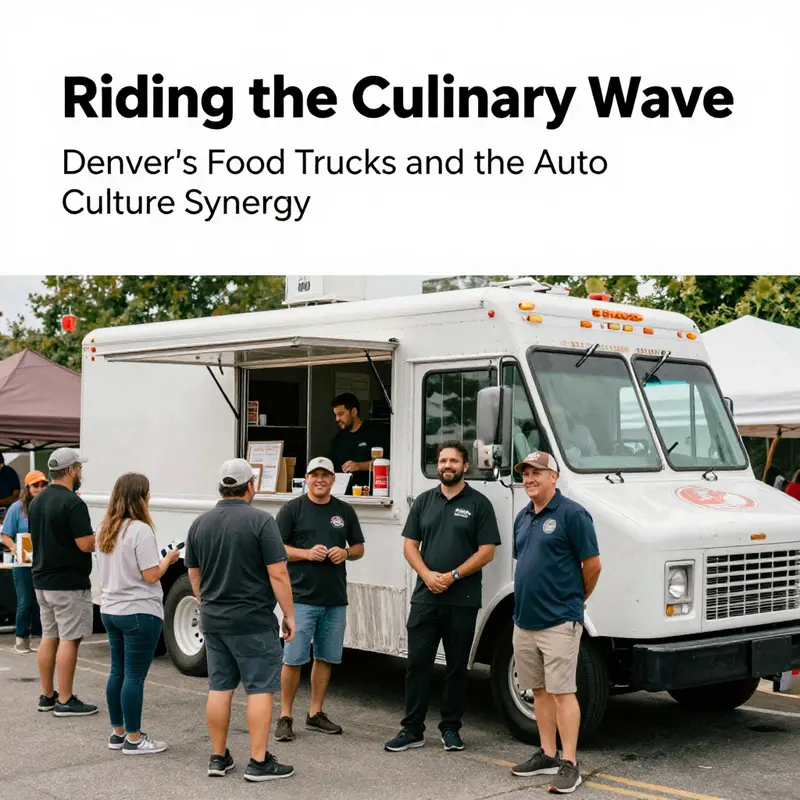
Denver’s food truck scene has evolved from a seasonal novelty into a persistent economic force that reshapes how neighborhoods breathe, how small businesses begin, and how residents imagine work. The rise of organized food truck pods in LoHi, City Park West, and South Broadway has done more than offer convenient bites; it has created dynamic microeconomies that pull in foot traffic, extend the day for nearby shops, and infuse civic life with a sense of place. Even when precise population counts remain elusive in public records, the observable indicators—dense clusters of trucks, long lines at peak hours, and steady spillover into adjacent storefronts—signal a robust growth pattern that has become a hallmark of Denver’s urban landscape. In this sense, the city’s mobile kitchens are not merely a culinary trend; they are an adaptable, low-overhead pathway for commerce to germinate in places that may have lacked a critical mass of traditional restaurants or retail storefronts.
These pods function as compact, accessible marketplaces that invite strolls through the neighborhood and lingered engagements with nearby businesses. When a cluster forms along a corridor like LoHi, it does not stand alone; it catalyzes a corridor’s vitality. Coffee shops see more morning footfall as people arrive early for a quick bite, boutiques benefit from the extended hours and increased foot traffic, and art galleries enjoy the after-work crowds that linger for a meal and conversation. This interconnectedness is not accidental. It reflects a broader urban economic logic that values agile interfaces between food, culture, and commerce. The street becomes a public stage where people congregate, share space, and contribute to the tempo of city life. In that sense, each food truck is a moving anchor, drawing a crowd and then distributing that crowd across a wider retail ecosystem.
From a purely business lens, the implementational beauty of the food truck model lies in its low barrier to entry. The upfront costs, flexible leases, and reduced risk compared with brick-and-mortar locations allow aspiring chefs and entrepreneurs to test ideas, build customer relationships, and iterate menus with remarkable speed. This isn’t merely about cutting costs; it’s about accelerating learning. A top-rated taco truck operator described the advantage this way: the model enables experimentation, direct customer connection, and dynamic menus that respond to what customers want in real time. The ability to pivot quickly—whether adding a vegan option, a regional specialty, or a seasonal spice blend—turns culinary ambition into a trackable business trajectory. When people taste a menu that evolves with feedback and neighborhood flavor, a truck becomes less a fixed service and more a living brand that grows with its community.
Importantly, the truck framework also broadens access to entrepreneurship for groups historically underrepresented in the dining and retail sectors. Immigrant and minority chefs often start with limited capital but bring a willingness to experiment and cultivate local supplier relationships. This flexibility translates into tangible social mobility: it is possible to launch a venture, learn the ropes, and scale into more formally recognized business structures over time. The anecdotal evidence in Denver’s growing scene aligns with broader urban economic narratives that celebrate distributed, participatory models of business creation. In this arena, the street serves not only as a marketplace but as a training ground for business acumen, marketing, and customer service that translates to future ventures, including pop-ups, shared commissaries, or even brick-and-mortar iterations.
The city’s embrace of mobile cuisine also underscores a shift toward community-centric consumption. It’s not just about the plate in front of you; it’s about the moment of connection—the way a line forms, how neighbors greet one another, and how visitors discover a city’s culinary identity through a sequence of stops. A founder of a local green-focused kitchen captured this sentiment: we’re not just serving food—we’re building community, one meal at a time. This perspective speaks to a broader social purpose that complements the traditional economic metrics of GDP and employment. When meals become experiences that invite participation, they contribute to social capital—the networks, trust, and shared meanings that support resilient local economies.
Of course, the economic story is not told by meals alone. The spillover effects on nearby suppliers, farmers, and artisans can be just as meaningful as the revenue generated by the trucks themselves. Food trucks commonly source ingredients locally, reinforcing regional agricultural networks and creating cyclical demand that sustains farms and distributors even in off-peak seasons. The multiplier effects extend into cross-sector collaborations: a truck might source produce from a neighborhood farm and pair it with a pastry from a local bakery, then pass customers along to a nearby coffee roaster or gallery. That kind of cross-pollination helps to sustain a broader retail ecosystem by weaving together food, culture, and commerce into a cohesive city identity.
As Denver’s food truck culture matured, a sense of urban experimentation and community participation deepened. The mobile food economy became part of the city’s creative economy—an ecosystem that values storytelling, place-making, and experiential consumption alongside traditional outputs like employment numbers and tax receipts. It’s an economy that recognizes the street’s potential to host small-scale manufacturing in the form of kitchen equipment, cold storage, and mobile logistics, all of which require skilled labor from cooks, technicians, and drivers. In turn, these jobs offer pathways to stable income, skills training, and professional growth for residents who may not have had access to the conventional restaurant ladder. The story of Denver’s trucks, then, is a story of how cities can reimagine work by pairing mobility with local asset-building.
The evidence for this economic vitality comes not only from visible street activity but also from the policy and planning conversations that accompany it. City planners, chambers of commerce, and small-business advocates increasingly view food trucks as partners in neighborhood revitalization rather than as competitors to fixed-location retailers. The practical implications are tangible: more coordinated pods help communities guide foot traffic, reduce vacancy, and bolster the vitality of otherwise dormant commercial blocks. In the right contexts, trucks become a catalytic tool for reintroducing life to aging corridors, offering a platform for community events, live music, and temporary collaborations with local artists and makers. In this sense, Denver’s mobile cuisine is knitting together economic development with cultural vitality, turning meals into an occasion that people anticipate and remember.
There is a human side to this economy as well. The people who operate these trucks bring diverse backgrounds, stories, and networks that contribute to a city’s cultural fabric. Their ambitions often extend beyond the immediate hustle. Some operators participate in mentorship and peer-learning circles that help newer entrants navigate licensing, insurance, and compliance—often the most daunting initial hurdles. The supportive ecosystem surrounding these business owners—mentors, suppliers, and fellow operators—creates an informal safety net for risk-taking and growth. When a veteran operator shares a step-by-step account of launching a truck, securing a permit, and balancing cash flow through seasonal ups and downs, it becomes a practical guide for the next generation of culinary entrepreneurs. The result is not only a roster of vendors but a network of small businesses that lift each other as they grow.
To illustrate how stories travel through this economy, consider the experience of veteran operators who have built enduring careers from modest beginnings. Their narratives illuminate how resilience, adaptability, and local engagement translate into sustainable businesses. The stories also reveal the value of mentorship and community ties in sustaining a diverse food economy. These perspectives—rooted in real-world experiences—offer a roadmap for policymakers and aspiring operators alike. They show that the path to success in Denver’s food truck sector is less about chasing a single breakthrough and more about developing a durable habit of learning, collaborating, and responding to neighbor needs. It is this habit that turns a fleet of rolling kitchens into a network that feeds families, fuels small businesses, and nourishes community pride.
For readers seeking a deeper look at the human side of this growth, the field notes and anecdotes from operators across the city offer a vivid portrait of entrepreneurship in motion. The stories underscore how the truck model extends beyond catering to jobs, training, and local procurement. They reveal how a city can leverage mobility to distribute opportunity unevenly but increasingly toward communities that want to participate in the local economy. The narrative is not merely about the trucks; it’s about the people behind them—the cooks who learn to manage inventory as deftly as they balance spice and flavor, the drivers who ensure timely service in changing weather, and the organizers who create pods that can host multiple vendors and encourage cross-pollination of customers and ideas. In this light, Denver’s food truck scene becomes a living laboratory for how urban economies can expand without requiring large upfront investments or permanent brick-and-mortar footprints.
Beyond individual businesses, the broader economic logic of this growth aligns with contemporary urban strategies that prioritize agility, community engagement, and experiential urbanism. The city’s willingness to embrace mobile cuisine mirrors a trend toward flexible, lower-cost models of economic activity that can scale organically with neighborhood demand. The pods themselves function as micro-markets where customers encounter a curated variety of flavors, textures, and storytelling moments. In these moments, food becomes a conduit for social connection, and commerce becomes a means of building shared places. The cumulative effect is a city that can attract visitors not just for spectacle but for repeat experiences—each visit reinforcing the idea that Denver is a place where food, art, and commerce are inseparably linked.
For readers who want to translate these observations into practical guidance, the path forward involves nurturing the conditions that allow food trucks to thrive: clear permitting processes, accessible licensing, and ongoing support for local sourcing and training. When these conditions exist, the trucks can continue to serve as catalysts for neighborhood revival, a source of affordable dining, and a proving ground for culinary innovation. They also stand as a reminder that city economies thrive when they balance flexibility with structure, when government and communities co-create spaces that welcome new ideas, and when people are empowered to build businesses that reflect their unique talents and their neighborhood’s character. The Denver experience, while unique in its own right, speaks to a universal truth about urban economies: opportunity multiplies where mobility, community, and local assets converge.
External reference: https://www.denverbusinessjournal.com/food-trucks-local-economy-2025
External links and further exploration can illuminate how these dynamics unfold in practice. For readers looking for human-scale portraits that complement the macroeconomic view, the discussion of veteran and immigrant-led ventures provides grounded insight into how personal narratives drive broader market forces. For more on the role of personal stories in the food-truck economy, consider the profiles of veteran operators and the ways they mentor newcomers, which can be explored through the following internal resource: profiles of veteran food truck owners. The chapter’s broader takeaways about urban growth, neighborhood vitality, and small-business development are underscored by these concrete, lived experiences in Denver’s dynamic food truck ecosystem.
Regulatory Currents and Denver’s Food Truck Boom
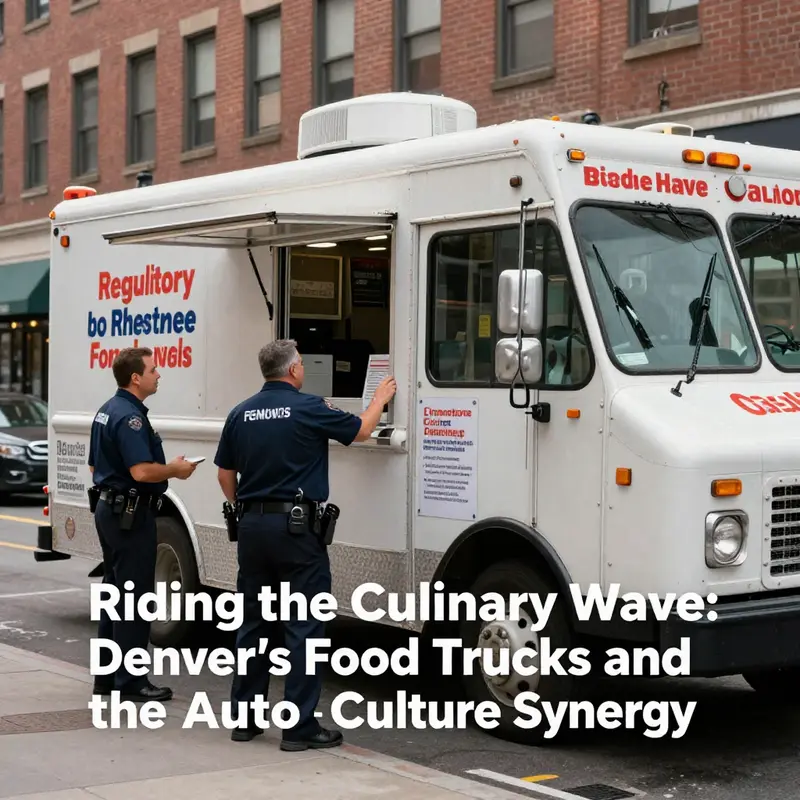
Denver’s mobile-food culture has grown not only from culinary curiosity but also from how the city manages risk, space, and public health. Growth in the number of food trucks is as much a function of regulatory design as entrepreneurial appetite. When rules align to reduce friction while preserving safety, operators scale more quickly and districts attract more customers. When rules feel unpredictable or expensive, growth slows or stalls.
Fire safety acts as both gatekeeper and catalyst. The city’s expectations around fire suppression equipment, ventilation, propane storage, and vehicle design mean that trucks must plan investments early. Compliance costs are real, but so are the benefits: fewer unexpected shutdowns, steadier service, and higher consumer trust.
Zoning and permitting are the bureaucratic backbone of where trucks can operate. Proximity rules to brick-and-mortar restaurants, limits on street frontage, and the need for a valid business license and mobile-vendor permits create a structured but sometimes lengthy path from idea to street service. Operators weigh site selection, event calendars, and permit timelines as part of their growth equation.
Health codes inject a different form of discipline. Regular sanitation checks, temperature controls, and staff training raise ongoing operating costs but also reduce the risk of foodborne illness and negative publicity. Vendors who invest in hygiene practices tend to enjoy smoother inspections and more consistent customer experiences, which in turn support scale across multiple venues.
Parking access and hours of operation translate city layout into revenue. In dense cores, fixed parking spots and curfews can limit the number of service days or the length of shifts. Operators respond by aligning menus, staffing, and routes to peak windows, campaigns, and events, which can either extend or constrain growth depending on how the rules map to customer demand.
Taken together, these regulatory dimensions shape not only the pace of growth but also the geography of opportunity. Larger, resource-rich operators may absorb compliance costs and chase scale through multiple permits and districts. Smaller entrants face higher relative frictions and may choose to consolidate presence in a few high-performing zones. Financing and risk management are affected as well: lenders seek predictable timelines and clear pathways to expansion, which can influence decisions about whether to fund a second or third truck.
From a policy perspective, the Denver experience suggests three areas where alignment could accelerate healthy growth without compromising safety: streamlined permitting with predictable timelines; targeted, affordable compliance support for health and fire-safety investments; and a cadence of policy updates that respects neighborhood character while embracing mobile, diverse cuisine. If city departments, health authorities, and industry players share a common playbook—clear requirements, defined inspection steps, and consistent enforcement—the regulatory frame becomes a competitive advantage rather than a barrier.
For operators planning expansion, a practical takeaway is to pair location scouting with regulatory sequencing. A strong first unit validates a concept in a particular district; a second unit can extend reach—but only if the second permit, equipment upgrades, and training paths are lined up in advance. Denver’s geography matters: a truck that thrives in one district may face different rules or costs in another. Growth, in this sense, becomes as much a matter of policy navigation as of culinary appeal.
Roving Kitchens and Shared Tables: Denver’s Food-Truck Rise as a Mirror of City Life
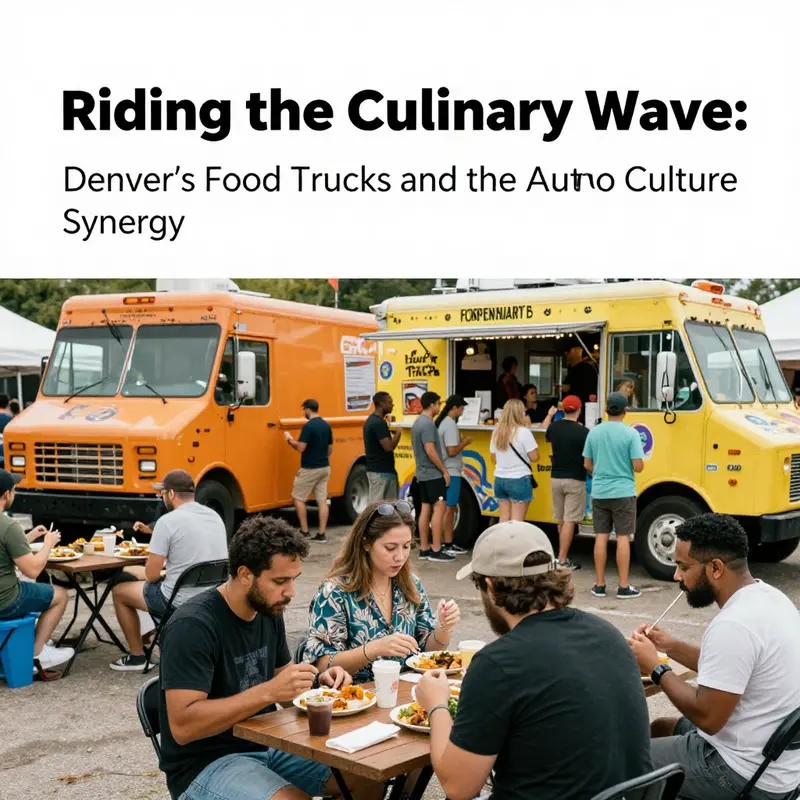
The rise of food trucks in Denver is not merely a statistical trend in a city’s culinary ledger. It is a living sign of how urban dwellers negotiate time, space, and flavor in a densely used public realm. In the chapters that map the growth of mobile vendors, a single thread emerges with clarity: food trucks are smoothing friction—the friction of crowded evenings, the friction of diverse tastes meeting a hurried schedule, and the friction of a metropolis seeking new ways to gather, eat, and connect without the overhead of a brick-and-mortar restaurant. The impact of this shift travels beyond what diners order; it rewrites expectations about where food comes from, who prepares it, and how strangers might share a moment over a common meal. Denver’s street-food ecosystem has become a living laboratory for understanding how cities adapt to changing rhythms while still preserving the social value of shared meals.
The downtown arteries, neighborhood corners, and park edges where fleets of trucks collect at certain times of day have become more than convenient dining options. They are urban laboratories where speed, variety, and cultural exchange coalesce. When the workday ends and streets begin to pulse with traffic, a line of trucks becomes a micro-community, a temporary canteen where people from different backgrounds converge, often with only the brief, bright exchange of a single bite or a quick conversation about a local event. In these moments, food trucks fulfill a practical need for efficient, high-quality meals and also fulfill a deeper desire for immediacy, for choice, and for the chance to sample cultures in a way that is both affordable and accessible. It is not just about replenishing energy; it is about participating in a city that speaks through taste.
What makes Denver’s experience distinctive is not only the breadth of options but how these options are deployed in a city that is actively rethinking public space. The presence of mobile vendors during peak meal times—especially in the evening rush—offers a flexible alternative to traditional dining formats. The trucks arrive where people already are, rather than compelling pedestrians to seek out a specific restaurant district. This mobility aligns with a broader urban preference for convenience without compromising quality. The result is a dining culture that feels both intimate and expansive: intimate because meals are shared across a simple counter or a bench in a public square, expansive because the menu spans continents and traditions, inviting residents and visitors alike to explore global flavors without long hours of travel or elaborate planning. The very act of choosing a truck becomes a small act of urban exploration, a daily ritual that democratizes access to diverse cuisines and lowers the barriers to trying something new.
In this context, the food-truck ecosystem can be read as a social barometer. It signals a city that values speed, inclusivity, and experiential dining. It signals that the urban palate is no longer satisfied with the predictable. It signals that the cultural economy of Denver is plural, stitched together by chefs who navigate the constraints of mobility, licensing, and the demands of a fast-paced consumer culture. The trucks themselves are flexible platforms for entrepreneurship, offering a leaner entry point for aspiring cooks who might not have the capital to sustain a brick-and-mortar operation. They allow culinary experimentation to occur in public, in real time, with direct feedback from customers who can literally shape a menu through their choices. This kind of feedback loop—fast, informal, often local in its focus—helps small operators refine their craft and align their offerings with neighborhood tastes while still pushing the boundaries of what a city’s street food scene can become.
Cultural diversity is a central pillar of this growth. Food trucks travel well beyond the familiar fast-casual format by embracing cuisines that reflect the city’s increasingly multicultural fabric. The result is a form of dining that doubles as cultural exchange. A customer can sample a handful of dishes from different continents in a single afternoon, sampling textures, spices, and techniques that would require multiple trips across town—if not across the country—to gather in a single place. This accessibility matters for a city that welcomes visitors from near and far and for residents who want to celebrate their neighbors’ culinary expressions without leaving their own neighborhoods. In practice, this translates into a culinary edifice where the street becomes a gallery of taste, and every truck is a potential exhibit. The social value of such a system lies not only in flavor discovery but in the daily invitation to recognize shared humanity through a favorite comfort dish or a novel spice blend.
A contemporary marker of this social shift is the way mobile vendors are weaving themselves into the city’s awards and reputational infrastructure. The 2025 Consumer Choice Award, earned by a Denver-based mobile vendor, underscores a broader trend: consumers are gravitating toward meals that fuse convenience with quality and originality. The award signals elevated expectations for speed and reliability, but it also signals something more enduring—a desire for food to function as a social experience. When a truck can offer pickup and delivery options alongside a culturally rooted menu, it becomes an adaptable node in the city’s food ecology. The resulting dynamic is not a simple binary between street food and formal dining; it is a continuum where the street becomes a flexible extension of the kitchen and the dining room.
The social implications of this expansion reach into neighborhoods where street-life and local economies are tightly interwoven. Small business owners who pilot food-truck ventures frequently design their operations with a respect for place—the idea that a meal can belong to a street corner, a park, or a plaza, that it can be tied to a place’s identity even as it borrows flavors from elsewhere. This alignment with place helps neighborhood economies diversify and strengthens the city’s overall culinary identity. It also raises questions about land use, licensing, and the evolving choreography of who gets to set up where and when. In policy terms, these questions translate into practical considerations about where trucks can operate during peak hours, how quickly a permit can be secured, and how festival seasons might accommodate a larger, more varied fleet. The answers lie in a cooperative approach that respects the rights of workers, the expectations of residents, and the aesthetics of public spaces. The challenge is to balance nimbleness with safety, speed with sanitation, and entrepreneurial ambition with neighborhood harmony.
Within this evolving ecosystem, stories of individual operators illuminate the human dimension behind the numbers. Behind every truck is a set of decisions about where to park, which vendors to partner with, and how to curate a menu that resonates with a diverse audience. The entrepreneurial arc often mirrors broader currents in urban life: a willingness to adapt, a commitment to quality, and an ability to read a crowd with a few practiced cues. For many operators, success hinges on more than culinary skill; it rests on the capacity to cultivate relationships with customers, with workers who help navigate the logistics of mobility, and with communities that value a meal as a shared experience rather than a solitary purchase. In this sense, the street becomes a classroom of civic life, where people observe how quick meals can be respectful, inclusive, and celebratory all at once.
The cultural dimension also intersects with labor and identity in ways that deserve careful attention. Food trucks frequently provide professional routes for culinary artists who might otherwise face barriers to entry into the formal restaurant sector. The mobile format lowers initial costs, opens doors for immigrant and minority entrepreneurs, and allows a range of talents to surface in public spaces. This democratization of opportunity can contribute to a more representative culinary narrative in a city, a narrative that invites patrons to encounter flavors they may not have considered and to see themselves reflected in the menu. At the same time, it requires ongoing attention to working conditions, fair pay, and the wellbeing of staff who operate in a highly mobile, often busy environment. The balance between opportunity and protection is delicate but essential if the street food economy is to remain vibrant and sustainable over time.
In weaving together economic vitality, social connection, and cultural exchange, Denver’s food-truck rise exemplifies how cities evolve through everyday routines. People do not just eat; they participate in a shared urban ritual that transcends neighborhood boundaries. A family on a weeknight, a group of colleagues after work, a tourist threading through a neighborhood—these are the silhouettes of a city experimenting with new ways to gather. The rise of mobile vendors thus becomes not merely a matter of appetite but a statement about urban life: that the city can be a stage, a classroom, and a dining room all at once, that speed and variety can coexist with a sense of place and community, and that food itself can be a common language spoken across identities and geographies. The chapters of this story—economic, cultural, logistical—are interwoven, each thread reinforcing the others as Denver continues to negotiate its evolving urban flavor profile.
For readers seeking deeper insight into the people behind these names—operators who have long contributed to the city’s food landscape—there are rich narratives worth exploring. The profiles of veteran food-truck owners offer a window into how experience, mentorship, and craft intersect with new opportunities in a changing market. These stories remind us that the street food ecosystem is not a monolith, but a mosaic of individual journeys that collectively shape a city’s appetite and identity. The way these owners mentor newcomers, adapt recipes, and negotiate permits can illuminate the practical realities of a thriving mobile economy and the social dynamics that sustain it. Profiles of veteran food-truck owners provide a useful starting point for readers who want to connect with lived experiences behind the broader cultural shifts described here. The blend of tradition and experimentation that characterizes these narratives helps explain why Denver’s street-food scene has become a magnet for both locals and visitors alike.
As the landscape continues to shift, the conversation around food trucks invites a broader reflection about what a city owes to its streets and how those streets can be used to knit a more inclusive urban fabric. The street food economy invites design thinking about public spaces: how can parks, plazas, and corridors be patterned to support safe, vibrant, and accessible dining moments without erasing the legibility and character of neighborhoods? How can licensing and inspection processes be streamlined to keep pace with a mobile economy while ensuring safety and fairness for workers? These questions do not have easy answers, but they are essential to sustaining a system that values speed and variety while protecting the human elements at its core—the cooks, the staff who support them, and the communities that choose to gather in these shared spaces. Denver’s experience suggests that the most resilient food-truck ecosystems are those built on collaboration: partnerships among city agencies, business associations, neighborhood groups, and the people who work at the heart of the trucks. In this collaborative model, the street is not simply a conduit for commerce; it becomes a forum for dialogue, exchange, and the ongoing negotiation of place, flavor, and belonging.
The narrative of Denver’s burgeoning mobile dining economy is still being written, with new chapters unfolding as neighborhoods embrace these quick, flavorful, and culturally rich experiences. The social value embedded in this phenomenon—convenience aligned with discovery, community engagement anchored in shared meals, and entrepreneurship rooted in cultural exchange—speaks to a city that is increasingly comfortable with complexity and diversity. As a result, the rise of food trucks is less about competition with conventional dining and more about expanding the city’s collective palate and social imagination. In practical terms, this means more opportunities to celebrate local talent, more accessible entry points for diverse culinary voices, and more moments when strangers become neighbors through the simple act of choosing a plate from a moving kitchen. The street becomes an invitation to participate in Denver’s ongoing experiment in urban hospitality, a test case for how mobility and multiculturalism can enhance everyday life rather than fragment it.
For readers eager to consider how this dynamic might shape future urban experiences, the Denver story offers both caution and inspiration. It cautions against assuming a single path to success—recognizing that licensing, logistics, and community standards must evolve in step with growth. It inspires by showing how a city can cultivate a vibrant, inclusive, and highly adaptable food culture by embracing mobility, encouraging collaboration among operators, and valuing the social rituals that emerge around shared meals. In the end, the rise of food trucks in Denver is less about the number of trucks and more about the ways in which street food redefines what counts as a public meal, a public space, and a public good in a modern urban setting. It is a story about how urban life can be made richer, more equitable, and more enjoyable when mobility, culture, and community intersect at the curb.
External reference for broader context on Denver’s street-food scene and recognition: https://www.denverpost.com/2025/01/10/borderless-food-truck-wins-consumer-choice-denver/.
Final thoughts
The rise of food trucks in Denver is more than mobile dining; it is a catalyst for culinary diversity, economic activity, and community collaboration. As vendors, regulators, and enthusiasts navigate this evolving landscape, the city witnesses a blend of mobility, creativity, and shared experiences that extend into the automotive world and beyond. This ongoing narrative invites car and food lovers alike to explore how mobile enterprise reshapes urban culture, one tasty bite and one innovative ride at a time.