
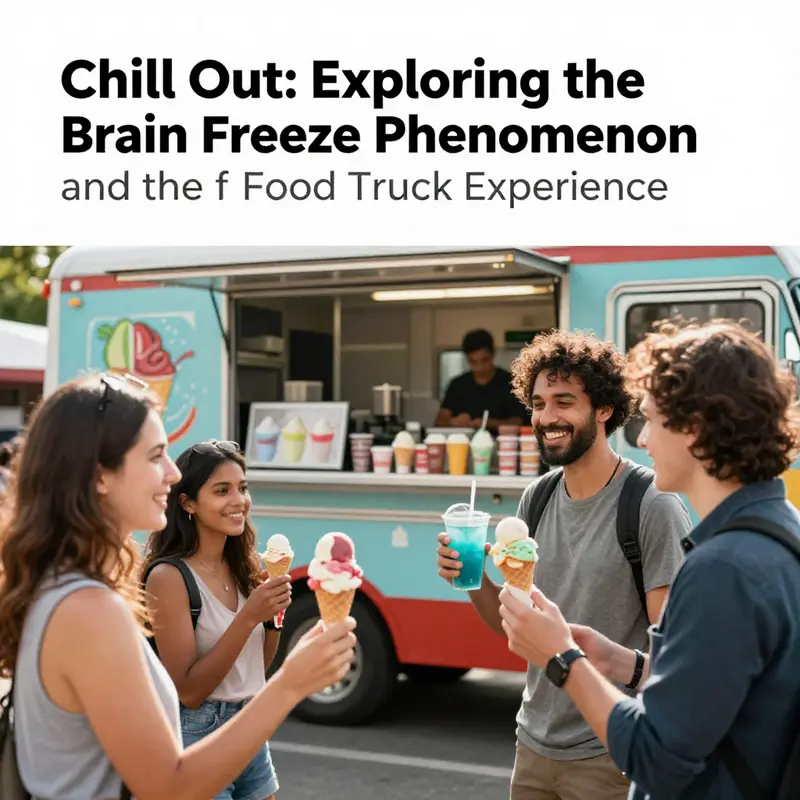
The summer heat often sends food lovers flocking to food trucks for refreshing icy treats, offering delicious delights that can occasionally come with an unforeseen consequence – brain freeze. This intriguing phenomenon, medically known as sphenopalatine ganglioneuralgia, occurs when indulgence in cold foods like ice cream or icy beverages leads to brief but intense head pain. As food trucks proliferate, tempting patrons with frozen concoctions on bustling streets, the connection between brain freeze and these modern culinary vehicles becomes undeniable. The following chapters will delve deeper into understanding brain freeze, its health implications, and how culinary trends are shaped within the vibrant world of food trucks. Readers will also gain insights into consumer behaviors that minimize discomfort from brain freeze while exploring ingenious innovations in food truck design that consider both enjoyment and safety.
Brain Freeze on the Street: Cold Treats, Heat, and the Pace of Summer
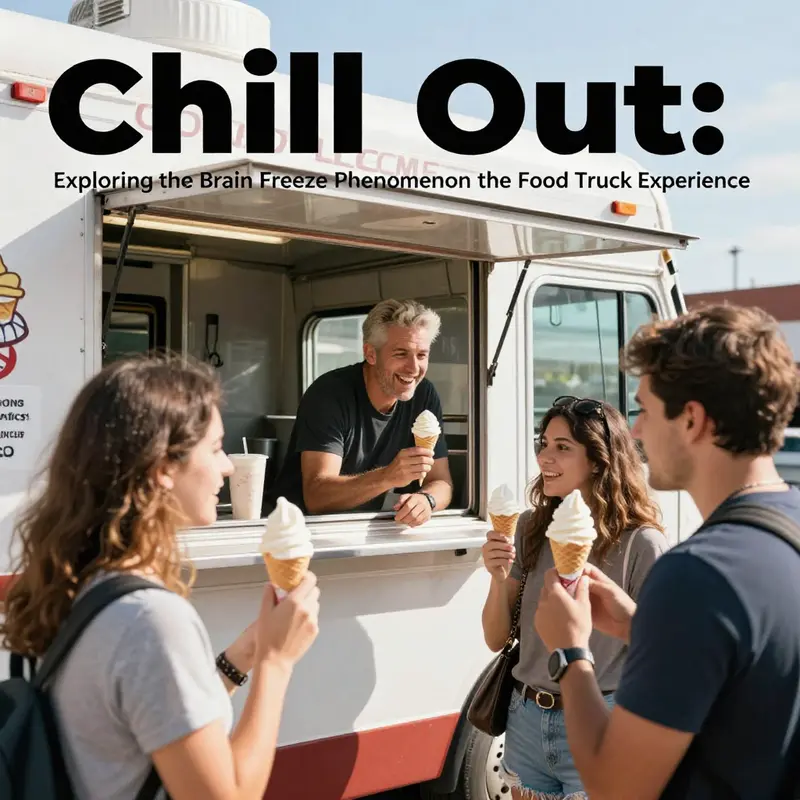
When a cold bite collides with a hot street, a small moment of physics and taste unfolds. Brain freeze, the ice-cream headache, is a brief, sharp sensation that travels across the forehead and temples as cold foods reach the roof of the mouth.
It happens most often with ice cream, slush, and frozen drinks sold from mobile kitchens that crowd city sidewalks in summer. The sensation is caused by rapid cooling of the palate, followed by a quick rebound of warm blood vessels, which sends sensory signals to the brain via the trigeminal nerve. The result is a headache-like ache that is brief and not dangerous; it is a normal reflex of the body’s temperature regulation.
In the street-food ecosystem, brain freeze intersects with pace, serving, and crowding. Vendors offer cold items to relieve heat, and lines move quickly. If customers bite too fast or take too large a bite, the odds of a brain freeze rise. Slower consumption, letting the ice melt slightly, and small samples can help keep the moment enjoyable rather than painful.
Managing this phenomenon is practical for operators: signaling melting time, offering tasters, and designing queues that allow customers to pause and savor. For diners, awareness—and a little patience—can transform a jolt of cold into a refreshing pause that fits the tempo of the street.
Chilled Cues: Brain Freeze, Food Trucks, and the Health Lessons of Fast-Lane Eating
On a sunlit curb, a row of food trucks glints with chrome and color. The air carries the scent of fried dough, citrus, and something cold that promises instant relief from the heat. People lean in, choosing cups of ice, slush, or creamy ice cream, and the tempo of order, payment, and consumption becomes a microcosm of the city’s rush. In such moments, a familiar sting travels across the palate and settles behind the eyes—a brain freeze, a brief eruption of pain that reminds us how closely taste, tempo, and physiology are braided in urban life. The moment is small, almost theatrical, yet it reveals a stubborn fact about modern eating: we prize immediacy and satisfaction, often at the expense of a gentle, mindful pace. The brain’s quick response to cold treats encodes a larger message about how urban food culture nudges us toward rapid consumption, especially when the street is lined with options that sparkle in the sun and invite a hurried bite between tasks and errands. Brain freeze is not merely a nuisance; it is a conspicuous signal that our bodies still respond to the old physics of temperature in a city shaped by speed and spectacle.
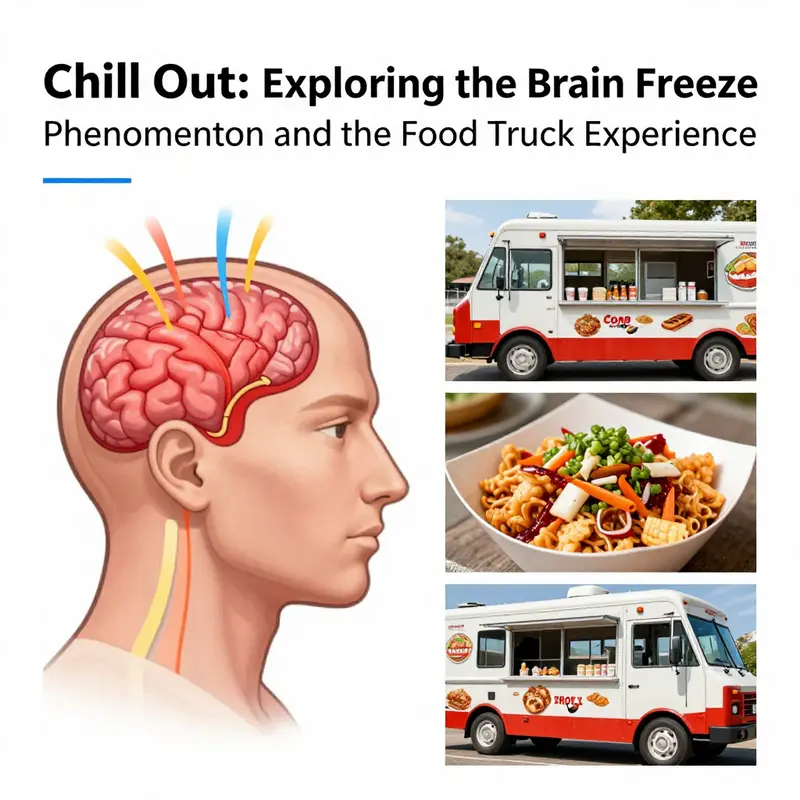
Medically, the phenomenon is known as sphenopalatine ganglioneuralgia, a mouthful that basically names a nerve-based hiccup in sensation. The mechanism is straightforward, in what scientists know and what most people feel: a sudden chill hits the roof of the mouth, the palate’s blood vessels constrict rapidly and then re-expand as warmth returns. That swift vascular swing is detected by the trigeminal nerve, which carries sensory information from the face to the brain. The brain interprets those signals as pain in the forehead or temples, creating the familiar, sharp pulse that lasts only moments but can cast a spotlight on the entire eating moment. When a food truck serves ice-cold desserts or beverages, the stimulus is often timed just right—too fast, too close to the palate, and the nerves fire a touch louder than desired.
The setting matters. Food trucks thrive on flurries of summer heat, crowded sidewalks, and the lure of a quick fix. A customer stepping up to a window, choosing a frozen yogurt swirled with toppings, or grabbing a slushy at the end of a busy afternoon, may inhale the scent and swallow before a thought catches up. That rush—of taste, price, and the promise of relief from heat—has its own social logic. It invites speed, which in turn multiplies the likelihood of brain freeze. Yet the same environment that makes a cold treat irresistible also creates a teachable moment for health-aware eating. If a bite is slowed, if a sip is more deliberate, the cold stimulus has time to be cushioned by saliva warmth and gradual palate adaptation. The result is less discomfort and a more pleasurable, sustainable savoring of the treat. In this sense, the brain freeze phenomenon becomes a small but telling microcosm of how food-truck culture negotiates pleasure, speed, and health in a busy city.
A link between brain freeze and migraines adds another layer to this urban vignette. Research notes that individuals who experience migraines may be more prone to brain freeze, suggesting shared neural pathways within the trigeminal vascular system. In other words, the same circuitry that sharpens sensory perception during a headache can also tighten its reins when a cold stimulus arrives too quickly. This doesn’t mean every brain-freeze is a forewarning of trouble, but it does point to a vulnerability pattern worth acknowledging. For someone with a history of headaches, a brain-freeze episode can feel more intense or lingering, reinforcing a practical lesson: the body’s tolerance is not a fixed line but a dynamic margin that shifts with health history, temperature, and even mood. In the context of food trucks, this awareness invites a compassionate approach to customer experience. It’s a reminder that the rush to satisfy hunger and craving should not eclipse the possibility of gentle guidance—stretching the moment, encouraging slower consumption, or offering pacing cues that invite a safer, more comfortable tasting journey.
Public health perspectives echo this sentiment with a simple, humane strategy: promote mindful eating in fast-food environments without dampening the joy of discovery. Food-truck operators, often pressed by lines and heat, can still cultivate ways to ease the experience. A few quiet cues—light signage that suggests sipping slowly, or a menu design that highlights temperature-based tips—can help patrons regulate their intake without turning a playful moment into a discomforting one. Guidance might also include practical in-store reminders, such as enjoying cold items with a small sip of warmer water or slowly letting the food linger on the tongue to reduce abrupt cold contact with the palate. These adaptations are not grand health campaigns; they are subtle nudges that respect the speed of the street while acknowledging the body’s natural limits. In a city that values rapid access to flavor, such mindful adjustments can complement the hustle, preserving pleasure while reducing unnecessary discomfort.
Within this frame, the experience of a brain freeze becomes less of a nuisance and more of a signal—an indicator of how the pace of urban life intersects with physiology. It invites a wider reflection on how street food culture negotiates health literacy and sensory delight. The same street that offers a diverse array of ice-cold desserts also invites a broader conversation about how to balance appetite with well-being. For readers who want to explore the street-food landscape beyond the immediate experience of a single truck, a deeper dive into related narratives can be illuminating. For a broader sense of the street-food universe and its health narratives, see Latinos Food Trucks blog-2.
As the city continues to race along, the brain freeze episode endures as a curious intersection of science and social life. It is not the end of appetite or the final word on cold treats; rather, it is a prompt to savor with a little more intention. The dish is simple, the science is clear, and the health message is humane: slow down when cold treats are involved, especially if you know you tend toward headaches or sensitivity to cold stimuli. The result is a richer, more comfortable tasting experience and a happier science of everyday eating. In the end, a brain freeze from a summer treasure on wheels can still taste like progress—progress in understanding our bodies, in shaping friendly food cultures, and in learning that pleasure often travels best when it travels slowly.
External resource: https://www.mayoclinic.org/health-news/why-do-we-get-brain-freeze-from-cold-foods-20251230
Brain Freeze on the Street: The Sensory Pulse of Cold Treats and Mobile Flavor
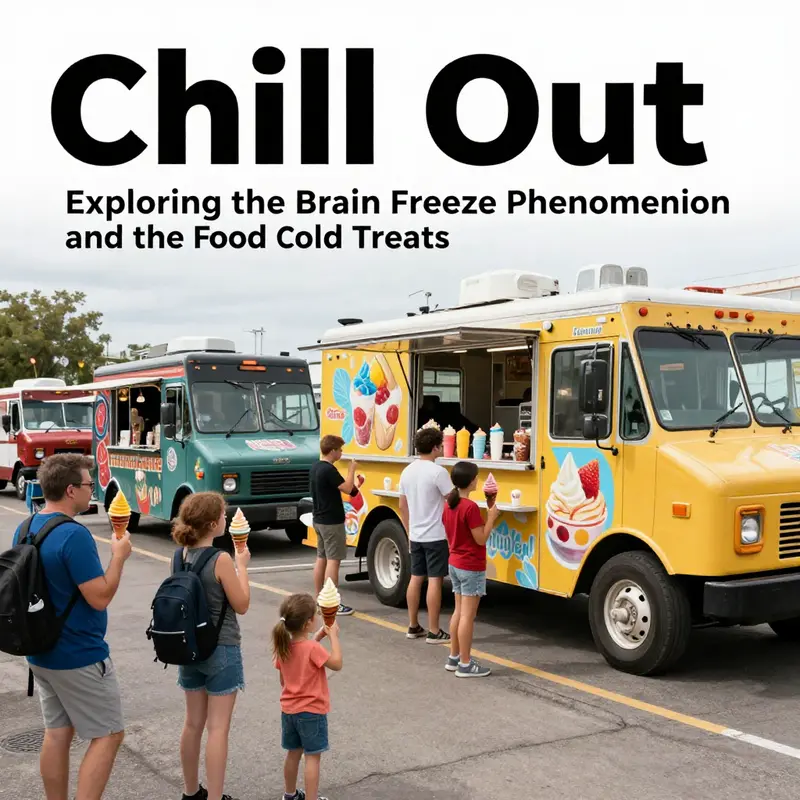
On a sunlit street, a food truck gleams like a portable kitchen of possibility, ready to ferry passersby from heat to respite. The air carries the scent of roasted coffee, caramel, and something frosty that glints under the shade of a striped awning. A line forms for icy drinks, soft scoops, and handheld wonders, and in that moment a familiar spike of sensation travels from the palate toward the temples. Brain freeze, or ice cream headache, is a real if temporary reminder that the body treats rapid cold as a shock. The mouth’s nerves react, blood vessels constrict and then re expand, and a brief surge of signals travels through the face and head.
What intrigues urban observers is not the headache itself but what it reveals about our relationship with cold foods and speed. The medical take is straightforward: brain freeze is temporary, not dangerous, and does not damage the brain. NHS guidance frames the moment as a normal physiological reflex, a reminder that pleasure and pain can share the same bite of temperature.
Food trucks have emerged as dynamic trendsetters in the culinary landscape. They offer portable kitchens that can pivot quickly, test ideas, and deliver flavorful experiences without the fixed costs of a brick-and-mortar space. Consumers increasingly demand quick service and a sense of discovery, and trucks answer with menus that evolve with the weather, the neighborhood, and a chef’s latest muse. The appeal goes beyond velocity; it lies in the freedom to remix cuisines, to fuse cultural influences into handheld forms, and to celebrate a sense of immediacy that feels intimate yet expansive. Breakfast ideas, fusion inspirations, and the playful reinvention of familiar textures have propelled the mobile format into the mainstream.
Cold treats sit at a pivotal crossroad of comfort and experimentation, offering a direct line to the senses while inviting curiosity about new combinations. The street becomes a laboratory where speed, craftsmanship, and storytelling converge, and the truck serves as a rolling stage for flavor that travels with the seasons and the moods of city life.
Yet behind the sparkle of this mobile culinary scene lies a set of practical tensions. The success of a food truck hinges on logistics as much as on taste. Cold storage and reliable refrigeration are indispensable for preserving perishable ingredients, from dairy and eggs to leafy greens and fresh produce. The compact kitchen must balance flavor with safety, and the equipment has to perform in shifting urban environments, often without easy access to a full-scale prep area. Power sources, temperature control, and rapid turnover are part of a delicate choreography that keeps quality high while service remains brisk. In many markets, operators lean into this tension by prioritizing frozen or semi-frozen items that travel well and maintain texture, while still offering a breadth of choices that satisfy diverse palates. The emphasis on cold offerings amplifies the need for disciplined handling, clean lines, and consistent temperatures, because even a small lapse can alter flavor and safety. The result is a campus-wide reminder that great street food blends creativity with practical design, turning small spaces into platforms for big ideas.
The evolution of cold treats in the street-food universe is particularly telling. Beyond savory handhelds, trucks are reshaping the demand for artisanal frozen desserts and refreshing beverages. Gourmet ice cream, shaved ice, and gelato blends have moved from novelty to staple, inviting customization through toppings, textures, and regional twists. The appeal is no longer simply about a cold bite; it is about a narrative—how texture, temperature, and accent flavors narrate a city’s identity. This trend invites a dialogue between local pride and global technique, allowing neighborhoods to claim their own versions of a frozen moment. The street ecosystem thus becomes a canvas where culinary memory and technical craft meet experimentation, producing experiences that feel both familiar and surprising. In evaluating how mobility alters dessert culture, one sees a pattern: the portable kitchen makes room for deeper storytelling, where a cold treat acts as a small, portable festival of texture and aroma. To situate this idea within a concrete example of a culturally diverse menu, consider the linked profile offering Top Latino Food Truck Dishes as a pathway to understanding how regional favorites translate into street-friendly formats.
The phenomenon of brain freeze is more than a momentary discomfort; it is a practical reminder about pacing. When a customer dives into a cold treat, the urge to hurry can overshadow the desire to savor. The remedy is straightforward and widely endorsed: slow down, let the cold meet the warmth of the mouth, and offer a small pause between bites. A simple sip of warm water can cushion the initial shock, softly guiding the palate toward a steady temperature so that subsequent mouthfuls deliver richer flavor rather than a sharp spike. This gentle ritual aligns appetite with physiology, transforming a potentially disruptive moment into a deliberate, enjoyable cadence. In the street food setting, this translates into a mindful service rhythm—train the eye to read the line, not the clock; train the palate to anticipate rather than overpower the next bite. Through this approach, the speed of service remains uncompromised, while the sensory experience becomes more precise, more satisfying, and safer for all ages.
The broader cultural arc follows a similar thread. The street, with its curated menus and efficient service, acts as a crucible for how communities negotiate heat, memory, and shared delight. Mobile kitchens enable people to sample new combinations without committing to a full meal, turning a quick stop into a moment of personal discovery. A cart can carry echoes of home and culinary memory across neighborhoods, letting a dish learned abroad mingle with local ingredients to create something new and recognizably local at the same time. The pace of street dining teaches patience as well as appetite; the best trucks earn trust by delivering consistent flavor, texture, and temperature, time after time. In that sense, the fusion of fast service with careful handling becomes a hallmark of the modern street food culture, where speed and safety work in harmony to forge lasting connections with customers.
For readers looking to situate these micro-trends within a wider frame, the literature on mobile culinary platforms suggests a shared path between flavor and safety. The capacity to deliver sophisticated frozen textures from a compact kitchen signals progress in equipment design, staff training, and workflow optimization. The street becomes more than a source of quick nourishment; it is a space where hospitality, quality, and responsibility converge. A returning customer is often a sign of a successful blend of taste, temperature, and timing, a testament to a culture that respects both the pace of urban life and the need for mindful consumption. As cities grow more dynamic and outdoor dining persists, the lessons from these trucks reach beyond any single cuisine. They teach that taste, temperature, and timing are interdependent crafts that require attention to science and storytelling alike.
Cool Delights, Mindful Sips: Navigating Brain Freeze While Enjoying Food Truck Treats
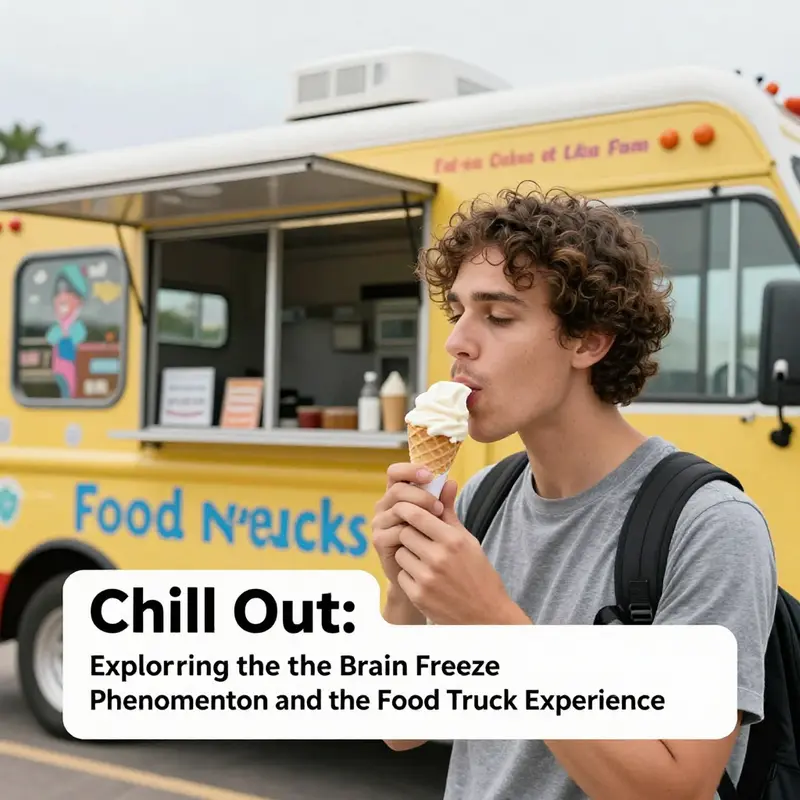
The summer air carries a mix of exhaust, sizzling oil, and the sweet lure of frozen treats drifting from a line of passing food trucks. In urban climates, these mobile kitchens become impromptu oases, offering relief from heat and the thrill of novelty. Yet amid the applause of summer cravings, a familiar sting can surprise the palate: brain freeze. Known to medical science as ice-cream headache or sphenopalatine neuralgia, this phenomenon is not a literal freezing of the brain but a rapid, nerve-triggered cascade caused by sudden cold contact with the mouth and upper palate. A brisk gulp of an ice-cold drink or a fast scoop of frozen dessert can flood the neuron’s pathways with signals that momentarily misread the temperature, leading to a sharp, short-lived pain that flares across the forehead or temples. People often imagine the brain itself chilling; in truth, the drama unfolds in the proximity of the trigeminal nerve, a highway of sensation that runs through the face. The practical consequence for city dwellers craving a cool bite is not a medical crisis but a behavioral cue. The very stage on which this sensation rehearses—an open-air food truck queue, a sunlit curb, the swirl of flavors—also shapes how people decide to eat, how quickly they eat, and how they balance pleasure with comfort.
The link between brain freeze and the bustling world of food trucks is both practical and poetic. Many trucks lean into frozen offerings—ice creams, shaved ice, frosty drinks—that provide instant relief on a hot afternoon or a late-night chill after a windy evening. The allure is immediate: a chime of sweetness, a rush of cold, and a social moment captured in a pair of hands that pay, grab, and share. But the same immediacy can invite rapid consumption, a behavior pattern that increases the likelihood of triggering brain freeze. In the dance of taste with speed, a single impulsive bite or a fast swallow can tip the balance from refreshing to painful, from momentary pleasure to a jolt of discomfort. The phenomenon thus becomes a microcosm of consumer behavior in informal food spaces. It reveals how sensory rewards, environmental cues, and social context interact to shape how we eat in public settings where choices are abundant and pace is accelerated.
From a design perspective, food trucks are engineered for quick gratification. They stand in line with a rhythmic cadence and a menu that often emphasizes bold textures and bold temperatures. The cognitive load of choosing can be light, but when the customer is tempted by a cool treat, the temptation is amplified by the visual appeal of glossy scoops, swirls of color, and the promise of relief from heat. In such settings, the decision to savor or to hurry becomes a negotiation, not just with hunger but with the body’s immediate signals. The science of brain freeze offers a simple, accessible framework for understanding this negotiation. When cold food contacts the palate, the blood vessels constrict and then rapidly dilate in nearby tissues, sending a surge of signals to the brain. This brief miscommunication lands as pain, a momentary reminder that the body’s protective mechanisms can be triggered by even ordinary pleasures. Yet the same mechanisms remind us that moderation and mindful consumption can turn an intense moment into a longer, more enjoyable experience of flavor and social connection.
Guided by this understanding, several practical habits emerge that align with both health-minded living and the playful urban food culture. Savoring slowly stands at the core. Rather than gulping an ice-cold drink or chasing a frozen scoop with a rapid swallow, a customer can take small bites or sips and let the chill linger in the mouth for about five seconds before swallowing. This pause allows the oral tissues to acclimate to the temperature, reducing the severity or likelihood of nerve-triggered pain. The timing of cold indulgence also matters. Consuming such treats between 12 PM and 3 PM aligns with a traditional rhythm wherein the day’s strongest energy flux is thought to peak, providing the body with a robust baseline to handle cold stimuli. While this is framed in traditional energy terms, the practical takeaway is straightforward: a warmer internal milieu can temper the shock of cold foods. It is not a prescription for fasting or a ritualized habit, but a simple scheduling cue that respects the body’s tempo in busy urban environments.
A lighter, preparatory bite can further cushion the experience. Eating a small, easily digested snack before indulging in ice cream or a frozen drink helps avoid a brutal thermal shock to the digestive tract. An empty stomach can amplify discomfort, especially in the heat, where the body’s resources are allocated toward cooling and digestion concurrently. This buffer is not about rigidity but about creating a gentler transition from ambient warmth to frozen pleasure. In the moment of brain freeze’s onset, a tactile, almost comforting technique can shorten the episode. Pressing the tongue against the roof of the mouth is a well-known ritual that serves a practical purpose: it can warm the area quickly, helping to restore normal sensation and reduce pain duration. While the sensation is intense, the duration is finite, and these small strategies can make a substantial difference in how long the moment lingers.
Portion control, too, plays a meaningful role. Moderating servings—no more than roughly 150 milliliters of cold beverage per serving and consuming one frozen item at a time—reduces cumulative cold exposure. Reflexive gluttony is a difficult impulse to resist in the moment of delight, but the longer-term payoff is a steadier mood, fewer abrupt spikes in discomfort, and a more predictable appetite for the rest of the day. Hydration with warmth offers another practical remedy. If brain freeze does flare, sipping warm water slowly can foster a faster recovery by promoting a quicker refocusing of blood flow away from the cramped nerves and toward more comfortable pathways. These strategies are not merely self-care; they reflect a broader approach to enjoying street food in a way that preserves both delight and well-being.
The social fabric of food truck culture enriches this equation as well. The experience of choosing, waiting, and sharing frozen treats is rarely a solitary act. Friends and families often navigate the sensory overload together—the visual spectacle of toppings, the scent of cold sweetness mingling with savory aromas, the shared laughter over a clumsy bite, and the ritual of savoring before the first bite. In such settings, slow consumption becomes a social practice rather than a mere health suggestion. The environment—queue flow, window design, vendor interaction, the music, and the pace of service—shapes how much time people spend with their food before they swallow. A mindful approach to cold foods thus serves both individual comfort and collective enjoyment, turning potential discomfort into a shared moment of playful restraint and appreciation.
This chapter sits at the intersection of neuroscience, consumer psychology, and street-level gastronomy, illuminating how a small physiological reflex can influence the way urban food culture operates. The phenomenon of brain freeze, far from deterring people from cold delights, becomes a teachable moment about pacing, portion, and context. It reminds us that the most satisfying experiences in food culture often arise not from sheer abundance or speed but from a balanced choreography of impulse and restraint. For readers curious about the broader landscape of street cuisine, the discussion also nods to the rich diversity within food truck offerings. The city’s mobile kitchens are not only about flavor but about the rhythms of everyday life—how people move, decide, and connect in shared spaces. In that sense, brain freeze is a micro-event that reveals larger patterns: how customers respond to sensory intensity, how vendors design menus to invite lingering rather than rushing, and how communities form around the simple act of standing in line for a cold treat on a hot day. A well-choreographed encounter with frozen delights can thus become a small but meaningful practice of mindful consumption, offering joy without unnecessary discomfort.
For readers seeking a broader flavor profile linked to these themes, a deeper look at popular offerings from Latino street cuisine can provide context about how regional palettes interpret cold and warm contrasts in a mobile setting. See the collection of dishes and experiences at Top Latino Food Truck Dishes. And for readers who want a medically grounded summary that complements this practical guidance, sources like NHS offer clear explanations of brain freeze’s temporary nature and lack of long-term risk. Taken together, these threads illuminate how urban food culture can be as much about pace and ritual as it is about taste. The simple act of enjoying a cold treat from a food truck becomes an invitation to slow down, sense more fully, and align delight with a touch of precaution so that summer fun remains cool in more ways than one.
External reference: NHS – Brain Freeze. https://www.nhs.uk/conditions/brain-freeze/
Chilled Innovation on Wheels: Designing Food Trucks to Mitigate Brain Freeze and Elevate Comfort on the Move
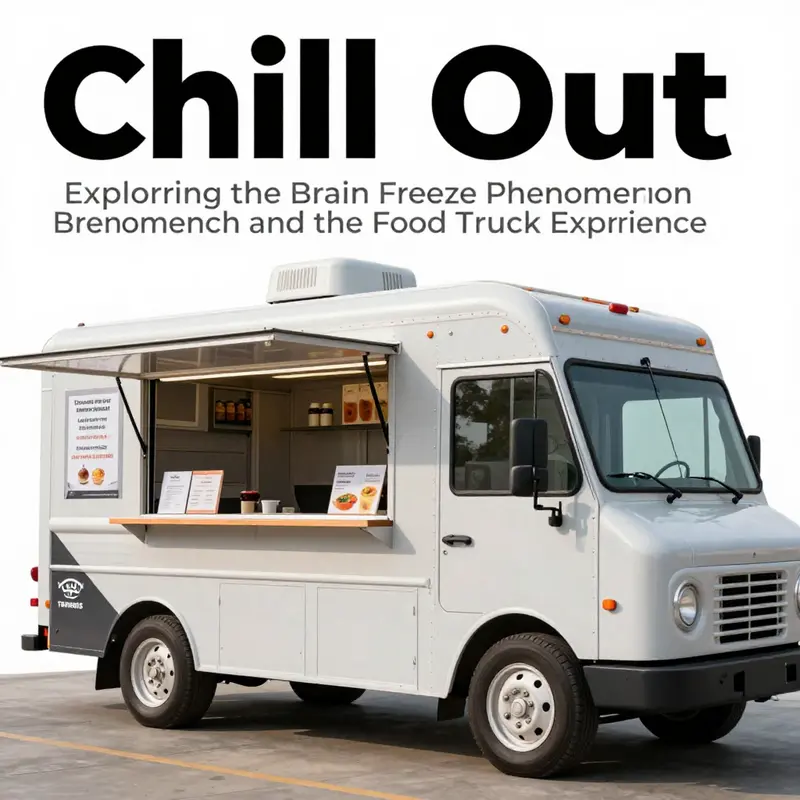
On city streets, where the pace of life is a constant tempo, the same design challenges that govern safety, cleanliness, and efficiency also shape how people savor cold foods. If a truck is too quick to fill a cup or rush customers toward the next order, the moment of enjoyment can become a fleeting sting. If, however, the space between purchase and consumption is managed with care, the experience can become a teachable moment about temperature, pacing, and health. What the broader literature clarifies is that brain freeze, while intense, is not a signal of brain injury or long-term harm. The NHS frames it as a temporary, harmless response to cold stimuli, subsiding within seconds to minutes as normal blood flow resumes and nerve signals settle. This boundary between sensation and safety offers a unique design brief for mobile vendors who want to balance delight with restraint. Innovations in food truck design are rarely framed as medical interventions, but when they embrace slow, mindful consumption, they align closely with public health goals. The street cart becomes not just a source of sweetness but a small classroom on pacing, reminding customers to savor flavor rather than race through it. In this light, the urban food truck scene can evolve beyond speed and novelty toward a more thoughtful approach to how we meet our cravings. One practical avenue for progress lies in the intimate relationship between product design and user behavior. When cold offerings arrive in a form that invites steady, small sips rather than rapid gulping, the likelihood of brain freeze decreases. This is less about banning fast eating and more about shaping moments of choice and action. For example, menu structure can encourage smaller portions of the coldest items, paired with warmer or room-temperature companions that balance mouthfeel and temperature. A well-designed serving system can cue pace without nagging, subtly guiding customers toward a more comfortable experience. In many ways, this is an extension of good food safety practice: keep the heat and cold separately, minimize cross-contact, and ensure that customers can enjoy their meal without feeling rushed into rapid consumption. The result is a more reliable sensory journey where the initial shock of cold is tempered by a longer, more deliberate tasting process. The physical design of the truck itself plays a decisive role in shaping these behaviors. Vehicle architecture affects how customers order, how food is displayed, and how easily staff can communicate with buyers. A footprint that supports clear sight lines, comfortable queuing zones, and accessible product displays helps reduce stress and speed in the purchasing moment. When the experience feels calm and considered, people are more likely to pace themselves. This is where the choice of chassis—step vans versus cargo vans—has practical implications. Step vans often offer better ergonomics for operators and more flexible interior layouts for display and service functions. They can host safer, more intuitive flow patterns that reduce crowding and encourage slower service. For a broader perspective on how chassis choice shapes operational reality, see the discussion at step-vans-vs-cargo-vans-food-trucks. The way a truck is built informs how effectively it can host educational prompts, sample portions, and temperature-controlled storage that supports both safety and comfort. Beyond the mechanics of moving parts, there is a communicative layer that touches customers directly. Signage and packaging can be used to encourage mindful eating without creating punitive vibes. A few well-placed reminders—positive cues about savoring flavors, waiting a moment before a second bite, or pairing a cold treat with a warm drink or a longer, slower finish—can transform a moment of indulgence into a small lesson in sensory patience. This approach resonates with a broader public health ethos: we do not merely instruct people to eat slowly; we design environments that make slow, enjoyable eating the natural choice. In a mobile setting, where attention is often split among crowd noise, neon signs, and the lure of novelty, thoughtful prompts must be clear, friendly, and unobtrusive. The language on boards, the rhythm of the service, and even the cadence of the vendor’s voice can learn from behavioral science to nudge customers toward a more comfortable tempo. Innovation in mobile food units also intersects with safety outreach and education. The Hong Kong Centre for Food Safety’s emphasis on mobile education vehicles illustrates how design can extend public health messaging far beyond traditional storefronts. While that example focuses on safety promotion generally, the underlying principle—bringing information and best practices to the curb—applies directly to brain-freeze awareness. A truck can become a rolling platform for bite-sized guidance on temperature, portioning, and pacing, paired with simple, memorable tips that stick with customers long after the purchase. In practice, this translates to laminated cards tucked into napkin dispensers, QR codes leading to concise, friendly explanations, or even a short explainer loop played on a screen or a portable projector during busy hours. Such features should be integrated with respect for the customer experience rather than as an intrusive lecture. The aim is to elevate the moment of consumption into a shared, enjoyable event where safety and pleasure coexist. The opportunity for innovation deepens when we consider the urban stages where food trucks perform. Markets, fairs, and street festivals intensify the sensory environment—bright lights, concentrated sugar smells, and a crowd moving in quick, almost dance-like patterns. In these contexts, designing for brain-freeze prevention becomes a micro-ethnography of human impulse and choice. The menu can encourage balance: cold items that provide fast hits of refreshment paired with slower, comforting companions. Packaging can be sized to discourage large gulps and to support a gradual finish. Staff training that emphasizes calm service, clear communication cues, and patience with customers who linger at the window can transform a potential friction point into a moment of connection. When vendors understand that brain freeze is a predictable, manageable reaction rather than a mystery, they can respond with empathy and practical design. As this chapter unfolds within the broader arc of the article, it becomes evident that innovations in mobile food units are not solely about speed, novelty, or capacity. They are about shaping a city’s relationship with taste, temperature, and time. The brain-freeze moment, once seen as a quirk of summer indulgence, can become a conscious focal point in design thinking. The street becomes a laboratory where form meets function, where the rhythm of service aligns with the physiological realities of the human palate. The result is a more humane, more health-conscious street-food culture that respects the boundaries of bodily sensation while preserving the joy of discovery that defines urban dining on wheels. And in that balance lies the future of the mobile food movement: a space where safety, comfort, and delight are not competing goals but complementary aspirations that make every bite a little more intentional and a lot more enjoyable. External resource: NHS – Brain Freeze. https://www.nhs.uk/conditions/brain-freeze/ Internal link: step-vans-vs-cargo-vans-food-trucks. See how chassis choices influence service flow and customer experience at step-vans-vs-cargo-vans-food-trucks.
Final thoughts
Food trucks not only add vibrancy to our culinary landscape but also bring with them the joy of icy treats that can lead to the fleeting discomfort of brain freeze. By understanding this phenomenon, its health implications, and the trends shaping the food truck industry, enthusiasts and patrons alike can enjoy delicious frozen delights without the fleeting pain of a brain freeze. The comprehensive exploration sheds light on the evolving relationship between modern culinary trends and health consciousness, allowing consumers to indulge in comfort while remaining mindful of their experience. As food truck designs advance, they hold promise for a future where enjoyment and safety coexist, ensuring that food lovers can focus more on savoring their treats than worrying about brain freeze.