
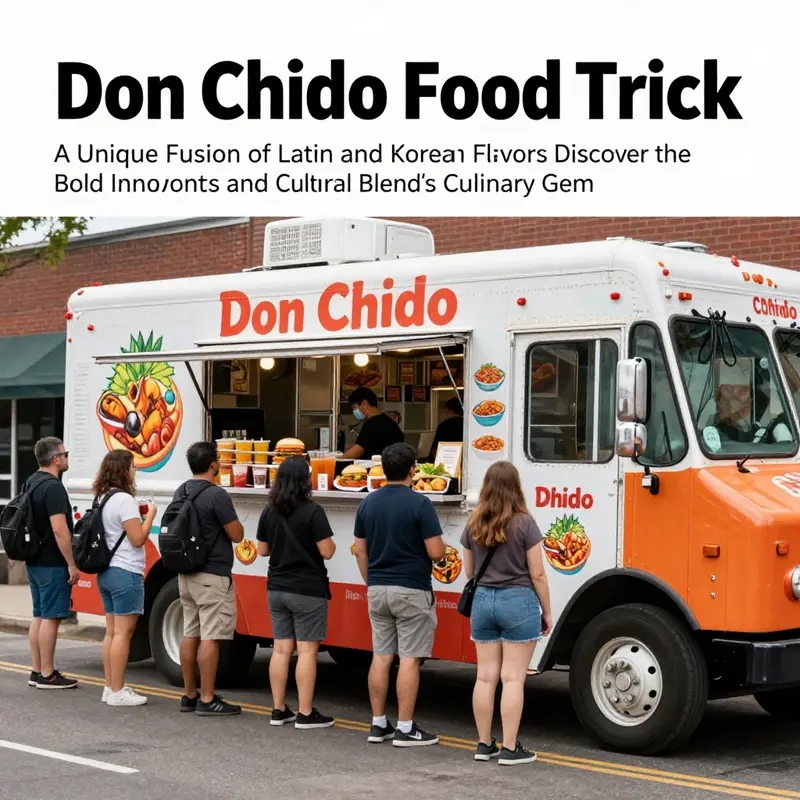
In the vibrant culinary landscape of Williamsburg, Virginia, Don Chido Food Truck stands out as an extraordinary fusion of Latin and Korean flavors. Founded by Abner Alva Cano, this food truck not only embodies a unique gastronomic approach but also ignites a sense of community through its rich heritage and innovative dishes. Each chapter of this article delves into the depths of Don Chido’s culinary innovations, the essence of cultural blending, the economic impact of its business model, and its commitment to community engagement. Together, these elements reveal a comprehensive portrait of how Don Chido transcends simple dining, offering a full-spectrum experience that resonates with food lovers and fosters community bonds.
Wheels of Fusion: The Culinary Innovations Driving Don Chido Food Truck
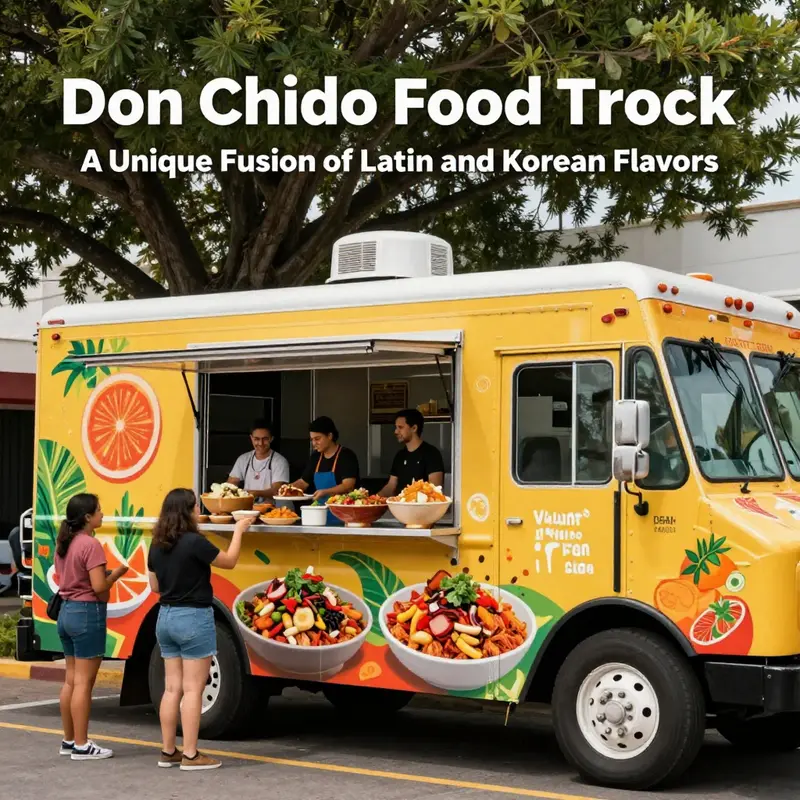
When you stand at a street corner and hear the sizzle of a grill, you are listening to more than a meal in motion. Don Chido Food Truck is a moving kitchen where memory meets technique, and the rhythm of the street becomes a laboratory for flavor. The founder’s life weaves Guatemala and Korea into a single culinary thread, translating cherished family recipes into street level artistry and showing how mobility can be a platform for cultural exchange.
Two forces pull at every kitchen on wheels: the tenderness of home cooking and the curiosity that travels with global flavors. The founder’s Guatemalan roots and love for Korean seasonings create a kitchen-on-wheels where ingredients are treated as living histories. Latin staples meet kimchi and gochujang, not by forcing a fusion, but by letting their conversations deepen with each passing day.
Mobility asks cooks to rethink timing and heat. The open air demands sauces cling to tortillas, textures stay crisp, and brightness shines through gusts of wind. Lean meats hold their own against garlic and chili paste; soups become lighter; vegetables are blanched or quick-pickled to keep crunch. Each service becomes a real-time round of testing and listening, a feedback loop between street life and kitchen craft.
Signature moves: a handmade corn tortilla as a flexible canvas; meat seasoned with Latin and Asian spices; pickled vegetables for acidity and crunch; a carefully balanced sauce to tie components together. These elements stay rooted in tradition while moving toward modern sensibility, so a familiar tortilla becomes a platform for cross-cultural storytelling.
Nontraditional pairings are explored with respect to their sources. A touch of sweetness from fruit, a whisper of citrus, a hint of smoke are introduced to invite the palate to travel. The menu honors the integrity of Latin flavors while inviting Korean influences like fermentation and umami to expand possibility. It is not trend-chasing but disciplined curiosity that guides invention.
Sustainability is another throughline. The truck selects seasonal produce, minimizes waste, and supports local suppliers as central to flavor and responsibility. Fresh vegetables are lightly prepared to preserve crunch; meats are chosen for tenderness without excess fat; menus emphasize health-minded options without sacrificing richness.
Culturally, Don Chido stands as a microcosm of immigrant storytelling. Street corners become classrooms where diners participate in a shared ritual of discovery, and the vendor station becomes a liminal space that shifts with routes yet offers a sense of belonging. Food trucks turn into cultural engines that narrate community histories while welcoming new voices.
A broader landscape shows fusion street food moving from novelty to experimentation with craft. Mobility allows direct feedback, iterative refinement, and a language of taste that travels. Don Chido sits within this wider arc as a model where memory, technique, and mobility co-create a vibrant street gastronomy that respects origins while inviting innovation.
For readers curious about the future of Latin-Korean fusion on wheels, Don Chido offers a vivid case study in culinary innovation on wheels. The road ahead is open, and the kitchen remains within reach, ready to welcome the next experiment and the next bite that honors both old kitchens and new routes.
Cultural Fusion in Motion: Don Chido on Four Wheels, Where Latin Heritage Meets Korean Flavor in Williamsburg
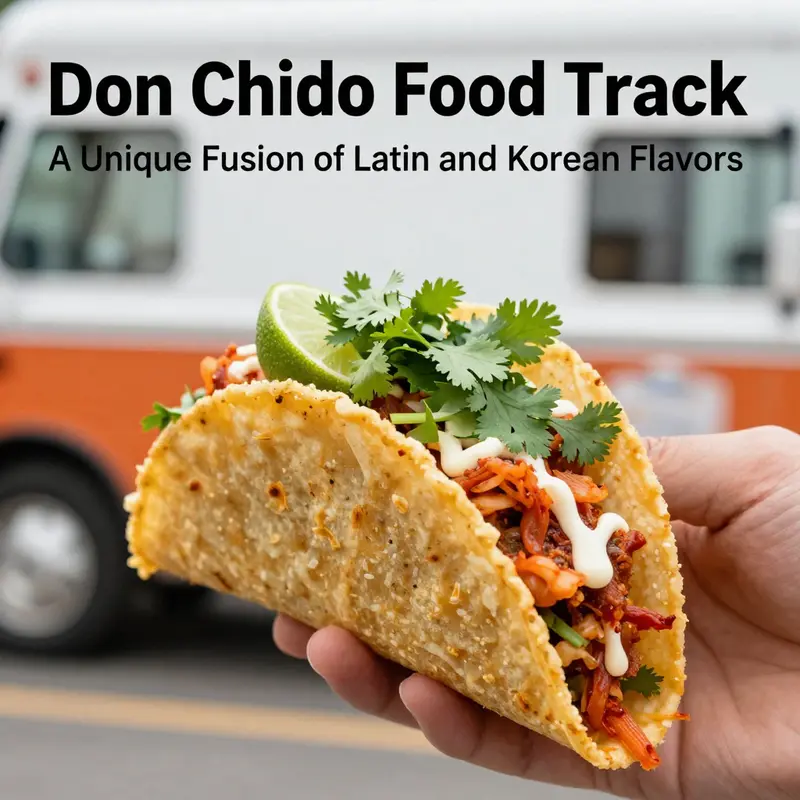
The streets of Williamsburg, Virginia, have become a small stage where a bright yellow-and-chrome food truck rolls in and folds two vast culinary continents into a single, vivid moment. Don Chido is more than a quick stop for those craving something new; it is a moving classroom where Latin and Korean flavors debate, harmonize, and ultimately teach the palate to expect more from a plate than familiar borders permit. The aroma that greets you as the window slides open is not a single scent but a conversation. A whiff of grilled meat, the tang of citrus, the warmth of garlic, and a sly, almost conspiratorial mist of chili—and then, underneath, a faint echo of kimchi’s fermented brightness. The fusion here is not a marketing gimmick; it is a deliberate act of translation, a culinary dialog that asks how much a tamal can bend before it becomes unrecognizable, and how a kimchi twist might illuminate a traditional Latin framework rather than erase it.
At the heart of this dialogue stands Abner Alva Cano, a founder whose life story is braided with both Guatemalan roots and an enduring curiosity for Korean technique. The narrative of Don Chido is not a neat origin myth but a lived experience of crossing borders in the kitchen. Cano’s Guatemalan heritage provides a warm backbone of earthy maize, bright herbs, and the comfort of family meals passed down through generations. Into that backbone, he stitches a curiosity for fermentation, for the crisp brightness of kimchi, and for the layered, umami-driven depth that-gochujang can lend to a dish. The result is a menu that reads like a cross-stitch sampler of two worlds—one that respects tradition while daring to improvise in real time. When patrons bite into a dish such as tamales dressed with a subtle gochujang warmth or a pastry filled with kimchi-spiked fillings, they are not merely tasting a fusion; they are witnessing a cultural negotiation performed with heat and texture.
The choice to fuse Latin and Korean flavors is neither a gimmick nor a novelty act. It is a statement about identity and adjacency. Cano’s culinary instincts fuse the resilience of corn masa with the umami of Korean ferments, the smoky char of grilled proteins with the bright lift of citrus and cilantro that characterize many Latin American kitchens. The stove’s heat becomes a translator, translating the vocabulary of one cuisine into the syntax of another. In this sense, Don Chido’s dishes function as living examples of how culture travels—not as a tourist, but as a resident—adapting to new neighborhoods, new grills, and new audiences while preserving a personal throughline. The plates tell stories about home that are not bound by one geography; they are bound by memory, curiosity, and the desire to connect strangers through taste.
Every plate at Don Chido is a careful balance of technique and intuition. The tamales infused with gochujang spice, for example, show how a single ingredient can carry a cross-cultural map across a single bite. The gochujang note adds a mellow warmth and a subtle sweetness that complements the masa’s corniness, rather than overpowering it. In other preparations, kimchi makes a cameo as a bright, crunchy ally to grilled meat or as a core of a savory pastry that mirrors an empanada but sings in a different key. These decisions reveal a method that is both playful and reverent. The kitchen becomes a studio where chefs test boundaries and listeners decide if the new harmonies are pleasing or provocative. The best bites feel inevitable, as if this was always the next natural step in a cuisine’s evolution—an evolution that has room for both ancestral memory and inventive risk.
The fusion on display is not only culinary; it is social and aesthetic as well. The four-wheeled venue travels to Williamsburg with a careful sense of place. The truck’s design, its signage, the staff’s cadence—these elements shape the experience as much as the menu does. In a place where street food intersects with local art, music, and a steady stream of visitors, Don Chido acts as a cultural connector. The cooking rhythm aligns with the rhythms of the street, and the bites arrive with a cinematic sense of moment. People order, they taste, they pause, and they set down their forks with a recognition that the plate has offered more than sustenance: it has offered a small mediation between communities, a reminder that flavor can be a form of dialogue, not a spectacle meant to overwhelm.
The dialogue extends beyond the plate into the stories that travel with each visitor. Don Chido’s story is, in part, a tale of identity in transit. Cano’s kitchen is a workshop for reimagining traditional dishes through the lens of another culture’s techniques and flavors. The result is a menu that feels both anchored and exploratory, a place where a guiso might be gently altered by a Korean touch, and where the familiar can be gently unsettled by something entirely new. This approach speaks to a broader truth about food trucks as a medium. They are inherently portable, improvisational, and intimate—a perfect conduit for cultural exchange. In the clutter of a busy street corner, a customer can sit and listen to the story of a dish as a story of a person and a family. The truck makes a tight circle around the idea that food is memory, that memory can be reinterpreted without losing its heart, and that the appetite for new experiences can coexist with respect for lineage.
Readers who want to glimpse the living texture of this fusion can anchor their curiosity in the real-time pulse of the scene—the frequent updates on Don Chido’s locations and menu that come through its official channels. The truck’s mobile identity allows it to navigate not only streets but also seasons, events, and evolving tastes. The appeal of Don Chido, then, rests on more than a one-off dish; it rests on a persistent invitation to participate in a translation across cultures, to taste and then tell the story back to others. In this sense, the act of eating becomes a shared act of interpretation. When communities encounter Don Chido, they do not simply consume a meal; they encounter a method for thinking about cuisine as a form of civic conversation, a way of asking: What else can we learn by letting flavors travel across borders? What else might we discover by letting a kitchen become a stage for cultural dialogue rather than a static display?
The chapter of this conversation moves with the same brisk, locomoting energy that characterizes street food itself. The menu, while rooted, is not fixed in stasis. It breathes with the same flexibility that a dancer adjusts to a crowded room. If a particular pairing does not resonate in one week, the shift is not treated as a misstep but as an invitation to listen more closely to the constituency—customers who stop by the window not to claim a diet but to explore possibilities. In that sense, Don Chido emerges not only as a place to eat but as a case study in culinary diplomacy. Its presence in Williamsburg—an area known for its evolving food scene and its openness to new influences—reaffirms that fusion is not a threat to tradition but a channel for tradition to express itself in new voices. The result is a menu that honors the convivial heart of Latin American food—the sharing, the communal plate, the lively conversation around a table—while inviting Korean methods and sensibilities to enrich that shared space.
As a reader reflecting on this fusion, one can trace a thread back to the stories of other veteran food truck owners, recognizing a pattern in which founders become ambassadors through their food. The narrative of Don Chido aligns with longer histories of culinary entrepreneurship where identity, place, and craft converge to forge a new path forward. For those who want a broader sense of what it means to carry a kitchen on wheels and to conceive of a business as a living cultural project, the storytelling found in profiles of veteran food truck owners offers a compelling lens. This is not about competition or conquest; it is about collaboration and learning, about seeing a menu as a manifesto and a route map to where next culture can arrive. And in the act of serving, Don Chido offers a permission slip to others to imagine what happens when flavors from different homelands learn to listen to one another through the heat of a grill and the crisp crack of a fresh kimchi-touched bite.
The broader context of food trucks as microcosms of cultural exchange helps explain why Don Chido resonates so deeply in a community like Williamsburg. The area’s own appetite for global flavors, its willingness to support street-level entrepreneurship, and its openness to stories that sit at the intersection of tradition and experimentation all create fertile ground for this project to thrive. Don Chido’s footprint—temporary yet memorable, local yet full of otherworldly potential—demonstrates how a nomadic kitchen can become a steady heartbeat in a city’s evolving culinary landscape. The truck’s route is a metaphor for how culture travels: not to erase the past, but to invite the past to participate in a living present, where the flavors of yesterday can light up the plate of today with a different kind of brightness. In any given bite, the eater is witness to a transposed lineage, a conversation between Guatemalan roots and Korean techniques, a dialogue that invites curiosity and respect in equal measure.
For readers seeking direct access to the latest events, menus, and geographic updates, Don Chido’s official site serves as a real-time compass. It is a reminder that the fusion story is not a finished work but a continuous performance, one that invites spectators to become participants—visitors who contribute their own impressions and, in doing so, become part of a larger network of taste that spans borders. The real magic emerges not only in the flavors themselves but in the way a small, mobile kitchen makes room for other stories to be told, not as separate narratives but as interwoven strands of a shared human appetite. In this sense, Don Chido stands as a small but powerful exemplar of how food can travel, be transformed, and then return home richer for the journey.
Internal link note: Readers curious about the broader landscape of Latino food trucks and the people who drive them can explore profiles of veteran food truck owners to gain insights into how experience shapes cuisines that travel. profiles of veteran food truck owners.
External resource: For broader context about Don Chido’s approach and ongoing updates, see the official site. https://www.donchido.com
Flavor on Wheels: The Business Model and Economic Footprint of Don Chido Food Truck
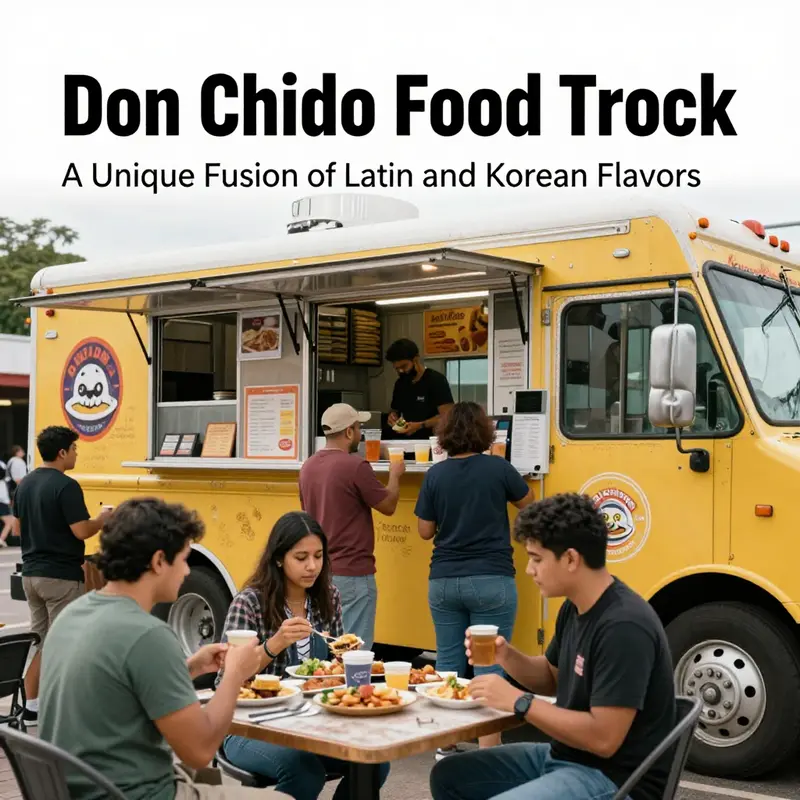
Don Chido Food Truck sits at the intersection of culture, craft, and entrepreneurship. It is not merely a mobile kitchen; it is a deliberate experiment in how a small, nimble business can fuse two distinct culinary lineages—Guatemalan warmth and Korean savory precision—into a singular, portable experience. Based in Williamsburg, Virginia, the truck represents more than a menu; it embodies a strategy for local impact, one that treats flavor as a catalyst for community and economic activity. When Abner Alva Cano launched Don Chido, the aim was not just to serve food but to test a model for sustaining a cultural venture in a competitive, highly local market. The fusion concept offers a distinct value proposition: dishes that are familiar enough to invite curiosity, yet adventurous enough to command attention in a food scene crowded with standbys. In this way, Don Chido provides a case study in how a food truck can become a micro-economy unto itself, balancing artistry with the practicalities of running a small business in a dynamic urban fringe. The operational choices behind this balance reveal a broader narrative about how mobile eateries navigate cost structures, revenue streams, and the ripple effects they generate in a place like Williamsburg, where tourists mingle with residents and food culture is both a daily habit and a seasonal spectacle.
The backbone of Don Chido’s business model rests on the core truth that mobility can dramatically reduce fixed costs while expanding reach. A traditional restaurant incurs substantial real estate costs, long-term leases, and a fixed staff obligation that can strain cash flow during slow periods. A food truck, by contrast, defers or eliminates some of those sunk costs and instead concentrates instead on capital investments in equipment, safety systems, and licensing. The operational logic here is straightforward: high-velocity sales in multiple micro-locations, coupled with the flexibility to shift venues as events, markets, and seasons demand. Don Chido leverages Williamsburg’s constant flux—the weekday commuter corridors, weekend shoppers, and seasonal festivals—to maintain a steady rhythm of sales without being tethered to a single storefront. In practice, this means a business model that emphasizes fast service, streamlined prep, and a menu designed to be executed efficiently in a mobile kitchen. The fusion concept—where kimchi-meets-lajune, or marinated meats meet a citrusy brightness from Central American roots—relies on quick, bold flavors that travel well and apparel-ready portions that entice repeat purchases. This is essential: the customer-facing decisions must align with what a truck can do best—delivering crave-worthy, quick-service meals that feel novel yet comforting.
From the outset, the economics of a food truck are anchored in a triad: location, menu, and people. Location is not merely about foot traffic; it’s about the quality and consistency of that traffic. For Don Chido, the Williamsburg locale offers a blend of residential neighborhoods, university-adjacent communities, and a steady stream of visitors who are both curious and prepared to spend on a distinctive tasting experience. The truck can move to where this traffic is thick, whether it’s a public square during lunch hours, a weekend farmers market, or a festival that draws regional crowds. Each site becomes a micro-sales channel, with its own carryout pace and peak times. This flexibility translates into a more resilient revenue plan, one that can absorb seasonality and event-driven spikes without the heavy overhead of a fixed dine-in model. Such resilience is not accidental; it is a deliberate design choice that enables Don Chido to test markets, refine its assumptions, and measure what sticks in real time. By treating each location as a temporary storefront, the business can calibrate pricing, portion sizes, and menu mix to suit the prevailing demand while maintaining a coherent brand narrative across venues.
The menu itself is a carefully crafted instrument within this system. Fusion cuisine thrives on balance—between heat and brightness, between familiar comfort and culinary curiosity, and between speed of service and depth of flavor. Don Chido’s approach hinges on identifying core flavors that can travel well and pair with a lean set of techniques that a mobile kitchen can sustain day after day. The inclusion of ingredients like kimchi and gochujang signals a willingness to deliver bold, umami-rich notes that differentiate the truckscape from conventional street-food fare. Yet the menu also respects the constraints of a compact galley: the most popular items are those that can be prepared rapidly, standardized for consistency, and produced with a predictable cost of goods. Maintaining flavor integrity across a moving operation demands meticulous sourcing and supplier relationships, plus standardized mise en place that keeps prep time and waste to a minimum. The result is a menu that feels both adventurous and approachable, enabling first-time customers to take a confident bite and become repeat patrons who crave that distinctive kick after a long day of work or exploration.
A crucial element of the Don Chido model is workforce structure. In a truck, labor is a central variable that shapes margins as much as ingredient costs. The team must be versatile, capable of both front-of-house flow and back-of-house execution. Cross-training is not a luxury but a prerequisite; staff learn to monitor grill temperature, manage mise en place, handle safe food storage, and deliver cheerful customer service within a tight window. Because mobility often means working in environments with variable equipment and weather conditions, training also covers basic troubleshooting and safety protocols. This approach supports a lean staffing plan that remains scalable as demand grows or during peak seasons. It also places an emphasis on safety and compliance, given the higher risk profile of mobile culinary operations. The interplay of staffing, equipment reliability, and rigorous standard operating procedures becomes a core driver of the financial health of the venture. When labor costs are aligned with throughput—precisely when customer demand peaks—the economic impact of the enterprise expands beyond daily sales to contribute to the broader ecosystem that supports a thriving street-food culture.
Permitting, licenses, and regulatory compliance are the practical rails on which the Don Chido train runs. A mobile kitchen is subject to health codes, fire safety regulations, vehicle inspections, and business licensing. Meeting these requirements is not a mere formality; it’s a continuous cost of doing business that influences both price strategy and cash flow management. The practical upshot is that a successful food-truck operation must embed compliance into its daily routines. This includes maintaining temperature logs, sanitary practices, and routine equipment maintenance—each of which protects both customers and the business’s livelihood. The legal framework for Latino food-truck startups, for instance, is a topic that many operators study closely, as it frames expectations for operation, safety, and long-term viability. Integrated with everyday practice, compliance helps Don Chido sustain a steady cadence of operation across different venues and seasons, while reducing the risk of sudden shutdowns that can disrupt revenue streams. In this sense, the business model is not only about creativity in the kitchen but also about discipline on the road.
The question of capital costs and capital allocation inevitably arises when discussing a mobile venture. Startup costs for a food truck, including the vehicle, a compliant kitchen setup, and the necessary safety equipment, can be substantial. Yet the reality is nuanced: the most critical investments are those that enable consistent output and reliable service. This typically means a durable vehicle or retrofit, efficient cooking equipment that fits within health and safety guidelines, cold storage for perishables, a dependable power plan, and a robust point-of-sale system that can handle busy lines and remote locations. Don Chido’s budgeting philosophy, like that of many successful trucks, emphasizes modularity: the fleet can be upgraded piece by piece, allowing the business to respond to demand and seasonality without overextending resources. Contingencies—maintenance reserves, fuel fluctuations, insurance, and unexpected repairs—are baked into the financial plan so cash flow remains stable across a variety of scenarios. In such a setup, growth often follows a path of measured expansion: test a new site, refine the menu, adjust pricing, and gradually broaden the geographic footprint as reputation and data justify it. The outcome is a sustainable cycle in which learning translates into repeatable profits, rather than into episodic spikes that fade when a single location closes or a festival ends.
Beyond the numbers, the economic footprint of Don Chido extends into the community it serves. The truck functions as a mobile cultural ambassador, translating Guatemalan warmth and Korean flavor into a digestible and shareable experience. When a customer returns for a second or third bite, that loyalty creates a small but meaningful revenue stream that compounds with word-of-mouth referrals. Local suppliers—whether they provide produce, spice blends, or fermentation ingredients—become part of a regional supply network that strengthens the viability of the truck over time. The social return on investment is warranted by the way the truck participates in events, supports cultural exchange, and anchors a sense of place in Williamsburg’s bustling food scene. In practical terms, this social dimension translates into partnerships with farmers’ markets, neighborhood festivals, and collaborative pop-ups with other culinary entrepreneurs. Each partnership broadens the audience and adds a layer of credibility to the business, while also creating shared opportunities for cross-promotion and cost-sharing that can improve margins for everyone involved. The cumulative effect is not only about what customers eat but about the cultural currency the truck helps generate—an intangible asset that, over time, can translate into brand equity and community sponsorships that are themselves monetizable.
Importantly, the Don Chido model remains adaptable to broader market realities. The urban-food-truck impulse—temporary, visible, mobile—appeals to investors and partners who are intrigued by the potential to scale without the permanence of a brick-and-mortar operation. That scalability can take several forms: expanding to other college towns and city centers with similar demographics, offering catering services for private events and corporate functions, or partnering with local breweries, markets, and cultural venues that celebrate fusion cuisine. Any of these trajectories depend on disciplined operations, a track record of reliable service, and a brand language that travels well across venues. The fusion concept gives Don Chido a distinctive narrative arc—one that can be leveraged in storytelling to attract investment, secure sponsorships, or generate media attention. Yet growth must be tempered with the realities of mobile food economics: margins are sensitive to labor, fuel, insurance, and the volatility of crowd demand. The most resilient operators learn to weather these swings by cultivating multiple revenue streams in parallel and by keeping the core offering tightly aligned with the brand promise. In the Don Chido story, that means continuing to deliver bold flavors with efficiency, while expanding access to more people without diluting the essence of what makes the concept special.
One practical takeaway from Don Chido’s approach is how a fusion concept can become a strategic asset in a saturated food scene. The distinctive blend of Latin and Korean influences creates a narrative that is easy to market—a story that translates well in social media, at events, and through customer referrals. It also informs pricing psychology. A menu built around high-impact flavors and efficient portioning allows for a price structure that reflects quality while remaining accessible to a broad audience. The goal is not to chase every trend but to cultivate a dependable rhythm of meals that customers anticipate and return for. When the rhythm is established, Don Chido can cultivate recurring revenue through loyal customer programs, collaborative events, and a steady presence in strategic locations. In this sense, the business model becomes a living framework for understanding taste, community, and economics in a mobile format. The fusion identity is not merely aesthetic; it is a strategic advantage that helps translate cultural exchange into sustainable business outcomes.
For readers seeking a deeper dive into the regulatory and strategic considerations facing Latino food-truck startups, several practical resources offer concrete guidance and checklists that complement the Don Chido experience. Legal considerations for Latino food-truck startups serves as a practical touchstone for owners navigating permits, registrations, and compliance in a fast-moving space. Legal considerations for Latino food-truck startups.
As with any chapter in the evolving story of mobile cuisine, the Don Chido journey will continue to respond to the tug of markets, community needs, and the evolving landscape of food culture. What remains clear is that a food truck physics—compact space, high throughput, and a direct link to customers—creates a powerful platform for experimentation. The fusion concept adds a layer of cultural resonance that can turn a simple meal into a memorable moment. In Williamsburg and beyond, the model invites curiosity and yields tangible economic benefits that go beyond the cash register: jobs, supply-chain opportunities, and a local sense of place that thrives on shared meals and shared stories. For operators and observers alike, Don Chido offers a lens into how a small, well-tuned vehicle can carry not just food but a statement about how diverse traditions can coexist on wheels, travel to audiences who crave novelty, and contribute to a regional economy that rewards thoughtful risk-taking and disciplined execution. The chain of value—from ingredient sourcing to customer experience to community engagement—illustrates how a modern food truck can be more than a business. It can be a living, moving engine of culture, connection, and commerce.
External resource for broader context on starting a food-entrepreneurship journey can be helpful for readers who want to compare models and approaches across markets. For a general guide to starting a food truck, see this external resource: https://www.shopify.com/za/blog/how-to-start-a-food-truck-business
Weaving Flavor with Fidelity: Don Chido and the Art of Building Community Through Local Roots
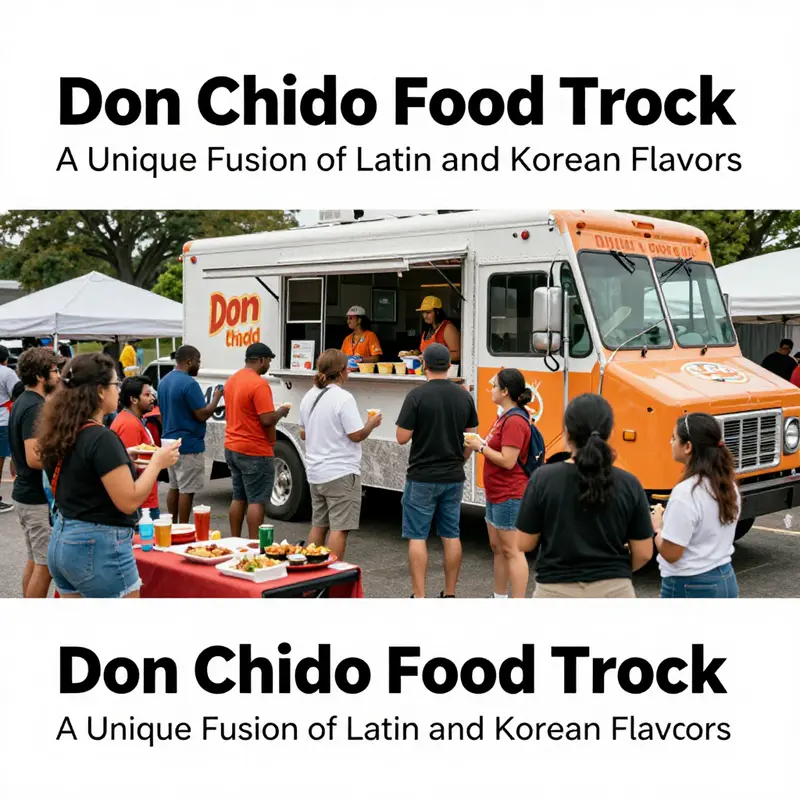
Don Chido Food Truck sits at the crossroads of two cuisines and two communities, a mobile stage where Guatemalan memories meet Korean seasonings, and every service window becomes a moment for conversation bigger than the next plate. In Williamsburg, Virginia, this fusion is more than a creative menu; it is a living practice of how a food business can connect with a place by listening to its farmers, its neighbors, and the everyday stories that rise like steam from a busy lunch line. The truck’s origin story—founded by Abner Alva Cano, whose background threads through Guatemalan warmth and bold umami—sets the tone for a practice that prioritizes people over profit and place over spectacle. Yet the heart of the matter is not simply flavor, but the way flavor becomes a bridge to community, inviting folks to talk, to learn, and to invest in the neighborhood’s well being.
Local sourcing stands at the core of this mission. In a world where supply chains can distance urban kitchens from the soil and the seasons, Don Chido makes a point of shrinking that gap. The truck’s practice—drawing on local farmers and regional suppliers—does more than ensure freshness; it reinforces a cycle in which money moves through nearby hands and returns as nourishment to nearby mouths. Sourcing locally supports sustainable agricultural practices, helps stabilize small family farms, and reduces emissions tied to long-haul shipments. The effect on the community is practical and tangible: more resilient local food ecosystems, more consistent access to diverse ingredients, and a sense that diners are participating in a mutual portfolio of care rather than merely completing a transaction. When a customer bites into a dish that tastes like it could only come from here and now, they are also tasting a promise that their dinner supports someone who lives a few miles away and a farmer who tends a field that needs this market as much as it needs the sun.
Even when the weather turns unpredictable or a street corner becomes a temporary stage for pop-ups, Don Chido demonstrates a willingness to show up for the places that need a solid meal and a steady presence. Food trucks often rely on the energy of events—farmers’ markets, school fundraisers, charity drives, and neighborhood block parties—to broaden reach and deepen impact. Don Chido’s participation in these gatherings is less about advertising and more about service, offering a reliable, warmly spiced palate to people who might not have easy access to diverse options in their everyday meals. In underserved neighborhoods, where affordable quality meals can be a scarce resource, this presence matters. Each event becomes a chance to model how a small business can be anchored in generosity and reciprocity rather than in rapid turnover and disposable income. The truck’s presence at community events provides a social footprint that is as real as the footprint left by the wheels that carry it from one corner to the next.
The interactions that occur at the truck window also reveal a social dimension that larger, brick-and-mortar restaurants often struggle to cultivate. The physical act of ordering places the chef and the customer in a shared moment of exchange. This is not a transactional ritual; it is an opportunity for dialogue. Diners ask about the origins of a dish, request modest adjustments to accommodate dietary needs, or share their own family meals and memories. The direct line of communication fosters trust, which in turn becomes a conduit for deeper engagement. Regular customers become a kind of informal advisory board; they help shape future menu ideas, highlight seasonal ingredients worth highlighting, and serve as ambassadors within their own networks. In this sense, the truck becomes a micro‑community hub, a portable town square where nourishment and neighborliness converge.
Sustainability threads through these practices with a quiet confidence. The broader food truck sector has increasingly embraced responsible waste management, resource efficiency, and community-minded operations. While specific programs at Don Chido may not be exhaustively documented in public sources, the alignment with industry trends suggests a deliberate posture toward minimizing waste and reimagining packaging, sourcing sustainable materials, and maximizing the use of ingredients. In practice, this can translate into strategies that reduce food waste through careful portioning and creative reuse of scraps, employing compostable or reusable packaging, and selecting ingredients that support humane supply chains. When a business designs its processes around such values, the impact ripples beyond the tip jar; it informs the expectations and choices of customers who recognize that their meals are connected to a larger system of care. The result is not only a cleaner footprint but a clearer narrative about who benefits when a street food enterprise commits to responsibility at every stage—from farm to fork to the moment of service.
In a wider frame, Don Chido’s approach mirrors the evolving realities of the food truck industry, which studies its impact on local economies and community well‑being as part of a legitimate business strategy rather than a collateral side effect. Shopify’s 2025 industry observations underscore how food businesses increasingly integrate social responsibility into core operations, using local sourcing, event participation, and sustainable practices as competitive differentiators rather than mere marketing gimmicks. In this light, Don Chido’s practice can be seen as a case study in the intimate, practical ways a mobile eatery can contribute to a more vibrant, inclusive economy. The truck’s ability to flex and adapt—moving to where the community gathers, pricing mindfully for broader access, and listening to feedback from a diverse customer base—creates a dynamic that strengthens neighborhood ties and invites ongoing collaboration with other local vendors, nonprofits, and cultural groups. The result is not simply a busy lunch rush; it is a form of social infrastructure, a set of micro‑investments in the community’s fabric that pay dividends over time in the form of trust, collaboration, and shared pride.
The conversation about social responsibility in this context inevitably touches the founder’s personal narrative. Abner Alva Cano brings with him a heritage rich in family and tradition, and his choices around menu, sourcing, and community involvement reflect a storyteller’s instinct to show rather than tell. Food becomes a conduit for cultural exchange, with each dish carrying hints of Guatemalan warmth mingled with Korean depth. This blending is more than culinary technique; it is a metaphor for the way communities grow when openness to difference is paired with a commitment to stewardship. When customers experience a plate that evokes memory and curiosity, they are reminded that meals are not isolated experiences but shared acts of belonging. The truck’s presence in Williamsburg thus contributes to a larger social tapestry where cultural exchange and mutual care are legitimate, desirable outcomes of small business enterprise.
Central to the narrative is the sense that community engagement is not a separate activity but an integrated way of operating. Local sourcing, event participation, and direct customer interaction are not add‑ons; they are woven into daily routines, pricing decisions, and menu planning. The operational logic is simple yet powerful: build relationships with local producers, offer meals at prices that reflect a community’s needs, and use every interaction as a chance to learn what the neighborhood wants and values. This approach invites customers to see the truck not solely as a place to eat but as a resource for community life—an entity that helps build networks, supports neighbors who are working toward common goals, and models ethical entrepreneurship for others in the ecosystem.
In this sense, the broader ecosystem of food trucks in the Williamsburg area provides a supportive backdrop for Don Chido’s work. The Williamsburg Food Truck Association, as a practical hub for real‑time updates on location and schedules, plays an enabling role in keeping the community connected to its mobile vendors. When a customer checks in on a site like the association’s resource hub, they gain a sense of the movement of deliberate, community minded commerce across the town’s streets. This visibility matters because it reinforces the idea that a meal from a truck can be part of a broader, shared itinerary—a day that includes groceries, education, and social events, all anchored by the food itself. In turn, Don Chido’s steady presence helps anchor a sense of continuity in a city that hosts a rotating cast of itinerant cooks and temporary neighborhoods of cuisine. The result is a civic rhythm that acknowledges the role of food trucks as contributors to local vitality and cultural expression, not just as convenient dining options.
From an ethical vantage point, the integration of social responsibility into Don Chido’s business model speaks to a larger aspiration among food entrepreneurs: to align values with practical actions. The choices around energy use, waste reduction, community engagement, and fair access to flavorful experiences reflect a disciplined attention to how a small business can be a good neighbor. When a truck commits to these commitments, it signals to the community—especially younger diners and aspiring culinary entrepreneurs—that success is not measured solely by sales figures but by the quality of relationships built and the positive consequences enacted for the neighborhood. This is a reframing of profitability—toward a shared profitability that includes social and environmental returns as measurable outcomes of good practice.
For readers seeking a tangible throughline from Don Chido’s approach to broader industry trends, the connection to the Shopify insights becomes instructive. The report highlights how contemporary food ventures need to embed sustainability and community focus into the DNA of their operations. Don Chido’s story, therefore, resonates as a practical, real‑world embodiment of these principles. It demonstrates how a mobile kitchen can serve as a catalyst for regional economic support, a promoter of sustainable habits, and a platform for cross‑cultural dialogue. The tone is hopeful but grounded: a reminder that the most meaningful impact often emerges from the ordinary, repeated acts of care—sharing a table, swapping recipes, accepting feedback, and turning collective appetite into communal resilience.
For readers who wish to see more concrete examples of how community‑centered approaches shape Latino and immigrant food networks, the broader ecosystem offers a treasure trove of case studies and reflections. A helpful frame for further exploration can be found in resources dedicated to Latino food trucks and cross‑cultural culinary ventures, such as the family of sites and articles that chronicle the evolution of these mobile kitchens. The page invites readers to dive into stories of resilience, mentorship, and entrepreneurship that illuminate how food trucks contribute to cultural preservation and economic vitality at the neighborhood scale.
Amid these discussions, one practical takeaway remains clear: the social contract between a food vendor and its community is not a relic of oldfashioned hospitality but a strategic asset in a modern, value‑driven economy. Don Chido’s model—rooted in local sourcing, active participation in community events, and a mindset oriented toward sustainability—offers more than inspiration. It functions as a playable blueprint for how a small, mobile enterprise can become a trusted partner in the social infrastructure of a town. In a landscape where quick service often competes with quality and community connection, Don Chido demonstrates that the long game—investing in relationships, nurturing local economies, and aligning daily operations with a broader sense of responsibility—can coexist with, and even enhance, a distinctive culinary identity. The result is not merely a menu that delights the palate but a practice that expands the meaning of what it means to run a food business in a way that honors the people who eat, the land that yields, and the communities that make a city worth living in.
As this chapter closes its circle, it remains a case study in the art of cooking communities into existence. Don Chido’s ongoing work—its presence in Williamsburg, its ties to local farms, its participation in neighborhood events, and its commitment to sustainable, inclusive practice—illustrates a future where food trucks are less transient fixations on flavor and more enduring threads in the fabric of local life. The journey of this truck invites readers to imagine a city where every curbside stall, pop‑up, or mobile cart carries a quiet promise: that the food we share can be a medium for belonging, education, and equity, as surely as it feeds us at the table. It suggests that the best recipes in the street are those that nourish not just the body but the community, turning every bite into an act of care and every mile traveled into a step toward a more connected town.
Final thoughts
Don Chido Food Truck serves not just as a beacon of culinary creativity but as a catalyst for cultural exchange and community bonding. By blending the bold flavors of Latin cuisine with the savory essence of Korean cooking, Abner Alva Cano has cultivated a unique dining experience that goes beyond taste. The truck is not simply a place to grab a meal; it is a venue where stories are shared, diversity is celebrated, and the local economy is bolstered. As we savor the innovative dishes of Don Chido, we are reminded of the power of food to connect people and foster understanding across cultures.