

Launching a food truck in the UK is not just about serving delicious food; it’s about marrying passion for cuisine with love for vehicles. For car modifiers, tuners, and automotive aficionados, the transition from vehicle customization to culinary entrepreneurship can be an exhilarating journey. Each chapter of this guide will facilitate your roadmap, commencing with essential market research by identifying who your customers are and what they want. We’ll then navigate through the necessary licenses and permits to operate legally, ensuring your dream truck runs smoothly without legal hitches. Finally, we’ll examine the vital vehicle and equipment requirements, focusing on how to turn your mobile kitchen into a culinary machine that meets health standards and boosts your creative menu. Buckle up as we steer you toward launching a successful food truck venture in the UK.
Reading the Street: Market Research That Powers a UK Food Truck Startup

Market research for a UK food truck is a discipline of listening to places and people. It begins before you buy the first generator and continues through every location you test. In the United Kingdom, the mobile dining scene is diverse, with gourmet burgers, plant based options, and world flavors served from compact kitchens on wheels. The aim is to understand where crowds gather, when they eat, and how much they are willing to pay for quick, flavorful meals. This knowledge informs location choice, menu design, pricing, and branding.
Effective market research looks at geography, hours, and seasonality. High traffic business districts may reward fast handheld options, while university campuses or cultural venues can support longer queues and higher perceived value. You learn to map demand across days of the week, weather conditions, and local events, then convert those patterns into a rolling calendar of tested locations.
Understanding customers requires a clear view of demographics and behaviour. Students may seek affordable, trendy bites; professionals may value speed and consistency; families may want kid friendly options and straightforward value. Your research captures these signals and translates them into a menu and service model that fits your costs and brand promise. The result is a repeatable concept that can adapt to new neighborhoods while staying true to core value.
null

null
Rigging for the Road: Vehicle, Equipment, and Compliance for UK Food Trucks
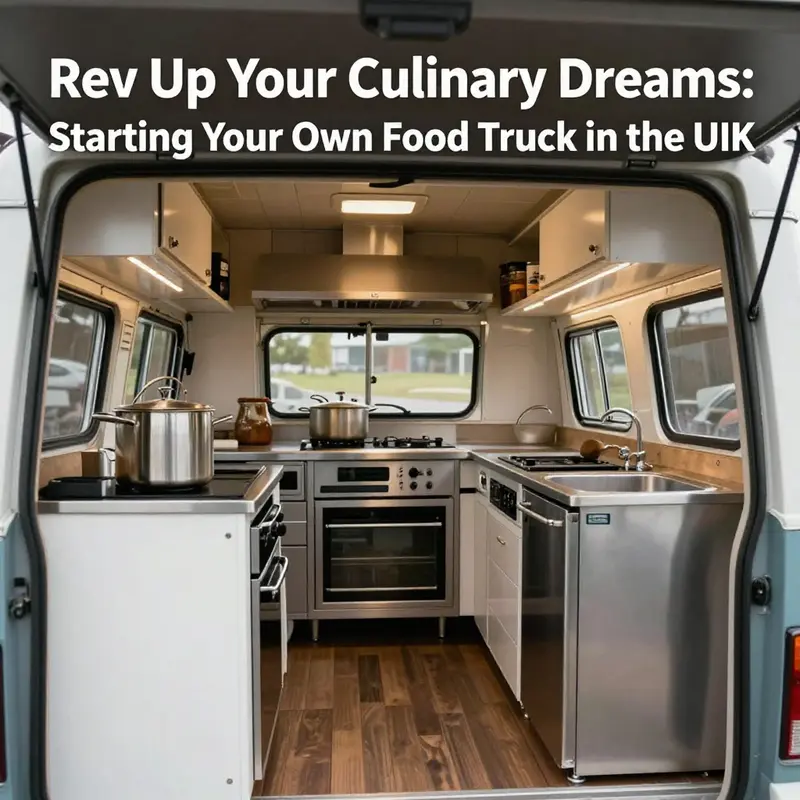
Launching a food truck in the UK is a test of planning as much as it is of appetite. The vehicle you choose and the kitchen you install are the backbone of your concept. They define not only what you can cook and serve, but how safely and legally you can operate day after day. In many ways, the road to a thriving mobile kitchen runs through the garage, the workshop, and the local council office as much as it does through a bustling market or a crowded festival. The journey begins with a clear sense of responsibility: a roadworthy chassis, a hygienic interior, a reliable energy and water system, and a permissions portfolio that satisfies local authorities. This chapter follows that path, weaving practical considerations into a narrative that keeps the focus on the core goal—delivering great food to customers while staying compliant, safe, and financially sustainable.
Your first consideration is vehicle suitability and safety. A food truck must be a roadworthy vehicle that can stand up to the demands of daily street service. This means it should pass an MOT where applicable and carry the appropriate registration with the DVLA. A vehicle that looks good in the photograph but falters on brakes, lights, or steering will threaten both safety and the venture’s reputation. Insurance for commercial use is not optional; it is the shield that protects your business and customers if something goes wrong on the road or at the curb. These checks are not mere formalities. They are the foundation of a lawful operation and a practical safeguard against costly incidents. Regular maintenance and timely repairs should be budgeted as a core operating expense, not an afterthought. An initial investment in a solid, reliable platform pays for itself over the long term through reduced downtime and fewer emergency fixes.
Beyond the shell itself, the interior layout matters as much as the exterior appearance. The hygiene and food safety equipment you install must align with both best practice and local expectations. A working refrigeration unit is essential for keeping perishable items at or below 5°C. The cold chain matters for safety and for the quality of your offerings, especially in a market where temperatures can swing from brisk to bustling within a few hours. Cooking appliances—whether grills, fryers, ovens, or hot plates—need to be clean, well-maintained, and properly installed by professionals who understand mobile installations. The interior should also feature a dedicated hand-washing sink with hot and cold running water, soap, and single-use towels. Some councils require a separate sink for washing utensils and dishes, while others accept a combined setup; knowing your local expectations is a matter of early dialogue with the environmental health team.
Waste management is another area where planning pays dividends. Secure, sealed bins for general waste and recyclables must be located away from food preparation zones to minimize contamination risks. But waste handling goes further than segregation. Wastewater management is an area where councils increasingly scrutinize practices. Food trucks must manage grey water responsibly, storing it in a dedicated tank and ensuring it is disposed of at approved facilities rather than being poured onto pavements or into drains. This might seem bureaucratic, yet it reflects a broader ethos of responsible street commerce that protects waterways, public health, and the reputation of mobile food vendors across communities. A simple, well-designed drainage and grey water plan reduces the chance of odors and health concerns, making your operation more customer-friendly and regulator-friendly at the same time.
Energy and fuel systems require careful planning too. If your kitchen relies on LPG for cooking, the installation and ongoing maintenance should be carried out by qualified engineers who understand the unique demands of mobile deployments. Gas systems in a truck are not merely about safety; they are about reliability. A fault in a gas line can halt service at a crucial moment, leading to lost sales and dissatisfied customers. For electrical systems, the aim is to prevent fire hazards and ensure dependable performance. Regular inspections and a maintenance log help you track tests, certifications, and any corrective actions. Both LPG and electrical systems should be designed with redundancy in mind where possible. This reduces the risk of a single point of failure that could take your entire service offline on a busy shift.
Permits, licenses, and the regulatory landscape sit alongside vehicle and equipment decisions as a core element of preparation. A mobile food vendor license from your local council is usually the cornerstone, but it is rarely the only requirement. Councils often ask for a clear layout plan that shows where food preparation, cooking, and washing occur, along with a demonstration of compliance with hygiene and safety standards. In many areas, you may need additional business licenses, VAT registration, and possibly a street trading license if you intend to operate in public spaces beyond private events or festival grounds. This is not a box-ticking exercise; it is about building legitimacy for your venture and ensuring that operations can proceed smoothly without compliance-related roadblocks. Early engagement with the local environmental health department can prevent delays, help you anticipate inspections, and provide a path to obtaining all necessary approvals without last-minute surprises.
The practical task of procuring a vehicle and outfitting it is closely tied to your concept, your menu, and your anticipated scale. Some operators start with a newer vehicle that already has a robust commercial fit-out, while others repurpose a well-maintained second-hand platform and build outward from there. Either route requires careful attention to the vehicle’s structure and how it supports food safety. The interior must be designed to minimize microbial harborage, with non-porous, easy-to-clean surfaces such as stainless steel or solid laminate. Consider the flow of work from receipt of ingredients, through storage and prep, to cooking, plating, and service. A well-thought-out layout minimizes cross-contamination risks and speeds up service, both of which contribute to better margins and a better customer experience.
The mechanical and electrical interfaces demand checks as well. You will need a stable electrical supply to support refrigeration, lighting, and any cooking equipment. If you operate from a site with limited power access, you may need a generator or alternative power arrangements. The key is to ensure you have adequate capacity for peak service without excessive idle fuel use or risk of overheating. Ventilation is another critical element, particularly if your cooking process generates smoke or steam. A compliant ventilation system helps maintain air quality and protects both staff and customers. The controls for gas and electricity should be clearly accessible, with a clear maintenance routine and documented tests. A well-kept electrical log and gas service records reassure inspectors and give you a predictable operating rhythm.
In the decision-making phase, it can be helpful to compare different vehicle types and configurations. For a practical comparison of vehicle types, many operators weigh Step vans against cargo vans for food trucks. This choice shapes how you allocate space for cold storage, cooking zones, and washing facilities, and it influences your likely service locations. If you are still uncertain, this is a good moment to explore the nuances with experienced operators or consultants who understand UK regulatory nuance, customer expectations, and the realities of mobile service.
As you approach the practicalities of vehicle acquisition and outfitting, you should also map out how your equipment choices support your brand and service model. A strong concept benefits from equipment that mirrors your menu’s demands while staying within budget and ensuring reliability. A compact footprint may suit a street-food concept with a focused menu, while a larger footprint could support a broader range of dishes and higher daily volumes. Regardless of scale, the aim is a cohesive system where every piece of equipment serves multiple functions without creating safety or sanitation risks. For example, a sink arrangement that supports both utensil washing and hand hygiene can simplify operations while reinforcing hygiene standards. Similarly, a refrigeration layout that minimizes the distance from ingredients to cooking zones can reduce time and temperature exposure, which supports food safety and keeps your service snappy during busy periods.
Compliance remains a throughline in every operational decision. From the first sketch on a workshop table to the final test drive in a town centre, you should be mindful of how each choice affects hygiene, safety, and regulatory readiness. Documented processes matter as much as the processes themselves. Write down how you clean equipment, how you store ingredients, and how you segregate ready-to-eat foods from raw items. When inspectors review your plans, they will be looking for a clear, auditable trail that demonstrates a serious commitment to public health. A well-documented approach reduces friction during inspections, helps you maintain consistency, and makes day-to-day operations smoother for staff who join your team later.
To further support your planning, it is worth recognizing that some aspects of vehicle and equipment compliance are region-specific. Local environmental health teams may have slightly different expectations for the layout, drainage facilities, or waste disposal arrangements. Always contact the environmental health department early, share your plans, and ask targeted questions. They can provide checklists or sample plans that align with your council’s interpretation of national guidance. The overarching framework is provided by national guidance on food hygiene and safety for mobile vendors, which sets out core standards and expectations, while local authorities translate these into actionable requirements at the street level. This balance between national standard and local adaptation helps ensure that the mobile kitchen you build is both compliant and adaptable as your business grows.
The end goal is not simply to pass inspections, though that matters. It is to create a working environment that protects staff, safeguards customers, and delivers consistently high-quality food. The equipment you install is the tool that makes this possible. So is the vehicle you drive. When you invest in a well-specified platform—reliable power, proper drainage, hygienic interior finishes, and clear systems—you set up a business that can scale, meet demand, and weather regulatory changes with confidence. The human side—your team’s training in hygiene, safe handling, and safe operation—complements the technical setup. A strong, safety-conscious culture can be as important as the latest stainless steel and the most robust electrical panel.
As you advance from planning to procurement, keep the long view in mind. The choices you make about vehicle type, interior layout, safety features, and compliance workflows will influence every service you run. In a bustling city, a well-planned truck with an efficient kitchen can outperform a larger but poorly configured vehicle. In a smaller town, the same attention to cleanliness and regulatory readiness can create a trusted neighborhood favorite that customers seek out week after week. The good news is that with thoughtful design and early engagement with regulators, you can align the practical realities of a mobile kitchen with the ambition of growing a distinctive, compliant, and resilient food business. The road ahead is long, but the route is clear when you treat vehicle and equipment choices as an essential part of your brand’s promise rather than as a mere compliance hurdle. For those who want to explore vehicle options more deeply, consider looking at resources that discuss practical comparisons between common truck configurations in the mobile-food sector.
For a practical comparison of vehicle types, many operators weigh Step vans against cargo vans for food trucks. This choice shapes how you allocate space for cold storage, cooking zones, and washing facilities, and it influences your likely service locations. If you are still uncertain, there is value in talking through the specifics with peers who have faced similar decisions, from the initial build to daily operations in varied environments. The aim is not to imitate someone else’s setup but to tailor a configuration that suits your menu, your route, and your local rules. And as you refine your design, you will benefit from a growing set of reference materials, best-practice guides, and, importantly, the knowledge that your compliance framework is robust enough to handle audits, market checks, and community expectations.
In the end, the chapter on vehicle and equipment requirements is not a dry inventory of do’s and don’ts. It is a practical blueprint for turning your concept into a working, safe, and scalable business. It is about choosing a vehicle that is truly fit for purpose, outfitting it with kitchen systems that promote hygiene and efficiency, and building a governance framework that makes compliance straightforward and routine. When you combine a sound physical platform with disciplined operations and thoughtful stakeholder engagement, your food truck becomes more than a portable kitchen. It becomes a reliable part of the local dining landscape, capable of delivering warmth, flavor, and opportunity to both staff and customers alike. To support this journey, remember that the UK Government’s official guidance on food hygiene and safety for mobile vendors remains a key reference. It offers authoritative context and updates that reflect evolving best practices and regulatory expectations. For more on this resource, you can explore the government guidance linked at the end of this chapter.
External reference: For authoritative guidance on vehicle and equipment standards for food trucks in the UK, see the UK Government guidance on food hygiene and safety for mobile vendors: https://www.gov.uk/government/publications/food-hygiene-and-safety-guidance-for-mobile-vendors.
Final thoughts
Venturing into the food truck business as an automotive enthusiast can be fulfilling, blending your passion for cars with culinary creativity. By thoroughly researching your market, complying with required licenses and permits, and investing in the right vehicle and equipment, you lay a strong foundation for future success. Embrace your journey and transform your love for vehicles into a thriving mobile kitchen. Remember, every great ride starts with a well-planned route!