
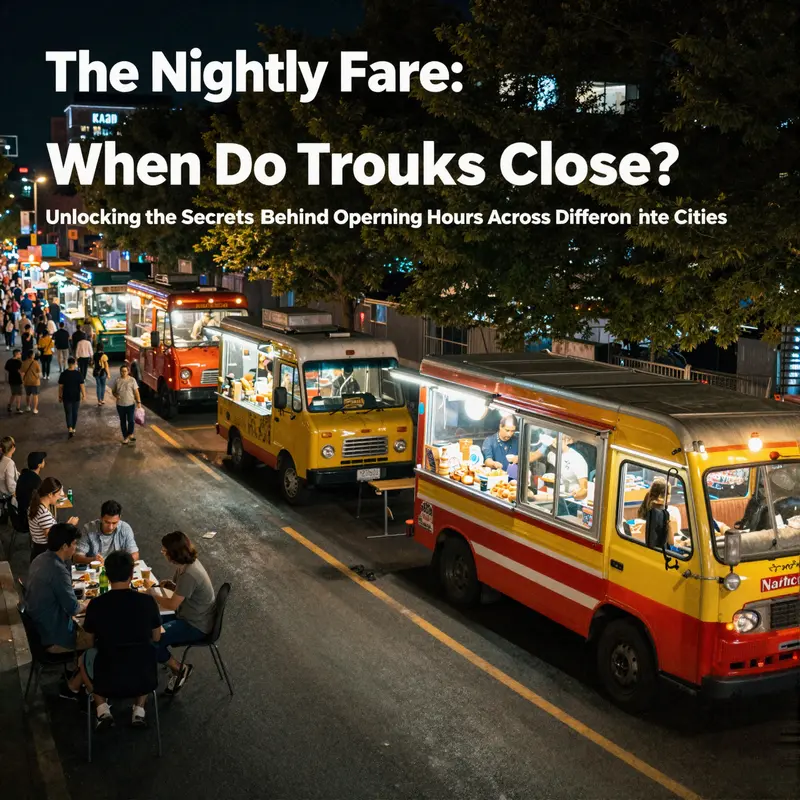
Food trucks have cemented their place in urban dining, serving delectable dishes across cities at various hours. However, as enthusiasts of car culture and modification often find themselves after late-night adventures, understanding the operating hours of food trucks becomes crucial. This article delves into when food trucks typically close, bringing to light the influence of city regulations, the significance of location, emerging late-night trends, the diversity among food truck types, and how technology can keep us informed. Join us as we journey through the vibrant late-night food truck scene that complements the automotive passion of car enthusiasts everywhere.
Closing Time Is Local: Decoding Food Truck Hours Through City Rules
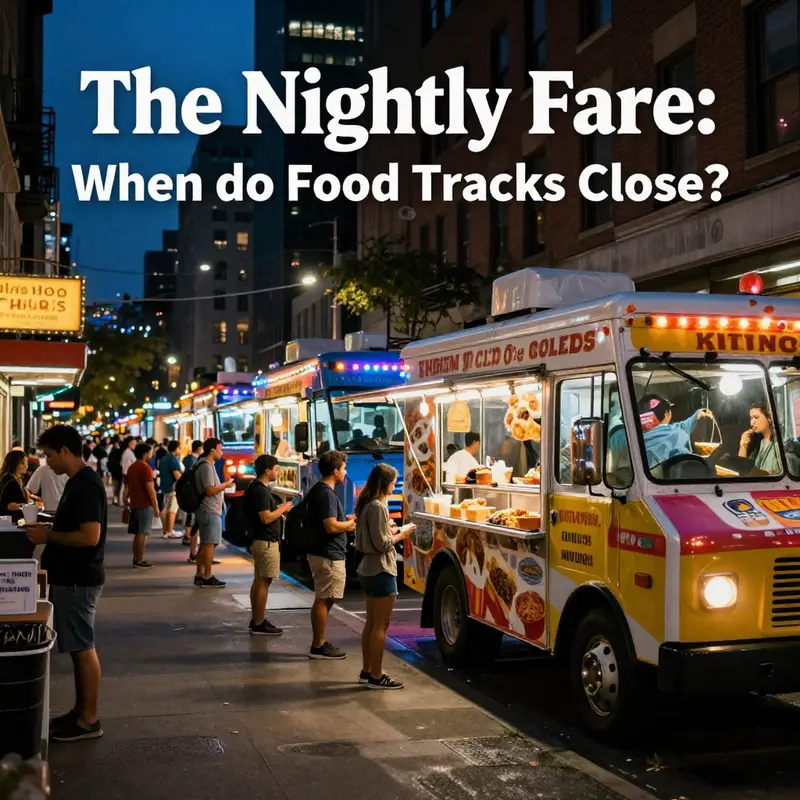
The question of when a food truck closes is less a single hour and more a map of local rules, seasonal rhythms, and the hustle of a city’s nightlife. Across the United States, trucks cluster around the same peak windows—lunch, dinner, and late-night after-work or post-event gatherings—but the clock they follow is set by street codes, zoning, permits, and neighborhood expectations. In many places, lunch crowds drive a truck to quick turnover between 11:00 and 2:00, followed by a return to curbside life for dinner service around 5:00 to 9:00. But end times drift, stretch, or snap shut in response to a jurisdiction’s pulse. Urban cores with nightlife may see vans rolling until midnight, and a handful of trucks that chase late-night crowds can push past that, until a curfew or noise ordinance nudges them toward departure. The result is a layered ecosystem where closing time emerges not from a single rule but from a negotiated fit between vendor calendars, customer expectations, and what the city allows at a given corner on a given night. In practice, the difference between a truck that closes at 9:00 and one that remains open until 2:00 is often a conversation between the operator and the municipality, with loudspeakers, street noise, resident complaints, traffic flow, and the local event schedule all playing roles in shaping that final hour.
Among the most fertile sources of late hours are metropolitan nightlife districts, where people spill out of bars and clubs and seek food that travels well and stays warm. In places like Los Angeles, for example, late-night trucks have become part of the after-hours fabric, feeding crowds that wander the streets after midnight. The exact closing time in such areas can be fluid, with some trucks tilting toward 1:00 a.m. or 2:00 a.m. during peak weekends or special events. This pattern reflects a city’s tolerance for late noise, the density of nighttime venues, and the capacity of the local health and licensing framework to accommodate extended service.
Yet the story of closing time is equally about the exceptions and constraints that constrain hours in other contexts. Not every truck is chasing a citywide nightlife. Daytime-only trucks exist in office corridors, near campuses, and around farmers markets, where closing by 3:00 p.m. or even earlier can be a natural consequence of the workday cadence. Some operators aim for a precise window that matches a specific event or venue schedule, whether a corporate lunch hour or a weekend market, and those commitments can set the pace for the entire day. The range is not just about appetite but about the permission to operate where and when a truck physically can, given traffic, safety, and the community around it.
To understand why a truck shuts down when it does, it helps to look at the regulatory frame that supports or curtails those hours. Local regulations are not uniform. They serve as the legal backbone for when a truck may park, when it must move on, and how long it can stay in any single site. A telling example is the way some municipalities implement site-specific restrictions. In Burleson, Texas, for instance, the rules govern how long a food truck can operate at a single construction site—no more than an hour—illustrating how the purpose of a location can override broader daily timing. Although this particular rule does not declare a universal closing time, it demonstrates the principle that location and objective determine the operational rhythm. These rules are not capricious; they exist to manage noise, traffic, and the use of public space. When a truck parks for a short window at a construction project, the operators know their window is dictated by the site’s schedule, not by a citywide appetite for a late-night bite.
Beyond site-specific limits, urban curfews frequently shape closing times. Many cities place curfews in or near residential neighborhoods to reduce noise and late-night disruption. In such zones, a truck may be allowed to operate until the end of a permitted hour, often between 9:00 p.m. and 11:00 p.m., depending on the neighborhood and the surrounding land use. The purpose is practical harmony: businesses that operate in commercial districts can stay a bit later, while residents who sleep early or who rely on early-morning routines get a quieter night. These curfews can force a truck to close earlier than it would prefer, even if a prime crowd remains on the street. For operators, this reality means planning for a predictable cadence that aligns with the most common cadence in their chosen footprint while staying alert to exceptions—festival nights, street fairs, or special permits that extend hours for a defined period.
Permits and operational hours provide another layer of structure. Many trucks carry permits tied to particular venues, events, or zoning categories. In some areas, a vendor may be approved to operate in a business district during lunch but not in a residential district after hours. Events, farmers markets, and pop-up street festivals often come with their own schedule, effectively extending or compressing hours for the duration of the event. The contrast between commercial zones and residential ones can be pronounced: in commercial cores, trucks may be expected to linger through late dinner and into early evening; in residential blocks, neighbors may push for earlier shutoffs regardless of surrounding activity. This modular flexibility reflects a city’s intention to balance opportunity with livability, allowing cooks and crews to pursue audiences while maintaining a predictable rhythm that neighbors can accommodate.
Seasonality adds yet another axis to when trucks close. In colder climates, many operators exploit improved insulation, heated tents, and engine pre-warming to stretch their season and extend operating windows for winter markets or holiday events. Conversely, in hot climates, the daylight sun can narrow the window to midday hours, with crews chasing mild evenings instead. A century of street-food practice has taught vendors to adapt to climate, crowd dynamics, and the cadence of city life. The simple act of closing time becomes a fluid negotiation: a truck may push the clock later on a warm spring night or retreat earlier during a rainy skid or a festival that requires a quiet street for a parade route.
Market influence remains a steady force shaping closing hours. Vendors serving office districts might end their day around 3:00 p.m., aligned to the post-work clock and the rhythm of a business neighborhood. Night markets, music venues, and outdoor celebrations create natural anchors for extended service, with closing times that reflect the intensity of the last crowd and the logistical needs of restocking, cleaning, and travel to the next stop. Operators calibrate their schedules not just to the appetite of the community but to the realities of mobility, fuel, waste disposal, and the need to be several steps ahead of the next day’s operations. The world of food trucks thus resembles a living calendar—hours bend and settle in response to permit windows, traffic patterns, and the ebb and flow of the urban calendar.
For readers trying to navigate this landscape, practical guidance matters as much as theory. The basic advice is straightforward: always check the specific truck’s schedule through the channels it maintains—social media pages, park-and-ride postings, and location-tracking platforms—because hours can shift weekly, even nightly. An explicit reminder from many operators is that curfews can change with neighborhoods, events, or city council decisions. If you plan a late-night bite after a concert or a shift, look for trucks assigned to nightlife corridors or late-night markets. If you crave a daytime snack, locations near business districts are more likely to have consistent afternoon closures as the workday winds down.
To see how regulation threads through this reality, consider the interplay between permit compliance and customer expectations. A vendor may receive permission to operate at a festival for a weekend, with a granted window that stretches into the late hours. That permission creates a temporary hour extension that would not apply on a ordinary weekday at a street corner. The same vendor, if placed in a different zone without a festival, would rely on the base rules, potentially closing earlier and departing before the last buses run. In this way, the clock becomes a map of responsibilities rather than a single universal rule—a map that varies with jurisdiction, venue, and the concrete needs of the day.
For readers who want to explore the regulatory backbone further, a compact resource on the regulatory frameworks behind food truck operations can offer a detailed lens. A practical reference point in this regard is the regulatory code that governs food establishments in local jurisdictions, including details on setup, teardown, noise levels, and proximity to schools or sensitive areas. Such codes illuminate how even modest differences in language or enforcement can shift a truck’s closing hour by an hour or two, or even by a day if a temporary condition like a street fair is in effect. This is why proximity to a regulator and awareness of permit terms are essential for operators who aim to optimize their hours without crossing into violations.
Within this complex system, the closing time of a food truck emerges as a negotiated outcome shaped by place, season, and purpose. It is a reminder that food trucks are not simply mobile kitchens waiting for customers; they are compliant participants in a broader urban ecosystem. When a truck closes is as much about where it is as about who is listening when the lights switch off and the engines cool. The next chapter will continue to unfold this tapestry by looking at how communities can cultivate environments that support sustainable, safe, and vibrant street food cultures without sacrificing residents’ comfort or the integrity of city operations. For readers seeking a deeper dive into regulatory considerations that influence these decisions, see the discussion on legal considerations for Latino food truck startups.
External reference for regulatory specifics: https://www.burleson-tx.gov/CodeOfOrdinances/Chapter16.aspx.
Closing Time by Location: How Where a Food Truck Sits Shapes When It Stops
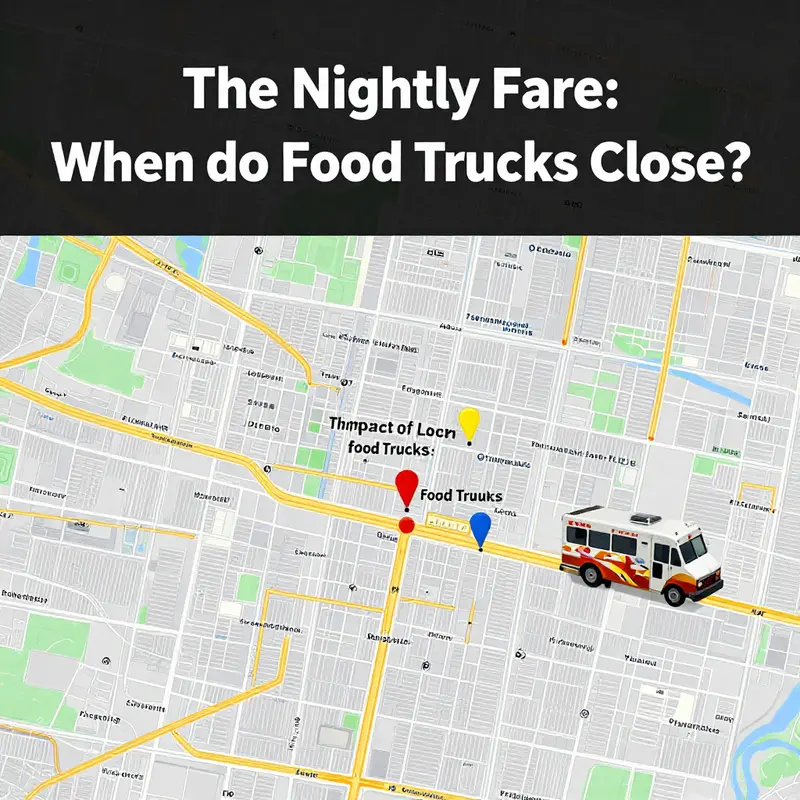
Closing time is not a fixed hour but a negotiation with place. A truck in a nightlife district often stays late, extending service as crowds linger after bars and clubs. In office cores, lunch hours dominate and the close comes early as workers head home. In parkside or event zones, hours hinge on the calendar of gatherings. The location acts as the regulator and the engine, shaping the rhythm of the day for vendors and customers alike. The chapter explores the patterns that emerge when we map closing times to the places where trucks park, hawk their food, and move with the city.
In nightlife districts the end of service blends with the street tempo of longtime venues. Trucks may push past typical dinner time to align with last call, with safety and rest checks guiding crews through late hours. In contrast, business districts emphasize efficiency, with a sharper close as offices empty and transit schedules shift. Park districts and events create windows that arc around performances and fairs, offering concentrated rush hours that allow a compact but busy service period. Tourists add another dimension, extending hours when crowds gather near museums, waterfronts, or venues that attract evening visitors. The interplay of demand and regulation yields a spectrum of closing times that feels less like a clock and more like a map of the city.
Location does not simply set a start and end; it shapes the costs and constraints of operating. Some jurisdictions allow late service in entertainment corridors, provided permits, noise limits, and health codes are met. Others cap hours to ease congestion or protect quiet residential streets. For operators the story is one of balance: maximize exposure and revenue while meeting safety requirements and keeping crew rested. The geography of a neighborhood becomes a calendar, with spots in high foot traffic acting as anchor hours and more isolated corners offering flexibility for off peak days.
The world outside the city center still teaches a lesson. In suburban or light traffic zones, hours may compress but can expand on weekends when events spill into streets and plazas. The pattern remains the same: location sets the ceiling and floor for how long a truck serves, and daily decisions depend on the rhythm of the surrounding life.
Beyond the numbers, the lesson is clear: location sets the ceiling and floor of a truck’s operating window. To plan around closing times, vendors study the district, track updates on social feeds, and adapt by rotating spots to ride demand waves. The geography of a neighborhood becomes a calendar, shaping when a cart is busiest and when it finally rests.
Closing Time, Open Late: How Food Trucks Extend the Night and Shape Urban After-Hours Culture
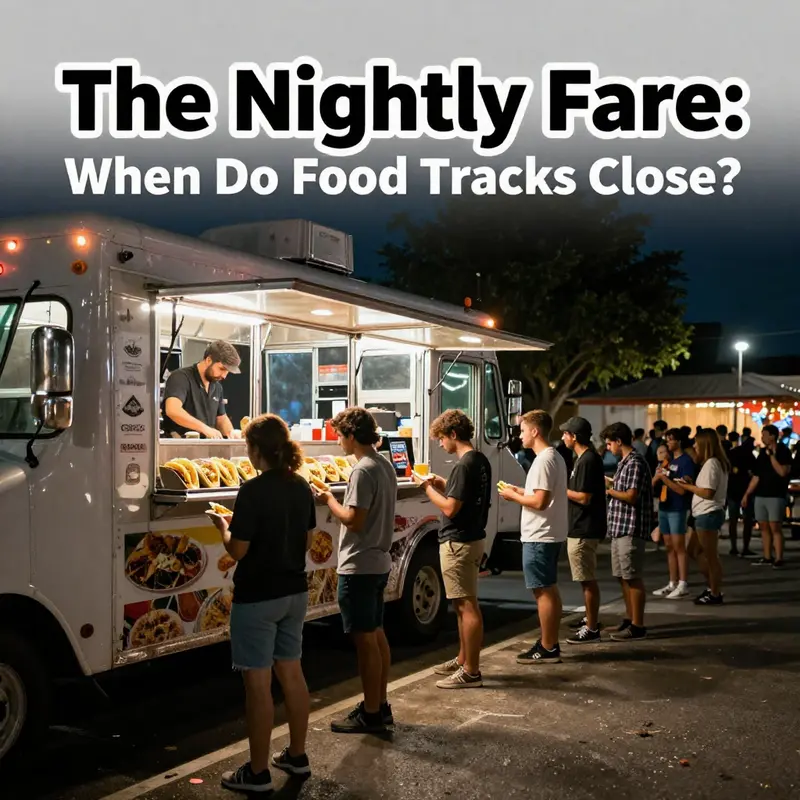
The closing time of a food truck is not a single fixed clock but a flexible rhythm that expands or contracts with the city around it. Across neighborhoods, districts, and seasons, trucks choreograph their hours to streetlight economies, nightlife patterns, and the shifting pulse of their own supply and crew. The most common picture is straightforward: many trucks wrap up by late evening, roughly between 8:00 PM and 10:00 PM, but in dense urban cores with lively after-dark scenes, the last orders can creep past midnight and even into the small hours of the morning. The real story is the widening arc of operation, how vendors stretch into the night to serve a craving that restaurant hours no longer fully satisfy, and what those late hours mean for the city, the workers, and the people who chase late dinners, late-night snacks, and late-shift meals after a long day. If you map a city’s food truck landscape, you see a canvas that reflects both appetite and regulation, a barometer of cultural willingness to eat on the edge of the night.
History sometimes frames late-night food options as a modern novelty, yet the trend sits atop older rhythms of urban life. Markets, carts, and pop-ups have always followed where people go after work or after the theater, but today’s trucks bring a portable, regulated, and frequently schedule-driven version of that tradition. A late-night truck is not merely a concession stand with wheels; it is a small, mobile kitchen built to maintain food safety and quality under shifting light, weather, and customer flow. The equipment choices tell part of the tale: sturdy propane or electric heating, compact refrigeration, and portable lighting that can illuminate a counter while keeping costs manageable. When a truck owner invests in lighting, tents, heat, and the batteries or generators that keep them running, it is a signal that the late shift is worth sustaining. Quality, not just speed, becomes a selling point in a crowd that expects a warm meal after the clubs close or the stadium empties.
What determines if a truck chooses to stay open past 10 or 11 PM? A handful of interwoven factors shape the decision. Location is paramount. Trucks clustered near theaters, sports venues, music venues, and bars see a different demand pattern than those tucked into daytime business districts or farmers’ markets. Entertainment districts feed a recurring audience—the night crowd that needs sustenance while moving from one venue to another. In these blocks, a late service cadence becomes a practical extension of the nightlife economy, not an exception to it. Customer demand follows the same logic: night-shift workers finishing late, partygoers craving a post-show bite, and late diners who prefer a quick meal without the bustle and wait of a conventional restaurant. When demand persists, vendors test longer hours, reinforcing a feedback loop where more operating time translates to more revenue, which in turn justifies continued late service.
Regulations also shape the calendar of closing times. City ordinances govern curfews, parking, and where and when a truck can operate after dark. Some zones allow late markets only on weekends or during special events, while others permit steady late-night service with strict compliance checks on food handling and sanitation. The balance between flexibility and compliance becomes a strategic consideration for operators. They must align hours with local rules, while also accounting for staffing realities and the cost of staying open. Staffing is the third pillar of the late-night equation. Longer hours require more crew, organizers, and security considerations, especially in busy districts. The human element—who stays up late, who handles the grill, who manages the cash—can cap or extend a truck’s nightly hours. A crew trained to operate safely into the early hours brings both capability and responsibility; fatigue management, shift rotation, and rest cycles become part of the operational plan, echoing the broader labor practices that undergird urban food scenes.
The late-night shift is not only about surviving the night but also about delivering a consistent experience when the city is at its most variable. Weather adds another layer of complexity. A chilly wind or a damp evening can dampen foot traffic or push diners inside. Trucks adapt with weather-ready setups—insulated walls, portable heaters, extra lighting, and tents that keep rain off the grill and the customers. These adaptations are not cosmetic but functional, ensuring food safety and consistency while the clock moves forward. Consider how a late-night menu often gets tuned for the audience it serves: heartier items that travel well, more compact offerings that can be prepared quickly, and seasonal twists that reflect the moment’s appetite. In a city with a robust late-night culture, the menu can become a living, breathing map of the night’s moods.
Technology has quietly rewritten the timing logic of late hours. Digital ordering platforms and real-time location apps empower customers to trace a truck’s schedule and anticipate last calls. For operators, these tools offer a way to optimize staffing, inventory, and service windows. A truck with a clear, real-time update about last orders can avoid risky rushes and maintain food safety standards. The ability to push a quick notification to followers about a sudden extension or a pop-up late-night event helps smooth demand curves and reduces the friction of late-night dining. In practice, operators often rely on a blend of low-tech and high-tech strategies: a reliable generator, portable lighting rigs, and robust cold storage paired with social media channels that announce a daily starting point, a current location, and the expected closing time. The coordination between kitchen readiness and communication efficiency matters as much as the food itself.
From a consumer perspective, these extended hours reshape how people plan meals. The late-night truck becomes part of a casual, after-hours ritual: a stop between venues, a post-event snack, or a late supper that fits into a flexible evening. The experience is intimate in its tempo—the truck illuminates a short stretch of street, a few stools or a snippet of curb, and a brief but satisfying moment of connection between cook and customer. Social cues—where the truck is parked, how long it is staying, and what’s on the menu—are almost as important as the food. This is where a well-timed update can turn a casual curiosity into a regular habit. Vendors increasingly lean into this dynamic by sharing daily schedules, last-order cutoffs, and occasional late-night pop-ups, turning a simple bite into a dependable, repeatable ritual.
Finding reliable information about operating hours becomes essential in this shifting landscape. Since hours can flip day by day, the best approach blends official channels with community-sourced updates. Operators often post their schedules on social media, and many use location-based services that track where the truck will be and when it plans to close. The practice of keeping a tight, transparent update loop helps manage expectations and builds trust with customers who schedule around a truck’s hours. For readers who want to explore the broader ecosystem and understand how late-night service is evolving, a deeper dive into related coverage can be illuminating. A good starting point is a widely referenced guide that captures the momentum of late-night food trucks in major cities, a resource that resonates with the urban economy angle this chapter threads through. If you’re curious to see how a particular content stream frames this topic, you can explore a related entry such as the blog-2 page on Latinos Food Trucks for a perspective that situates late-night eating within communities that have built enduring street-food traditions. blog-2 page on Latinos Food Trucks.
What does all this mean for the city’s after-hours economy? The shift toward longer operating hours signals a deliberate integration of food trucks into the urban after-hours economy. It reflects a broader consumer expectation for accessible food options beyond traditional restaurant hours and demonstrates how street food can complement rather than compete with fixed-location dining. The financial logic tightens around the idea that late hours can convert marginal demand into meaningful revenue, provided the operations remain safe, reliable, and responsive to the street-level realities of late-night urban life. In cities that have embraced this model, late-night markets and pop-up collaborations have become a form of cultural economy—places where vendors test menus, collaborate with venues, and extend the city’s sensory and social spectrum into the early hours. This resilience contributes to a more dynamic urban image, a city that keeps moving when others are winding down.
Ultimately, the question of when a food truck closes is not a single answer but a conversation about timing, safety, demand, and community needs. It is about recognizing that food trucks’relate-night potential is not a quirk but a response to how people live after dark. The most successful late-night operators treat closing time as a decision shaped by data and dialogue: the cadence of foot traffic, the reliability of staff, the temperature of the night, and the city’s regulatory framework. They see closing as a negotiated endpoint, a moment when the street quiets but the kitchen’s flame remains a little longer so that late diners can walk away with something nourishing and warm. If you are planning a night out or a late shift, consider not just where to go but when to go, how far you are willing to travel, and how to verify the day’s last orders. In a city that prizes flexibility and speed, the late-night food truck is less a novelty than a practical extension of the urban appetite—an adaptive, mobile, and essential piece of how modern cities feed themselves after dark. For readers seeking a broader frame on how these mobile eateries contribute to urban economies and social life, this discussion aligns with ongoing research and urban studies that explore the evolving role of food trucks in city centers and neighborhoods alike. https://www.brookings.edu/research/food-trucks-and-the-urban-economy/
When Do Food Trucks Close: Variations in Closure Times by Food Truck Type
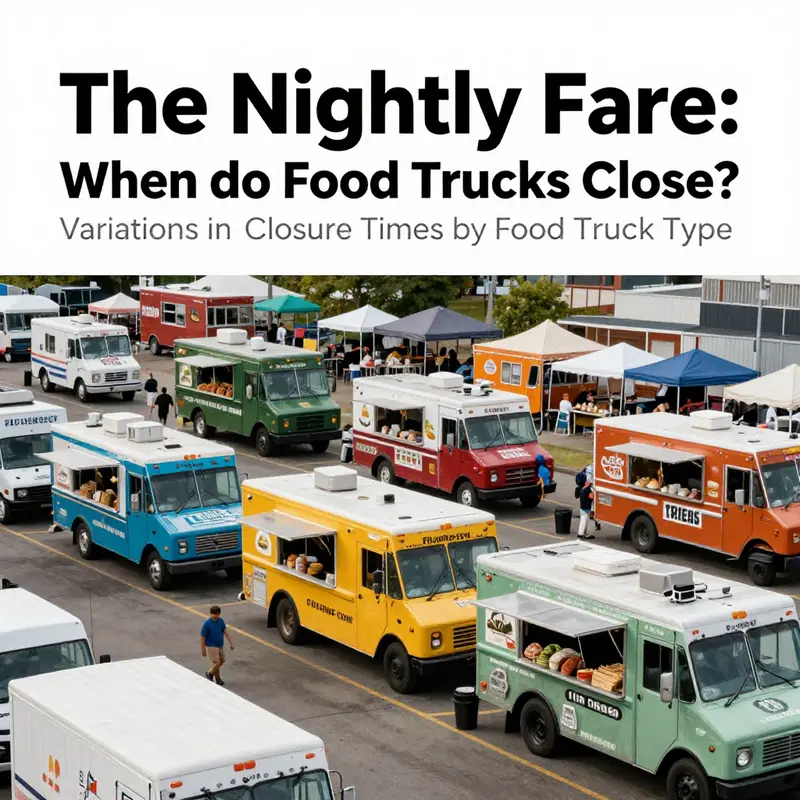
Closure times for mobile kitchens are not a single, universal clock. They are a mosaic shaped by the type of cuisine, the intended audience, the venue, and the rhythms of the city where the truck operates. In many places, you will find a loose pattern: some vendors peak during lunch and early evening, while others position themselves as late-night options that feed crowds after bars, concerts, and festivals have started to hum. The lesson here is simple but often overlooked: if you want to know when a specific truck closes, you need to look beyond generalities and read the moment in context. A city’s nightlife districts, event calendars, and even weekly market schedules can push a truck’s closing time well past the typical dinner hour. In such urban centers, it is not unusual to see late-night service extend until midnight or even 1 or 2 a.m., especially on weekends when night owls and revelers look for something warm, flavorful, and portable to cap the night. In Los Angeles, for instance, the landscape of late-night options has grown around the idea that food can be part of the after-dark social experience. The trucks that stay open late aren’t just working on impulse; they’re responding to a demand curve created by the city’s nightlife economy. The same dynamic unfolds in other large metro areas where entertainment districts, stadiums, and outdoor concerts create a steady stream of customers who want quality food after standard kitchens have shut their doors. But even within a single city, the spectrum can be broad. Some trucks iron out a schedule that straddles lunch and dinner, closing around 6 or 7 p.m., while others extend their hours to capture the after-work crowd and the late-evening festival goers. This variability isn’t merely a matter of appetite; it is a strategic alignment with customer habits and the logistical realities of operating a mobile kitchen. The practical takeaway is that a traveler or a city resident who wants to eat from a mobile kitchen should treat hours as a moving target rather than a fixed rule. It is essential to verify the day’s schedule through the vendor’s public channels or through location-tracking tools that provide real-time updates. Even when a truck posts a standard schedule, the actual hours can shift due to weather, special events, or supply considerations. When people ask, “When do food trucks close?” the answer is almost always: it depends on who’s cooking, where they’re serving, and what the night demands of the market look like. A useful mental model is to imagine the day as a funnel. As the day narrows toward night, the appetite shifts from breakfast and lunch to dinner and late-night cravings. The funnel’s width—the volume of potential customers—varies with the neighborhood, the day of the week, and the cultural calendar. In a city with a robust dining and nightlife ecosystem, late hours are not a novelty; they are a synchronized component of the urban rhythm. It is this synchronization that explains why closure times range from a modest 6 p.m. for daytime-focused trucks to the 10 p.m. to 2 a.m. window that some late-night operators rely on to stay viable and visible. As a result, the best strategy for anyone planning to visit a mobile kitchen is to check in advance and to remain flexible. The modern reality is that many vendors update their hours weekly to reflect evolving demand, seasonal events, and the locations that host the most reliable foot traffic. Rather than pinning a visit to a single, static hour, it pays to track a schedule across several days and to maintain situational awareness about the area’s activity level. In practice, this means following the truck’s social media feeds, checking the location pages that aggregate mobile vendors, and, if possible, calling ahead for confirmation. The goal is not merely to know when a truck closes but to understand why that closing time exists in a given place. Consider the way a BBQ-focused truck plans its day. These operators often book or position themselves near outdoor events, concerts, or festival grounds where the atmosphere lingers after daylight has faded. Their customers tend to be families and groups looking for hearty, shareable foods that sing with smoke and char as the evening air cools. The schedule tends to skew toward late afternoon starts around 3:00 p.m. and can carry forward until 9:00 or 10:00 p.m., with some nights pushing even later when crowds linger and demand remains robust. This pattern is not a universal rule, but it is a useful heuristic for readers who want to understand why a BBQ truck might close later than a bakery trailer or a street-corn stand. In contrast, towable food trailers—those easier to relocate and often built around a fixed, market-style setup—tend to align their best business hours with commuter rhythms. Their operation is frequently strongest in the late morning through mid-afternoon window, roughly 2:00 p.m. to 4:00 p.m., when lunch crowds and market-goers fill the aisles. The close of these venues mirrors a logistics calculus: after the lunch peak, vendors head toward relocation or restocking, and the window for maximizing profit shrinks. The effect is that such trailers often retire earlier than their evening-focused counterparts. Their meals are commonly breakfast- and lunch-forward offerings, suitable for markets, business districts, or curated event locations that do not demand late-night service. A separate, more flexible model is found with trucks that rely on deep-freeze capacity or specialized international cuisines. Deep-freeze capabilities enable these kitchens to stock premium ingredients that hold up for extended periods and require careful handling. These operators can adapt more easily to fluctuating demand and can stretch their hours when a festival or a late-night gathering drives higher footfall. This flexibility can translate into longer service windows during peak demand periods, while on weekday evenings the same trucks might close earlier simply to maintain fresh supply and to manage labor hours. An example from the festival circuit illustrates this dynamic. A Sri Lankan-inspired mobile kitchen that leans on frozen staples may run until 9:00 p.m. during a weekday fair but can push past 10:00 p.m. or later during weekend festivals when the density of attendees is higher and the after-hours linger is part of the experience. The common thread across these patterns is that closure times are not locked into one formula. They are a product of supply chain realities, the cuisine’s operational needs, and the social fabric of the neighborhood. Factors such as local regulations, which can dictate permissible operating hours, also cast a architectural influence on when a truck can reasonably stay open. If a city restricts late-night commerce in certain zones, operators must adapt by shifting to nearby districts where permission is granted or by leveraging event-based locations where temporary licenses are easier to obtain. The presence of a niche demand—whether it be a nocturnal crowd seeking comfort food or an audience craving bold, international flavors after dark—also feeds into the decision to extend service hours. A late-night truck near an entertainment district may reap the benefits of a constant stream of customers who want something hot and tasty after the main venues close. Weather, seasonality, and day of the week further complicate the equation. Cold or rainy nights can shorten the window, while seasonal festivals can dramatically extend it. The safe rule for someone who plans a night out with mobile dining is to prepare for change and to verify real-time information. While many readers rely on a vendor’s public channels, others may use general event calendars or location-based lists that track where trucks are roaming on a given evening. In the end, closure times reflect not just when a truck decides to shut the window but why that decision makes sense in the context of demand, location, and operational practicality. If you want a concrete sense of how these hours play out in a regional context, consider the patterns of a city with a thriving late-night scene. A truck may begin service in the late afternoon, extend into the evening, and push into the early hours as nightlife dens remain active. The implication for visitors is that a single trip might require flexibility: arrive for a before-dinner bite and be prepared for a possible late-night option, or plan a post-show meal where the vendor’s schedule accommodates the after-hours crowd. For readers seeking a practical compass, the approach is to assess the day’s likely audience, the venue’s licensing framework, and the surrounding activity. A quick look at a few cues can be enough: the density of bars or music venues nearby, whether there is a major festival or stadium event, and how late the area tends to stay lively. If you want a navigable anchor as you explore these patterns, you can explore regional discussions and city-specific profiles that illuminate how various trucks schedule around major hubs and neighborhoods, including urban cores that rely heavily on curbside dining as a cornerstone of the local food culture. To connect with a broader sense of how hours shift across communities, you can explore broader regional discussions, such as those that profile Latino food trucks and their growth in major cities, which offer a window into how communities adapt the street-food rhythm to different urban scales. Latino Food Trucks in Major Cities can provide one illustrative thread for understanding how closures map to patterns of local demand, culture, and geography. The key point remains: closure times are fluid, informed by hours of service, the type of cuisine, and the external forces acting on a given night. In the end, the best approach for diners and enthusiasts is to treat closing times as situational rather than absolute, and to use a combination of scheduled hours and real-time updates to plan a mobile dining experience that aligns with both appetite and circumstance. External references can deepen your understanding of operating hours as a trend within the broader food-service ecosystem. For an industry-wide perspective, an external resource on operating-hour trends provides a wider lens on why these patterns exist and how vendors navigate them when the market is most dynamic.
When Do Food Trucks Close? Harnessing Real-Time Tech to Track Hours, Locations, and Late-Night Feasts
The closing time of a food truck is never just a line on a schedule. It is a moving target shaped by urban rhythm, weather, local regulations, and the simple realities of a business that thrives on mobility. In many cities, the end of the night means more than a cut-off bell; it marks the moment when the crew packs up, wipes down the grill, and responsibly presses pause on the operation until the next set of hungry patrons arrives. Yet the hours aren’t constant. They bend with the flow of crowds, the pull of entertainment districts, and the occasional late-breaking event. What remains constant is the growing role of technology in translating these fluid hours into a reliable map for customers who want a hot bite without chasing a moving target. The arc—from late afternoons to the dusky hours of night—is increasingly navigated with real-time signals rather than printed timetables. And that signal-driven approach is changing the way people plan a meal on the street and how vendors manage the delicate balance between profit, safety, and community connection.
Food trucks tend to cluster around peak dining windows. A typical day might begin with a lift of steam and the first lines forming near office corridors or bus stops, with lunch crowds pushing the doors open around mid-morning and lasting through the early afternoon. Dinner hours often settle in later, as the kitchen finds momentum during the golden hours of sunset and after-work gatherings. But this cadence is not universal. The very same trucks that fill a lunch crowd may fade to a shorter day or extend into late-night service depending on the location and the audience. Urban centers, entertainment districts, and nightlife corridors often host trucks that stay open well past the traditional dinner hour. In these places, closing could stretch toward midnight, 1 a.m., or even later, as crowds spill out of bars, clubs, and venues that thrive after dark. In contrast, daytime-only trucks or those anchored near corporate campuses may close by 6 p.m. or 7 p.m., when foot traffic—and thus demand—wanes. The variability becomes a kind of city weather, changing with street closures, seasonal events, and the unpredictable temperament of a neighborhood on particular nights.
In discussing closing times, it is tempting to offer a single snapshot of a city or a vendor. Yet the truth lies in the nuance of location and habit. Take Los Angeles as an example, where late-night food trucks are a beloved feature in nightlife districts. Vendors there often design their schedules to ride the nightlife wave, closing in the early hours after the crowds have thinned. The practice of staying open late is not merely about extending revenue; it’s about serving a specific, time-sensitive community that craves hot, handheld meals after a night out. What matters from a consumer perspective is not a fixed closing hour but a dependable signal about where a truck will be and when it will roll away. That signal—whether it’s a posted sign, a whiteboard update at a curbside, or a push notification on a mobile device—must be accurate and timely to prevent the disappointment of a wasted trip. And that is where technology becomes a partner to the human element of street food: the vendor’s hustle, the cook’s rhythm, and the customer’s plan.
Technology has entered the street-food workflow not as a novelty, but as a core operating discipline. It is common for food truck operators to lean on several channels to keep their audiences informed about hours and locations, a practice that has grown from a nice-to-have into a business necessity. Social media channels function as the public notice boards of the street food world, where a single post can recalibrate expectations across a neighborhood. These platforms allow operators to announce weather-driven changes—whether a sudden shift due to rain or a weekend event that alters the usual route—and to share last-minute updates when a planned stop is canceled or extended. The cadence of these updates creates a living ledger of hours that customers can scroll through before choosing a plan. In parallel, dedicated mobile applications equipped with location services give customers a real-time map of where a truck is parked and how long it plans to stay. These apps, designed to push alerts when a truck is near, turn a potentially frustrating search into a confident, near-future plan. Not every operator will lean into every channel, but the composite effect remains clear: customers gain visibility, and vendors gain a more predictable flow of foot traffic.
Web pages and basic calendars still hold their value in this ecosystem. A truck’s website can host a running schedule, note seasonal hours, or post changes due to events. For communities that prefer a centralized information hub, these pages become the reliable anchor that customers consult when other channels (like social posts) are unsettled. The key benefit across all of these technologies is transparency. When a truck announces a late-night detour or a shortened run because of weather, the transparency not only informs customers but also builds trust. A customer who knows that a truck might pause earlier on a stormy night is more likely to adapt plans than to chase a moving rumor. In that sense, technology reallocates attention from the uncertain moment of arrival to the more productive moment of planning ahead. This shift reduces the energy wasted by unsuccessful trips and enhances the overall experience of chasing flavor on the street.
The social contract between vendor and customer deepens when technology is deployed with consistency rather than opportunistically. A study conducted in a different cultural and geographic setting—France—offers a telling parallel. It highlighted how tech-enabled engagement, especially through social channels, can cultivate both physical and virtual communities around street food. The mechanism is not simply about posting times; it is about sustaining dialogue. Regular updates, even when hours shift because of a festival, a parade, or a spontaneous pop-up collaboration, invite customers to participate in the rhythm rather than merely observe it. In practice, that means a vendor’s on-page calendar, a quick post about a weather delay, or a tweet-like update about a late start can create a sense of anticipation. For regulars, these updates become a reliable rhythm to plan around. For newcomers, they offer a window into a street-food personality—the kind of profile that invites return visits and word-of-mouth recommendations. The broader takeaway is not that technology replaces the window clerk’s signboard but that technology extends the window’s reach. It makes the closing time—whether it comes at 9 p.m. or 2 a.m.—a responsive, customer-centered moment rather than a one-size-fits-all cut-off.
For readers seeking practical pathways to stay informed, the path is simple, though not always one-size-fits-all. Start with a multipronged approach: follow the truck’s social updates to catch any weather-related changes, check the truck’s website when you plan a longer outing, and keep an eye on location-based alerts from the truck’s dedicated app or a generic tracker that maps mobile vendors. The goal is not to accumulate channels but to cultivate a reliable pipeline of information. When a truck announces a change—perhaps a shift in its usual path due to a special event or a late-night extension for a busy weekend—it becomes a moment of trust. Customers learn to rely on the vendor’s communication practice, and vendors learn to calibrate their operations to deliver on that trust. The dynamic is reciprocal: better information for customers reduces the friction of a street-food hunt, while more predictable hours give vendors greater confidence in planning routes, staffing, and inventory in a way that can be sustainable across a busy season.
These interwoven channels also shape the social fabric around food trucks. The transparency generated by real-time updates invites communities to engage with vendors in new ways. Patrons increasingly perceive food-truck dining as a shared experience rather than a solitary purchase. They comment on routes, share sightings, and help each other interpret a late-night clock on the curb. The result is a strengthening of local food culture, fueled by timely information, mutual aid, and collective memory—the moments of arrival, the taste profiles that define a night out, and the stories that emerge from a successful, well-timed bite after hours. In this sense, hours themselves become a kind of cultural artifact. They tell a story about where people gather, what kind of food travels through a city, and how the street becomes a stage for culinary improvisation.
From a consumer’s standpoint, there is a practical blueprint for navigating a world where closing times oscillate. Before heading out, scan the latest posts across the truck’s channels to pick up any weather notes, traffic detours, or event-driven route changes that could affect the final stop. If you are planning a late-night bite, subscribe to notifications from the truck’s app or enable alerts on location trackers so you’ll receive a ping when the truck is nearby. If you are in a group, designate a point person who can monitor updates and relay changes to the whole crew. And if a planned encounter seems risky because of a weather shift or an unexpected event, remember that a quick alternative route or another nearby truck can often save the evening. The entire experience hinges on a shared expectation—that hours will be updated in real time, that locations will be shared with honesty, and that a reliable signal will guide the final bite of the night.
For readers who want to explore the wider landscape of regional trends and how communities adapt to these shifting hours, a broader context can be found in related discussions within the food-truck community. Latino food trucks in major cities offer a useful case study in how localized schedules are shaped by neighborhood dynamics, cultural expectations, and the cadence of nightlife. Such pages illuminate how a city’s street-food ecosystem evolves, with hours that reflect both the city’s heartbeat and the vendors’ needs to balance late-night demand with safe, sustainable operations. This link provides a gateway to understanding how a single subculture—latino food trucks—navigates urban space with a combination of tradition, innovation, and logistical savvy. Meanwhile, for readers seeking a more general external perspective on hours and locations, the Food & Wine exploration of the evolving landscape of food truck operations offers a complementary, research-backed lens on how technology and transparency intersect with street cuisine: https://www.foodandwine.com/food-truck-locations-and-hours.
In the end, the question of when food trucks close is less a fixed timestamp than a dynamic practice—a practice increasingly guided by real-time information, multi-channel communication, and a shared desire to connect flavor with place. The closing hour becomes part of a larger choreography: a nightly dance that begins with a menu, travels along streets humming with traffic and conversation, and ends with a made-at-just-right-time bite. Technology does not erase the human dimension of curbside service; it amplifies it. It makes the closing signal more precise, more reliable, and more human—a cue that invites customers to join a temporary community formed by a shared appetite and the willingness to adapt to the moment. As long as vendors keep the lines of communication open and customers stay curious about where the next truck will roll, the city’s street-food scene will continue to extend its hours—one updated post, one location pin, and one late-night bite at a time.
External resource note: For further information about technology’s impact on food truck hours and locations, see the external resource linked above.
Final thoughts
Understanding the closing hours of food trucks is more than just a curiosity; it enhances your overall experience in urban nightlife and dining culture. By comprehending the factors that determine these hours—from city regulations to food truck types and locations—you give yourself the chance to discover the optimal dining options post-car shows or races. Whether you’re on the hunt for a midnight snack after a long day of tuning or simply wish to explore the local food landscape, staying informed about food truck operations is a critical asset for any car enthusiast.