
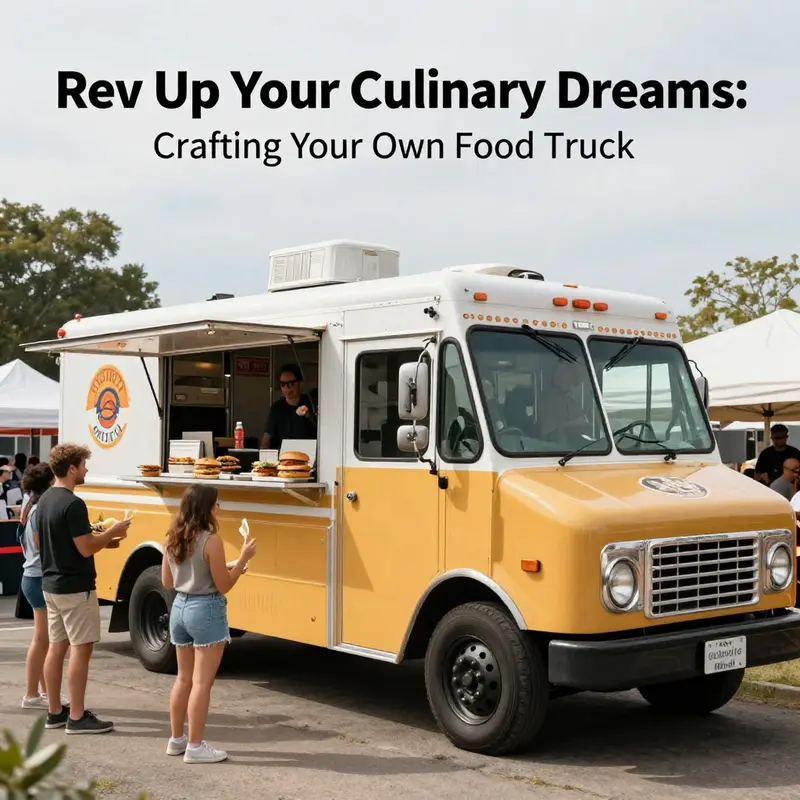
Merging the world of food and automotive modification invites a unique opportunity for creativity and business. For hobbyist car modifiers and classic car restoration enthusiasts, creating a food truck becomes not only a novel way to earn a living but also an avenue to showcase your automotive skills. From designing a distinct vehicle to understanding legal regulations, each step is crucial for a successful launch. This guide will take you through developing a solid business plan, selecting the right vehicle, navigating permits, and ensuring compliance with food safety standards, providing a comprehensive approach to realizing your mobile culinary dreams.
From Dream to Street: Crafting a Clear, Impactful Business Plan for Your Food Truck Venture
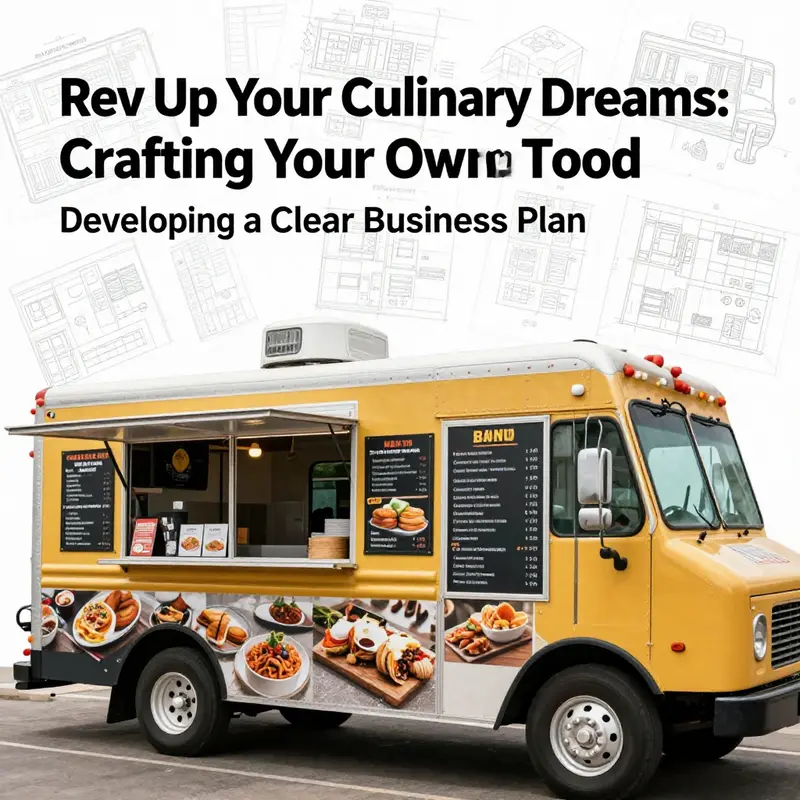
Turning culinary passion into a street-side enterprise begins with a clear, comprehensive business plan. The food truck sector has proven its resilience and scale, and by 2024 the U.S. street vendor landscape was valued at about $2.4 billion, with more than 58,000 food trucks operating nationwide. That data underscores a vibrant, accessible market for new entrants who come prepared. Your plan should do more than outline a menu; it should crystallize your vision, map the path to profitability, and align day-to-day actions with long-term ambition. A well-crafted plan helps you answer essential questions before you invest in a vehicle or purchase expensive equipment. It clarifies who you are serving, what you will offer, and how you will stand out in a crowded marketplace. It also acts as a living document, guiding decisions from location scouting and supplier negotiations to marketing strategies and staffing schedules. In practice, this means writing a robust executive summary that distills your purpose and potential, a company overview that sets out the legal form, ownership, and management philosophy, and a financial and operational plan that translates ambition into numbers and processes you can actually execute every day. The components matter not just to lenders or investors; they steer your tiny business through the unpredictable currents of street commerce, where weather, foot traffic, and local regulations can shift with the seasons and the city’s mood.
Your plan should anchor itself in concrete realities and market insights. A thoughtful market analysis identifies your target customers—office workers seeking quick, flavorful lunches, students craving inexpensive yet novel bites, or festival-goers hungry for one-of-a-kind snacks. It should outline your unique value proposition: a niche cuisine or a bold flavor profile that differentiates you from the many trucks sharing the curb. If your concept leans into a niche like plant-based options or globally inspired street flavors, the plan must articulate why this niche resonates locally and how it aligns with current trends. Contemporary guidance on building a food truck plan emphasizes a structured outline that includes an executive summary, company overview, management structure, financial and operational plans, and an in-depth market analysis. This framework makes the difference between a dream and a disciplined, fundable venture. The idea of a living plan is crucial here. It invites you to revise forecasts as you learn from pilots, adjust menus for seasonality, and reallocate marketing resources in response to what the data shows about customer demand. A living plan also helps you communicate progress to partners, lenders, and potential collaborators, making your business feel credible and doable from the start.
Even as you draft the plan, you should keep the truth of the street in view. The path from concept to checkout is paved with practical choices: where you operate, how you price, how fast you serve, and how reliably you deliver consistent quality. Your plan should spell out not just what you will serve, but how you will source ingredients, manage inventory, and maintain food safety. It should set measurable goals for revenue, cover costs, and gross margins, and it should specify key milestones such as fleet readiness, first five locations, and a scalable path to multiple trucks if success comes quickly. The inclusion of a robust market analysis helps you size the opportunity and identify potential gaps in your locale that your truck can exploit. If your menu features bold flavor combinations or a niche cuisine say plant-based Korean tacos the plan must explain how that differentiation translates into customer appeal and repeat visits. It also justifies branding decisions, such as vehicle wraps, signage, and a consistent voice on social media that ties back to the menu concept. This link between concept, branding, and market insight is essential for creating a coherent, persuasive narrative that can attract funding and partnerships.
Your financial plan deserves careful attention. Start with upfront capital needs: the vehicle or trailer, kitchen equipment, upgrades for compliance, and the costs of permits and insurance. Then model ongoing expenses—raw materials, labor, fuel, maintenance, and scheduled marketing spends. Most importantly, forecast revenue under realistic scenarios to estimate break-even points and likely timelines to profitability. The literature on successful food truck plans highlights the value of conservative yet practical projections and the inclusion of multiple scenarios so you’re prepared for slower months or unexpectedly high demand. A well-structured financial plan also supports conversations with lenders or grant programs that favor mobile food ventures, especially those tied to community impact or sustainability goals. In practice, your plan becomes a blueprint that guides supplier negotiations, inventory controls, and pricing strategies, all of which are critical to sustaining profitability in a mobile context where margins can tighten quickly if you aren’t precise about costs and capacity.
Beyond the numbers, the plan should address operations and compliance in a way that feels actionable. Map out a realistic staffing model that covers peak hours, training timelines, and cross-training so you’re never short-staffed during a rush. Specify the layout of your mobile kitchen in a way that minimizes motion waste and maximizes safety, with defined zones for prep, cooking, cold storage, and cleaning. Consider the flow from cart or window to customer, including how you’ll handle peak lines and refill cycles without sacrificing food safety. It helps to anchor these details in widely accepted standards for hygiene and HACCP plans. The plan should also include a clear strategy for permits and licenses, since legal compliance is as essential as culinary quality. In the UK, for example, street trading licenses and mobile vendor permits underpin operations, and a lapse here can be costly. Regardless of geography, your plan should explicitly identify required registrations, insurance, and risk management practices so you can move smoothly from concept to bustling curbside.
The value of a strong plan extends to brand-building and growth. A compelling executive summary can attract partners who share your appetite for expansion, while the operations plan demonstrates you know how to scale without compromising quality. The rise of digital channels complements a physical footprint, enabling you to cultivate a loyal customer base through social media engagement, email outreach, and even online sales for curated menu items or branded merchandise. Your plan should acknowledge this reality and set a strategy for online presence that aligns with your street-level identity. The juxtaposition of a mobile kitchen’s nimbleness with the reach of digital platforms is one of the defining advantages of this business model. It enables a clever, resilient growth path, whether you remain a single truck or gradually build a small fleet. The concept of building community around a truck, through pop-ups, collaborations with local vendors, and seasonal menus, should be reflected in both the brand narrative and the revenue model. In this way, the plan becomes not just a document for financing but a road map for everyday decisions, from where you park on a given day to which supplier you choose for a limited-run item.
As you craft your plan, draw on proven guides and adapters from the broader ecosystem of food entrepreneurship. A recent guide from Shopify emphasizes the core sections you’ll want to populate—executive summary, company overview, management structure, financial and operational plans, and a detailed market analysis. These elements ensure you’re prepared for funding discussions, but more importantly, they provide internal clarity that helps you stay focused during the first year of operation. Even as you study these frameworks, remember that your plan should reflect the identity you want to build on the street: a concept that’s not only tasty but consistently reliable, compliant, and responsive to customer feedback. The idea is to align every page with a practical path to execution, so that the moment you roll out your first truck, you have a clear standard of what success looks like and how to measure it week by week.
To illustrate how this planning translates into action, consider a scenario where your concept is plant-based street fare with global influences. Your executive summary would spotlight your mission to offer vibrant, accessible flavors that change with the seasons. Your market analysis would identify office parks with lunch-hour surges and nearby universities hungry for affordable, inventive meals. Your financial plan would forecast equipment needs, a realistic pricing strategy, and a schedule for gradually expanding to a second truck if demand proves robust. Your operations plan would lay out how you manage prep, refrigeration, cleaning, and food safety, including a HACCP plan to prevent contamination. And your branding would extend beyond the vehicle to a simple but memorable online presence, enabling a digital storefront for recipe kits or branded swag that reinforces your street identity. This integrated approach makes your plan a practical tool for every decision, not a static document collecting dust on a shelf.
Finally, as you move from drafting to execution, consider how to test your concept without overcommitting. Starting with a pop-up stall or market presence lets you validate the menu, pricing, and service speed before committing to a full truck. It also builds early rapport with the community, which is essential for generating word-of-mouth and social proof. The best plans treat these early experiments as learning laboratories, not as one-off experiments. They use the data you collect—customer feedback, transaction counts, peak times—to refine the concept, adjust the menu, and calibrate the staffing and equipment. The end goal is a lean, scalable plan that supports gradual growth while preserving the core values of your brand. If you approach the process with discipline and curiosity, your plan becomes a compass that keeps you aligned with your mission and the realities of street commerce, from the first service to a multi-vehicle operation. For readers seeking a practical reference that expands on these sections, explore linked resources that distill the essentials of building a strong business plan for a food truck and translating it into action on the street. See the Latinos Food Trucks blog for practical perspectives on planning and execution, and refer to the external planning guide noted earlier for a structured template you can adapt to your locale. External resource: https://www.shopify.com.nz/blog/food-truck-business-plan-template-examples
null
null
From Paper to Plate: Navigating Permits and Licenses to Launch Your Food Truck
Securing the right permits and licenses is the quiet discipline behind every successful food truck launch. It is not the glamorous side of street cuisine, but it is the foundation that protects customers, safeguards your business, and keeps you in the open where you can truly let your cooking shine. As you move from concept to cart, you begin a careful dialogue with local rules—a conversation that, if handled thoughtfully, can be your strongest ally. The process unfolds like a well-planned mise en place: a sequence of precise steps that, when done in order and with proper documentation, turns a dream into a legally thriving, mobile kitchen. This chapter weaves the practical steps into a narrative rhythm, tracing what you need to obtain, why each item matters, and how to manage the timelines without letting bureaucracy derail your momentum. Along the way, the story becomes a map you can follow when you’re debating where to park, what to serve, and how to reassure customers that your truck is not just delicious but compliant and safe to trust with their meals. It is easy to underestimate the power of paperwork, yet the permits you secure are far more than formalities; they align your operation with health standards, insurance expectations, and the everyday reality of street food at scale. In the quiet hours of planning, you will discover that the right licenses are not a barrier but a lock that, when opened, reveals a doorway to consistent sales, reliable suppliers, and the confidence to grow into new neighborhoods or events without fear of sudden disruption. The path starts with a street trading license, but it does not end there. Rather, it opens a corridor of compliance that continues into hygiene, registration, vehicle integrity, taxation, and credible business identity. Each license you pursue serves a purpose that becomes visible in the field: when your cart stands before a crowd, it is not just a kitchen on wheels; it is a certified, accountable, and trustworthy enterprise. The journey toward this reliability begins with understanding the three most immediate realities you will face: local authority jurisdiction, the hygiene expectations of health regulators, and the fiscal structure that keeps your books straight while you keep customers fed. In many places, your local authority will act as the gatekeeper who decides when and where a truck can operate. They assess your concept not only through the lens of food safety but also in terms of where a mobile vendor can legally stand for service, what hours are permitted, and how you manage waste. This is not a bureaucratic trap; it is the frame that ensures a bustling market or business park becomes a sustainable place where you can serve meals repeatedly without interruption. When you begin this process, the first practical move is to prepare a clear, well-organized dossier. Gather proof of identity, a plan for your operating location—whether you have a leased space, a temporary site, or a partnership with an events organizer—and a simple but robust food safety management system. The value of this preparation shows up immediately in inspections and audits, which, far from being adversarial, are opportunities to demonstrate how you protect customers and maintain consistent quality. The first gateway is the street trading license, the legal right to sell from a mobile unit on public streets. The exact requirements vary by city or county, yet the principle remains constant: you must show you will operate without creating hazards or blocking essential access. In many regions, failing to obtain this license can carry a fine or, worse, a shutdown that halts all planned sales. In practical terms, the application often asks for the business identity, a description of your vehicle or trailer, copies of insurance, and a basic sketch of your planned serving setup. You may also need to present a health-focused plan that demonstrates how you will manage food storage, cooking, and waste. This is where the meaningful connection between cuisine and compliance becomes visible. Your menu concept and your safety procedures reinforce each other; you are not just selling food, you are offering reliable, predictable meals in a mobile setting. As you pursue this license, you should simultaneously begin the next leg of the journey: the food hygiene license, or the food safety certificate. Local environmental health departments review your operation for cleanliness, temperature control, cross-contamination prevention, and the overall ability to keep food safe from the moment of purchase to the moment it reaches the customer. The required documents frequently include a form of government-issued identification, a lease or proof of control over your operating location, and, crucially, a formal food safety management system. Your system should outline critical control points, temperature logs, cleaning schedules, and staff hygiene practices. A common expectation is the HACCP framework—an evidence-based approach to identify hazards and establish controls at critical points in the process. This is not a mere formality. It is a living system that you implement daily, with regular reviews and staff training to ensure never a lapse. The health department will likely conduct an inspection, sometimes before you begin trading or within a few weeks of your first operation. The best outcome from this step is a certificate or confirmation that your kitchen meets the authority’s standards. The moment you gain this credential, your credibility rises. People are more willing to line up if they know the truck follows rigorous hygiene practices and operates under consistent supervision. The next horizon is registration of your food business, a requirement that anchors your operation in the broader regulatory framework. While the exact language and requirements can differ across jurisdictions, the core idea is uniform: you must notify the appropriate authority that you are handling food for the public, and you may need to renew this registration on an annual basis. This process often intersects with business registration, since many places treat food handling as a business activity that needs formal recognition, tax status, and proper structure. The registration step is also your invitation to the broader compliance ecosystem, including inspections, possible warrants for record-keeping, and the right to obtain insurance that aligns with your risk profile. Vehicle registration and roadworthiness follow in a practical and technical cadence. Your food truck must be a legal vehicle, with a valid registration certificate and evidence that it has passed a mechanical inspection or MOT where applicable. If you have modified a vehicle into a mobile kitchen, you should anticipate additional inspections. These inspections verify that gas lines, electrical systems, ventilation, and fire suppression align with safety standards. In many areas, the process is not a one-off event but a cycle: you register, you modify, you recheck, and you re-register as part of ongoing compliance. The investment in safety equipment—an appropriate exhaust system, a certified fire suppression mechanism, and a robust power source—reflects directly in the ease with which you can obtain the necessary approvals. Equally important is the financial backbone that supports your permit journey: HM Revenue and Customs registration, tax compliance, and, if you reach a level of activity that triggers it, VAT registration. You need a tax reference number and a reliable accounting workflow to track income, expenses, and payroll if you hire staff. The practical benefit of this discipline is clear when you file returns and when you price your offerings with an eye toward profitability rather than the friction of late penalties. Finally, there is the matter of business licensing or trading-name registration. While not always mandatory for micro-entrepreneurs, formalizing your business name can simplify contracts, insurance, and banking. It can also boost credibility with event organizers and landlords who require a named entity. In many cases, you will register with a national or regional company registry or with your local council to secure a distinct, legally recognized identity. Taken together, these licenses and registrations form a scaffold that supports every other effort—from branding and menu development to sourcing and staffing. They create a predictable operating environment in which a clever concept can flourish. The timelines vary, and the pace depends on the locality, the completeness of your documentation, and how quickly agencies can process applications. A well-prepared operator who starts early with a clear plan, a feasible operating location, and a safety-first mindset can often obtain the core permits within a few months. The most effective preparation blends practical documents with a genuine readiness to adapt. For instance, a lease agreement for your operating site not only proves a physical base but also supports your street trading application by demonstrating stability. A structured food safety plan, tested through simulations or staff training sessions, shows regulators that you will not compromise on hygiene on busy weekends or during special events. As you assemble these elements, keep an eye on the bigger picture: a licensed truck is not merely a ticket to do business; it is a commitment to your customers, your team, and your future growth. With the right licenses in place, you unlock access to more venues, from parklets and market nights to corporate campuses and large-scale festivals. You can then craft a more confident brand narrative, knowing you can be inspected, audited, and trusted. If you want a broader view that contextualizes these licenses within a wider set of considerations for the Latino food-truck landscape, a resource focused on legal considerations for Latino food-truck startups offers helpful perspective and practical pointers. legal considerations for Latino food-truck startups. For those seeking official guidance that maps the full regulatory journey, consult the government framework that outlines what it takes to start and run a food business. This is not merely about compliance; it is about building a business that respects health, safety, and community trust, while remaining flexible enough to grow with opportunities in your city or region. The road to a compliant and thriving mobile kitchen is a thoughtful sequence, not a single leap. When you treat permits as the strategic backbone of your operation, you are better prepared to face market shifts, seasonal demand, and the inevitable bumps along the journey. Do not rush the process, but do not stall either. Pace your applications alongside your vehicle readiness, menu concept, and operational plan. Each permit you obtain is a passport to expand your footprint, refine your service, and ultimately turn a well-loved idea into a sustainable, scalable business. And when you’re ready to extend beyond a single neighborhood, you already have the structure in place—the licenses, the records, and the trusted reputation—that will let you move with confidence into new venues, new partnerships, and new flavors that keep customers coming back for more. For further practical, location-specific guidance on how to navigate these processes and to see how they play out in real-life startup stories, the ongoing conversation in related resources can provide a grounded sense of what to expect and how to plan. Official resources and local guidelines should be your steady companions as you turn the dream of a mobile kitchen into a reliable, celebrated presence on the street and beyond.
Permits, Plates, and Public Trust: A Safety-First Blueprint for Your Food Truck
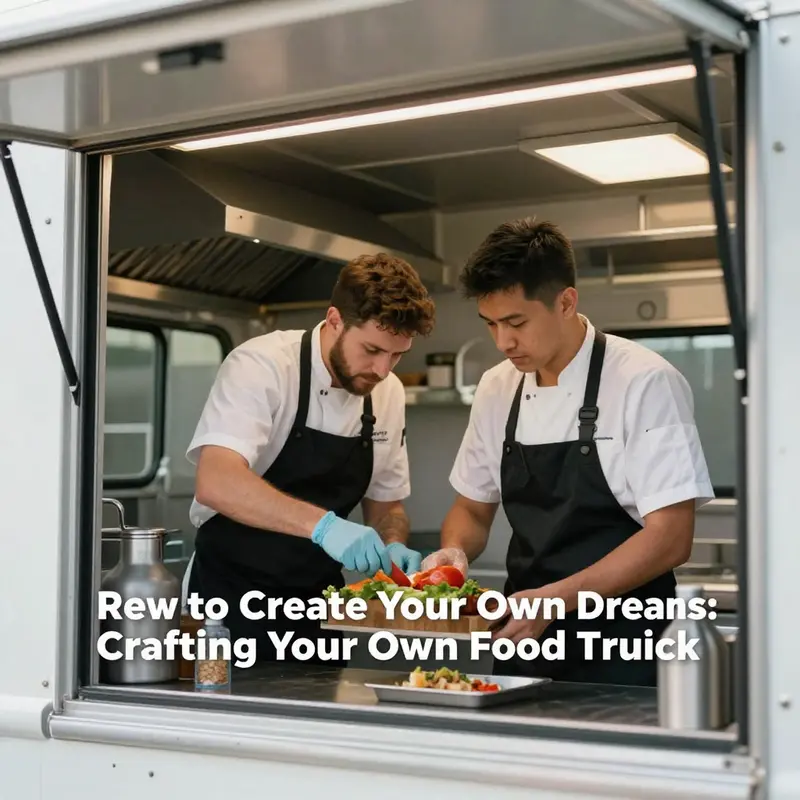
A food truck is a moving stage for flavor, but the safety and health regulations surrounding it are the unglamorous, steady drumbeat that keeps every show from collapsing. In the hustle of choosing a concept, sourcing equipment, and plotting routes, the practical work of securing permits, meeting sanitation standards, and building a repeatable safety routine often determines whether a dream becomes a sustainable business or a costly detour. This chapter threads the regulatory fabric into the everyday life of a mobile kitchen, showing how compliance is not a bureaucratic hurdle but a competitive advantage that earns trust from customers, event organizers, and the local health infrastructure that ultimately grants you access to busy corners and big weekends alike. When you understand the rules and design your operation around them, you not only protect the public but also create a smoother path to growth, better margins, and fewer surprises on busy shifts or high-stakes events.
The first steps are concrete and nonnegotiable: permits and licenses that authorize you to feed people wherever you roll. At the heart of this system is the Food Service Permit, sometimes called a Food Handler’s Permit or a Food Safety Certificate. This credential confirms that you and your crew have completed a recognized food safety course and understand the basics of preventing cross contamination, controlling temperatures, and maintaining clean surfaces. It is more than a stamp of approval; it is a public commitment that your team will handle ingredients with integrity and care. The permit is issued by the local health department after training, testing, and a review of your operation’s fundamentals. Behind that permit lies a chain of other requirements, because a mobile unit cannot simply be a kitchen in motion; it must function as a safeguarded food service facility in transit.
Next comes the Food Business License, a broader authorization tied to the jurisdiction where you plan to operate. In many places the license is valid for a specific site, market, or route. In others, it travels with your business registration across multiple sites. Either way, the license signals that you meet local standards for facility design, waste handling, and safety documentation. It is the legal backbone that connects your day-to-day activities with the city or state’s regulatory framework. Then there is the Mobile Food Vendor Permit, a specialized clearance for vehicles that serve food in public space. This permit looks at your unit through the lens of mobile sanitation: reliable handwashing capability, proper waste disposal, cleanable surfaces, temperature-controlled storage, and an accessible workflow that keeps food clean from prep to plate. In bustling cities, you may need to register with a central vendor management system or secure seasonal permits for events and fairs. The ecosystem can feel intricate, but the payoff is straightforward: predictable access to where people congregate, not sporadic legal risk.
As you assemble these permissions, you will likely gather a portfolio of documentation that demonstrates your readiness and responsibility. A complete application package typically includes proof of insurance, both liability and equipment coverage, a detailed floor plan of the truck showing equipment placement and the sequence of tasks, records of supplier certifications and ingredient sourcing, and written policies on food safety, employee hygiene, and emergency procedures. The floor plan is not decorative; it is a blueprint for safe operation, illustrating how you will separate raw from ready-to-eat foods, how temperatures will be monitored, and where handwashing and waste management facilities sit in the flow of work. Your supplier documentation shows that you source ingredients from reputable partners who meet quality standards, a small but meaningful signal to regulators that your kitchen is built on reliable inputs.
The regulatory landscape also imposes a broader set of constraints beyond the unit itself. Local zoning laws and city ordinances often define where and when a mobile kitchen may operate, and some locales require special use permits for regular parking in chosen districts or routes. In practice, that means you should map your typical parking spots against the zoning map, identify any neighborhoods or venues that forbid or restrict mobile food operations, and plan contingency routes that keep you compliant while still delivering the experiences customers expect. In major markets, inspectors may review daily logs during visits, including temperatures of perishable items, cleaning schedules, and pest control measures. These checks are not about catching mistakes; they are about ensuring a consistent safety culture across every shift and every location you serve.
The daily reality of maintaining health compliance is the same whether you operate in a grocery-anchored festival lineup or in a downtown lunch corridor. A HACCP-based approach, long a staple of larger food operations, translates well to a truck that moves from venue to venue. Begin by identifying critical control points in your workflow—points where contamination could occur or temperatures could drop or rise outside safe ranges. Establish clear limits and monitoring procedures for each point, then create corrective actions if limits are not met. For a mobile unit, common control points include receiving and storage temperatures, hot holding for cooked foods, cold holding for ready-to-eat ingredients, and the cleanliness of food-contact surfaces. You will want a simple, practical record-keeping method for temperature checks, cleaning logs, and pest prevention activities. The goal is not to overwhelm staff but to build a repository of evidence that your operation runs safely day after day.
Food safety extends beyond the kitchen into the training of your crew. A certified food safety manager is often either required or highly advisable, especially as you scale and add more events or locations. Training should cover not only the mechanics of safe cooking and storage but also worker hygiene, illness reporting, equipment maintenance, and emergency procedures. Small teams benefit from standardized checklists that remind everyone of handwashing moments, glove use where appropriate, and the steps for isolating a compromised batch if contamination is suspected. The human element matters as much as the hardware. A crew that understands why a particular practice exists—whether it is to prevent cross contact in allergen-prone kitchens or to ensure that raw chicken never touches a surface used for produce—will perform more consistently, even when the pressure of a busy lunch rush or a crowded festival sets in.
The logistical design of the truck itself must support safety without compromising efficiency. The layout should create distinct zones for prep, cooking, refrigeration, storage, and serving, with enough space to move between these zones without stepping on wet or contaminated surfaces. A robust, food-grade framework such as stainless steel tubing provides a hygienic backbone that’s easy to clean and resistant to corrosion. The inclusion of a commercial-grade refrigerator, a properly sized handwashing station, an integrated drainage plan, and a fire suppression system are not luxuries but essential components of a compliant unit. The exhaust system and ventilation cannot be treated as afterthoughts; they ensure that grease, smoke, and heat do not accumulate in the truck or spill into the street where pedestrians could be exposed. Even seemingly minor details, like the placement of a foldable counter or pull-out drawers, should reflect both workflow and sanitation. A well-thought-out layout reduces the chances of cross contamination and makes routine inspections less burdensome, because regulators value a kitchen that can demonstrate sanitation in a practical, visible way.
The storytelling power of safety is not mere compliance; it is a platform for brand value. Consumers increasingly connect with operators who openly communicate their standards. The confidence that a mobile vendor exudes when customers see clean surfaces, proper labeling, and a tidy, well-documented operation translates into repeat business and better word-of-mouth. Marketers who reflect this discipline in their brand identity—clear signage about temperature controls, visible notice of allergen handling, and a straightforward explanation of where food comes from and how it is kept safe—will find that safety becomes a differentiator rather than a burden. Event organizers and markets value operators who can demonstrate consistent safety practices because it reduces risk and simplifies the logistics of scheduling. When your permit portfolio, your training records, and your on-truck practices align with local expectations, you gain access to more opportunities and fewer gatekeeping headaches.
In practice, many operators find that a single, reliable internal resource helps keep everything aligned. A documented safety plan that encompasses risk assessment, employee hygiene policies, supplier verification, and emergency response procedures acts as a living guide. It can be shared with staff, prospective customers, and partners, becoming a trust-building instrument rather than a bureaucratic formality. As you grow, you may add more locations or participate in more complex events. The core principle remains constant: you protect customers first, then you build capability to serve them faster and in more places. A well-run safety program is thus both a shield and a lever for growth.
To connect these ideas with broader legal perspectives, consider exploring resources that discuss regulatory considerations for Latino food-truck startups. This reference offers context on how regulatory frameworks can vary by location and how operators can approach compliance strategically while maintaining the cultural and culinary voice that sets their concept apart. Legal considerations for Latino food-truck startups.
Ultimately, the path to a successful food truck is paved with permits, precise documentation, rigorous hygiene, and a culture that treats safety as an ongoing practice rather than a one-time checklist. When you design your truck, train your crew, and operate with transparent safety standards, you create a platform for delicious food and dependable service. You also earn the privilege of choosing where you roll next, rather than being limited by fear of regulatory issues. The payoff is real: customers who trust you to handle their meals safely, partners who value consistent compliance, and a business that can weather audits, inspections, and the occasional unpredictable shift with confidence. For official, location-specific guidance aligned to your jurisdiction, consult your local health department or city government website. External resources such as the Centers for Disease Control and Prevention provide comprehensive food safety guidelines that apply to mobile vendors and help you translate general best practices into verifiable actions on the truck. See https://www.cdc.gov/foodsafety/index.html for deeper guidance on keeping mobile food service safe for everyone.
Final thoughts
Navigating the journey of starting your own food truck is a thrilling blend of creativity, regulatory compliance, and strategic planning. By developing a comprehensive business plan, customizing your vehicle, obtaining the necessary permits, and adhering to health regulations, you’re not just creating a food truck; you’re building a mobile culinary experience. Embrace your passion for automotive craft while serving delicious food, and watch your dream come to life on the open road.