
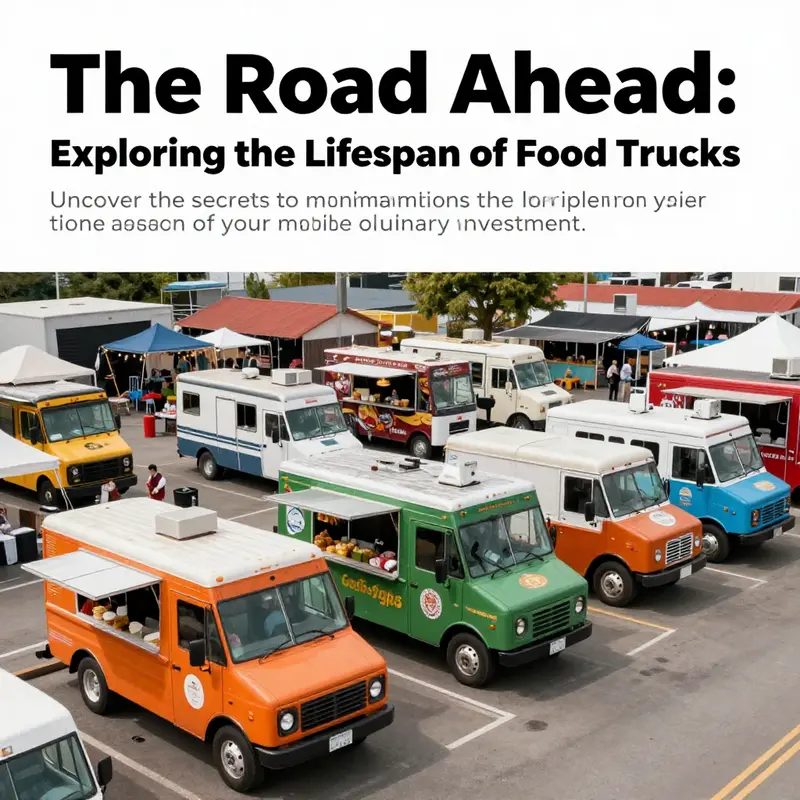
Food trucks represent a unique blend of culinary creativity and automotive spirit, appealing to enthusiasts from various backgrounds. Understanding the lifespan of a food truck is crucial, not only for hobbyist modifiers and professional tuners but also for business-minded individuals looking to invest in this mobile venture. Several factors influence how long a food truck can effectively serve its purpose, from build quality to maintenance habits. This piece will explore these crucial aspects in three chapters: the factors affecting lifespan, essential maintenance practices, and usage patterns that directly impact durability. By the end, readers will gain valuable insights into enhancing the longevity of these unique vehicles.
Lifespan on Wheels: How Build Quality, Maintenance, and Market Forces Decide a Food Truck’s True Longevity
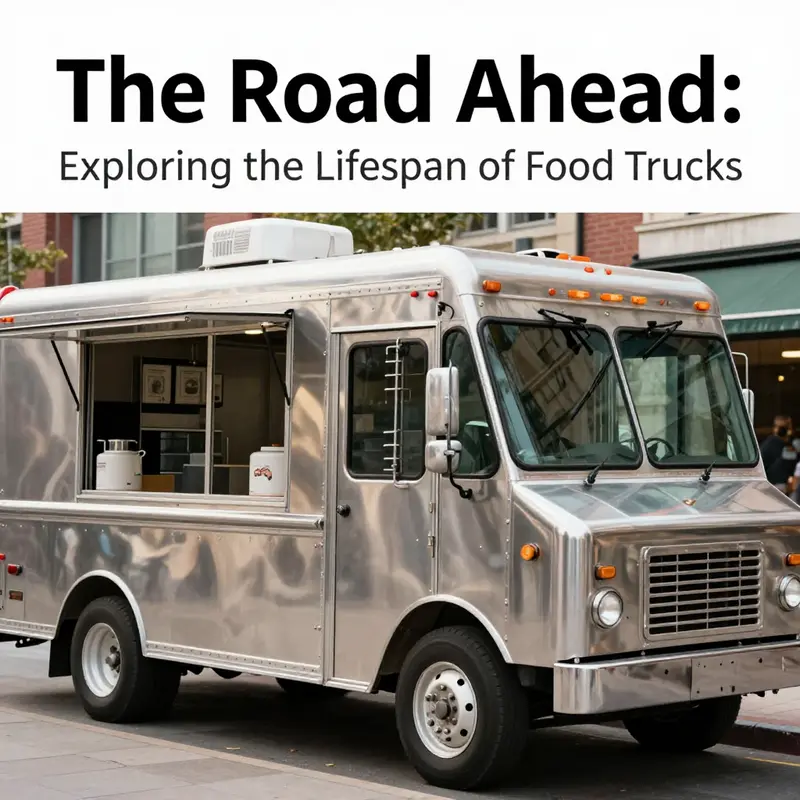
The lifespan of a food truck is not a fixed line on a depreciation chart but a moving target shaped by how the vehicle is built, how it is used, and the world it moves through. Operators who want more than a few seasons out of their investment must consider a web of factors that begin with the truck’s core construction and extend to the rhythms of customer demand, regulatory shifts, and the shifting sands of the urban landscape. This chapter follows that weave, tracing how internal choices collide with external pressures to determine how long a food truck remains a viable, profitable platform for mobile food service.
At the heart of longevity lies the quality of construction. A truck built with durable materials, thoughtful insulation, and a reinforced chassis can weather regular trips, daily readiness checks, and the constant vibration of urban streets far better than one assembled with lighter components. Stainless steel is a common ally here, offering corrosion resistance, ease of cleaning, and a longer life when exposed to steam, oils, and high-temperature cooking. A robust chassis provides the backbone for a kitchen that travels from curb to event to street corner without rattling apart at the worst possible moment. The way the kitchen is laid out also matters: efficient, well-ventilated layouts reduce strain on appliances and minimize the risk of leaks, faulty ignition, or overheating. The benefit, in turn, is fewer unplanned replacements and repairs, which can add months or years to a truck’s working life.
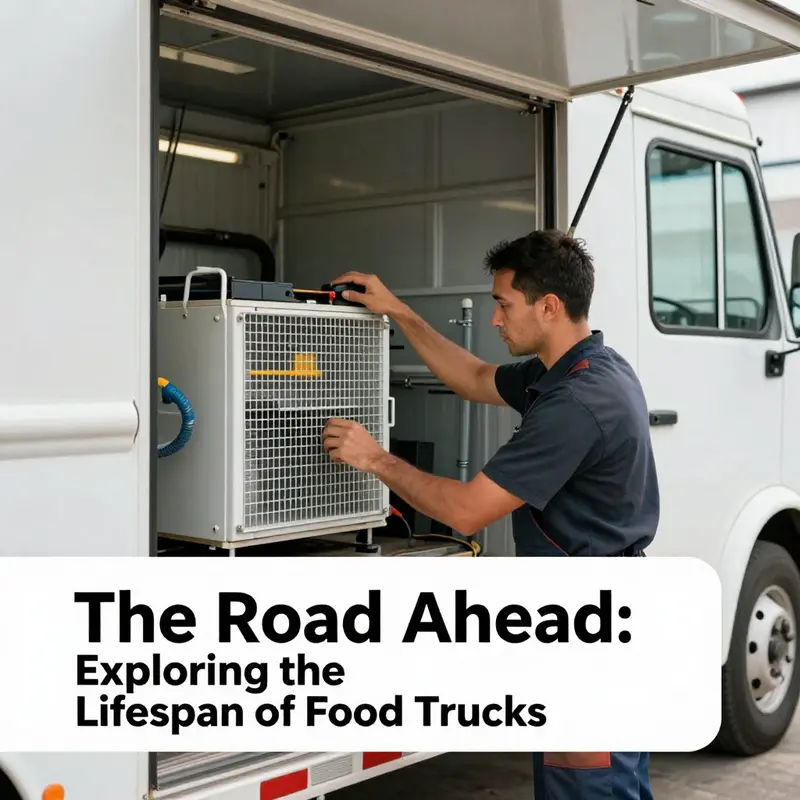
But materials and architecture are only part of the story. The lifetime of the truck also depends on the sophistication and durability of the kitchen equipment mounted within it. Commercial-grade fryers, grills, and refrigeration units are designed for high usage, but their longevity hinges on how reliably they are maintained and how well they cope with the demands of peak service. A unit that runs 60, 70, or more hours a week will experience wear that accelerates when cleaning is lax or calibration drifts due to inconsistent power supply. Regular servicing—checking electrical connections, inspecting refrigerant lines, testing gas lines where applicable, and cleaning grease traps—not only protects food safety but also preserves equipment integrity. A small, well-timed tune-up can prevent a minor fault from turning into a costly failure that grounds a truck during a busy weekend.
Maintenance routines themselves are a major determinant of life expectancy. A predictable calendar of inspections is more than a checklist; it is a philosophy about preparedness. Preventative maintenance reduces the probability of cascading problems. It is not glamorous, but it translates into steadier revenue, fewer emergency repairs, and a longer arc of useful life. When an operator commits to annual or semiannual overhauls—engine servicing, electrical system checks, plumbing integrity tests, and the meticulous cleaning of grease traps—these actions accumulate into a gentler aging process for the truck. Conversely, neglect invites corrosion, unaddressed leaks, and the gradual breakdown of seals. The cost of deferred maintenance compounds as components fail in unpredictable ways, forcing earlier replacement rather than a longer service life.
The business model behind a truck is another invisible yet powerful lever of longevity. A sustainable approach to pricing, menu planning, and customer retention affects how hard the vehicle is worked, how often it circulates in different environments, and how quickly wear accumulates. A well-balanced menu that remains efficient to prepare also protects equipment, because it limits high-stress sequences that tax the kitchen and the electrical and plumbing systems. When a truck is managed like a moving restaurant with predictable cycles and smart inventory control, wear-and-tear patterns become more manageable. A vehicle that serves a narrow, repeat clientele in a few consistent venues might enjoy a gentler wear pattern than one that zips between high-volume festivals, pop-ups, and street fairs. The same logic applies to financial planning: a stable cash flow makes it feasible to invest in upgrades, trade-ins, or retrofits that extend the truck’s life and maintain compliance with evolving health and safety standards.
External factors then layer onto this internal framework, adding volatility that can accelerate or slow the aging process. Market demand for mobile food services can wax and wane with seasons, events, and local tastes. In a city where foot traffic swells around lunchtime and dusk, a truck may run longer hours, enduring more engine hours, more miles, and more exposure to weather. In quieter markets or off-peak seasons, a truck may idle longer, preserving life but reducing revenue. The key is adaptability: operators who diversify locations, adjust routes, and optimize the mix of events can maintain revenue while moderating the physical demands placed on the vehicle. This is not merely a business concern but a design consideration, because a truck that proves itself in a variety of contexts will typically avoid overextension in any single setting.
Competition also threads through the lifespan equation. A crowded market can push a truck to push harder—more miles, faster turns, and crisper service to win customers. The resulting wear is real: faster grease buildup, more frequent drivetrain strain, and the sense of urgency that makes preventive maintenance easy to postpone. On the flip side, a competitive field can incentivize owners to invest in higher-quality equipment, better insulation, or more efficient layouts that reduce energy use and heat buildup. In some cases, operators may decide that replacing or upgrading a vehicle makes financial sense sooner than pushing an aging truck past its practical viability. The result is a dynamic timing of investment that reflects competitive intensity as much as it does the truck’s physical condition.
Regulatory environments set defensive boundaries that protect public health and safety while sometimes imposing new costs or constraints on older hardware. Permitting regimes, health codes, and sanitation standards evolve, and trucks must adapt to remain compliant. This may require modifications that, while enhancing safety, also impact the truck’s aging pattern. A vehicle that has kept pace with code updates—reclustered gas lines, improved fire suppression systems, or upgraded electrical panels—will age more gracefully than one that sits with outdated configurations. In practice, compliance is less about a single event than an ongoing discipline. It invites an annual review of permits, equipment certifications, and staff training. When these tasks are embedded in routine operations, a truck’s lifespan becomes less a question of raw mileage and more a question of how faithfully an operator tracks and implements regulatory changes.
The broader economic context also shapes longevity. Fuel prices, insurance costs, and the costs of parts and labor all feed back into maintenance decisions. When operating margins tighten, owners may delay certain upgrades, or they may trade down on equipment to save upfront cash. That choice can have a long-term price: it may lower current expenses but increase the likelihood of earlier failures or more frequent repairs, shortening the life cycle. Conversely, a favorable economic climate can enable more proactive investments—sturdier equipment, better insulation, or a complete retrofit—delaying replacement and extending the useful life of the truck. The same logic applies to urban development patterns. Trucks that find steady demand in high-traffic areas—business districts, event venues, and dense residential zones—tend to accumulate more miles and use, while those in flatter, slower neighborhoods can age more gently, preserving infrastructure but reducing revenue potential.
These internal and external factors do not operate in isolation; they interact in ways that determine a truck’s operational viability. A truck built with durable materials but used in a volatile market may still achieve a decade or more of life if maintenance is rigorous and routes are carefully planned. A high-use but well-maintained vehicle in a stable market can exceed the often-quoted 15-year benchmark. Conversely, a well-built truck subjected to harsh weather, heavy daily use, and inconsistent upkeep may fail within five to seven years, even if the chassis and refrigeration units were premium models. The numbers—10 to 15 years as a typical baseline, with potential to surpass 20 under exceptional care—are not rigid laws, but a reflection of how these factors coalesce in daily practice. The chapter’s opening statistics reflect the range many operators experience when the interplay of care, schedule, and environment lines up just so. In the end, longevity is a function of deliberate design choices, disciplined maintenance, flexible business strategy, and the capacity to navigate the market’s ebbs and flows.
For readers seeking a practical map beyond philosophy, industry resources emphasize the same core themes. Durable construction, careful system design, and ongoing compliance underpin durable performance. They also underline the value of regular servicing and clear investment plans for upgrades and retrofits. While every operator’s path is unique, the guiding principle remains consistent: treat the truck as a living, evolving platform rather than a single-use asset. The more attentively a business treats its mobile kitchen as a durable machine that travels through time and space, the longer it will serve its purpose—and the more predictable its financial trajectory will become.
To deepen the perspective on how these dynamics unfold in real-world settings, practitioners reference leading voices in the field who map the lifecycle from build to retrofit to eventual replacement. The lifecycle discussion is not simply about the chassis and the stove; it is about aligning maintenance cadences with revenue cycles, forecasting capital needs, and planning for regulatory changes that could redraw the boundaries of what a truck can safely and legally do. This integrated view helps operators move beyond reactive repairs toward a proactive strategy that respects both the mechanical limits of the vehicle and the economic realities of the business.
In addition to internal discipline, the practical literature encourages prospective owners to study long-track operators—those who have navigated the transition from first trucks to subsequent fleets. These narratives offer a richer sense of how longevity is earned through steady, disciplined care rather than dramatic, last-minute overhauls. A recurring theme in these stories is the role of maintenance culture: teams that embrace cleanliness, regular checkups, and transparent reporting tend to extend the life of their equipment and maintain higher resale value when the time comes to upgrade. That culture is reinforced by standardized processes: checklists that become second nature to staff, shared documentation of repairs, and a clear understanding of which components should be replaced proactively rather than when failure occurs. In practice, these habits translate into fewer surprises on busy service days and a more predictable calendar of capital investments, both of which contribute to a longer, more resilient operational life.
As the chapter closes this circle of internal and external forces, it is useful to imagine a spectrum rather than a fixed point. A well-constructed truck with meticulous maintenance and a flexible operation can stretch its life toward the upper end of the spectrum, even in challenging environments. By contrast, a truck that is pushed hard with minimal upkeep may reach the lower end, requiring replacement sooner than anticipated. The range of 5 to 20 years across real-world experiences is not an anomaly; it reflects the reality that longevity is earned through deliberate choices, disciplined practices, and the capacity to adapt to shifting markets and regulations. When readers walk away from this discussion, they should carry with them not a single answer but a framework: what to invest in first, how to schedule maintenance, how to diversify revenue streams, and how to prepare for regulatory realities that could influence a truck’s lifespan. This framework helps translate abstract factors into concrete decisions that shape both the present profitability and the future viability of a mobile kitchen.
For further context on durability and lifecycle considerations, industry analyses offer more detailed perspectives on how lifecycle management works in practice. These resources describe the balance between upfront investment in quality and ongoing maintenance, plus the strategic decisions that influence when a truck becomes more cost-effective to retrofit or replace. The combined wisdom from manufacturers, trade associations, and veteran operators provides a practical compass for anyone evaluating the long-term viability of a food truck platform. In the end, the approximate life of a food truck is not a mystery but a carefully navigated journey from build to maintenance to market adaptation. The most resilient operators treat longevity as a continuous project, not a one-time milestone.
Embedded within this conversation are opportunities for deeper exploration and practical alignment with real-world procedures. For readers seeking to apply these ideas, consider examining how other operators structure their maintenance programs, what patterns emerge in the frequency of major repairs, and how seasonal or event-based usage affects wear rates. Those insights can be drawn from case studies and practical guides offered by industry communities and technical resources. The aim is to translate the chapter’s principles into concrete actions—choices about materials, layouts, service routines, and strategic planning that extend a truck’s productive life while preserving safety, compliance, and profitability.
One useful way to connect these ideas to day-to-day practice is to look at how regulatory demands intersect with design and maintenance. Projects that retrofit or upgrade equipment to meet evolving health and safety codes can achieve longer service life through improved reliability and reduced risk of sudden downtime. While such enhancements require upfront investment, they often yield a healthier return over time by maintaining consistent service and keeping the truck in good standing with inspectors and customers alike. This emphasis on proactive compliance aligns with a broader philosophy: longevity emerges when every decision about the truck—its build, its systems, its routes, and its regulatory posture—contributes to a sustainable, repeatable level of performance across seasons and markets.
In this sense, longevity becomes less about a number and more about a disciplined practice: designing for durability, maintaining rigorously, adapting strategically, and aligning with the rhythms of the communities served. The resulting lifecycle is no longer a linear path but a resilient loop: build well, care regularly, plan ahead, and stay adaptable to changing demands. When these elements cohere, the life of a food truck extends beyond conventional expectations, turning a mobile kitchen into a durable enterprise capable of thriving across years of evolving tastes, economics, and cityscapes.
External resources that illuminate these ideas remind us that the conversation extends beyond individual practice. For those who want to explore broader perspectives on life-cycle management and how it applies to food trucks, a reputable external resource offers a detailed framework for evaluating durability, maintenance intervals, and retrofit opportunities. This wider lens adds context to the practical steps discussed here and helps operators picture a pathway from the first wheel turn to the next major modernization. And for readers seeking connections to related topics, internal links can guide them toward practical implications for legal considerations, labor and work-life balance, and the broader ecosystem surrounding Latino food trucks in urban centers. For instance, the topic of legal considerations for Latino food truck startups can provide a grounded view of regulatory alignment that complements the lifecycle focus of this chapter. See legal-considerations-latino-food-truck-startups for a streamlined overview across permits, safety codes, and license requirements that shape long-term viability.
As the narrative of longevity unfolds, it becomes clear that the approximate life of a food truck is a function of purposeful design, vigilant care, and an adaptive strategy that regards the vehicle as part of a larger business system. The chapter has traced a path from the materials that determine durability to the daily discipline of maintenance, from the influence of a dynamic market to the weight of regulatory obligations, and from the realities of competition to the opportunities of fleet modernization. It is a holistic picture, one that invites operators to see their trucks not as transient tools but as enduring platforms whose value increases through ongoing stewardship.
External Reading: Those seeking a broader lens on lifecycle management in the food truck sector can consult industry analyses that lay out the relationships among build quality, maintenance cadence, and capital planning. These resources help translate the practical guidance in this chapter into a scalable approach for growing, aging, and upgrading a mobile kitchen. The broader discussion situates the food truck within a field of comparable mobile businesses, offering transferable lessons about durability, risk management, and strategic resilience.
Endnotes and further exploration can be found in external resources such as the National Business Review’s discussion of food truck lifecycle management, which frames the financial and operational calculus behind decisions to repair, retrofit, or replace equipment as markets and technologies evolve. Read more here: https://www.nationalbusinessreview.co.uk/food-truck-lifecycle-management
null
null
Riding the Arc: How Usage Patterns Shape the Lifespan of a Food Truck

The life of a food truck is less a fixed timeline and more a living curve drawn by how it is used, how well it is cared for, and the environments it travels through. A vehicle built for serving meals on wheels becomes durable through habit as much as through material quality. When we look at the life expectancy of a mobile kitchen, we are really charting a path along which mechanical fatigue, component stress, and environmental exposure accumulate. The path is unique for every operator, yet certain patterns repeat themselves enough to provide a map. A well-maintained truck that does steady, moderate work often unfolds a longer story than a flashy, high-output one that ignores preventive care. In other words, the rhythm of daily operations—hours on the road, the intensity of cooking tasks, and the cadence of maintenance—shapes how long a truck keeps delivering flavor, rather than how long it sits idle waiting for the next season to begin.
Consider the arc of a truck that runs hard during peak seasons in dense urban hubs. If a unit operates 12 to 14 hours a day, six or seven days a week during those bursts, the wear on the engine, the transmission, and the cooling system compounds quickly. The same pattern places heavy demands on the electrical system, the generator or auxiliary power source, and the refrigeration units that preserve perishable ingredients while the cart rattles through traffic and city blocks. In such use, every mile is a test. Mechanical fatigue arrives not as a single failure but as a sequence of small, often invisible degradations: a diminishing refrigerant seal, a slow rise in compressor duty cycle, a tiny drift in vessel insulation, a loosening bracket here, a corroded fastener there. Operators who push for full-service, high-output performance may delay downtime for a single repair, only to find a cascade of issues later that can limit a truck’s viability or increase downtime costs. The practical takeaway is clear: heavy, continuous use accelerates wear in a way that magnifies the need for rigorous preventive maintenance and scheduled rest for the truck’s core systems.
On the other hand, a truck that balances use with deliberate downtime often preserves its value longer. A unit that runs in a steady routine—say, 6 to 8 hours per day, five days a week, with planned off-days for servicing—builds a much different fatigue profile. Temperature fluctuations, grease exposure, and heat cycling still occur, but they do so in a more orderly fashion. When a maintenance window appears, the operator can address issues before they become urgent. Components recover less harshly from small problems if they are detected early and treated promptly. This disciplined pattern can extend the functional life of crucial systems: the engine, the drive train, the HVAC and refrigeration, and the electrical network that powers cooking equipment, lighting, and payment terminals. It is a subtle form of restraint—knowing when to pull back, when to press forward, and how to allocate time for care without sacrificing cash flow. In this sense, usage patterns become a form of long-term strategy rather than mere operational habit.
Cuisine choice, seemingly a question of menu, turns out to be a deeper driver of durability than it might appear at first glance. Trucks that specialize in high-fat, high-heat processes—grilling or frying burgers, fried chicken, or other oil-based preparations—face a relentless onslaught of grease, heat exposure, and soot. Those conditions demand more frequent cleaning, more aggressive inspection of exhaust systems and ductwork, and tighter control of fire suppression and ventilation equipment. The grease trap, the hood filters, and the ducting are under continuous strain in this mode, and corrosion rates may accelerate in the presence of hot oils and airborne particulates. The consequence is a broader maintenance load that must be carried to preserve performance and prevent unplanned downtime. By contrast, trucks serving cold items, beverages, or smoothies rely more heavily on refrigeration systems and precise temperature control. Their wearing forces shift toward compressor efficiency, insulation integrity, and door seals. The maintenance routine becomes a balancing act between ensuring a steady cold chain and preventing energy waste that could stress the refrigeration circuit. Each cuisine style creates a distinctive pattern of component wear, and those patterns must be anticipated in both the build phase and the ongoing service plan.
Beyond cooking style, the vehicle’s environment leaves a lasting mark on its lifespan. Coastal regions with salt-laden air accelerate corrosion on exterior metal, hinges, latches, and undercarriage components. Regions with wide temperature swings impose greater stress on seals, gaskets, and insulation, increasing the likelihood of condensation and mold control challenges inside the unit. In inland, desert climates, heat and dust can clog filters, degrade electrical connectors, and shrink plastic components, all of which demand more frequent inspections. A truck that spends most of its life in harsh weather will likely require more proactive corrosion management, protective coatings, and timely replacements of weathered hardware than one that operates in milder conditions. Conversely, a vehicle that migrates between climates with gentle transitions may accumulate less environmental fatigue, provided it remains protected from salt exposure, moisture intrusion, and the risk of road debris striking vital systems. The narrative here is not simply about where a truck travels, but how those journeys interact with maintenance decisions and part replacement cycles. The interplay between environment and usage is a continuous dialogue, and the operator who reads that dialogue accurately can stretch the arc of the truck’s service life.
The standard lifespan figures—roughly 7 to 12 years under typical operating conditions—help anchor expectations, yet the actual number for any given unit is a negotiation among many forces. A well-funded preventive maintenance program, a digital maintenance log, and a disciplined approach to equipment upgrades can push that window toward the longer end. When an operator tracks lubrication schedules, electrical testing, plumbing integrity, refrigeration performance, and structural checks with a systematic cadence, small problems remain small. A quick fix for a loose fitting or a worn gasket saves the costs and downtime of a major failure. This is not merely a matter of saving money; it is about preserving the truck’s ability to perform safely and reliably across a long service horizon. The shift toward preventive maintenance is itself a strategic decision, one that recognizes that time on the road is time banked for future profitability.
To make the most of those patterns, a robust maintenance culture becomes essential. A digital log is more than a ledger; it is a living record of cycles, trends, and early warning signals. When a technician documents recurring vibration in a drive line, rising electrical resistance in a circuit, or subtle changes in the hood’s thermal profile, the operator gains foresight. The knowledge comes not from a single inspection but from patterns across many checks. Teams that treat maintenance as a collaborative, ongoing project—linking cooks, managers, and mechanics with shared data and goals—tend to keep the truck healthier for longer. In practice, this means regular, scheduled inspections for mechanical systems, a quarterly review of energy efficiency and insulation, and a long-range plan for replacing aging components well before they fail. It also means resisting the temptation to push the vehicle to its limits once signs of fatigue appear. A prudent operator adjusts schedules, negotiates downtime, and plans for contingencies so that the truck’s life does not end in a sudden, unexpected breakdown.
The equipment mix itself can alter a truck’s longevity. Different configurations place varying loads on electrical systems, refrigeration units, and cooking appliances. For example, a unit built around a compact, energy-efficient refrigeration module may gain durability through reduced strain on compressors and fans, while a larger system that operates at a higher duty cycle could demand more frequent service. The choice of equipment—whether it uses more robust, industrial-grade components or lighter, more compact options—will shape how maintenance costs accumulate over time. Those decisions often come down to balancing initial build cost, ongoing energy use, and projected life expectancy. The same calculus applies to the vehicle’s powertrain: diesel versus gasoline, or even emerging electric propulsion. Electric setups shift the conversation toward battery health, charging cycles, coolant systems, and thermal management. Batteries, in particular, carry a different kind of aging curve, one that rewards controlled charging practices and stable storage temperatures. Operators who embrace energy-aware strategies—pre-cooling during off-peak hours, using energy-efficient lighting, and selecting equipment with favorable duty cycles—tend to preserve battery health and reduce heat-related wear in the kitchen and vehicle interior.
The economics of lifespan are tightly bound to maintenance discipline and operational efficiency. A truck that can repeatedly deliver high service levels with minimal downtime creates a stronger value proposition. When downtime is predictable and manageable, the business can absorb a longer loan of the vehicle’s life and still maintain margins. Conversely, frequent unscheduled repairs can erode returns to the point where replacement seems more sensible than endless patches. This is where the literature on durability meets real-world practice: a well-run operation uses best-practice maintenance, records everything, and invests in predictable upgrades. It may also incorporate technological aids such as diagnostic tools, remote monitoring, and data-driven scheduling, all of which help prevent failures before they disrupt service. The goal is not to maximize the time of service for its own sake but to keep the kitchen reliable, safe, and consistent for customers who expect a reliable meal on a timely basis.
A final piece concerns the freshness of the operator’s approach to longevity. The best plans recognize that durability is not merely a function of hardware but of process, culture, and foresight. Adopting a digital maintenance log, as noted, is part of a broader mindset that treats every mile as a data point. Pre-order notification systems, which can reduce idle kitchen operation during busy shifts, are another example of how operational efficiency improves durability. When the kitchen is not running idly, the risk of heat buildup, grease accumulation, and mechanical strain decreases. Energy-efficient technologies, too, can extend the truck’s life by reducing the load on critical systems and distributing stress more evenly across components. A thoughtful operator will design routines to balance production needs with the vehicle’s long-term health, ensuring that the truck remains a useful asset across many seasons rather than a short-term investment that loses value with each unexpected breakdown.
For operators looking to ground this discussion in practical experience, the profiles of veteran food truck owners offer a window into how seasoned teams manage life on the road. These leaders often emphasize maintenance discipline, steady schedules, and a willingness to adapt equipment and routines as the business evolves. Their stories reinforce the idea that longevity in this field is earned through ongoing care, proactive planning, and a clear sense of the road’s demands. Profiles of veteran food truck owners provide a narrative counterpoint to the more technical considerations discussed here, illustrating how values, relationships with suppliers, and the choice of routes contribute to a durable, reliable operation.
Crucially, the chapter’s message should not be read as a prescription for stagnation. A durable truck is not a rigid machine that refuses change. It is a platform upon which a flexible, resilient business can grow. When use patterns align with the truck’s design and a steadfast maintenance program, the occupation of mobile cooking becomes a sustainable craft rather than a disposable rush. The approximate life of a food truck is a living estimate, always evolving with how the operator treats the vehicle, the kitchen, and the path it travels. In that sense, the road itself is a tutor, teaching restraint, foresight, and the art of balancing appetite for service with respect for the machine that makes it possible. To readers planning a future in this field, the takeaway is straightforward: treat endurance as a practice, not an inevitability. Build a rhythm of care, respect the cadence of the road, and the arc you ride can extend far beyond the most optimistic baseline, quietly delivering good meals and steady momentum for years to come.
External resource: https://www.example.com/electric-food-truck-supplier-performance
Final thoughts
The lifespan of a food truck ultimately hinges on a combination of quality materials, diligent maintenance, and mindful usage. By understanding the factors that contribute to longevity, enthusiasts and operators can ensure their food trucks serve both delicious meals and profitable ventures for many years. Whether you’re a seasoned car modifier or a budding food truck entrepreneur, applying these insights will help you reap the best from your mobile kitchen investment.