
With the thriving food truck scene in Dallas, finding the right parking location for your mobile culinary venture can significantly impact your success. This guide delves into premier spots like Truck Yard, Ghost Food Park, Cowtown Dogs, and Harvest Hall. These designated areas are designed to support burgeoning food truck businesses while enriching the local dining culture. Whether you’re a seasoned barista or an emerging taco genius, understanding these hotspots will help you strategically park and promote your food truck in a bustling metropolis.
Where to Park Food Trucks in Dallas: Truck Yard as the Pulse of the City’s Street Food Scene
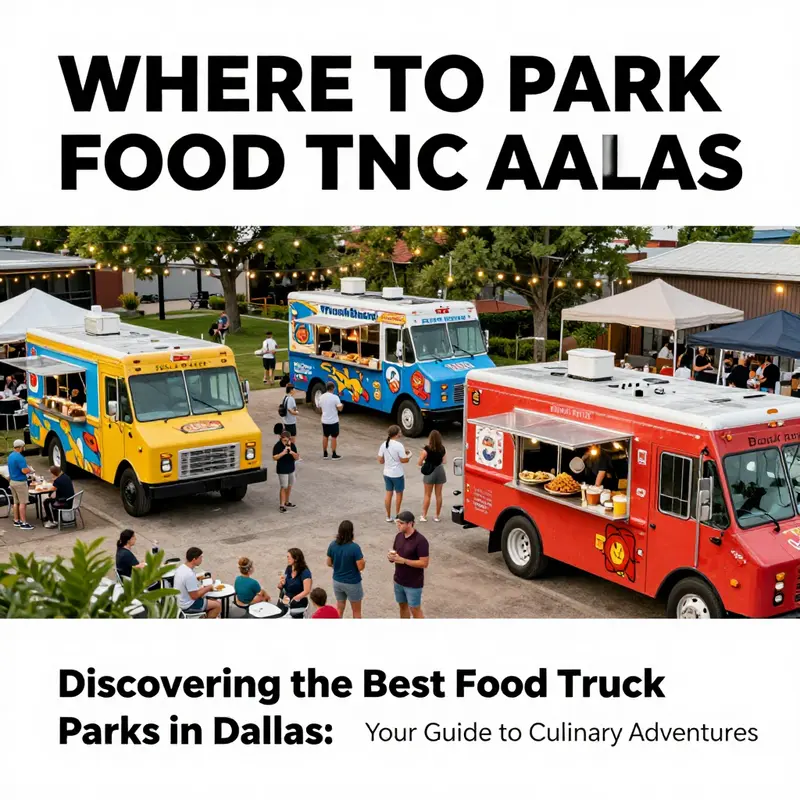
Dallas is a city that wears its appetite on the street. Between gleaming high-rises and stand-alone boutiques, you can taste a culture of improvisation, of kitchens that travel, and of spaces that turn a parking lot into a gathering place. For food truck operators, the question of where to park is not simply about a patch of asphalt; it is about visibility, access, and the organic rhythm of a city that loves to taste and connect. In a landscape that includes a spectrum of parks, plazas, and open-air hubs, Truck Yard in Uptown Dallas stands out as a touchstone. It isn’t merely a place to drop anchor; it is a dynamic community hub where the act of selling food becomes part of a social experience, where a line is a signal, and where the street food scene grows roots in real time. Across the city, this kind of space matters because it shapes how vendors reach guests, how guests discover new flavors, and how the city as a whole experiences its own evolving culinary culture.
If you’re scouting locations, Truck Yard offers a blueprint for what a modern food truck park can be. Nestled in the heart of Uptown, the park sits at a cadence with Dallas’ walkable urban core. Its proximity to Klyde Warren Park creates a logical loop for visitors who are strolling the city on foot, taking a break to savor a bite, and then continuing their exploration. The site has consistently ranked among Yelp’s Top 10 Best Food Truck Parks in Dallas, TX, a reflection not only of the numbers on the calendar but of the ongoing vitality that keeps bringing people back. For operators, that consistency translates into a predictable flow of curious customers who are already primed for a food-first experience as part of their downtown excursion. This isn’t luck; it’s a carefully cultivated ecosystem that rewards both variety and reliability.
What makes Truck Yard feel different from other parking lots or single-vendor lots is the sense that you’re walking into a shared experience. The space supports a rotating roster of local vendors who bring a wide range of flavors to the table. You can imagine everything from the sizzle of burgers and the aroma of grilled meats to the bright pop of vegan street fare and the nuanced tang of craft beverages. The emphasis here is not on a single culinary trend but on a broad spectrum of tastes that reflect Dallas’ own diversity. If a guest arrives hungry for something comforting, they can find it; if they want something adventurous, there is a doorway to the unfamiliar that still feels welcoming because the setting is communal rather than exclusive. The result is a place where guests don’t just eat; they linger, chat, and share recommendations, turning a simple meal into a social moment.
From an operator’s standpoint, the venue’s layout matters as much as the lineup. Truck Yard is designed to accommodate the practical needs of food trucks: wide aisles for maneuvering, loading zones that minimize back-and-forth traffic, and seating that encourages both small gatherings and larger groups to settle in for a longer stay. There is a sense of order without rigidity, a balance between the spontaneity of street food and the predictability that keeps guests returning. The parking spaces are generous enough to reduce the stress of setup and break-down, yet intimate enough that the scene feels human-scale rather than industrial. The infrastructure—shaded areas, lighting for evening hours, and a general emphasis on walkability—creates an environment where a customer can arrive on foot from nearby neighborhoods or hop off a nearby transit route and still feel fully immersed in the experience.
And then there are the events. Truck Yard doesn’t rely on a single selling point; it amplifies its appeal through a calendar that features live music, themed evenings, and occasional food truck festivals. This approach does more than drive foot traffic; it builds memory. A guest remembers the buzz of a Friday night, the particular combination of flavors they discovered, and the friendly interactions with the team behind the truck. For operators, these events are opportunity windows—moments when a vendor’s story can become part of a broader narrative about the city’s food culture. The result is a symbiotic relationship: guests discover dishes they’ll crave again, and trucks gain exposure that can translate to repeat customers and steady seasonal demand.
The social fabric of Truck Yard is also a reminder that food trucks thrive best when they are part of a community rather than isolated actors on a lot. The park’s environment encourages conversation—between neighbors, between guests and cooks, and between vendors who share tips, swap ideas, or collaborate on pop-up concepts during special evenings. For newer operators, this proximity to peers can be as valuable as any formal mentorship. It’s a living ecosystem where the success of one vendor can help lift others as well, creating a positive feedback loop that sustains the entire scene. In that sense, the Truck Yard model isn’t just about parking; it’s about hospitality, accessibility, and a shared enthusiasm for discovery.
Now, to speak plainly about logistics: if you’re planning to park your truck here, you’ll want to consider not only the daily flow of people but also the planning habits that keep a shift smooth. The space tends to attract a broad audience, from locals who make a habit of visiting downtown for a bite after work to visitors who are exploring the city’s walkable core on weekends. That means peak windows—typically evenings and weekend hours—can bring a lively crowd and a corresponding demand for efficient service. It also means that space in the park can fill quickly during popular events, so arriving with a plan and a clear sense of where you’ll position your unit matters. Load-in and load-out routines become more efficient when you’ve coordinated with the park’s staff and fellow vendors, easing the tension that can come with leaving a kitchen running while guests are enjoying the scene nearby.
Flexibility is another practical virtue of the Truck Yard model. The park welcomes a rotating cast of vendors, which helps keep the menu fresh and the customer base engaged. This is not a static lineup; it mirrors how urban street food evolves in real time. For a manager or operator, the ability to adapt to demand—pulling in a new flavor one week, highlighting a seasonal option the next—can be a powerful driver of repeat visits. It also allows a food truck to test concepts with a relatively low-risk environment before making a longer commitment to a particular stall or event. In a city where the food scene continually expands, the ability to be nimble is almost as important as the recipe itself.
Beyond the storefront and the plate, Truck Yard’s proximity to the city’s core invites a broader conversation about place and mobility. Dallas’ urban plan emphasizes walkable neighborhoods, accessible parks, and a transit network that makes a day of street foods and cultural exploration feasible for a wide range of guests. The city’s infrastructure supports not only the movement of people but also the movement of goods and ideas. When a truck parks at a venue like Truck Yard, it is not just serving a meal; it is participating in a cycle of urban life that includes street performances, seasonal markets, and cross-cultural exchanges that enrich the city’s social texture. The broader regional context is also noteworthy. The Dallas–Fort Worth area, with its robust transportation links, metal fabrication resources, and closeness to Gulf ports, forms a practical backbone for a food truck ecosystem. Operators who understand this ecosystem recognize that the decision about where to park is intertwined with logistics, supply channels, and talent pools that support year-round operations and growth.
For guests and operators alike, the attraction of Truck Yard rests on a simple truth: great food is most memorable when it is found in a space that invites lingering, conversation, and a sense of belonging. The park’s design—an outdoor, sociable arena where strangers become familiar faces over shared plates—helps foster that feeling. Operators gain from a steady stream of word-of-mouth referrals and social-media moments that capture the park’s energy, and guests gain a reliable venue where they can pair their wanderings through the city with a satisfying bite. The synergy is tangible: a well-curated vendor mix, a community-oriented atmosphere, and a setting that embodies the kind of urban dining experience that Dallas increasingly celebrates.
As you plan your route through the city’s food truck map, consider how Truck Yard could anchor your strategy. It represents more than a parking decision; it is a platform for visibility, community, and growth. If your aim is to embed your truck in a neighborhood’s weekly rhythm, to be in the presence of guests who appreciate the story behind a dish and the craft that goes into it, then Truck Yard offers a compelling model. It is a case study in how a well-designed outdoor food market can elevate individual vendors by aligning them with a shared experience rather than competing on a single, isolated storefront.
For operators who see the potential of a Dallas street-food itinerary, remember there are many routes to success. Truck Yard is a cornerstone, yet it sits within a larger network of parks, markets, and gatherings that collectively define the city’s food landscape. The opportunity is not to imitate a single model, but to borrow its core strengths: accessibility, a vibrant vendor mix, events that create buzz, and a space that invites guests to stay longer and explore more. If you’re navigating the city’s streets with a truck in tow, a stop at Truck Yard can become a defining moment in your calendar—one that signals your participation in a living, evolving, and delicious urban narrative.
To learn more about the broader philosophy of balancing a busy food-truck life with sustainable operations, you can explore insights here: work-life-balance-food-truck-entrepreneurs. This resource speaks to the practical realities of managing schedules, team dynamics, and guest expectations, which are all part of the decision to park at a place like Truck Yard and make it a meaningful chapter in your business story.
In closing, Truck Yard is more than a parking option. It’s a living laboratory for the street-food imagination in Dallas. It demonstrates how a single, well-designed space can amplify flavors, foster a sense of community, and become a longstanding anchor in a city that loves to gather, eat, and celebrate the things that bring people together. If your aim is to park smart, attract a diverse audience, and grow your brand through authentic, people-centered experiences, looking to Truck Yard as a benchmark can inform your approach across the city’s many parks and pop-up venues. The lesson is clear: in Dallas, where to park a food truck is as much about where you are seen as what you serve, and Truck Yard shows how powerful that alignment can be.
External resource: https://www.yelp.com/biz/truck-yard-dallas
Ghost Food Park Unlocked: Arlington’s Central Hub for Dallas-Fort Worth Food Trucks
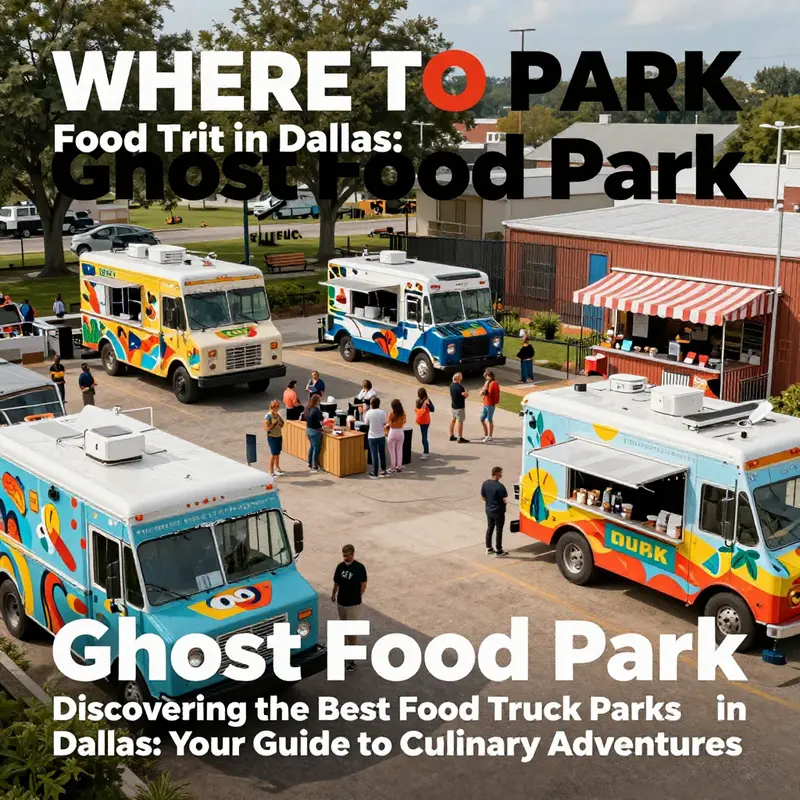
In the Dallas-Fort Worth food landscape, Ghost Food Park in Arlington has become a focal point for operators who want more than a parking spot. Located at 2601 W Arkansas Ln, the park has evolved into a premier destination for food truck enthusiasts within the DFW metroplex. It is not just a place to park and serve; it is a living gallery of flavors, textures, and tempo where grills hum, and diners mingle under a welcoming sky. The space has a soft Arcadian glow, a laid-back vibe, and a curated mix of trucks that makes it a compelling option for anyone whose business relies on visibility, foot traffic, and a steady stream of curious eaters who crave variety.
I am struck by Ghost Food Park’s strategic location. While just outside Dallas proper, its position along Arkansas Lane provides easy access from major arteries, and the I-30 corridor makes a quick hop from downtown feasible. For a truck operator, that accessibility translates into predictable arrival patterns. The venue is designed with the truck as a core element of the experience, with a lot laid out for clear sightlines, generous spacing, and smooth pedestrian flow. It is not merely a lot; it is a carefully orchestrated stage where trucks are the actors and the audience is a rotating cast of locals and explorers.
The park’s operating philosophy shines through its truck lineup. Ghost Food Park curates a rotating roster that covers a wide culinary spectrum – comfort foods that feel like home, adventurous interpretations of crowd favorites, and everything in between. Visitors can find Tex-Mex staples with a modern twist, smoky barbecue that lets other flavors shine, bold Asian fusion, gourmet burgers, and inventive street-food staples. This diversity matters for operators because it broadens the potential audience and creates natural opportunities for visitors to sample multiple dishes in a single visit.
For truck operators, the logistics of parking and staying compliant are as important as the flavors. Ghost Food Park provides on-site parking with clear signage to reduce the friction of finding a space and to minimize blocking drive aisles. The proximity to major roads and to downtown Dallas means that trucks can plan routes with predictable travel times, factoring in weather and peak hours. It is a practical advantage that translates into less stress and more reliable service windows.
The visitors’ experience at Ghost Food Park is a study in how well designed outdoor dining can become a community event. Families, friends, and solo diners come for a quick bite but linger for the atmosphere, the music, and the chance to chat with cooks who have become local personalities. Theme nights and special events punctuate the calendar, often translating into spikes in foot traffic and social media buzz. A park that offers both daytime crowds and an animated evening scene creates a sustainable ecosystem for operators who rely on repeat visits, visibility, and shared promotion opportunities.
From a practical standpoint, operators should track hours and truck rosters, which can vary by day and season. Arrivals earlier in the day help to stage an attractive storefront and accommodate last-minute weather changes. On-site parking, clear signage, and the central location all contribute to a smoother logistics chain: load-in, service, load-out, and a timely departure when the crowd thins. The community-minded culture at Ghost Food Park also supports collaborations among trucks, enabling bundle deals or cross-promotions that invite guests to try multiple flavors.
In closing, Ghost Food Park offers a reliable parking option, a dynamic customer base, and a vibrant atmosphere that invites experimentation. For operators evaluating where to park in the Dallas area, it stands out as a robust, welcoming, and strategically sound choice that aligns with both practical operations and creative ambitions. The park is more than a stopover; it is a hub where volume meets variety and where a single shift can become a recurring chapter in a truck’s growth story.
Cowtown Dogs and the Central Pulse of Dallas: A Thorough Guide to Parking Your Food Truck in Uptown
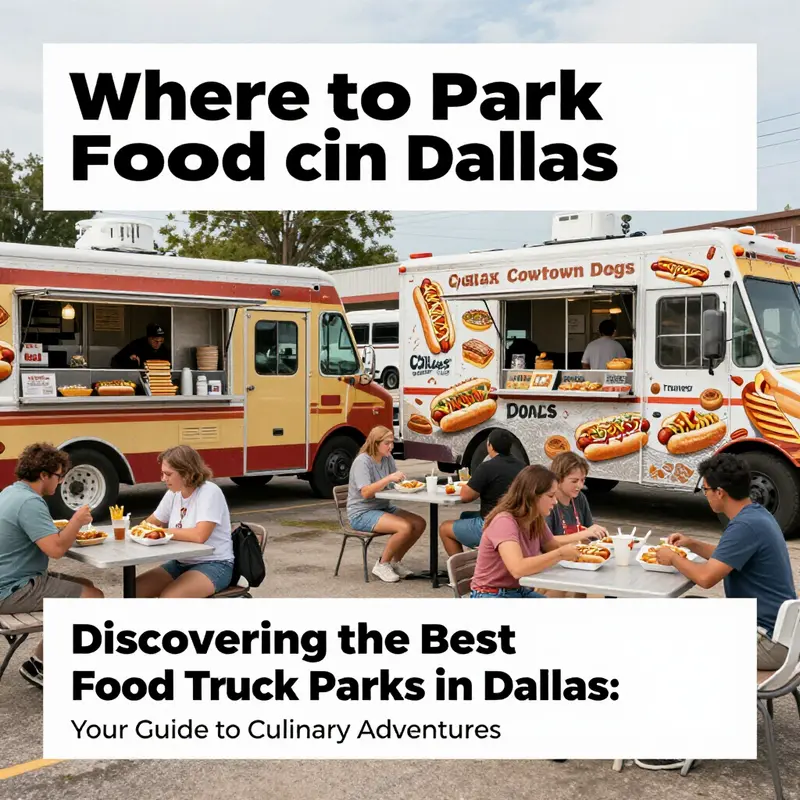
In Dallas, the art of parking a food truck is less about finding an empty lot and more about tuning into the city’s rhythm—the clamor of entertainment districts, the cadence of weekday lunches, and the seasonal surge of weekend crowds. Among the parks that exemplify this dynamic, Cowtown Dogs stands out as a microcosm of what makes a site valuable: location, accessibility, a ready-made audience, and a surrounding ecosystem that makes grazing and grazing again feel seamless. The park’s core is simple in concept but rich in opportunity. It centers on a curated array of hot dogs and street foods delivered by mobile vendors, yet it thrives because the space is more than a stall row. It is a social hub in the Uptown corridor where locals and visitors converge after work, during sporting events, and on evenings when the city’s skyline glows with lights and anticipation. For a food truck operator, Cowtown Dogs is both a showcase and a proving ground—a place to test a concept against real-time foot traffic and the unpredictable tempo of a city that loves its urban snacks.
The park’s address is a key piece of the puzzle: 2000 Main Street, Dallas, TX 75201. That location places it squarely in the heart of Uptown, an area known for walkability, a dense mix of apartments, office towers, restaurants, and nightlife. This centrality matters because a truck parked here is not just parked; it becomes part of a walkable circuit. Visitors can stroll from a late-afternoon happy hour at a nearby venue to a quick bite before catching a show or catching a ride home, all without straying far from the same block. The value of this setting is not merely proximity to customers; it is the ability to ride the city’s momentum. When a street team or a single truck sets up near Cowtown Dogs, the potential for a steady stream of curious passersby rises from a trickle to a current.
Uptown itself is a magnet for both residents and travelers. The walking-grid around Main Street and the surrounding avenues creates a natural flow that feeds the park. People filter through on foot after work, then linger when a vendor offers a hot dog with inventive toppings or a bite-sized street food option that feels new but comforting all at once. Cowtown Dogs thrives in this context because it invites a diverse set of vendors to participate in a shared narrative. The result is not only variety but a sense of community—the kind of environment that makes a customer think, I could return here tomorrow and try something else. For operators, this translates into a built-in testing ground: a place to observe which formats, toppings, or presentation styles spark the interest of a broad audience in a single, consistent location.
The surrounding infrastructure plays a supportive role in this dynamic. Uptown’s dense urban fabric means that parking spaces at Cowtown Dogs must blend with a larger network of ingress and egress routes, ensuring that trucks can arrive, set up, and break down without causing disruption to nearby businesses or pedestrians. The park’s design typically accommodates a range of transport modes—truck turnarounds, loading zones, and access points that minimize conflicts with foot traffic. It’s a careful balance between mobility and visibility: trucks that can quickly maneuver in and out keep the area safe while preserving the inviting street-level energy that makes Cowtown Dogs a destination. This balance is crucial when you’re managing a schedule tethered to events, shifts, and the unpredictable pace of Dallas life.
From a strategic perspective, Cowtown Dogs is more than a single venue. It sits within a cluster of notable Dallas food truck hubs, each with a distinct character. Truck Yard, for instance, is celebrated for its spacious lots and a community-driven vibe that invites a broad audience to sample many vendors in one place. Ghost Food Park emphasizes a creative environment and thematic events that can drive extra footfall and media attention. Harvest Hall leans toward healthier, organic offerings and a cleaner, more curated ambiance that appeals to diners who value quality and consistency. The Shindig Food Park blends food with music and entertainment, creating an atmosphere that makes food trucks part of a larger social experience. The Cowtown Dogs example allows operators to compare how different parks choreograph their spaces, host events, and communicate with patrons. If a truck wants to understand the local ecosystem, visiting Cowtown Dogs and observing the flow of customers can reveal how a central location interacts with nearby venues and what it takes to sustain a crowd over several hours.
One of the most practical advantages of Cowtown Dogs is its real-time information stream. For operators who want to know which vendors are present on a given day, or whether a special promotion is on the docket, a quick check of the park’s updates via the Yelp listing provides value. The vendor roster can shift from day to day, and the ability to gauge the lineup ahead of time helps operators plan their own shifts, quantities, and menus. It also helps sales planning: if a hot dog vendor is drawing a line at noon, a nearby truck might choose a complementary strategy—perhaps offering a fresh topping or a drink pairing to ride that surge rather than compete directly. This kind of adaptive planning is the backbone of a successful day in a park with a high turnover of vendors and a variety of guest interests. In practice, a truck operator will often scan the moving parts of the park—where the high-traffic windows are, how long lines tend to form, and how crowds choose between similar offerings. It is a dance of timing and placement, and Cowtown Dogs provides a compelling stage on which to learn that dance.
The practicalities of parking at a park like Cowtown Dogs require attention to a few core dimensions. First, there is the physical space: how much room the truck needs, how the lines form, and how the service window aligns with foot traffic. A stall with a broad, well-branded frontage tends to attract more attention than a compact setup tucked behind a pole or a planter. Second, there is the operational tempo: what are the peak hours, how long can a truck stay, and what are the buffer periods needed for clean-up and turnover? A well-run park will often publish guidelines or work with operators to coordinate shift lengths so a space can host a new vendor promptly when a crowd starts to wane. Third, there is safety and sustainability: waste disposal, grease management, and the chain of custody for sanitation must be clear and efficient. Parks that invest in shared facilities—portable handwashing stations, waste receptacles, and clear routes for waste removal—help operators stay compliant and focused on delivering great food and fast service.
For a truck operator, the decision to park at Cowtown Dogs is not merely about convenience. It’s about aligning with a city that rewards efficiency, creativity, and consistency. The Uptown location rewards those who can move quickly between prep, service, and wrap-up, while still preserving a readable and engaging guest experience. It rewards those who understand the cadence of Dallas crowds—how a lunch rush might compress into a more relaxed dinner period as the sun sets and a new rhythm takes over. It rewards those who listen to the park’s pulse: the way a particular day’s weather affects foot traffic, the way a midday lull can be turned into a trickle that grows into a surge during an evening event nearby. A smart operator will pattern shifts around this pulse, ensuring that a truck is in the right spot at the right time to capture the most valuable customers—the people who are walking, chatting, and deciding what to eat as they weave through the park’s atmosphere.
That strategic awareness is reinforced by the surrounding ecosystem of Dallas’s food scene. Cowtown Dogs serves as a practical anchor point within a network of parks and neighborhoods, each offering a different flavor of opportunity. The availability of nearby venues, the proximity to transit options, and the general density of foot traffic all feed into an operator’s choice about where to park and when to park there. A daily decision might be shaped by an ongoing event, a show at a nearby venue, or a festival that increases the park’s traffic. In these moments, a vendor’s flexibility becomes a competitive advantage: being able to switch from a classic hot dog with a few toppings to a themed or seasonal offering can unlock new demand in a crowded park with many choices.
To bring a broader perspective into the mix, Dallas sits among a cadre of major urban centers where mobile cuisine has established strong footholds. This is the kind of city where the micro-niche could become a larger movement, especially for vendors who bring a high-quality, distinct approach to simple comfort foods. For those analyzing where to park a food truck in Dallas, a useful touchstone is the wider landscape of Latino food trucks in major cities. These trends—urban visibility, a district that invites strolls and conversations, and a steady cycle of events—often play out similarly across different cities. Latino food trucks in major cities provides a comparative lens that helps frame Cowtown Dogs not in isolation but as part of a larger pattern. This broader context isn’t about replication; it’s about calibration—understanding what makes a central, walkable hub work and then translating those elements into a local strategy for Uptown Dallas.
Real-time updates and event calendars are especially valuable for operators who want to optimize their presence at Cowtown Dogs. While planning ahead is essential, the day-to-day reality of a park with multiple vendors is that conditions can shift quickly. A partner vendor might promote a limited-time special, a new topping, or a collaborative dish that draws a crowd. Staying informed about who is on site, what promotions are running, and when special events are scheduled allows a truck to adjust its own offerings and service approach in response. The practical upshot is simple: knowledge of the park’s roster and schedule translates into smarter stock levels, better queue management, and a higher likelihood of turning guests into repeat visitors. It also helps a truck coordinate with neighboring vendors so that overlapping menus don’t saturate the same customer base, while complementary offerings can create a day-long flavor journey that encourages longer stays and more generous baskets or plates.
In this sense, Cowtown Dogs is more than a parking option. It is a learning ground for operators who want to refine how a mobile kitchen communicates with a city. The surrounding area’s walkability supports a flexible, customer-centered approach. A guest who finishes a hot dog can easily traverse the block to a nearby theater, bar, or coffee shop, or step into a plaza that hosts live music later in the evening. The park’s central location helps ensure that a crew can maintain a steady tempo—from the moment the truck doors open to the moment the last customer’s plate is swept clean and the stall is tidied for the next day. For any operator contemplating a move into Uptown Dallas, a stay at Cowtown Dogs offers immediate exposure to the city’s appetite for bold flavors served with speed, style, and a touch of urban theater.
As with any big-city choice, there are practical questions to answer before pulling into Cowtown Dogs. How many hours can a truck operate in a given day? What is the turnover rate for the spaces, and how does that align with the park’s event calendar? What kind of electrical support, water access, or waste disposal facilities are available, and how easy are they to use during a busy service window? A thoughtful plan will address these concerns while also leaving room for experimentation. It might mean starting with a shorter first shift to gauge line length and customer flow, then expanding as confidence grows. It could also mean partnering with a nearby vendor for a collaborative dish that leverages shared audiences rather than competing head-to-head for the same slice of appetite. The city rewards the entrepreneur who can listen to the audience, adjust the offer, and keep the service experience consistently smooth for guests who are eager to taste a spectrum of options in a single visit.
In short, Cowtown Dogs represents a practical blueprint for parking a food truck in Dallas: a central, walkable location; proximity to a vibrant mix of venues and neighborhoods; a community-focused environment that supports a diverse lineup of vendors; and a reliable framework for real-time updates and strategic planning. For operators, it means recognizing the value of a space that can draw a steady crowd while offering the flexibility needed to adapt to Dallas’s fast-moving urban food scene. For guests, it means a reliable, dynamic pipeline of options in a setting that invites exploration and repeat visits. The city rewards those who approach Cowtown Dogs with curiosity, preparation, and a willingness to ride the city’s rhythm rather than attempting to force a rigid schedule. In a place as layered as Dallas, a smartly parked truck becomes a small but meaningful thread in the wider tapestry of urban life, food, and community. And that is precisely what makes Cowtown Dogs a compelling case study for anyone seeking to understand where to park a food truck in Dallas—the heart of Uptown, where food, people, and motion converge into a daily feast of possibility.
External resource:
- Cowtown Dogs on Yelp: https://www.yelp.com/biz/cowtown-dogs-dallas
Harvest Hall Parking as a Dallas Food Truck Compass: Smart Spaces, Short Walks, Big Crowd Potential
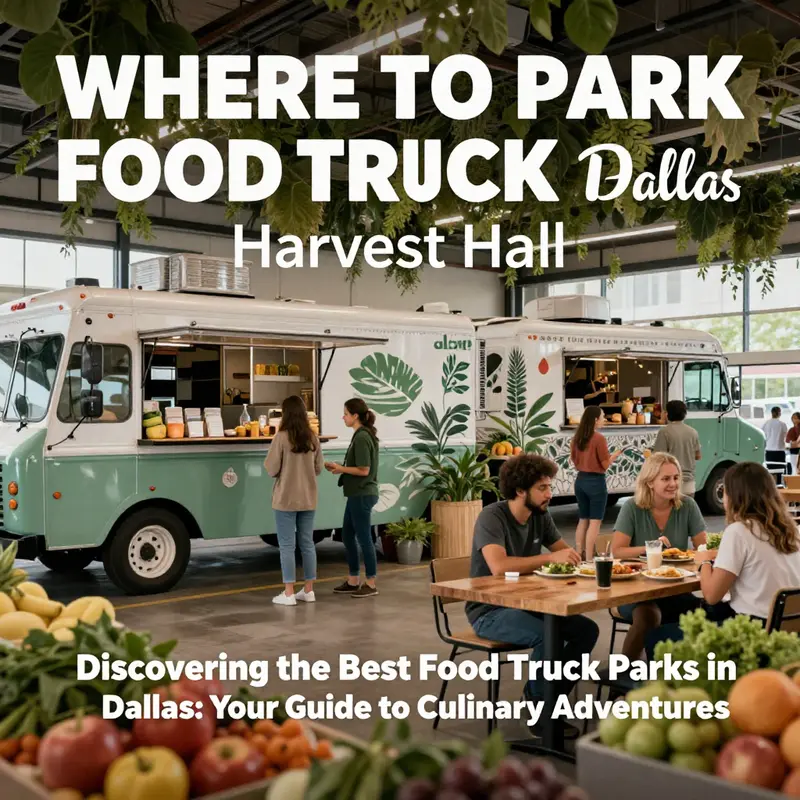
Dallas is a city of distrinct energy where food trucks have become a recognizable thread weaving through the urban fabric. From the busy lanes near downtown to the growing clusters in the northern suburbs, operators learn quickly that success is as much about where you park as what you plate. In this chapter, the focus narrows to a specific hub that often acts as a compass for Dallas-area operators: Harvest Hall in Grapevine. Although Harvest Hall sits just outside the heart of Dallas proper, it stands as a model for how a well-placed parking strategy can multiply visibility, streamline logistics, and connect a rotating cast of cooks with a steady stream of diners. The practical lessons gleaned here extend beyond one site and into the wider Dallas food-truck ecosystem, where parks with robust infrastructure and predictable access become anchors for a mobile business. For operators exploring multiple venues, Harvest Hall’s adjacent infrastructure—its attached garage, the surrounding plazas, and the way people move through the area—offers a blueprint that can be translated to many other parts of the metroplex.
At first glance, the most immediate advantage of parking near Harvest Hall is obvious: proximity. The Grapevine Main Garage sits at 255 E Dallas Rd and is directly attached to Harvest Hall and Hotel Vin. That means you can roll in, stage, load, and serve with minimal dead time between setting up and serving customers. Time is money on a food-truck schedule, and in a busy market, every minute shaved off the process impacts your bottom line. Importantly, the garage provides practical, predictable access, which lowers the stress familiar to many operators who frequently juggle tight turnarounds, customer queues, and the unpredictable demands of a live event calendar. When you know you can pull into a designated space just steps from the action, you can focus more on food quality, customer flow, and safety rather than chasing movement and maneuvering pressures.
The most widely cited benefit, however, is not simply the distance but the cost structure that accompanies this particular option. The Grapevine Main Garage offers free parking for the first 90 minutes. That window is more than enough for a typical loading/unloading cycle, a quick setup, and a mid-day service push during a peak period when Harvest Hall draws a crowd. For small, lunch- or dinner-focused operations, those 90 minutes can cover a complete service window if you optimize your sequence. If, on a given day, your plan requires a longer stay, the key is to coordinate with the garage management ahead of time, ensuring you remain compliant with any extended-stay options or alternative arrangements that may be available during special events.
For operators who run a disciplined schedule, Harvest Hall’s environment supports a kind of org chart for mobility. The garage serves as a staging point, a loading zone, and, when needed, a temporary on-site kitchen support zone where you can prep before your formal service begins. The attached nature of Harvest Hall means you can move from vehicle to customer flow with clear, safe routes. There is a rhythm to the site: a steady stream of visitors, event promoters, and food enthusiasts move through the plaza, creating natural indirect foot traffic that can be captured by a well-timed, well-positioned truck. That flow matters because the most successful mobile kitchens in Dallas do not rely on sheer volume alone; they rely on the confluence of convenience, predictability, and the ability to respond to a crowd with speed and quality.
A practical navigational framework starts with arrival. For a typical lunch or early dinner window, aim to reach the Grapevine Main Garage ahead of the main crowd. Arriving earlier helps you secure a preferred loading zone, reduces the risk of last-minute bottlenecks near Harvest Hall’s entrance, and gives you headroom to perform a careful, organized setup. Your team should run through a quick pre-service checklist: confirm your permit status with the site manager, verify your assigned stall or queue position, stage any necessary equipment, and confirm where trash and used oil will be disposed of or collected. The goal is to minimize on-street hazards and keep the surrounding pedestrian area clear of obstructions that could slow foot traffic or create safety concerns for diners and delivery personnel alike.
Beyond timing and proximity, the surrounding ecosystem of Harvest Hall contributes to a distinctive advantage for a food truck operator. Harvest Hall itself, along with its sister venues and the broader Grapevine dining district, has cultivated a loyal following of guests who appreciate a curated blend of health-conscious options, creative street-food flavors, and a dynamic environment featuring music, markets, and seasonal events. This is not just about the food; it is about the whole experience. A truck parked near Harvest Hall benefits from a built-in audience that understands the value of a short walk from car to plate, a social moment around a shared meal, and the chance to discover a new favorite dish in a space where culinary creativity is celebrated.
Of course, any discussion of parking and location must acknowledge the realities that frame every Dallas-area operator’s decision. The region embraces a mosaic of parks and gathering spaces, each with its own rules for loading, unloading, and staying beyond the allotted time. Larger complexes like Truck Yard, Ghost Food Park, Cowtown Dogs, Harvest Hall, and The Shindig Food Park represent a spectrum of approaches—from open-air, festival-like environments to more organized, structured venues with predictable hours. Each location appeals to different kinds of cooks and customer crowds. The Harvest Hall cluster, with its attached garage and complementary venues, stands out for operators who value a tight coupling of parking, ingress/egress, and customer immersion in a single geographic footprint. In this sense, studying Harvest Hall is less about mimicking a single model and more about extracting the underlying principles that drive success in a Dallas ecosystem where mobility, accessibility, and crowd psychology interact in real time.
A note on strategy comes from recognizing the value of partnerships and timing. When Harvest Hall holds a special event, a market, or a live performance, the crowd tends to cluster in predictable zones—near entrances, plazas, and designated seating areas. A reasonable approach is to schedule your arrival to align with the opening of doors or the first wave of attendees, ensuring you have a clean, efficient path from your vehicle into your service area. If an event escalates, you may see temporary changes in traffic patterns or loading zones. Keeping a flexible plan—while respecting posted signs and staff directions—lets you adapt quickly without compromising safety or the guest experience. In the Dallas food-truck world, this adaptability often translates into high-margin sales during peak windows and smoother operations during lulls.
What about the larger city-wide picture? Harvest Hall’s success on parking strategy mirrors a broader, almost urban-planner mindset that many operators bring to Dallas and the surrounding metro area. The local geography is conducive to a cluster approach: a few well-chosen parks with solid infrastructure and clear policies can become anchors that steady revenue flows and reduce risk for itinerant cooks. The reality is that not every site offers a garage, a clear loading zone, or a time-limited free parking window. But the principle remains constant: proximity to a destination with established foot traffic, a reasonable parking framework, and supportive on-site management can transform a day’s revenue trajectory. This is particularly true for operators who want to balance volume with quality, speed with sustainability, and the art of cooking with the science of operations.
If you are looking to expand your understanding of how communities support Latino and other diverse food-truck ventures, consider exploring related resources that discuss community building, health-focused menu innovations, and legal considerations for startups. For a broader look at how food-truck communities form and evolve, visit latinosfoodtrucks.net/blog-2/. This resource provides context that complements a practical parking strategy by situating a truck’s day-to-day moves within a larger cultural and entrepreneurial ecosystem. The link functions as a companion piece to the Harvest Hall-focused plan, offering a lens into the social fabric that often drives patrons to seek out a truck’s next location as part of a broader culinary journey. latinosfoodtrucks.net/blog-2/
As you map the Dallas landscape, keep Harvest Hall in view as a case study. It demonstrates how a thoughtfully designed parking option—one that emphasizes accessibility, predictable time windows, and a strong on-site ecosystem—can reduce friction for operators while elevating the guest experience. The model invites operators to curate a more precise, efficient flow that respects the pace of the market, the rhythm of events, and the simple reality that most diners want a seamless path from car to bite to conversation. In a city known for its drive and diversity, the ability to translate a single, well-executed parking plan into multiple venues becomes a form of operational literacy. It is a prime example of how the right parking environment can act as a strategic advantage rather than a logistical afterthought.
For readers who want to connect the practical with the inspirational, Harvest Hall’s approach encourages a mindset: treat parking not as a mere logistics headache but as a strategic parameter that can unlock higher earnings, better guest satisfaction, and a more sustainable pace for your team. By prioritizing easy access, clean loading zones, and clear alignment with event calendars, you create a professional footprint that invites repeat customers, word-of-mouth recommendations, and collaborations with neighboring vendors. Over time, this clarity of purpose—anchored by a dependable parking option—helps your truck become a familiar, beloved staple in the Dallas food scene. The story of Harvest Hall, then, is less about a single location and more about a philosophy: plan around parking that serves people first, and the rest of the business follows.
To close the loop, consider the broader arc of the Dallas food-truck ecosystem. A city that loves food on the go thrives when operators are strategic about where they park, how they move, and how they communicate with property managers and guests. Harvest Hall’s model shows how a single, well-integrated space can deliver reliable access, cost-effective operations, and a positive guest experience that compounds in valuable ways. If you keep this compass in mind—proximity to a destination, predictable time windows, and a supportive venue ecosystem—you can chart a course through the Dallas metroplex that respects the city’s pace while maximizing your truck’s potential. And as you plan, remember that the best parking decisions often begin with a simple question: where is the fastest, safest, most visitor-friendly route from vehicle to mouth to memory? The answer at Harvest Hall, and in many other Dallas hubs, is not just a space to park; it is a space that allows your business to move with confidence and your flavors to travel farther than you might imagine.
External resource: https://www.yelp.com/biz/harvest-hall-grapevine
Final thoughts
Finding the right spot to park your food truck in Dallas greatly influences your success in this competitive culinary landscape. Each of the parks discussed, from the vibrant ambiance of Truck Yard to the creative flair of Ghost Food Park, offers unique opportunities for food truck operators. With a focus on community engagement, customer interactions, and diverse culinary experiences, these locations cater to both the needs of food entrepreneurs and the tastes of hungry consumers. Embrace these choices and elevate your food truck game for a flourishing culinary endeavor in Dallas.