
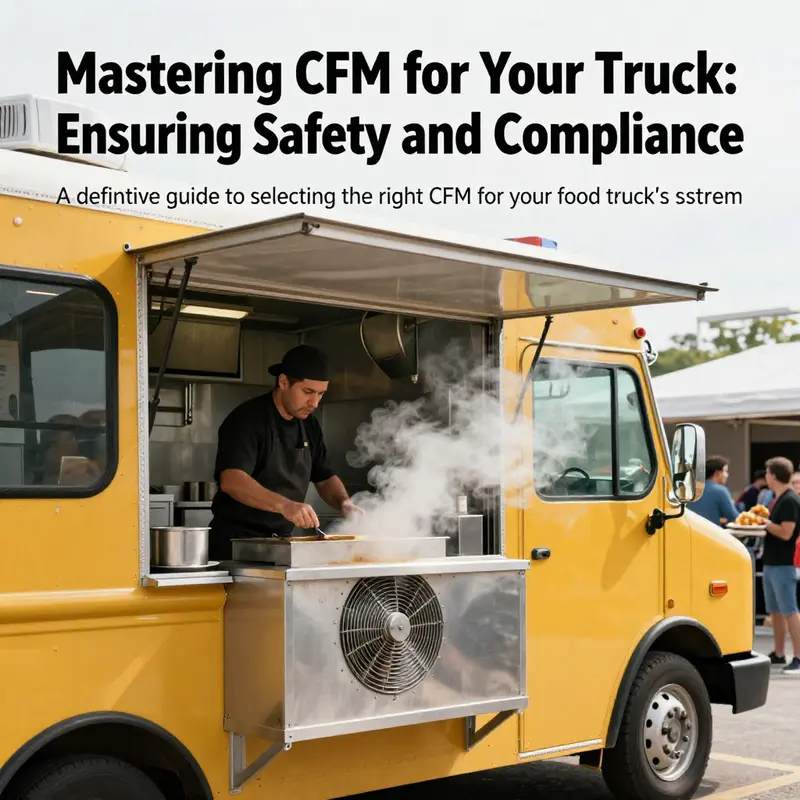
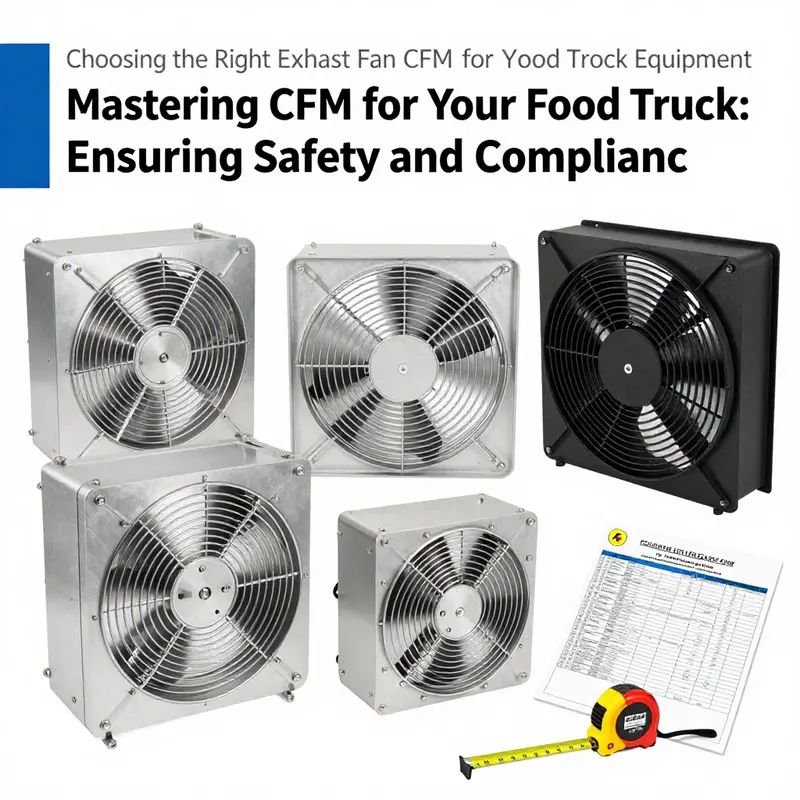
Choosing the right Cubic Feet per Minute (CFM) for a food truck’s exhaust system is pivotal for safety, air quality, and compliance with local regulations. Just as enthusiasts meticulously tune their vehicles for performance, food truck operators must ensure their exhaust systems efficiently handle the heat, smoke, and odors generated by cooking equipment. This guide dives into five essential chapters, intricately weaving through the importance of CFM, factors that influence requirements, standards to adhere to, methods for selecting the correct exhaust fan, and the value of consulting professionals for optimal design. By the end of this journey, you will have a comprehensive understanding of how CFM impacts your food truck operations, mirroring the precision seen in automotive modifications.
Airflow That Protects: Why the Right CFM Is Critical for Every Food Truck
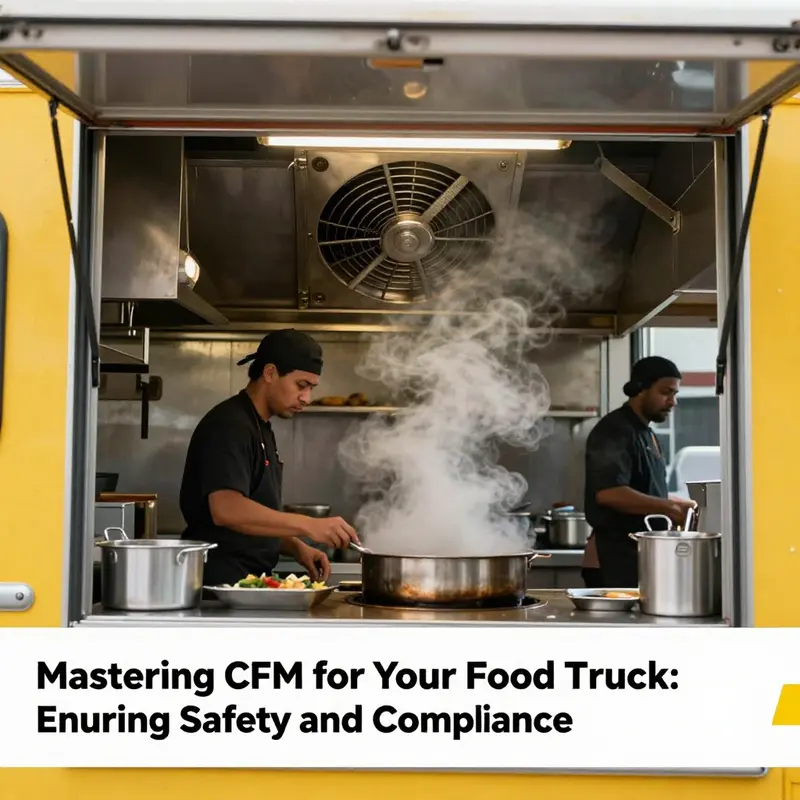
The right exhaust airflow—measured in CFM—does more than clear smoke. In a compact mobile kitchen, it governs safety, food quality, crew comfort, and regulatory compliance. A fan that is too weak will allow heat, grease, and fumes to linger. One that is oversized, or poorly integrated, can create drafts, waste energy, and impair cooking performance. Choosing the correct CFM is therefore a balancing act that connects appliance load, hood design, makeup air, and maintenance into a single, functioning ventilation system.
Mobile kitchens concentrate cooking processes in a tiny area. That density multiplies the production of grease-laden vapors and high heat. Those byproducts must move out quickly. Without adequate exhaust, grease can condense on surfaces and inside ducts. Condensed grease is a major fire risk and accelerates hood and duct deterioration. Likewise, heat buildup raises interior temperatures and makes the environment dangerous and uncomfortable for staff. Properly sized CFM removes contaminants before they settle, reducing the chance of fire and maintaining a healthier workspace.
Safety is the primary reason to get CFM right. Grease and soot particles that collect in ducts become fuel for fires. A correctly specified exhaust fan keeps airborne grease moving through filters and out of the truck’s system. This reduces deposit buildup and lowers the probability of ignition. Exhaust capacity also affects how cooking byproducts interact with the fire-suppression system. If exhaust is inadequate, smoke and hot gases can overwhelm suppression efforts or trigger them improperly. Regulatory inspections often check ventilation performance as a key element of fire safety. Meeting expected CFM values helps you pass inspections and avoid expensive corrections.
Air quality and food safety are inseparable from ventilation performance. Persistent smoke and odors cling to ingredients and equipment, and airborne particulates can settle on prepared foods. Adequate CFM reduces airborne contaminants and minimizes cross-contamination risks during service. It also controls humidity, which affects food preservation and prevents condensation. Condensation harbors bacteria and accelerates surface corrosion. A ventilation system that balances exhaust and makeup air keeps humidity within acceptable limits and protects both food and surfaces from microbial growth.
Crew health and productivity improve dramatically with correctly balanced ventilation. Heat stress lowers focus and increases the chance of errors. Breathing smoke or grease-laden air causes respiratory irritation and long-term health concerns for staff who work extended shifts. Efficient exhaust paired with proper makeup air provides a continuous supply of fresh air without creating uncomfortable drafts. That steady airflow increases comfort and supports longer, more productive work periods.
Sizing ventilation for a food truck is not one-size-fits-all. Small to medium setups with limited appliances often need between 1,000 and 1,400 CFM. Larger trucks, or those running multiple heavy appliances like large griddles and deep fryers, commonly require 2,000 to 2,500 CFM or more. These figures serve as practical starting points. Final sizing should account for hood length, appliance heat output, and the hood’s capture efficiency. Industry standards, local building codes, and fire codes provide more detailed specifications that guide exact sizing.
Hood design and placement are critical to realizing a fan’s rated CFM. A high-capacity fan cannot compensate for a poorly designed hood that fails to capture rising smoke and vapors. Hoods must be positioned close enough to the cooking surface and sized proportionately to appliances. Filters and grease extractors should be correctly installed to prevent rapid clogging, which reduces effective airflow. Duct runs must be as short and straight as practical. Each bend, transition, and damper reduces CFM and increases static pressure, lowering the fan’s effective performance.
Makeup air is the mirror image of exhaust, and it matters equally. Removing large volumes of air without supplying replacement air creates negative pressure. Negative pressure can pull combustion gases back into the vehicle, cause doors and service windows to slam, and interfere with refrigeration and HVAC equipment. Makeup air prevents these problems by supplying tempered fresh air at a rate that matches the exhaust. In some jurisdictions, makeup air is required by code. Where makeup air systems are impractical, a ventilation designer may recommend balancing dampers or energy recovery solutions to maintain pressure equilibrium.
Noise and energy use are practical constraints that influence CFM decisions. Higher airflow typically means louder operation and greater electrical demand. That increase impacts generator sizing and can push a truck beyond its available power capacity. Fan selection, isolation mounts, and acoustic duct treatments can reduce noise. Variable-speed drives allow modulation of CFM to match real-time cooking loads, saving energy and extending equipment life. Thoughtful design also anticipates electrical capacity and fuel needs, integrating ventilation into the vehicle’s overall power budget.
Maintenance is the long-term ingredient that preserves designed airflow. Grease filters must be cleaned frequently. Ducts need scheduled cleaning by licensed professionals to remove accumulated grease and meet fire code requirements. Fans should be inspected and balanced to prevent vibration and mechanical failure. A system that begins at the correct CFM can lose performance quickly if maintenance lapses. Keeping logs of maintenance and filter changes helps during inspections and supports predictable, safe operation.
Beyond equipment and maintenance, compliance with local codes matters. Fire departments and health inspectors often reference national standards when evaluating mobile kitchens. Detailed guidance on vent sizing, hood placement, and grease removal practices is available and should influence final designs. Consulting a knowledgeable HVAC or commercial kitchen ventilation specialist helps bridge the gap between general CFM guidelines and the specific demands of your truck. Specialists can run smoke tests, measure capture efficiency, and recommend duct and fan configurations tuned to your setup.
Selecting the appropriate CFM also supports operational efficiency. Properly exhausted heat reduces reliance on auxiliary cooling. Cooler interiors preserve staff stamina and keep equipment running within factory limits. When vendors and customers approach the service window, a well-balanced system prevents unpleasant gusts and minimizes airborne odors. In other words, good ventilation contributes to smoother service and a better customer experience.
If you operate a food truck as part of a startup, be sure to factor ventilation into your broader legal and operational planning. Many legal and permit hurdles connect directly to ventilation performance and fire safety. For guidance on regulatory and startup concerns specific to Latino food truck entrepreneurs, consult this overview of legal considerations for Latino food truck startups.
Designing ventilation for a food truck means navigating constraints while prioritizing safety. Start with a realistic assessment of cooking equipment and hood needs. Use those inputs to arrive at a CFM range, then refine that range with attention to hood capture, duct layout, and makeup air. Finally, commit to maintenance and inspections to preserve performance over time. For code-backed technical guidance and standards covering ventilation control for cooking operations, consult the NFPA 96 standard: https://www.nfpa.org/Code-Development/Standards/NFPA-96
Sizing the Airflow: How Cooking Load, Space, and Ductwork Define CFM for Your Food Truck
Matching CFM to Reality
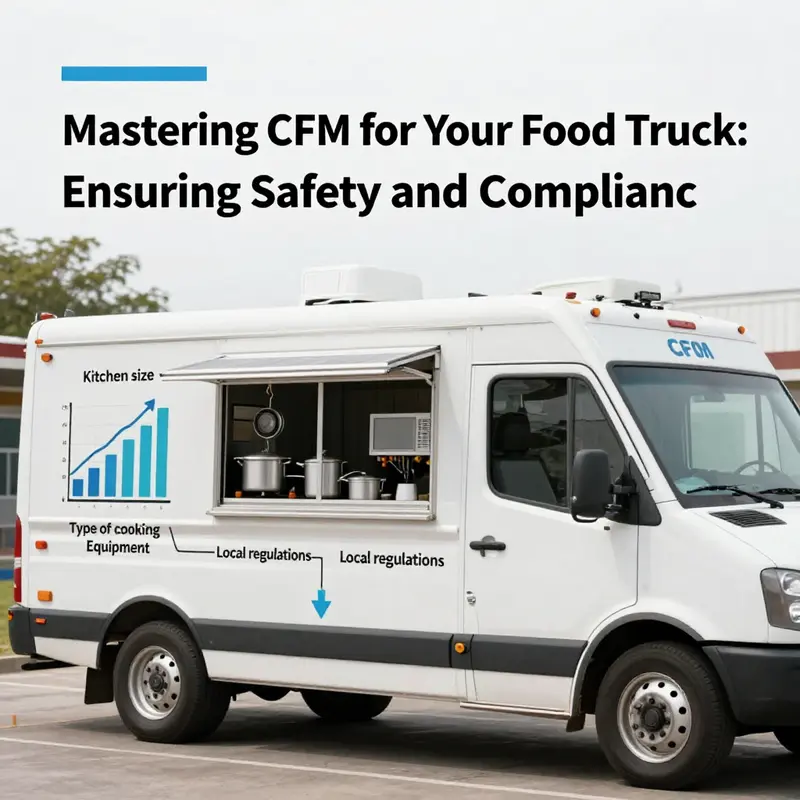
Deciding how much CFM a food truck needs starts with honest inventory and ends with practical engineering. Airflow requirements are not a single number you can pick at random. They depend on what you cook, how your kitchen is arranged, and how the exhaust system is built. When those elements are considered together, the resulting fan capacity keeps heat, smoke, and grease under control. It also protects staff and avoids costly shutdowns during inspections.
Begin by listing every heat-producing appliance. Griddles, charbroilers, fryers, and convection ovens each create a different mix of heat, steam, smoke, and grease. High-heat appliances and fryers produce dense grease-laden vapors. Those vapors demand higher airflow to capture and remove contaminants before they spread through the truck. As a general rule, small to medium trucks with limited appliances commonly fall into the 1,000 to 1,400 CFM range. Larger or high-volume kitchens with multiple heavy appliances often require 2,000 to 2,500 CFM or more. Those ranges are starting points, not final answers.
The truck’s physical footprint alters how that airflow performs. Compact interiors heat up faster than larger spaces. In a tight layout, heat and smoke concentrate near the hood more quickly. That means you may need more CFM per square foot than a larger kitchen would. The ceiling height, hood placement, and location of doors and service windows also change how air moves. Even the choice of vehicle chassis matters. If you are comparing step vans to cargo vans, the body layout drives hood size and fan placement, which affects required airflow. For a discussion about chassis choices and layout trade-offs, see Step Vans vs Cargo Vans: Food Trucks.
Exhaust design is the next critical factor. Duct length and configuration create resistance, called static pressure. Long runs, multiple bends, or inadequate duct diameter increase resistance and reduce effective airflow. Fans must overcome this static pressure to deliver the CFM specified at the hood. A fan rated at 1,400 CFM free-air may push far less through a high-resistance duct. That mismatch leaves grease and smoke behind.
Centrifugal fans are the typical choice for food trucks. They can generate the higher static pressure needed in confined duct systems. Inline or roof-mounted units often sit at the right balance of size and power. When ducts are short and straight, axial fans may suffice. But in real-world mobile kitchens, duct complexity is common. When design calls for many elbows, transitions, or long vertical runs, specify fans with enough static pressure capacity and an actual rated CFM at that pressure.
Regulatory standards shape minimums too. Codes such as NFPA 96 provide guidance tying required airflow to hood area and the cooking load. Local health and fire departments may add rules. Compliance is not optional. Under-sizing can get you cited, or worse. It can also create hazards: grease accumulation, poor visibility, and higher temperatures that stress equipment and staff. Over-sizing, while safer from a capture perspective, has drawbacks. Excessive airflow increases make-up air needs, raises energy consumption, and can create negative pressure in the vehicle. Balance is essential.
Noise matters more than you might expect. Higher CFM fans commonly generate more sound. In urban or residential service areas, noise limits or neighbor complaints can restrict fan choices. Acoustic attenuation, isolation mounts, or locating the fan away from noise-sensitive areas can help. But these measures often add back pressure and reduce net airflow. The practical outcome is a compromise between raw performance and acceptable sound levels.
Energy use ties directly to CFM decisions. Ventilation affects the truck’s cooling load. When the exhaust removes hot air, the HVAC system or portable coolers must replace that air with conditioned make-up air. Larger CFM requires more make-up air, which increases fuel or electrical use. Correctly sized ventilation minimizes unnecessary energy draw while maintaining safe working temperatures. Consider energy recovery options where feasible, or design the system to minimize exhaust that pulls conditioned air directly from occupied zones.
Properly estimating required CFM begins with a methodical process. Start with a cooking audit. List each appliance, its heat output if known, and typical duty cycle. Measure hood length and width. Hoods are the first line of capture; their size and position determine how much air the fan must move to keep the capture zone effective. Use industry guidelines to translate hood size and cooking load into a target CFM. Then add allowances for duct losses, fittings, and fan discharge conditions.
Account for static pressure throughout the system. Compute pressure loss for each duct segment, each elbow, each transition, and any filters or grease extractors. When in doubt, use conservative estimates. Select a fan that delivers the target CFM at the cumulative static pressure. The fan curve matters. Choose a model whose performance curve crosses the intersection of required CFM and calculated static pressure comfortably. Avoid relying on free-air ratings.
Think about make-up air and placement. Exhaust without adequate make-up air creates negative pressure. Negative pressure pulls smoke into service areas and can affect appliance combustion. Make-up air can be passive or powered. In tight food trucks, providers sometimes use dedicated conditioned make-up air systems sized in proportion to exhaust CFM. These systems add complexity and cost, but they protect indoor air quality and appliance performance.
Maintenance and filtration influence long-term performance. Grease buildup in filters and ducts increases resistance over time. A system sized without maintenance margins may fail to deliver adequate airflow after a few months. Design with accessible filters and easy-to-clean ductwork. Schedule regular inspections and cleaning. Those practices keep the system at its intended capacity and reduce fire risk.
Practical trade-offs happen at installation. If a design calls for 2,250 CFM but site constraints limit fan choice, prioritize capture at the hood. Increase hood canopy depth or reduce hood length to improve capture efficiency. Shorten duct runs, increase duct diameter, or reduce the number of elbows. These changes lower static pressure and can permit smaller fans to do the job effectively.
What happens if the fan is undersized? Expect higher interior temperatures and lingering odors. Grease may deposit on surfaces, creating fire hazards and increasing cleaning needs. Appliances may perform poorly due to altered airflow and combustion conditions. If the fan is oversized without system balance, the truck may consume more energy and need larger make-up air equipment, imposing greater operational costs.
Because so many variables interact, consult with a commercial kitchen ventilation specialist. A professional will apply validated formulas, reference codes, and real-world experience. They can perform or recommend a hood capture test, calculate static pressures, and specify a fan with the correct performance curve. For operators building or retrofitting a truck, that consultation prevents costly mistakes.
A final point about real-world ranges: use the common CFM bands as a starting reference. Small-to-medium trucks frequently need 1,000–1,400 CFM. High-volume or heavy-equipment trucks often require 2,000–2,500 CFM or more. Tailor those numbers to your equipment, layout, and local regulations. When you combine a thorough equipment audit, careful duct design, and professional verification, the result is a ventilation system that keeps staff safe, minimizes odors, and protects your investment.
For more detailed technical guidance on fan performance, hood sizing, and practical installation advice, consult a specialized ventilation resource: https://www.foodtruckventilation.com/food-truck-hood-exhaust-fan-specifications/.
How to Size Exhaust CFM for a Food Truck: Standards, Practical Rules, and Safety Considerations
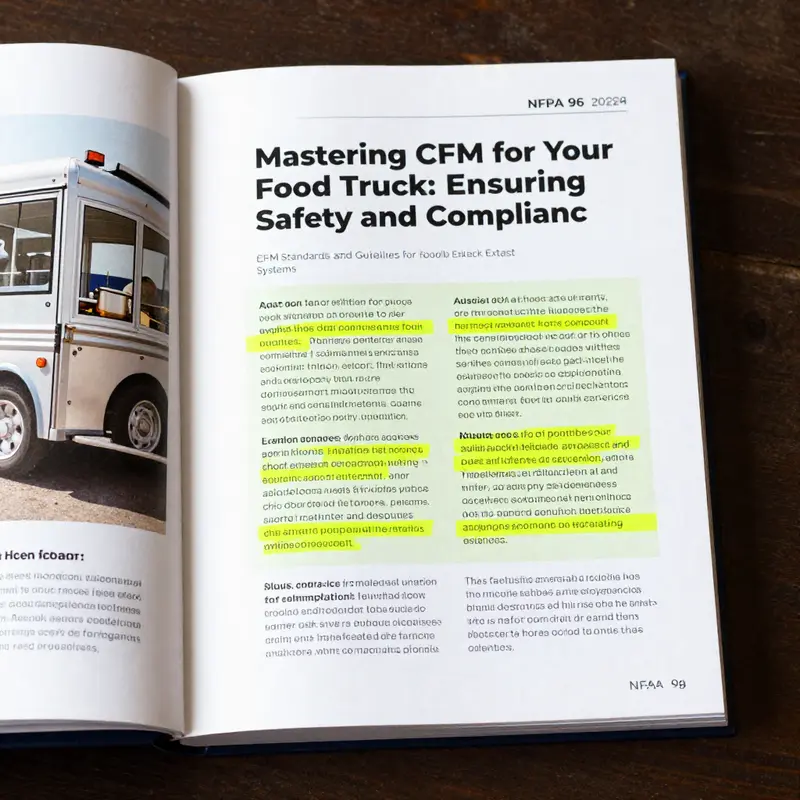
Designing the right exhaust for a food truck starts with understanding that there is no single, blanket CFM number that fits every mobile kitchen. Instead, sizing is a mix of standards interpretation, practical rules of thumb, and attention to equipment, hood geometry, duct layout, and local authority requirements. The goal is simple: capture and remove heat, smoke, grease, and steam at the source so staff can work safely and a fire risk isn’t created. Achieving that requires matching fan capacity to the cooking load, and then accounting for real-world losses and code-driven requirements.
Begin with the guiding standard. Although no mandatory CFM listing exists specifically for food trucks, the principles in NFPA 96 apply. That standard sets minimum capture velocities and hood design criteria used by fire marshals and inspectors. One core metric often derived from NFPA 96 is a target face velocity at the hood opening—commonly 100 feet per minute—to ensure effective capture. From that baseline, designers use two practical calculation methods: the equipment method and the hood-area method.
The equipment method sums the exhaust demand of every appliance under maximum use. Each burner, griddle, or fryer contributes a defined share of exhaust need. In practice, designers convert appliance heat output or published manufacturer guidance into required CFM, then add them together. A conservative safety margin of 20–30% is commonly applied. This margin covers variations in real operation, prevents undersizing when multiple appliances run at once, and accommodates reduced fan performance due to dirty filters or ductwork.
The hood-area method is simpler to apply when hood dimensions are known. It uses a rule of thumb of roughly 100 CFM per square foot of hood area. For example, a 12-square-foot hood roughs out to 1,200 CFM. This method is fast and often used for preliminary estimates, but it must be reconciled with appliance-driven needs. If appliances demand more than the hood-area calculation yields, the higher number wins.
From practical experience, typical ranges emerge. Small to medium trucks with one or two moderate appliances commonly operate in the 1,000–1,400 CFM range. High-volume trucks with multiple heavy-duty appliances often need 2,000–2,500 CFM or higher. These ranges are baseline starting points, not final answers. Always verify by adding the specific appliance loads and considering the hood capture characteristics.
Hood design and placement are as important as CFM. A hood must be positioned close to the cooking surface and sized to overhang it adequately. Capture effectiveness falls off quickly if the hood is too small or too far from the heat source. The required exhaust velocity is measured across the hood face; turbulence, obstructions, or improper baffle placement reduce effective capture. For mobile kitchens, low ceilings and compact layouts make precise hood placement even more critical.
Ductwork length and configuration influence the actual CFM delivered at the hood. Long runs, multiple bends, and restrictive grease filters increase static pressure, reducing the fan’s delivered flow. Fans are rated for a given CFM at a specified static pressure. When you specify a fan, estimate the total system static pressure and choose a fan capable of delivering the target CFM at that pressure. Underestimating static pressure is a frequent source of undersized ventilation on food trucks.
Makeup air must not be overlooked. Exhausting thousands of cubic feet per minute without supplying equivalent replacement air creates negative pressure. Negative pressure pulls combustion byproducts into the truck, disrupts equipment draft, and can make doors difficult to open. Codes and safety reviewers often require makeup air equal to the exhaust, either introduced mechanically or via engineered passive openings. Makeup air should be tempered when possible to avoid degrading interior comfort or overworking cooling systems.
Fire protection requirements closely tie to ventilation. NFPA 96 calls for automatic fire suppression systems in almost all commercial cooking operations. The hood and duct design must accommodate that system. Grease extraction features—such as baffle filters or other approved filters—reduce grease carryover, but they require regular cleaning. Cleaning frequency depends on cooking type and volume. Heavy frying often requires monthly or even more frequent cleaning; lighter operations can go longer between cleanings. Documented cleaning schedules are commonly required by inspectors and insurers.
Operational realities influence final decisions. Noise, vibration, and energy use matter in mobile settings. Higher CFM systems produce more noise and can create uncomfortable working conditions if not mitigated. Flexible duct connections and rubber mounts help reduce vibration transfer into the truck chassis. Consider variable-speed fans or controls that allow reduced flow during low-demand periods. However, any control scheme must maintain required capture when appliances are in use and comply with local codes.
Testing and verification are the final steps. Smoke tests at the hood while appliances run demonstrate capture effectiveness. Anemometer or hood face velocity measurements confirm whether the installed system meets the 100 fpm guideline or the required CFM derived from calculations. Local officials often require proof of testing during permitting. Keep records of test results, maintenance, and inspections. These records simplify future permit renewals, inspections, and insurance audits.
Local authorities play a commanding role. Fire marshals and building officials routinely review food truck exhaust systems for compliance with NFPA 96 principles and with local ordinances. Some jurisdictions adopt prescriptive CFM requirements or require third-party certification. Early engagement with local permitting agencies helps avoid last-minute redesigns. For operators in the Latino food-truck community, understanding both the technical and regulatory sides is vital. For more on the regulatory landscape and startup compliance, see the guidance on legal considerations for Latino food truck startups.
Finally, always involve a qualified HVAC or kitchen-ventilation professional for final sizing and selection. These experts translate appliance BTU or kW ratings into exhaust demand, model duct static pressure losses, and specify fans that meet both performance and space constraints. They also ensure proper integration with fire-suppression systems and makeup-air strategies.
In short, there is no one-size-fits-all CFM mandate for food trucks. Instead, apply NFPA 96 principles, choose a method—equipment summation or hood-area—and then adjust for real-world factors: ductwork losses, makeup air, static pressure, cleaning needs, noise, and local code requirements. Aim for an engineered solution that includes a safety margin, documented testing, and a maintenance plan. That approach protects staff, preserves equipment life, and keeps your truck in good standing with inspectors and insurers.
For the authoritative standard and further technical details, consult NFPA 96: Standard for Ventilation Control and Fire Protection of Commercial Cooking Operations: https://www.nfpa.org/codes-and-standards/all-codes-and-standards/list-of-codes-and-standards/nfpa-96
Sizing the Breath of a Mobile Kitchen: How Much CFM Your Food Truck Exhaust Really Needs
The heart of any successful food truck operation isn’t just the recipe or the sizzling sound of a grill; it’s the quiet, relentless circulation that keeps the kitchen livable. A cramped mobile space can turn into an overheated, smoky cave if the exhaust isn’t sized correctly. Heat, smoke, grease, steam, and odors accumulate quickly when fans are underpowered, and the resulting discomfort can slow service, raise error rates, and push a truck out of compliance with local health and safety rules. The challenge is not simply choosing a fan with a high number on the box. It’s about matching airflow to the realities of your kitchen—its size, what you cook, how you lay out your equipment, and how far the air has to travel through ducts. A well-sized exhaust is an investment in safety, product quality, and staff well-being, not merely a utility upgrade.
In practice, the right CFM hinges on several interacting factors. The size of the kitchen sets a ceiling on how much air you need to move to keep temperatures down and to prevent smoke build-up. The type and volume of cooking equipment define the heat load and the grease load your ventilation system must handle. A deep fryer, for example, generates large amounts of grease-laden vapors, while a big griddle with a high-output burner dumps heat directly into the hood area. The hood’s footprint, or hood area, matters because it frames the mass of air that must be exhausted to carry heat and contaminants away. Then there’s the ductwork: its length, turns, and material all create resistance that a fan must overcome. Longer, more tortuous duct runs require more powerful fans to pull air through the system, or they demand clever layout adjustments to minimize friction.
This interplay means there isn’t a single magic number that fits every truck. Still, the field provides practical guardrails that help operators make a safe, efficient choice from the outset. For many standard mobile kitchens that rely on common grilling, griddling, or frying setups, a baseline around 1000 CFM is a practical starting point. This level of airflow tends to strike a balance between effective heat and smoke removal and the need to keep noise and energy use reasonable in a compact space. A fan in this range is typically compatible with medium-length duct runs and can be found in configurations that suit both ducted plumbing and inline installations. The goal is to give the kitchen enough “breathing room” to prevent heat build-up during peak service periods, while avoiding over-sizing which can create unnecessary noise and wear on the system.
When the cooking load intensifies—whether you run multiple grills, heavy-duty fryers, or a combination of high-heat appliances—the straightforward 1000 CFM figure becomes a starting point that invites refinement. In such high-heat or high-velocity settings, 1200 CFM is often a sensible next step. It offers a noticeable boost in air movement to scrub heat and grease more aggressively, reducing the chance of hot spots near the hood and keeping the cooking line cooler for longer periods. Beyond that, some operations with substantial volume or unusually challenging duct configurations may benefit from a much larger capacity, such as around 2600 CFM, to push air through long or highly resistant ducts and to cope with heavy grease production. It is not uncommon for a larger, high-output operation to require this level of exhaust power, particularly when the hood area is significant or when the duct run imposes substantial friction.
All of these recommendations sit on a bedrock of safety and compliance. The choice of CFM is not merely a matter of comfort; it is a matter of code compliance, fire safety, and environmental quality. Fire codes—often anchored in NFPA 96 standards for hood ventilation—provide guidelines for determining exhaust requirements based on hood area and cooking load. These standards emphasize that ventilation must be sufficient to remove heat, smoke, and grease, while preventing grease-laden air from accumulating in the kitchen or entering areas where it could pose a fire hazard. In practice, this means that a sizing decision should be guided by both the physical attributes of the kitchen and the regulatory expectations of the jurisdiction in which the truck operates. Consulting a professional HVAC or commercial kitchen ventilation specialist is highly advised to translate these foundational principles into a precise, site-specific solution.
Even with a solid starting point, the practical task of sizing is inherently iterative. A 1000 CFM recommendation might seem perfect on paper, but real-world factors can shift the target. If the truck’s layout requires long duct runs, or if the hood is paired with multiple cooking stations generating substantial heat and grease, you may encounter significant static pressure—resistance to airflow created by the ductwork and components. In response, a larger fan can compensate for this friction, but it is a trade-off. Higher CFM comes with increased noise, power consumption, and mechanical stress on the hood, duct, and fan bearings. The objective is to meet the required air changes per hour and maintain comfortable working conditions without overdoing it. A careful assessment that balances heat removal with noise control and energy use tends to yield the most reliable results over the life of the truck.
For operators who want a practical path forward, a collaborative approach tends to work best. Start with a baseline that reflects the equipment load and the hood area you plan to use. You can then compare how the space behaves during peak service: do you feel the heat and smoke dissipate quickly, or do you notice pockets of heat and lingering odors near the frying station? If the latter, consider stepping up to 1200 CFM to strengthen extraction. If you operate a more expansive mobile kitchen with multiple high-heat appliances and a long duct run, you may need a higher-capacity unit, but this should be pursued with a professional assessment of duct friction, fan performance curves, and the hood design. Above all, ensure your choice aligns with local regulations, including fire and health codes, and that the system can be installed and maintained with the hood and duct accessible for routine cleaning and inspection.
In this context, it becomes clear that a one-size-fits-all answer is rarely sufficient. A thoughtful evaluation of the cooking load, kitchen footprint, duct routing, and regulatory thresholds will yield an exhaust solution that preserves safety and product quality while keeping the work environment tolerable for staff and comfortable for customers nearby. While guidelines point toward 1000 CFM for standard setups and 1200 CFM or 2600 CFM for heavier operation, the final decision should be anchored in a detailed assessment rather than a rough estimate. For a focused look at the legal and regulatory dimensions that can influence this choice, consider consulting resources such as the legal considerations for Latino food truck startups, which discuss how local requirements can shape ventilation strategies. Legal considerations for Latino food truck startups.
Beyond the regulatory and technical considerations, the experiential aspects of the exhaust system deserve attention. The noise profile of the fan matters, especially in urban settings where a mobile kitchen operates in proximity to homes, sidewalks, and street-foot traffic. Inline duct fans, particularly those operating around the 1000 CFM range, are often favored for their quieter operation relative to larger, centrifugal fans. Yet the choice of fan type—whether inline, axial, or mixed-flow—will be guided by the specifics of duct routing and mounting constraints. Vibration control becomes important when the fan is attached to a ceiling or a swing-out hood, and maintenance access should be planned to minimize downtime and disruption during busy service windows.
The practical upshot is that sizing is not a single calculation but a thoughtful integration of cooking load, space constraints, duct design, and local code expectations. It is about creating a working environment in which heat and grease are efficiently removed, odors don’t linger, and the kitchen remains a place where staff can perform at their best for extended shifts. The goal is to achieve reliable exhaust performance without introducing unnecessary energy waste or noise that could alienate customers or passersby. As you fine-tune the system, keep in mind that the best outcomes often emerge when you couple a solid baseline with an informed, flexible plan for adjustments as your menu evolves, as service volume shifts, or as you upgrade equipment.
For readers who want to dive deeper into the technical nuances of a 1000 CFM exhaust and related configurations, there are comprehensive resources that review types, grades, and best practices in industry ventilation. This external reference provides a detailed perspective on how to evaluate airflow, resistance, and installation considerations in real-world kitchens, complementing the practical guidelines discussed here. https://www.hvac.com/exhaust-fan-1000-cfm-types-grades-best-practices
Sizing the Breath: Why Precise Sizing Matters for Mobile Kitchen Ventilation

The exhaust system of a food truck is less a luxury feature than a lifeline. In the cramped quarters of a moving kitchen, CFM—the rate at which air is drawn through the hood—becomes the difference between a comfortable, productive workspace and a kitchen that feels like a simmering furnace. The task is deceptively simple on paper: move enough air to pull heat, smoke, and grease out of the cooking zone. In practice, correct sizing requires a careful balance of equipment load, interior volume, hood area, and the travel-ready realities of a mobile operation. Skipping that balance invites risk, from overheated equipment and smoky interiors to grease buildup and fire hazards. The overarching message is clear: for a food truck, precise CFM sizing is not an afterthought; it is a foundational design decision that influences safety, efficiency, and the ability to maintain steady service during peak hours.
The first question operators confront is how the cooking load translates into air movement. A compact truck with a grill, a couple of fryers, and a small oven can often operate with a different ventilation profile than a larger unit loaded with multiple high-heat devices. Yet even in smaller configurations, most mobile kitchens require CFM in the thousands, not hundreds, to keep the space safe and breathable. Across the industry, a common heuristic places mobile kitchen fans in a broad range—from roughly 4,000 up to 10,000 CFM or more—depending on how many appliances are running at once, how intensely they cook, and how much interior volume the hood must protect. Those figures, while useful as starting points, are not a substitute for precise calculation. They are the scaffolding on which a tailored system must be built, one that accounts for heat and grease loads specific to the menu, the hood dimensions, and the path of air through the truck’s ducting.
As you navigate from theory to concrete design, the layout of the vehicle itself becomes a critical variable. The space inside a food truck is a compact theater where every inch matters. The distance between the cooking line and the exhaust outlet, the height and shape of the hood, and the route the air must travel through bends and elbows all impose losses that reduce the effective air velocity reaching the outside world. In other words, simply selecting a hood fan with the target nominal CFM is not enough. Real-world performance must reflect duct length, duct diameter, elbow count, and any grease filtration devices that sit along the exhaust path. The more complex the route, the higher the starting CFM must be to achieve the same net airflow at the hood face. For operators who are contemplating chassis choices, the decision between a step van and a cargo van is not merely about space for food preparation; it also reshapes how easily the ventilation system can be integrated without creating awkward dead zones or restricting service flow. If you’re weighing those trade-offs, you may find it helpful to explore discussions about Step Vans vs Cargo Vans for Food Trucks, which illuminate how vehicle geometry influences layout decisions and, by extension, ventilation needs.
Beyond layout, the local regulatory framework adds another layer of precision to the sizing exercise. NFPA 96, the standard governing ventilation of commercial kitchens, provides guidelines for determining hood area, fire suppression requirements, duct design, and the overall philosophy of exhaust performance. While the exact calculations are best performed by a qualified HVAC or commercial kitchen ventilation specialist, the principle remains straightforward: you size the system to remove the peak heat, smoke, and grease load generated by your typical shift, while ensuring that the system remains safe, reliable, and compliant under the specific conditions of mobile operation. This is not about chasing a perfect theoretical number but about creating a resilient, code-compliant system that performs under varying loads and weather conditions, which can shift dramatically from one event to the next.
The value of professional involvement cannot be overstated. A mobile kitchen is a dynamic, evolving workspace. Equipment loads shift with your menu, staff, and hours of operation. A professional consultant can translate the menu and footprint into a precise airflow model that includes hood size, duct routing, and the fan’s full operating envelope. They bring expertise with local health and safety regulations, fire codes, and the relevant testing and certification processes. The aim is not only to meet the standard but to demonstrate that the design holds up under inspection, reduces energy waste, and minimizes the risk of grease-laden air recirculation inside the cab or workspace. The benefit of this approach extends to maintenance and operational continuity: if a system is properly sized and certified, it is less prone to disruptive redesigns or rework when new equipment is added or when business scales up.
Certification and testing are the final layer that lends confidence to a food truck’s ventilation design. Independent testing and certification services—offered by recognized testing bodies—can verify that the system adheres to the applicable standards. This external validation is particularly valuable for operators seeking to reassure staff, customers, and regulatory inspectors that the truck’s ventilation is robust and compliant. The process typically involves measuring actual airflows, pressure losses across the hood and ducts, and the overall performance of the exhaust and make-up air components under simulated cooking loads. When a system passes such scrutiny, it becomes easier to secure permitting, comply with inspections, and maintain a smooth path to market entry. Even with a sound design, professional evaluation and third-party certification provide an additional layer of assurance that the system will perform as intended, helping to prevent the costly and disruptive redesigns that often accompany under- or over-sized solutions.
As a practical next step, many operators reach out to specialists who can perform the necessary calculations and provide a documented plan. They may also coordinate with code officials to align the design with local interpretations of NFPA 96 and related health and safety requirements. In support of this, professional evaluators can offer field testing and ongoing certification services, ensuring that the system remains up to date with evolving standards and technological advances. The goal is to create a transparent, verifiable ventilation design that operators can rely on during busy service windows and at large events, when the kitchen’s demands spike and margins tighten.
In this process, a thoughtful, well-documented approach yields dividends in safety, comfort, and longevity. For the operator, it means fewer hot spots, less humidity buildup, and a cleaner, more manageable workspace. For the crew, it translates into improved air quality, reduced odors, and less fatigue from heat and smoke exposure. And for the business, it reduces downtime due to equipment wear, simplifies maintenance planning, and enhances consumer confidence in a brand that prioritizes safety and cleanliness as clearly as the flavor that goes into each dish. The practice of sizing CFM with professional involvement is not a showpiece of engineering trivia; it is the backbone of a mobile kitchen that can sustain good service, even when demand spikes or weather turns unforgiving.
For readers who want to ground these insights in practical decision points, consider how your vehicle’s geometry and menu will interact with airflow demands. If you are contemplating vehicle options or planning a kitchen fit-out, use the proposed CFM targets as a baseline, then invite a ventilation specialist to tailor the plan. A robust initial estimate will still require validation under real operational conditions, and that validation—often supported by third-party testing—provides the assurance that the system will perform when it matters most: during peak service. This collaborative approach reduces risk, accelerates permit approvals, and supports scalable growth as the business expands to more events, new locations, or additional equipment.
To further explore the practical implications of vehicle choice and layout on ventilation, you can read about the considerations involved in choosing between different van configurations for mobile kitchens here: Step Vans vs Cargo Vans for Food Trucks. This resource helps illuminate how the physical footprint intersects with airflow planning and hood design, reinforcing the central idea that ventilation sizing is inseparable from layout and vehicle choice. As with any complex system, the most reliable results come from a structured process that combines precise calculations, professional judgment, and third-party validation. When that process is in place, operators gain a clear, defendable pathway to safe, compliant, and efficient cooking on the move.
In summary, the question of how much CFM a food truck needs cannot be answered with a single number in isolation. It requires a holistic assessment of equipment load, hood area, duct routing, vehicle geometry, local codes, and the realities of mobile operation. The aim is not to oversize for the sake of margin, nor to undersize in the hope that default settings will suffice. It is to find the sweet spot where heat and smoke are removed swiftly, air quality stays high, and the kitchen remains a productive space for cooks to craft their best dishes. Engaging with a ventilation professional and pursuing third-party certification ultimately yields a design that can weather changes in menu, scale, and events, while safeguarding people and performance in every service window.
External resource for reference: for a deeper look at the testing and certification aspects of ventilation systems, see UL Solutions’ Ventilation Testing and Certification page. https://www.ul.com/solutions/ventilation-testing-certification
Final thoughts
A successful food truck operation relies on understanding and implementing the right CFM for your exhaust system. This knowledge directly correlates to operational safety and air quality, akin to how precision in car tuning leads to superior performance. By navigating through the chapters, you have learned about the safety importance, influencing factors, standards, selection of exhaust fans, and the necessity of professional guidance. Equip your food truck with the right CFM understanding and enhance your culinary venture’s safety and efficiency.