
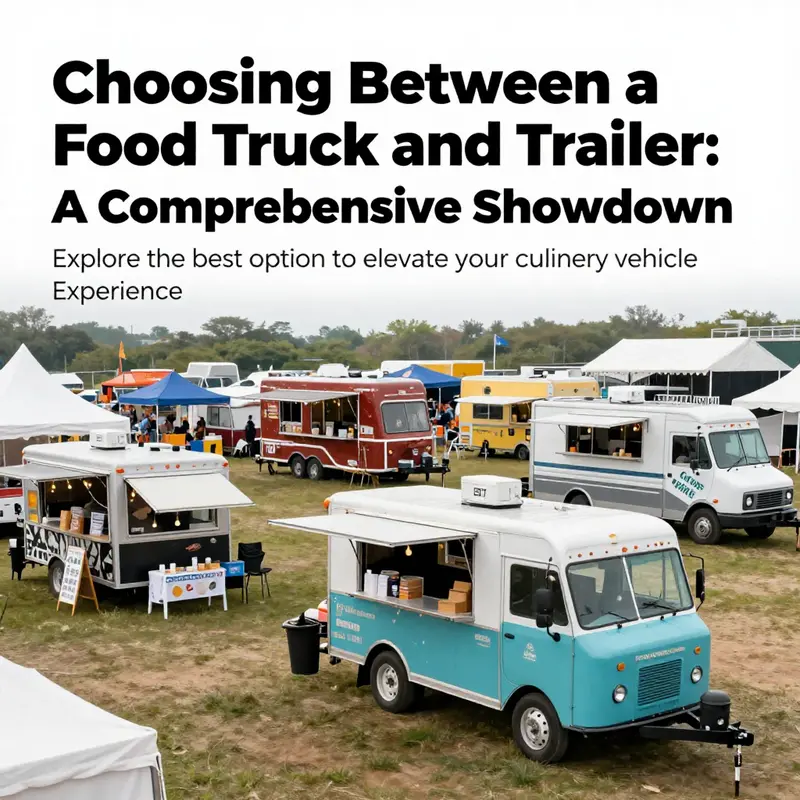
For car enthusiasts and business-minded individuals alike, the decision between investing in a food truck or a trailer can be pivotal. Whether your passion lies in the culinary arts or automotive customization, both options present unique advantages and challenges that must be carefully weighed. A food truck offers inherent mobility and an integrated setup, while a trailer allows for customization and often a more budget-friendly entry point. This article delves into a three-part comparison of food trucks and trailers, examining their pros and cons, setup and maintenance considerations, and the crucial cost analysis. Together, these sections will empower you to make an informed choice that aligns with your operational goals and vision.
Mobility or Modularity: How to Decide Between a Food Truck and a Trailer
Making the choice: key trade-offs and practical realities
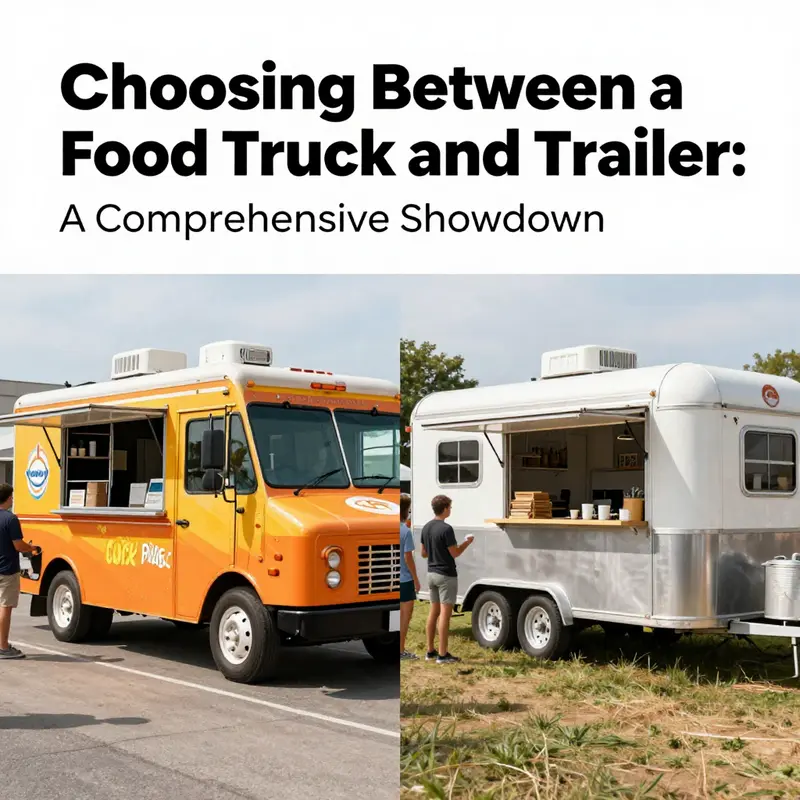
Deciding whether to build your business around a food truck or a trailer comes down to a set of clear, practical trade-offs. Both formats serve the same purpose: bringing food to customers where they gather. Yet each one approaches that goal differently. A food truck packages mobility, instant presence, and polished branding into a single vehicle. A trailer offers a lower cost of entry, flexible configuration, and the ability to pair with a variety of tow vehicles. Understanding the operational realities behind those differences helps you pick the path that matches your budget, menu, rhythm, and long-term goals.
Start by separating the choice into core themes you will revisit again and again: mobility and access, startup and operating costs, day-to-day logistics, regulatory and insurance obligations, menu and equipment needs, branding, and scalability. These themes overlap, and the right decision balances all of them, not just the one that feels most urgent. It helps to imagine concrete scenarios: the weekend market vendor who needs a simple setup, the chef who wants to run a complex menu in the city, and the seasonal operator who values storage and transport flexibility. Each scenario points to different strengths.
Mobility and access often dominate the early conversation. Food trucks are self-powered and ready to roll. Drive to a park, a festival, or a city block and you can be ready to serve quickly. That self-contained mobility shortens prep-to-sales time. It also makes spontaneous opportunities easier. If a last-minute event opens up, you can be on site without a tow vehicle or additional staging. Trailers, by contrast, require a tow vehicle and often more time to set up. They must be unhitched, leveled, and connected to utilities. In tightly scheduled urban environments, those steps matter. But in other contexts they can be managed. If you plan to stay at a single weekly market or a parking-lot spot, the extra setup time is less costly. Trailers give you the option to use a pickup, a van, or a truck for towing, which can lower the capital you tie up in a single asset.
Costs shape the decision for most startups. A new, custom-built food truck typically carries a higher price tag because it is a vehicle and a kitchen fused into one. The chassis, engine, and vehicle systems add expense. You will also carry vehicle-related costs: fuel, maintenance, and commercial vehicle insurance. Trailers are usually cheaper to buy and easier to finance. They remove the vehicle engine from the equation and reduce upfront manufacturing complexity. For many first-time operators, a trailer lowers financial risk and lets capital go into kitchen equipment or initial inventory instead of vehicle systems. But a lower purchase price does not eliminate ongoing expenses. Fuel still matters if you tow often. Storage costs may be different, and owning two pieces of equipment—towing vehicle and trailer—has its own maintenance budget.
Operational logistics tell a similar story in practice. Food trucks simplify daily setup because the kitchen and serving window are part of the driving unit. Fewer hookups and fewer external components reduce the chance of a delayed opening. That simplicity can translate to higher revenue-per-hour in fast-paced locations. Trailers demand that you plan for water hookups, electrical connections, and propane. Many operators overcome this by investing in onboard tanks and generators. That increases independence but also adds weight and complexity. Trailers can support heavier equipment and larger storage areas because they do not carry an engine. This makes them well suited to multi-station operations or menus that require several large appliances. If your menu has fryers, pizza ovens, or large refrigeration needs, a trailer often offers more square footage and structural support for those systems.
Regulatory and insurance realities are not glamorous, but they change the calculus quickly. Food trucks are registered as commercial vehicles in most places. That triggers specific permits, vehicle inspections, and commercial insurance rules. Some cities limit where motorized mobile food units can park. Others restrict operating hours or require truck-specific vending permits. Trailers face a different set of regulations. They may fall under food service or temporary retail rules rather than vehicle codes. That can simplify permitting in some jurisdictions. But trailers can also face zoning restrictions around where tow vehicles can park and vend. Both options demand diligence. Learn local health department rules, fire codes, and municipal vending ordinances early. If legal nuance is important for your market, review dedicated resources such as guidance on startup compliance and licensing to avoid surprises. For operators who expect frequent changes to locations or who plan multiple jurisdictions, the regulatory burden often favors the format with the most flexible permitting profile.
Branding and customer perception matter more than many operators expect. A well-designed food truck conveys a single, unified brand and a visible presence on the street. That visibility can drive walk-up business and social media shareability. Food trucks benefit from integrated graphics, custom wraps, and a cohesive exterior that works as a moving billboard. Trailers can also achieve strong branding, but they sometimes feel more modular and less permanent. This perception varies hugely by market. In some communities, a charming trailer with a distinctive awning is a beloved fixture. In others, a truck feels more professional and trustworthy. Your brand narrative should influence the choice. If a polished, instantly recognizable presence is central to your concept, a truck may provide an edge.
Menu and equipment constraints influence the physical shape of your unit. A complex menu with many hot and cold components typically needs more stable electrical and gas systems. Trailers often provide more room for multi-station prep, and their insulated walls support consistent refrigeration. Trucks can support elaborate menus too, but their compact footprint requires more careful layout planning. If you intend to prepare most dishes to order, consider ergonomics: where will staff stand, how many orders can they assemble at once, and how will flow change during peak minutes? Remember that staff movement and safety are easier in a larger workspace. If you plan to host more than two staff during busy shifts, a larger trailer or a larger truck chassis will be necessary.
Long-term flexibility and growth should shape your decision beyond the startup phase. A trailer separates the kitchen from the tow vehicle. That separation can make upgrading or swapping the tow vehicle easier than replacing an entire truck. If you imagine scaling to multiple units or changing your vehicle over time, a trailer provides modularity. That same modularity can complicate expansion. Operating multiple trailers requires a fleet of tow vehicles or a rental strategy. Food trucks consolidate vehicle and kitchen into one asset, which simplifies fleet structure but increases the cost per unit to replicate. Consider resale and asset life. Trucks depreciate as vehicles and as specialized kitchens. Trailers can retain value longer if the kitchen layout stays relevant and if the trailer frame remains structurally sound.
Daily life and work patterns also influence the question. If you value quick mornings and simple closings, a truck reduces the number of tasks to manage. If your operation runs seasonal schedules, a trailer may offer easier winter storage and the ability to park the tow vehicle at home. Trailer operators often cycle between being drivers one day and helpers the next. That shared responsibility can be a benefit in small teams where owners wear many hats. Remember the human element: how many hours will you spend loading, unloading, and driving? How much do you want to be responsible for mechanical repairs? These lifestyle questions are as important as financial ones.
Maintenance and ongoing costs must be part of realistic planning. Trucks carry engine, transmission, and vehicle wear. Those systems require scheduled service, and unexpected repairs can take a unit off the road. Trailers skip engine maintenance but demand attention to axles, brakes, the hitch assembly, and the body. Tires, lights, and suspension are points of failure for both formats. Both need regular cleaning, sanitary maintenance, and health inspections. Plan a reserve fund. Many experienced operators recommend keeping three to six months of operating expenses in reserve to cover repairs and slow seasons.
Operational risk management also differs. If your tow vehicle is unavailable, a trailer is immobile. That single point of failure can be costly during busy festival weeks. Conversely, a truck having a mechanical issue means the entire business stops too. But swapping a trailer to another vehicle may be feasible if one is available. Insurance nuance matters here. Insuring a commercial vehicle and insuring a trailer can involve different coverage layers. Talk to brokers who understand mobile food units and can explain liability, property, and vehicle insurance options.
Financing and cash flow play out differently. Lenders sometimes view trucks as vehicles and apply auto loan structures. Trailers may qualify for small business equipment loans. Down payments, interest rates, and loan terms vary accordingly. Leasing can be an option for both formats, but lease structures differ. Consider how monthly payments fit your projected revenue model. A higher monthly payment for a truck may be justified if expected higher sales offset costs. Conversely, a lower payment for a trailer can ease cash flow and allow reinvestment into menu development and marketing.
Finally, think about contingencies and exit strategies. How easy is it to sell the asset? In many markets, trailers have a larger resale pool among small business buyers. Trucks may fetch a strong price if their mechanical condition is good and the kitchen is well maintained. Decide whether you want an asset you can repurpose, store easily, or liquidate quickly. These decisions influence how you design your build and what warranties and documentation you keep.
The right choice is rarely about which option is objectively superior. It is about alignment between your business model and the vehicle that supports it. Choose a food truck if you value instant mobility, brand presence, and a seamless operating rhythm. Choose a trailer if you need a lower capital barrier, greater customization, and modularity between vehicle and kitchen. Both can be highly profitable when matched to smart location strategy, consistent food quality, and efficient operations. If legal clarity is a pressing concern for your plan, consult dedicated guidance on permits and compliance early, such as resources addressing legal considerations for Latino food truck startups.
For a practical next step, map your typical week. Note the markets, event distances, hookup needs, staff count, and weather exposures. Compare the time cost of setup to the likely revenue in each setting. Run a simple five-year cash flow that includes purchase, financing, insurance, fuel or towing costs, maintenance reserves, and expected revenue. That exercise will reveal whether the lower upfront cost of a trailer outweighs the convenience of a truck in your specific projection.
A clear-eyed comparison helps you build a realistic roadmap. When paired with careful attention to local regulations and a plan for branding and menu execution, either format can support a thriving mobile food business. For a detailed, authoritative overview of differences in cost and regulation, refer to the industry guidance from the National Restaurant Association: https://restaurant.org/industry-resources/mobile-food-service/food-truck-vs-trailer
From Wheels to Windows: A Balanced Look at Setup, Mobility, and Maintenance in the Food Truck versus Trailer Debate
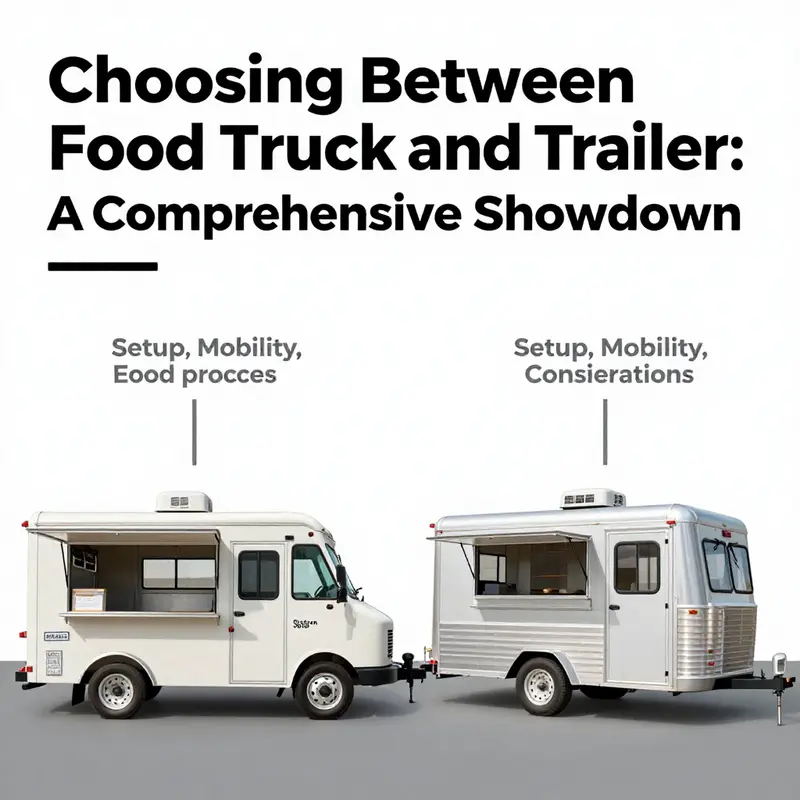
Choosing between a food truck and a trailer is more than picking a shape on wheels. It is a decision that threads together how quickly you can deploy, where you can operate, and what it costs you to keep serving your customers day after day. The stakes are not only about initial cash outlay but about the rhythm of a business that thrives on location, timing, and reliability. In this chapter, the focus narrows to three practical pillars—setup efficiency, mobility in the real world, and long-term maintenance—and it treats them as three conversations you must have with yourself before you sign any purchase agreement. The goal is not to crown a winner but to illuminate how each option aligns with a business model, a market, and a personal sense of how to show up at the right corner, at the right time, with the right impression. The larger article’s question—is it better to have a food truck or a trailer—rests on these terrain-specific questions: how quickly you can be open for business, how freely you can chase events and foot traffic, and how sustainable your operating costs will be over months and seasons. When those elements are laid out in plain terms, the choice becomes a strategic decision rather than a cosmetic one.
To begin with, setup and operational efficiency shape the daily life of a vendor far more than most outsiders anticipate. A food truck, built on a commercial chassis, often comes with an integrated kitchen, refrigeration, plumbing, and electrical systems. The consequence is a self-contained engine room that reduces the number of loose components you must bring to a location. When you arrive, the process may involve leveling the vehicle or chassis, confirming water and power connections, and making sure the on-board systems register a green light for service. In practice, that means fewer trips back and forth to grab hoses, generators, or portable coolers. The moment you arrive at a venue, you can translate the space into a working kitchen with a predictable sequence: stage the menu, test the burners, and set the display, all inside a compact, weather-protected shell. The immediate clarity of a built-in system cannot be overstated; it is a kind of operational assurance that many operators value when planning a busy weekend or a high-volume event.
Yet that streamlined setup comes with a price tag and a set of dependencies. A food truck’s integrated design is a double-edged sword. While it promises efficiency on-event, it also requires a capable towing vehicle and proper licensing to move the truck from one site to the next. The towing arrangement adds complexity to your operations—permits, insurance considerations, and the need for a driver who can manage a larger, heavier vehicle safely through crowded streets or during a shift change. In practical terms, if your event calendar demands rapid transitions between multiple locations on a single day, the truck’s on-board systems are a major advantage, but the logistical overhead of moving and maintaining a motorized unit is an ongoing cost that cannot be ignored. This is a point of friction that many operators learn to manage early: you gain speed and consistency at the storefront, but you inherit the responsibilities of a small mobile business in motion.
In contrast, the trailer offers a different rhythm of setup—one that emphasizes plug-and-play efficiency and a modular approach to deployment. Trailers are designed with the assumption that you will tow them, connect utilities quickly, and then be ready to serve in minutes rather than hours. Quick-connect water lines, propane, and electrical hookups are crafted to minimize the ritual of turning gear on and securing everything in place. This design ethos rewards operators who move frequently between events, pop-up markets, or daily street operations where time is of the essence and space is at a premium. A 2026 analysis highlighted that for those who prize rapid deployment and minimal on-site preparation, trailers often hold a practical edge. You can arrive, hook up, level, and be open for service with a cadence closer to a fixed storefront, albeit while towing behind a separate vehicle. The trade-off is that you must manage a tow rig in addition to your food service equipment, which introduces a separate layer of planning for fuel, maintenance, and insurance.
The mobility conversation, however, is not only about the mere act of moving from place to place. It is about how mobility intersects with market strategy, curbside dynamics, and the realities of urban and rural zoning. Food trucks carry a built-in prestige that can translate into customer confidence and a stronger brand identity. A well-designed truck communicates a story through its exterior, its branding, and the way it remains consistent from event to event. In densely populated areas, that consistency can be worth a premium because it creates a recognizable, reliable experience for repeat customers who spot the truck on the boulevard and know that they will receive a predictable product and service standard. On the other hand, a trailer’s flexibility can be a tactical advantage when you want to experiment with different neighborhoods, target multiple small venues in a week, or adjust to seasonal shifts without a large capital commitment. Trailers can be towed by a broad range of vehicles, from compact SUVs to pickup trucks, which makes them accessible to operators with lighter fleets or more limited upfront budgets. The ability to pair a trailer with a cost-effective towing vehicle is a practical consideration that can free up capital for the kitchen itself and for the other components of the business, such as marketing, staff training, or inventory planning.
The mobility decision, in other words, rests on how the business intends to move through space. If daily location changes are frequent and the operator values speed and image in equal measure, the truck often becomes the more seamless option. If the operator expects to move frequently but wants to avoid the heavier financial and logistical footprint of a motorized vehicle, the trailer provides a nimble alternative that remains faithful to a core kitchen design. A nuanced way to frame this is to think about the friction of movement: trucks demand a towing protocol, licensing, and insurance practices, while trailers demand a towing vehicle and a habit of careful pre-operation checks. Each path imposes a schedule, a risk profile, and a cultural footprint on the business. To illustrate the practical trade-offs, consider how a vendor might map a typical week. A truck-based operation might anchor its week in a single, prominent market or district, where mobility is less of a constraint and the emphasis is on presenting a polished, professional environment. The trailer-driven model might prioritize a tour of several high-traffic locations within a city or along a waterfront, making the ability to reposition quickly a major strategic advantage.
Maintenance is the final pillar in this triad, and it often serves as the most revealing lens on total cost and long-term viability. A food truck’s maintenance load mirrors that of a small commercial vehicle. The engine, transmission, brakes, and tires demand regular attention, and the integrated kitchen systems add layers of complexity. Refrigeration, ventilation hoods, and electrical networks operate in tight spaces that are not as forgiving as a conventional kitchen. When something goes wrong, the repair bill can rise quickly because specialists may be required to service both the vehicle shell and the kitchen equipment in tandem. Fuel costs, insurance premiums, and ongoing depreciation of a motorized asset all accrue in ways that can catch a growing business off guard if not carefully modeled. In the long run, these factors can contribute to a higher total cost of ownership, even if the monthly payment or lease is manageable and the on-site efficiencies are compelling. The above realities mean business owners must consider not just what they will cook, but how they will move and how they will maintain the machinery that makes the cooking possible.
Trailers, by contrast, tend to present a different maintenance profile. With fewer mechanical systems integrated into the unit itself, trailers typically incur costs tied more to the daily use and to the towing rig that pulls them. They rely on the vehicle’s engine and drive components for mobility, which means maintenance spending is more modular and spread across two distinct assets: the trailer shell and the tow vehicle. The trailer itself usually features simpler refrigeration and power options, and the absence of a built-in engine means there is less exposure to engine wear-and-tear and fuel-related operating expenses inside the kitchen’s own ecosystem. As a result, long-term operating costs for trailers can be lower, especially for operators who optimize fuel use and schedule regular, predictable maintenance for both the trailer and the towing vehicle. A 2026 report highlighted that while initial investment in a trailer is typically lower, prudent operators also plan for the cost of a reliable tow vehicle, annual inspections, and potential trailer-specific components like hitch systems, leveling jacks, and utility hookups that must be kept in top condition. Taken together, the maintenance calculus for trailers can be simpler to forecast and often more forgiving during the early growth phase of a business, particularly for those starting with a tighter budget or a do-it-yourself mindset.
Even with these architectural differences, the real-world decision is rarely about a single feature in isolation. It is about the combination of setup speed, the cadence of movement, and the ongoing maintenance load shaping cash flow, risk management, and the narrative of your brand on the street. A truck can deliver a polished, consistent image and a “ready-to-open” workflow that appeals to venues and event organizers who value reliability and professional presentation. The trailer can deliver lean costs, flexible location strategies, and the ability to experiment with different layouts or branding modules as you grow. A practical way to hold these possibilities in mind is to project a year or two into the future. If your plan involves a rapid expansion in urban pop-ups, frequent relocation, and a strong emphasis on a single, cohesive brand image, a truck might be the better anchor. If your aim is to test market concepts, serve multiple neighborhoods with a lean crew, or preserve capital for menu development and staff training, a trailer could be the wiser starting point. The beauty of the framework lies in its transparency: the most suitable path is often the one that aligns with your operating tempo, your locality, and your willingness to manage the additional responsibilities that come with mobility.
To explore a concrete facet of mobility that influences daily operations, consider the nuanced differences between how a vehicle-based truck and a trailer can shape your route planning, time on-site, and the ability to respond to last-minute venue changes. A practical comparison of mobility constraints in daily operations can be found in discussions that compare step vans and cargo vans for food trucks. This line of consideration helps illuminate the subtleties of moving between sites with minimal disruption, and it underscores why so many operators place a high premium on the cadence of their day—from parking and setup to the speed of service and the pace of cleanup. For vendors who want to blend mobility with branding, this cadence is not a luxury but a requirement, because it defines how you earn, reinvest, and scale.
In the more granular dimension of cost and risk, the choice between truck and trailer often becomes a question of capital structure and timeline. A food truck embodies a capital-intensive, turnkey solution. It promises all-in-one reliability and a capacity to scale by multiplying the number of events rather than the number of staff or the square footage of a kitchen. But it also requires ongoing investment in maintenance, insurance, and the vehicle’s resale value. A trailer, in contrast, invites a modular approach to growth. It invites operators to start with a smaller, leaner footprint and to build out capabilities as revenue streams widen. It can be easier to finance in stages, and it can adapt to a changing appetite for different menus or different venues with a few strategic tweaks to the trailer’s interior layout. This adaptability is not merely about physical space; it is about the strategic flexibility to pivot your brand to new neighborhoods, to adjust for seasonal demand, and to respond to regulatory landscapes with a lighter, more manageable test-and-learn posture. In practice, both routes require careful budgeting for maintenance contingency, for license changes as you move through markets, and for the evolving needs of your operations. The most successful operators treat maintenance not as a static cost but as a core capability—regular checks, proactive upgrades, and a cadence of inspections that keeps both your kitchen and your mobility assets aligned with your business goals.
Together, these threads—setup efficiency, mobility, and maintenance—are not independent. They inform a feedback loop that determines how your business scales, how safely and predictably you can serve customers, and how you can sustain profitability across a season or a year. A boutique vendor who opens at a weekly farmers market might prize a trailer’s quick setup and nimble movement, using the extra capital to refine the menu and build a larger social footprint. A mobile catering operator with a roster of large events and corporate bookings might lean toward a truck to deliver the seamless, high-impact presence that organizers expect. The tension between these paths lies in how you value speed versus flexibility, image versus cost, and the short-term ease of operation versus the long-term discipline of maintenance. The true answer, then, is not a single choice but a fit—an alignment of your schedule, your capital plan, and your customer promise with the practicalities of setup, the realities of mobility, and the demands of ongoing upkeep.
In closing this exploration, the decision is not about which option is objectively better in every circumstance. It is about which option better serves your business model, your target markets, and your long-term vision. If you want the speed of opening a polished storefront on wheels and the branding authority to match, the food truck stands out as the most straightforward bet in terms of customer perception and on-site efficiency. If you want to test markets with minimal upfront risk, move lightly between venues, and allocate resources toward menu development and staff training rather than a heavy asset, the trailer offers a cost-conscious, flexible route forward. The practical calculus is anchored in the specifics of your operation—the cadence of your events, the markets you serve, and your appetite for the responsibilities that mobility imposes. By thinking of setup, mobility, and maintenance as a single, integrated system rather than three separate considerations, you can chart a path that leverages the strengths of either option while mitigating its weaknesses. And as you plan, remember to review your calendar, your local permit landscape, and your financial runway, because the most resilient mobile food business is the one that treats its wheels as a strategic asset—carefully chosen, well maintained, and tuned to the tempo of the markets you serve.
For readers seeking a broader, technical context on these issues, a comprehensive external resource on mobile kitchen specifications and industry applications is available at https://www.foodtrucks.com/ . In practical terms, analyzing this broader landscape alongside the specific trade-offs of trucks versus trailers can help you anchor your decision in both theory and real-world constraints, ensuring that your choice not only fits your pocket but also resonates with your customers wherever you set up shop. And as you move through the process, consider visiting related conversations and case studies that discuss the realities of daily operations, life on the road, and the long arc of building a mobile food business. For a closer look at the human side of running a mobile kitchen, you can explore profiles and stories of veteran operators and their journeys, which provide useful perspective on how setup, mobility, and maintenance translate into everyday practice. A starter look can be found in resources focused on balancing work-life demands for food-truck entrepreneurs, which helps illuminate the personal decisions that accompany the technical ones.
Internal link for further reading on mobility considerations: Step Vans vs Cargo Vans for Food Trucks. This resource discusses how different vehicle architectures affect maneuverability, parking, and the overall workflow of a street-side kitchen, offering a practical lens for operators weighing truck-plus-kitchen against trailer-plus-tow-vehicle arrangements. While the content there centers on vehicle comparisons, the underlying principle—how the physical form of your mobile kitchen shapes daily operations and long-term strategy—resonates with the themes of setup, mobility, and maintenance explored here.
Ultimately, the choice between a food truck and a trailer should be grounded in clarity about your market, your schedule, and your tolerance for ongoing upkeep. The decision is less about chasing the latest convenience and more about building a resilient, repeatable model for serving customers on the move. If you map your priorities to the three pillars of setup speed, mobility flexibility, and maintenance predictability, you will discover not a fixed winner but a workable path that aligns with your business’s unique tempo and your own sense of how a mobile kitchen should exist in the world. The road is open, and the right vehicle—whether it sits on a chassis or tows behind a vehicle—will emerge as the one that most faithfully supports the business you are building, day after day, event after event.
Weighing the Investment: A Detailed Cost Anatomy of Food Trucks Versus Trailers
Cost Anatomy: How Trucks and Trailers Stack Up
Buying a vehicle for a mobile food business is rarely just about the sticker price. Costs spread across purchase, customization, operations, compliance, upkeep, and eventual resale. Each of these layers shifts the return on investment and changes which option—food truck or trailer—makes sense for your goals. This chapter breaks down those layers and shows how they interact, so you can make a financially grounded decision without losing sight of practical realities.
The first figure most entrepreneurs focus on is the initial investment. Food trucks are typically more expensive up front. They combine a vehicle chassis with a fully outfitted kitchen, plumbing, electrical, and insulation. Expect a built unit to cost significantly more than a simple trailer. Trailers, by contrast, often cost 30% to 50% less for a comparable kitchen footprint. Lower entry cost makes trailers appealing to startups or operators testing concepts. But the raw purchase price is only the start.
Customization and build quality drive early spending. A food truck’s frame and drivetrain increase charges for professional builders. Purpose-built trucks often require specialized welding, integrated HVAC, and reinforced floors. These elements add to labor and materials. Trailers tend to be simpler. They rely on a tow vehicle for mobility and so omit engine-related work. For this reason, many owners can save by buying a trailer shell and managing the fit-out themselves. That choice reduces initial cost but raises labor time and planning needs.
Beyond the build, permitting and licensing can create immediate and recurring expenses. Both trucks and trailers must meet local health codes, fire regulations, and business permits. However, the logistics differ. Motorized trucks may face extra municipal fees or vehicle-specific restrictions in some cities. Trailers often require separate permits, a compliant tow vehicle, and sometimes additional inspections at each event or market. It pays to get local guidance early. For operators focused on compliance and risk management, resources like legal considerations for Latino food truck startups can clarify typical municipal requirements and help avoid surprise costs.
Operational flexibility affects ongoing revenue and variable costs. Food trucks win on mobility and speed. They can move between neighborhoods, follow event schedules, and pivot when demand shifts. That mobility often translates to higher gross sales potential. Hidden within that benefit are fuel, vehicle maintenance, higher insurance premiums, and regular chassis servicing. Operating a truck is like running a small commercial vehicle fleet. Fuel and mechanical expenses add up with high-mileage calendars.
Trailers trade some mobility for lower operational overhead. You can tow a trailer to events and then detach it. This approach reduces engine wear and can let multiple trailers share a single tow vehicle. Yet trailers increase setup time. You must level the unit, connect utility lines, and secure propane and power sources. Those tasks cost labor and occasionally require rental equipment. In tight event windows, lost time at setup translates to lost revenue. For operators who run predictable schedules, however, the trade-off often works in their favor.
Insurance and liability shape monthly budgets. Food trucks generally carry higher commercial auto rates. Combined policies must address vehicle damage, third-party liability, and the kitchen’s contents. Trailers may get lower vehicle-related premiums, but you still need commercial general liability and property coverage for equipment, plus coverage for the tow vehicle. Don’t underestimate added costs when you tow to out-of-state events. Different jurisdictions can affect premiums and require additional endorsements.
Fuel and utility expenses diverge between the two options. Food trucks consume fuel to both travel and power onboard systems if they lack sufficient secondary power. Many trucks use generators or shore power when parked. Trailers rely more heavily on external power or portable generators. Trailers can also leverage larger, more efficient generators because they do not need to match vehicle powertrain size. Electric powertrain adoption is an emerging factor here. Purpose-built electric trucks promise lower lifetime fuel costs. But they currently bring higher initial price tags and require charging infrastructure.
Maintenance and depreciation matter for long-term returns. Vehicles depreciate on different timelines. A motorized truck ages both as equipment and as a vehicle. You must manage engine hours, transmission wear, and regulatory emissions compliance, as relevant. Trailers primarily depreciate as equipment. They can be easier and cheaper to repair. However, trailers can suffer frame fatigue, corrosion, and wear from frequent towing. In either case, durable construction and quality components reduce long-term replacement and downtime costs.
Kitchen equipment overhead is another shared factor. Fryers, grills, refrigerators, and prep tables retain similar costs regardless of a truck or trailer. But space constraints influence equipment choices. Trucks may provide better insulation and climate control, making some menu items viable year-round. Trailers, with tighter footprints, sometimes force menu simplification. Simplified menus reduce ingredient inventory and labor, but can cap ticket size and daily revenue.
Labor affects profitability. Food trucks often benefit from smoother flows and efficient, integrated layouts. That efficiency can reduce staff headcount per shift. Trailers may require extra hands during setup and service, particularly when equipment is split between trailer and tow vehicle. Staffing costs should be forecasted based on realistic shift structures, including prep time and teardown. Labor laws and overtime rules remain constant across both models and must be built into projections.
Commissary and storage costs should be included. Many municipalities require a commissary or certified kitchen for food trucks and trailers. Commissary fees vary by region and range from modest to substantial monthly costs. Shared-commissary programs and municipal incentives sometimes reduce overhead for trucks by streamlining permitting and inspection. Trailers may allow for easier off-hour storage in private yards, but secure storage and long-term parking still incur costs. Factor in both day-to-day commissary fees and seasonal storage needs.
Cash flow and financing shape feasibility. Securing a loan is often easier when cash flow projections look strong. Lenders evaluate the asset and the operator. Food trucks, being higher-cost assets, often require larger loans or deeper down payments. Attractive resale value and durability can help secure financing. Trailers demand smaller loans and lower monthly payments. That improves early-stage cash flow and reduces burn risk. Some businesses intentionally start with a trailer, validate the model, then trade up to a truck after establishing steady revenue.
Return on investment depends on realistic sales, margins, and utilization. A truck’s higher revenue ceiling stems from mobility and capacity. But if market demand is inconsistent, that higher ceiling may remain unreachable. Trailers work well where predictable demand exists, such as fixed markets or catering contracts. Do the math on break-even sales. Include loan payments, insurance, commissions to event organizers, and all operating costs. Model conservative and optimistic scenarios to see how fast you recover the initial outlay.
Seasonality and weather resilience also affect net returns. Trucks often offer better insulation and customer-facing areas, improving sales during colder months. Trailers can be less comfortable for customers and staff in extreme temperatures. If your market faces long winters or intense heat, ask how many months per year you realistically can operate. Seasonal closures change annual revenue and push you to plan for storage and off-season costs.
Scalability and long-term strategy determine which investment aligns with your growth path. If you plan to scale through multiple units, trailers allow faster replication at lower capital cost. You can buy several trailers and rotate a single tow vehicle between them. A franchise-minded operator may prefer this model. Conversely, if your brand depends on a polished, mobile presentation and frequent neighborhood hopping, trucks can strengthen brand recognition and justify higher margins.
Resale and asset liquidity are important exit considerations. Well-maintained trucks often sell at reasonable values, especially if built on common chassis. Trailers also sell well, but the market can be narrower. Custom builds may depreciate faster if buyers want different layouts. Keeping build standards near industry norms preserves resale value. That also helps when refinancing or using the asset as collateral.
Risk management completes the financial picture. Unexpected downtime, accidents, regulatory changes, or supply chain disruptions can erode margins. With trucks, mechanical failure can halt business until repairs finish. With trailers, losing access to a tow vehicle can do the same. Build contingency reserves into your financial plan. Consider warranties, preventive maintenance contracts, and emergency operating funds. Budgeting 3% to 5% of gross revenue for maintenance and unexpected repairs is a prudent rule of thumb.
Finally, market trends nudge the direction of sensible investment. The broader food truck market is growing, and innovations like electric powertrains and purpose-built chassis reduce lifetime operating costs. These trends favor durable investments like trucks. Yet the initial premium remains a real barrier for many operators. Trailers retain a strong place for entrepreneurs who need low-cost entry, controlled risk, and modular expansion.
Choosing between truck and trailer is an alignment problem more than a technical one. If your model depends on frequent moves, varied locations, and a strong branded presence, the higher upfront cost of a truck often pays off through increased revenue potential and streamlined operations. If your plan is to test a concept, manage costs tightly, or operate mostly in fixed settings, a trailer can stretch your runway and reduce risk. Both paths require careful budgeting for licenses, insurance, commissary fees, and maintenance. Build conservative forecasts, model multiple scenarios, and prioritize flexibility where possible.
The decision comes down to the sum of many parts: purchase price, build quality, licensing, insurance, utilities, labor, maintenance, storage, and resale. Each item interacts with your local market and your chosen business model. By translating those interactions into monthly cash flows and break-even points, you can see which asset aligns with your capacity, appetite for risk, and long-term objectives. For operators who want a deeper look at market dynamics and future forecasts, consult the authoritative market analysis linked by industry research. https://www.marketsandmarkets.com/Market-Reports/food-truck-market-149785298.asp
Final thoughts
Ultimately, the choice between a food truck and a trailer hinges on your specific needs, budgetary constraints, and operational aspirations. Each option has distinct merits: a food truck is unparalleled in mobility and convenience, while a trailer shines in affordability and customization. As you reflect on your culinary journey and automotive passion, your ideal choice will resonate with your vision for success. Carefully evaluate what aligns best with your business model and lifestyle to ensure that whichever option you select, it is a stepping stone toward achieving your culinary dreams.