
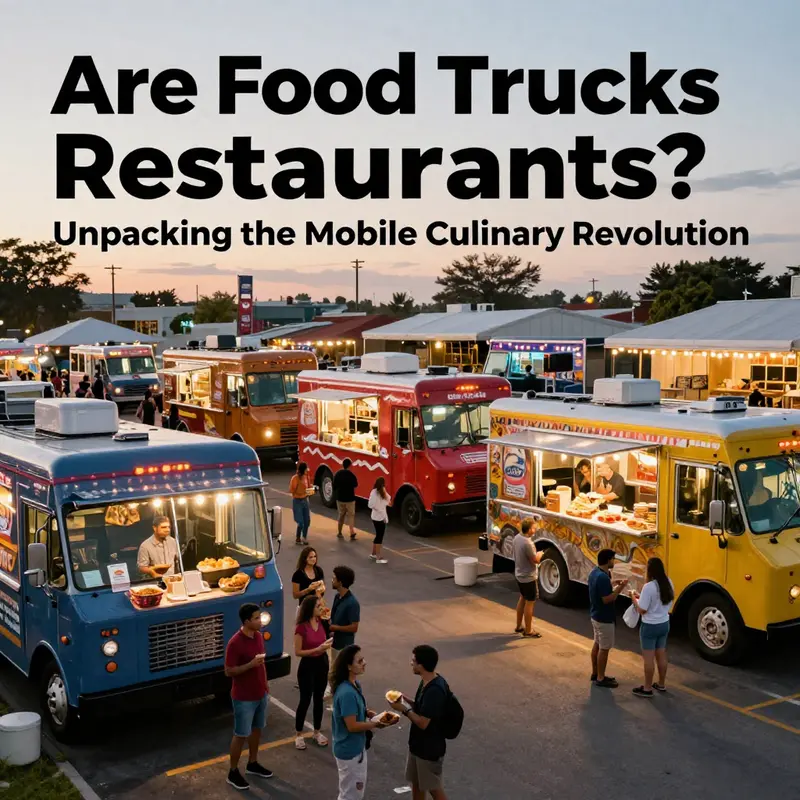
As food enthusiasts and culinary pioneers, the allure of food trucks has steadily captured the imaginations of consumers and chefs alike. These mobile kitchens symbolize not just a trend in dining but also bring to light pressing questions about their identity: Are food trucks legitimate restaurants? This exploration seeks to define what constitutes a restaurant, investigate the regulatory landscape that governs food trucks compared to traditional establishments, and illustrate the significant economic impact these ventures have on communities. Additionally, we will delve into the cultural significance of food trucks and their role in fostering community interactions, and finally, we will uncover the latest innovations shaping the food truck industry. Each chapter aims to provide a nuanced understanding of how food trucks have carved their niche in the broader culinary landscape.
Mobile Kitchens, Real Tables: Redefining What It Means for Food to Be Served from a Truck
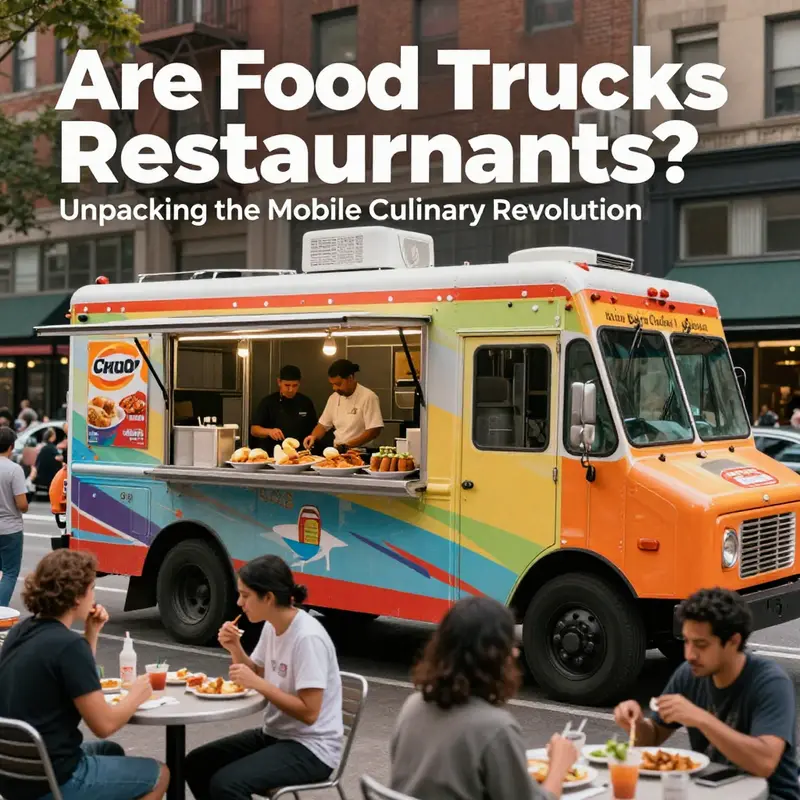
Food trucks are restaurants in motion: they cook, plate, and serve meals from a mobile kitchen rather than a fixed dining room. Mobility expands where and when people can dine, but the core restaurant values: quality, safety, hospitality, and consistency remain intact.
Modern trucks are purpose-built kitchens on wheels, with integrated cooking lines, refrigeration, storage, and a service window that welcomes customers. This setup enables high turnover and the execution of more complex menus than one might expect from a vehicle.
They still operate under health codes, obtain permits, and undergo inspections, and the staff perform the same essential roles as in a brick-and-mortar restaurant: prepping ingredients, cooking, plating, and engaging diners. The difference is scale, not standard.
Above all, food trucks adapt to venues and communities, tailoring offerings to the audience and location, and in doing so, broaden access to high-quality cooking. Mobility becomes part of the dining experience, not its obstacle.
Are Food Trucks Restaurants? Navigating Regulation, Mobility, and Culinary Innovation
The question of whether food trucks are restaurants invites a careful look at how we define a dining experience, not just a menu. Food trucks are kitchens on wheels, vessels of craft that prepare and serve meals with the same intention as a brick-and-mortar restaurant: to feed, to delight, and to build a repeat audience. Yet they operate with a mobility that turns every shift into a field test and every curbside into a temporary dining room. This mobility changes the regulatory calculus in real time. It is not merely a legal nuance but a fundamental feature that reshapes risk, opportunity, and the pace of culinary innovation. When we ask if food trucks are restaurants, we are really asking how regulatory frameworks can accommodate a dining format that travels as freely as the menus it carries, while still upholding public health, fair competition, and neighborhood character.
Health codes and licensing are the foundational bridge between a kitchen in a truck and a kitchen in a building. In both cases, the operator must demonstrate safe food handling, proper temperature control, sanitation practices, and reliable staff training. Yet the way those requirements are enforced diverges in meaningful ways. A traditional restaurant anchors its compliance in a fixed location, where inspectors routinely sample product, review records, and confirm that plumbing, ventilation, and waste systems operate in harmony with city codes. A food truck, by contrast, must prove that its mobile kitchen maintains those same standards while traveling, parking, and serving across multiple zones and jurisdictions. It is as if the restaurant’s core requirements were projected onto a moving stage where every stop might trigger a new round of checks, permits, and expectations.
Zoning and location regulation are the most visible frontiers for mobile vendors. Traditional eateries negotiate a single lease, a single zoning classification, and a single set of surveillance routines that correspond to a permanent address. Food trucks, however, operate under a lattice of location-based permissions. They need permits for each site and often for each event, and many cities impose time limits on how long a truck may remain in one spot. Some jurisdictions require mobile vendors to register as temporary or mobile establishments, with reporting that tracks hours, destinations, and compliance history. This mobility is both liberating and burdensome. It liberates operators to meet customers where they are—parks, business districts, stadiums, markets—while burdening them with a web of permissions that can change from block to block. The regulatory landscape becomes a dynamic map that operators must read in real time, a map that rewards planning and disciplined documentation.
The contrast with traditional restaurants also includes infrastructure and capital considerations. A fixed-location restaurant typically invests heavily in plumbing, ventilation, and fire-control systems designed for a single, stable footprint. Those investments anchor a more predictable inspection regime and a steadier operating rhythm. In contrast, a food truck must balance the limitations of a compact cooking space with the demands of high-volume service, all while ensuring that waste disposal, power supply, and food storage meet health standards across varied locations. The physical constraints of a truck—smaller cold storage, limited prep space, and time-bound service—shape not only the menu but also the development of processes for sourcing, receiving, and storing ingredients. The result is a different kind of culinary discipline: lean inventories, focused prep, and a responsive menu that can pivot with the day’s supply and the clientele’s preferences.
Despite these differences, both forms of dining share core regulatory obligations: inspections by public health departments, meticulous record-keeping of food sourcing and preparation practices, and a commitment to safe operation. The shared expectations are a reminder that the distinction between food trucks and traditional restaurants sits less in the quality of food and more in the structure of how and where that food is prepared and served. In this light, mobility becomes a lens through which innovation flourishes rather than a barrier to entry. Denver, for instance, has become a laboratory where culinary risk-taking and accessibility intersect. As Carlos Mendez, Director of the Colorado Street Food Alliance, observed, Denver’s food trucks are where culinary risk-taking meets accessibility. You’ll find more creativity per square foot here than in most downtown restaurants. That sentiment underscores a truth: regulatory frameworks can be flexible enough to protect public health while still allowing mobile kitchens to push culinary boundaries and reach audiences that sit outside the usual dine-in model.
The practical implications of this regulatory negotiation extend to how operators source ingredients, train staff, and build partnerships with customers and communities. For many truck operators, success hinges on a steady rhythm of permits, location scouting, and clean, efficient operations. The ability to move to a busy lunch corridor, a festival, or a neighborhood event is a powerful competitive advantage, but it comes with the responsibility to secure the necessary permissions for each locale and to adapt the service model to different regulatory climates. This means not only compliance but also strategic planning: choosing routes with predictable foot traffic, aligning with community events that favor diverse culinary offerings, and maintaining transparent records that simplify renewal processes and audits. The result is a business model that looks lean but demands a robust, ongoing regulatory literacy.
The dialogue around regulation is not meant to dampen the appetite for mobility or innovation. Rather, it invites a more nuanced view of how public policy can support safe, inclusive, and dynamic food ecosystems. The mobile format encourages a democratization of access to diverse cuisines, and it can introduce more neighborhood flavor into urban life than a single fixed site might manage. In practice, cities that balance oversight with agility tend to cultivate vibrant street-food scenes that coexist with traditional dining spaces, not at odds with them. The case for food trucks as legitimate, dynamic dining establishments rests on a shared commitment: safety, accessibility, and the belief that cuisine can travel as freely as the people who crave it.
A useful path for operators and policymakers alike is to view regulatory guidance as a living document rather than a one-time checklist. This means codes that recognize mobile service, permit processes that streamline for frequent relocation, and inspection protocols that adapt to the realities of on-the-go kitchens, not just brick-and-mortar ones. Operators benefit from proactive engagement with city agencies, clear documentation of sourcing and handling practices, and a willingness to adjust menus and operations to meet sightlines of health and safety without sacrificing the creativity that draws customers in the first place. In this ecosystem, the line between a restaurant and a mobile kitchen blurs in a productive way: both are culinary venues that deserve to be judged by the same standards of quality and safety, even as their modes of delivery diverge.
For readers seeking a practical entrée into the regulatory considerations that shape Latino food-truck startups and related enterprises, a dedicated resource explores the terrain in depth. It offers guidance on licensing steps, permits, and compliance strategies tailored to the unique demands of mobile Latino food-service operations. See the article at legal considerations for Latino food-truck startups for a grounded view of the hurdles and opportunities that arise when mobility meets culinary craft. It complements the broader discussion by providing concrete examples of how operators navigate local rules while maintaining a distinctive cultural voice on the street.
Ultimately, the debate about whether food trucks are restaurants centers on intent and function as much as on location. They share the same responsibility to deliver safe, appealing food but do so within a regulatory framework that rewards ingenuity even as it guards the public interest. The success stories across markets—from busy urban cores to neighborhood pockets—affirm that mobility, when paired with disciplined compliance, can coexist with tradition and expand the dining map for a city’s residents and visitors alike. The regulatory conversation, then, is not a wall but a scaffold: a structure that lets culinary experimentation reach more people without compromising health, fairness, or accountability. As this chapter has shown, food trucks deserve a respected seat at the table of modern dining, with rules that fit their moving, improvisational nature rather than forcing them to fit into a static, one-size-fits-all model. The result is a dining landscape where mobility amplifies choice and where innovation can thrive under the careful watch of public health and community standards.
External reading for deeper context on regulatory landscapes and operational dynamics of food trucks in specific cities can be found in coverage focused on Denver’s street-food scene: https://www.denverpost.com/2026/01/29/best-food-trucks-denver-flavorful-street-eats/
Rolling Kitchens, Real Economic Power: How Food Trucks Redefine the Restaurant Landscape
Food trucks have moved beyond novelty to claim a permanent seat in the modern dining economy. They are, in essence, fully operational restaurants on wheels, equipped with integrated cooking lines, refrigeration, storage, and service windows that allow cooks to prepare and plate meals while on the move. This combination of mobility and capability creates a dining experience that rivals brick-and-mortar establishments in both quality and variety. A single truck can switch from street corner to festival to corporate campus, offering everything from casual street foods to carefully composed dishes that reflect culinary training and experimentation. The result is a dynamic, responsive form of service that can meet the pace of urban life without sacrificing the predictability and standards customers expect from a restaurant.
The economic implications of this mobility are profound. Food trucks extend the reach of dining options into parks, office districts, and event spaces where permanent restaurants may face lower foot traffic or higher fixed costs. When a truck parks in a busy neighborhood, it can attract a crowd that spills over to nearby retailers, bars, and hotels, creating a cascade of spending that benefits a broader local economy. This spillover effect is a hallmark of the mobile dining model: it concentrates foot traffic in places that might otherwise struggle to attract patrons, turning vacant lots and underutilized plazas into temporary culinary hubs. The rise of food truck parks in many cities illustrates how a cluster of mobile eateries can transform a once obscure corner into a vibrant destination, encouraging people to linger, explore, and spend, sometimes well into the evening. As the research notes, these parks often catalyze more sustained economic activity by drawing a cross-section of visitors who might otherwise bypass the area.
Inside this swirling ecosystem, the role of the food truck as a legitimate restaurant is reinforced by the capacity to handle large volumes and diverse menus. Trucks can offer multi-cuisine menus, adapt to seasonal ingredients, and host themed events that bring in new customers. They are not just about quick bites; some operate with the same level of culinary ambition found in established restaurants. This position is reinforced by leaders in the field, such as the director of a street food alliance in a major western city, who notes that Denver’s food trucks exemplify how culinary risk-taking and accessibility can coexist. In his view, the mobility of these ventures liberates chefs to push the boundaries of what a restaurant can be, unbound by the physical constraints of a single storefront. The effect is a more varied, sometimes more daring local food scene that expands consumers’ expectations about what a restaurant can deliver on a given day or at a given event.
Entrepreneurship sits at the heart of the food truck movement. The entry barrier is lower than that of a traditional startup restaurant: lower upfront investment, simpler licensing steps in many jurisdictions, and rapid time-to-market. This combination makes the truck model an attractive proving ground for new concepts, allowing culinary innovators to screen ideas in real-world settings before committing to a brick-and-mortar footprint. The consequences extend beyond individual success stories; they reshape the competitive landscape by enabling micro-entrepreneurs to build brands through mobility, social media presence, and direct customer feedback. Food trucks thus function as laboratories of the restaurant economy, where risk-taking is not just tolerated but encouraged as a path to sustainability.
The mobility of food trucks also supports the broader goals of urban vitality. In many cities, truck operators calibrate their schedules to synchronize with events, festivals, and seasonal outdoor activities, creating temporary streetscapes that resemble pop-up dining districts. These districts are not merely about food; they become social spaces—gathering places where locals and tourists exchange experiences, discover new flavors, and create memories around meals enjoyed in public spaces. Such experiences cultivate a sense of place that can lift neighborhood mood, increase dwell time, and, by extension, enhance retail activity in the surrounding streets. In this sense, food trucks contribute to what urban planners describe as place-making, turning underused zones into recognizable culinary destinations that invite repeated visits.
Cultural variety is another engine of economic impact. Mobile dining makes it easier for communities to showcase regional cuisines and immigrant cuisines that might be underrepresented in conventional dining districts. The flexibility to rotate menus and highlight specific traditions means that diners encounter a broader spectrum of flavors without committing to a long-term restaurant investment. This accessibility benefits restaurant professionals, too, who can partner with truck operators for events, catering, and brand experiences. The result is a more interconnected local food economy in which trucks, events, and stationary restaurants reinforce one another rather than compete in a zero-sum struggle. The experiential appeal of street-level culinary exploration also supports tourism and local employment, from chefs and cooks to event coordinators and food safety instructors.
The economic narrative of food trucks would not be complete without recognizing their role as accessible avenues into the restaurant industry for a wide range of aspiring entrepreneurs. The barriers to entry are often lower than those faced by aspiring restaurateurs who seek a permanent storefront. With a smaller financial footprint, truck operators can test ideas, refine their offerings, and build a loyal customer base before expanding to more permanent locations or launching multiple vehicles. This experimentation is invaluable in a market that increasingly rewards culinary differentiation and a fast response to consumer preferences. It is not merely about surviving; it is about thriving in a competitive ecosystem where branding, mobility, and consistent quality converge to define a resilient business model.
The idea of legitimacy is central to the discussion of whether food trucks are restaurants. When a truck serves prepared meals from a service window on a street corner or at a festival, it is performing as a restaurant in two crucial ways. First, it adheres to the same expectations around food safety, hygiene, and consistent service that customers associate with brick-and-mortar venues. The cooking lines, storage facilities, and service protocols are designed to maintain quality across a wide range of dishes and audience sizes. Second, it is a business that generates revenue, sustains staff, and interacts with licensing regimes, health inspectors, and city planners in ways that parallel traditional restaurants. Mobility, in this sense, is the differentiator, not a exemption from standard culinary practice. The result is a contemporary restaurant form that meets people where they are, literally, in motion across streets and neighborhoods.
Against this backdrop, it is helpful to consider how specific urban dynamics shape the success and perception of food trucks. In cities where there is a robust street-food culture and supportive regulatory environments, trucks flourish as culinary anchors rather than passing fads. Where regulatory hurdles are higher or where space is scarce, trucks may face more friction, but their adaptability often allows them to navigate licensing, zoning, and safety requirements in creative ways. The central pattern across these scenarios is adaptability: trucks adjust menus, schedules, and locations to align with customer rhythms, seasonal demand, and community events. In doing so, they become part of the urban fabric rather than a transient spectacle. This adaptability, combined with high-visibility branding, makes trucks a compelling channel for culinary storytelling and neighborhood economic development.
In the broader narrative of the urban dining economy, the presence of Latino food trucks—by extension, immigrant and multicultural culinary ventures—has played a notable role in shaping city food scenes. In major urban centers, these mobile kitchens contribute to a richer, more diverse culinary landscape, expanding the palette available to diners and creating pathways for culinary entrepreneurship that reflect community identities. For readers exploring this topic, a closer look at Latino food trucks in major cities can illuminate how mobility, cultural heritage, and economic opportunity intersect on crowded streets and at city events. Latino food trucks in major cities offers a window into these dynamics, providing concrete examples of how mobile dining translates into local economic activity and cultural exchange.
Throughout this convergence of mobility, entrepreneurship, and culture, one constant remains: food trucks are adding a tangible, measurable dimension to the restaurant economy. They are not simply a trend; they are a flexible, scalable model that can respond to changing consumer expectations, urban development patterns, and evolving food cultures. By turning empty lots into vibrant dining experiences, trucks help to revitalize neighborhoods, create employment opportunities, and stimulate spending across adjacent sectors. They also invite a rethinking of what counts as a restaurant, inviting customers to consider the experience of dining as something that can happen in many places and through many forms, all while maintaining the core values of quality, service, and culinary imagination.
For readers seeking a more in-depth exploration of the economic impact behind this mobile restaurant model, the broader analysis of food trucks as restaurants offers a compelling synthesis of mobility, market dynamics, and culinary ambition. External research consolidates observations about how mobile kitchens catalyze economic activity, diversify food offerings, and lower barriers to entry for aspiring chefs. This body of work helps anchor the chapter’s assertions about legitimacy and impact in a broader, data-informed context, while still recognizing the human stories—the operators, the crews, and the communities that come to life around a moving kitchen. External resource: https://www.foodtrukk.com/blog/food-trucks-as-restaurants-economic-impact
In sum, food trucks represent more than a traveling menu. They embody a flexible, resilient layer of the restaurant economy that travels with communities, responds to demand, and nurtures local enterprises. They enable experimentation, spur neighborhood revitalization, and expand access to diverse flavors. They also elevate the conversation about what a restaurant can be in the twenty-first century, offering a model that blends culinary artistry with mobility, accessibility, and economic inclusivity. As the street becomes the dining room, the rolling kitchen emerges not as a substitute for traditional restaurants but as a complementary, complementary engine of culinary innovation and local prosperity.
Rolling Cafés and Cultural Stages: How Food Trucks Reframe Restaurants Through Community and Craft
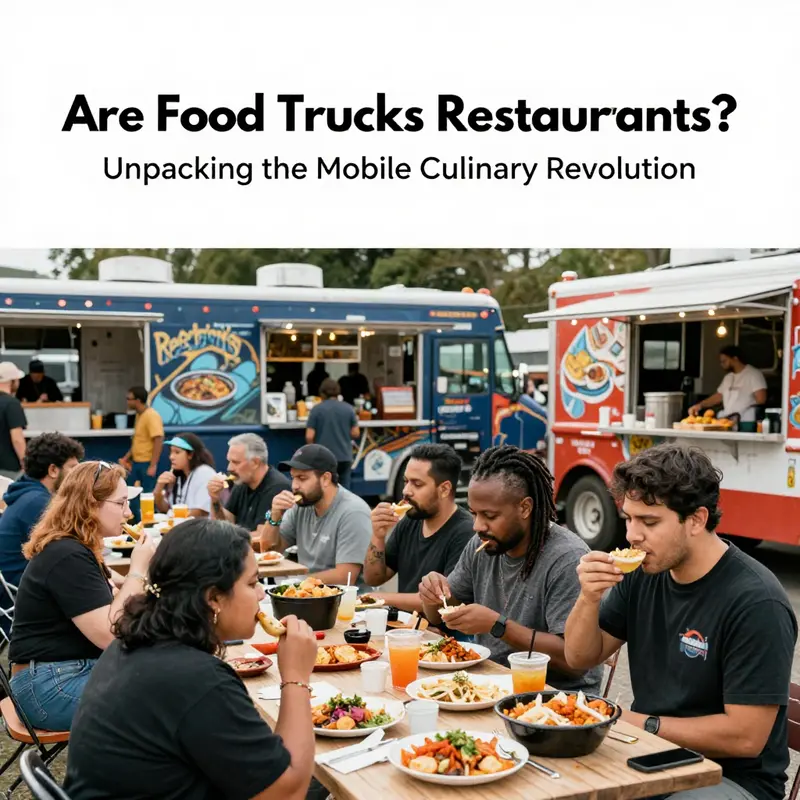
Are food trucks restaurants? The question invites a broader reflection on what we value in dining, who gets to tell the city’s culinary stories, and how flavor travels across sidewalks and skylines. In practice, food trucks operate as restaurants in motion. They are fully equipped kitchens on wheels, governed by the same culinary logics that govern brick-and-mortar spaces: a curated menu, exacting attention to ingredients and technique, a rhythm of service, and a continuous negotiation between taste, economy, and sustainability. The difference lies not in the quality of the cooking but in where and when the cooking happens. The truck turns a street corner into a dining room, a park into a dining courtyard, a festival into a temporary restaurant district. Mobility, then, is not merely a logistical feature; it is a design principle that broadens access, accelerates experimentation, and invites a city to eat with its eyes as well as its palate.
Cultural significance threads through this movement as surely as the aroma of a simmering sauce threads through a busy street. Food trucks carry histories as much as they carry pepper mills and thermometers. Their lineage stretches back to 19th‑century lunch wagons and extends into today’s vibrant, mobile culinary scene. In this continuum, trucks are not simply vendors; they are cultural artifacts that reflect and shape local identity. They offer a portable stage for voices that might be overlooked in fixed dining rooms and provide a platform for chefs to express heritage in adaptable, scalable ways. When a Korean-Mexican fusion taco truck slows at a corner, it is more than a meal; it is a narrative of migration, adaptation, and belonging enacted through flavor. The dish becomes a language that speaks to both memory and possibility, an edible proof that culture travels with people and ideas, often in tandem with spice, smoke, and heat.
The shift after the 2008 economic crisis elevated street food from a casual convenience to a serious venue for culinary risk and refinement. No longer is a truck simply a low-cost option; it has become a laboratory where technique can be tested, refined, and shared with a broad audience. This transformation democratizes excellence in a way that fixed dining rooms sometimes struggle to match. In many cities, the best trucks compete on the same stage as traditional restaurants, with chefs who push boundaries while remaining responsive to what a diverse urban population desires. Denver’s street-food landscape, for instance, has become a touchstone for this dynamic. As Carlos Mendez, Director of the Colorado Street Food Alliance, has observed, Denver’s food trucks are where culinary risk-taking meets accessibility. The emphasis here is not merely on being convenient but on being a site where culinary questions can be asked in the open—and answered with precision and creativity. It is a reminder that mobility can be a catalyst for high craft and for a dining culture that welcomes experimentation rather than guards it behind a velvet rope.
Beyond theory, the cultural significance of trucks manifests in the daily life of neighborhoods and the city’s cultural economy. Trucks gather where communities converge: farmers’ markets, neighborhood festivals, street fairs, and blocks that pulse with student energy or office hour rhythms. Mobility matters because it allows a truck to reach places where a fixed restaurant might never appear, thereby broadening who can experience a particular cuisine and how. A family in a heat-scented evening, a student between classes, a local worker unwinding after a shift—these are all potential customers and participants in a shared ritual of food and conversation. In this sense, the truck converts dining into an event rather than a transaction, a brief moment of communal eating that can redefine how people see the city and themselves within it. There is a social intimacy to the curbside grill, a sense that a meal is less about profit and more about hospitality—an invitation to belong, even if just for the time it takes to savor a single plate.
The community-centered posture of food trucks extends well beyond the plate. Operators frequently engage in local initiatives, partner with nearby businesses, and host pop-up workshops or cooking demonstrations. These gestures turn cuisine into a form of shared learning, a way to transmit knowledge about ingredients, techniques, and regional flavors. Such encounters also foster trust, reciprocity, and mutual support, reinforcing a network that sustains a roving culinary economy. The truck’s itinerary—its clusterings at markets, parks, or neighborhood centers—becomes a public map of possibility, guiding residents toward opportunities to taste, learn, and collaborate. When a child tastes a dish rooted in her family’s heritage at a curbside table, she experiences a bridge between home and city, a bridge that suggests local culture can be inclusive, dynamic, and delicious. The social texture—the conversations about spice levels, sourcing stories, and the shared jokes between cooks and customers—creates a sense of belonging that often rivals the intimacy of a dedicated dining room.
The human side of this economy—the people who operate and cook in these mobile kitchens—offers essential perspective on what it takes to sustain mobility as a form of dining. Behind every menu is years of learning, nerves faced during weather challenges, and the stubborn optimism to keep cooking when access to permits, financing, or permits again becomes a hurdle. The community becomes not only a customer base but a chorus of supporters who validate the chef’s decisions and celebrate the dishes that taste like home even when they appear on an unfamiliar street. The cadence of a truck’s schedule—pop-ins at schools, parks, and community centers—becomes a social calendar that aligns local needs with culinary possibility. This is not merely convenience; it is a form of social infrastructure that makes cuisine more portable, more inclusive, and more like a shared public good.
In this light, a closer look at the people behind the plates offers a human-centered view of entrepreneurship. The best stories reveal journeys shaped by persistence, community ties, and the creative problem-solving necessary to balance quality, cost, and schedule. The city becomes a classroom and a marketplace at once, where mobility lowers barriers for those who might be excluded from traditional dining spaces because of work hours, transportation gaps, or budget constraints. When all these threads come together—craft, culture, community, and commerce—a compelling portrait emerges: food trucks are not merely a temporary fix but a resilient and evolving form of dining. They embody accessibility, adaptability, and cultural expression in ways that broaden the very idea of what a restaurant can be in the modern urban environment. They invite a form of hospitality that travels, meeting people where they are, inviting them to participate in a shared ritual of eating, storytelling, and belonging.
For readers seeking a window into the personal side of this economy, a closer look at the profiles of veteran food truck owners offers tangible insight into how culture becomes business and how business becomes culture. These stories illuminate the persistence, community ties, and creative problem-solving that sustain the roaming kitchen economy. See Profiles of Veteran Food Truck Owners. The people behind the plates are the living connectors between you and the many kitchens that journey through a city’s districts, seasons, and celebrations. This is not a separate sphere from restaurant culture; it is an expansion of it, a mobile arm of the culinary world that makes cuisine more accessible, dynamic, and personal.
Ultimately, the debate about whether food trucks are restaurants hinges less on taxonomy and more on the experience they cultivate. The restaurant’s essence is not fixed to a building; it is the ability to produce, present, and share food in a way that builds memory and community. Food trucks do all of this, only in motion. They invite a form of hospitality that travels, meeting people where they are, inviting the city to participate in a shared ritual of tasting and storytelling. They are not merely a practical solution to limited brick-and-mortar capacity or a novelty on the urban palate; they are a living, mobile form of dining that embodies accessibility, adaptability, and cultural expression. If dining’s future is to be inclusive and creative, mobility may well be the design principle that expands who gets to tell the city’s culinary story—and how that story is told.
External reference: https://www.npr.org/2023/07/12/1185678432/food-trucks-urban-culture-mobility-and-community-engagement
On Wheels, In the Moment: Redefining Restaurants Through Modern Food Trucks
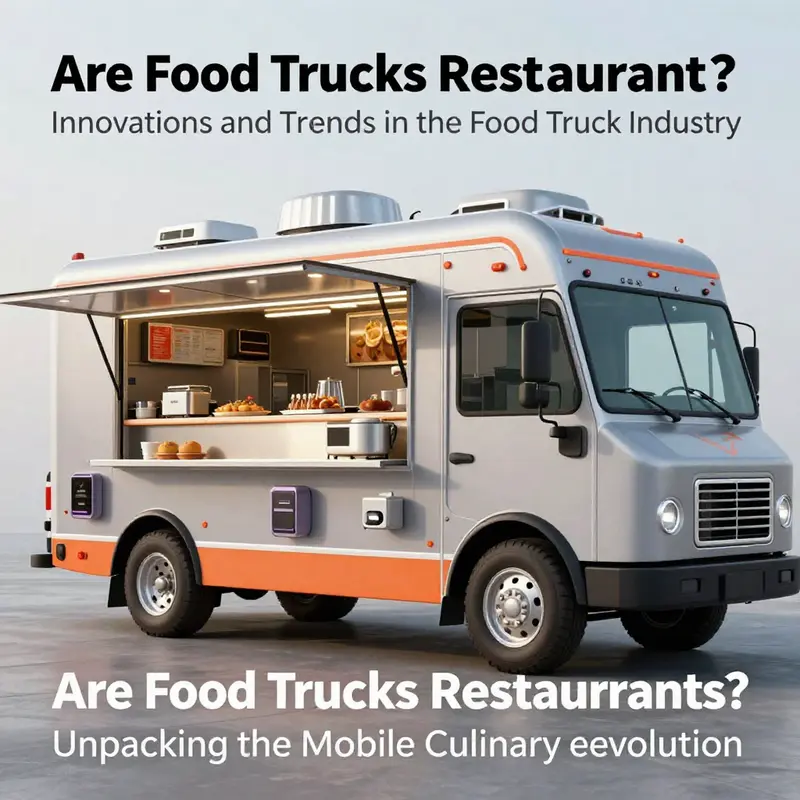
Defining a restaurant is no longer limited to four walls and a fixed clock. When a kitchen rides on wheels and serves guests from a curb, a quick glance at the menu hardly captures the full range of what that business can be. Food trucks are not simply mobile eateries; they are fully equipped kitchens on wheels that cook, plate, and serve a diverse array of dishes. The key difference lies in mobility. A truck can roll to a park, an office district, a neighborhood block party, or a festival, bringing fresh, hot meals directly to people where they work, play, and gather. In this sense, the question shifts from what is a restaurant to what makes a dining experience memorable, and the answer increasingly points to food truck operators who blend culinary ambition with real time adaptability.
The discipline behind a food truck’s craft is evident in the way the kitchen is designed for both efficiency and artistry. These mobile kitchens must be compact, yet capable enough to reproduce high quality dishes that can stand up to market competition. They require precise workflow, reliable equipment, and strict food safety practices. The result is a kind of culinary rigor that challenges the traditional dichotomy between street food and fine dining. As a result, many trucks avoid simply copying fixed location menus. Instead, they push menus toward flexibility and experimentation, offering a rotating set of staples and specials that reflect local harvests, chef curiosity, and audience demand. This is where the industry earns legitimacy in the eyes of diners who expect consistency, even when the dining venue is on the move.
A landmark shift in perception comes from recognizing the degree of sophistication that can exist in mobile kitchens. A case study from Denver captures this shift succinctly. Analysts note that many food trucks are where culinary risk taking meets accessibility. You will find more creativity per square foot here than in most downtown restaurants. That statement speaks to a dual reality: accessibility is the vehicle for broad experimentation, while the compact footprint forces cooks to optimize ingredients, timing, and technique. It is precisely this combination of opportunity and constraint that drives culinary risk taking that used to be reserved for the most heralded dining rooms. When risk yields flavor and speed without sacrificing quality, the line between food truck and restaurant becomes blurred in the best possible way.
Technological and operational innovations have accelerated this convergence. The industry has embraced advanced kitchen technology, improved refrigeration systems, and eco friendly practices that reduce cost and environmental impact. Modern trucks now boast energy efficient lighting, compact ovens, and precise climate control that keeps ingredients fresh from prep to service. Some operators have adopted solar powered equipment to power refrigeration and cooling—an innovation that lowers energy use and supports longer service hours in parks and festivals. Sustainable packaging and waste reduction practices have grown from a niche concern to standard operating practice for many trucks. These upgrades do more than trim costs; they stabilize food quality and safety, enabling trucks to deliver consistent experiences day after day and event after event.
The consequences extend beyond the kitchen. Food trucks are increasingly integrated into city life as flexible, socially driven platforms. They appear at pop up events and food truck festivals, where the energy of a crowd meets the creativity of a rotating cast of vendors. Partnerships with local businesses and institutions give trucks reserved times and locations, transforming once transient appearances into reliable dining options. In many cities, curated food truck parks provide a centralized hub for multiple vendors, creating a community around shared spaces and collective exposure. The result is a culinary ecosystem that functions as a hybrid of street food vitality and restaurant level consistency, inviting a broader audience to sample high quality food without the commitment of a permanent location.
This evolution reshapes how communities think about cuisine and entrepreneurship. The mobility of food trucks creates pathways for niche concepts to reach audiences that would not typically encounter them in a fixed restaurant landscape. Chefs can test ideas in real time, adjust recipes to local tastes, and scale operations with unusual speed. The on season dining format makes culinary experimentation more visible and accessible. It also democratizes opportunities for aspiring operators who might not have the capital needed for a brick and mortar space, yet possess the culinary vision and business sense to sustain a mobile operation. In regions with vibrant food cultures, trucks often become ambassadors for specific traditions, neighborhood flavors, or innovative fusions that push diners to reassess what belongs on a plate.
The narrative of food trucks as legitimate restaurants is enriched by personal stories that reveal a broader industry truth: resilience and adaptability are as central as technique. Veterans in the field frequently underscore how mobility has amplified their reach and allowed them to cultivate loyal communities around a shared taste for quality. These stories are not merely about success; they are about building sustainable livelihoods through a model that prioritizes speed, responsiveness, and dialogue with diners. For readers curious about the human side of the industry, profiles of veteran food truck owners offer insightful portraits of how mobility translates into career longevity, inventive menus, and enduring relationships with neighborhoods. Profiles of veteran food truck owners illuminate how experience and place inform menu choices, branding, and community impact in a way that feels both grounded and aspirational.
In the broader frame, the question of whether food trucks are restaurants intersects with consumer expectations about dining quality and flexibility. People increasingly want options that blend comfort with novelty, speed with care, and price with value. Food trucks deliver on those expectations by offering menus that are bold enough to attract interest and disciplined enough to sustain quality across repeated visits. The best trucks build reputations on the trust that a taco, a noodle bowl, a dumpling plate, or a small glass of something comforting will be prepared with attention to sourcing, technique, and presentation. They become itinerant restaurants that honor neighborhood rhythms rather than a fixed daily schedule. The format invites a form of dining that is intimate in its immediacy: you watch the cook assemble your dish, you understand the constraints of a tiny kitchen, and yet you taste complexity that rivals many stationary eateries.
For readers seeking a roadmap of where the industry is headed, the literature points toward ongoing innovations and expanding opportunities. The 2024 landscape highlights the rise of hyper local menus and collaborations with farmers, fishermen, and foragers that bring seasonality and locality to the curb. It also points to a continued emphasis on sustainability, with trucks adopting energy efficient gear and packaging that minimizes waste. And it emphasizes how the cultural fabric of cities shapes what a truck can become: a moving stage for cuisine, a portable kiosk for community gatherings, and a flexible platform for culinary experimentation. As a result, the line between a traditional restaurant and a food truck continues to blur—in the most productive and delicious ways.
Final thoughts
The exploration into whether food trucks can be classified as restaurants reveals a nuanced understanding of mobile dining. These dynamic establishments embody the spirit of culinary creativity while navigating various challenges unique to their mobile nature. As regulations continue to evolve, the economic contributions of food trucks grow in importance, fostering community engagement and promoting cultural diversity. Furthermore, the industry is marked by continual innovations that redefine the dining experience. In this context, it’s clear that food trucks are not just a trend but rather a significant player in the culinary world, deserving recognition as true restaurants in their own right.