
Food trucks have surged in popularity, promising a unique culinary experience directly on the streets. However, aspiring food truck operators must navigate the intricate landscape of profit margins and operational costs. This exploration delves into the reality of food truck profits, highlighting crucial factors such as profit margins, initial investments, operational expenses, and revenue fluctuations. Each chapter will dissect these elements to deliver a comprehensive understanding of how much profit the average food truck truly makes in today’s evolving market.
null
null
From Fork to Fleet: How Startup Costs Shape the Profit Path for a Food Truck
Launching a food truck blends aspiration with arithmetic. The charm of rolling into a neighborhood, serving something people crave, and building a following on wheels is undeniable. Yet the numbers behind that dream deserve equal attention. The initial investment sets the ceiling for what you can recoup, how quickly you can reach profitability, and how resilient you will be when the calendar turns slow or a festival doesn’t materialize. This chapter traces the landscape of those upfront costs, showing how each choice—from the truck you buy to the licenses you secure—reverberates through the math of profit. It is not a dry ledger exercise; it is a practical navigator for decisions that determine whether your venture becomes a steady, salary-like income or a seasonal hobby that requires ongoing capital infusions to stay afloat. The core idea is simple: higher upfront costs demand higher revenue or tighter control of expenses to reach break-even, and every dollar spent up front changes the trajectory of your profitability over time.
First, consider the vehicle itself, the anchor of your operation. The price gap between a new, purpose-built food truck and a used, road-worn platform is wide for good reason. A new truck comes with the latest exhaust systems, energy-efficient equipment, and a warranty that can be appealing to risk-averse lenders and operators alike. But the sticker price can stretch from roughly one hundred thousand dollars to well over two hundred fifty thousand. A used truck offers immediate capital relief, with typical costs in the thirty-thousand-to-eighty-thousand-dollar range, though it can carry more maintenance risk and a shorter path to reliability under heavy, daily use. The decision between new and used is more than a headline cost: it shapes maintenance schedules, insurance premiums, and the pace at which you can scale your brand as demand grows or shrinks.
If you choose the new route, the initial investment is not just the chassis. Kitchen equipment—grills, fryers, refrigeration, sinks, ventilation, and the essential work zones—becomes a fixed, upfront requirement. The practical rule of thumb is that the truck and kitchen fit-out are your fixed capital anchors. These are not throwaway costs; they are the plumbing through which every dish will pass. The more elaborate or specialty your menu, the more robust your equipment needs to be, which pushes up both the upfront price and the ongoing maintenance commitments. If you carry premium equipment or plan a high-volume, multi-dish operation, you should expect a longer depreciation life and higher monthly financial commitments as you keep the system running.
Beyond the vehicle and the kitchen, there are other startup expenses that often catch first-time operators by surprise. Inventory is not merely the first week’s stock; it is a cash flow determinant that sits at the origin of your cost structure. The price of ingredients, napkins, containers, and packaging adds up quickly, especially when you are launching in a competitive environment where customers expect consistency and reliability. Branding and marketing materials are more than a logo on the side of the truck. They include designed menus, storefront-signage, take-home materials for customers, and the digital assets that drive interest before you ever point your wheels toward a crowded event. Insurance protects both your vehicle and your business, and the premium reflects the broader risk profile of a mobile operation—vehicle liability, general liability, and health permits—all of which must be secured before you serve your first customer. Permits and licenses are not negotiable either; they are a legal prerequisite to operate in many jurisdictions, and the process can be time-consuming, which for a busy startup translates into opportunity cost as you wait to hit the road.
Taken together, these upfront costs form a ceiling on profitability that is highly sensitive to how you finance the venture. The arithmetic works like this: more cash invested up front means you must generate enough revenue to cover not just the day-to-day operating expenses, but also the debt service, depreciation, and the opportunity cost of that capital. If you invest heavily in a gleaming new platform with state-of-the-art equipment, the monthly payments and insurance bills can be substantial. Your revenue must be high enough to cover those recurring commitments while still leaving room for payroll, supply replenishment, maintenance, and a cushion for slow days. If you elect a leaner start—a used truck, simpler equipment, and tighter branding—your break-even threshold lowers, but you trade away some reliability margins and brand parity that can influence customer perception and repeat business.
Financing is the bridge between upfront costs and ongoing profitability. Bank loans are a traditional path, offering lump sums and structured terms but often accompanied by higher interest rates and stricter qualification requirements. A loan’s cost isn’t just its stated rate; it includes fees, the length of the amortization, and how the payment schedule interacts with your cash flow across different seasons. A longer repayment term can reduce monthly payments and improve early cash flow, but it also increases the total interest paid over the life of the loan. This dynamic matters for profitability because every additional month of debt service eats into net income, which in turn affects how quickly you can accumulate equity in your business or prepare for future expansions.
Another viable route is the Small Business Administration’s loan programs. The SBA’s offerings are designed to reduce the financial burden of startup costs and equipment purchases, often by providing more favorable terms and more flexible underwriting than conventional banks. The effect on profitability can be meaningful: lower down payments, better interest rates, and longer terms can translate into more affordable monthly obligations, improving the likelihood you reach and sustain positive net income. The SBA also emphasizes coverage for startup costs, working capital, and equipment purchases, which aligns well with the cash needs of a food truck launch. For operators who are balancing lease commitments, seasonal variability, and the unpredictable cadence of events, the SBA route can be a strategic lever to protect early profitability while laying the groundwork for growth.
When you map these financing choices to your business plan, you cannot ignore the intangible or less visible costs that still wash through the numbers. Location strategy plays a central role. The price of parking, event fees, and the rents or permits required to set up shop in a given area can dramatically impact monthly cash flow. A high-foot-traffic environment or a busy festival circuit can boost revenue, but those advantages come with premium permit costs and sometimes higher facility or event fees. Weather patterns and seasonality also skew profitability. A city with a long outdoor market season and predictable crowd flow can help you sustain steady revenue, whereas markets that shrink during winter or shoulder seasons demand deeper contingency planning and more conservative upfront investments. In other words, the same upfront decision that determines your initial capital outlay also nudges your long-run risk profile and expected profitability ceiling.
To illuminate the arithmetic further, consider a hypothetical but representative frame drawn from industry observations. If you purchase a mid-range new truck at the lower end of the new-truck spectrum, say around $100,000, and you outfit it with dependable, durable equipment designed for a focused menu with high turnover, your initial cash outlay might include a modest inventory buffer, branding, and permits that conservatively total tens of thousands of dollars. Financing that scenario with a steady loan can keep monthly debt service in a range that leaves room for labor, utilities, insurance, and ongoing maintenance. In this scenario, the path to profitability hinges on achieving enough monthly revenue to cover fixed costs—vehicle payments, insurance, and rent for any parking spaces or event slots—plus variable costs such as food, labor, and consumables. If revenue sits in the range supported by high-traffic urban opportunities and the operator maintains disciplined cost control, it is plausible to approach a modest net profit after all costs, perhaps in the low thousands per month, and see those profits compound as volume scales and the brand gains traction.
But the story changes with larger upfront commitments or with more ambitious menu strategies. A higher initial investment—whether through a premium vehicle, a more complex kitchen setup, or extensive branding—raises the required revenue ceiling. If a truck carries a price tag closer to $200,000 or more, lenders will scrutinize cash flow even more carefully, and the monthly debt service will likely be more pronounced. The upside is improved capacity: a faster service line, a larger or more diverse menu, and more resilient equipment that can handle peak events with less downtime. The downside is that the burden of debt and the pressure to maintain a higher standard of execution can compress margins if foot traffic does not meet expectations or if operating costs rise unexpectedly. In such cases, careful forecasting, a staged rollout, and an emphasis on building a loyal customer base through consistent quality and branding become essential tools for protecting profitability while managing risk—tools that begin with a clear understanding of upfront costs and their long-run implications.
What does this mean for planning and decision-making? It means that the cost structure you choose shapes your goals, your milestones, and your risk tolerance. If you are evaluating two options—a lean start with a used truck and a conservative footprint, versus a more ambitious build with a new vehicle and a broader menu—the choice should be driven by a blend of market realities and personal bandwidth for managing cash flow. The lean path lowers the barrier to break-even and reduces the stress on early cash flow, which in turn can accelerate profitability if you can scale quickly and efficiently. The ambitious path raises the stakes but can deliver higher payoff if you can secure consistent demand, partnerships, and repeat customers. Either route requires a disciplined approach to budgeting, a robust plan for capital deployment, and a realistic assessment of how much emergency capital you will maintain to navigate slow months.
A practical discipline that can help you navigate these decisions is to build a simple, transparent pro forma that captures all upfront costs, the expected financing terms, and the anticipated operating costs. You should model worst-case, most-likely, and best-case scenarios, explicitly listing variable costs such as food supplies and labor against fixed costs like loan payments and insurance. In this exercise, the goal is not to produce a perfect forecast but to surface sensitivities—how a 10 percent uptick in food costs or a 15 percent drop in event bookings would alter your break-even point. With such clarity, you can calibrate your initial spend: do you go lean to lower your risk, or do you invest more upfront in equipment and branding with the expectation of higher throughput and ticket averages that justify the added cost? Either outcome should be anchored by a clear plan to reach profitability within a realistic horizon, and that plan will, in turn, be shaped by the upfront investment you choose to make.
For operators who want to connect the dots between capital decisions and long-term profitability, there is value in exploring the mechanics of vehicle choice as a foundational decision. The debate between step vans and cargo vans is more than logistical; it is a driver of both upfront price and operating efficiency. A step van might command higher initial costs but offer better kitchen layout efficiency and a more favorable flow for higher-volume service without compromising space. A cargo van, with a simpler interior and typically lower upfront cost, can work well for more compact menus and lean operations, particularly in markets with strict parking constraints or shorter event windows. The trade-offs touch on how you price, how you schedule, and how many hands you need on deck at peak hours. When this decision is framed as part of your profitability plan, it becomes a lever you pull to align your capital commitment with the revenue path you expect in your chosen market. For a deeper dive into this equipment decision, you can explore the discussion on step-vans-vs-cargo-vans for food trucks.
In sum, the journey from the first dollar spent to the first dollar of profit is paved by the balance between upfront investment and disciplined ongoing management. The numbers are not abstract: every dollar you invest up front raises the bar for what your monthly revenue must achieve to break even and eventually be profitable. Financing decisions amplify or mitigate that impact. The insurance you carry, the permits you secure, the branding you invest in, and the quality of your equipment all echo through your cost structure and your customer experience. A startup plan that respects these realities—one that includes careful budgeting, realistic revenue projections, and a strategy for diversifying revenue through events, partnerships, and repeated customer engagement—will stand a better chance of turning the thrill of a mobile kitchen into a durable, profitable enterprise. The payoff for that disciplined approach is not merely a higher profit figure, but a smoother path to sustainable growth, a stronger brand, and the flexibility to weather the inevitable fluctuations of demand that come with operating in a dynamic, competitive food landscape.
External resources and tools exist to help you cost out these decisions with more precision. For guidance on startup costs and funding options, the U.S. Small Business Administration provides extensive resources and templates designed to support prospective food truck owners as they map out their capital needs, financing options, and cash-flow projections. See the SBA guidance at https://www.sba.gov/business-guide/plan-your-business/startup-costs to ground your planning in established best practices and real-world benchmarks. As you move forward, keep the focus on the interplay between capital outlay and profit potential, because in a business where timing and customer reach matter as much as the recipe, the upfront financial script you choose to follow will largely determine whether your truck becomes a profitable, repeatable experience for both you and the communities you serve.
null
null
Seasonal Winds and Profit Pulses: Reading How Seasons Shape the Average Food Truck’s Profit
Profit in the food truck world does not travel a straight line. It moves with the weather, the calendar, and the places where people gather for meals and moments. For operators seeking clarity about what the average food truck makes, the story is not simply about daily receipts. It is about how revenue climbs in sunlit months, then slides in colder ones, and how those shifts squeeze or widen margins that already sit between a narrow band and the broader restaurant industry. Industry data suggests that profit margins for food trucks typically fall in the 3% to 8% range. Those percentages align with the general restaurant sector and reflect the tug-of-war between high fixed costs and the daily variability of sales. The reality behind the numbers is a mix of disciplined planning, smart branding, and adaptive scheduling. In practice, the season is a strategic partner and sometimes a difficult opponent. The average operator must accept that a good month in peak season can look very different from a slower period, and the difference can be enough to tilt a business from break-even to profit, or from profit to a cautious setback. One core truth remains clear: seasonality magnifies the ordinary costs and the ordinary opportunities that come with running a mobile kitchen. It amplifies the importance of cash flow management, diversified revenue streams, and the willingness to move and adapt to where customers gather and what they crave when the weather turns in new directions.
Seasonality starts with foot traffic. In late spring and into early fall, urban cores buzz with lunchtime crowds, street fairs, and neighborhood celebrations. The weather cooperates, and city dwellers and visitors are more inclined to linger outside, share a meal, and discover a truck they hadn’t considered before. Festivals become magnets, and the cadence of the workday shifts toward outdoor dining. In these conditions, a well-curated menu, fast service, and the ability to scale a crew for a short period can yield meaningful lift in revenue. For operators who optimize their routes and align with local events, peak season can feel almost exponential. Yet those gains are never guaranteed. A crowded calendar can still test inventory discipline, labor costs, and the delicate balance of supply and demand. The risk lies in overreliance on a few big events or on a single hot neighborhood. If a summer stretch becomes a string of cloudy days, or if a favorite festival moves to a different part of town, revenue can slip as quickly as it rose.
The flip side arrives when the calendar turns and the weather cools. Winter, particularly in regions with harsh climates, tends to depress foot traffic. The same urban density that drives lunch crowds in good months can shrink to a thinner stream of in-person customers when temperatures drop and cold winds push people indoors. The National Restaurant Association’s data from 2023 underscores this pattern by showing that major U.S. cities can experience a monthly revenue swing of up to about 40% between peak summer months and off-season winter periods. That swing is not a footnote; it shapes every financial decision, from pricing to scheduling to inventory. In practical terms, a truck that ferries daily sales through a busy street corridor might see its daily average dwindle to a fraction of the spring and summer highs. When a truck’s fixed costs remain relatively constant and its variable costs creep upward—fuel, ingredients, and labor—winter can erode margins quickly if there is no plan to preserve cash flow.
The profitability reality for many operators rests on a blend of resilience and resourcefulness. The 2026 Food Truck News analysis indicates a spectrum of outcomes. Top performers may post net profits of $30,000 to $60,000 annually after expenses, but the median operator often lands closer to $15,000 to $25,000 per year. Those numbers reflect part-time or seasonal work, geographic variation, and the complexity of keeping a truck financially viable through slow months. The difference between the optimistic top line and the down-to-earth middle lies in how carefully the business is managed, how well the brand maintains relevance, and how successfully the operator diversifies revenue streams beyond a single outdoor footprint. A big part of this management is recognizing that profit is a function not only of sales but of the cost structure that supports those sales. High fixed costs—ranging from the truck itself to insurance and permits—can magnify the impact of lean months. When revenue dips, the same set of costs remains, and every incremental sale becomes more valuable. In turn, this reality reinforces the imperative to optimize every operating expense, from fuel and maintenance to labor scheduling and procurement.
Seasonality also tests the consistency of branding and customer loyalty. A truck that can show up reliably in the same neighborhoods at the same times becomes a dependable part of a local routine. Regular customers become the backbone of cash flow during off-season months, especially if the menu can adapt to shorter days or indoor spaces. That adaptation is not a mere nicety; it is a practical strategy for preserving revenue when outdoor foot traffic wanes. Smart owners think about what a season can teach them about the brand’s resonance. If the crowd in summer is drawn by a culinary novelty or a festival energy, winter may reward the same truck that offers comfort-food staples, family-friendly options, or holiday-themed menus. The ability to read the calendar and pivot the menu accordingly—without sacrificing core branding—can be the difference between surviving the season and thriving through it.
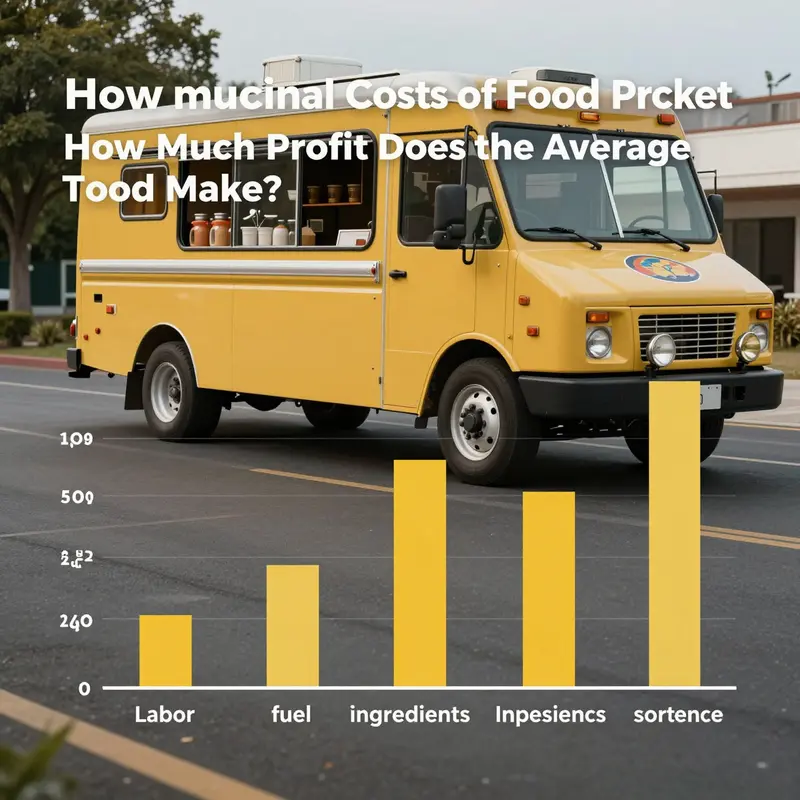
The economics of seasonality become clearer when you consider the cost structure that underpins every sale. High fixed costs—truck payments, permits, insurance, and branding—must be recovered across a certain volume of sales. In high-traffic months, when crowds convert at a healthy rate, that volume supports margin. In leaner months, if volume collapses and pricing cannot be maintained, margins compress quickly. Labor, which commonly accounts for 30% to 40% of total expenses, becomes especially sensitive to seasonal shifts. If staffing is not aligned with demand, payroll becomes a bottleneck. A loader of the schedule who carries too many shifts in a quiet week can erode profits more than the same schedule would in peak periods. Conversely, a flexible staffing model—one that scales up for events and down for slower days—can protect margins and preserve cash flow. Inventory management also becomes more delicate in the face of seasonality. Over-ordering ahead of a busy period can leave a truck stuck with spoiled ingredients during a downturn. Under-ordering during a surge can sabotage service and revenue. The balance is not simple; it requires tight forecasting, real-time data, and the willingness to adjust orders, portions, and menus with the weather and the calendar.
Seasonality also invites creative diversification as a hedge against the variability of outdoor dining. Many operators extend their reach beyond curbside service. Indoor catering for corporate events, private parties, or community gatherings can turn a single season into a broader revenue window. Holiday markets, food hall partnerships, and pop-up experiences in shopping centers offer alternative venues that do not rely entirely on summer sunshine or outdoor events. The key is to align these efforts with the brand’s strengths and the local appetite for your cuisine. A truck that brings bold, authentic flavors to festival circuits can adapt by offering a simplified, comfort-forward menu at winter markets or by partnering with venues that need flavorful, mobile catering without the uncertainties of an outdoor setup.
Pricing strategy also plays a crucial role in translating seasonal demand into sustainable profit. During peak times, rapid service and high-volume sales can justify higher price points or value-added combinations. In the off-season, prices can become a more sensitive lever, especially in markets with tight competition. The trick is to preserve value without alienating regular customers or signaling volatility. Many operators stitch together a flexible menu—one that remains faithful to the core brand but carries a few season-specific items that drive curiosity and repeat visits. Seasonal specials can create a sense of urgency, encouraging customers to try something new before it disappears. This approach, paired with targeted promotions and a clear message about quality and freshness, can keep revenue buoyant even when the calendar is unkind.
The mental model for enduring seasonality also hinges on financial preparedness. A truck with a well-stocked reserve fund, or access to a revolving line of credit, can weather the gaps between peak months and slow seasons. Cash flow forecasting becomes not just a financial exercise but a strategic navigator. By mapping expected revenue against fixed and variable costs, operators can identify the months when additional marketing, catering contracts, or a temporary relocation to a warmer climate might be worth the investment. Relocation is not a vacation from winter weather, but a calculated move to maintain consistent cash flow for the business. A number of operators employ a seasonal migration pattern—keeping a core presence in one climate and relocating to a warmer market when the snow starts to fall. This strategy can be enhanced by a robust plan for supply chain continuity and labor management in both locations. It is not a panacea, but a disciplined approach to stabilizing earnings across the year.
These practical considerations sit within a broader narrative about the entrepreneur’s mindset. Seasonality tests a founder’s ability to balance ambition with pragmatism. It pushes operators to code a business with fewer dependencies on a single revenue stream and more on a resilient, repeatable process. It invites the operator to think like a brand-builder, not just a cook. It asks for the discipline to measure, adjust, and repeat. It also emphasizes the human element—the crew members who rely on predictable schedules, the families who value stability, and the communities that crave reliable access to good food. In the end, the difference between a seasonal growth story and a seasonal loss story is rarely a matter of luck. It comes down to systems: forecasting models that incorporate weather patterns and event calendars, inventory controls that adapt to demand, and a scheduling philosophy that scales with the market. The most enduring operators treat seasonality as a feature of the business, not a bug. They build routines that honor the holidays in the same way they celebrate a city’s summer festivals. And they stay mindful of the fact that profitability, for the average food truck, lives where numbers meet notice—the moment when a forecast becomes a plan and a plan becomes consistent, year after year.
For operators who want to explore how others balance work-life and the seasonal rhythm, there is value in learning from those who have built durable practices around the calendar. These voices emphasize steady habits—regular reviews of menu performance, careful cash-flow monitoring, and a willingness to adapt without sacrificing core identity. You can find reflections on balancing a food-truck life with personal well-being in resources that discuss the realities of entrepreneurship. As you strategize, consider how seasonality can be integrated into a broader approach to growth rather than treated as a temporary hurdle. The season’s pulse is a guide to planning, not a verdict on potential. The aim is to create a business that thrives across months, weather conditions, and changing tastes, with a brand that remains recognizable whether the sun shines or the snow falls.
Within this framework, the broader lesson for the average food truck operator is clear: profitability in a seasonal business is less about chasing a fixed annual number and more about shaping a repeatable, resilient cycle of revenue and cost management. It is about aligning the menu, the schedule, the people, and the venues with the natural rhythms of the year. It is about turning the season’s fluctuations into a disciplined practice of forecasting, adaptation, and growth. It is about maintaining a brand that people trust to show up in good weather and bad, in bustling markets and quiet streets alike. For those who embrace the calendar as a collaborator rather than as a source of anxiety, seasonal fluctuations become not a constraint but a framework within which profit can be measured, nurtured, and expanded over time. And in that frame, the average food truck can translate the weather into opportunity, harness the energy of peak months, and sustain a meaningful, if not spectacular, annual profit through careful planning, flexible operations, and unwavering focus on the customer next door and the one passing by in the crowd.
External resource for broader context: https://restaurant.org/research/industry-trends
Internal reference for further reading on balancing daily operations and long-term planning: work-life balance for food-truck entrepreneurs.
Final thoughts
In summary, the profitability of a food truck hinges on a myriad of factors, including profit margins as well as the initial and operational costs involved. With the potential to earn a respectable annual income, food truck operators must navigate the challenges of maintaining profitability through strategic planning and market awareness. By understanding these dynamics, aspiring food truck owners can better prepare for the realities of running their mobile cuisine ventures.