
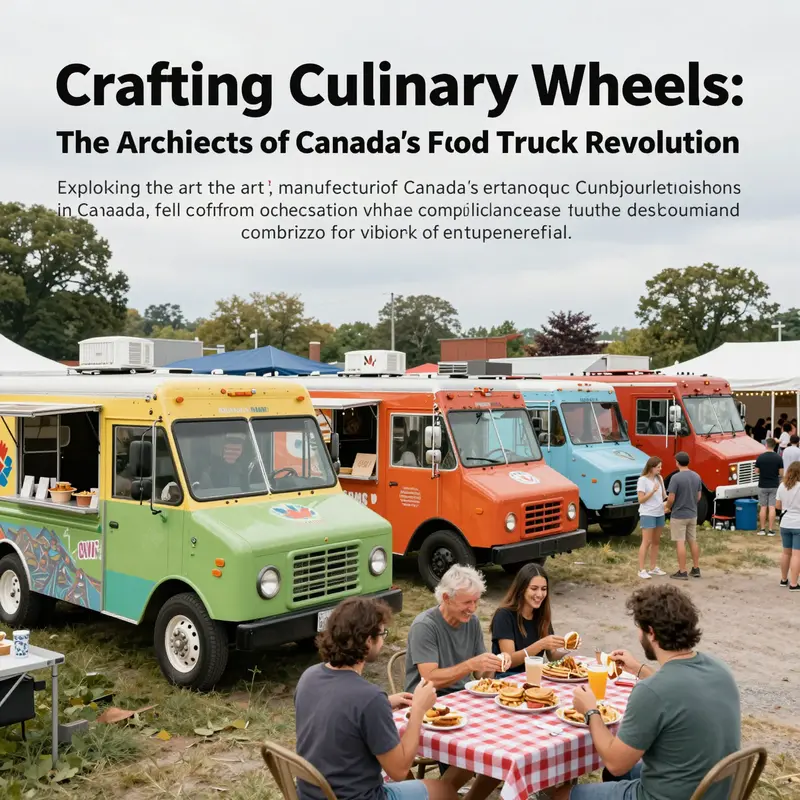
In the vibrant landscape of Canadian cuisine, food trucks are not merely mobile kitchens; they are culinary innovations on wheels. Canadian food truck manufacturers play a pivotal role, intertwining artistry with compliance to create mobile gastronomic experiences. From customized kitchen designs that cater specifically to local regulations to sustaining the economy through local manufacturing, the uniqueness of these food trucks is evident. In the following chapters, we will dive deep into the world of food truck manufacturers in Canada, examining the advantages of local production, the economic impact of this industry, the crucial regulatory landscape, and a glimpse into the future of food truck innovation.
Canada on the Move: Local Builders, Custom Kitchens, and the Compliance Edge in Mobile Food
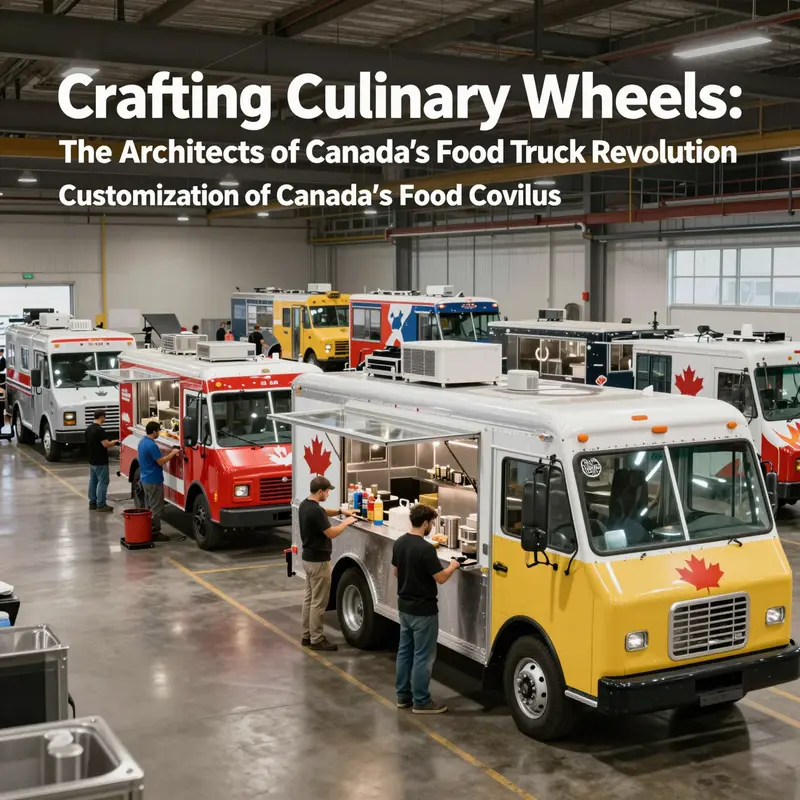
In Canada, the story of the food truck is as much about the people who assemble the kitchens as it is about the chefs who operate them. The market may not be as densely populated with manufacturers as some other regions, yet the advantages of sourcing locally are unmistakable. When operators choose a Canadian builder, they are aligning themselves with partners who understand the tempo of city streets, the rigors of transport across provinces, and the precise standards that keep a mobile kitchen safe, legal, and dependable. The rationale for building within Canada rests on more than proximity; it rests on a shared commitment to regulatory coherence, robust after‑sales support, and the ability to adapt a design to variable urban geographies. This is especially true in a country that spans several climate zones and a patchwork of municipal licensing rules, where a one‑size‑fits‑all trailer simply cannot endure the seasonal shifts and the regulatory nuances that come with operating from British Columbia’s waterfront to Newfoundland’s harbor towns.
Canada’s food truck ecosystem thrives on innovation tethered to regulation. Operators scanning the horizon for a new mobile kitchen must prioritize makers who can deliver not only a sleek interior and efficient workflow but also a package that aligns with federal safety guidelines, provincial health standards, and the sometimes thorny municipal licensing matrices. At the heart of this alignment is a trio of considerations: adherence to national food safety standards, compliance with vehicle safety regulations, and the ability to meet the variegated provincial requirements for mobile food service. The Canadian standard set is not simply about temperature and cleanability; it encompasses a holistic approach to risk management, from airflow and exhaust to electrical configurations and structural integrity. In practice, this means that a vehicle’s design must anticipate the worst weather of a northern winter and the busiest urban summer, without compromising safety or service capacity. A reliable Canadian builder does not merely install equipment; they engineer a system. The system is modular enough to support a quick kitchen reconfiguration, while sturdy enough to withstand frequent on‑site commissioning and the seasonal demands of markets, fairs, and downtown corridors.
The strategic value of local production becomes most evident when operators weigh the benefits of customization against the burden of compliance. A number of Canadian manufacturers offer turnkey solutions that integrate customizable layouts with strict adherence to health and safety standards. They recognize that every cooking process—whether it is hot‑holding, shallow frying, or espresso extraction—imposes different demands on a truck’s interior, exhaust, and electrical backbone. Consequently, design options are not merely about aesthetics or a clever workflow. They encompass multi‑functional kitchens, optimized storage systems, and branded exteriors that reinforce a business’s identity while staying within regulatory bounds. The emphasis on customization does not undercut compliance; it amplifies it. Flexible vehicle dimensions, such as standard models around the 2.3 by 1.65 by 2.3‑meter footprint, provide a pragmatic baseline. Builders then tailor workstation heights, drainage configurations, and airflow paths to fit the specific menu, expected traffic, and geographic locale of each operation. The outcome is a kitchen that not only looks the part but functions within the narrow corridors of a city block, where every inch of space counts and every system needs to operate in harmony with environmental and fire regulations.
Another compelling driver of local production is the assurance of ongoing service and robust parts support. In a country where a single cold snap can tax a fleet of mobile kitchens, having a nearby partner who can perform on‑site installation, provide training, and conduct annual inspections becomes a practical safeguard. This level of after‑sales service—often tied to a local network of technicians, spare parts inventories, and scheduled maintenance programs—reduces downtime, extends the life of equipment, and helps operators maintain compliance without diverting time and capital to unplanned repairs. The value proposition is especially pronounced for aspiring caterers who need to scale across multiple events or regions. A local supplier can offer phased deploy‑and‑learn strategies, allowing a business to test a concept in one city before expanding. The knowledge transfer involved—how to manage CFIA inspections, navigate provincial licensing nuances, and coordinate with municipal health authorities—becomes part of the package, not an afterthought. In this sense, the most successful builders in Canada act as regulatory navigators as well as fabricators, guiding clients through the maze of requirements and turning compliance into a competitive advantage.
Prices for Canadian‑assembled trailers reflect a balance of quality, regulatory alignment, and service commitments. While price points can be higher than some global alternatives, buyers often regard this premium as a prudent investment in reliability, long‑term maintenance, and legal conformity. A representative snapshot from recent market data shows that standard equipment packages for a basic trailer can range into several thousand dollars, with a noticeable premium attached to fully customized layouts and advanced exhaust systems designed to meet Canadian environmental and fire regulations. In practice, a Canadian trailer with standard equipment might fall in a mid‑range bracket, while fully customized, regulation‑ready configurations command a higher price due to the added design complexity, sturdier materials, and the inclusion of features such as robust electrical systems capable of handling a range of voltages to suit different locations. The key takeaway is that operators are paying for more than a kitchen on wheels; they are paying for a certified, maintainable, and legally compliant mobile operation that can weather Canada’s varied markets and climate realities.
Within the landscape of suppliers, several manufacturers—predominantly headquartered in provinces with established food‑service clusters—offer an integrated approach to design, fabrication, and compliance. These builders routinely deploy kitchen pathways that are adaptable to a variety of concepts, from ice cream and coffee carts to full‑service meal trailers. They emphasize that every unit is built to satisfy stringent health hygiene standards and structural durability so as to withstand daily wear and tear and the rigors of long road travel. A hallmark of these builders is their ability to translate a business concept into a practical kitchen configuration. They listen to operators’ menu plans, traffic forecasts, and service style, and then translate those inputs into kitchen zones, workflow diagrams, and safety strategies that align with CFIA guidance, Transport Canada vehicle safety regulations, and provincial mandates. The result is a product that supports rapid, compliant startup and sustainable growth.
In this Canadian ecosystem, a notable supplier of international origin has demonstrated what it means to bridge global capabilities with local needs. The supplier’s offering emphasizes extensive customization options paired with rigorous performance standards. They also carry certifications that signal a robust quality management framework and conformance to international norms. While the specifics of every unit vary, these features provide common threads across the portfolio: non‑slip fuel‑resistant flooring with drainage, multifunctional stainless steel work surfaces, and electrical systems engineered to handle multiple supply voltages. The combination of flexible power configurations and durable materials proves essential when a unit must operate across climate extremes and in settings that demand quick cleaning and easy sanitation. In addition, professional design support helps tailor each unit to a business’s purpose—whether it is for ice cream, hot dogs, coffee, or full‑service meals. The company’s production cadence—typically measured in hundreds of units per year—speaks to scalability, which matters to entrepreneurs who plan to grow beyond a single truck.
Design support, production capacity, and logistics for a global supplier are not simply about fabrication speed. They are about how well a builder can integrate the necessary features into a cohesive system that remains compliant through time. The Canadian client benefits from a process that begins with a clear understanding of regulatory obligations and ends with a unit that can be commissioned with minimal disruption. This means not only regulatory checks at delivery but also the practical instruction that empowers operators to manage routine inspections, cleaning protocols, and preventive maintenance. In practice, this translates into detailed layouts, labeled service points, and modular components that can be swapped without compromising compliance. The value of such a system is visible not only in the first year of operation but in the long arc of business growth when operators may need to reposition, rebrand, or expand to new locales with minimal downtime.
For anyone exploring this space, the path to choosing a suitable builder hinges on several core questions. Can the supplier demonstrate CFIA‑compliant workflows in a kitchen design? Does the engineering align with Transport Canada’s safety standards and the province’s licensing requirements? Is the offered customization comprehensive enough to support a menu that may evolve over time? How reliable is the after‑sales network, and what is the track record for on‑site training and annual inspections? These questions are not merely about procurement; they are about risk management, operational resilience, and the ability to grow within Canada’s regulatory framework. A thoughtful procurement process recognizes that a mobile kitchen is a legal entity on wheels, bound by the same duties as a brick‑and‑mortar operation yet exposed to the unique challenges of mobility. The best Canadian builders meet this dual expectation by delivering a product that is technically sound, legally robust, and economically viable across multiple market cycles.
The broader picture is that Canada’s focus on customization and compliance does not erode the appeal of global supply chains. Instead, it creates a pragmatic hybrid approach. Operators may look to a Chinese or other international supplier for certain components or design philosophies while relying on a local partner for installation, regulatory alignment, and ongoing maintenance. This blended strategy allows entrepreneurs to access cutting‑edge design concepts and cost efficiencies while ensuring that every unit that hits the street is fully compliant with Canada’s rules and ready for the fast pace of urban commerce. It is a model built on trust, technical rigor, and a shared understanding of the realities of mobile food service in a country where each city tells a different story about permits, health checks, and street usage. For readers seeking a broader sense of benchmark data and performance metrics across the global landscape of food truck manufacturing, a comprehensive guide offers an up‑to‑date view of prices, compliance, and post‑purchase support. See the external resource cited at the end for a global comparison that informs, but does not replace, Canada’s distinct requirements.
In this way, the question of who builds food trucks in Canada becomes a question of how expertise, locality, and regulation converge to create a dependable platform for entrepreneurial food service. The answer lies in builders who treat compliance not as a hurdle but as a design constraint that sparks creativity. They craft kitchens that integrate multi‑purpose work zones, space‑efficient storage, and vivid branding within the bounds of CFIA standards, provincial ordinances, and municipal codes. They provide on‑site installation and training that translates regulatory obligations into practical routines. They maintain spare parts availability and service networks that shorten downtime. They design for diverse climates, ensuring materials, seals, and electrical systems perform when the snow comes or the rain returns. They project a future where a single truck can pivot between menus and markets, with confidence that every inspection and renewal will be a routine part of the business rather than a crisis. And in that future, the Canada story of food trucks is less about the speed of manufacturing and more about the fidelity of build to regulatory reality, the durability of the design, and the reliability of the partner who stands beside an operator on the journey from concept to thriving street‑level commerce.
To readers seeking deeper comparative insights and data on global manufacturing benchmarks, a comprehensive supplier guide offers current performance data and pricing benchmarks. It serves as a valuable resource for buyers navigating an increasingly complex market landscape. External resource: https://www.foodtruckmanufacturersguide.com/supplier-performance-data-2026
For additional context and practical perspectives drawn from the broader food‑truck community, the following internal reference may be useful for exploring how regulatory and operational considerations play out in different contexts: legal considerations for Latino food-truck startups.
Makers on the Move: How Canadian Builders Shape the Nation’s Food Truck Landscape
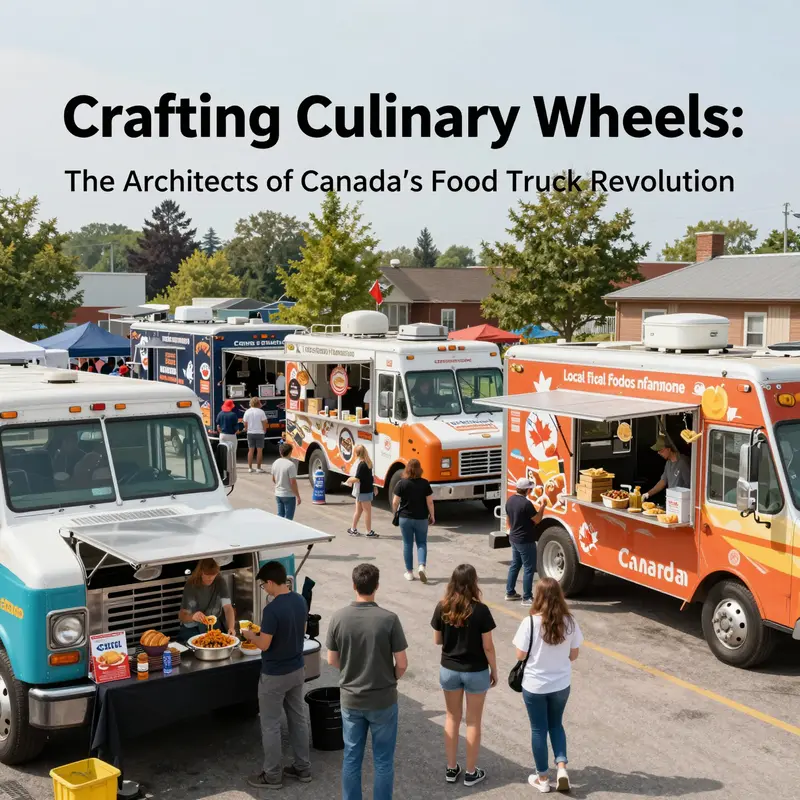
When people ask who builds food trucks in Canada, the answer unfolds as a conversation about craftsmanship, regulation, and the steady hands of regional manufacturers who translate culinary ambition into mobile kitchens. The Canadian market may not boast the explosive scale of mass production seen in some other countries, but it thrives on a different kind of precision. Local builders rise to the challenge of compliance, customization, and rapid service in ways that are not only practical but economically meaningful. A March 2026 report anchors this reality by highlighting that Canadian manufacturers align equipment and configurations with national health standards, transportation rules, and municipal licensing requirements. The result is a fleet of mobile kitchens that look and operate like purpose-built extensions of brick-and-mortar food ventures, with the flexibility to adapt to a city’s streets, a festival’s timetable, or a caterer’s evolving menu. In this ecosystem, the makers matter as much as the chefs, because the maker’s decisions about layout, materials, and systems determine not just what can be cooked, but how reliably it can be served on-demand in every season and neighborhood across the country. The story of who builds these rigs is really a story about how design thinking, local know-how, and regulatory clarity converge to sustain a dynamic, consumer-facing industry that continues to reinvent itself as it travels from curbside to catered event, from downtown core to rural fairgrounds, and back again.
Canadian builders commonly emphasize a design language grounded in durability, safety, and ease of maintenance. They produce equipment that adheres to stringent health standards and is adaptable to the country’s diverse climates and municipal rules. Their offerings range from basic configurations that meet core needs to fully customized kitchen layouts that integrate specialized work zones, cold- holding systems, and streamlined sanitation passages. The practical features that distinguish these units are telling. Stainless steel work surfaces and cabinetry are designed to withstand rapid cleaning and heavy usage; exhaust systems are engineered to meet both environmental and fire regulations that vary across provinces and municipalities. Electrical configurations acknowledge the realities of service at markets, in parking lots, and at private venues that can demand 110V, 220V, or even higher voltages depending on the locale. The dimensions of the vehicle itself are not left to chance either; a typical, urban-friendly model hovers around a compact footprint, roughly 2.3 by 1.65 by 2.3 meters, a size chosen for maneuverability without sacrificing workspace. In short, Canadian builders tailor mobility to mission, ensuring that the kitchen can function efficiently at a busy festival corner or a quiet neighborhood street market.
These equipment makers also distinguish themselves through a robust commitment to after-sales service. In a market where small margins and tight timelines frequently collide, the promise of on-site installation, practical operator training, and annual inspections matters enormously. Ontario and British Columbia host a cluster of manufacturers that not only supply the equipment but stand behind it with local service networks. When a generator hiccup, an exhaust noise issue, or a wiring question arises, the response time can be measured in hours rather than days, a friendly specificity that is highly valued by first-time operators launching a catering business or expanding to multiple trucks. This level of local support helps eliminate the guesswork that can accompany importing a trailer from abroad, where service centers and spare parts may be weeks away. It also reinforces a sense of regulatory continuity: if a unit is installed in a city with strict bylaw rules or a province with particular inspection protocols, the builder who understands the local context can guide the operator through the licensing maze while ensuring ongoing compliance.
Cost remains a natural concern for hopeful entrepreneurs. While the price of a standard, well-equipped food trailer in Canada tends to be higher than comparable imports from other markets—illustrated by a market reference around the mid-2020s that quotes approximately four thousand five hundred to nearly six thousand Canadian dollars for standard configurations—the value proposition extends beyond the sticker price. The higher upfront cost translates into higher reliability, stronger regulatory alignment, and a more comprehensive after-sales network. In a sector where downtime translates directly into lost revenue, the peace of mind that comes with working with a local supplier who can diagnose and repair issues quickly can be worth the premium. For many operators, the decision to invest in domestic production is not simply about equipment; it is about building a trusted partnership with a supplier who can scale with the business as menus evolve, festivals expand, or licensing environments shift.
The economic ripple of this manufacturing sector is multi-layered. The Food Trucks of Canada Economic Impact Study portrays a sector that is not just about a few mobile kitchens rolling through town; it is about a network of employment that ranges from two to ten workers per operation and beyond. The presence of a robust local supply chain supports not only assembly lines but also a web of ancillary services—metal fabrication, HVAC system design, electrical engineering, interior craftsmanship, and logistics—each adding a layer of capability to communities. The low barrier to entry in the food-truck world, compared with the capital-intensive cost of a brick-and-mortar restaurant, invites a wider array of entrepreneurs. It is a portal to culinary experimentation and business exploration for individuals who bring unique cultural perspectives, regional flavors, and mobile service concepts to the market. In the Canadian context, a local builder does more than assemble a truck; they anchor local ambitions by offering configurations that respond to city-specific requirements and by providing the training that often makes the difference between a good launch and a sustained venture.
This nurturing of entrepreneurial energy has a broader industrial logic. Domestic manufacturers are not isolated actors; they are nodes in regional economies that rely on skilled labor in metal fabrication, HVAC engineering, electrical work, and interior design. As the market matures toward more sophisticated offerings, Canada’s mobile-kitchen builders expand capacities to deliver premium, turnkey solutions that ease the path from concept to opening day. The growth of premium manufacturers within the country reflects a deliberate shift from generic, off-the-shelf trailers to bespoke units that accommodate high-end menus, complex service workflows, and extended culinary equipment arrays. In this sense, the Canadian landscape mirrors a broader trend in which domestic production hooks into a digital, design-driven economy. It leverages local know-how, embraces iterative prototyping, and promotes a supply chain that can respond rapidly to the changing needs of operators who are often working in tight urban spaces or at large-scale events.
The regional dimension is equally important. Ontario and British Columbia have emerged as hubs where design, fabrication, and installation converge with the realities of provincial and municipal regulations. On-site installation and operator training, along with annual inspections to uphold compliance, are not unusual offerings. This is critical because the regulatory perimeter—health standards, vehicle transport rules, and licensing processes—can vary between cities and provinces. A unit that travels from coast to coast must perform consistently within different frameworks, and Canadian builders work to ensure that the equipment and the installation process can adapt without requiring a complete reconfiguration. That adaptability matters because street-food cultures and regulatory attitudes differ across municipalities, and a flexible design ethos helps operators maintain consistent service quality as they relocate or expand into new markets. The result is a mobile kitchen that is not only compliant today but designed to stay compliant as rules evolve.
In discussing who builds the Canadian food truck, it is also useful to consider how operators themselves engage with the creation process. The dialogue between culinary entrepreneurs and builders often begins with a clear articulation of the kitchen’s workflow: the order of cooking stations, the sequence of food handling, the pace of service, and the sanitation routines that will keep health inspectors content. Builders translate that workflow into a kitchen layout that minimizes cross-contamination risks, optimizes heat and ventilation, and ensures a smooth line from customer order to plate. The interplay between design and operation is not a theoretical exercise; it yields tangible benefits in speed, safety, and customer experience. The operator’s ability to train staff efficiently, to clean and sanitize quickly, and to service equipment with minimal downtime is, in many cases, the difference between a successful season and a missed opportunity. In this sense, Canadian builders contribute not only to the physical truck but to the operational culture that sustains mobile dining across the country.
As the market evolves toward more nuanced offerings, the conversation about who builds food trucks in Canada becomes a conversation about how the country balances global reach with local responsibility. Domestic production enables operators to customize equipment to respond to regional tastes and event formats while maintaining alignment with national and local regulations. It also keeps a portion of the value chain within Canada, forming jobs in design, fabrication, procurement, logistics, and after-sales support. The result is a resilient ecosystem that can withstand supply-chain shocks and regulatory changes without sacrificing quality or safety. Within this ecosystem, there is also a growing recognition of the importance of continuing education and maintenance culture. Annual inspections, routine calibrations, and proactive component replacements help protect not only the operator’s investment but also public health and safety. In short, the people who build these mobile kitchens do more than assemble equipment; they help create a trustworthy infrastructure for a vibrant, street-level food culture that is deeply connected to Canadian cities and communities.
For readers curious about the practicalities of vehicle configuration and their impact on kitchen design, a deeper dive into how choices between different van types affect workflow can be illuminating. See the discussion on the relative merits of step vans versus cargo vans for food trucks, which offers a thoughtful look at how chassis, loading height, and service access shape both the build and the user experience. step vans vs cargo vans for food trucks. The Canadian context adds another layer to this decision, as builders account for climate considerations, local electrical standards, and the specific constraints of urban markets.
All of these threads come together in a single, practical frame: the economic and social value of local manufacturing. By reinforcing regional supply chains, supporting skilled trades, and delivering compliant, customizable mobile kitchens, Canadian builders contribute to a robust, sustainable model of food entrepreneurship. They enable small businesses to start with a solid platform and grow with confidence, knowing they can rely on a partner that understands the regulatory landscape as intimately as it understands the cooking process. The story of who builds food trucks in Canada is, at its core, a story about trust—trust in the people who design and assemble the heart of a business, and trust in the systems that keep customers safe and vendors profitable as they bring diverse flavors to streets across the country. For those seeking a broader regulatory and industry context, the official report on the economic impact of food trucks offers a comprehensive framework for understanding how these mobile kitchens fit into municipal and provincial strategies. See the report for a detailed, data-driven view of how this sector shapes local economies and employment in communities across Canada: https://foodtrucksofcanada.org.
Wheels of Compliance: How Canada’s Food-Truck Builders Shape a Regulated, Resilient Mobile Kitchen Landscape
Wheels of Compliance: How Canada’s Food-Truck Builders Shape a Regulated, Resilient Mobile Kitchen Landscape
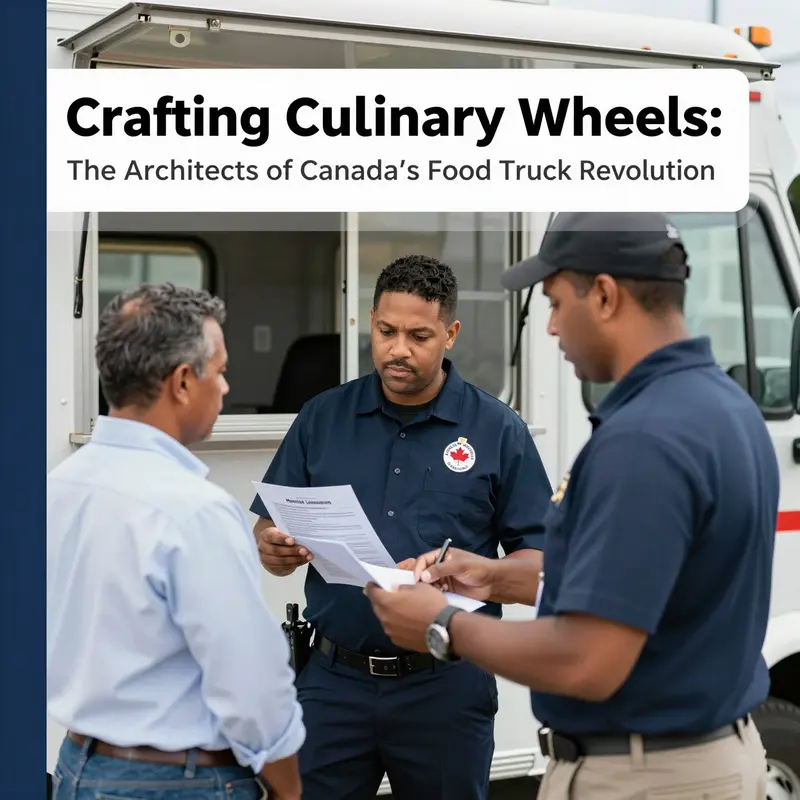
Across Canada, the making of a food truck is less about a single blueprint and more about a disciplined conversation between health codes, road rules, and entrepreneurial appetite. In a country where municipal governance blends provincial health standards with federal safety guidelines, local manufacturers have carved out a niche that places compliance at the heart of design. The result is a cohort of builders who quietly align every bolt, wire, and stainless steel panel with a regulatory lattice that travels from coast to coast. Their work ensures a mobile kitchen can move through crowded urban cores and quiet neighborhoods with equal confidence, turning a bright idea into a durable, legally sound business tool.
The Canadian landscape for food-truck manufacturing is smaller than the scale you might find in major global markets, yet that scale is deeply practical. Local production brings a distinct set of advantages. Most notably, compliance is not an afterthought but a design constraint. When a Canadian builder designs a trailer or a compact kitchen on wheels, they do so with the CFIA framework in mind, particularly the Safe Food for Canadians Regulations. This is more than a checklist; it is a guiding philosophy that shapes where the kitchen is laid out, how food is stored, and how hands are washed and surfaces are cleaned. Beyond federal rules, provincial and territorial health departments translate broad standards into local procedures that affect sanitation, temperature control, cross-contamination prevention, and staff health policies. Take Ontario as an example: Health Protection and Promotion Act regulations influence sanitation procedures and the management of food handlers. The implication for a road-ready kitchen is practical—an operator who begins the process with a Canadian builder gains a road map that anticipates inspections and licensing hurdles long before the truck hits the first market.
Embedded in this approach is the heavy responsibility of vehicle safety and electrical integrity. Canadian builders operate within a framework that keeps roadworthiness and kitchen safety in constant alignment. The vehicle must meet road-safety standards, and installed kitchen equipment needs to comply with recognized electrical and safety codes. Appliances tend to be certified by labs that reassure warranty, performance, and safety on a moving platform. In practice, this means the kitchen layout is engineered not only for cooking efficiency but for resilience in a climate where temperatures swing, power supply can vary, and the street demands a smooth, unobtrusive operation. The result is a compact, robust system that can endure the rigors of service in winter markets, humid summers, and everything in between.
The practical outcomes of this compliance-first design show up across the spectrum of options Canadian builders offer. A typical footprint remains 2.3 by 1.65 by 2.3 meters, a size that fits through narrow urban lanes and into standard loading zones, yet the real distinction lies in customization. Builders respond to the business model behind each mobile kitchen—whether a lean, essentials-first configuration for pop-up markets or a fully customized kitchen that optimizes workflow from prep to service. The edible dream is matched by a modular, adaptable layout that aligns with municipal licensing, health codes, and the specific street presence an operator intends to cultivate. In this market, customization is not a luxury but a necessity, because every city, every festival, and every curbside market tends to demand a slightly different balance of cold storage, hot cooking capacity, wash facilities, and waste management.
Cost is a natural line in the sand. Local manufacturing in Canada frequently commands a premium relative to overseas imports, reflecting the added value of regulatory alignment, reliability, and service networks. A widely cited range for a standard equipment trailer sits around four thousand five hundred to six thousand Canadian dollars, with price climbs when customization, larger electrical requirements, or advanced ventilation are added. For a Canadian entrepreneur, this premium often translates into a portfolio of dividends: a durable product, fewer regulatory headaches, and rapid, on-the-ground support when something goes awry. This is not merely about buying a stainless shell; it is about investing in a platform that can be trusted not just to perform at a single event, but to survive hundreds of service checks, licensing renewals, and the recurring maintenance needs that come with an itinerant kitchen.
The advantages of local manufacture extend beyond the initial sale. Ontario and British Columbia have developed robust ecosystems that support on-site installation, operator training, and annual inspections. The proximity of service technicians who understand the subtleties of Canadian electrical systems, exhaust configurations, and grease-management regimes means that a fleet can be kept in optimal condition with handlers who can speak the same language as the regulator and the operator. When a hood needs a filter replacement, or a wiring panel requires an upgrade to meet evolving codes, a Canadian builder can deliver a timely, regionally informed response. The end-to-end value hinges on this service orientation: the after-sales experience, the ready parts supply, and the ability to coordinate inspections with municipal authorities. In a country as large and climatically varied as Canada, that service ecosystem can be as decisive as the equipment itself.
Within this ecosystem, the equipment choices reflect a careful balance: the kitchen must be efficient, sanitary, and easy to clean, yet flexible enough to accommodate a range of menus and event types. The manufacturing discipline emphasizes practical, testable features such as NSF-compliant stainless steel worktables and cabinets, exhaust systems that conform to Canadian fire and environmental standards, and electrical systems capable of handling 110V, 220V, or 380V as demanded by different locations. The flexibility of vehicle dimensions remains a core design consideration, ensuring a standard footprint can work in tight urban lots while still delivering a comfortable kitchen flow for cooks and service staff. The design process is iterative and collaborative, with operators providing input on how a space should feel in practice, what the line flow will be during peak service, and how the cleaning schedule will be integrated into a bustling schedule.
There is also a broader environmental and municipal dimension to be acknowledged. While food trucks operate at the front lines of street cuisine, they must also navigate environmental regulations and emissions expectations that differ from those applying to stationary restaurants. Canada is moving toward stricter alignment of vehicle emissions with its neighbor to the south, a policy trajectory that could influence fuel choices and propulsion options for mobile kitchens in the future. Although a food truck is not a typical passenger vehicle, the push toward cleaner powertrains and more efficient power systems may shape the options Canadian builders present to operators. This forward-looking stance is not a distant abstraction; it translates into design choices that preserve adaptability, including the potential for propane or electric configurations and the capacity to swap components as regulations evolve.
Insurance plays a central role in the risk management of a mobile dining business. A robust policy package that covers general liability, property damage to the truck and equipment, and often commercial auto insurance is viewed by operators as a vital safety net. In a landscape where licensing is a product of a patchwork of city, province, and national requirements, insurance becomes a practical enabler of growth, allowing operators to plan for expansion, tougher health codes, and the inevitable maintenance cycles that keep equipment performing over time. The operational reality then becomes a cycle of compliance, maintenance, and growth, where every update to a regulatory standard or municipal rule prompts a corresponding update to the truck’s design and the operator’s business model.
Labels and menus bring a different kind of safety discipline into view. Allergen disclosure is a regulatory expectation in many jurisdictions, and nutrition information may be requested in certain municipalities for menu items. The emphasis placed on clear labeling is not merely for compliance; it also supports customer trust, which is the lifeblood of any mobile dining concept. The Canadian approach thus interweaves health, safety, and transparency into the fabric of what a food truck is and how it operates day to day. The result is a kitchen that is not only mechanically sound but also a reliable platform for consumer safety and honest communication with patrons and inspectors alike.
From a design perspective, the Canadian builders’ craft is best understood as a translation of entrepreneurial intent into a regulated, adaptable device. A creator who builds in Canada has to anticipate what city life will demand—tight turns, busy streets, long hours, and frequent inspections—while preserving the ability to scale, upgrade, or reconfigure as a business grows. The end product is more than a trailer; it is an integrated system that travels with a brand, communicates a commitment to safety, and carries with it the confidence that the regulatory gaze is understood, anticipated, and met. This is the essence of the Canadian food-truck ecosystem: a collaborative, regulatory-aware craft that turns a mobile dining concept into a sustainable business tool.
For readers seeking a practical route into this world, the daily grind is less about choosing a cooktop and more about aligning a concept with a regulatory path. What matters most is a partner who can speak to the lifecycle of the mobile kitchen—from onboarding into CFIA standards to ongoing maintenance needs and eventual upgrades as rules evolve. The most successful builders in this space do not merely deliver a wheel and a stove; they deliver a platform that remains compliant, serviceable, and capable of delivering a consistent guest experience across diverse environments. In this sense, the Canadian makers are not just builders; they are regulators’ collaborators and entrepreneurs’ allies, turning a street-food dream into a durable, compliant enterprise that can grow alongside a community’s appetite for new flavors and new experiences.
For readers who want to explore the practical trade-offs between different vehicle footprints and workflow layouts, there is a detailed comparison of step vans versus cargo vans in food-truck configurations. This resource helps illuminate how space planning, weight distribution, and service access influence both kitchen efficiency and regulatory compliance. See Step vans vs cargo vans for food trucks.
External resource: for a broader standards framework that touches electrical safety and equipment certification, see CSA Group resources: https://www.csagroup.org/.
Homegrown Wheels: How Canadian Manufacturers Build the Mobile Kitchens of Tomorrow
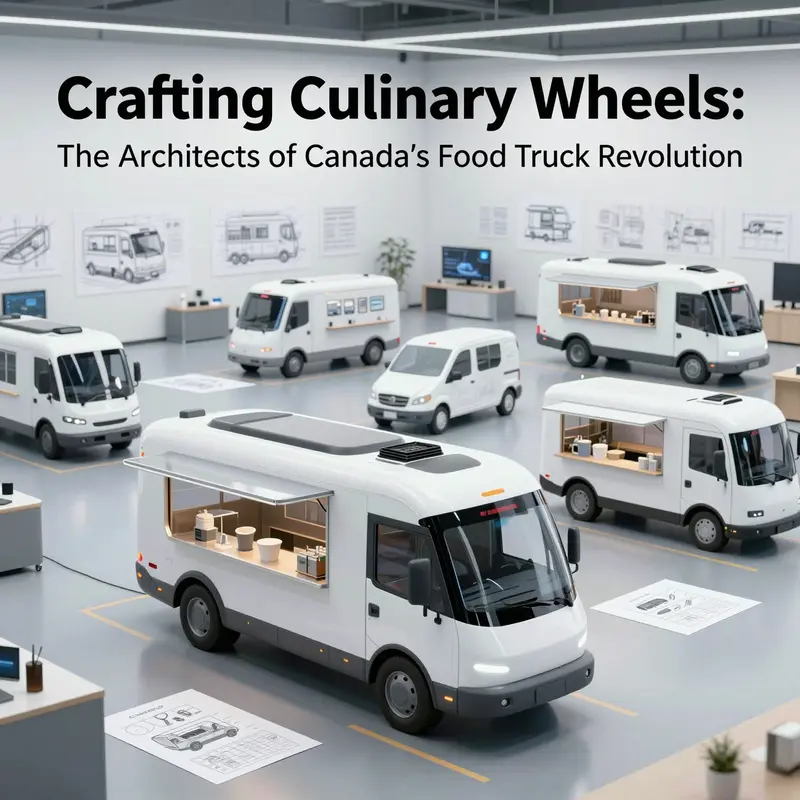
Canada’s market for mobile kitchens is built on a network of local fabricators, electrical installers, and service partners who understand Canada’s rules. Ontario and British Columbia concentrate this ecosystem, offering a reliable supply chain from chassis to completed kitchen. Compliance is the through-line: NSF-compliant surfaces, proper ventilation, and electrical systems sized for variable power demands. Operators benefit from local support, shorter lead times, and after-care that keeps trucks on the road longer. The design philosophy favors modularity with room for customization, enabling fleets to adapt to markets like farmers’ markets and downtown events while maintaining safety and efficiency. As consumer tastes shift toward sustainable, regulated mobile dining, Canadian builders continue to blend craft with compliance, delivering kitchens that travel well and perform consistently across municipal lines.
Final thoughts
The journey into the world of food truck manufacturing in Canada reveals a blend of culinary innovation, local empowerment, and commitment to compliance. Canadian manufacturers not only provide essential support to entrepreneurs but also play a crucial role in boosting the local economy. As these mobile kitchens continue to evolve, they embody the spirit of creativity and resilience in the food industry. Embracing and supporting these local manufacturers benefits not just food entrepreneurs but the entire community, ensuring that the future remains as vibrant and diverse as the cuisines itself.