
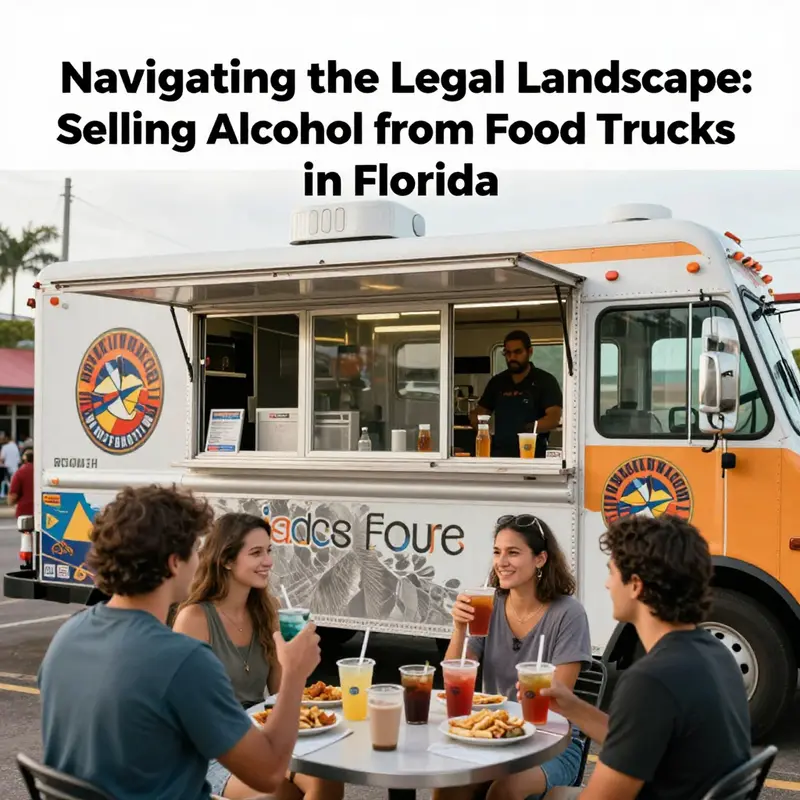
Selling alcohol from a food truck in Florida is a complex topic, one that intertwines legal stipulations, permits, and consumer behavior. With a growing trend of food trucks offering unique culinary experiences, understanding the rules surrounding alcohol sales can unlock new business opportunities and elevate the customer experience. This article delves into the legal aspects of selling alcohol, focusing on permits and regulations, event-specific sales, the economic implications, and consumer preferences in the sunny state of Florida. As food trucks become a staple of the culinary landscape, adapting to the rules governing alcohol sales can be critical for growth and success.
The Pouring Puzzle: Legal Realities and Special-Event Permits for Florida Food Trucks
The question of whether a food truck can sell alcohol in Florida sits at the intersection of public safety, local governance, and small-business pragmatism. The straightforward answer, grounded in state practice and enforcement patterns, is often no for regular operations. Florida law does not provide a standard liquor license pathway for mobile food businesses, and food trucks that aim to serve alcohol as part of their everyday menu typically encounter a nonstarter from licensing authorities. This reality is not a mere technicality; it reflects a broader framework designed to regulate where, when, and under what conditions alcohol may be sold. For operators trying to run a bustling, mobile kitchen, the implications are practical and pervasive. Without a license that covers ordinary service, a truck may legally offer only nonalcoholic beverages as a core component of its daily operation. The rationale behind this stance is rooted in public safety concerns, oversight, and the need to keep alcohol service within clearly defined channels where trained staff, responsible servers, and predictable locations can be monitored by authorities. In day-to-day terms, this means a Florida food truck should plan its beverage strategy around nonalcoholic options, weathered by creative pairings and compelling branding that do not hinge on alcohol as a draw. Yet the landscape is not entirely rigid, and there is a lifeline for those who want to incorporate alcoholic beverages at specific moments. An exception exists for special events, festivals, or temporary gatherings, where a city or local licensing authority may issue a permit that allows alcohol sales for the duration and scope of the event. These special-city permits are not blanket approvals; they come with strict conditions, carefully delineated event boundaries, and time limits. The permits are granted at the discretion of local municipalities, and each jurisdiction may tailor its requirements to reflect the character of the event, the expected crowd, and the logistical realities of serving from a mobile unit. In practice, that means a food truck operator who wants to offer alcohol must first identify the event and then engage with the city or county that oversees the event’s permit process. The application often includes details about the event’s location, duration, anticipated attendance, and the methods by which alcohol will be served, including age verification and responsible-service protocols. It also means preparing for a tighter compliance regime: temporary permits may impose site restrictions, curfews, limits on the types of beverages available, and the need for certified staff to manage service responsibly. The balance here is delicate. For the operator, the possibility of selling alcohol at a festival or fair presents a path to broaden the business and attract a larger audience. For the community and regulators, it offers a controlled mechanism to ensure public safety, reduce underage drinking, and maintain orderly event conduct. The key for a truck owner is to treat the special-event route as a separate, project-based venture rather than a seamless extension of daily operations. In practice, this means compartmentalizing licenses, inventories, staff certifications, and on-site procedures. It also means building relationships with event organizers and municipal offices well in advance. The process typically begins with outreach to the city or town’s licensing or public safety department to understand eligibility, required documents, and timelines. Local authorities may request a plan that includes the layout of the truck at the event, the locations where alcohol will be stored and displayed, and the approaches to preventing over-service and ensuring that beverages are sold only to patrons who prove they are of legal drinking age. It also requires robust insurance coverage, explicit consent from event organizers, and a clear chain of custody for alcohol throughout the event—measures designed to minimize risk and to ensure accountability for every sale. The reality for many operators is that, without a temporary permit, alcohol service becomes a line item that cannot be crossed. This is not a deficit in entrepreneurial spirit but a regulatory reality that demands careful planning and respect for jurisdictional boundaries. To navigate this landscape effectively, operators should stay informed about the current rules, recognizing that licensing standards can evolve and that municipal interpretations can vary. The best strategy is to anchor operations in compliance-first thinking: prioritize compliant beverage offerings, maintain meticulous records, and pursue the special-event path only when aligned with a concrete festival or temporary gathering. When considering alcohol as part of a broader business model, it is crucial to consult the official sources that govern licensing and to engage with local authorities early in the planning process. The Florida Department of Agriculture and Consumer Services remains the primary touchstone for general licensing guidance and for confirming the absence of a broad, state-level path for mobile alcohol service. While the FDACS pages emphasize foodservice and alcohol licensing specifics, they also point readers to the correct regulatory channels at the municipal level for event-based approvals. This layered approach—state guidance paired with city-specific permits—highlights the practical boundaries that shape how a food truck can responsibly alter its beverage offerings. The guidance converges on one clear implication for operators: plan around events when alcohol is involved, and treat everyday operations as alcohol-free. In the flow of a year, this translates into seasonal menus that spotlight regional flavors, craft nonalcoholic beverages, and optimized service formats that maximize speed, consistency, and compliance. It also encourages operators to think in terms of partnerships rather than solo execution. For example, a truck may collaborate with a licensed vendor at a festival, ensuring that each party remains within its legal remit while offering customers a combined experience that blends culinary and beverage elements in a regulated setting. Such collaborations can preserve the brand’s integrity while expanding its appeal during events. The strategic approach to licensing becomes a matter of timing, location, and audience: choose events that align with the brand, secure the necessary permits, and design a service model that remains compliant under the rules governing those events. The path to growth through events also invites operators to cultivate relationships with organizers, managers, and other vendors who have navigated the permitting landscape before. Those networks can prove invaluable in demystifying the process, identifying typical documentation requirements, and understanding common timelines. Alongside this practical know-how, operators should integrate training that emphasizes responsible service, age verification, and safe operational practices for temporary settings. Even when alcohol is not part of the regular menu, a strong foundation in responsible service helps build trust with customers and regulators, reduces risk, and reinforces the business’s commitment to a safe, enjoyable experience for all attendees. In this light, the legal framework is less a barrier and more a map—one that guides the innovator toward venues where a well-structured event can become a successful extension of the brand, rather than an untracked risk at the street corner. For readers interested in the broader legal landscape that shapes Latino street cuisine and the entrepreneurship that powers it, our coverage of legal considerations for Latino food-truck startups offers a complementary lens on permits, registrations, and compliance practices that are common across mobile food ventures. This resource helps connect the specifics of Florida’s regulatory posture with the larger realities of running a mobile culinary business that respects both the letter of the law and the liberties of creative enterprise. Ultimately, success in Florida’s mobile food economy hinges on clarity about what is allowed, smart planning around special-event opportunities, and a disciplined approach to compliance. Operators who invest time in understanding municipal processes, who build relationships with local authorities, and who design menus and service models around safe, age-appropriate beverage offerings will find a route to growth that stays within regulatory boundaries. The goal is not to avoid alcohol altogether, but to pursue it with a precise, event-driven strategy that aligns with community standards and the lawful use of space and resources. For official licensing details and the most current requirements, consult the Florida Department of Agriculture and Consumer Services’ alcohol licensing guidance: https://www.fdacs.gov/foodservice/alcohollicensing/.
Sunshine, Permits, and the Alcohol Question: Navigating Florida Food Truck Alcohol Sales
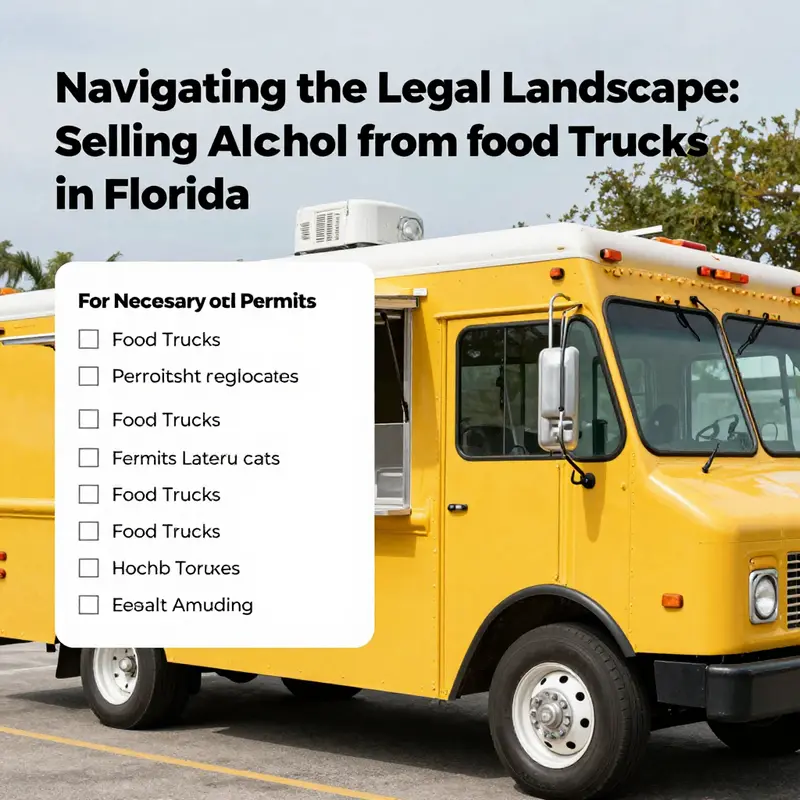
When a city lays down its plans for food, weather, and the welcome of visitors, it also sets the stage for what vendors can offer. Florida’s sun-drenched streets and bustling food-truck scene tempt operators with fresh ideas, bold flavors, and the idea of serving a cold beer or glass of wine alongside a hot meal. Yet the actual rules governing alcohol sales at a mobile eatery stay surprisingly strict. The core reality is stark: in Florida, food trucks generally cannot sell alcoholic beverages. This is not because operators lack entrepreneurial spirit, but because the state and local regulators have designed a system to tightly manage where alcohol can be sold, by whom, and under what circumstances. The public interest, after all, includes preventing on-street sales that could happen without proper oversight, ensuring responsible service, and protecting both customers and the mobile businesses that serve them. For anyone hoping to pursue alcohol sales from a mobile unit, the landscape is navigable but narrow, requiring careful alignment with city permits for special events and strict adherence to licensing criteria that often sit at the intersection of state law and municipal policy.
The practical implications begin with the basic rule and its exceptions. The general prohibition means that a Florida food truck cannot routinely offer beer, wine, or spirits as part of its standard menu. The usual path to alcohol service is through an event-based permit. In practice, that means the truck can sell alcohol only if it participates in a designated event or festival and has secured a special permit from the city or the event organizer for that occasion. These permissions are not permanent licenses for the rolling kitchen. They are limited authorizations tied to a specific time, place, and event. The process often involves cooperation with the city’s licensing department and the event’s management team, plus adherence to event rules that govern hours, beverage types, ID checks, and the expected behavior of staff and attendees. The result is a framework that supports controlled, temporary alcohol service rather than ongoing, everyday sales from a mobile unit.
In theory, there is a longer-term licensing option that can, under the right conditions, expand a truck’s ability to offer alcohol. The 4COP license is presented in regulatory guides as a potential route for selling beer, wine, and packaged alcohol. It is described as a permit that enables certain types of alcohol sales for an outlet. The catch is formidable: the applicant must meet a set of qualifications, including demonstrating a reputable business history and satisfying other state and local requirements. Florida’s licensing ecosystem often envisions brick-and-m mortar or clearly defined, stationary business premises as the primary institutions for a 4COP license. A mobile food unit, by contrast, is inherently dynamic and itinerant. While the 4COP framework exists, translating it into a profitable, compliant model for a moving kitchen demands careful coordination with licensing authorities, a solid business footprint, and the ability to maintain compliance across multiple jurisdictions. In other words, the lure of a 4COP license is real, but the practical reality is that mobile operations usually face significant hurdles to qualify and maintain such a license, especially when the unit must relocate from city to city, event to event.
For operators who are serious about exploring alcohol sales within Florida’s legal boundaries, the first rule is to start with the official, up-to-date guidance. The Florida Department of Agriculture and Consumer Services provides the state-wide baseline on what is permissible and where exceptions may lie. It is not uncommon to see shifting interpretations or updated requirements posted by state agencies or local jurisdictions following changes in policy or public safety concerns. Therefore, the prudent path is to treat every plan to serve alcohol as something that must be validated against current regulations rather than as a fixed, universal rule. Operators should be prepared for a multi-layered process: securing event permits, coordinating with the city or county, potentially pursuing a 4COP license if the structure allows, and ensuring that all other licenses and inspections—health, safety, and sales tax compliance—are fully in place before the first pour occurs.
The regulatory dance is not just about having the right paperwork. It is about how a mobile operation is built to function within the framework of Florida’s alcohol laws. For example, serving alcohol involves more than a simple sales transaction. Vendors must implement responsible-service practices, verify ages, control access to alcohol, and manage the flow of customers in ways that do not create safety or liability risks. Mobile units must also grapple with zoning and health regulations specific to their operating routes. Trucks and trailers are not simply kitchens on wheels; they are regulated spaces requiring sanitation certifications, appropriate storage for beverages, and procedures for handling spills, waste, and service area boundaries. These factors compound the complexity of attempting to run a regular alcohol program from a food truck and underscore why many operators opt to keep alcohol separate from their daily offerings.
A meaningful path forward for those who want the option without anchoring the business exclusively to festival season lies in partnerships and strategic positioning. Many operators find value in booking space at events that already have approved alcohol-service plans. Collaborating with organizers who understand the local rules can reduce the friction involved in obtaining permits and ensure compliance with the event’s alcohol policy. Some operators consider pairing with fixed-location venues in a way that aligns with the event-based approach: the truck appears at venues on days when the host venue has its own alcohol licensing in place and adheres to the venue’s rules for mobile vendors. Such arrangements require careful negotiation and clear written agreements that delineate responsibilities, hours, insurance, and the boundaries of alcohol service. While these arrangements do not transform a mobile unit into a licensed alcohol outlet, they can create viable opportunities to offer alcoholic beverages in a controlled, compliant context.
For those who want a more in-depth legislative map, it helps to consult resources that address broader regulatory considerations for food-truck startups and alcohol laws in the state. A pathway worth exploring is outlined in materials that discuss legal considerations for Latino food-truck startups, which cover a spectrum of regulatory topics—licensing, permits, and compliance—that matter for operators navigating the overlap between food service and alcohol. You can explore this topic at the linked resource, which provides contextually relevant insights for operators who are balancing entrepreneurial ambitions with strict regulatory realities. Legal considerations for Latino food-truck startups.
Even with a potential 4COP route on the table, the realities of Florida’s regulatory environment reinforce a few practical truths. The process is inherently local as much as it is state-based. State agencies issue broad guidelines, but city and county governments—through their licensing offices, police departments, zoning boards, and health inspectors—define the day-to-day feasibility. The most common reality for a mobile operator remains: alcohol sales are tightly restricted and typically restricted to permitted events or to licensed establishments that can accommodate a licensed bar environment, albeit within a fixed address. This layered approach is designed to preserve safety, control, and accountability. It also means that anyone who dreams of selling alcohol from a truck must prepare for a multi-step journey that often includes contracting with venues, applying for event-specific permits, aligning with a community’s alcohol policy, and meeting the rigorous standards of both state and local regulators.
In the end, the Florida food-truck scene thrives on flexibility, creativity, and the ability to adapt to rules rather than the freedom to bend them at every turn. Operators who pursue alcohol service will benefit from a long game—careful planning, robust risk management, and transparent communication with event organizers and licensing officials. They should also remain aware of the broader business implications. Alcohol service introduces liability considerations, higher insurance requirements, and additional training needs for staff. It affects not only the bottom line but also brand perception and customer experience. Therefore, even for those who manage to secure a permit for a particular event, sustaining a reliable, compliant alcohol program from a mobile unit is a challenging endeavor that demands unwavering attention to regulatory detail and a readiness to pivot when rules shift.
For operators who decide to advance with a proactive, compliance-first approach, the journey begins with thorough research and verified guidance. The state’s official channels remain the most trustworthy resource, and operators should check them regularly for updates. They should also cultivate relationships with event organizers and local authorities, ensuring that every plan to serve alcohol is anchored in documented permits and clear operational boundaries. And when exploring broader regulatory landscapes beyond Florida, or when seeking practical guidance on how to navigate licensing considerations in a broader market, it can be helpful to look at a wider range of resources and case studies. The core takeaway is simple: selling alcohol from a food truck in Florida is possible, but it is conditional, time-bound, and highly regulated. It is not a default capability of the mobile kitchen. Those who pursue it should expect a meticulous process, a dependency on event and municipal permits, and a readiness to adapt to a regulatory environment that prioritizes safety, accountability, and orderly operation.
External resource: For an authoritative overview and the latest guidance on permits and alcohol sales, consult the Florida Department of Agriculture and Consumer Services at https://www.fdacs.gov.
Event-Driven Libations on Wheels: Navigating Florida’s Bar-on-Wheels for Weddings, Festivals, and Private Events
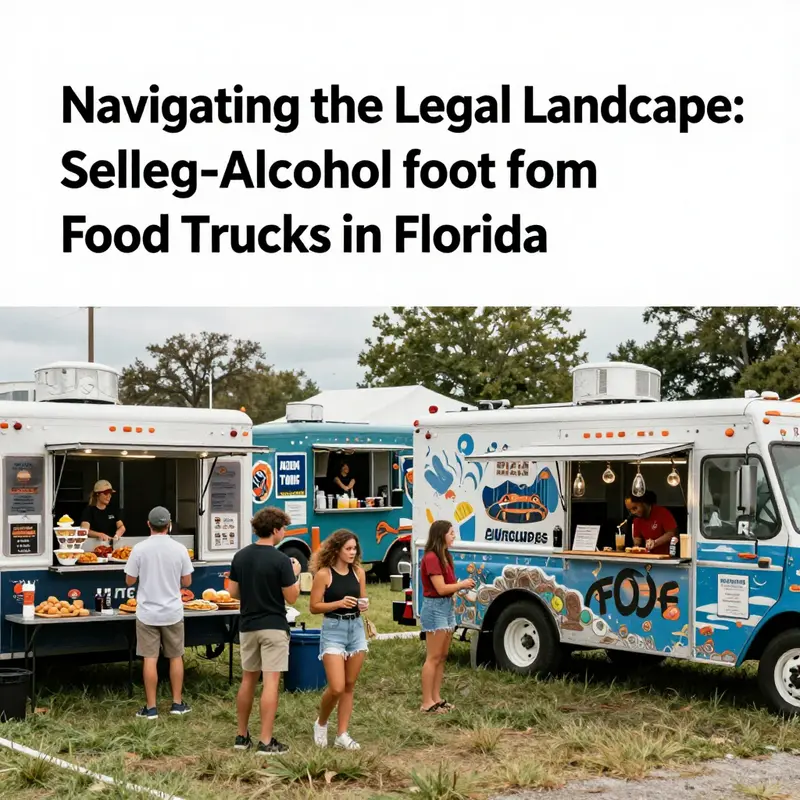
Florida permits on-site alcohol service for events via licensed mobile beverage units, but there is no blanket policy allowing daily alcohol sales from a food truck. To operate legally, bar trucks must hold a valid state liquor license for beverage service and comply with local health and safety requirements. Local counties and municipalities may impose hours of service, permissible locations, and staffing rules that vary by jurisdiction. Operators should treat each event as a unique regulatory package and coordinate closely with hosts, venues, and local authorities. A successful bar-truck model pairs a clear beverage menu with a coordinated guest flow, integrating service with food, timing, and site layout to maximize guest satisfaction and margins. Safety and responsible service are essential: verify ages, monitor consumption, and ensure staff are trained in crowd management and emergency procedures. Partnerships with event organizers, caterers, and other vendors help create a seamless guest experience while maintaining compliance. Industry associations and local health and licensing offices provide guidance on permitting, ventilation, fire safety, and on-site best practices. In short, Florida’s bar-on-wheels opportunity rewards careful planning, proper licensing, and transparent collaboration with host venues and regulators.
Beverages on the Move: Navigating the Economic Realities of Florida’s Alcohol Rules for Food Trucks
Across Florida, the dream of selling alcohol from a food truck collides with a regulatory landscape that treats beverages and meals as a bundled public interest. Operators move through streets and markets with high hopes, only to encounter a rulebook that restricts the easy pairing of drinks with meals. The economic implications of these rules ripple through every decision a mobile kitchen makes. They influence how a truck schedules its route, what events it targets, and how it prices its offerings. The story here is not only about legality; it is about a business model that must align with local government processes, consumer expectations, and the realities of limited revenue streams. In the end, whether a Florida food truck can profit from alcoholic sales depends as much on timing, location, and permit availability as on culinary skill.
Regulatory Framework: In Florida, food trucks are typically barred from selling alcoholic beverages as part of regular operations. The only path to serving alcohol is to obtain a temporary permit for a specific event, issued by the local city or county government. This means that normal lunch rush hours or weekend dinners rarely, if ever, become alcohol-inclusive experiences. When a truck does serve alcohol under a permit, it is usually within the boundaries of a festival, fair, or other pre-approved gathering. The permit is time-limited and tied to the event’s duration, with strict conditions about hours, service area, proof of age, and responsible beverage service practices. Operators must coordinate with the event organizer and comply with the host jurisdiction’s licensing rules, which can differ from one city to the next. The Florida Department of Agriculture and Consumer Services remains a primary reference point for understanding the overall framework, but the on-the-ground rules are locally enforced and frequently updated. For those seeking official guidance, the state’s resources are the best starting place.
Economically, this framework creates a built-in episodic revenue stream rather than a steady one. The immediate implication is that revenue from alcohol is not a reliable baseline for planning payroll, ingredient purchasing, or vehicle maintenance. A truck that adds an alcohol option at a festival might experience a surge in profits during those events, but that spike is offset by the inherent uncertainty of festival schedules, weather cancellations, and the complexities of securing permits for many dates throughout the year. There is also the risk that alcohol sales could crowd out time better spent expanding core food offerings. The overall effect is a two-tier revenue model: the predictable food sales that occur regardless of alcohol, and the event-driven beverage sales that may appear only sporadically, with profits varying dramatically by event scale and location.
Administrative and Financial Burdens: The permit process is not merely a checkbox; it is a continuous administrative burden. To obtain a temporary permit, operators must prepare documentation, submit applications, and pay fees that vary by jurisdiction and event. These permits are often limited to a single event or a cluster of events within a season, requiring meticulous scheduling and forecasting. If a truck wants to participate in multiple festivals or fairs, each event may require separate approvals, renewals, and financial outlays. The costs can be significant when multiplied across a calendar year, especially for smaller operators who balance thin margins with rising fuel, insurance, and maintenance costs. Even when a permit is granted, operators must budget for compliance costs—age verification systems, staff training in responsible beverage service, and incident reporting. All of these add to the baseline cost of doing business and can erode what might seem like a straightforward profit from selling drinks.
Market Position and Growth: The economic impact of alcohol sales in Florida is highly situational. In markets where festivals and outdoor gatherings are common, temporary alcohol service can turbocharge foot traffic, brand visibility, and repeat customer engagement. For operators who already excel at food quality and speed, a well-timed beverage offering during a high-volume event can boost overall spend per guest and create a more complete dining experience. On the other hand, a truck that cannot reliably offer alcohol during regular operating hours may lose ground to brick-and-mortar rivals that can cross-sell beverages in a steady, predictable manner. The asymmetry becomes clear when comparing everyday street-peak trade to sporadic festival performance. Where permitted, a festival season might yield a disproportionate share of annual profits, but the calendar remains constrained by permitting windows and event calendars. This creates strategic tension: grow the business through constant mobile presence and low-cost expansion, or pursue capital-intensive partnerships at events that carry the risk of uncertain return.
Yet there is nuance in Florida’s regulatory environment. The very limitations can spur creative approaches to growth that rely less on alcohol and more on brand building, service quality, and menu differentiation. A truck can still capture customer loyalty by delivering consistently excellent food, rapid service, and an engaging customer experience. By focusing on a strong core product, seasonal specials, and smart social media outreach, operators can extend their reach beyond the walls of a permit event. In this sense, the economic story is not simply a prohibition; it is a reminder that hospitality economics often reward specialized execution. When the beverage option is constrained, the opportunity is to intensify the value of what is offered—timeliness, flavor, and the social dimension of sharing a meal in a public space. And where events do permit alcohol, those moments must be exploited with rigorous operations, from staff training in responsible service to precise inventory and point-of-sale discipline to protect margins.
Operational and Strategic Considerations: For a food-truck business, the decision to pursue alcohol service hinges on alignment among regulatory prospects, event calendars, and cost structures. Some operators strategically target a calendar crowded with family-friendly festivals where non-alcoholic beverage needs drive demand, then weave a narrative of an all-inclusive food experience that still respects local rules. Others partner with event organizers and licensed venues to create a broader occasion that draws crowds and ensures compliance through shared responsibilities. The collaboration can extend to cross-promotional activities, where the truck offers exclusive tasting experiences at events or collaborates on menu pairings that emphasize food quality rather than heavy drink sales. In places where alcohol is permissible at events, seasoned operators protect margins by teaching staff to manage portions precisely, train in customer service, and apply a reliable accounting framework that tracks beverage revenue alongside food revenue.
A note to readers who are mapping their path through this regulatory labyrinth would be to study the broader ecosystem in which mobile food ventures operate. There is a dynamic interplay between city ordinances, county rules, and state guidelines that requires ongoing diligence. In some communities, a sympathetic council member or proactive local official may facilitate special event policies that expand opportunities for mobile vendors. In others, complex licensing regimes can slow down ambitious growth plans. For those who want a practical entry point for understanding legal considerations and startup challenges in the Latino-dining context, this exploration can be complemented by relevant resources. For a closer look at legal considerations facing Latino food-truck startups, see Legal considerations for Latino food-truck startups. The key remains: regulation shapes revenue, and revenue shapes strategy; the two are inseparable in a Florida setting.
External resource note: Official guidance from the state agency can be found at https://www.fdacs.gov/. This authority provides the essential rules that operators must follow, including the state-level expectations that accompany city or county permits. Given the constantly evolving nature of local policies, consulting the official portal regularly helps ensure compliance and reduces the risk of costly missteps.
In sum, the economic implications of selling alcohol from food trucks in Florida are highly situational. The absence of a broad, steady alcohol sales channel pushes operators to maximize the core food business while opportunistically leveraging event-based opportunities when available. The most resilient business models are those that treat regulatory constraints as a limit on where and when alcohol might appear, not as a dead end. By building a robust operations platform, maintaining strong relationships with event organizers, and cultivating a track record of reliable service, food-truck operators can still achieve meaningful growth within a restricted framework. The chapter thus highlights a practical truth: in Florida, alcohol can be part of the equation, but only if the equation is solved with careful timing, careful paperwork, and a clear focus on the fundamentals of food excellence and guest experience.
Between Sips and Streets: Understanding Consumer Behavior and Alcohol Access for Florida Food Trucks
In Florida, consumer behavior around alcohol does not exist in a vacuum. It unfolds within a lattice of advertising rules, sales controls, and taxation that aims to lower risky consumption while preserving personal choice and business opportunity. This dynamic becomes especially visible when a food truck—the portable heartbeat of Florida’s vibrant street-food scene—enters the picture. The same regulatory levers that deter heavy drinking in bars and clubs create a very different landscape for mobile vendors, where the ability to serve alcohol is restricted, tightly gate-kept, and often seasonally activated through special-event permits. The result is a consumer environment where choices about when, where, and how to drink are mediated not only by preference but by venue-specific rules that guide access, pricing, and social norms.
The law is blunt about most food trucks and alcohol: a standard food truck in Florida typically cannot offer alcoholic beverages to customers on site. The path to alcohol service is narrow, requiring a special city permit tied to festivals or targeted events. This limitation is codified in guidance that designates events as the only practically viable route for mobile alcohol sales. The difference between a neighborly lunch pickup and a festival imbued with craft beverages is not just a matter of logistics—it is a fundamental consumer experience shift. When a truck can legally pour a beer alongside its barbecue or tacos, the crowd’s behavior around that truck tightens in a way that resembles a bar scene. When it cannot, the crowd naturally gravitates to events where alcohol is permitted—or simply opts for non-alcoholic pairings that emphasize the meal’s flavors and textures. In practice, this means the same enthusiastic crowd that might linger over live music and street food will plan policed, event-based excursions to access alcohol, while the majority of day-to-day street vending remains alcohol-free.
From a consumer psychology standpoint, the absence of on-site alcohol at most food trucks reshapes perceived value and decision-making at the moment of purchase. For many patrons, the thrill of a food truck meal is linked to social ambiance, novelty, and the chance to sample a curated mix of bites in a single stop. Alcohol, when present, can amplify dwell time, encourage sharing, and elevate perceived quality. Without it, operators lean on other value signals to compete: speed, flavor intensity, and the provenance of ingredients; creative beverage options that do not contain alcohol; and the convenience of pairing a meal with a non-alcoholic, refreshing beverage. Consequently, consumer expectations adjust. People may decide to visit a festival or a market because they want a broader alcohol experience, while choosing a truck for a quick, high-quality meal, often with an emphasis on authenticity and craft in the food rather than in the drink.
The regulatory context also shapes who shows up and when. Advertising restrictions for alcohol in the state influence how, and whether, a food truck can leverage promotional activity around beverages. Operators must navigate a system designed to reduce impulse drinking and protect the public from aggressive marketing while still allowing lawful commerce. Taxation interacts with price sensitivity, another driver of consumer choice. When alcohol is available in limited venues, customers weigh the cost of drinks against the perceived value of the entire food experience. They may select a festival or event that bundles food, music, and alcohol into a single, time-bound experience, making the overall economic calculus favorable for attendees who value variety and atmosphere. This dynamic can raise the price sensitivity for alcohol, particularly for casual consumers who want the occasional drink but are not willing to travel to a dedicated venue just to obtain it. The upshot is a market where alcohol sales from mobile vendors remain a constrained channel, and consumers learn to calibrate their expectations accordingly.
For operators, the constraint is not merely regulatory. It creates an environment where strategic partnerships and menu design become critical to sustaining traffic and revenue. When a truck cannot offer liquor, it must craft beverages and food pairings that can stand on their own. That often means elevating non-alcoholic beverages—house-made sodas, fruit-forward choices, and other distinctive drinks that complement spicy or savory profiles. It also means thinking about the sensory experience of the meal: aroma, texture, temperature, color, and even the pacing of service. A well-timed bite with a refreshing non-alcoholic drink can produce a sense of celebration without risk, and can attract patrons who might have otherwise opted for a nearby venue with alcohol. In this sense, the absence of alcohol on most mobile units pushes a form of culinary innovation that aligns with public health goals by reducing alcohol exposure in street environments while still delivering a memorable food experience.
The social fabric around food trucks in Florida also matters. Festivals and seasonal events are not just economic engines; they are communal rituals that shape how people choose to spend their time. In markets and at pop-up gatherings, crowds anticipate a spectrum of offerings—from chef-driven bites to regional favorites—often anchored by the shared experience of walking from stall to stall and sampling different specialties. When alcohol is part of the festival mix, the behavior changes in ways that are familiar to anyone who has attended a tasting event: longer dwell times, more social interaction, and a broader dispersion of spending across vendors. The constrained landscape for alcohol on the street makes these events even more important as focal points for both commerce and public health messaging. It is at these festivals that consumer behavior around alcohol remains visible, licensed, and regulated within a controlled environment, allowing city officials and organizers to balance enjoyment with safety and order.
This interplay between policy and practice extends to the choices vendors make about licensing and compliance. The official guidance—such as the Florida Restaurant Licenses & Food Truck Permits Guide—provides a map of where and when alcohol sales might occur for mobile vendors. It is not a roadmap for broad on-site alcohol service, but rather a boundary within which entrepreneurial food-truck operators can plan for scalable, event-based opportunities. For readers who want to understand how these boundaries shape strategic planning, exploring this guide is essential. It offers clarity about the licensing requirements, the nature of event permits, and the permit conditions that can enable a temporary, festival-driven alcohol option. The practical takeaway is that the ability to serve alcohol is contingent—often limited to a few heightened moments rather than a regular, day-to-day offering. That reality requires careful forecasting of revenue streams, customer flow, and compliance costs, and it invites operators to reimagine value in ways that complement the alcohol offerings found at events rather than on the street.
To connect policy with practice, consider how consumer behavior shifts in response to perceived safety, social norms, and trust in the licensing environment. Patrons are more likely to linger when they trust the event ecosystem—when there is clear signage, consistent enforcement of rules, and visible health-conscious practices around food handling and crowd management. In a landscape where alcohol is restricted on most mobile units, trust becomes a key differentiator. People return to vendors they believe deliver quality, consistency, and reliability, even if the beverage component is absent. Trust also extends to how events market themselves. If a festival promises a thoughtful, curated experience with responsible drinking environments and accessible non-alcoholic beverage options, it can attract a broader audience, including families and long-time residents who value safety and community well-being. In turn, this broadening of appeal can support more robust consumer engagement with street food, beyond the sporadic impulse to drink.
The broader public-health lens adds another layer of consideration. The same sets of policies designed to curb excessive consumption can inadvertently steer consumer behavior toward alternative venues or modes of socializing. The net effect is a market that learns to choreograph consumption in a way that emphasizes controlled access, quality cuisine, and social experience rather than unregulated on-site drinking. This alignment between public health goals and consumer demand is not a victory lap; it is a dynamic that requires ongoing attention from policymakers, event organizers, and operators. In the Florida context, the practical implications are clear: if a consumer wants an alcoholic beverage alongside a truck meal, their best option is to attend a special event with the appropriate permit. Elsewhere, they can enjoy flavorful cuisine and creative non-alcoholic drinks, or they can plan around community events that legally permit on-site alcohol service in a controlled setting. The chapter, then, is less about a failed freedom to serve alcohol from every truck and more about understanding how policy shapes the theater of urban dining, influences customer choices, and ultimately drives innovation in Florida’s dynamic, food-forward street culture.
For readers who want a direct line into the policy discourse, the topic intersects with broader debates about how municipalities balance commerce, health, and neighborhoods. The question is not simply whether a truck can pour a drink; it is how a city structures opportunities for mobile commerce while safeguarding residents. The licensing regime creates a set of predictable incentives: emphasize culinary excellence, craft distinctive beverages without alcohol, and leverage event-driven access to alcohol in ways that satisfy both consumer desire and public policy. In this context, the consumer is navigating a landscape that rewards quality over quantity and community over impulse. That is not a constraint to creativity but a prompt to reframe the street-food experience as a more deliberate, socially integrated activity. And because these patterns are local and event-driven, they offer a flexible template for operators who want to align with Florida’s diverse communities and evolving urban landscapes.
For further reading on how vendors navigate legal and logistical realities, see the internal discussion referenced here: Legal considerations for Latino food truck startups. This link points to a broader conversation about the regulatory, licensing, and compliance considerations that mobile vendors confront as they grow from street corners to festival footprints. The takeaway is not to fear regulation but to understand it as a framework within which creativity and business strategy can thrive, especially when alcohol sales are limited to special-event contexts.
In sum, consumer behavior around alcohol in Florida’s mobile food economy is shaped by a distinctive mix of policy, risk management, and social expectations. The shortage of on-site alcohol options at most food trucks reframes how patrons experience street dining, nudging them toward festival environments where alcohol is available under strict oversight, or toward non-alcoholic beverage innovations that complement their meals. The regulatory scaffolding thus plays a quiet yet powerful role in steering demand, shaping vendor strategy, and guiding the evolution of Florida’s dynamic, food-forward street culture.
External source: For official guidelines on licensing and event permits, see the Florida Department of Agriculture and Consumer Services Food Truck Permits Guide: https://www.fdacs.gov/foodtruck/
Final thoughts
Understanding the intricacies of selling alcohol from food trucks in Florida is essential for those looking to enhance their offerings and adhere to state laws. As regulations can vary by city and event, obtaining the necessary permits is vital. The economic benefits can be significant, drawing more customers and increasing sales. Finally, being attuned to consumer preferences can allow food truck operators to capitalize on this growing trend. Navigating this landscape effectively not only enhances the culinary experience but also positions food truck businesses for future growth and success.