
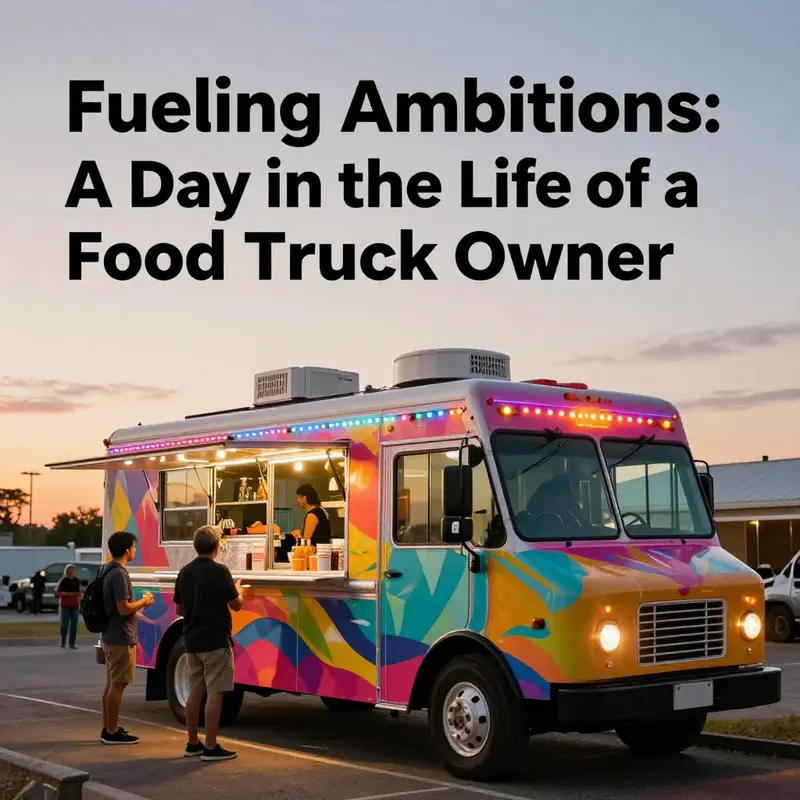
From the crack of dawn to twilight, the life of a food truck owner is one of determination, creativity, and resilience. Understand the meticulous early morning routines dedicated to sourcing fresh, local ingredients, discover how strategic parking and engaging customer interactions shape daily success, and gain insights into managing operational challenges while leveraging social media to build a loyal following. Each chapter unpacks crucial aspects of this unique entrepreneurial journey, revealing how passion and practical skills intertwine to create a thriving mobile business.
Dawn in the Drive: The Quiet Rituals That Power a Food Truck Day on the Road
Dawn in the drive means more than a change of light; it marks the moment when intention takes the wheel and the city begins to stir around a single, purposeful flame. For a food truck owner, the day begins long before the first customer arrives, and long before the siren-soft glow of street lamps flickers out. It begins in the hours when the world is still gathering itself, in the hum of a generator, the clink of cold-air vents, and the quiet, almost ceremonial routine of turning a mobile kitchen into a reliable, breathing engine. The owner steps into the lot or the shared commissary where the truck sits like a sea captain’s vessel—calibrated, checked, and ready to chart a course through lunch crowds, sunset lines, and the occasional rainstorm. In this life, preparation is not a ritual of luxury but a lifeline, a discipline that translates into consistent flavors, steady service, and the kind of efficiencies that turn a weekend into a predictable, though never dull, revenue stream.
The clock often starts its count between two and four in the morning, a window dictated not by romance but by demand—by the stubborn reality that people crave warm, comforting food as they begin their days. The crew arrives before the city is fully awake, parking in a designated space or a secure lot that becomes the night’s quiet command post. The first step is not plating or tasting but checking the core of the operation: the cold chain. Perishable items—dairy, meats, and fresh produce—are checked against a calibrated thermometer, tucked into a logbook, and assessed for temperature stability. The safety guidelines are not a back-page afterthought; they are the engine’s oil. A failing fridge or a sour batch is not merely a recipe ruin; it’s a safety hazard that can rupture an entire day’s service. So the morning starts with a series of precise, almost ritual checks: the fridge doors are opened, the racks are inspected, and temp readings are recorded with a practiced hand. The practice is built on habit and safety, with an eye toward compliance that never shouts but quietly anchors every decision the owner makes.
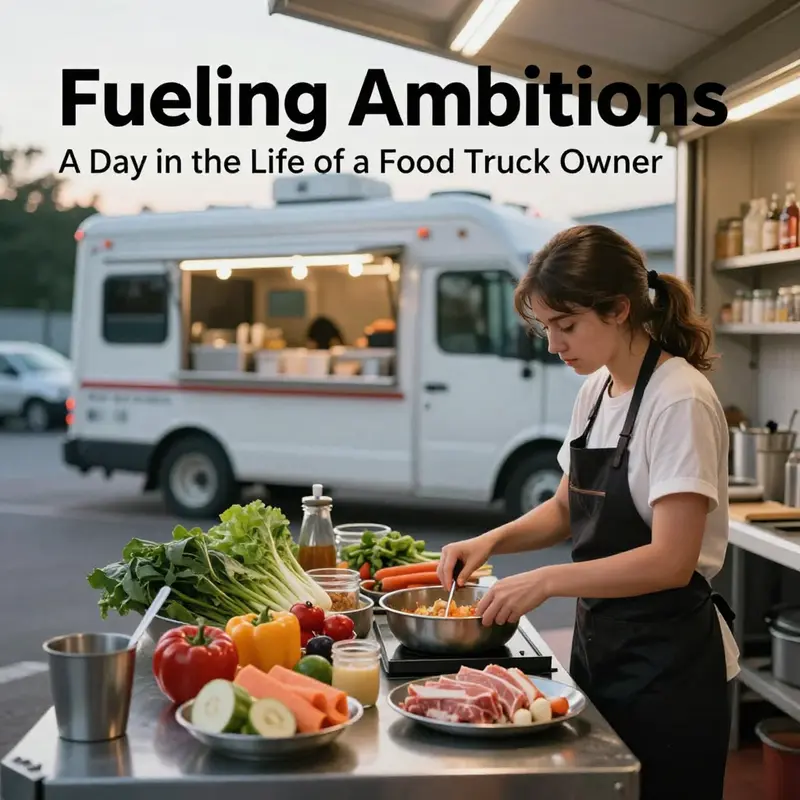
Once the cold storage has been verified, the crew moves to the heart of the operation: the prep stations. The vegetables are washed and trimmed, the greens teased from their roots, the peppers sliced to uniform thickness, the onions chopped to a crisp that resists wilting in heat. Meats are marinated in batches, a technique that allows flavors to penetrate while ensuring uniform texture across dozens of servings. Proteins are portioned with a scale and a careful eye toward weight, because a single ounce can be the difference between an honest portion and a spillover cost that gnaws at margins. For a breakfast-focused truck, this moment might feature batches of scrambled eggs plated into ready-to-reheat forms, bacon laid out in crisp stacks, and potatoes par-fried to a perfect golden edge; for a lunch- or dinner-centric truck, burritos, sandwiches, or grilled proteins become the day’s canvas. The exact routine is shaped by the menu, forecast, and the anticipated pace of the day, but the underlying principle remains constant: prep with a forecast in mind, and execute with a calm, experienced hand.
In this quiet hour, the crew also resumes the essential task of equipment readiness. Griddles spark to life or rest on a pre-heat cycle, fryers are checked for proper temperature and oil clarity, and ovens or burners are ignited with the same measured confidence that a conductor uses when warming a violin. Sanitation remains in motion, as every surface that will touch food is wiped clean, sanitized, and re-sanitized as needed. Utensils are checked, gloves are stocked, and the serving supplies—cups, napkins, lids, and straws—are counted and organized into logical, ergonomic stations. A pre-planned menu helps guide this step; it prevents the team from wandering into overstocking or shortages. If a dish is destined to fly out of the window with a certain speed, its prep steps are simplified, its sauce lines are pre-mixed, and its garnishes portioned in uniform little heaps, ready to crown bowls and sandwiches with a flourish that looks rehearsed but feels effortless to a hungry customer.
Temperature management is not merely about compliance; it is about taste preserved through time. A steady use of temperature monitoring devices reinforces a culture where the eye-in-the-cold-box becomes a habit and not an afterthought. A small digital thermometer hums in the fridge, its red glow a quiet reminder that the safety margin matters. The crew cross-checks the readings, confirms the low-risk zones, and notes any anomalies. If a unit dips or climbs unexpectedly, the team has a plan in place: rearrange items to keep the most vulnerable ingredients in the coldest corners, adjust the load to optimize air circulation, or, if necessary, make a rapid call to resupply. In the world of mobile food service, a single mistake—food held at an unsafe temperature, ingredients not rotated, or a dock that isn’t locked—can cascade into a day’s worth of complications, from unhappy customers to public health concerns. So the early hours are saturated with micro-decisions that, when added up, create a reliable, repeatable experience for every patron who approaches the window.
The day’s blueprint also unfolds in the way the menu evolves with the forecast. A seasoned operator reviews the menu plan in light of the predicted weather, local events, and seasonality. In the heat of a Florida winter, for instance, tourism often swells and brings an uptick in lunch rushes and after-beach traffic. The plan may lean into bolder, heartier fare that travels well and holds heat, while lighter options might anchor the morning prep. Whatever the combination, there is a discipline about forecasting that keeps the operation steady: not every item can be prepared in the same quantities, and the team learns to read demand without overcommitting. The result is a kitchen that feels both intimate and expansive, where the same crew can pivot from one service model to another with the ease of a pianist switching keys, never sacrificing the rhythm that makes a line move smoothly and quickly.
As the prep completes, the truck itself becomes a character in the story. The driver returns, the vehicle is checked for a clean interior and a secure exterior, and the day’s loaded cargo is accounted for. Prepped ingredients, ready-to-serve portions, and neatly packed packaging materials fill the cargo bays in a choreography that resembles a stage crew rehearsing a show before the audience arrives. The cash drawer or card system is tested; a small test transaction confirms that the payment stream will flow when the line of customers forms. In this world, the equipment is not inert. It is alive with potential—the potential to feed families, to celebrate birthdays, to comfort someone after a long day, or to bring a moment of communal joy to a busy street corner. The owner, who often shoulders a large share of the operational load, moves with a steady rhythm, a sequence of checks that feels almost musical in its cadence: inventory, safety, cleanliness, prep, packaging, and payment—each step lifting the day higher without ever spilling into chaos.
When the first light brush of dawn finally touches the hood of the truck and spills into the interior, the team makes its final sweep, checks the soft hum of the exhaust, and aligns the vehicle with the day’s intended routes. The menu is tucked into a binder or downloaded onto a tablet and reviewed for branding accuracy, portion control, and the readiness of garnishes and sauces. The first destination is chosen with thought—typically a high-traffic zone such as a business district during lunch hours, a park during a weekend stroll, or a beach promenade where foot traffic surges with visitors. The owner understands that visibility is half the game; the other half is the timing, the ability to anticipate crowd surges, and the readiness to adapt when the city’s rhythm shifts. The driver departs around that sweet late-morning window—often between 6:30 AM and 7:30 AM—to greet the city with a hot, inviting scent and a line that promises fresh, thoughtful food rather than just quick sustenance.
The essence of this early ritual is not the grandeur of the recipes alone, but the quiet, disciplined care that safeguards flavor and trust. The owner’s attention travels beyond the kitchen to the sensory world of the street: the way the steam from a hot burrito curls into the air, the first bright bite of a sun-warmed salsa, the way a customer learns the rhythm of the window and the pace at which the line grows. There is a certain poetry in it—the way a well-timed sizzle signals a busy service, the way the order pad fills with shorthand notes that become the language of service, the way a friendly greeting can turn a stranger into a regular. It is a life of micro-moments that accumulate into a daily narrative of success, and within that narrative, the early morning hours hold the most promise because they set the tempo for every moment that follows.
To frame this experience within a broader arc, consider the parallels that even seasoned owners acknowledge in the quieter moments of the day. The discipline of early prep carries forward into service with the same calm focus that a conductor relies on when guiding a chorus through a complex movement. The team moves in unison, not because they are compelled to, but because they have learned to trust the routine—trust that their careful measures will deliver consistent portions, that steaming kettles will release the right aroma at the right moment, that a batter will set just enough to hold its shape without becoming dull. This is the art of mobile cuisine: that the quality of a dish begins long before a customer’s first bite, in the careful, almost meditative routine of early morning tasks, the temperature checks, the portioned ingredients, and the clean, ready-to-go station that greets the day with dignity.
As the sun climbs and the city’s tempo accelerates, the owner will often reflect on how this window of dawn work shapes not only the day’s profits but the customer relationships that sustain a small business over time. The patience exercised in the pre-dawn hours translates into an even, friendly demeanor at the window, where a smile and a quick explanation of a dish can turn a casual passerby into a loyal guest. The routine also reinforces a practical wisdom: a predictable morning that avoids shortages and spoilage reduces stress, keeps staff healthy, and fosters a culture of pride in craft. In a world where food trucks chase visibility the way a river chases a bend, the quiet, repetitive work of early preparation becomes the upstream current that powers every downstream moment of service. It is the work that makes the busiest moments feel manageable, the rush of demand feel like a rhythm rather than a frenzy, and the difference between a dish that satisfies and one that simply fills a hunger.
The internal logic of this life is also the bridge to the day’s other responsibilities. After service, the routine shifts again to post-service cleanup, restocking, and planning for the next day. The crew wipes down stations, cleans the grills, and stores the equipment with a care that echoes the morning’s reverence for safety and order. Inventory is updated, waste is logged, and the day’s sales are reviewed in light of the goals that shape the business—margin targets, repeat customers, and opportunities to refine the menu based on what sold well and what didn’t. The attention to social media follows suit, as a few decentered hours of the day often include sharing photos of the dishes, behind-the-scenes glimpses of the prep work, and updates that keep the community engaged—an online family that grows with each post and comment. In this way, the early morning ritual is not merely the preface to a day of cooking but the foundational practice that makes the entire venture resilient, scalable, and deeply human.
This chapter, grounded in the specifics of the modern mobile kitchen, nods to the broader ecosystem that supports such ventures. It acknowledges the crucial, often invisible infrastructure: the shared commissaries, the safety protocols, the forecasting that informs prep and procurement, and the digital tools that help a small business stay competitive. The owner’s story is one of balancing immediacy and foresight—handling the heat of the grill and the heat of a changing market, soothing anxious customers with a friendly smile while adjusting to rain or sudden crowds, and threading together a day that begins in quiet discipline and ends with a sense of accomplishment that is earned, not assumed.
For readers who want to deepen the practical side of this morning magic, the path lies in learning from those who have walked this road before. The work-life balance of food truck entrepreneurs, for instance, provides a framework for pacing and boundaries that protect both the craft and the crew. work-life balance for food truck entrepreneurs offers a lens into how other operators maximize efficiency while preserving energy for the long, stretching hours of service. This shared wisdom is not a shortcut; it is a map drawn from experience—one that helps a new owner understand that the dawn rituals are not a solitary burden but a shared commitment that can sustain a life on the road.
As the chapter moves toward the moment when the first customers begin to appear and the day truly begins, the quiet bloom of early prep yields a day that is not merely about feeding people. It becomes a rhythm for building relationships, a sustainable practice that keeps the stove hot, the lines moving, and the kitchen calm even when the weather shifts or the crowd thickens. The dawn ritual is, in essence, the heart of the day: a steady, unglamorous, incredibly precise set of actions that transforms ingredients into experiences and strangers into regulars. The truck moves forward not by luck or by impulse but by the patient, deliberate work that begins in the pale hours before sunrise and travels through every service hour with quiet strength.
External reference: For a broader, safety-focused perspective on mobile food vending guidelines, see the U.S. Department of Agriculture’s Mobile Food Vending Guidelines. https://www.fsis.usda.gov/food-safety/safe-food-handling-and-preparation-guides/mobile-food-vending
Dawn, Data, and Delicacies: Orchestrating People, Places, and Profits on a Rolling Kitchen
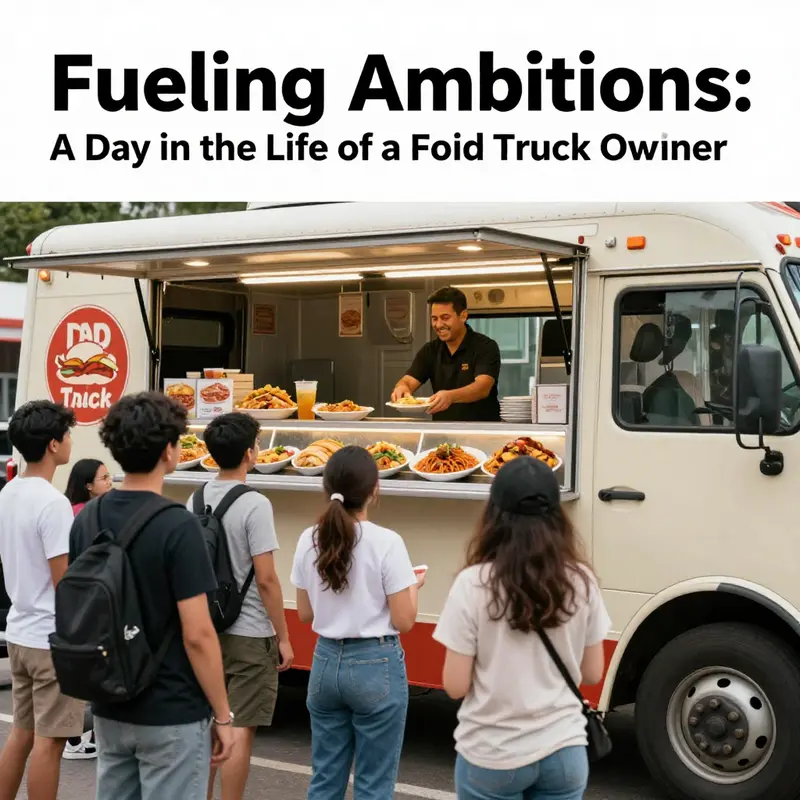
The day begins long before the first customer appears, long before the sun steals the cool edge from the morning air. The owner wakes in a small apartment above a quiet street, where the smell of citrus zest and ground coffee drifts through the window like a promise. The ritual is practical and intimate: a quick review of the night’s notes, a mental map of the city’s rhythm, a list of tasks that will tomorrow become routine. She moves with a quiet urgency, not loud or dramatic, but precise—like the grind of a well-tuned engine. In Florida, even the winter light carries a different kind of energy. Tourism lingers in the air, and locals crave something familiar yet exciting. The owner leans into this cadence, knowing that a day’s success hinges on preparing ingredients with care, selecting locations with intention, and engaging customers with warmth that feels seamless rather than forced. The routine is not romantic; it is an art of balance. Fresh, locally sourced produce is washed and portioned, herbs are snipped into small bundles, and sauces are whisked to a glossy finish. The prep list is shorter than it used to be, but every item carries a story—where the vegetable was grown, who harvested the citrus, how the spice blends were developed with neighbors who share a kitchen space. Quality is not an afterthought; it is the first commitment, because in a world where meals are fast and mobile, the memory of a single bite can decide if a customer returns tomorrow or moves on to the next bright spark along the curb. The day’s early quiet also serves as a moment to calibrate the truck’s systems—gas lines checked, water temperatures tested, sanitation stations refreshed. Even the smallest detail matters when a line forms in the heat of the afternoon and a customer’s first impression is formed in seconds. In these moments of preparation, the owner thinks about more than a single plate. She thinks about the neighbor who stops by weekly for a comforting bowl, the office worker who loves a particular spice blend, the student who orders a vegan option because it travels well and tastes like home. She considers how every choice at this hour ripples through the day’s experience, shaping perceptions, shaping loyalty, shaping the revenue that sustains the business. The preparation stage is not merely hygiene and mise en place; it is a quiet celebration of local suppliers and the relationships that underwrite reliability. The owner’s approach reflects a simple truth: quality travels with consistency. So the morning is spent aligning the ingredients with the menu concepts that have proven themselves time after time, and the result is a kitchen that feels awakened before any rush begins. When the last bag of greens is tucked into the cooler and the last bottle of citrus is labeled, she moves to the logistical heart of the day: the route, the location, the moment when the truck will most likely meet its audience. Mobility is the core of the craft, and in a city with a persistent flow of people, the right curb can transform a slow lunch into a steady stream of customers. The choice of where to park is not a guess but a calculation refined by listening to the city’s pulse. Downtown blocks breathe in predictable rhythms: a high volume of professionals during the workday, students near the campus edges, shoppers weaving through lanes of weekend activity. A few blocks away, parks and waterfront promenades pulse with families, joggers, and visitors chasing a shade of green or a sea breeze. The owner studies these patterns and translates them into a plan. She will stall near office corridors when the lunch crowd thins into a confident queue, then drift toward the beach or a festival venue in the late afternoon when energy shifts to social moments, photos, and conversations that travel faster than a dish can be served. The plan is flexible, and the flexibility is the daily currency of success. Like many operators, she builds a mental map of hotspots—places where the wind carries the chatter of potential customers and the sight of a well-lit board, a chalked menu, and a line drawn by anticipation draws people in. The research that informs this practice emphasizes the importance of hotspots for mobile food businesses: high-traffic areas, repeated access to pedestrians, and consistent visibility during peak times. It isn’t enough to park in a crowded area; one must park where the crowd is already moving toward a bite, a break, a moment of shared flavor. The day’s first takeaway is that profit flows when visibility and accessibility align with the customer’s daily rhythm, not merely when the cook’s favorite shade of garnish is perfect. With the route sketched in broad strokes, the owner begins to lay a track of real-time signals. She checks social feeds, prepares a few post-ready photos of the day’s specials, and drafts a quick note for her followers: where the truck will be, what’s fresh on the menu, and a friendly invitation to say hello in person. The act of posting is not a marketing monologue; it is a bridge to conversation and belonging. People respond with a mix of curiosity, nostalgia, and trust. A regular who knows the pattern of the truck’s day can plan a precise lunch window, while a newcomer may decide to linger for a taste that might become a favorite. The relationship aspect is an essential thread in the day’s fabric. In the best stories shared by veteran operators—profiles of who has learned to read the curb and read customers—the emphasis is on relational gravity: the way a short, sincere exchange at the window can turn a one-off encounter into a repeat visit, a recommendation to a coworker, or a share to a friend who sees the truck’s post from a distant corner of the city. Readers who study these lessons often gravitate toward a particular figure or collective of operators, drawn to the practical wisdom of people who learned by trial and trust. Among the stories, one recurring motif stands out: successful owners understand that interaction is not a performance; it is a language that evolves with the clientele and the neighborhood. The day’s customer interactions unfold in a quiet series of moments. The first guest arrives with a shy smile, scanning the chalkboard and muttering that they’ve heard great things. The second customer asks for a mild version of the signature spice blend, and the third thanks the team for a speedy exchange. Each interaction reinforces a principle: a friendly greeting, a brief demonstration of care in portioning and plating, and a follow-up that makes the guest feel seen. This is where technology and humanity begin to braid into a single thread. The owner uses a lightweight customer relationship approach, not as a database of numbers but as a living practice. A small tablet at the window records a preference here, a compliment there, a note about a certain timing for lunch orders, and a request for a larger container next time. The data is not overwhelming; it is actionable and human, designed to preserve the speed and simplicity of the curbside exchange while subtly building a memory bank that can be tapped for personalized service. The most discerning part of the workflow is the balance between speed and warmth. A line forms; the team moves with practiced rhythm. Orders are taken with a quick, friendly acknowledgment: one or two words, a smile that travels through the window, a readiness to adapt if a customer wants to modify a dish to accommodate dietary needs or spice tolerance. Payments are processed with ease, whether by cash, card, or a contactless option that glides through the moment without breaking the flow. The crew remains synchronized, letting the kitchen hum while the window stays open to connection. In many ways, the day’s financial health is visible in the cadence of these exchanges. A steady stream of small transactions can accumulate into significant revenue when managed with clarity and intention. The owner tracks sales by item in real time, not because she wants to micromanage, but because the data can illuminate what is working and what is not. A particular taco, a bowl with a house-made sauce, or a plant-based option that travels well may rise to the top due to a combination of flavor, aroma, and timing. When the clock hits the early afternoon, the heat grows, the sidewalk breathes heavier, and the crowd shifts toward a different rhythm. The owner shifts the focus to elevated service with the same calm confidence. She greets new faces with a few lines that fit the moment, offers recommendations tailored to weather and appetite, and uses the opportunity to demonstrate the care that makes the difference between a one-time bite and a lasting memory. The day becomes a choreography—customers step forward with plates, the team moves with practiced precision, and a steady stream of social posts captures the human element of the experience. Real-time engagement becomes part of the product itself: a behind‑the‑scenes shot of chopping herbs, a quick video showing a sauce emulsifying perfectly, a caption that invites followers to share their own variations on the dish. The interplay between online presence and curbside service is not a gimmick; it is a signal that the business respects its audience and wants them to feel part of a story that unfolds each day. The owner also uses the afternoon lull to reinforce the concept of community-driven entrepreneurship. Local partners—vegetable growers, bakers, small roasteries—are welcomed to contribute ideas at market stalls or in the kitchen during slower hours, creating a cooperative atmosphere rather than a mere vendor-customer relationship. This approach echoes a growing body of industry insights that emphasize collaboration and localized engagement as drivers of sustainable revenue. The social fabric matters because it creates word-of-mouth that can sustain a day when foot traffic dips for reasons as simple as a sudden rainstorm or a competing festival a block away. When the weather turns, the truck becomes a refuge as well as a source of sustenance. A canopy helps shield customers from a brief shower, the heat of the grill is tempered by efficient ventilation, and the team improvises with a few contingency dishes that travel well and stay vibrant under damp skies. These adjustments are not ad hoc; they are the result of a menu strategy designed to cash in on the adaptability that mobile kitchens demand. The ability to pivot—whether to feature a comforting warm bowl during a storm or to offer a crisp, refreshing cold option when the sun returns—enables the day to retain momentum rather than lose it. The owner uses short, friendly conversations to turn a weather shift into an opportunity for a new connection. She asks a passerby how they’re handling the rain, offers a small sample of a dish that can be enjoyed without a long wait, and invites them to follow the truck’s updates for a limited-time offer. It is an artful blend of situational awareness and generosity, designed to cultivate loyalty without pressuring the customer. By late afternoon the sky clears, the crowd thickens again, and the day slips toward its most critical phase: the transition from service to sustainability. Revenue flow must be kept strong as the clock nears the end of the shift, and so attention shifts to end-of-day rituals that secure tomorrow’s possibilities. The owner leads a quick, humane debrief with the team—what went well, what could be smoother, where a bottleneck appeared in the window sequence, and which ingredients were oversupplied or underutilized. The conversation is practical, not punitive. Each insight is tied to a small, actionable change: adjust the number of plates prepared for the next day, tweak a promotional message, rotate the inventory more aggressively to avoid waste. This is where data becomes a living guide rather than a passive ledger. End-of-day data review is both a forecast and a memory bank. The owner compares today’s sales to the day before and to the same weekday last month, noting shifts in item popularity, in response to weather, events, or even the vibe of the neighborhood. She distills these observations into a succinct plan for tomorrow’s locations, a refined set of menu items, and a social post that invites the audience to step into the unfolding story. The final part of the day—cleaning, restocking, and preparing for the next sunrise—feels almost ceremonial in its discipline. The kitchen is scrubbed spotless, the equipment is checked again, and the storeroom is organized with the same meticulous eye that marked the morning prep. The owner maps out a shopping list that aligns with the anticipated demand, ensuring that ingredients stay fresh and waste stays low. The night’s social updates are drafted with a sense of gratitude and anticipation: a thank-you to new friends who made an appearance, a tease of tomorrow’s special, and a call for feedback on what customers want to see more of. The cycle is not merely about keeping the truck running; it is about building a trusted pattern that the neighborhood comes to anticipate, respect, and share. Data and emotion work together here in a complementary duet. The numbers tell a story of appetite and timing; the stories from the window—smiles, nods, and surprised exclamations—tell a story of human connection. The operator knows that sustaining a mobile food business is less about chasing a one-day surge and more about shaping a living relationship with the city. This is the essence of the day: the seamless weaving of strategic location, real-time engagement, personalized service, and disciplined operations into a single experience. In this sense, the day is not a sequence of tasks but a continuous conversation with a city that never stops moving. And in that conversation, the operator’s greatest asset is a keen sense for people—the way a regular’s favorite choice returns like a familiar refrain, the way a nearby business owner notices the truck’s rhythm and offers a friendly handshake in passing, the way a tourist laughs at a playful, perfectly seasoned bite and promises to return with friends tomorrow. The chapter that follows in this collaborative guide will explore how these conversations scale—how the same care can be translated across multiple trucks, how a shared platform can support dozens of operators, and how a community built around good food can weather the unpredictable tides of a city that is always changing. For operators who want to study real-world practices, the lessons are clear: cultivate hotspots that align with daily rhythms, invest in real-time engagement that makes customers feel seen, design a lean, repeatable menu that travels well, and treat data as a living resource that informs tomorrow’s decisions rather than a cold ledger to be tallied. The stories from veteran operators remind us that authentic connection is at the heart of every successful day. These connections are not accidents; they are built through consistent behavior, thoughtful listening, and the willingness to adapt with grace. And while the chase for revenue is real, the path to sustainable success emerges when profit becomes the byproduct of a genuinely human experience—one curbside moment, one smile, one well-timed suggestion at a time. The driving force behind a day in the life of a mobile food entrepreneur is this: the work is not just about feeding people; it is about creating small, reliable moments of belonging that travelers and locals alike carry with them long after the last bite. If you want to dive deeper into the perspective of operators who have learned to thrive in this space, consider exploring profiles of veteran food truck owners in the community. Profiles of Veteran Food Truck Owners. These voices offer concrete, grounded practices that translate across neighborhoods, vehicles, and teams, and they reinforce the idea that great food is inseparable from a thoughtful, human-centered approach to business. The synergy between practical logistics and the warmth of service is what keeps the wheels turning and the community coming back. The day ends as it began—with a clear sense of purpose, a calm confidence in the routines, and an openness to what the city will bring tomorrow. For readers seeking a broader frame on how to position a mobile kitchen for maximum impact, a comprehensive external resource on location strategy offers practical guidance and data-driven insights that complement this lived experience: https://www.foodtruckresources.com/blog/food-truck-location-strategy.
Sizzle, Schedule, and Social: A Day in the Life of a Food Truck Owner Where Back‑of‑House Precision Meets Online Community
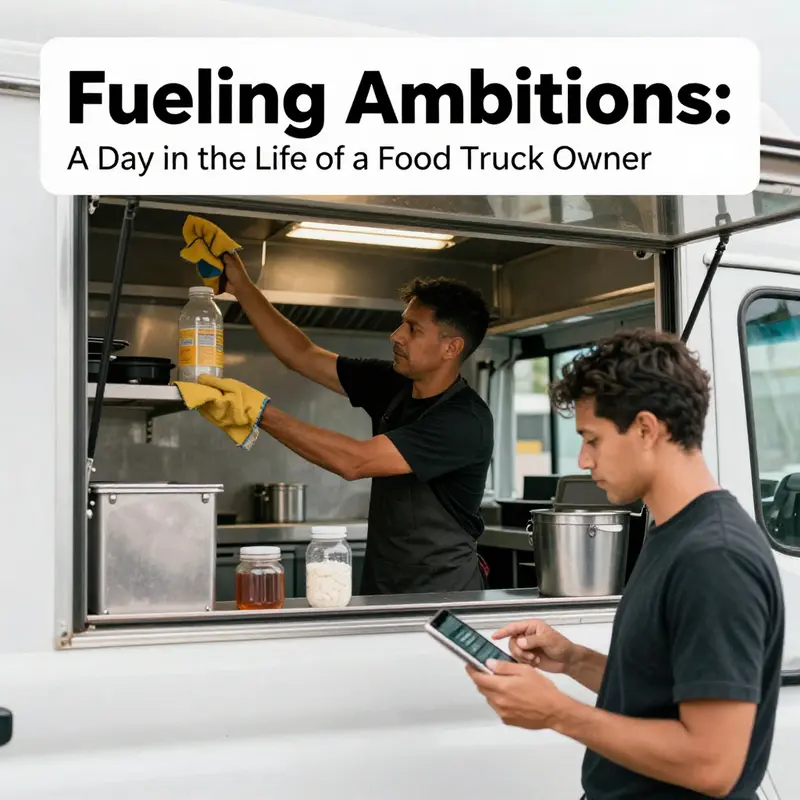
Dawn arrives with a soft glow and the hum of the street still sleeping, and the day begins not with a loud shout of customers but with the quiet arithmetic of tomorrow’s dinner. The owner wakes with a practiced ease earned from years of rehearsing minutes into meals and meals into momentum. The routine is not merely a checklist; it is a choreography built on vigilance, taste, and a knack for turning small, ordinary tasks into opportunities. The first light falls on the stainless worktable as the owner surveys the truck’s belly—coolers, prep bins, and the metal gleam of the grill—all waiting to wake with flavor. It starts with inventory, not as a mere stock count but as a vow to keep every dish faithful to its identity. Spices aligned like a tiny, organized army; vegetables stacked with straight edges; meats tucked in their chilled sanctuaries; sauces poured into precise jars, each label a map to a plate that tells a story as honest as any signboard in the city. The owner checks for essentials—coats of cleanliness, gloves clean and ready, thermometer probes calibrated, and cleaning logs that record each small victory over drift and time. This is the prelude to a day that will demand speed without sacrificing safety, warmth without losing control, and a smile that travels from the service window to the back of the queue and back again through the steam in the air.
The ritual continues with a quiet compliance that many pass by in their haste. Permits, licenses, and certificates sit in a designated folder, each page a reminder that this mobile kitchen moves within a map of rules and regulations as intricate as any recipe. The owner spends a moment with the city’s health guidelines, letting the numbers and standards settle into a mental mise en place. It is not about fear of fines but about the discipline of doing things right every time. The equipment checks follow, a familiar loop that makes the kitchen feel almost like a sentient being with a pulse. Is the grill hot enough to seize a crust that locks in the juices? Are the refrigeration units maintaining a safe climate so the greens stay crisp and the dairy remains firm? A quick test here, a listen there—sounds that tell stories of fans humming, motors ticking, and the hum of a day about to begin. In the world of a mobile kitchen, a small anomaly can unravel hours, so the owner treats every potential snag as a chess move to be anticipated rather than a crisis to fear.
With the truck primed, the next step is to chart the day’s map. In a city of shifting rhythms, where the sun slides behind tall glass canyons and the breeze carries hints of ocean salt or rain, location is a living parameter. The owner plots a route that threads through morning and lunchtime power hubs: office towers that pulse with human traffic, quiet corners that awaken as schools open, and parks where people drift toward a muggy scent of roasting peppers and caramelized onions. The goal is not simply to be seen but to be found by people who crave something that feels both convenient and satisfying—the kind of food that feels like a small celebration of their day. The truck must be where the day’s conversations happen—near transit stops, near plazas where events unfold, near beach fronts where a quick bite becomes a memory of a sun-drenched afternoon. The decision to move is a practical calculus: the cost of fuel, the risk of congestion, the possibility of a rain curtain that could redraw foot traffic. In these calculations, the owner weighs not just numbers but patterns—where customers tend to gather, how the wind shifts smells, and how a single tweak in visibility can tilt a line from a few eager tasters to a bustling crowd.
Service begins with a careful balance of speed and soul. The window opens to a chorus of greetings, the scent of garlic and citrus cutting through the morning air, and the rhythmic clang of utensils that announces that the kitchen is alive. Orders arrive in a steady stream, a blend of quick-lunch decisions and comfort cravings that require both memory and improvisation. The owner takes pride in a system that feels almost invisible to the customers yet holds everything together. Chopping board clacks, flames kiss the air with a friendly heat, and the plating becomes a small act of theater as the dish leaves the window with a flourish that makes the first bite feel like the best bite a day can offer. Cash and card transactions swirl into the register, a practical duo that keeps the day flowing. The owner moves with a calm energy that makes the small corridor of the service window feel like a stage where every micro‑gesture matters—from wiping a stray crumb to guiding a plate toward a smiling face. There is always a moment for a quick check of background tasks—the way a recipe card is updated after a suggestion from a customer, the way a new garnish is tested, the way a vanishing stock item triggers a reordering before a gap becomes a problem. This is where craft meets logistics, where taste sits on a shelf next to numbers and notes, and where a well-run day becomes a quiet advantage over the chaos of a crowded market.
In the midst of the rhythm, the weather looms as a capricious co‑star. A thin drizzle can slick the pavement and push the crowd away, while a bright afternoon can push the door of opportunity wide open. Rain is not merely a weather report; it is a temporary rule that forces creative adaptation. The owner considers the emotional weather too—the mood of the city, the mood of the team, and the mood of the customers who show up with umbrellas and hungry eyes. Tips for resilience become practical tactics: waterproofing the exterior with protective materials that guard electrical systems and outlets, non-slip mats that keep the crew steady, and a plan to keep the grill and fryers dry enough to perform without the risk of slips or shorts. The menu might shift a touch as the day goes on—a handful of Rainy Day Specials that emphasize comforting, heartier flavors, easier assembly, and faster service times to counterbalance the dampened foot traffic. If delivery becomes viable in this moment, the owner was prepared to pivot toward the new channel—recognizing that an extended line of people under a sheltered awning might become a perfect stage for a virtual queue, where customers can preorder and pick up with minimal contact. The idea is not to chase every trend but to meet the moment with a calm confidence that comes from preparation and practice: a recipe for weathering the day without compromising the smiles that fuel repeat visits.
The social thread that runs through the day is as essential as the cooking itself. From the moment the first orders appear until the last plate leaves the window, the owner threads into a living conversation with an audience that grows with every post and every story. The platforms become a dynamic menu board in the open air, a place where weather updates, new items, and behind‑the‑scenes glimpses are shared with a cadence that mirrors the cadence of service. Real-time updates of location help those who follow along to join the queue, while behind‑the‑scenes clips reveal a kitchen that could be mistaken for a small theater where hot plates are the props and the cooks are the actors who know their lines. The dialogue is two‑way: questions, requests, and compliments ripple back from the crowd, and the owner responds with warmth and accessibility, turning casual patrons into community members. The daily posts are not an afterthought; they are a continuous thread that stitches together a scattered audience into a recognizable, loyal crowd. The owner treats the digital space as part of the restaurant itself—an extra dining room that exists even when the truck is parked in a high‑traffic square or rolling toward a shaded park. A quick snapshot here, a short video there, a caption that invites engagement without pressuring the reader, and a thoughtful reply to every meaningful comment—these small acts compound over time, creating a sense of belonging that cannot be bought with a single marketing burst.
If the day includes a lull or a storm of orders that loses its shape, the owner turns to the same steady practices that kept the kitchen from tipping before sunrise. A moment of reflection: what is working, what needs adjustment, and what can be refined before tonight’s crowds arrive? The checks are not about perfection but about learning in small, continuous steps. The owner revisits the day’s footage, notes, and analytics with a practiced eye, scanning for patterns—an increase in a particular dish on days when the weather shifts, a particular time that sees more foot traffic, or a post that drives more engagement than others. The aim is a living plan that can bend and adjust with the city’s rhythm rather than a fixed, brittle script. In this practice, social media becomes more than marketing. It becomes a diary of the truck’s life—a transparent, shareable account of what it takes to bring warmth and comfort to strangers who become neighbors of the curb, co‑workers who drop by during lunch, or families who walk together after a day of sun and errands.
Even as the sun begins to tilt and the sidewalks draw closer to the edge of evening, the work continues—this time with a cleaner rhythm that signals closure and care. The kitchen is cleaned with precision, and the leftovers are wrapped and stored in a way that respects safety and waste reduction. Restocking becomes a ritual in which every item is checked against the next day’s needs, and a calendar note prompts the order of staples that will be in short supply. The owner takes a breath that is not fatigue but relief—the relief of a day well navigated and a business well tended. The social loop lingers in the air as well, because the owner knows that a strong community extends beyond the bite of a single plate. A quick round of thank‑you messages, a photo that captures a highlight, a teaser about tomorrow’s specials, and a promise to reply to every inquiry that arrived in the last hours—all of these moves convert today’s momentum into tomorrow’s anticipation. The day ends with the truck parked in a safe, organized space, the lights dimmed to a level that invites people to notice but not glare, and the crew, tired yet fulfilled, sharing a few minutes of camaraderie before the routine of closing and cleaning truly begins. It is in that quiet togetherness that the owner recognizes the last truth of a mobile kitchen: success is sustained not by one heroic rush but by the patient, daily accumulation of good decisions, consistent care for guests, and a voice in the digital world that feels like a neighbor’s porch light, welcoming, dependable, and human.
The narrative above is not a fairy tale of overnight triumph but a careful account of how hands-on operations and social media engagement fuse into a single, ongoing practice. The morning inventory, the weather‑driven pivots, the steady attention to customer care, and the disciplined yet generous use of social platforms all shape a day that looks simple on the surface but is underpinned by a structured, lived experience. The owner’s day is a continuous loop of preparation, execution, reflection, and communication, a cycle that keeps the truck relevant in a bustling market where taste is not the sole currency but a portfolio that must be nurtured through consistency and connection. This blend of operational discipline and online presence, rooted in the realities of city life and the rhythms of dining, is what allows a mobile kitchen to not merely survive but to become a trusted pin on the map for locals and travelers alike. The ledger of effort is visible in the lines of a queue, the glow of a window at dusk, and the upturned smiles of repeat customers who, day after day, choose a meal that feels like a small celebration amid the day’s ordinary grind.
In sum, the day of a food truck owner is a living textbook of how to balance craft and commerce. It is a narrative of preparation that prevents problems, of presence that converts interest into loyalty, and of adaptability that turns weather and crowd shifts into opportunities rather than obstacles. The owner’s practice—rooted in meticulous housekeeping, responsive service, and an honest, ongoing dialogue with customers—transforms a mobile kitchen into a small, resilient enterprise. The social layer is not separate from the daily grind but a natural extension of the same care that flavors every dish. It is the quiet art of turning everyday tasks into reliable, repeatable routines, the kind of routine that keeps the flame alive, the lines steady, and the meals memorable.
For readers who want to see this approach translated into concrete guidance, the field has produced practical insights about how social media can drive retention and revenue when paired with solid operations. A 2025 report from a leading industry association highlights that operators who actively maintain a digital presence report higher customer retention rates and that digital tools—like simplified ordering and clear, accessible menus—enhance efficiency and overall experience. This research underscores the point that the social and the technical are not separate domains but intertwined facets of a successful day in the life of a food truck owner. The numbers reinforce what the day itself demonstrates: the value of planning, the resilience to adapt, and the power of sharing the kitchen’s story with a community that grows more loyal with every post, every interaction, and every plate shared in good faith.
External resource: https://www.nationalfoodtruckassociation.org/insights/2025-food-truck-trends-and-social-media-strategy
Internal reference for further reading: work-life balance for food truck entrepreneurs.
Final thoughts
The life of a food truck owner embodies the essence of entrepreneurship—creativity, dedication, and robust customer connection are the lifeblood of this business. Early mornings filled with preparation set the tone for a day packed with opportunities. Engaging interactions not only foster customer loyalty but also streamline revenue flow. Navigating operational challenges while crafting an online presence further underscores the multifaceted skills required to thrive in this vibrant industry. Whether you’re a fellow entrepreneur or simply an admirer of culinary passion, the journey of food truck owners serves as both an inspiration and a guide.