
In the world of culinary entrepreneurship on wheels, securing the perfect parking spot for your food truck is crucial for success. Whether you are a hobbyist passionate about food on the go or a professional looking to grow your mobile dining business, understanding where and how to park your truck can make or break your venture. This article will delve into effective strategies that help you locate safe and prime parking locations for your food truck. From leveraging mapping applications to understanding local regulations, we’ll explore specialized platforms and community networks that open up new opportunities. Each section aims to equip you with valuable insights that not only enhance your operational efficiency but also amplify your business’s visibility.
Charting the Streets: How Mapping Apps Shape Your Next Food Truck Parking Location
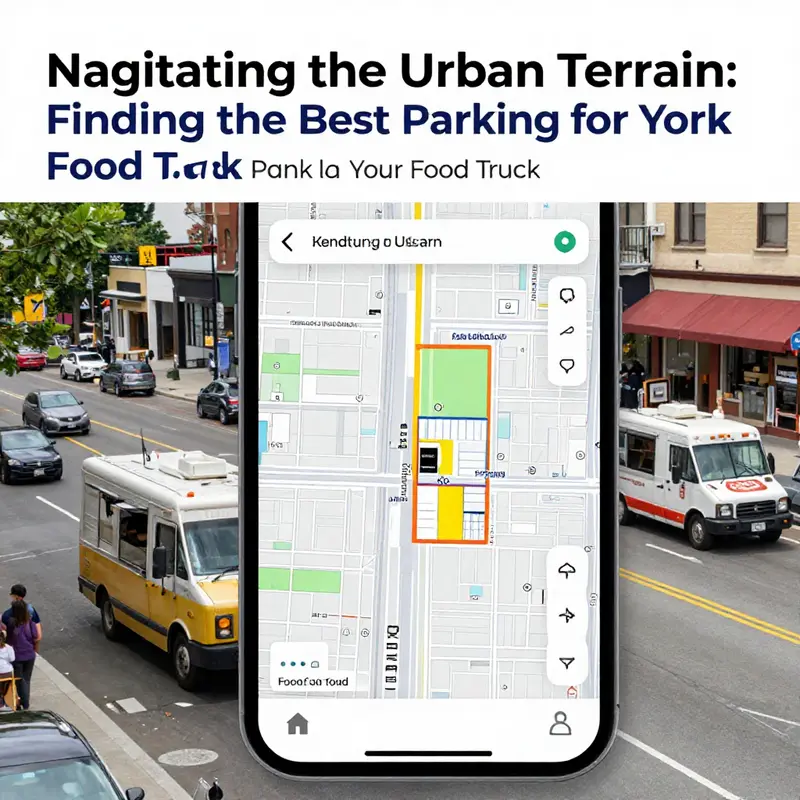
The path to a successful food truck day begins with a map that blends street intuition with real time data. Mapping apps aren’t just directions; they’re operating tools that help you gauge where customers gather, when spaces are legally usable, and how changing conditions reshape a curbside window.
Real-time updates normalize volatility: a spot that looks promising at noon can be crowded by 2 pm due to events, detours, or permit changes. Shared location data, when available, can help operators anticipate shifts. Platforms like Kraven illustrate crowd powered location data, showing where trucks park and what they offer, while also revealing limits of crowd inputs.
Google Maps and Apple Maps add layers of context: shade, transit access, nearby amenities, loading zones, and patterns of foot traffic. Read the map with intent: which streets offer quick turns, where parking requires permits, and how traffic ebbs and flows across the week. Truck Mode on Apple Maps prioritizes safer routes and easier access for larger vehicles, nudging you toward spaces that minimize maneuvering friction and avoid conflicts with pedestrians and neighbors.
Beyond the big two, Gaode Map and other regional tools contribute patterns such as congestion hotspots and lane-level guidance. Where-the-Truck adds community-driven intelligence, showing where trucks typically park but also highlighting problem spots or permit constraints. Collectively, these feeds form a layered map: legal zones, customer clusters, and time-bound constraints all visible at once. The operator who cross references sources gains a durable advantage rather than relying on a single snapshot.
Practical steps: identify several anchor spots with predictable flow and hours of operation, test them on different days, and record observations about ease of parking and access for customers. annotate legal zones, high foot traffic areas, and time windows, then refresh data as signs, permits, or events change. The map becomes a living guide that helps you move with city rhythms rather than chase a moving target.
In the end, mapping apps are partners, not guarantees. They amplify on-the-ground judgment, and require due diligence with municipal portals and permit maps. Spacer, a service that centralizes spots for mobile vendors, can complement this toolkit by offering a centralized ledger of opportunities and a way to track changes over time.
Reading the City’s Rules: How Local Regulations Decide Where Your Food Truck Can Park
Every food truck operator eventually learns that the quest for a high-traffic parking spot is less about finding an empty curb and more about reading the city’s regulatory map. In many places, the right of a truck to pull up and serve customers is tethered to rules that are written not in friendly user guides but in municipal codes, district-by-district regulations, and time-based schedules that reflect public safety concerns, street usage priorities, and the needs of neighborhoods. In a country like China, the framework can feel especially nuanced because the central guidance translates into district and subdistrict implementations that vary from Chaoyang to Haidian, from residential corridors to commercial hubs. To operate with confidence, you must treat regulations as a companion to your scouting routine, not as a final barrier you discover after you’ve already set up shop for the day. The path to lawful, dependable parking begins with a clear understanding of the general Beijing regulations and then narrows to the exact rules that apply to your neighborhood, your food concept, and the time window you intend to work.
The backbone of Beijing’s approach is formal organization: a framework that defines designated areas, required registration, and time windows during which vendors may operate. The overarching document, Beijing’s Small-Scale Food Production and Operation Management Regulations, emerges from the Standing Committee of the Beijing Municipal People’s Congress and establishes the principle that street vendors must operate within specific zones and hours. It emphasizes that a registration process—not a conventional business license—controls entry into the system, and it directs vendors to obtain registration through the local township or subdistrict offices. While the language may feel administrative, the practical effect is direct: you must align your physical location and operating hours with the zones permitted by the district and subdistrict authorities. The city’s aim is to minimize clashes with pedestrians, reduce traffic disruptions, and protect public health, while still leaving room for vibrant street markets that add character to the urban landscape.
Of course, the real texture appears when you move from city-wide edicts to district-level implementation. Each district in Beijing—Chaoyang, Haidian, Fengtai, and others—crafts its own version of the rules, and those variations matter in a very concrete way. Where a truck can park is not simply a question of “is there space?” but “is this space within a legally designated park area?” The hours of operation can swing with the day of the week, the season, or the presence of nearby schools and government offices. Some districts even specify the types of foods that can be sold in certain zones, a reflection of local consumer demand and cultural dynamics. The enforcement side of this system is carried out by urban management and law enforcement departments that assess area needs, monitor compliance, and determine whether a particular location is suitable for a recurring presence or only for temporary events. This is where the practical reality of city rules begins to intersect with your daily business planning: a prime curb might be off-limits on weekdays but permissible during a weekend farmers’ market, a festival, or a permitted pop-up series. You need to track these periods as you would a weather forecast, because neglecting them can turn a lucrative route into a risk.
To navigate this landscape with accuracy, there are a few essential steps. First, contact local authorities directly. Your starting point should be the township or subdistrict office—the smallest unit of governance with real authority over street vending. In a busy district like Chaoyang, for example, you would reach out to the Chaoyang District Urban Management Enforcement Bureau. These offices are the custodians of the boundary between permissible activity and regulatory violation. They can confirm whether a location is within a designated area, what hours apply, and what documentation is required to maintain compliance. The conversation may also reveal operational nuances that are not obvious from a higher-level regulation text, such as seasonal adjustments, temporary busy zones, or changes in public safety expectations during large public events.
Second, consult the district government website. Local portals usually host sections dedicated to food vendor management, street vending guidelines, or maps of permitted zones. The official sources are your most reliable reference points for up-to-date rules, revisions, and district-specific notices. Even if a policy statement appears dense, it typically includes practical links to registration procedures, contact points, and Maps that show where you can park and operate. If you are unsure how to interpret a portal entry, a quick call to the municipal hotline—12345—can bridge the gap. Operators often report that hotline staff can point to the right department or provide a direct contact, which saves valuable time when you’ve set a tight schedule for a pop-up.
Third, embrace the power of precise documentation. Registration, in this regulatory environment, is not just a formality but a prerequisite that legitimizes your presence in a parking spot for a defined time window. The documentation you organize in advance becomes your shield against unexpected enforcement actions. It’s wise to maintain copies of your registration certificate, proof of hours, and any district-specific permits or letters of approval for recurring locations. Having these on hand not only reduces friction during spot checks but also demonstrates a professional respect for local rules, which can help when negotiating last-minute permit extensions or clarifications with enforcement officers.
The practical implications for choosing parking spaces hinge on this alignment with rules. A prime, high-traffic corridor might sound perfect, but if it sits outside the designated zones or operates under time restrictions that clash with your schedule, that spot becomes a liability rather than a boon. Conversely, a quieter street within a district-approved zone can offer stable, predictable hours that support steady revenue and fewer conflicts with pedestrians and drivers. The balance is rarely about discovering the largest potential location, but about identifying reliable, compliant spaces that fit the rhythm of your business and the community you serve. To this end, a habit of routine checks helps you adapt when rules shift—perhaps a district introduces a seasonal permit for weekend markets, or a new zone opens near a transit hub that could attract a wave of customers but requires an updated registration approach.
Education and networking remain powerful complements to formal procedures. Joining local associations or vendor networks keeps you apprised of policy changes, shared resources, and upcoming events where food trucks are welcomed. These networks often exchange insights about parking strategies that work within the governance framework, from staggered shifts to shared spaces with other mobile vendors. The collective knowledge becomes especially valuable in a city where a single location can be regulated differently across blocks, and where small operational decisions—like the duration of a set or the placement relative to crosswalks—can influence safety, visibility, and customer experience. You can translate this network intelligence into practical planning: if a district’s routine is to rotate permitted curb spaces every quarter, you might design a schedule that prioritizes the spaces that align with peak lunch hours and evenings, while keeping a buffer for emergencies or city-led events.
When you combine the official channels with digital tools, you gain a more resilient approach to finding legitimate parking. Map applications can highlight nearby zones that are labeled as permissible for food vendors, public plazas with reserved hours, or event sites that welcome vendors. Yet, you should cross-check every digital pin against the district’s current guidance. Some apps aggregate data from various sources and may not reflect last-minute changes in hours or zone boundaries. Specialized platforms exist to help mobile vendors locate parking that is administratively feasible and logistically sensible, but even those should be treated as starting points rather than final authorities. The idea is to build a workflow that treats regulation as a living map—one you update as you travel and as you hear from local officials or veteran operators. You can use these digital references to pre-scout potential zones, then call the relevant office to confirm, and finally, if needed, request a temporary permit when a location shows promise for a longer engagement.
To illustrate the process in a practical, human way, consider the sequence of steps you might follow on a typical week. Start with a scouting pass in the morning to identify potential zones that are within your district-approved areas and that align with your kitchen’s output and target customers. Note the doors and corridors where you would place the truck, the number of steps to a nearby sidewalk corner, and the proximity to traffic signals, crosswalks, or loading zones. Then, contact the township or subdistrict office to verify that these spots are currently permitted and to learn if any time-of-day exceptions apply. If there’s a discrepancy between what you’ve found on a map and what the official channel reports, favor the latter. After you receive confirmation, prepare your registration documents and make sure to carry them with you every time you operate. On the day you plan to park, keep a copy of the district’s guidelines in your vehicle and have a quick script ready for enforcement staff: polite, concise, and focused on your compliance with hours, zone, and health-safety requirements. This approach reduces risk and enhances your credibility with the people who regulate the street where you work.
In the broader arc of finding good parking for a food truck, this chapter threads together the regulatory threads that govern space, time, and permissible fare. It reminds us that legality is not a bureaucratic hurdle but a framework that protects the street ecosystem, ensuring safety, accessibility, and fairness for all operators and residents. The city’s design—its zones, its hours, its party-pending pop-ups, and its quiet, steady parks—creates a living map. Your job is to interpret that map in real time, to translate it into a day’s plan, and to adjust as the map updates. The practice is iterative: you learn which zones consistently align with your peak service times, which districts offer flexible hours for weekend events, and how to negotiate for temporary permits when a new market opens near a neighborhood you want to serve. With experience, you begin to anticipate regulatory changes, so your fleet, your paperwork, and your parking routines stay ahead of the curve rather than playing catch-up after a mistaken curbside moment.
As you integrate local knowledge with digital signals, you also maintain a mindset of respectful collaboration with the communities you serve. Parking a food truck is not merely about maximizing meters; it is about contributing to the street’s vitality without compromising safety or public order. This is particularly salient in cities where pedestrian zones, bike lanes, and bus routes share the same space as curbside commerce. The rules exist to preserve flow and safety, but they also create opportunities when you align with community routines—lunch waves near office clusters, evening markets near cultural venues, or weekend fairs where families roam with strollers and dogs. Your ability to read and respond to the regulatory environment—and to plan ahead with registration and district-specific guidance—translates into a more reliable, sustainable business. It reduces the risk of fines, relocations, or last-minute cancellations and it builds trust with customers who look for consistent, compliant experiences.
In closing, the pathway from a potential parking spot to a reliable selling location is paved with information you gather from both formal channels and practical networks. It begins with recognizing that Beijing’s regulations are not static declarations but a dynamic system that shapes where and when a mobile kitchen can operate. It continues with proactive outreach to township and subdistrict offices, careful consultation of district guidance, and preparation of the appropriate registrations. It is reinforced by keeping a status watch on district websites and by using hotline support when necessary. And it is reinforced further by the disciplined use of digital tools as a starting point, not a final authority. In this way, your pursuit of high-traffic, compliant parking becomes a disciplined, methodical process rather than a chase that ends in detour and regret. The city’s map is your ally when you approach it with clarity, patience, and respect for the rules that keep the streets safe and vibrant for everyone who uses them.
For those who want a direct sense of the regulatory architecture at a national level, the official document that provides the overarching framework is linked in the broader sources. As you plan, remember that the specifics—where to park, when you can operate, and what you can sell—live at the district level. Your success depends on translating high-level regulation into precise, day-to-day action. And that is how you turn a simple question into a reliable practice: where can you park a food truck today, and how can you stay within the lines that govern the city you’re serving? For a broader look at regulatory considerations as you navigate food-truck ventures, you may explore additional resources such as this detailed guide on legal considerations for Latino food-truck startups. Legal considerations for Latino food-truck startups. This kind of cross-cutting knowledge helps you see how different cities approach similar challenges, reminding you that the core steps—verify, document, and communicate—are universal across jurisdictions.
External resource: Beijing Municipal Government – Food Vendor Management Regulations. https://www.beijing.gov.cn/zhengce/fgwj/2025-11/27/t20251127_3978679.html
Digital Gateways on the Street: How Specialized Platforms Redefine Food Truck Parking
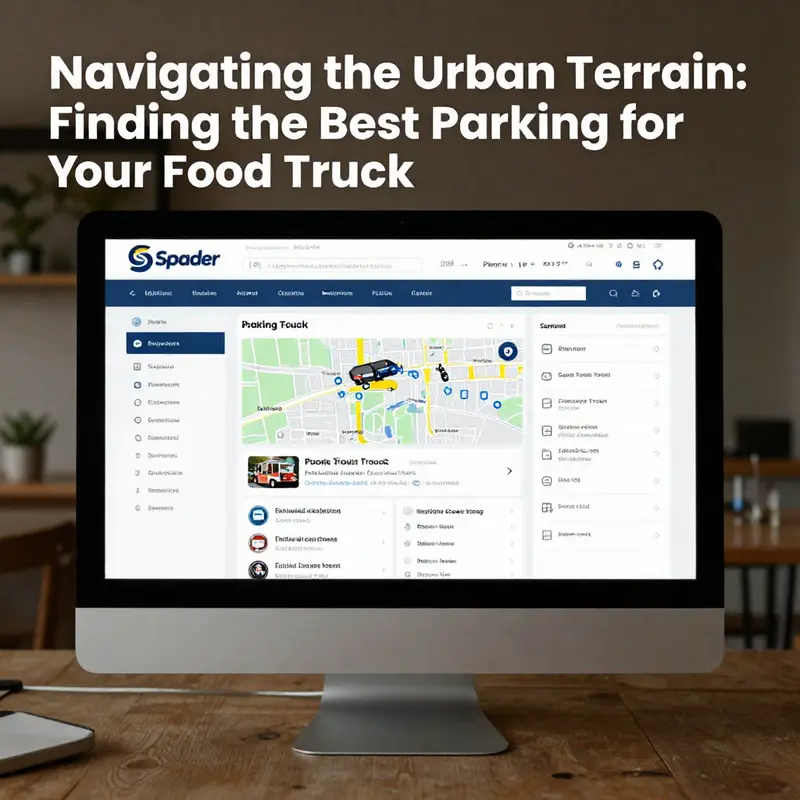
A city’s appetite for street food is as real as the need for organized, predictable parking. The best operators learn early that success is not just about cooking great food; it’s also about being in the right place at the right time. In recent years, specialized digital platforms have emerged as the connective tissue between mobile vendors, municipal regulations, and urban foot traffic. They do more than show where a truck can park; they translate a scattered ecosystem of permit rules, event calendars, and street occupancy limits into a coherent map for planning, execution, and sustainable growth. This transformation is not merely about convenience. It changes how vendors think about route optimization, peak-hour strategy, and the social impact of parking choices in a dense urban fabric. Rather than relying solely on instinct or local whispers, operators can now align parking decisions with measurable data, public-safety requirements, and community expectations, all while maintaining flexibility to seize unexpected opportunities as they arise.
At the heart of these platforms is a simple promise: bring order to a space that is inherently fluid. GPS tracking serves as the first touchpoint, offering real-time visibility into nearby permitted spots, street-seller zones, and park-adjacent settings where a truck can legally operate. This isn’t about turning the city into a rigid grid but about reducing wasted miles and minimizing friction with residents and other street users. A vendor who knows the exact location of suitable parking within a few blocks can shift from a reactive mode—driving and searching—to a proactive mode—selecting a spot that maximizes seating availability, hold time, and service speed. For operators, the result is smoother shifts, shorter wait times for customers, and a more predictable daily flow that supports staffing decisions and inventory planning. It also means less time spent negotiating ad hoc permissions on the fly, which can lead to costly delays and uncertainty.
But GPS is only the opening act. The real power of modern platforms comes with reservation capabilities. In busy districts or event-heavy cities, the ability to reserve a designated space in advance helps prevent conflicts with neighboring vendors, reduces the risk of last-minute displacement, and creates a reliable heartbeat for a truck’s daily rhythm. Reservations translate into better customer experiences: lines form in familiar places, customers know where to find you, and the truck can time its arrival with the peak of foot traffic rather than chasing it. Operators can stage multi-day runs in recurring hotspot areas—downtown cores, parks after concerts, or waterfront promenades—without sacrificing the flexibility to pivot when weather, permits, or market calendars shift. For city planners and venue managers, reservations also provide a predictable occupancy model that supports safety protocols, sanitation planning, and traffic design around the event itself.
Beyond location and timing, data analytics turn parking decisions into a strategic lever. Platforms aggregate foot traffic, event calendars, weather patterns, and historical occupancy to reveal patterns that aren’t obvious from a single shift. A week of data may show that a corner near a transit hub spawns a predictable mid-afternoon surge on weekdays, while a waterfront festival draws a concentrated crowd with longer dwell times. Vendors can use these insights to align their routes with high-demand windows, tailor menu offerings to anticipated crowd types, and adjust staffing to the cadence of the day. For operators who juggle multiple trucks, analytics become a constant source of refinement, highlighting which parking clusters convert best, where competition is intensifying, and when to deploy capex for mobile order-ahead capabilities or additional refrigeration. The insight isn’t just about chasing traffic; it’s about understanding the flow of people through a city and positioning a mobile kitchen where it can contribute most value while preserving quality and speed of service.
Dynamic pricing adds another layer of leverage, though it requires careful handling. Some platforms experiment with price adjustments based on demand, weather, time of day, and the presence of major events. The logic is straightforward: when a location is in high demand, a modest premium can reflect the value of the space and the opportunity cost of being elsewhere. When demand wanes, pricing can soften, encouraging operators to remain flexible rather than abandon a zone altogether. For vendors, dynamic pricing can optimize earnings during peak hours or high-foot-traffic days, while still ensuring accessibility for communities that rely on street food as a staple. However, successful implementation demands transparency and a shared understanding with city authorities, event organizers, and local stakeholders about what constitutes fair practice, how prices are communicated, and how revenue adjustments are tracked and reported. In markets with strong labor or consumer protection norms, platforms that implement pricing strategies with clear rules and open data tend to win trust and ensure long-term collaboration with venues and residents.
The broader value of these platforms extends beyond the truck’s bottom line. They provide a framework for coordination among diverse urban actors: vendors, city agencies, property managers, and neighborhoods. When a city integrates a mobile-vendor platform with its permitting and zoning databases, the system can automatically surface compliant parking options, flag potential regulatory conflicts, and streamline permit renewals. For operators, this reduces the cognitive load of staying compliant and frees time to focus on food quality, marketing, and customer relationships. For cities, the result is a more predictable distribution of street activity, better adherence to safety standards, and clearer channels for feedback from residents about noise, congestion, or litter. The alignment between data-driven parking decisions and public policy helps ensure that street commerce remains a constructive part of the urban ecosystem rather than a source of friction.
To make this reality practical, operators should approach specialized platforms with a mindset of integration, experimentation, and incremental scaling. Integration means connecting the platform with existing business systems—point-of-sale, inventory management, and employee scheduling—so that data flows smoothly and operational workflows are not disrupted. Vendors can begin with a single high-traffic route, test the reservation feature during a known event, and measure changes in take rate, order size, and average service time. Experiments should be designed to answer specific questions: Does a reserved slot shorten wait times? Do dynamic pricing signals correlate with extended dwell times or higher average ticket? Is there a measurable reduction in conflict with other street users when a truck commits to a designated zone in advance? Incremental scaling involves gradually expanding the footprint of the platform’s use as comfort grows, while maintaining strong feedback loops with customers and neighbors. This cautious expansion preserves the quality of service that customers expect while unlocking the strategic advantages of a tested, data-backed approach to parking.
From the vendor’s vantage point, a well-chosen platform becomes a partner rather than a tool. It offers a single, credible view of where a truck can operate, what the conditions are, and how to optimize the day’s earnings within those conditions. It also acts as a bridge to city authorities by providing transparent data streams about where and when food trucks operate, the volume of activity, and the safety measures in place. This transparency matters because communities increasingly expect street food to contribute positively to the public realm: it should be accessible, well-managed, and compatible with neighborhood goals. Platforms that emphasize safety, permit compliance, sanitation, and neighbor feedback can help sustain that trust over time, which in turn sustains the space for mobile vendors in a crowded ecosystem.
As readers consider adopting or upgrading a dedicated parking platform, it is useful to keep a few practical guidance themes in view. First, prioritize interoperability. The platform should not require a complete overhaul of your current operations. Instead, it should support data exchange with existing sales, inventory, and scheduling systems so you can maintain continuity while you gain new capabilities. Second, verify regulatory alignment. The platform should map to the city’s zoning and permit framework and provide clear pathways for renewal and compliance checks. Third, invest in customer-facing clarity. If customers are tracking your location or reserve spots, the interface should deliver predictable, transparent information about where you are, how long you will stay, and what to expect in terms of wait times. Fourth, cultivate a collaborative stance with stakeholders. Vendors, neighborhoods, and city departments should share feedback, refine rules, and adjust operations in light of real-world experience. When these elements align, the platform becomes a durable asset for a mobile business and a constructive element of urban commerce.
For readers seeking broader context on how digital infrastructure supports street-level entrepreneurship, a deeper dive into related industry conversations can be found here: Blog-2.
In sum, specialized platforms are not merely conveniences; they are strategic infrastructures for modern food trucks. They convert uncertainty into planning certainty, traffic into opportunity, and a patchwork of local rules into a navigable grid of safe, visible, and profitable parking options. The impact ripples through the daily rhythm of a truck’s life—from the first mile of the morning route to the closing counts after service ends—empowering operators to align street-level commerce with the rhythms of the city itself. As the urban landscape continues to evolve, those who embrace these digital gateways will likely find not only steadier revenue but also stronger ties to communities that value vibrant, diverse, and well-managed street food ecosystems.
External resource: https://www.parkmobile.com
Networks That Park Your Path: Leveraging Associations for Parking
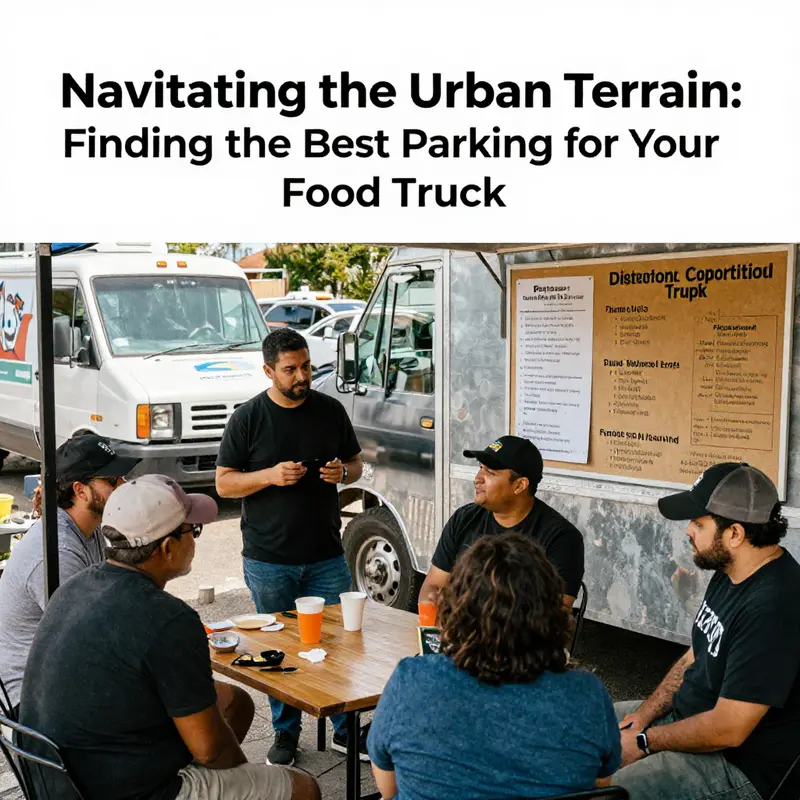
In the clockwork of a street-food business, proximity and predictable access to parking spaces are as important as the menu. Associations and networks act as infrastructure that connects operators to spaces, schedules, and people who manage events. Through memberships, operators gain throughlines—pathways to recurring markets, vetted venues, and shared calendars that reduce search time.
By participating actively in a network, you align with rules, comply with permits and health standards, and build trust with organizers and city officials. A practical approach is to map opportunities through a few reliable associations, attend meetings, share feedback, and coordinate with fellow vendors to balance demand. The result is a more predictable calendar of parking windows, lower travel time, and improved margins. The chapter also notes the value of balancing network guidance with clear regulatory knowledge from official city resources, ensuring that the parking strategy remains compliant and scalable over a season or year. Profiles of veteran operators illustrate how networks translate opportunity into stable revenue, while a disciplined onboarding process helps ensure readiness and reliability.
Final thoughts
Grasping the complexities of parking a food truck in urban environments is an essential skill for any mobile vendor. By embracing modern technology like mapping applications, keeping abreast of local regulations, utilizing specialized platforms designed for food vendors, and engaging with community associations, you can ensure your food truck operates smoothly and thrives. The strategies discussed are not just about finding a spot but about paving the way for your culinary dreams to take flight amidst the urban hustle and bustle. Equip yourself with this knowledge and elevate your food truck experience.