
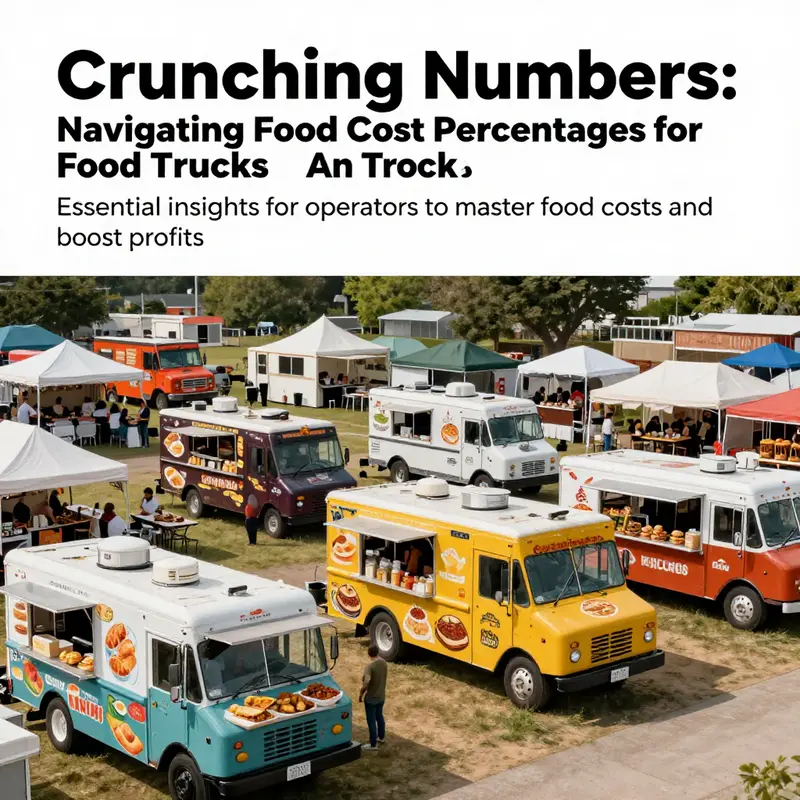
Food trucks offer a unique culinary experience and a viable business model, but managing the financial side effectively is crucial for success. One key factor in this equation is understanding the food cost percentage, which plays a vital role in ensuring that food truck operators can maintain profitability while providing quality offerings. Without a careful balance in food costs, even the most delicious creations can lead to financial strain. This article delves into the optimal food cost percentage range for food trucks, typically between 30% and 40%, and how it can significantly impact operational sustainability. From managing ingredient costs to adjusting menu pricing, we will explore strategies that help food truck operators not just survive but thrive in a competitive landscape. Join us as we navigate the intricacies of food cost management and discover practical insights to elevate your food truck operation.
From Sizzle to Cents: Mastering the Food Cost Percentage in the Mobile Kitchen
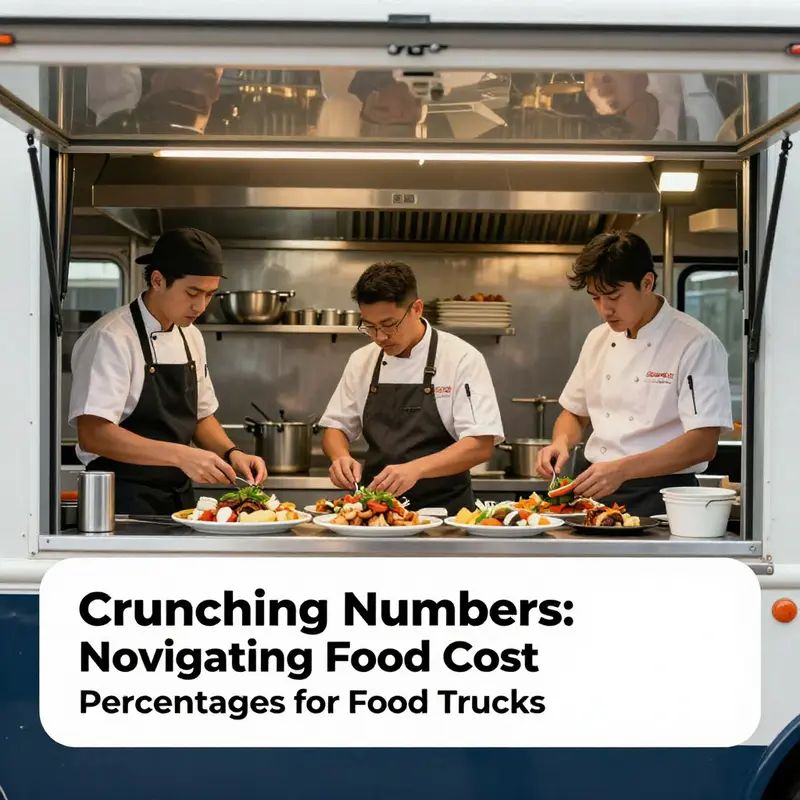
The rush of a food truck is as much about the math behind the magic as the sizzle on the grill. In any mobile kitchen, the food cost percentage serves as a compass, guiding decisions from recipe development to pricing strategy. It is the proportion of the selling price that is consumed by the cost of ingredients, a simple ratio with far-reaching consequences for profitability, sustainability, and the ability to scale. When a truck finds the right balance, it can deliver consistently high-quality dishes while still carving out a healthy margin to cover labor, fuel, licensing, maintenance, and marketing. The challenge, of course, is keeping that margin steady in the face of fluctuating markets, seasonal ingredients, and unpredictable demand. Understanding how to measure and manage this percentage is not a luxury; it is a core operating discipline for any mobile kitchen aiming to survive and thrive in a busy food scene.
The calculation itself is straightforward, but its implications are nuanced. The food cost percentage is derived by taking the total cost of food used during a given period—such as a week or a month—dividing it by the total food sales for that same period, and then multiplying by 100 to yield a percentage. Consider a truck that spends $500 on ingredients and earns $2,000 in food sales from those ingredients during the period in question. The math is simple: (500 ÷ 2000) × 100 = 25%. This number is more than a number; it is a lens through which every plate is scrutinized. A lower percentage generally signals tight control over ingredients, thoughtful purchasing, and disciplined portioning. A higher percentage signals friction—waste, over-ordering, or pricing that hasn’t kept pace with costs. Either way, the metric anchors a discussion about what customers are paying for and what the business must earn to cover fixed and variable expenses beyond the kitchen.
Industry wisdom, including benchmarks cited by professional associations, points to a healthy range for the food cost percentage in a food-truck operation as roughly 30% to 40%. This band is not arbitrary. It reflects the need to reserve enough margin to absorb labor costs, fuel and vehicle maintenance, permits and insurance, seasonal menu changes, and ongoing marketing efforts, all while keeping menu prices competitive and sourcing sustainable. In mobile dining circles, the 30–40% target remains a touchstone for evaluating whether a menu is well engineered: are recipes standardized to protect portions, is inventory being tracked with precision, and are suppliers delivering reliable value without eroding quality?
Operational discipline matters as much as arithmetic. Effective inventory management is the backbone of a favorable food cost percentage. A truck that tracks ingredient usage daily, conducts regular counts, and adjusts orders based on actual consumption rather than estimates creates a feedback loop that curbs waste and shrinkage. It is not enough to know that a particular sauce costs a certain amount per batch; one must know how many batches are produced, how many plates are served from those batches, and how closely actual usage tracks the recipe standard. When usage diverges from expectation, the cause should be traced—spoilage in transit, over-portioning, inconsistent serving sizes, or menu items that have outsized ingredient requirements.
Technology plays a pivotal role in translating daily labor into reliable margins. A point-of-sale system with integrated inventory tracking can simplify the management of food costs by providing real-time visibility into stock levels, cost per unit, and the true cost of every dish after waste is accounted for. With such a system, the moment a dish is plated and sold, the software can redraw the map of profitability, showing which menu items sustain margins and which ones threaten them. The result is not abstract; it is a practical guide for pricing decisions, menu engineering, and ingredient substitution when costs drift.
Supplier negotiations form another pillar of cost control. A diverse, reliable supplier base can deliver better pricing, quality ingredients, and steadier delivery schedules. The goal is to secure competitive prices without compromising on freshness or provenance. For a food truck, this often means balancing global sources with regionally sourced goods when feasible. Such sourcing discipline supports consistent plates and predictable costs, which in turn stabilizes the food cost percentage. A thoughtful supplier strategy also opens doors to seasonal variations that can be leveraged to refresh the menu without eroding margins.
Part of cost discipline is standardizing recipes and maintaining consistent portion sizes. Standardized recipes are the antithesis of waste. They ensure that every batch uses the same amount of each ingredient and every plate receives the same portion. This consistency translates into predictable costs and predictable sales, two essential ingredients for sustaining a healthy margin. When recipes are standardized, even a momentary rush in business does not derail margins because the system has built-in safeguards against over- or under-portioning. The balance of flavor and cost hinges on this consistency, which, in the long run, supports steady customer expectations and repeat business.
Pricing strategy must respond to the realities of ingredient costs while preserving value for customers. When costs rise, adjustments to the menu may be necessary. This can involve revisiting recipes to use less expensive ingredients without sacrificing quality, shifting the menu mix toward items with stronger margins, or adjusting selling prices in a transparent and strategic manner. The objective is not to nickel-and-dime customers but to preserve a sustainable margin that funds ongoing operations and growth. Menu engineering, then, becomes an ongoing discipline: testing new dishes, monitoring their cost profiles, and phasing in changes that preserve or improve the overall food cost percentage without eroding the brand promise.
Beyond numbers, trends tell a story. Regular, comprehensive reviews of the food cost percentage help operators recognize patterns that might not be visible in week-to-week fluctuations. A seasonal surge in produce prices, for example, can push the percentage upward if the price increase is not matched with adjustments elsewhere. Conversely, a period of lower ingredient costs or improved yields can present an opportunity to reprice or reallocate margins. The ability to interpret these signals depends on clean data, disciplined recording, and a willingness to translate insight into action. The endgame is a margin that remains robust enough to support essential operations while keeping the price tag attractive to mobile diners who crave both quality and affordability.
To translate these principles into practical practice on the curb, consider the concrete steps that build toward a healthier food cost percentage. Start with meticulous inventory discipline: count, compare, and reconcile. Schedule regular counts, not just at month-end, and use those counts to adjust procurement plans. Embrace technology that ties sales to stock in real time, so you can see the impact of every dish on your bottom line. Negotiate with suppliers for better pricing and flexible terms, and don’t overlook the value of seasonal or locally sourced ingredients when they align with your flavor profile and margins. Standardize recipes and train staff to portion correctly, reinforcing consistency with every service. Finally, price strategically: set menu prices based on a careful mix of cost data, demand, and competitive context, and be prepared to refine as costs move.
In the spirit of practical sourcing and cost control, additional insights can be found through a broader exploration of mobile dining cost management. For more on procurement and cost control in mobile kitchens, you might explore resources such as the Latinos Food Trucks blog, which offers practitioner-focused perspectives on running a lean, price-aware operation in the street-food landscape. See the Latinos Food Trucks blog for related discussions that connect kitchen practice to financial outcomes: Latinos Food Trucks blog.
In sum, the food cost percentage is not an isolated metric but a living measure of how well a food truck converts ingredients into value for customers and profit for the business. Keeping it within the 30–40% range is not a prescription for stagnation but a framework that supports growth, resilience, and sustainable excellence on wheels. It requires daily discipline—tracking, adjusting, and communicating across the team—so that every plate served moves the business closer to its financial goals while preserving the integrity of the dining experience.
External resource for deeper guidance: National Restaurant Association’s 2025 Food Cost Guidelines offer a comprehensive framework for cost control, benchmarking, and best practices across the mobile dining sector. https://restaurant.org/industry-research/food-cost-guidelines
On the Move and Under Budget: Mastering the Food Cost Percentage for Food Trucks
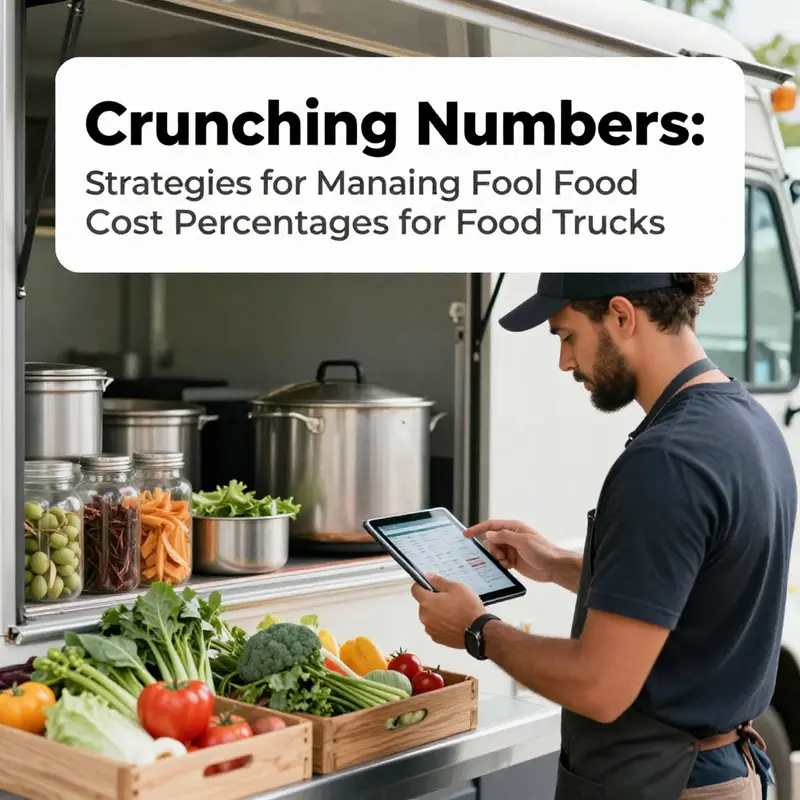
The kitchen that travels is a kitchen that must think in margins as deftly as in flavors. A food truck lives and dies by its ability to produce mouthwatering food while keeping the plate costs aligned with revenue. The food cost percentage, often described as the food cost ratio, isn’t a theoretical number pinned to a spreadsheet; it is a living discipline that informs every decision from recipe design to daily prep. In practice, most mobile concepts aim for a range that balances quality with profitability, commonly cited between 30% and 40% across industry benchmarks. Yet a growing body of operational experience suggests that in the fluctuating world of a mobile kitchen, a leaner target—roughly 28% to 35%—can be more sustainable, provided every lever of the operation pulls in the same direction. It is not simply about dialing prices up or down; it is about building a disciplined, repeatable system that makes those numbers predictable even when markets swing. This chapter unfolds the practical choreography behind that system, weaving cost accounting, inventory discipline, supplier leverage, menu design, and overhead control into a single, coherent rhythm. The aim is to show how a mobile business can protect margins without sacrificing the very elements that win repeat customers: consistency, quality, and speed of service.
The first pillar of a robust food cost strategy is precise cost accounting, anchored in a Bill of Materials for every menu item and a clear accounting of yield. Every dish becomes a model, with ingredients itemized from the first gram of onion to the final squeeze of lime. The core formula—Single Serving Ingredient Cost = Σ (Ingredient Net Quantity × Price) ÷ Yield—ensures you know the true cost of a plated portion before it ever hits a customer. Yield accounts for the waste that occurs during prep and cooking: trimming, trimming again, evaporation, and any shrinkage that happens in the pan or on the grill. When you couple this granular view with accurate yield, you illuminate high-cost items early, before they become a drag on margins. This is not a theoretical exercise: it guides menu pricing, helps you reallocate production time, and informs substitutions when a single ingredient becomes volatile.
In a mobile business where every minute matters, an equally rigorous inventory discipline is non-negotiable. Perishables demand a safety-first approach, and that starts with a robust inventory system that prioritizes First Expired, First Out. Establish clear safety stock levels and precise reorder points for all ingredients. Conduct regular, systematic counts, with A-class high-value items checked daily, B-class items reviewed weekly, and C-class items examined monthly. The objective is twofold: minimize waste and maintain a real-time pulse on consumption versus sales. A unified platform that streams procurement, receiving, production planning, and reporting can transform guesswork into data. Real-time visibility makes it possible to calculate an actual food cost percentage as Food Cost Percentage = Period Food Cost ÷ Sales Revenue, and it is this metric that drives disciplined decision-making rather than reactive scrambling when prices move.
Procurement is the third pillar, and it is about building resilience as much as it is about chasing price points. A robust sourcing approach avoids dependence on a single supplier and instead seeks competitive bids from multiple vendors. The hospitality landscape rewards the operator who can lock in favorable prices through disciplined negotiation, even in volatile markets. Consider long-term contracts for key staples or proteins where feasible; these arrangements can stabilize cost trajectories and soften the impact of spikes. The overarching aim is consistency in quality at predictable prices, so that your BOMs and yield calculations stay meaningful rather than becoming messy, frequently rewritten documents.
Yet cost accounting, inventory discipline, and procurement only reach their full potential when paired with strategic menu engineering. The data generated by precise costing should flow straight into menu decisions. Regular analyses of each item’s cost, gross margin, and sales velocity illuminate which dishes are driving profits and which are bogging down the kitchen’s efficiency. Items that are high in cost but slow to move can drain both ingredients and time, even if they are beloved favorites. Conversely, high-margin, fast-selling dishes deliver the leverage needed to sustain the business during lean periods. When a dish’s economics don’t pencil out, a thoughtful adjustment in recipe scale, portion size, or ingredient substitution can restore balance without sacrificing perceived value. In this environment, the goal is to design a portfolio where the bulk of revenue comes from items that deliver reliable margins and quick turnover.
But even with precise costing and smart menu design, a food truck cannot ignore the total cost of operating a mobile business. Labor remains a major line item, and the dynamic demands of a curbside service model require scheduling that minimizes idle time while preserving quality. Cross-training staff can increase flexibility, reduce overtime, and improve throughput during peak hours. Overheads—energy use, equipment maintenance, and packaging—must be scrutinized with the same eye as ingredients. In a mobile context, packaging choices matter not only for cost but for operational efficiency and environmental responsibility. Wherever possible, opt for materials that offer both cost efficiency and sustainability. And logistics—the routing of routes, travel times, and fuel consumption—can be a surprisingly large lever on the cost line. Efficient routing reduces fuel outlays, increases service speed, and protects the customer experience, which, in turn, stabilizes sales and supports a healthier margin.
The net effect of these intertwined disciplines is a capacity to maintain a sustainable food cost percentage even as external conditions shift. The research consensus—bolstered by practical, real-world mobile operations—points toward a healthy target in the 28%–35% range. This band acknowledges the peculiar economics of a moving kitchen, where speed, quality, and waste reduction are in constant dialogue with ingredient volatility and labor costs. Achieving it requires rigor in costing, discipline in inventory, and a pricing strategy that adapts to real-time cost signals without chasing price alone. The operator who builds this rhythm finds that price adjustments can be implemented with confidence because margins are anchored in reliable data, not guesswork. At its best, this approach yields a stable financial path that sustains growth, supports better supplier relationships, fuels menu experimentation, and funds investments in equipment and marketing that enlarge the business’s footprint over time.
A practical way to anchor high-margin opportunities is to study the menu through the lens of product design—how a dish is assembled, how long it takes to prepare, how flexible it is to substitutions, and how its ingredient combination responds to seasonal changes. A thoughtful design can unlock margins not by cutting quality but by optimizing the conversion of raw inputs into plated perception. The result is a menu that rewards quick service, a predictable prep flow, and a reduced need to hold large and diverse ingredient stocks. In this sense, the cost percentage becomes a compass that points toward dishes that are not only delicious but also efficient to produce and resilient to price movement. The larger the system becomes, the more critical it is to maintain alignment between what is promised on the menu and what is delivered on the truck, both in flavor and in value.
To connect theory with practice, consider the tangible effect of yield-aware costing on pricing decisions. When you know the true cost of a dish per serving, you can price for value rather than mere cost-plus markup. A properly driven price can accommodate seasonal price shifts or supplier changes without forcing a sudden, noticeable jump in menu prices. This is particularly important for a mobile business that thrives on consistent, repeat traffic. Customers appreciate stability in what they pay, even as the costs of ingredients drift. A disciplined approach to yield, combined with vigilant waste reduction and careful portion control, translates into fewer plate wasteables and more plates sold per hour. The efficiency dividend shows up in the form of faster service, higher table turnover for those trucks operating at events, or shorter wait times at busy street corners—all of which feed back into the margin equation.
As a practical touchstone, keep the weight of the daily operating decisions aligned with a simple rhythm: compute the true cost per serving for each item, compare it with the current menu price and margin, review inventory usage against sales by category, and adjust either the price or the recipe when signs point to unsustainable drift. When cost pressures rise, lean on menu engineering to elevate high-margin options and prune low-margin items that consume labor and space. When costs fall, use the opportunity to reallocate labor toward faster service or to introduce new, value-adding items that can broaden the customer base rather than merely expanding the same footprint. The beauty of this integrated approach is its adaptability; the same framework can be scaled to a single truck or a fleet, with data flowing from one kitchen on wheels to the next, harmonizing pricing, procurement, and production across the entire operation.
For operators looking to deepen the practical linkage between cost data and menu strategy, one accessible path is to explore where high-margin ideas live within the broader spectrum of mobile offerings. A useful touchpoint is the catalog of dishes that exemplify balance between cost and appeal: Top Latino Food Truck Dishes. This resource illustrates how strong item design, informed by cost awareness, can sustain growth while maintaining cultural authenticity and culinary interest. The takeaway is not to imitate popular items blindly, but to apply the same discipline to your own repertoire: identify fast-moving, high-margin items, optimize their recipes for yield, and ensure your pricing reflects value delivered rather than merely the food cost line alone. The broader implication is clear—when you couple precise costing with savvy menu engineering and disciplined operations, the food cost percentage ceases to be a ceiling and becomes a dynamic target that moves in step with your business.
The strategic implication for the mobile operator is simple in concept but demanding in discipline: align cost data with real-world actions, and use that alignment to shape pricing, menu design, and service efficiency. The dialogue between cost, speed, and quality should never be a one-off calculation but a continuous feedback loop. Every shift, every event, every street corner becomes a test of whether the system remains calibrated to the objective. If the kitchen on wheels can sustain a cost percentage in the 28%–35% range through careful costing, lean procurement, and menu discipline, the result is not only healthier margins but a more predictable, scalable business model. That stability, in turn, supports growth through reinvestment in equipment upgrades, staff development, and brand-building activities that convert curious passersby into loyal customers. In short, managing the food cost percentage on a moving kitchen is less about chasing a fixed number and more about building a resilient process that remains confident amid uncertainty while keeping flavor at the center of every plate.
External resource: https://www.shopify.com/blog/food-truck-food-cost-percentage
Margins in Motion: How Ingredient Sourcing Shapes Food Cost Percentage for Mobile Kitchens
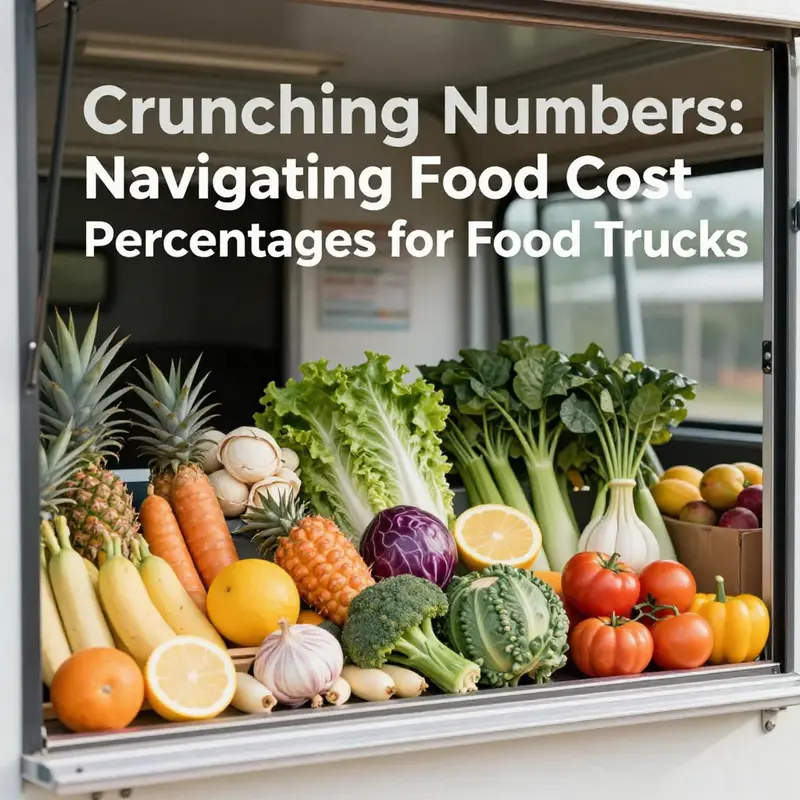
The food cost percentage a food truck carries is not just a number on a spreadsheet; it is a map of how a business translates ingredients into a sustainable plate. In a mobile operation, where overheads chase each other through tight turns and quick turnarounds, the way you source ingredients can directly tighten or loosen the ratio of cost to sales. The target range many operators aim for—roughly thirty to forty percent of revenue spent on ingredients—is not arbitrary. It exists because it balances the need for sound margins with the appetite for quality and reliability in sourcing. If you push food costs too high, margins vanish under the weight of labor, fuel, permits, and maintenance. If you push them too low without attention to quality, you risk spoilage, menu instability, and guest dissatisfaction. The challenge of a food truck, then, is to choreograph sourcing in a way that keeps the cost percentage within that ideal corridor while preserving flexibility to adapt to price shifts, demand swings, and seasonal opportunities. This is where sourcing strategy—local, seasonal, and reliable—becomes less a backdrop and more a central driver of profitability and resilience.
Local sourcing emerges as a powerful lever in this orchestration. When ingredients travel shorter distances, transport costs shrink and the window for spoilage tightens, which translates into less waste and more predictable yields. The freshness that comes with nearby producers also opens doors to higher perceived quality—an asset that can justify a premium in the eye of customers who equate freshness with value. For a street-side operation, that perceived value can compensate for the premium that fresh goods may carry, allowing the menu to maintain its business case even when the sticker price on certain raw components climbs. Local networks also tend to be more responsive; a well-nurtured farmer, a neighborhood bakery, or a regional meat purveyor will often offer shorter lead times, easier substitutions when demand shifts, and a shared sense of reliability born from ongoing, reciprocal relationships. If a truck can secure a steady flow of core ingredients from nearby suppliers, it reduces the likelihood of sudden recalibration of the menu at the last minute to accommodate stockouts, a disruption that can ripple into food cost percentages as cooks improvise without full access to planned quantities.
Integrating a local-first mindset does not happen in a vacuum. It requires a careful choreography of seasonality, capacity planning, and menu design. When menus are built with local availability in mind, operators can lean into what is freshest and most affordable at any given time. Seasonal produce, for example, often arrives at peak abundance in certain months, which drives down unit costs and improves yield efficiency. A truck that centers its strategy on seasonally available items can capitalize on the natural price cycles that accompany harvests, while maintaining a level of consistency in portioning and plating. Seasonality can be a powerful ally, but it must be managed with discipline. Cooks need to anticipate changes, calibrate recipes to ensure consistent flavor profiles, and adjust portions so that the cost per dish remains within the target band even as the supply mix shifts.
Yet every strength in local sourcing comes with its own set of challenges. Local networks can be more limited in scale than wholesale channels, which may lead to higher baseline costs or tighter negotiating power. The absence of a broad, standardized catalog means more time spent vetting multiple small suppliers, confirming quality, and securing reliable delivery windows. For a mobile operation, the calendar can tilt quickly—from a midweek lull to a weekend surge—and a supplier’s capacity must be able to rise and fall with the truck’s schedule. Then there are the risks of dependency on a small circle of local producers. If a single harvest or supplier hiccup coincides with a peak service period, a truck can face a sudden squeeze on ingredients, which could push its food cost percentage upward and threaten margins unless there is a well-built contingency plan in place. The human element matters as well: strong relationships with local suppliers hinge on consistent communication, fair payment terms, and a shared understanding of quality standards. A vendor who sees a truck as a reliable, recurring partner is more likely to offer favorable terms, flexible substitutions, or proactive alerts when shortages loom—benefits that can stabilize costs in a volatile market.
Beyond local ties, the seasonal rhythm offers a practical framework for cost control. Seasonal sourcing aligns with what nature provides at lower prices during harvest peaks. It also invites creative menu design that harmonizes with what the market actually wants and can reliably supply. A truck that leans into seasonal ingredients can design daily specials that leverage current crops, reducing the need for expensive imports or long-shelf-life components that create waste. The discipline of building menus around seasonal abundance can help smooth the cost curve: during peak harvest, ingredients are cheaper; in leaner periods, the menu can pivot to items that still deliver flavor and value without inflating costs. This is not simply about chasing the cheapest options; it is about aligning quality, price, and availability so that each menu item carries a predictable and manageable share of the overall food cost percentage. It is a dynamic interplay, where menu engineering becomes a cost control tool as much as a flavor strategy.
A parallel thread in the sourcing narrative concerns the volatility inherent in non-local supply chains. When a truck depends heavily on distant suppliers or broad distributors, it loses some of the speed and flexibility that define a mobile operation. Freight charges accumulate; longer transit times elevate the risk of spoilage or misalignment with demand, and price volatility can ripple through the planning process. The consequence is a higher likelihood of unexpected increases to the food cost percentage, particularly during periods of market disruption or weather-related supply shocks. In those moments, the ability to pivot quickly—by adjusting portion sizes, substituting ingredients with locally available alternatives, or rebalancing the menu to emphasize items with more predictable cost structures—becomes the operational heartbeat that keeps margins intact. The best practice is not to minimize risk by narrowing the vendor pool to a single source, but to diversify thoughtfully. A robust sourcing strategy blends local resilience with the security of reliable, disciplined supply channels that can deliver consistent results when the market tightens.
In this landscape, a coherent, well-communicated sourcing strategy translates into tangible, measurable benefits for the bottom line. The operator who tracks usage precisely, anchors procurement to defined price ranges, and maintains a transparent relationship with suppliers sets up a feedback loop that continuously guides pricing decisions. Inventory management becomes not merely a warehouse function but a forecasting discipline—anticipating what will be needed, what will be wasted, and how fluctuations in supply will influence the cost per dish. When the team understands the linkage between sourcing choices and the food cost percentage, pricing decisions gain legitimacy. A menu price adjusted to reflect a shift in ingredient costs is not a punitive measure; it is a financial acknowledgement of reality that preserves quality and service standards. This is the core rationale for keeping the food cost percentage within the established band and for maintaining the operational flexibility necessary to adapt to both opportunities and risks in real time.
For operators seeking practical pathways to translate these principles into daily practice, consideration of vendor relationships becomes essential. One way to deepen practical insight is to explore ongoing conversations within the broader Latinos Food Trucks community, where veteran operators share lessons learned about sourcing, pricing, and menu adaptability. See more in this community discussion in the Latinos Food Trucks network—the linked post offers snapshots of how small, local, and seasonal strategies have shaped margins for operators navigating similar markets. Latinos Food Trucks blog-2.
Ultimately, the race to optimize the food cost percentage in a food truck is less about chasing a single perfect supplier and more about weaving a reliable sourcing fabric that accommodates local abundance, seasonal opportunity, and prudent risk management. The goal is to keep the cost of ingredients as a stable proportion of revenue while maintaining the freedom to showcase quality, variety, and responsiveness to the street’s evolving palate. It is a balancing act—one that requires disciplined purchasing practices, a clear alignment between menu strategy and procurement, and a willingness to recalibrate in response to market signals. When these elements come together, a food truck can sustain a competitive edge not solely through clever marketing or speed but through disciplined stewardship of its most variable yet most controllable input: the ingredients that reach the customer’s plate.
Informed by industry benchmarks and grounded in practical operating discipline, the path to a healthier food cost percentage is paved by smart sourcing choices. Local, seasonal, and reliable suppliers form the backbone of predictable costs. They reduce waste, stabilize lead times, and support menus that both delight customers and protect margins. The challenge remains ongoing: to maintain flexibility so that price changes, supply disruptions, and seasonal shifts do not derail profitability. The response is a combination of intelligent menu design, robust supplier relationships, and a vigilant approach to inventory and pricing that respects the realities of the street. As food trucks continue to evolve, the teams that master these sourcing dynamics will be the ones most likely to maintain a healthy food cost percentage without sacrificing the quality that brings customers back for more.
External reference for broader context on mobile-food cost considerations and practical tips can be found at the following resource, which complements the discussion here: https://www.foodandwine.com/restaurant-management/food-truck-tips-2023
Pricing with Precision: How Food Trucks Adjust Menu Prices to Sustain Food Cost Percentages
Pricing with precision is more than a math exercise; it is a discipline that underpins resilience for mobile kitchens that must navigate fluctuating ingredient costs, seasonal demand, and the realities of small margins. Across the best-run fleets, the food cost percentage, often defined as the share of the selling price eaten by the cost of ingredients, acts as a compass. When operators keep that percentage within a disciplined band, typically around 30-40 percent, they create space for labor, fuel, permits, equipment maintenance, and marketing. The outcome is not just a number on a sheet; it is a sustainable cycle in which quality ingredients, fair prices, and dependable service can coexist even as conditions outside shift.
To translate the idea into practice, start with a pricing rule that links what it costs to produce a plate with what the customer pays. A widely used approach is cost-plus pricing, where the selling price is tied to the total cost of ingredients and the intended margin. The principle is straightforward: price should reflect the ingredient cost as a meaningful portion of the selling price. If the target is that ingredients represent a specific percentage of the price, then the price must be set so that cost divided by price equals that target percentage. In other words, price equals cost divided by target food cost percentage. When operators think in terms of gross margin, they sometimes flip to the complementary formulation: price equals cost divided by (1 minus gross margin). Both expressions describe the same intent, but they demand careful attention to what the percentage represents. A misalignment can quietly erode margins before costs spike or sales dip.
Illustrative example: assume a mixed ingredient cost for a signature taco runs 2.00. If the operator wants the dish to have a 35 percent food cost, the selling price should be 2.00 divided by 0.35, which is about 5.71. The ingredient cost then represents 35 percent of the final price, and the remaining 65 percent covers labor, overhead, and profit. If instead the target is 65 percent, the price would be 2.00 divided by 0.65, about 3.08, leaving a smaller margin. The lesson is to fix the relationship between cost and price so it remains stable as costs and demand fluctuate. In practice, many operators prefer a steady target such as 30-40 percent and adjust prices or portions to keep the actual price aligned with that plan across items.
Pricing discipline is part of a broader rhythm that considers the menu structure and inputs. Ingredient costs drift with seasonality, supplier bids, and regional conditions. Small changes in unit costs can compound at scale, squeezing margins if not countered with timely adjustments. An effective pricing system requires meticulous cost tracking at the item level, recording every component from proteins to garnishes, spices, and even condiments. The more precise the cost ledger, the more accurate the price when costs move up or down. The aim is to adjust the balance among menu items so the overall food cost percentage stays within the target band while preserving perceived value.
With cost tracking in place, menu design becomes a powerful ally. Menu engineering blends economics with consumer psychology to balance a range of price points and dish profiles. A well-engineered menu offers options that attract different customer segments while preserving a coherent profitability story. A practical tactic is to introduce a low-cost, high-traffic item that, despite a slim margin, drives volume and cross selling to higher-margin dishes. The logic is that a cheap starter can lower perceived risk and encourage guests to explore more expensive options later. A typical mix might include a $3 appetizer, a $15 introductory dish, a $35 mid-tier option, and a $58 premium dish that communicates value and complexity without cannibalizing overall profitability. Numbers can be tuned to the truck concept and audience, but the principle stays the same: price the menu to reflect costs, design the menu to create a tiered ladder, and monitor real-world performance to keep the overall food cost percentage in check.
Proactively price, source, and respond to customers. Sourcing and procurement matter as ingredient costs swing with harvests and logistics. Strategic sourcing means reliable suppliers, multiple vendor relationships, and opportunities for bulk purchases where possible. Even in a mobile setting with limited space, operators can negotiate contracts and build a stable supply base. Efficient procurement reduces costs on staple items like proteins, greens, grains, and flavorings, accumulating meaningful improvement in the food cost percentage. More broadly, predictable costs enable a more confident pricing strategy and steadier value for customers.
The human element is essential. Price setting is ongoing and depends on frontline feedback, sales mix, and crew experience. Staff should understand why prices change so they can explain value to customers and maintain goodwill when fees adjust. Upselling and strategic suggestions help protect margins. A well-prepared team that can describe ingredients, portions, and sourcing stories creates a perception of value that supports the price point.
To connect theory with practice, articulate a clear pricing policy through a concise menu narrative. A menu entry should explain not just the cost but why it costs that much: the quality of the protein, the care in the seasoning, and the reliability of the supply chain that ensures steady availability. Presenting the price alongside a brief note about portion size or origin of ingredients can legitimize a price increase as a conscious choice rather than a reaction to external pressures. In the end, customers respond to a coherent, value-forward story more than to a bare price.
For those who want to explore further, practical pricing strategies for food trucks can be found in blog-2.
Final thoughts
Managing the food cost percentage is not merely a mathematical exercise—it lays the foundation for a thriving food truck business. By understanding the critical metrics that guide your pricing and ingredient sourcing, food truck operators can craft menus that not only satisfy taste buds but also ensure economic viability. Sustaining a food truck’s operation through the tumultuous landscape of ingredient price fluctuations requires diligence, creativity, and strategic planning. Remember, succeeding in this mobile culinary venture hinges on the ability to maintain that delicate balance between cost and quality. Taking the right steps now will pave the way for long-term success.