
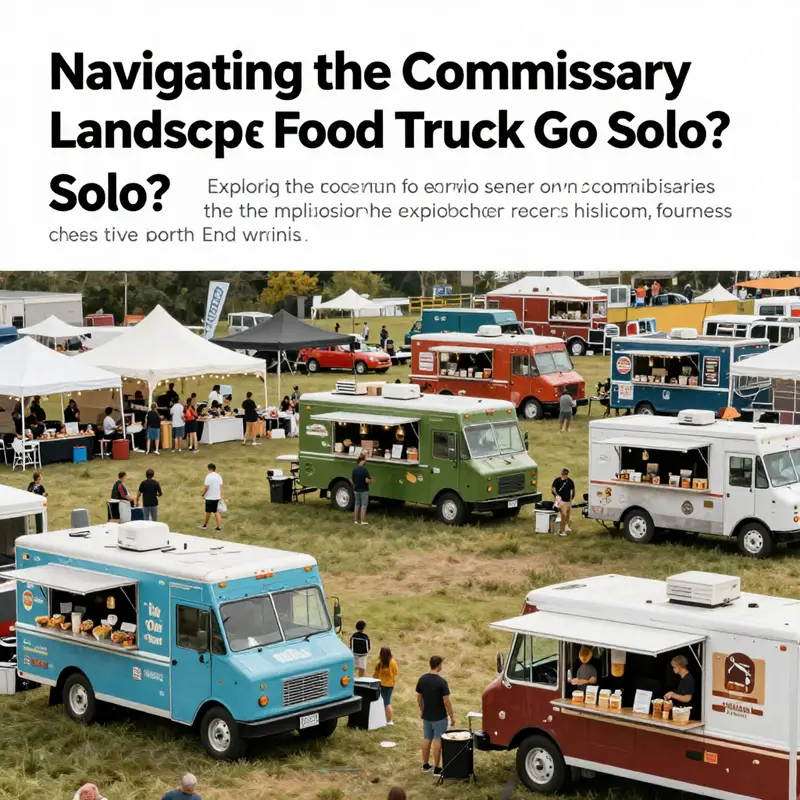
The food truck industry has rapidly evolved, with many aspiring chefs and entrepreneurs seeking ways to streamline operations and define their unique culinary identities. One of the most pressing questions facing food truck operators today is whether their mobile units can function as their own commissary. This article delves into the intricacies of food truck operations, focusing specifically on the role of a commissary. By exploring legal regulations, operational advantages and challenges, health and safety standards, and future trends, we aim to provide a comprehensive understanding of whether your food truck can indeed serve as its own commissary. We will also consider how this knowledge can empower not just food truck owners, but also industry enthusiasts, forming a deeper connection to the vehicle-centric culinary innovation in the market.
Self-Sufficient on Wheels: Can a Food Truck Be Its Own Commissary and Stay Compliant?
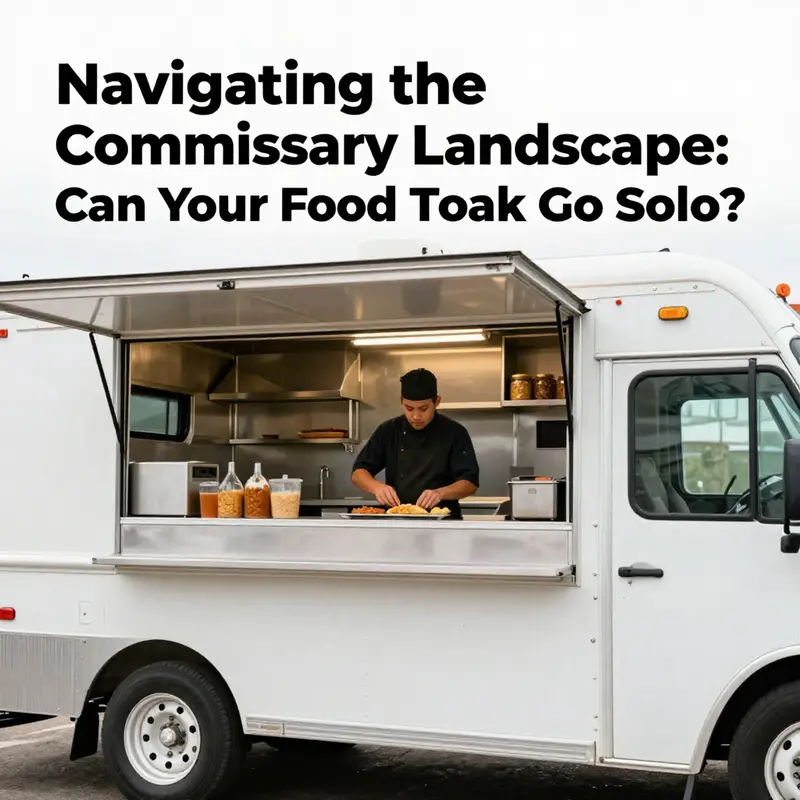
The idea of a food truck that can operate as a self-contained kitchen and storage hub is seductive. It promises control, speed, and lower overhead. Yet the reality is more nuanced than a single, neat blueprint. Whether a truck can truly function as its own commissary depends on how the operation is designed, where it operates, and the rules that govern food safety in that jurisdiction. A commissary, at its core, is more than a parking space. It is a licensed, compliant site that supports the essential back-end tasks of a mobile food business. It is where ingredients are stored under proper temperature control, where dirty equipment is cleaned and sanitized, where some preparatory steps can occur away from the curb, and where inspections can be conducted without conflicting with on-board space constraints. In short, a commissary is the safety and reliability backbone that keeps a fleet of trucks, or even a single truck, moving in harmony with public health standards and consumer expectations.
When a truck opts to handle commissary duties on board, the logic is straightforward. Space is limited, but for a small menu that requires minimal prep, a truck can manage with its own refrigeration, dry storage, and a sanitation station. The driver can stock ingredients overnight from a typical supplier dock, bring them in through a safe ingress path, and use the vehicle’s electrical system to keep perishable items at safe temperatures. The cooking and final assembly then happen in service, with careful scheduling to ensure safety and consistency. In some cases, operators stage prepped components in advance—dough, sauces, chopped vegetables—on the truck or within a tiny in-vehicle prep area, and perform finishing steps in the field. This approach can reduce the friction of coordinating with a separate kitchen and can be exceptionally appealing to entrepreneurs who want precise control over the pace and menu of each service.
Yet the practical, regulatory truth remains: most health departments require access to a licensed commercial kitchen—or what is commonly called an approved commissary. The reasons are practical and safety-driven. A licensed facility provides dependable refrigeration for perishables, adequate space to prevent cross-contamination, and established sanitation workflows that match city or state guidelines. It also serves as a centralized site for routine inspections and for receiving shipments, which can be logged and tracked away from the bustling curb. A truck that tries to rely solely on onboard systems must still clear the same safety bar. The cooling units must be capable of maintaining cold storage for all ingredients; dry storage must minimize contamination risks; and there must be a dedicated area for washing and sanitizing tools that complies with local standards. In some jurisdictions, it is possible for a truck to be its own commissary, but this is not a universal permission. It comes with a rigorous set of requirements that blur the line between a mobile unit and a stationary food facility.
To navigate this landscape, a thoughtful operator begins by mapping the entire workflow of the business—from ingredient receipt to service. What must occur in a clean, controlled space, and what can reasonably be accomplished on the road? Core tasks such as receiving perishable ingredients, stacking ice or refrigeration, storing prepared components, and performing deeper sanitization procedures typically belong in a licensed facility under most rules. If a truck is designed to double as its own commissary, the design must reflect that dual role from the ground up. That means reinforced storage for cold and dry goods, secure, cleanable shelving, partitioned zones to prevent cross-contact, and a sanitation station with reliable access to water, hot soap, and verified chemical sanitizers. It also means record-keeping that aligns with inspections, temperature logs for coolers, and a documented plan for how long ingredients can remain in the vehicle before they must be moved to a certified facility for safer inventory management.
The regulatory nuance matters. Health departments do not rely on guesswork; they require documented processes, traceability of ingredients, and proof that the truck’s onboard systems won’t jeopardize food safety during busy service windows. In practice, this means that even if a truck can technically cold-store its own ingredients, it must prove through policy documentation and operational practice that it can prevent cross-contamination, manage time-temperature abuse, and maintain hygienic standards during every shift. Operators with smaller footprints may opt for a hybrid model: most daily storage and some prep come from the truck, while more complex or larger-batch tasks—like dough fermentation in the right conditions, long-simmered sauces, or finishing work that requires precise equipment—are completed at a licensed commissary. This hybrid approach often offers a balanced path: it preserves control and flexibility while staying within the bounds of safe practice.
For those drawn to the autonomy of a self-sufficient unit, the legal path is nontrivial and must be navigated with care. It is not merely about installing a better refrigerator or a tougher lock on a storage bin; it requires a formal agreement with the local health department, a clear plan to enforce sanitation standards, and credible strategies for how the truck will meet the full scope of required inspections. The decision to forego a separate commissary cannot be treated as cosmetic; it changes how the business is audited, how waste is disposed of, how ingredients are rotated, and how the day’s prep aligns with regulatory expectations. In the same breath, many operators recognize the value of a well-run commissary—it is a hub for reliable storage, predictable cleaning schedules, bulk ingredient handling, and an orderly workflow that can scale with growth. The contrast is instructive: the truck’s mobility offers strategic advantages, while a licensed commissary offers risk management and consistency.
The practical benefits of a dedicated commissary are repeatedly echoed in industry observations. A central kitchen acts as a backbone for a fleet, ensuring that equipment is cleaned to standard, that hazardous waste is disposed of safely, and that staff can prepare in a space designed to handle the demands of a commercial kitchen. The accessibility of a commissary translates into fewer on-road storage challenges, smoother delivery of raw ingredients to the vehicle, and greater assurance of compliance with local regulations. For operators contemplating a sole-vehicle approach, the math is not only about the initial fit of a refrigeration unit or a shelving system; it is about whether the on-vehicle facilities can sustain food safety during peak service periods and whether the local rules permit such use. And here, the narrative from regulatory guidance and practical summaries converges on a single point: solid, proactive planning and ongoing oversight are indispensable.
As a practical matter, the decision to operate with or without a separate commissary should emerge from a process of due diligence. The operator should assemble a working plan that details how ingredients are received, how they are stored, how long they can stay in the truck before reloading, and how waste will be managed in a compliant fashion. A responsible plan also identifies who will perform routine cleaning, how often equipment will be sanitized, and what records will be kept to demonstrate compliance during inspections. This is not a one-time memo; it is a living document that guides daily operations and annual reviews. The plan should also address staff training, because sanitation and safety hinge on people as much as on space and equipment. Training should cover cross-contamination prevention, proper hand hygiene, cleaning protocols, and the specific temperature ranges required for different categories of ingredients. When teams operate with a shared understanding of these standards, the likelihood of violations diminishes, and the business earns a stronger license to move from one location to another with confidence.
There is a broader ecosystem of guidance available to operators who are weighing the self-sufficient route. A practical path includes studying the U.S. Small Business Administration’s comprehensive road map for food truck ventures, which outlines how to structure a venture around mobility, compliance, and customer engagement. It invites entrepreneurs to think carefully about location strategy, capital needs, and management processes that influence long-term viability. For those exploring the legal and practical implications of making a truck its own commissary, there is a clear thread of caution and possibility: you may be able to design a vehicle that doubles as a kitchen and a storage hub, but you must design the system in a way that satisfies the communities you serve and the regulators who oversee food safety. The balance lies in building a system that is flexible enough to respond to changing markets while remaining anchored to public health and safety obligations.
To deepen understanding, consider the relevant guidance on legal considerations for Latino food truck startups, which addresses how different jurisdictions treat commissary usage, licensing, and inspections. Legal considerations for Latino food truck startups. This resource is not a universal blueprint, but it illuminates how one operator translated the idea into compliant, scalable practice without sacrificing mobility’s core promise. The overarching lesson remains consistent: autonomy on wheels is achievable, but it is earned through meticulous planning, rigorous safety standards, and a readiness to adapt to the regulatory environment.
External resources can anchor decisions with formal guidance. The U.S. Small Business Administration’s Food Truck Business Guide provides practical, accessible insights into planning, launching, and operating a mobile food business, including the regulatory realities that influence whether a truck can function as its own commissary. For further reading, see the SBA guide here: https://www.sba.gov/business-guide/plan-your-business/food-truck-business.
Across the spectrum of potential configurations, the central question endures: can a food truck serve as its own commissary? The answer hinges on location, capability, and compliance. A self-contained unit is possible in theory, yet in practice most operators balance onboard efficiency with the safety and stability afforded by a licensed commissary. The path to mastery lies in disciplined design, rigorous procedures, and a willingness to engage early with regulators. When those elements align, a truck can indeed function as both mobile kitchen and storage hub, delivering the speed and flexibility that define modern street food while preserving the hygiene, accountability, and traceability that modern food safety demands.
Riding Solo in the Kitchen: Navigating the Regulations of a Food Truck That Serves as Its Own Commissary

The image of a food truck often conjures a clean pop-up kitchen on wheels, a siren song of mobility and entrepreneurship. When a truck serves as its own commissary—where it stores supplies, cleans equipment, and even preps certain components of its menu—the enterprise gains autonomy but also shoulders a heavier regulatory load. This setup can be feasible, even practical, for smaller operations or streamlined menus. Yet it rests on a delicate balance between ingenuity and compliance, where local rules govern what a truck can do in the field and what must happen inside a licensed kitchen. Understanding that balance requires moving beyond the headline appeal of independence and tracing the bones of the regulatory landscape that supports or restricts self-contained mobile operations.
At its core, the concept hinges on the same safety principles that govern any food business: keep perishable ingredients cold, prevent cross-contamination, and ensure clean facilities and skilled workers. When a truck acts as its own commissary, the vehicle itself becomes the primary platform for storage, sanitation, and sometimes food preparation that cannot safely occur in the field. The appeal is clear. A truck that can refrigerate, wash, and organize its supplies without driving to a separate kitchen reduces recurring overhead, increases operational flexibility, and can shorten lines between prep and service. But the operational gains must be weighed against the compliance responsibilities that come with operating a self-contained mobile kitchen.
Regulatory reality shapes what is possible in concrete terms. Health and safety standards form the backbone of the framework, and they are rarely uniform from one jurisdiction to the next. In many places, a self-commissary truck must still meet the same health criteria as a traditionally stationed operation. This often includes verified food safety training for staff, documented procedures for safe cooking temperatures, and explicit protocols to prevent cross-contamination between raw and prepared foods. The emphasis on training is not merely a box to check; it is a practical shield against a broad range of risks that could endanger customers and jeopardize a business license. The requirement to document temperature controls, cleaning schedules, and sanitation practices is common across jurisdictions and serves as a compass for operators who want to keep their on-board systems within legal limits.
Sanitation is another critical pillar. A truck that doubles as its own commissary must demonstrate robust cleaning and sanitizing practices that withstand the scrutiny of inspections. Many regulations require a portable handwashing station accessible at all times during operations, a non-negotiable feature that helps maintain hygiene in dynamic street-service settings. Beyond hands-on cleaning, there is the matter of waste disposal. Approved waste management systems are usually mandated, with strict rules about how food waste and other refuse are segregated, stored, and disposed of. Sealed containers, routine waste removal, and documentation of waste handling practices are common expectations. The goal is simple: prevent odors, leaks, or pests, and avoid introducing contamination anywhere within the vehicle or the storage area.
The physical footprint inside the truck is also under the microscope. Vehicles that serve as their own commissaries often need to prove that onboard refrigeration units, cooking facilities, and temperature monitoring systems meet health code expectations. Some jurisdictions require proof of continuous temperature monitoring for both cold and hot storage, ensuring that perishable ingredients remain within safe ranges. The storage environment—shelves, bins, and organization systems—must minimize cross-contact and allow easy cleaning. In practice, this means robust design choices and ongoing maintenance rather than stylish but impractical configurations. The more a truck relies on in-vehicle prep, the more imperative it becomes to document those processes with reliable systems and records.
Parking and operational permits add a final layer of complexity. Cities frequently regulate where food trucks can park and operate, sometimes creating zones or time windows that simplify the permitting process for mobile vendors. Some locales impose distance requirements from brick-and-mortar restaurants or demand that certain sites be used only for non-prep activities, redistributing the scope of what a self-contained truck can do on location. Even when a jurisdiction allows a truck to function as its own commissary, operators must secure the necessary permits and ensure that motor vehicle and food-service regulations align. If not, the truck risks penalties, suspension, or shutdown, even if the concept remains financially attractive.
Within this regulatory mosaic, compliance and inspections become not merely a corrective mechanism but a continuous practice. Health departments often mandate regular inspections to verify that a self-contained operation consistently maintains the required standards. Documentation becomes the language of compliance: cooking and storage temperatures logged daily, cleaning and sanitation schedules kept current, and waste disposal records maintained with clarity and accessibility. The absence of neatly kept logs can trigger fines or more severe enforcement actions, making disciplined record-keeping an essential habit for any operator who seeks to rely on the truck as a single commissary.
From a strategic standpoint, operators must assess a few practical questions before committing to a self-contained model. How feasible is onboard refrigeration relative to menu size? Does the truck offer adequate dry storage, clean potable water capacity, and space for a handwashing setup that meets code? Are there enough internal surfaces and equipment to perform safe, in-kitchen prep without compromising field efficiency? The answers are often a function of the menu’s complexity and the volume of service. A compact menu with limited cold prep and simple assembly may thrive on a well-designed truck that handles primary storage, cleaning, and limited field prep. A broader menu with multi-stage cooking, perishable ingredients, or complex sauces might demand a more rigorous self-cleaning protocol or the use of auxiliary commissary facilities to meet health and safety expectations.
A practical pathway for operators considering self-commissary arrangements begins with a candid regulatory audit. This involves mapping the exact requirements in the operator’s jurisdiction and cross-referencing them with the truck’s capabilities. The audit should cover health code sections, zoning ordinances, waste management rules, and vehicle standards. It is often wise to consult legal counsel or engage with industry associations that monitor regulatory evolution. The mobile food ecosystem is expanding, and many cities are updating their frameworks to accommodate inventive models while preserving safety standards. Staying current with code changes helps prevent surprises that could derail an otherwise lean, mobile operation.
Even when the regulatory path appears navigable, it is prudent to seek practical exemplars. Operators who have successfully run a truck as its own commissary often emphasize the importance of robust SOPs, continuous staff training, and an explicit emphasis on sanitation culture. These practices translate into consistent performance during inspections and smoother daily operations. The idea is not to mimic a fixed kitchen in every detail but to create a clean, controllable, and auditable micro-environment within the constraints of a vehicle. A clear advantage of this approach is the potential to curtail reliance on external facilities, which can reduce downtime, improve prep-to-service speed, and boost overall reliability in crowded or unpredictable markets.
For operators who want a sense of how the advocates of autonomy balance the realities of compliance with the desire for independence, there is value in looking at the broader community of mobile vendors. Engagement with peers—whether through industry groups or informal networks—can illuminate common pitfalls and practical remedies. Real-world stories about how trucks have adapted their layouts, schedules, or workflows to satisfy health and safety expectations can offer tangible guidance. And for readers who crave a deeper dive into people behind the trucks, the profiles of veterans who lead these ventures offer perspectives on discipline, adaptability, and the daily discipline of running a mobile kitchen. See Profiles of Veteran Food Truck Owners for insights into how seasoned operators balance autonomy with compliance while keeping service humming on the street.
Ultimately, the question of whether a food truck can serve as its own commissary is not a simple yes or no. It hinges on the specifics of local code, the truck’s design, the skill of the staff, and the business model’s appetite for meticulous record-keeping and ongoing maintenance. A well-dressed strategy—anchored in a thorough regulatory audit, a practical equipment plan, and a culture of safety—can turn autonomy into a competitive edge rather than a liability. The path is not guaranteed to be easy, but it is navigable for operators who approach the challenge with curiosity, rigor, and a willingness to integrate external guidance into a strong, compliant on-board system.
For an external reference that frames contemporary safety expectations while mobile vendors refine their models, see the FDA Food Code 2022. This resource provides model standards relevant to all mobile food establishments and serves as a useful benchmark for self-contained commissary planning. FDA Food Code 2022.
On the Move and In Command: Balancing Autonomy and Compliance When a Food Truck Serves as Its Own Commissary
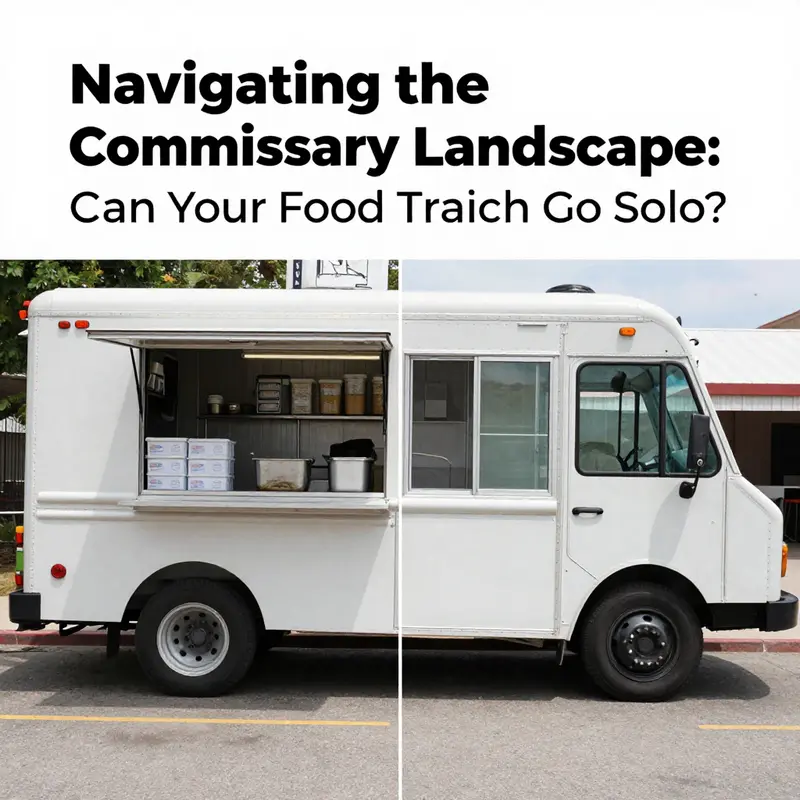
A food truck that acts as its own commissary embodies both a bold idea and a set of practical, sometimes stubborn, constraints. It promises independence from shared kitchens and external schedulers, while inviting the chore of turning a mobile vehicle into a fully functioning kitchen, storage hub, and sanitation station. In many places, the notion is not just a bold concept but a legally intricate one. Health departments regulate where perishable ingredients are received, how they are stored, and how equipment is cleaned and sanitized. They also require inspections, temperature control, waste management, and robust cross-contamination prevention. The FDA provides broad guidance on food safety for mobile vendors, but the specifics—where you prep, how you store, and how you prove ongoing compliance—vary widely by city and state. In short, a truck can be its own commissary, but only if the design, operation, and documentation align with local rules and the realities of mobile life. The promise is clear: fewer moving parts in the supply chain, more direct control of quality, and the potential to shorten the path from kitchen to customer. The cost side of that equation, however, shifts in nuanced ways. While you might save on renting a separate commissary and transporting pre-made dishes to events, you must invest in a kitchen on wheels that meets stringent sanitation and storage standards. The transition from a traditional model to a self-contained mobile kitchen is less a simple swap of spaces than a rethinking of every workflow—receiving, prep, cooking, cooling, storage, cleaning, and waste handling—so that the entire system fits inside or on a single vehicle without compromising safety or efficiency. This balancing act is where the argument for autonomy meets the reality of compliance, especially in crowded urban markets where demands for speed, cleanliness, and responsible waste management are uncompromising. The decision to operate as one’s own commissary often hinges on the size of the operation, the menu complexity, and the geographic scope. A smaller concept with a straightforward menu can, in principle, reduce the need for multiple prep areas and storage zones, making a mobile kitchen feasible. Yet the model also carries heightened risk: the truck becomes the sole 참or, and if something goes wrong—an equipment failure, a power outage, or a misstep in temperature control—the entire business is immobilized. The essential questions then become practical: can the truck reliably function as a licensed kitchen, and can the owner demonstrate ongoing compliance to inspectors who examine not only the cooking but the entire chain of custody for food, from receipt to serving? The FDA’s general food safety standards are a helpful touchstone, but local authorities are the final arbiters of whether a truck can legally assume the role of its own commissary. Most regulators expect access to a licensed commercial kitchen for activities that cannot safely occur in the field. They also require systems to prevent cross-contamination, proper segregation of clean and dirty zones, and reliable temperature control for perishable ingredients. Where the line is drawn depends on jurisdiction and the type of operation, and this is where a prospective operator must do careful due diligence before investing in a self-contained vehicle.
The operational advantages of a truck that doubles as its own commissary are tangible and persuasive for many owners. Autonomy stands at the top: the business can locate in high-demand corridors, swap locations for festivals or lunch rushes, and adjust its schedule without coordinating with a separate facility. In dense urban markets, access to shared kitchen space can be scarce and expensive, and the ability to prep and store on the vehicle can dramatically reduce lead times and improve freshness. Financially, the model can reduce ongoing costs tied to renting or leasing a commissary, and it can cut logistics friction. You eliminate the tension of moving batches of food from a central kitchen to a street-side window or a food cart. Inventory planning can be more direct when stock moves in and out with the vehicle; a tight, well-monitored truck inventory system can minimize waste and improve spend management. From a customer experience perspective, on-site prep can translate into visible freshness—grilled items, hot drinks, and salads assembled to order—creating a perception of higher quality and responsiveness. The ability to turn a quick service moment into a theater of preparation can also become part of the brand story—an authentic, mobile kitchen that brings the cooking closer to customers. For operators who prize speed and flexibility, these benefits can translate into higher turnover and more opportunities to serve in peak moments.
Yet the very strengths of the model illuminate its core challenges. Space is the most constraining factor. Food trucks, by definition, offer limited square footage, and the equipment must fit within narrow dimensions while still allowing safe, efficient operation. The result is a kitchen-on-wheels with compromises: smaller refrigerators, compact ranges, and multi-use equipment that performs several functions without sacrificing sanitation. Storage for perishable ingredients must be carefully designed to avoid crowding and to maintain consistent temperatures, often requiring additional insulation, blast chillers, or specialized compartments. The physical layout must separate clean, ready-to-use items from raw or contaminated gear, a task that becomes more complex as the menu expands or the preparation process lengthens. Cross-contamination prevention demands dedicated utensils and color-coded systems, frequent sanitation cycles, and clear workflow pathways that keep food moving without backtracking over dirty zones. All of this must function reliably while the truck is in motion, parked in a location with varying power and water access.
Regulatory compliance is another formidable frontier. The operator must demonstrate capacity to meet all requirements for temperature control, food handling, waste disposal, sanitation, and pest management in a mobile setting. The truck must have reliable refrigeration and a secure storage area to prevent tampering or accidental contamination. It should incorporate a handwashing station, proper wastewater collection, and safe food contact surfaces that stand up to rigorous cleaning. If water supply is limited, the business must plan for replenishment and waste removal without compromising food safety. Power supply becomes a critical reliability factor: generators, generators with proper ventilation, or off-grid systems must deliver steady electricity for cooling, cooking, and sanitation equipment, all while meeting noise and emission standards in various neighborhoods and venues. The capital outlay to achieve these standards can be substantial, and maintenance regimes must be robust to prevent downtime. The larger the operation or the more complex the menu, the more demanding the maintenance needs become. A single equipment failure can halt service, and on the move, getting replacement parts or technicians to a mobile unit quickly can be a logistical puzzle.
Labor dynamics also shift in this model. A small crew wears many hats: cooking, food assembly, serving, cleaning, inventory management, and compliance recordkeeping. In a fixed commissary, roles can be specialized and scheduled with more leeway for deep cleaning and quality checks. On a truck, staff must juggle multiple duties while maintaining precise temperatures, sanitation standards, and orderly workflows. This pressure can lead to burnout during peak service periods and overtime costs that offset some of the savings from skipping a third-party facility. Effective staffing then becomes essential: cross-trained crew, clear Standard Operating Procedures, and routines that minimize cross-task interference while keeping safety front and center.
From a design perspective, transforming a truck into a self-contained kitchen demands deliberate choices about equipment, layout, and process flow. The vehicle must accommodate robust refrigeration, a reliable cooking lineup, a sanitation station, and waste management that complies with environmental rules. A well-planned layout minimizes backtracking and congestion, with distinct zones for receiving, storage, prep, cooking, and serving. The equipment set should be chosen for durability, ease of cleaning, and energy efficiency. For example, compact ventilation solutions must handle the heat and by-products of cooking without overwhelming the space or triggering compliance alarms. Food safety in a moving vehicle also calls for rigorous monitoring systems: continuous temperature logging, visual cues for proper storage, and fail-safes for power interruptions. These measures, while technologically demanding, help ensure a truck that truly operates as a standalone commissary rather than a precarious, semi-autonomous kitchen.
The operational model hinges on menu design as well. A simpler, focused menu aligns with the constraints of a self-contained kitchen. Multi-step recipes or high-volume production that requires large processing spaces can quickly become untenable in a compact truck. Operators may rely on batch-prepared components that can be safely finished on the truck, or on ingredients that stay stable in transit with minimal handling. This approach reduces the risk of lapses in temperature control during extended service lines and shortens the time between food preparation and consumption. Inventory management becomes a vital discipline; a precise, real-time view of stock versus demand helps prevent shortages that derail service and overages that waste capital. The same discipline supports consistent quality, which is crucial when the entire customer experience is tied to the perceived integrity of the on-site preparation. The ability to adapt to demand—more sandwiches in a business district, more bowls at a daytime market, more beverages at a festival—depends on a clear plan for how the truck will scale its limited kitchen footprint without compromising safety or speed.
All of these considerations culminate in a choice array rather than a single right answer. A truck that serves as its own commissary works best for niche concepts with predictable, repeatable menus and operators who are prepared to invest in the infrastructure and discipline required. It suits ventures that prize speed and location flexibility, where the highest value comes from controlling the point of service and minimizing delays between cooking and serving. It is less well suited to high-volume, highly complex menus, or markets with stringent or rapidly changing regulatory expectations that place heavy demands on documentation and ongoing compliance. The balance between autonomy and risk is a moving target, and prospective operators should approach it with a staged mindset: start with the minimal viable self-contained setup, validate the workflow under real-world conditions, and scale the equipment and processes only after confirming reliability and compliance. For those who pursue this path, the payoff is an operations model that is tightly aligned with the brand promise of freshness and speed, delivered directly from the vehicle to the customer. If a reader wants a broader legal and regulatory frame to inform decisions like this, see the post on Legal considerations for Latino food truck startups.
In the end, the decision to run as one’s own commissary is not a blanket yes or no but a careful calibration of goals, resources, and risk tolerance. It asks operators to convert a vehicle into a compliant, clean, and efficient workspace that can stand beside a traditional kitchen in the eyes of inspectors and customers alike. It asks them to design processes that can withstand the occasional power hiccup, weather blight, or tight emergency turnaround. It asks for leadership that can articulate clear standard operating procedures, train a crew to execute them consistently, and document performance in a way that proves ongoing safety and reliability. When these elements align, the mobile commissary can deliver on its promise: a nimble, customer-facing unit that keeps a tight rein on quality from the moment ingredients arrive to the moment a plate reaches the hand of a smiling diner. When they do not align, the risk of noncompliance, downtime, or quality drift grows, and the cost of that misalignment can quickly become greater than the savings promised by avoiding a separate commissary. The route toward a successful self-contained mobile kitchen is winding, but for operators who design with rigor, the journey can redefine what it means to cook on the move. To explore the practical backdrop, further reading on how industry players manage mobile commissaries is available here: industry overview of mobile commissaries.
Wheel, Kitchen, and Compliance: The Contours of Health and Safety for Self-Contained Food Trucks in China’s Regulatory Landscape

The idea of a food truck that serves as its own commissary sounds efficient and appealing to operators who want tighter control over storage, sanitation, and workflow. In practice, however, the feasibility of this self-contained model rests on a complex matrix of design standards, operational protocols, and regulatory approvals that vary by jurisdiction. In China, where health and safety oversight is centralized through national bodies yet administered at the local level, the concept is not simply about fitting more equipment into a moving kitchen. It is about proving, unit by unit, that a truck can function as a licensed base for multiple mobile operations while maintaining the same assurances of hygiene, temperature control, and traceability that a fixed, commercial kitchen would provide. For smaller fleets or single-unit operations with a compact menu, the self-commissary approach can be appealing. Yet the path to legitimacy is paved with explicit requirements that translate into concrete features of the vehicle, the equipment it carries, and the processes its staff follows every day.
At the heart of the framework is the idea that safety and hygiene are not optional add-ons but core, inspectable elements of any food business. In China, the primary oversight comes from the National Health Commission (NHC) and the State Administration for Market Regulation (SAMR), operating under the Food Safety Law of the People’s Republic of China. These authorities define expectations for facility design, equipment sanitation, ingredient sourcing, temperature control during storage and transport, and staff hygiene. When a truck doubles as a commissary, it must meet the same standards that a stationary kitchen would be required to meet—except that the space is mobile and subject to movement, vibration, and on-site variability in power and water supply. The regulatory conversation thus centers on whether the vehicle can be engineered and operated to prevent cross-contamination, maintain stable temperatures, and enable proper cleaning and waste management in a way that is verifiable during inspections.
A critical area of focus is the design of the commissary itself, even when that commissary is a truck. Regulations specify that commissaries must house certified kitchens with ventilation systems that remove heat and moisture efficiently, adequate drainage to prevent standing water, and waste disposal mechanisms that do not pose a risk to workers or the environment. In a mobile setting, these requirements become more challenging because the equipment must be secured in motion and powered reliably in a variety of locations. The layout must include clearly separated zones for raw and cooked foods to minimize cross-contamination, with dedicated handwashing stations and food-contact surfaces that can be sanitized according to standard operating procedures. The system must also support precise temperature management—refrigeration for perishables, hot holding for prepared items, and temperature logging that can be reviewed during audits. In practical terms, this means selecting equipment that is not only compliant when the truck is stationary but remains compliant while the vehicle is moving, loading, unloading, and operating under field conditions.
From a licensing perspective, any operation that uses a self-contained commissary must obtain a valid Food Business License issued by the local market supervision department. This license is not a ceremonial credential; it is the formal recognition that the vehicle and its operations meet the applicable safety and hygiene standards. The licensing process typically involves routine inspections that verify adherence to national hygienic standards such as GB 14881-2013, the General Hygienic Standard for Food Production. That standard outlines requirements for facilities, personnel, and processes in environments where food is produced, prepared, stored, and transported. For a mobile commissary, compliance with GB 14881-2013 translates into rigorous criteria for how the truck is designed, how cleaning is performed, how personnel hygiene is maintained, and how records are kept. Documentation of cold-chain maintenance, calibration of thermometers, cleaning schedules, and employee training records all become non-negotiable pieces of the compliance puzzle.
An equally important consideration is the logistics and cold-chain management that enable a self-contained commissary to function across multiple service locations. The commissary model often involves centralized cooking and portioning, followed by transport to on-site service sites where food is assembled or finished. In China, maintaining the integrity of perishable ingredients during this process requires robust cold-chain practices: validated cold storage temperatures, continuous monitoring, and reliable transport conditions that prevent temperature excursions. The regulatory expectations extend to how ingredients are received, stored, and rotated, with an emphasis on traceability should a safety issue arise. This traceability is not merely an internal efficiency tool; it is a regulatory requirement that supports accountability at every step of the supply chain from procurement through service. With such expectations in place, the self-contained commissary model becomes less about novelty and more about a rigorous system designed to withstand audits and public health scrutiny.
Beyond the mechanics of design and licensing lies the practical reality of managing a mobile facility that also serves as the base for multiple units. A truck acting as its own commissary must establish robust procedures for sanitation that are compatible with the constraints of a vehicle. This includes regular, documented cleaning of all food-contact surfaces, equipment, and storage areas; provision of appropriate PPE for staff; and clearly defined procedures to prevent cross-contamination between raw and prepared foods. Staff hygiene is another pillar of compliance. This encompasses personal cleanliness, hand-washing protocols, illness reporting, and training tailored to the unique hazards of mobile food service. In addition, because the vehicle may operate in diverse environments, operators must plan for safe water supply, reliable electricity, and waste handling solutions that meet environmental standards and local regulations. The aim is to align daily routines with the formal requirements of inspection regimes so that the mobile base remains a trustworthy hub rather than an auxiliary space that could undermine safety.
For operators considering this route, the balance between control and complexity is central. A self-contained commissary demands investments in hardware and software that enable rigorous safety management while remaining adaptable to the realities of street service. Equipment must be rugged enough to withstand potholes and dynamic loads but precise enough to deliver consistent performance. Temperature-controlled storage must be calibrated and monitored, with backup systems in place to prevent failures that could compromise food safety. Cleaning and sanitation schedules need to be integrated with front-of-house operations so that the pace of service never sacrifices the integrity of the process. Staff training becomes a perpetual priority, not a one-off requirement. The culture of safety has to be baked into the operation—from the way ingredients are received to the moment a dish leaves the window and the waste is managed. In this sense, the vehicle is not merely a moving kitchen; it is a mobile system of safety, a compact version of a facility that must stand up to the same scrutiny as a brick-and-mortar operation.
Within this framework, there is also the matter of-scale and jurisdiction. In many places, the empowered choice to operate a self-contained commissary is conditioned on the capacity of the truck to house all necessary functions within a single, compliant space. This is easier for a small operation with a narrow menu and modest storage needs but quickly becomes impractical for fleets that require several units, each carrying its own share of perishables and prepared foods. In such scenarios, operators often lean toward establishing a licensed commissary facility that can serve as the base for multiple trucks, rather than attempting to coerce all activities into one mobile space. The regulatory language recognizes both models, but it reserves the right to enforce standards stringently. Understanding the local interpretation of the national framework is crucial, and this is where consultation with city or provincial health departments becomes essential for any operator who plans to rely on the self-contained model.
As this chapter threads through the fidelity of safety standards with the realities of mobile business, it becomes clear that the self-contained commissary is not an endorsement of improvisation over regulation. It is a carefully engineered approach in which the vehicle itself becomes, in essence, a licensed facility. The design choices—the placement of refrigeration units, the routing of waste lines, the configuration of surfaces for sanitization, the zoning of raw and cooked zones—are not cosmetic details but core determinants of compliance. Operators who pursue this path must design with inspections in mind, maintain meticulous records, and continuously train staff to meet evolving expectations. The interplay of design, documentation, and discipline forms the backbone of a credible self-contained model.
For readers seeking a broader sense of how regulatory conversations unfold in related contexts while considering the self-commissary concept, relevant internal discussions can be found in connected resources. For example, you can explore regulatory considerations and startup guidance that address similar themes in different contexts at this internal reference: legal-considerations-latino-food-truck-startups.
Ultimately, the question of whether a food truck can serve as its own commissary in China hinges on the ability to translate the letter of the law into the daily, practical operation of a vehicle-based base. It requires a disciplined approach to facility design, rigorous adherence to hygiene and sanitation standards, transparent and auditable cold-chain practices, and an ongoing commitment to staff training and recordkeeping. When these elements align, the self-contained model is not just a hypothetical convenience; it becomes a credible pathway for small operators seeking tighter control over their supply chain, a route that, if implemented with the required precision, can stand up to scrutiny and contribute to safer, more consistent food service on the move. For readers who want to further ground their understanding in official standards and regulatory guidance, the authoritative source of record remains the national and local regulatory bodies that administer the Food Safety Law and the associated hygienic standards. In particular, ongoing reference to the standards and guidance published by the State Administration for Market Regulation offers a practical anchor for operators navigating this complex space: https://www.samr.gov.cn.
Self-Sufficient on Wheels: The Next Wave of Commissary Innovation for Food Trucks
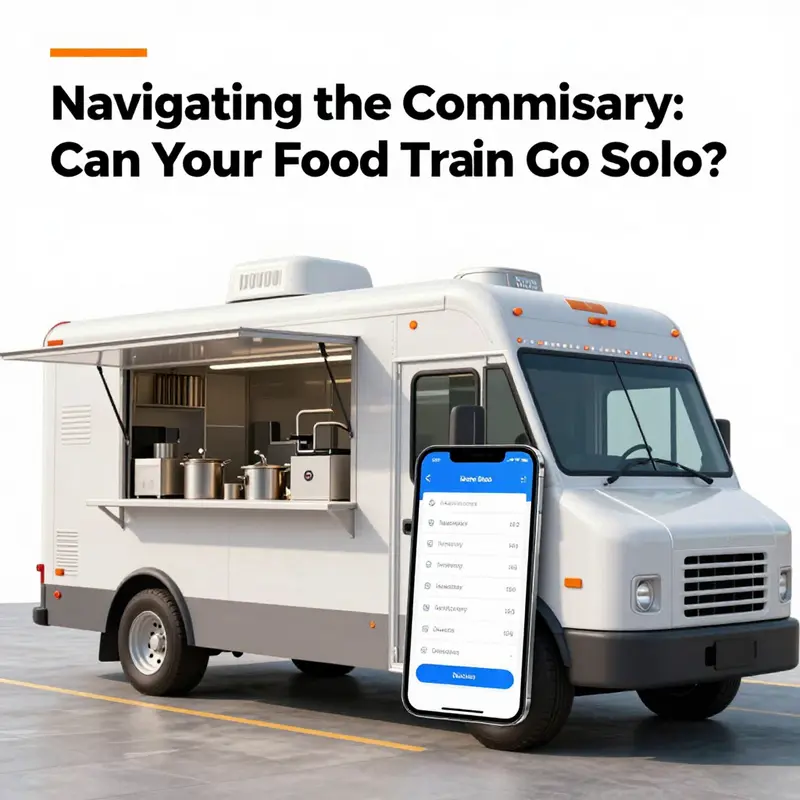
The future of food truck operations is not simply about speed and flavor; it is about rethinking the base of operations itself. When a mobile kitchen becomes its own commissary, the line between vehicle and facility blurs. Operators who want this model must reconcile the thrill of independence with the discipline of health codes, storage design, and ongoing maintenance. The most striking signal from recent research is that the mobile food space is leaning into systems that can be scaled, audited, and reported in real time. In practical terms, a truck that functions as a commissary must, at minimum, house a reliable refrigeration plan, waste management, clean-in-place or clean-in-situ sanitation, and secure storage that prevents cross-contamination. It also needs a workflow that allows for the same rigor the health department expects in a brick-and-mortar kitchen, even in the field. The payoff is not only cost savings but also greater control over menu timing, ingredient quality, and the ability to respond to fluctuating foot traffic at events, markets, and urban corridors.
Digital platforms have become the backbone of this shift. A truck that can manage orders, track inventory, and signal refills without always returning to a separate facility reduces downtime and unlocks flexibility. Social media is no longer a branding channel but a live operations tool, broadcasting location shifts, queue dynamics, and even real-time stock levels to a loyal following. The 2026 analysis cited in the literature underscores how these platforms directly correlate with financial stability. When an operator communicates precisely where a truck will be and what it can offer, the crowd distribution becomes part of the supply chain. Online ordering, curbside pickup, and push notifications support a self-sufficient model by turning the vehicle into both kitchen and storefront. Yet the same digital tools create new expectations: customers anticipate consistent quality regardless of site, and regulators expect transparency about where and how food is prepared. A truck that is its own commissary must therefore pair digital discipline with strict on-board sanitation protocols to avoid a mismatch between promise and practice.
Commissaries themselves are evolving into strategic hubs rather than simple back rooms. Even a truck designed to operate as its own commissary benefits from a centralized system for waste disposal, perishable storage, and equipment maintenance. The transformation is less about abandoning external facilities than about adopting a hybrid mindset. Semi-permanent pods in parks, business districts, or event campuses can host several mobile units while still adhering to a shared framework for safety and inspections. For operators choosing the self-contained route, the truck becomes the primary hub, but the commissary concept persists as a governance layer: a central set of standards, documented procedures, and a credible inspection trail that satisfies the locals and the health department. In jurisdictions that allow self-contained trucks, stringent features matter most: robust refrigeration that keeps dairy, meat, and vegetables within safe temperature ranges; sealed, cleanable storage that prevents cross-contact; and physical separation between raw ingredients and ready-to-serve items. The broader lesson is that the physical yardstick of safety shifts from a separate building to a well-checked interior logic of the vehicle. The result is a more resilient business that can ride regulatory scrutiny rather than bending to it.
Mobile kitchen technology is catching up with this new logic. Energy-efficient appliances, modular configurations, and smart monitoring systems allow operators to customize a truck’s footprint for different menus and seating patterns. A well-insulated body paired with high-efficiency induction cooking and compact refrigeration can reduce energy use and heat loads, which in turn lowers maintenance costs and environmental impact. Some operators are experimenting with solar arrays and battery storage to stretch service hours in parks or street fairs without running a generator. The literature notes a gap in long-term sustainability studies, which leaves room for cautious optimism: we can observe rapid adoption without fully understanding the cumulative ecological footprint. Still, the practical benefits are clear. Modular kitchens enable operators to switch between burrito-focused plates one day and plant-based bowls the next, without overhauling the entire vehicle. When the equipment is designed to be cleaned in place and reconfigured in minutes, the day-to-day realities of cleaning and sanitizing align with the high standards required by law. Technology does not replace discipline; it amplifies it, letting a single truck stand up to the demands of multiple events, markets, and neighborhoods without sacrificing safety or speed.
From a business model perspective, the self-contained commissary route makes sense for smaller, simpler menus and for operators who prize quick turnarounds. It limits the fixed costs of rental kitchen space and reduces the friction of permits when the truck is already under the regulatory umbrella of its own kitchen. But it is not a universal solution. Larger menus or more complex cooking processes still benefit from the specialization and scale of a traditional commissary with multiple bays, shared wash stations, and dedicated receiving docks. A prudent path for many operators blends both worlds: establish the truck as a primary kitchen and rely on a licensed facility for tasks that demand more space or specialized equipment, while using digital inventory and scheduling to minimize trips. The critical question is not about a binary choice but about a calibrated workflow that preserves safety, keeps costs predictable, and aligns with event calendars. When a truck can do the bulk of the daily prep and storage on board, it can still access a local kitchen when heavy-lifting tasks—bulk cooling, large-scale washing, or souring and aging processes—would compromise efficiency or safety. The hybrid arrangement also helps with audits, because documentation can show a consistent compliance standard across both on-board and off-site activities. For operators reading these signals, the message is clear: independence is valuable, but it must be tempered by responsibility and local law.
As the industry approaches 2030, the urban landscape will influence whether the self-contained model becomes a widespread norm. City policies, park commissions, and event organizers are increasingly attentive to waste streams, odor control, and traffic patterns. A truck that serves as its own commissary needs infrastructure that supports clean waste management and secure storage, but it also benefits from being easier to site in compact urban niches if it can minimize dependencies on large external facilities. The rise of micro-fulfillment concepts, where temporary kitchens emerge in high-footfall zones, resonates with the appetite for flexibility. Operators may locate their units near transit hubs or within supportive retail corridors, using real-time data to identify where the demand will align with pantry capacity. This approach reduces unnecessary travel, lowers carbon footprints, and tightens control over food safety by ensuring that perishable items never travel long distances before the first cook. In addition, the ability to maintain lifecycles for ingredients—from receipt to prep to service—becomes a competitive edge. The narrative here is not nostalgia for a bygone era of mobile cooking; it is a pragmatic alignment of mobility, safety, and sustainability that points toward a more responsive, resilient, and regulated future.
For operators who want a grounded path forward, the core takeaway is balance: embrace the autonomy of a self-contained kitchen while respecting the boundaries that safety and law set. The model is not a destination but a spectrum of practices that can be tuned to fit a given location, menu, and community norm. To those seeking deeper, practical guidance on how to negotiate these boundaries, see the legal considerations for Latino food truck startups.
External resource: https://www.grandviewresearch.com/industry-analysis/food-trucks-market
Final thoughts
The discussion around food trucks serving as their own commissary is multifaceted and deeply intertwined with local regulations, health standards, and operational realities. While some food trucks can indeed fulfill this role, the feasibility depends heavily on meeting stringent health and safety requirements. As the food truck industry continues to grow and innovate, staying informed about best practices and legal obligations is essential for aspiring food truck owners. Embracing the insights from this examination can empower food truck operators to make informed decisions about their operations, ultimately enhancing their potential for success in a competitive landscape.