
Launching a food truck can be a lucrative venture for those with a passion for culinary arts and the drive to succeed. However, determining how much profit you should realistically aim for requires a deep understanding of various factors that influence earnings in this industry. From the type of cuisine you serve to your location and operational efficiency, each element plays a crucial role in shaping your profit margins. This article breaks down five essential chapters that will guide you through setting profit expectations, developing a pricing strategy, controlling costs, choosing the right location, and maximizing operational efficiency—all tailored to help food truck enthusiasts, car modifiers, and automotive professionals alike.
null
null
Pricing with Precision: Setting Profitable Goals for Your Food Truck
Profit in a food truck isn’t a fixed number; it’s a function of price, cost, volume, and the local appetite for your style of food. Across recent market data and practical case studies (as of 2024–2026), the numbers vary by model and market, but a clear pattern emerges. A basic mobile fast-food truck can reliably reach modest net profits in the low thousands each month, while high-end or specialty trucks with premium positioning often push into the mid to upper thousands. Night markets and event-focused trucks can swing widely with seasonality and event fees. A notable real-case example from 2024 describes an artisanal breakfast burrito and cold brew coffee truck that averaged about $1,200 in daily revenue and roughly $400 in daily operating costs, translating to a monthly net profit in the vicinity of $22,000. This kind of result underscores what many operators already know: strong demand in the right location, paired with careful pricing and disciplined cost control, can yield substantial cash flow. The overarching lesson is that profitability is built through practical, repeatable processes rather than chasing a single extraordinary day. Your own numbers will reflect your location, menu mix, and how efficiently you run the operation.
Pricing strategy for a food truck, then, starts with a realistic sense of your costs and a disciplined approach to value. A core rule of thumb in the industry is to target a food cost percentage of roughly 28% to 35% of the selling price. In other words, for every dollar a customer pays, 28–35 cents should cover the direct cost of ingredients. This framework keeps your margins honest while still allowing room for competitive pricing. To illustrate, if a sandwich requires $1.50 worth of ingredients, pricing it at about $4.29–$5.36 will keep you within the 28–35% band. It’s not a rigid formula, but it does anchor pricing decisions to the actual cost of goods sold and prevents price erosion when costs rise.
Beyond that, a broader profitability target exists: a gross margin in the 60% to 70% range. This is the portion of revenue left after covering the direct costs of goods sold and is then used to absorb all other costs—fuel, permits, equipment maintenance, labor, and marketing. When you think of margins this way, price becomes not just a number on a menu but a lever you pull to sustain cash flow during slower periods and to finance growth during peak times. The math invites a practical discipline: you want enough cushion between what you charge and what your inputs cost, plus enough scale that fixed costs don’t overwhelm volumes. Operators who master this balance often pair food with high-margin add-ons—premium drinks, desserts, or side items—that can be upsold easily and lift the average ticket substantially.
To sharpen pricing decisions, the 3-3-3 rule offers a compact budgeting lens. Allocate roughly 3% of revenue to energy and fuel, 3% to equipment depreciation, and 3% to packaging and supplies. While these are guidelines rather than fixed strictures, they help keep operating costs aligned with revenue and prevent creeping inefficiencies from chipping into profits. The remaining share of revenue is what you allocate to labor, maintenance, marketing, and the profit pool, which means the way you structure your offerings and your staffing levels can dramatically influence whether you hit your target margins.
Locations matter just as much as lettuce and lattes. The most profitable spots tend to be high foot-traffic zones where people are in a hurry and looking for quality, quick meals. Office parks in the late morning, college campuses at lunch, downtown plazas, festivals, and consistent weekday sales in busy business districts are classic examples. Tools like heatmaps and local vendor data can reveal spots with 2,000 or more daily visitors, which aligns with the principle that volume often powers margin recovery when prices are carefully calibrated. When you pair favorable location with a well-priced, high-demand menu, you create a virtuous cycle of repeat traffic and stable cash flow.
Operational efficiency is the other side of the profit coin. If you can shorten the prep and order times, you improve throughput without sacrificing quality, which directly boosts profitability. A compact, well-designed kitchen workflow can push order times below 90 seconds, especially when you stage ingredients for rapid assembly in a streamlined setup. Pair that with thoughtfully designed combo meals—sandwich plus drink plus side, for example—to lift the average ticket by 30% to 50%. Higher ticket sizes don’t just raise revenue; they help spread fixed costs over more units of sale. And of course, the customer experience matters. Clear signage, consistent portioning, and friendly service build trust and can become the differentiator that turns first-time buyers into regulars.
Marketing and retention further shape profit potential. A disciplined social media presence that highlights daily specials, new items, and crisp product photos can drive daily visitation. Digital coupons, such as a “Buy 5, get 1 free” program, have been shown to lift repeat visits by significant margins in industry studies. Loyalty efforts pay off because a returning customer is not only more likely to buy at a higher frequency but often brings new customers through word of mouth. In short, pricing works best when it is married to consistent quality, dependable service, and a clear signal of value to your customers.
So how should you frame your target? If you’re just starting, a practical minimum goal is around $1,500 per month—enough to cover basic operating costs while you learn the ropes and refine your location strategy. A solid target, achievable with smart branding, a favorable site, and steady operations, sits in the $3,000 to $5,000 range. For those who successfully position themselves with premium offerings and multiple revenue streams, $7,000 or more per month is within reach, especially when you add seasonal events or additional routes. The bottom line from many operators is encouraging: with careful planning, most food trucks can achieve monthly net profits between roughly $2,000 and $6,000 after the initial 6–12 months. The emphasis remains on low overhead, high-margin products, and smart location selection.
Pricing strategy for growth is not a one-off calculation but a dynamic process. You’ll want to test different price points, observe how demand shifts, and gather customer feedback to refine your approach. Competitor analysis matters, especially in markets with tight price competition or distinctive regional tastes. The goal is to price while staying within the cost-based margins that sustain your operation and reflect the value you deliver. It’s a balancing act: you must stay competitive in your market while preserving enough cushion to weather cost fluctuations and seasonal slowdowns. Regular reviews—monthly or quarterly—will help you adjust to changing ingredient prices, labor costs, and permit fees. Incorporating structured pricing reviews into your business rhythm reduces the risk of surprise costs eroding profits. For operators who want to deepen their understanding, broader guides on pricing strategies offer useful frameworks and calculations to support ongoing optimization.
As you navigate the legal and operational layers of growth, consult resources such as the legal considerations for Latino food truck startups. This internal reference can help ensure that your pricing and expansion plans align with regulatory requirements, licensing considerations, and compliance requirements that shape profitability over time. legal considerations for Latino food truck startups.
For a wider lens on profitability trends and sector benchmarks, industry reports and associations offer validated data and templates that can inform your plans. As you build toward your first six figures in revenue, remember that your pricing discipline, cost controls, location strategy, and operational efficiency are the core levers that translate menu value into real profit. External resources can provide broader context and validation for your pricing decisions, helping you translate theory into repeatable, scalable practice. External resource: https://www.restaurant.org/research/food-truck-trends-2024
Counting Every Cent: How Cost Control Defines the Profit Potential of a Food Truck
Profit on a food truck is not a lucky break or a single big sale. It is the outcome of disciplined cost control, sharp pricing, and location-savvy operations that stay steady day after day. The profit picture you should aim for rests on a simple, repeatable math: a robust gross margin on every dish, followed by a lean, well-managed set of operating costs that preserve that margin in the face of fluctuations in traffic, labor, and fuel. Industry benchmarks consistently point to a target gross margin on food of roughly 60% to 70%. In practical terms, that means after you pay for the ingredients that go into each plate, you should retain about six to seven dollars of gross profit for every ten dollars of menu revenue. If a dish sells for $10 and the ingredient cost is $3, you’ve earned a $7 gross profit on that sale, a 70% gross margin. But the real challenge lies in what comes after—the messy, variable costs that accumulate across the whole business day, week, and month.
The takeaway is simple: gross margin is the floor, not the ceiling. Once the kitchen fees, packaging, fuel, insurance, vehicle maintenance, permits, staff wages, marketing, and depreciation are tallied, the net profit margin—profit after all expenses—tends to sit in a practical band around 10% to 20% for a sustainably run food truck. That range isn’t a guess; it’s the consequence of a business model that prioritizes cost control without sacrificing speed, consistency, or quality. The math matters because it translates into real dollars you can reinvest in equipment, marketing, or new locations, which in turn fuels more volume and closer adherence to your margins.
A core lever of this system is the food cost percentage, the portion of a selling price that goes toward the raw ingredients. The aim is to keep that percentage manageable, ideally between 25% and 40% of the selling price, with a practical target to keep food costs under 35% of sales. Using the earlier example, a $12 item with $4.50 in ingredient cost yields a gross margin of 62.5%. The wider goal is consistency across the menu, because a handful of low-cost, high-margin items can balance a few higher-cost specialties and still keep the overall margin intact. The pricing discipline that follows is a markup strategy—roughly 2.5 to 3 times the ingredient cost—as a starting point. This isn’t a rigid rule; it’s a framework you adjust for demand, competition, and seasonality. When you price strategically, you allow room for add-ons that carry higher margins, such as beverages or desserts, which can lift the average ticket without eroding customer value.
The path to profitability also hinges on waste management and inventory discipline. Track ingredient costs meticulously, replacing guesswork with data. A few practical habits make a big difference: standardized recipes that yield predictable quantities, daily inventory checks aligned to your prep schedule, and a reorder system that favors high-turnover ingredients with reliable suppliers. The aim is to minimize spoilage and shrinkage, because even small waste percentiles can eat into a fragile margin. The industry’s practical rule of thumb—commonly referred to in cost-control circles as a three-part guardrail—allocates roughly 3% of sales to energy or fuel, 3% to equipment depreciation, and 3% to packaging and supplies. While those percentages won’t cover every contingency, they provide a concrete ceiling you can monitor and adjust as you accumulate real operating data.
Beyond the math, location is a potent multiplier of profitability. The search for the right spots is less about glamour and more about steady, high-volume orders. Office parks at lunch, college campuses, downtown plazas, and seasonal festivals can deliver predictable traffic if you couple them with a consistent schedule, reliable service, and a clearly identifiable brand. In practice, the efficiency of your process matters just as much as where you stand. A streamlined kitchen layout that brings order to the workflow can push order fulfillment times well below a ninety-second target, reducing labor costs per unit and increasing throughput. When you can serve more customers quickly without sacrificing quality, you widen your margin of error on price and cost fluctuations.
Menu design is another frontline where profitability is won or lost. The idea of a tempting, well-structured combo—sandwich plus drink plus side—demonstrates how you can raise the average order value by thirty to fifty percent. This approach works hand in hand with a disciplined training regimen for staff: quick-sell techniques that steer guests toward higher-margin add-ons and upsell opportunities without appearing pushy. The loyalty thread also matters. A simple, well-timed digital incentive program—such as a periodic punch-card style reward or a short-term offer—can dramatically boost repeat visits. Data from recent industry studies shows that retention can rise substantially when customers perceive clear value and effortless redemption. The right balance of pricing, promotions, and experiences encourages a cycle of repeat business that compounds monthly revenue and strengthens margins.
So how should you translate all of this into a realistic target for your own truck? Start with a minimum that keeps you above a thin cash flow line: roughly $1,500 per month for a small startup operating modest hours. Then set a solid target in the $3,000 to $5,000 per month range—achievable with dependable branding, an excellent location, and consistent day-to-day operations. If you’re aiming high, a monthly figure of $7,000 or more is plausible for operators who position themselves as premium options, maintain multiple sites, or participate in peak-season events. The overarching reality is that, with disciplined cost control, most food trucks can realize net profits in the $2,000 to $6,000 range after the first six to twelve months. That band is not a ceiling; it’s a realistic plateau you can surpass with ongoing optimization: lean overhead, high-margin items, and smart location selection that protects your margins even when demand shifts.
Everything above weaves together a practical business design that treats the vehicle, kitchen, and menu as interdependent parts of a single profitability engine. The vehicle itself is not merely a conveyance but a capital asset that affects depreciation, financing, fuel economy, and maintenance costs. The choice between a step van and a cargo van is more than a style decision; it changes your upfront investment, your operating costs, and how you plan your capacity for peak hours. For a deeper treatment of that decision, see analyses that compare step vans and cargo vans and explain how these choices ripple through your operating costs and financing. The takeaway is straightforward: the platform you choose shapes your cost structure as much as your menu does, so approach it with the same rigor you apply to recipes. the decision between step vans and cargo vans.
All of this aligns with broader industry benchmarks that researchers and operators rely on. A growing corpus of data emphasizes that disciplined cost management, especially controlling food costs and maintaining lean overhead, remains the most reliable route to sustainable profitability. For a broader, externally sourced perspective on profitability benchmarks and best practices for food trucks, consult the National Restaurant Association’s food truck trends report. It offers verified statistics on profitability, cost structures, and success factors from operators across the country. External resource: https://www.restaurant.org/research/food-truck-trends-2024
The practical upshot is that profit in a food truck is not a leap of faith. It’s a math problem solved by consistent, data-driven discipline. Start with a clear target for food costs, keep a tight rein on waste, and price strategically to keep the gross margin within the 60%–70% band. Then add a 10%–20% net margin by controlling labor costs, vehicles, and overhead, while leveraging high-margin add-ons and traffic-driving locations. These numbers aren’t arbitrary; they reflect real-world patterns observed across successful operations. The path relies on inventory discipline, precise scheduling, and timely marketing. The result is a sustainable lifecycle for the business, not a one-off spike in revenue. When you align price, cost, and performance, every adjustment either preserves margin or unlocks a bit more profitability across the calendar year.
Locating for Profit: Harnessing Location and Demand to Define Your Food Truck’s Bottom Line
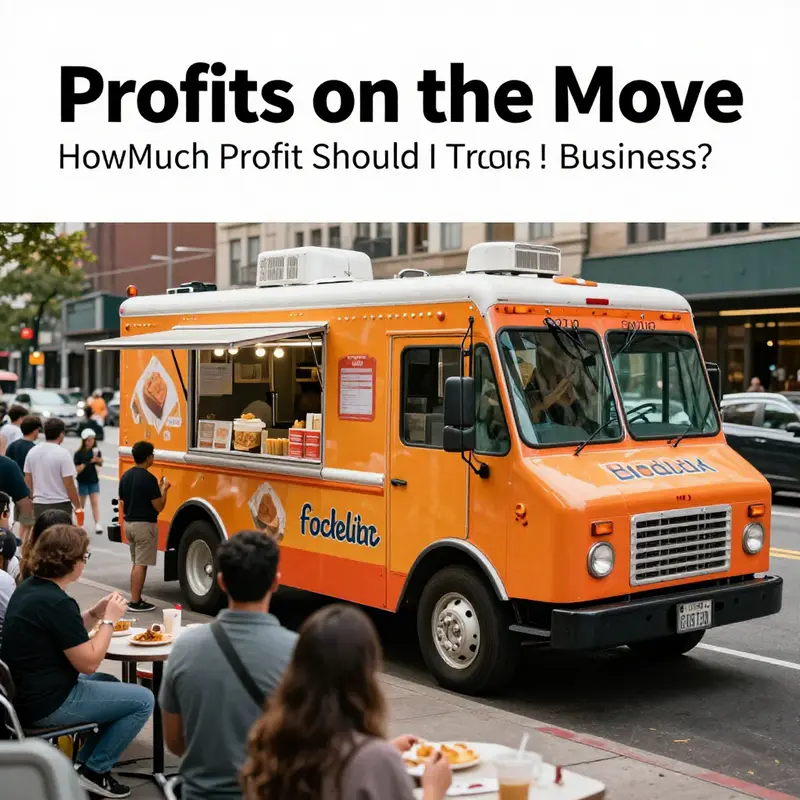
Profit in a food truck business hinges on two factors that work in tandem: where you operate and how many people want what you’re selling. Across 2024–2026, industry data show that location and demand power both price flexibility and turnover. When you pair smart site selection with high-margin offerings, your truck can navigate seasonal swings and still post meaningful returns. The heart of the matter is simple in theory: bring the right product to the right street at the right time, and you bend the margin curve in your favor. In practice, this means thinking beyond a single perfect location. It means designing a menu and a price structure that convert foot traffic into steady revenue, then protecting that revenue with disciplined cost control. Real-world operators have found that a well-chosen home base—an office park, a college campus, a festival circuit, or a downtown plaza—can become a reliable engine for both volume and margin. And when demand spikes, it’s not just luck. It’s a mix of timing, efficiency, and a menu engineered for quick, repeatable service that keeps customers returning week after week.
Profit margins by product category illuminate the path. If you want to maximize the odds of steady profitability, you should tilt your menu toward high-margin items. Industry analysis points to profit-driven items such as specialty sandwiches, grilled skewers, fresh smoothies, and coffee consistently delivering 55%–65% gross margins. These are the items that carry more price power and behavioral appeal. In contrast, high-volume, lower-cost staples like breakfast burritos or simple snacks typically yield 40%–50% gross margins. Then there are the low-margin but high-turnover items—basic drinks or pre-packaged snacks—at roughly 30%–35%. This breakdown isn’t a call to abandon humble staples; instead it’s a reminder to design a balance. A well-located truck serving a mix of premium items, perhaps a gourmet burger or a cold-pressed juice lineup, can maintain an average gross margin near 55%. That level is notably higher than many traditional restaurants, which often hover in the 30%–40% range. The aim is to turn a strong margin on your core items into daily profit, while using higher turnover on more affordable items to drive traffic, then upsell on high-margin add-ons like drinks and desserts.
To connect this with the reality of everyday operations, consider how location translates into revenue. Prime locations—office districts during the lunch window, university or hospital campuses during peak class changes or visiting hours, and busy downtown plazas during the workday—are where demand and pricing power converge. The guidance from market research is clear: spots with 2,000 or more daily foot traffic are often worth the daily effort to secure. The story of demand isn’t merely theoretical. A study of urban food truck activity showed that trucks in high-demand zones reach markedly higher turnover, frequently more than double what a similar truck earns in lower-traffic areas. The lesson is not only about choosing a place with many people, but choosing a place where the time of day aligns with the meals you offer. Peak hours matter: mornings for quick breakfasts and coffees, midday for fast lunch bites, and post-work hours when people crave snacks or treats after classes or meetings.
The journey from concept to profit also rests on operational discipline. Cost control is the backbone of sustainable earnings. A practical rule of thumb—often called the 3-3-3 rule in small-business guidance—allocates costs to three narrow buckets: energy/fuel, equipment depreciation, and packaging and supplies, each capped at approximately 3% of revenue. This framework helps keep a lid on non-labor costs while you scale. Labor usually takes a meaningful slice of revenue, but a target of 15%–20% of total revenue is a reasonable starting point for lean, high-efficiency kitchens. Keeping fuel and maintenance under 10% demands smart routing and regular preventive maintenance. Inventory management matters, too. An ABC approach—replenish A-items daily, C-items weekly—can trim waste and reduce spoilage by as much as 30%. In today’s digital environment, a robust POS with order tracking and predictive analytics becomes more than a convenience; it becomes a forecasting tool that aligns staffing, stock, and sales forecasting with actual demand.
A related element is customer retention. Loyalty programs and digital marketing aren’t optional extras; they’re core drivers of repeated visits. Simple tactics—daily specials, photo-driven social media campaigns, and small incentives for repeat customers—have shown tangible returns. One credible finding from recent industry studies is that digital coupons and loyalty schemes can lift repeat business by a substantial margin. The combination of a compelling, high-margin core menu with a steady stream of returning customers creates a virtuous cycle: higher frequency of visits supports more predictable sales, which in turn justifies targeted marketing and smarter procurement. In practice, a truck that nails location, price, and efficiency can cultivate a stable, repeat clientele while still waving in new customers with a tempting, curated offering.
So, what should you aim for if you’re building toward profitability? First, establish a minimum threshold that keeps you alive as you experiment and learn. A modest operation can aim for about $1,500 per month in net profit, especially if hours are limited and visibility is still growing. A more ambitious, well-branded truck with a steady stream of high-traffic hours can realistically target $3,000–$5,000 per month, particularly if you maintain a disciplined approach to pricing, costs, and location selection. A high-performance target—$7,000 or more per month—becomes attainable with premium positioning, multiple locations, or a focus on peak seasonal events. The bottom line from multiple market observations is consistent: with careful planning, most food trucks can achieve monthly net profits in the $2,000–$6,000 range after the first six to twelve months. The emphasis remains the same: low overhead, high-margin products, and smart location selection.
To translate these numbers into a coherent business strategy, consider the broader financial picture. If you manage to sustain a daily revenue around $1,200 in a high-demand setting, you’re targeting roughly $36,000 of gross revenue per month before variable costs. Subtract ingredients, fuel, and permits, and a disciplined operator can arrive at a comfortable net figure in the mid-three to four-figure range. The figures aren’t guarantees; they reflect patterns observed across multiple markets and operators who consistently optimize the levers that drive profit. A key feature of those patterns is a focus on premium, high-margin items supported by efficient operations and a cadence of high-turnover during peak hours. When this trio is in balance, a food truck can deliver not only competitive returns but a resilient, scalable model that translates to stronger long-term ROI—commonly in the 25%–40% range for well-run venues.
There is value in hearing the lived experiences of operators to ground these targets in real life. For example, some veteran operators who built repeatable routines around peak timing, strategic menu design, and location selection emphasize the importance of a solid, repeatable core palate that customers come back for. If you want to explore those stories, you can read about Profiles of Veteran Food Truck Owners and see how discipline, focus, and community relations blend into profitability. Profiles of Veteran Food Truck Owners
The final layer connects these insights to the broader market trends. Profitability isn’t a niche outcome; it’s a function of gridlines like a favorable margin on core items, consistent daily revenue targets in high-demand zones, and tight control over overhead. On the margins side, current global research indicates that a well-managed menu in a strategically located truck often sustains gross margins around 50% or higher on core items. Daily revenue targets near $1,200 in solid locations are reachable, and monthly net profits typically land in the $3,000–$8,000 band, depending on scale and overhead. When you pair strong margins with efficient operations, annual ROI can be in the range of 25%–40%. These figures reflect a disciplined approach to price, product mix, and location strategy, backed by industry data and case studies across North America and beyond. In short, your profitability hinges on choosing the right stage and performing consistently on the key levers that drive the bottom line.
External reference for further market dynamics and profitability data includes the broader industry analysis that supports these conclusions: https://www.statista.com/statistics/1489756/food-truck-profit-margins-global/.
Wheels, Whistles, and Wallets: Achieving Efficient Profit on a Food Truck
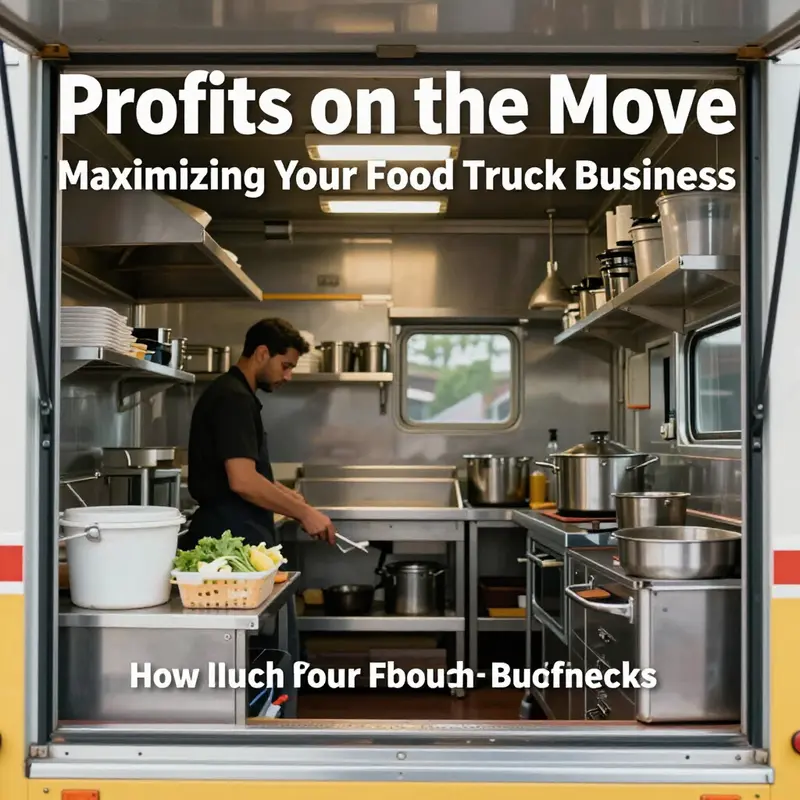
The question of how much profit you should expect from a food truck is rarely about a single magic number. It is about designing a system where every component — from your menu to your vehicle, from your pricing to your preparation workflow — works in harmony to deliver consistent, healthy margins. When you prioritize operational efficiency, you don’t just chase a higher top line; you protect your margins against price volatility, labor shortages, and the unpredictable rhythms of street commerce. The core metric to monitor is the food cost percentage, the share of each dollar in sales that must be allocated to ingredients. Industry guidance typically targets a food cost percentage in the range of 28% to 35%. In practical terms, that means for every dollar you generate in sales, 28 to 35 cents goes to ingredients. With that foundation, your gross margin sits in the broad neighborhood of 65% to 72%, assuming you manage the other cost layers with equal discipline. This is not a passive back-of-the-envelope exercise; it is a discipline of design, measurement, and adjustment that informs every pricing decision, every sourcing choice, and every shift you plan on the calendar.
To translate this into concrete action, start with a clear item-by-item cost structure. You’ll want to tally four elements for each dish or combo: ingredients, packaging, labor directly tied to that dish, and a share of overhead allocated to that dish. Once you know these costs, you can set selling prices using a straightforward formula. If the ingredients for a sample item cost $1.50 and you target a 30% food cost, the selling price would be $1.50 ÷ 0.30 = $5.00. The math fixes your gross margin around 70% for that item, a robust figure provided you keep the other costs in line. The elegance of this approach is that it makes pricing actionable rather than aspirational. You’re not chasing a sexy price; you’re ensuring your price covers costs and maintains a sustainable margin even when prices move up in the supply chain.
Consistency is the second pillar. If you want predictable profits, you must measure and adjust. Track actual ingredient costs against your recipes, monitor waste, and reconcile price changes with your suppliers promptly. This is where the practical guidance from small-business resources can help you stay on track. A simple but powerful framework is the 3-3-3 rule: allocate 3% of revenue to energy and fuel, 3% to equipment depreciation, and 3% to packaging and supplies. Taken together with a disciplined food cost percentage, this rule helps you keep overhead creep from eroding your margins. It’s not a rigid prescription but a reminder to protect the smallest line items that quietly erode profits if left unchecked. When you couple that discipline with a dynamic pricing strategy that rewards frequent buyers and offsets peak demand costs, you create a resilient profitability engine.
The economics of a food truck aren’t static. They ride on the kinds of propositions you offer as well as where and when you operate. The market data from recent years paints a clear picture: your monthly net profit can vary widely by model and strategy. A basic mobile fast-food concept with lower upfront investment and high volume can plausibly land in the $1,500 to $3,500 range per month after costs, while more high-end or specialty offerings can push that higher to $3,000 to $6,000 or more. Specialized lunch trucks serving healthy bowls or plant-based meals tend to perform in the $4,000 to $8,000 neighborhood, and night-market or event-driven trucks may swing from $2,500 up to $7,000 in peak periods. These ranges reflect a blend of pricing power, demand, and the ability to scale through location strategy and seasonality. A notable case cited in recent industry data described a truck focused on artisanal breakfast burritos and cold brew coffee, reporting daily revenue around $1,200 with daily operating costs near $400, yielding a substantial monthly net profit in the high five figures — an outlier that underscores what is possible with premium positioning and repeat traffic, but it is essential to anchor expectations to more typical outcomes for planning purposes.
A practical path to higher, more reliable profits, regardless of your menu, is to fuse the right vehicle and the right route with a lean kitchen design. Vehicle choice matters for both upfront costs and day-to-day efficiency. A well-constructed, purpose-built vehicle can shave minutes off prep and service, reduce fuel consumption, and improve sanitary workflows. For a deeper dive into how vehicle type affects efficiency and cost, consider the practical comparisons in the article on step vans vs cargo vans for food trucks. That discussion helps you think through capacity, maintenance, and customization options that support faster service and lower long-term ownership costs. The linkage is not merely about the type of van; it’s about aligning your mobility with your throughput goals and your customer footprint.
On the ground, the operational sweet spot often appears where menu design, pricing, and workflow intersect. The most actionable move is to favor high-margin, high-velocity items. Combos that bundle a sandwich or bowl with a drink and a side can increase average ticket size by a meaningful margin, sometimes 30% to 50% depending on the mix and the regional price points. This is not just about upselling; it’s about shaping a menu that minimizes waste and maxes out kitchen takt time. When prep is streamlined and orders flow through the service window within tight, repeatable steps, your team can sustain service speeds and keep customers satisfied. A kitchen layout that reduces motion, a prep calendar that aligns with peak hours, and a sourcing plan that minimizes variance in ingredient costs all contribute to steadier margins and less price pressure from suppliers.
The path to profitability also runs through customer retention. Loyal customers who return for daily specials or consistent weekday meals provide a reliable revenue baseline that smooths the monthly earnings curve. Digital marketing can amplify this effect. Daily specials, photo-driven social posts, and light-lift campaigns such as digital coupons or a simple loyalty stamp card can boost repeat visits. The 2024 data referenced in the broader analysis shows that loyalty programs and frequent-buyer incentives can materially lift retention and, by extension, monthly net profit when used consistently. In practice, this means you’re investing in repeat traffic while preserving price integrity and portion control. The result isn’t just a higher profit number on a chart; it’s a more predictable and sustainable business that can weather price shocks and seasonal shifts.
For operators weighing the breadth of opportunity, a useful takeaway is that profitability isn’t a single target. It’s a spectrum shaped by your positioning, your operations, and your daily execution. A basic truck with steady traffic and well-controlled costs can land in the lower end of the profit spectrum, but with disciplined pricing and a strong location strategy, that same truck can rise toward the mid to upper end of the range. A high-end brand with premium ingredients, strong marketing, and multiple dayparts can push into the upper reaches of the spectrum, particularly if it leverages events, festivals, and corporate catering. The data makes this plain: the most durable profit outcomes come from combining lean overhead, high-margin products, and smart location selection. When you align those factors, most food trucks can achieve monthly net profits in a practical band, typically between about $2,000 and $6,000 after the first six to twelve months. The exact number will depend on your market, your discipline, and your willingness to iterate on your pricing, menus, and routes. In short, efficiency drives profit: every minute saved, every dollar saved on waste, every carefully crafted price point, and every well-chosen location compounds into a healthier bottom line.
Finally, the broader context matters. While the chapter above translates to a concrete, day-to-day operating blueprint, it helps to keep an eye on industry-wide trends and evolving benchmarks. For deeper market trends, the National Restaurant Association’s recent food truck trends report offers a comprehensive data backbone on profitability, cost structures, and successful strategies from operators across the country. This external resource serves as a useful anchor for planning and forecasting as you scale your operation. If you are exploring vehicle considerations in more depth, the internal discussion on vehicle choice can be a practical companion to your budgeting and route planning. It reinforces the point that efficiency is not a single feature but a system built from the truck you drive, the menu you serve, and the routines you adopt each service day.
Internal link note: For a focused look at vehicle options that affect throughput and cost, see the discussion on step vans vs cargo vans for food trucks.
External resource: For broader market trends and data, refer to the National Restaurant Association’s Food Truck Trends 2024 report: https://www.restaurant.org/research/food-truck-trends-2024
Final thoughts
Understanding how much profit you should target for your food truck is integral to your business’s success. By following the insights presented in the chapters above, food truck owners can paint a clearer picture of their potential financial outcomes and establish sustainable practices to achieve their goals. Whether focusing on effective pricing strategies, mastering cost control, capitalizing on strategic locations, or streamlining operations, each approach contributes to a strong profit foundation. By being informed and adaptable, your food truck can thrive in a competitive market.