
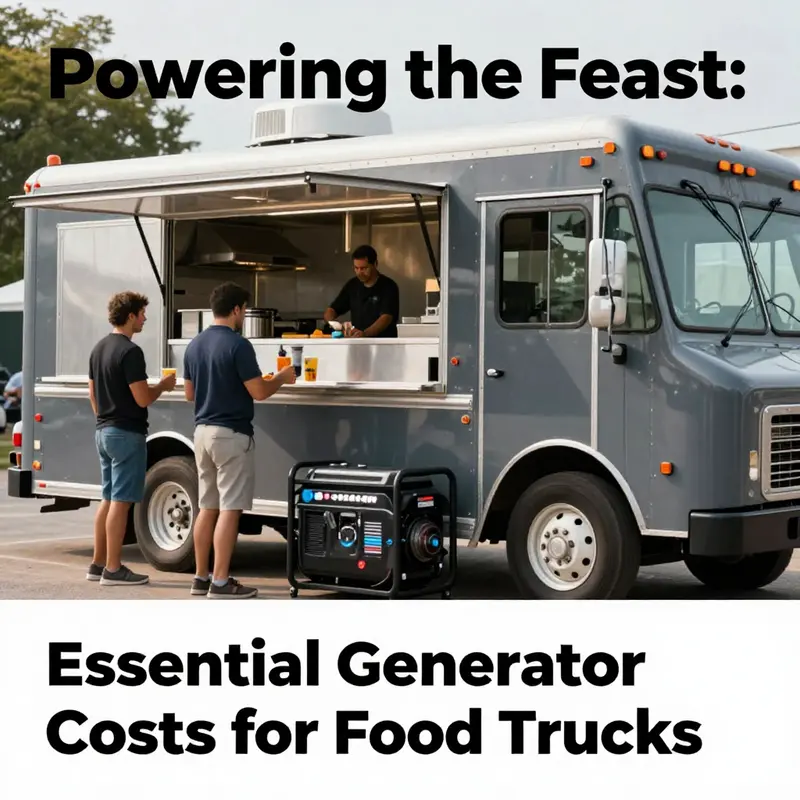
For anyone involved in the food truck industry—whether you’re modifying, tuning, or restoring classic vehicles—the question of generator costs is paramount. A reliable generator not only powers your culinary setup but also elevates the entire food experience you provide. This guide will dissect the financial aspects of acquiring a food truck generator, detailing the variations in pricing, types of generators, essential features, and overall estimates crucial for startups. As we traverse through the cost analysis, generator types, impactful features, and differences between diesel and inverter generators, you’ll glean insights that empower you to make informed decisions tailored to your food truck aspirations.
Breaking Down Generator Costs for Your Food Truck: What Drives Price and Value
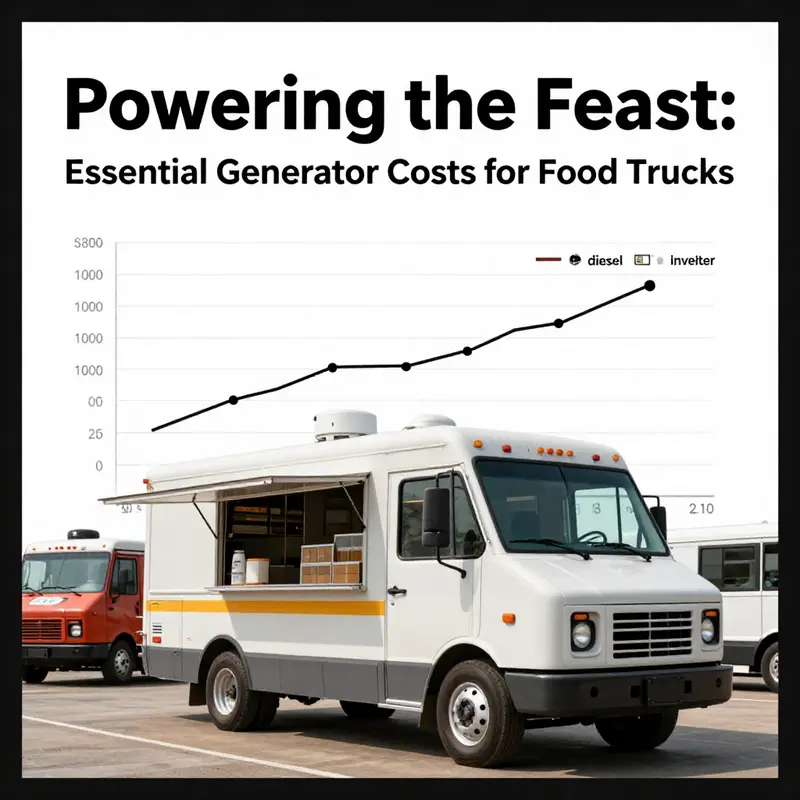
Understanding the true cost of a generator for a food truck goes beyond the sticker price. A generator is a core piece of equipment that keeps lights on, fryers hot, refrigerators at safe temperatures, and point-of-sale systems running. The right choice affects reliability, noise, fuel expenses, and the ability to operate off-grid. This chapter walks through the variables that create wide price ranges, explains how to match capacity to need, and highlights installation and long-term costs that often surprise new operators.
A useful way to start is to picture three common scenarios: a small truck with limited appliances and low power needs, a mid-size truck serving a steady daytime crowd, and a fully equipped mobile kitchen with multiple heavy-load appliances. Each scenario points to a different generator size and, consequently, a different cost band. Entry-level portable generators that can support a few lights, a small fridge, and a single small appliance often begin around one thousand dollars. These models are compact and convenient for supplemental power, but they can struggle when multiple high-wattage devices run at once. At the other end, larger units designed for full kitchens—capable of handling grills, fryers, multiple freezers, and HVAC—fall into a much higher price bracket, often several thousand dollars, with some heavy-duty models reaching the mid five-figure range depending on options.
Capacity is the single biggest driver of price. Generators are rated in watts or kilowatts, and the higher the rating, the more you pay. A 5,000-watt generator may cover basic cooking and refrigeration needs for a modest setup. If your truck uses several high-draw appliances simultaneously, a 10,000-watt or larger generator becomes necessary. Oversizing ensures you never overload the system, but it also increases upfront cost, fuel consumption, and the physical space required. Undersizing, in contrast, risks tripped breakers, damaged equipment, and interrupted service—problems that cost money and customer goodwill.
Fuel type influences both purchase price and operating cost. Diesel generators are generally more durable and better suited for continuous, heavy use. They often cost more up front but can be more fuel-efficient over long shifts. Gasoline models are commonly available and typically cheaper initially, but they may need more frequent maintenance and can be less efficient for extended operation. Propane and dual-fuel models offer flexibility in fuel choice and can be quieter or cleaner-burning, but they may come with additional conversion or accessory costs. When calculating the total cost of ownership, factor in local fuel prices, expected weekly run hours, and maintenance schedules. These ongoing expenses often surpass the initial purchase price within a few years.
Beyond capacity and fuel, the list of optional features quickly affects price. Inverter technology provides clean, stable power that is safe for sensitive electronics like digital payment systems and modern refrigeration controls. Inverter generators are typically more expensive than conventional models but are quieter and more fuel-efficient at variable loads. Features like automatic voltage regulation (AVR) protect equipment from voltage spikes and improve longevity, while remote monitoring systems let operators check status and logs without opening the engine compartment. Sound-dampening designs and weatherproof housings can add considerably to unit cost, but they matter in urban environments where noise and exposure to the elements are regular concerns.
Installation and integration are often underestimated. Custom mounting, vibration isolation, soundproofing enclosures, and ventilation channels can add hundreds to thousands of dollars. Wiring a generator into a truck’s electrical system requires an appropriate transfer switch to prevent backfeeding into the grid and to protect staff. Automated Transfer Switches (ATS) add convenience and safety but raise complexity and cost. If the generator will be permanently mounted inside or under a vehicle, professional installation ensures compliance with ventilation, fuel line routing, and fire safety codes. These installation expenses should be included in any realistic budget for adding a generator to a food truck.
Another cost consideration is portability versus permanence. Portable units are less expensive and can be swapped between vehicles or stored when not in use. Permanently mounted generators offer convenience and often better vibration damping but require a custom fit and secure mounting hardware. Portability affects resale value, too—portable units can be sold or repurposed, while permanently installed systems tie their value to the vehicle.
Wholesale and bulk purchase options are relevant if you operate multiple trucks or are planning to scale. Suppliers sometimes offer lower per-unit prices for bulk orders, but shipping, taxes, and minimum order quantities can influence the final figure. Some manufacturers list single-unit minimums, which benefit smaller operators who need just one set. Compare vendor warranties, service networks, and parts availability when evaluating wholesale deals; a lower upfront price can cost more in downtime if parts or service support are remote.
Noise regulations and neighborhood tolerance are practical constraints with financial implications. Urban events and late-night locations may enforce noise limits. Investing in a quieter model, or soundproofing measures, can be more expensive but prevent fines and complaints. Many cities have permit processes where proof of compliance can be necessary to operate at specific locations. This ties into business planning: where you plan to operate dictates how much you should invest in low-noise equipment.
When calculating a budget, think of the generator as an investment with both direct and indirect returns. A reliable generator enables extended service hours, supports refrigeration that prevents spoilage, and maintains payment systems that capture sales. Conversely, intermittent power or frequent breakdowns can erode revenue fast. Include expected lifespan, routine maintenance costs, and service intervals in your calculations. A slightly more expensive unit with a robust warranty and a broad service network can save money over time by reducing downtime and repair bills.
Financing and leasing options deserve mention. Some vendors offer payment plans that spread the cost over months or years. Leasing can minimize upfront costs and allow upgrades as equipment demands change. However, leasing often results in higher lifetime payments and may impose usage limits. Evaluate offers against expected revenue growth and the potential need to scale capacity in the near future.
Finally, safety and compliance must inform purchase decisions. Proper ventilation, fuel storage, and secure mounting protect staff and customers. Ensure any generator you choose meets local codes and industry standards. If you are unsure about regulations or installation details, consult resources that cover operational and legal requirements for mobile food businesses; for example, consider reviewing guidance on legal and regulatory aspects specific to food truck startups to align your choice with local rules.
A practical summary for budgeting: expect to pay roughly from five hundred to two thousand five hundred dollars for a quality, reliable generator suitable for most small to mid-size food truck setups. For larger, fully equipped mobile kitchens, budget between three thousand and six thousand dollars or more. Add installation, soundproofing, and integration costs when planning the total project budget. For precise pricing, specifications, and supplier options, review detailed supplier listings and product pages that explain capacities, features, and minimum order conditions.
External resource: https://www.alibaba.com/product-detail/Electric-Generator-Food-Truck-999_1601874127493.html
Internal resource: For more on the operational and legal side of starting and running a food truck, see the guide to legal considerations for food truck startups available here: https://latinosfoodtrucks.net/legal-considerations-latino-food-truck-startups/
Powering the Menu: How Generator Types Shape Costs for Food Trucks
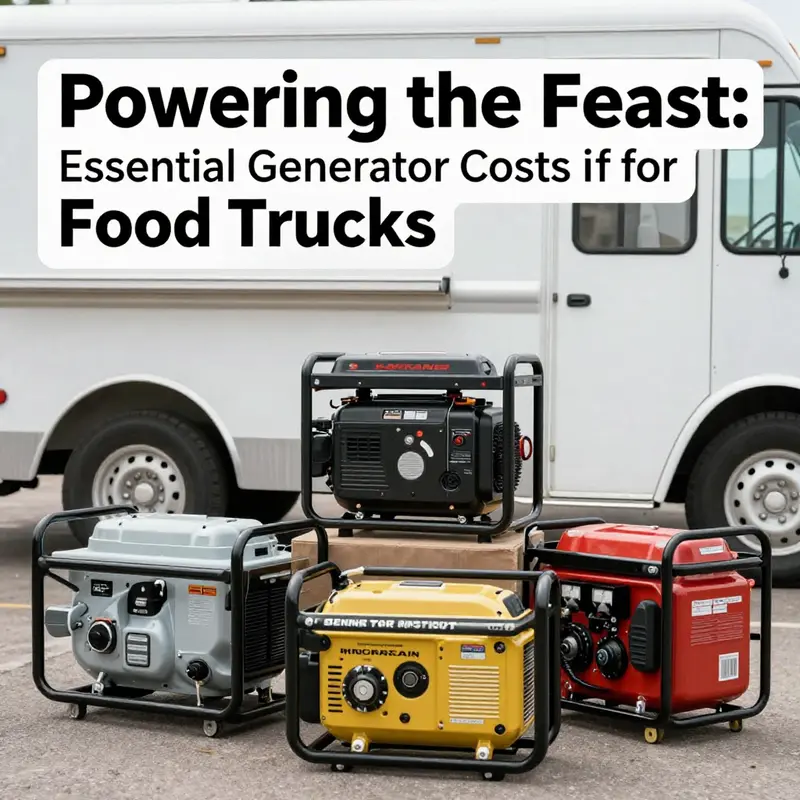
Power is the hidden backbone of a food truck’s operation. Behind the sizzle of the grill and the march of the register tape, a reliable power source keeps refrigeration steady, lights bright, and payment systems humming. The type of generator a truck owner chooses does more than supply watts; it sets up a long-term balance between upfront investment and ongoing operating costs. The decision isn’t purely about Getting Power Now; it’s about forecasting reliability, maintenance, fuel use, and the ability to scale as the menu grows or events become more ambitious. In practice, the choice boils down to three broad families of generators—gasoline, diesel, and inverter systems—each with its own economics and trade-offs. When a truck roams from a parking lot to a pop-up event, from a crowded market to a late-night festival, the generator chosen becomes a kind of financial compass. It guides how much to spend upfront, how much to budget for fuel, and how long the power supply can support the pace of service without interruption. For many operators, the question is not only what fits the current menu but what supports the next stage of growth without turning power into a recurring headache rather than a quiet backbone for the business.
Gasoline-powered units are often the first consideration for new operators who want a low barrier to entry. The upfront price tag tends to be lower than other options, which makes sense for a business still testing its concept and dialing in its daily revenue. On the flip side, gasoline generators tend to burn more fuel per hour and deliver shorter runtimes compared with their diesel counterparts. That translates into higher variable costs when the truck is out in the field for long shifts or multi-day events. The easier access to fuel and the broader availability of gasoline generators can be appealing, but the trade-off is a wheel that keeps turning with every dollar spent on fuel. In practice, this means small trucks with limited electrical loads—think lighting, a small refrigeration unit, a POS system, and basic cooking appliances—may ride comfortably on a gasoline generator, provided the operator monitors run times and fuel prices and plans for longer shifts with interim fueling.
Diesel-powered generators occupy a different end of the spectrum. They typically offer greater fuel efficiency and longer runtimes, which matters when events stretch across full days or when the truck operates in markets with intense demand. The longer intervals between refueling can translate into a lower cost per hour of operation, even though the initial price for a diesel unit consistently runs higher than a comparable gasoline model. Durability and robustness are hallmarks of diesel designs, making them attractive for high-volume environments where the equipment endures repeated startup cycles and heavy loads. The higher upfront cost is often offset over time by the savings from fuel efficiency and reduced maintenance frequency. For operators with demanding menus or larger refrigeration needs, a diesel unit can be the anchor that keeps cold storage stable and powered without the worry of frequent refueling.
Inverter generators present a third path that emphasizes power quality and quiet operation. These units are engineered to provide clean, steady electrical output with lower total harmonic distortion, which protects sensitive equipment such as POS terminals, digital thermometers, and computerized controls. The payoff is clearer when a truck’s workflow hinges on electronics that require stable power to avoid glitches or shutdowns. Inverter systems tend to be more expensive upfront than traditional gasoline or diesel units, but they often deliver lower fuel consumption and reduced maintenance costs over the life of the truck. For operators who rely on precision electronics or run high-efficiency refrigeration with tight temperature tolerances, the quieter operation and steadier power profile of an inverter-driven setup can be worth the premium. The longer view matters here: a quiet, reliable power source can support follow-up services, pop-up events, and partnerships where presentation and uptime are essential.
The economics of these options are not static. A small, portable unit designed for light loads might sit in the range of a few hundred dollars, representing a minimal entry point for a pilot or a single-operator concept. As the electrical demand grows—more burners, larger hot wells, multiple reach-in refrigerators, or a broader array of digital devices—the price bands widen rapidly. A compact, reliable system built to handle a typical food truck’s daily cycle can fall roughly in the mid-hundreds to low-thousands. When 5 kW or 10 kW capacity becomes necessary to cover a full range of appliances simultaneously, the costs can climb into the thousands. Some operators find themselves weighing a multi-kW setup that balances high-load cooking equipment with steady refrigeration against a leaner approach that relies on strategic scheduling and limited simultaneous loads. The spectrum between these points is where daily reality meets budgeting. Many operators discover that a well-chosen generator is less about chasing the lowest sticker price and more about ensuring predictable performance during peak hours, with a reasonable expectation of fuel costs and maintenance over the truck’s life.
Beyond the basic type, the feature set and build quality also move the price needle. Weatherproof housing, mufflers or enclosures designed to tame noise, and built-in safety features such as Automatic Transfer Switches (ATS) to seamlessly switch to utility power or to standby power when needed, can add real value. An ATS, for example, helps avoid power interruption during transitions and reduces the risk of equipment damage during startup or load changes. Units that offer weatherproof enclosures protect the generator from the elements, extending life in the harsh realities of outdoor service. Quiet operation is not mere comfort; it can be a practical advantage at bustling markets where noise limits and neighbor relations matter. For some operators, these enhancements justify a higher upfront investment because they translate into lower maintenance costs, longer life, and fewer service calls—a form of insurance against the unpredictable rhythms of a busy truck route.
There is also a growing interest in renewable options, including solar-powered hybrid systems that can supplement traditional generators. Solar hybrids can reduce reliance on fossil fuels and lower ongoing electricity costs, especially in sunny markets with extended events. The promise of reduced fuel expenditure aligns with a broader sustainability narrative that resonates with many customers. Yet, renewables come with their own sets of constraints: a substantial initial investment, and the need for adequate roof space to mount panels, plus a dependable sun window to deliver meaningful return on investment. For trucks that already struggle with space, the trade-offs become even more acute. In practice, most operators balance a conventional generator for core, dependable power with a supplemental, downsized solar or hybrid system to offset daytime loads or to power ancillary devices like lighting or charging stations during peak hours. This blended approach allows the truck to benefit from modern efficiency trends without compromising the ability to operate in less favorable conditions.
The magnitude of a truck’s electrical demand is a key driver of cost projections. A small to mid-size truck with a straightforward menu—griddled items, cold storage, and essential electronics—can often operate within a 3 kW to 5 kW envelope. For larger menus that feature multiple cooking stations, heavy use of fryers, multiple freezers, and advanced refrigeration, a 5 kW to 10 kW system becomes a practical target. The price bands reflect not only the power output but the expected duty cycle and durability. In practical terms, the total expense is a blend of the generator’s base price, the cost of any premium features (weatherproofing, quiet operation, ATS, and monitoring capabilities), and the long-term costs of fuel and maintenance. It is not unusual for a quality, reliable setup that meets the middle of the spectrum to sit somewhere in the several hundreds to a few thousand dollars range upfront, with annual operating costs that vary with usage patterns, fuel prices, and service needs.
When budgeting, it helps to think about the full lifecycle rather than the initial price alone. A lower upfront cost can become more expensive over time if the unit consumes fuel at a brisk pace, requires frequent maintenance, or fails during a busy service window. Conversely, a higher-quality generator with efficient fuel use and a robust design may yield savings through lower fuel bills and fewer interruptions. The decision should be anchored in the realities of the truck’s daily workflow, the cadence of events, and the level of reliability demanded by the business model. A practical approach often starts with a careful inventory of the truck’s electrical loads: how much refrigeration is necessary, how many cooking stations must run simultaneously, what lights and digital systems are essential, and how frequently the truck will operate in off-grid environments. From there, a conservative estimate of peak demand can guide the selection toward a comfortable margin—just enough to cover the heaviest back-of-house loads without overspending on capacity that sits idle during quieter shifts.
For operators who are balancing a varied menu with high service standards, the purchasing decision is as much about continuity as it is about price. The right generator type and size can enable a smoother service, reduce downtime, and support a consistent customer experience. The right mix of fuel strategy, power quality, and load management can even enable new business opportunities, such as longer events or pop-ups in areas with limited electrical access. In this context, a generator is not merely a machine; it is a strategic asset that underpins both day-to-day operations and long-term growth. Understanding the trade-offs among gasoline, diesel, inverter, and renewables—and recognizing how each aligns with the truck’s menu, event cadence, and target markets—can illuminate a path toward a cost structure that is predictable and scalable.
For readers seeking a deeper comparison of generator performance and cost considerations, a detailed review of options suitable for food trucks in 2025 provides a broader landscape of models, capacities, and efficiency metrics. This resource can help operators translate the abstract costs discussed here into concrete quotes from distributors and retailers. In the context of ongoing education, it also highlights how industry consensus on efficiency and reliability is evolving as technology improves and as event formats evolve. For a quick reference to practical menu planning that correlates with power strategy, consider exploring the resource that examines popular Latino truck offerings and how those menus structure their equipment needs. This piece offers a sense of how a diverse menu can influence power strategy and oven, grill, and refrigeration requirements in real-world settings, illustrating how the numbers translate into everyday operations.
In sum, the economics of generator choice for a food truck hinge on a balance between upfront price, operating costs, and the level of reliability required by the business. Gasoline units may be appealing for entry-level setups but can incur higher fuel costs over time. Diesel units typically deliver better endurance and lower running costs for high-demand operations at the expense of a higher initial price. Inverter generators emphasize power quality and quiet operation, with a premium upfront that can pay for itself through efficiency and fewer maintenance needs. Renewable options add a longer horizon of savings at the cost of a larger upfront investment and space considerations. The optimal path is not a one-size-fits-all verdict but a careful alignment of capacity, load, and business tempo with a realistic view of total cost of ownership. Operational patterns—how many hours per day the truck runs, how many events per week, and how much refrigeration is required at peak load—become the compass by which any price tag is judged. And as the menu expands, so too can the generator’s role, evolving from a simple power supply to a strategic enabler of service quality and profitability.
Internal link reference for readers exploring menu-driven planning: discover how varied menus influence equipment needs in the context of Latino street food offerings by visiting this guide to Top Latino Food Truck Dishes. Top Latino Food Truck Dishes.
External resource for a broader comparison: for a detailed analysis of generator performance and recommended models for food trucks in 2025, see EcoFlow’s comprehensive review. https://www.ecoflow.com/blog/best-generators-for-food-trucks-2025
Unpacking the True Cost of Food Truck Generators: Key Features That Drive Pricing
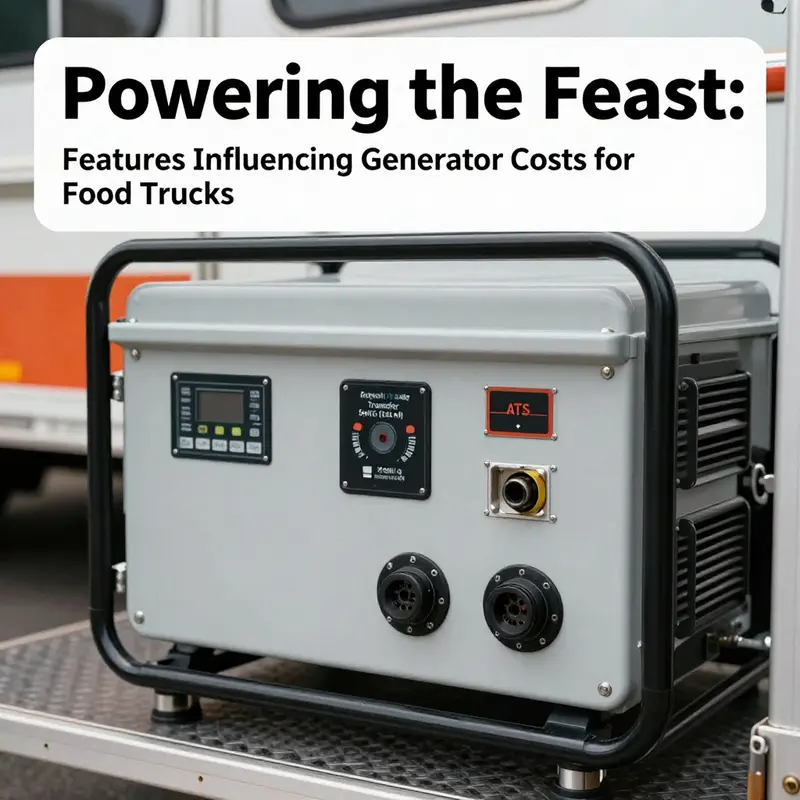
When investing in a generator for a food truck, the initial price tag only tells part of the story. The true cost reflects a variety of features that influence not only how much the unit costs upfront, but also its operational efficiency, longevity, and suitability for demanding mobile culinary environments. Understanding these influencing factors helps food truck owners select a generator that balances budget with performance needs, avoiding costly downtime or inadequate power supply.
At the heart of pricing lies the generator’s power output, typically measured in kilowatts (kW). Food trucks often operate multiple appliances simultaneously — grills, refrigerators, fryers, lighting, and point-of-sale systems all compete for electricity. Smaller generators around 3 kW can be less expensive, but they often fall short for trucks running multiple high-draw devices. Most mobile food businesses require generators between 5 kW and 15 kW to maintain smooth operations without risking power overloads. Larger wattage generators come with more robust engines, heavier frames, and advanced components, which naturally increase the price. Investing in a generator that can handle your peak load is crucial; undersizing can lead to equipment failures or constant trips to reset circuits, which ultimately impacts service quality and revenue.
Fuel type plays a pivotal role in both upfront costs and ongoing expenses. Diesel generators tend to demand a higher purchase price compared to gasoline models due to their heavier build and fuel systems optimized for efficiency. However, they excel in durability and fuel economy, important for food trucks that run long hours daily. Diesel units typically have longer runtimes on a tank and require less frequent refueling, which aids uninterrupted service. Gasoline-powered generators may come cheaper initially but often consume more fuel and necessitate more frequent maintenance. This can translate into higher operational costs over time. For food truck operators prioritizing endurance and fuel savings during busy downtown shifts or long festival days, the higher price of a diesel unit often pays dividends. On the other hand, food trucks with lighter, intermittent power needs might find gasoline models fitting within a more constrained budget.
Noise level is not merely a comfort factor but a practical consideration affecting compliance with city ordinances and customer experience. Generators labeled as “quiet” include specialized enclosures that muffle engine sounds, typically reducing noise to about 65 to 75 decibels. These units use insulating materials like foam lining and vibration-dampening mounts, adding to their manufacturing complexity and cost. For food trucks operating in noise-sensitive environments such as urban street corners or busy markets, a low-noise generator helps maintain a welcoming atmosphere and avoids potential fines. This silencing technology also contributes to the unit’s durability by shielding components from weather and dust, which may reduce maintenance needs in the long run.
Since mobility is the essence of food truck operations, portability features can add to the price but bring significant operational advantages. Generators designed with compact frames, ergonomic handles, wheels, and foldable stands ease transportation and facilitate quick setup in tight parking spaces. Robust mounting options such as shock absorbers and secure tie-down points ensure equipment safety during transit over uneven road surfaces. These enhancements help preserve the unit’s functionality and extend its service life, reducing replacement costs. Though these mobility-specific designs come at a premium compared to stationary generators, they align closely with the demands of a mobile kitchen and reduce day-to-day hassle.
Modern food truck generators often incorporate automation and control technologies, which further influence cost but significantly improve reliability and ease of use. Features like automatic voltage regulation stabilize electrical output, protecting sensitive electronics such as digital payment systems and refrigeration units from power surges or dips. Many models offer self-starting capabilities triggered by power outages, saving time for solo operators and ensuring continuous operation without manual intervention. Remote monitoring through smartphone applications allows operators to check fuel levels, engine status, and maintenance alerts on the go, a valuable asset when managing operations solo or across multiple locations. These high-tech conveniences add to upfront costs but provide peace of mind and may reduce operational disruptions dramatically.
Brand reputation cannot be overlooked when evaluating generator costs. Established manufacturers with proven warranties, extensive service networks, and a track record of reliable performance justify higher prices with greater long-term value. Recognized brands often build their generators with superior materials and engineering standards, resulting in robust machines that withstand the unique demands of mobile food service. The ready availability of replacement parts and skilled technicians minimizes downtime in case of breakdowns, a crucial factor when every minute of lost service equals lost income. While generics may appeal to lower budgets, investing in reputable brands mitigates risk and enhances the overall ownership experience.
Closely tied to brand and build quality is the warranty and after-sales support offered. Generators that come with longer warranties, typically 2–3 years, signal confidence in product reliability and reduce the burden of unexpected repairs. Access to local service centers or roadside assistance programs further elevates the value by ensuring that technical help is timely and convenient. For food truck owners, reliable after-sales support is more cost-effective than the stress and losses incurred waiting for repairs, especially during peak business times. Generators with poor or limited warranty scopes often come cheaper but may result in higher lifetime costs due to unforeseen failures.
Environmental compliance increasingly shapes generator pricing, especially in cities with strict air quality regulations. Units that meet EPA or European Union emissions standards typically incorporate advanced emission control technologies like catalytic converters and cleaner-burning engines. These modifications increase manufacture costs but allow legal operation in regulated areas, avoiding fines or restrictions on where and when food trucks can run. Environmentally compliant generators also align with growing consumer preferences for sustainable business practices, which can improve brand image and customer loyalty. However, non-compliant models, though possibly cheaper, come with legal risks that can hinder business growth or force costly replacements later.
In totality, the price of a food truck generator spans a wide range—typically from around $500 for a small, basic gasoline model to upwards of $6,000 or more for a large, diesel-powered unit equipped with noise reduction, automation, and portable designs. The wide spectrum reflects the complexity of matching a generator’s features to a food truck’s operational demands. Choosing wisely involves balancing immediate financial constraints with future requirements to ensure consistent power, regulatory compliance, and minimal operating hassles.
Ultimately, a thoughtfully selected generator becomes a powerful enabler of success rather than just a capital expense. It sustains critical kitchen appliances, supports a smooth customer experience, and withstands the rigors of mobile use. To explore detailed options and real-time pricing tailored to mobile food businesses, operators can visit trusted manufacturer websites offering comprehensive product lines designed for portability, durability, and quiet operation. For further guidance on owning and managing a food truck, including legal checkpoints and entrepreneurial insights, consider exploring resources focused on legal considerations for Latino food truck startups.
For up-to-date specifications and pricing of commercial generators tailored for mobile food businesses, consult reputable manufacturers’ official product pages dedicated to portable and standby generators.
Balancing Cost and Performance: Choosing Between Inverter and Diesel Generators for Your Food Truck
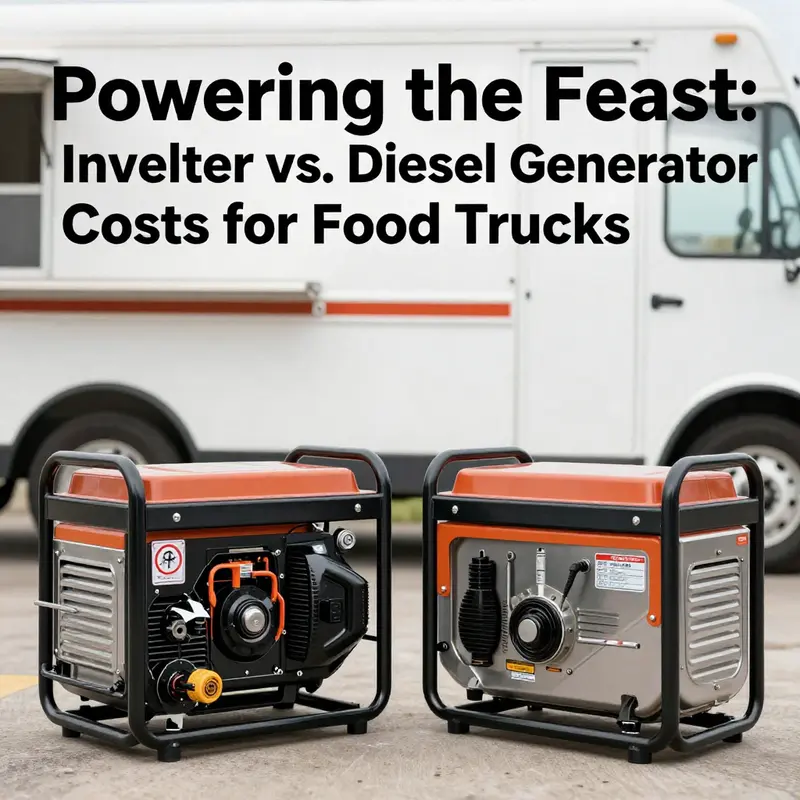
Balancing Cost and Performance: Choosing Between Inverter and Diesel Generators for Your Food Truck
Choosing the right generator for a food truck is about more than the sticker price. A successful decision weighs immediate purchase cost against fuel consumption, maintenance, noise, reliability, and how the unit affects daily operations. The choice typically falls between inverter generators, prized for clean power and quiet operation, and diesel generators, valued for durability and long-run capability. This chapter walks through how those trade-offs translate into real-world costs and helps you see which option aligns with your food truck’s needs and budget.
An inverter generator often has a higher upfront cost than a conventional diesel unit. That extra investment buys more than just a name. It powers sensitive electronics with stable, low-distortion electricity. Many food trucks rely on electronic point-of-sale systems, temperature sensors, LED menu displays, and modern refrigeration controllers. Those devices tolerate less voltage fluctuation. An inverter’s stable output reduces the risk of glitches, data loss, or premature wear in these components. For operators who depend on reliable electronics and a low-noise footprint near customers, the higher initial outlay can pay for itself through fewer equipment failures and smoother customer interactions.
Fuel efficiency is another major factor. Inverter generators typically throttle engine speed to match load. They use less fuel at low and variable loads, which is common in food truck work. Early morning prep, slower mid-day service periods, and intermittent appliance usage all benefit from a unit that scales power on demand. This efficiency lowers ongoing fuel expenses and reduces the frequency of refueling during long events.
Noise is a practical, often underappreciated cost. In urban areas, festivals, and tight vending zones, a quieter generator improves the customer experience and avoids complaints from neighbors or event organizers. Noise can also influence where you are allowed to park and serve. A quieter unit can mean access to higher-value locations and more repeat business, an indirect but real financial consideration.
On the other hand, diesel generators typically offer a lower initial purchase price for the raw wattage delivered. They are built to run hard and run long. If your operation requires sustained power for extended shifts or you often work off-grid, a diesel unit’s larger fuel capacity and robust construction can be decisive. Diesel engines are engineered for heavy loads and continuous operation. For trucks that run high-draw equipment like multiple fryers, large griddles, and sizable walk-in coolers, the durability and steady torque of a diesel unit reduce the risk of power drop-offs under load.
Diesel fuel itself tends to be more economical per hour of operation under full load compared with gasoline engines. This can offset the price difference over time, especially when the truck is in near-constant use. However, diesel maintenance can be costlier. Regular oil changes, filter replacements, and care to prevent fuel-system clogging add to lifetime expenses. Neglect increases downtime risk and can lead to expensive repairs. So while diesel engines can be economical in fuel and reliable for heavy loads, they demand a disciplined maintenance routine.
A clear way to compare the two approaches is to project total cost of ownership over a typical equipment lifespan. Start with purchase price, then add expected annual fuel costs, scheduled maintenance, and the likely cost of repairs. Factor in intangible savings too, such as fewer interruptions and less spoilage for refrigeration, or fewer complaints and lost sales because of noise or power instability. Inverter generators may show better economics for trucks running sensitive electronics and variable loads, while diesel may win where continuous, heavy-duty power is required.
Portability and installation matter as well. Inverter models are often lighter and easier to mount or stow onboard. A compact unit can free up cargo space and simplify setup. Diesel generators that provide more power are typically heavier and may require reinforced mounting and vibration isolation. Installation costs and structural modifications increase the effective price of a diesel solution. If you anticipate frequent removal or transport, the ease of handling an inverter unit can reduce labor time and cost.
Safety and compliance are another cost layer. Many cities and event organizers restrict idling or loud equipment. Some impose rules for emissions or require permits for certain fuel types. A quieter, cleaner-running inverter can help you avoid fines, restricted locations, or extra permit fees. Conversely, some jurisdictions favor diesel for its lower carbon monoxide output under heavy load and existing infrastructure for diesel refueling. Check local regulations early. Legal and permitting considerations can influence both the immediate choice and long-term operating costs—see the chapter on legal considerations for more on regulatory steps and permits.
For food truck operators who face mixed demands, a hybrid approach often makes sense. Pair a smaller inverter generator for low-load tasks and sensitive electronics with a larger diesel unit reserved for high-demand days or events. This combination lets you run quiet and efficient during normal service, then switch to high-capacity power when the menu and crowd require it. The hybrid method increases initial capital expense but improves flexibility and can reduce fuel and maintenance costs by using each unit in its optimal role.
Price ranges in the market reflect these differences. Inverter units aimed at commercial mobile operations commonly start in the lower thousands. They can climb higher with features like larger fuel tanks, built-in wheels, advanced control panels, or quieter enclosures. Diesel units that are portable and built for continuous duty usually sit in a higher bracket, with premium models that add automated transfer switches, advanced remote monitoring, and increased emissions controls occupying the top end of the market.
When comparing models, look past advertised wattage. Understand the starting and running wattage your equipment requires. Refrigeration units may have high startup spikes. Griddles and fryers draw significant continuous power. Account for inefficiencies and consider a margin to avoid overloading your generator. Evaluate control features too; built-in voltage regulation, automatic start/stop, and remote monitoring reduce the risk of downtime and help you detect issues before they incur major costs.
Warranties and dealer support affect total cost of ownership. A longer warranty and a local service network reduce repair risk and speed recovery from failures. If a seller offers maintenance plans or certified technicians, factor that into the purchase decision. Time without power directly reduces revenue and spoils perishable inventory, so fast service can be worth a premium.
Financing and leasing can change the calculus. Leasing smaller inverter units or financing larger diesel systems spreads the initial cost and maintains working capital. Consider lease terms that include maintenance and quick replacement options. For new operators, this preserves cash flow while securing reliable power.
Ultimately, match the generator to how you run the truck. If your operation centers on low-noise service, frequent stops, and sensitive electronics, an inverter generator often represents a smarter long-term investment despite higher up-front cost. If your truck runs extended hours in remote areas with heavy, continuous loads, a diesel generator may be the more economical choice over its lifetime. Many vendors also offer hybrid setups or modular systems that let you scale capacity as your business grows.
For up-to-date product specs and price comparisons, consult manufacturer sites and trusted suppliers. They provide detailed wattage charts, fuel consumption estimates, and maintenance schedules that help refine your decision. One helpful external resource for current diesel portable generator options is: https://www.generac.com/products/diesel-generators/portable-diesel-generators
Power on the Move: Crafting a Reliable Generator Budget for Your Food Truck Launch
Launching a food truck requires careful power planning. Electricity keeps your kitchen running, coolers cold, lights on, and payment systems online. The generator you choose is a long-term investment in reliability, not just a line item. A smart budget balances upfront cost with ongoing fuel and maintenance, leaving headroom for seasonality and event surges. Start with a broad range and narrow by assessing your kitchen layout, menu complexity, and venues. Map your maximum load at peak service, add a safety margin for startup surges, and compare options that fit within your budget, including transfer switches and insulation/weatherproof housings if needed. Consider fuel type: diesel is durable but heavier and noisier; gasoline is lighter but variable fuel costs; propane offers clean burn and long run times. Inverter generators tend to be quieter and deliver stable power ideal for sensitive electronics, but at a higher upfront cost. The decision comes down to your equipment mix and venue requirements. If you operate in noise-restricted zones, or rely on refrigeration and POS systems, the quieter inverter option can be valuable. Additionally, factor in installation costs and an Automatic Transfer Switch (ATS) to switch between grid and generator power automatically. Plan on a budget that includes a maintenance kit or service plan. Industry guidance suggests a practical budget range of roughly $1,500 to $4,000 depending on power needs, build quality, and features. Look for models that match your target wattage and preferred fuel while avoiding overpaying for unused features. The generator is a backbone for uptime and consistent service across markets. For further context, see Grand View Research on the Food Truck Market: https://www.grandviewresearch.com/industry-analysis/food-truck-market
Final thoughts
In navigating the world of food truck generators, understanding costs and selecting the right type for your culinary operation are crucial. The balance between price, efficiency, and reliability will ultimately steer your food truck toward success. By analyzing the varying prices, types, and essential features of generators, you’re now equipped to invest wisely, ensuring your mobile kitchen runs flawlessly and enhances the dining experience you aim to deliver. Stay powered, and let your creativity flourish.