
Food trucks have risen as a culinary phenomenon, enticing palates with diverse flavors served out of compact kitchens on wheels. However, behind the scenes, a rigorous inspection routine ensures that they operate within health and safety standards. Understanding the frequency and intricacies of food truck inspections is vital for entrepreneurs and aficionados alike. In the following chapters, we will dissect the typical inspection frequencies, delve into risk-based scheduling, and explore additional factors that influence inspection timelines, all of which play a crucial role in the day-to-day operations of food trucks.
The Inspection Cadence: How Often Food Trucks Are Regulated and Why It Matters
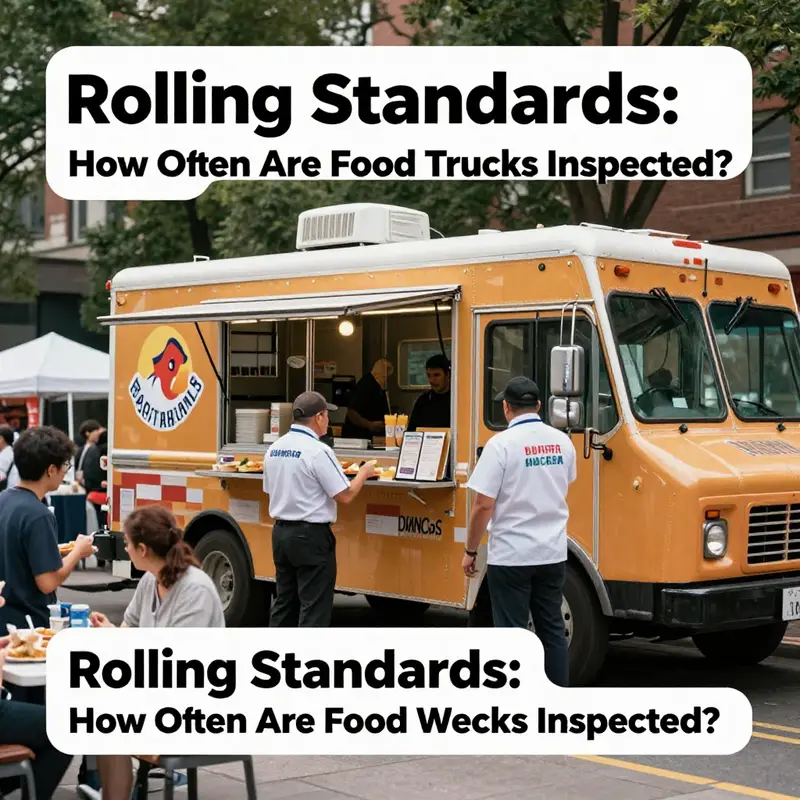
In the world of mobile kitchens, the timetable of oversight matters as much as the timetable of service. The question of how often a food truck is inspected might seem simple at first glance, but it opens into a landscape where jurisdiction, risk management, and public health converge. The cadence is not uniform; it shifts with where a truck operates, how it has performed in the past, and which population it serves. Yet there is a coherent thread running through most regulatory frameworks: a baseline expectation of regular checks intended to keep the food safe, the equipment sound, and the operation clean enough to protect everyone who tastes a dish from a moving cart. For operators, understanding that cadence is not a dry compliance matter but a practical, day‑to‑day discipline that shapes how they train staff, set up processes, and plan for peak seasons. It is as much about consistency and predictability as it is about avoiding violations. The rhythm of inspection, then, becomes part of the operating tempo of a mobile kitchen rather than a distant bureaucratic obligation.
Across many jurisdictions in the United States and around the world, the typical inspection cadence begins with a baseline—often an annual review that accompanies the renewal of a license or permit. In practice, this annual visit is usually the floor plan: a yearly touchstone that ensures the basic requirements are in place, from refrigeration temperatures to proper handwashing facilities, from pest control programs to correct food handling procedures. The annual inspection is not merely a ceremonial rite; it is a formal reaffirmation that the truck’s systems meet the current health code and that the operator remains in responsible, compliant standing. For many operators, that single annual pass becomes a major anchor for internal audits and staff training. If the truck passes with flying colors, the year ahead can proceed with a degree of confidence; if not, the operator knows there is time to close gaps before the next renewal window.
Yet the annual baseline sits atop a spectrum that varies by risk. In districts with high foot traffic, venues that draw large crowds, or locations near schools or hospitals, regulators may tighten the cadence. A high‑volume period creates more potential exposure triggers—both in terms of the likelihood of a problem and in terms of the public’s opportunity to notice it. For some operators, this translates into quarterly inspections during the busy season or biannual visits in the year when risk signals between inspections have accumulated risk points. The logic is straightforward: more eyes on operations where risk is perceived to be elevated, with the aim of catching issues before they escalate. Conversely, trucks with an unblemished history and consistently compliant practices may enjoy a more relaxed schedule, with longer gaps between reviews, because the data suggests a lower probability of noncompliance.
A substantial element of this framework is risk‑based scheduling. Many jurisdictions explicitly rely on a tiered model that classifies trucks by risk level, which is typically driven by past performance, violations, customer feedback, and other observable indicators of control over food safety hazards. Low‑risk trucks—clean records, minimal complaints, solid temperature logs—may be inspected less frequently, sometimes extending to a longer interval, even up to one to two years in some systems. Medium‑risk trucks typically receive annual inspections, as the closer monitoring helps ensure that a minor history of violations does not escalate. High‑risk trucks may face inspections every three to six months, or even more often in certain locales or during periods of heightened scrutiny. This dynamic, which blends historical performance with current risk signals, represents a shift toward data‑driven scheduling: regulators aim to allocate enforcement resources where they are most needed while offering operators a predictable, rule‑governed path to compliance.
The concrete expression of that risk‑based logic can be seen in notable examples. In California, for instance, a risk‑based model assigns a risk level to vendors, with higher‑risk operators facing more frequent scrutiny. The logic is not punitive but protective: more frequent checks are expected to uncover and address systemic weaknesses before they translate into real health consequences. In a dense city context such as New York City, routine inspections are a norm for all mobile food vendors, with repeat offenders subject to increased scrutiny and more frequent follow‑ups. This emphasis on consistent regulatory engagement—rather than episodic, surprise interventions—embeds a culture of ongoing compliance and continuous improvement in the daily life of a mobile kitchen.
The frequency story becomes more nuanced when other factors are taken into account. Local regulations, for one, can create a mosaic of schedules across a region. Some states or provinces maintain fixed schedules—annual, biannual, quarterly—while others rely on complaint‑driven visits and targeted investigations that respond to specific triggers. A single serious violation or a cascade of customer complaints can trigger an unscheduled inspection, reflecting the system’s capacity to react to real‑world signals rather than simply counting calendar pages.
Special events and high‑traffic periods are another practical driver of inspection cadence. Festivals, parades, and peak tourist seasons can transform a routine day into a more complex operational environment. In those times, inspectors may visit with greater frequency or may conduct winged inspections—unannounced checks aimed at verifying that even under pressure, the trucks maintain hygiene standards, food temperatures, and safe handling practices. The underlying aim remains constant: public safety. But the methods adapt to the season, the crowd, and the food‑on‑the‑go realities that define mobile dining.
For operators, translating this regulatory cadence into everyday practice begins with knowing local rules. The guidance offered by inspectors is inherently local, and getting it right means engaging directly with the health department or environmental health unit. The steps are usually straightforward: contact the local health department to understand the precise inspection schedule, licensing requirements, and any special provisions for mobile vendors; consult the city or county website for licensing information and posted standards; and inquire whether there are any unannounced inspection policies—often called flying inspections—in effect, particularly for major events. The practical implication is clear: every operator should think of inspections as a recurring part of the business plan, not a late‑stage check at the end of a license period. A disciplined approach to readiness—temperature logs, daily sanitation checklists, documented staff training, and prompt corrective actions—can transform the calendar of inspections from a potential source of disruption into a predictable routine that reinforces safety.
To illustrate the broader regulatory landscape, consider the cross‑border and cross‑jurisdictional variation. In North America and beyond, governance structures may diverge in how aggressively they pursue regulation or in the degree of transparency they provide to operators. In some jurisdictions, the lines between licensing, health inspections, and event permitting blur, creating a single, integrated process that governs where and when a truck can operate. In others, the framework remains more modular, with separate cycles for licensing, routine health checks, and event‑specific permissions. Regardless of the structure, the core logic remains: ensure consistent application of hygienic standards, verify proper food handling and storage, and confirm that the equipment and facilities meet defined safety thresholds. The result is a system that rewards reliability with smoother operations and better anticipation of what inspectors will require next.
For operators pursuing a coherent approach to compliance, there is value in treating inspections as a continuous improvement loop rather than as isolated hurdles. Regular internal audits, for example, can mirror the expectations of external checks, enabling staff to identify gaps in real time and to implement corrective actions promptly. Continuous staff training is essential; it creates a shared understanding of temperatures, cross‑contamination risks, and cleaning protocols that can be translated into consistent performance in the field. Documentation is a critical tool here: keeping complete records of temperatures, cleaning schedules, pest control measures, supplier approvals, and employee certifications builds an evidentiary trail that demonstrates a culture of safety and responsibility. And when inspections occur, this proactive posture tends to reduce the likelihood of major violations and shortens the time needed to achieve a favorable outcome, because inspectors see a kitchen where safety is baked into daily routines rather than inspected in as an afterthought.
From a strategic perspective, operators who monitor regulatory trends and engage with their local health units often find themselves ahead of the curve. The move toward risk‑based scheduling means that data—customer feedback, violation history, and internal audit results—will influence not just the frequency of inspections but the quality of the interactions with regulators. In practical terms, that translates into more constructive conversations with inspectors about what the business is doing to manage risk, rather than defensive explanations after a problem arises. The best operators build relationships with their health departments, presenting clear, accessible documentation and ready answers to questions about storage temperatures, cross‑contact prevention, and service at events. In turn, regulators benefit from a clearer view of the operation’s day‑to‑day realities, enabling them to tailor oversight to what truly matters for public health while respecting the realities of a mobile, customer‑facing business.
Within this framework, there is also value in understanding the broader standards that shape inspection cadence. For example, in some regions, operators should be aware of health standards as published by the provincial or state health authorities. In Canada, Ontario provides an instructive case where municipalities may enforce stricter schedules or demand additional documentation. Operators there are encouraged to stay informed about local health unit requirements, which may differ from one municipality to another even within the same province. In such environments, continuous education and routine internal checks become not just good practice but essential tools for staying aligned with evolving expectations. For operators who want to explore the regulatory ecosystem beyond their own city, the Ontario Health Standards offer a widely referenced benchmark for hygiene and safe food handling, which can be found in official resources managed by the provincial government. This cross‑jurisdictional awareness helps mobile kitchens navigate the question of cadence with a more informed lens.
Beyond the mechanics of scheduling, the practical takeaway for any operator is that the cadence of inspections is a predictor of daily routines. When a jurisdiction emphasizes frequent checks, it signals that attention to detail must be constant. That translates into pre‑shift briefings, checklists that capture critical control points, and a culture in which every team member understands how to sustain safety in a fast‑paced, public setting. When the cadence is more lenient, it does not mean laxity; it means the focus can be on reinforcing consistent best practices that will still stand up to a thorough review. Either way, tone and discipline matter. A business that treats safety as a core value will perform better under scrutiny and deliver a safer, more reliable experience to customers who come for the flavors and stay for the trust.
For readers seeking a practical touchstone, a recommended approach is to look at how other operators manage compliance in adjacent sectors—catering services, pop‑ups, and event vendors—without assuming that mobile food safety is a different universe altogether. The underlying principles—temperature control, cross‑contamination prevention, reliable sanitation, and clear, accessible documentation—are portable across formats. The cadence, then, becomes less about memorizing a timetable and more about building a resilient operating system: a schedule of checks that aligns with the expected inspection cycles, a framework for continuous improvement, and a collaborative relationship with the local health authorities who supervise public safety on the move. In that sense, the cadence is not just about when an inspector arrives; it is about how a truck proves, every day, that it can serve food that is safe, consistent, and worthy of the trust customers place in it.
For readers who want to explore this topic further and connect it with broader regulatory considerations, see the discussion of legal considerations for Latino food truck startups. That resource offers a lens on how regulatory expectations intersect with business strategy and community impact, underscoring that the cadence of inspections is part of a larger conversation about sustainable, responsible mobile dining. Legal considerations for Latino food truck startups.
In sum, the typical inspection cadence is a practical orchestra conducted at the local level, with conductors who balance baseline requirements against risk signals, events, and the realities of serving food on the street. The “how often” question thus yields a more nuanced answer: while many trucks begin with an annual check, the actual rhythm is tailored to the operation’s history, risk profile, and the regulatory environment. In a world where public health and public appetite intersect, that cadence matters not only to compliance but to the reliability and reputation of mobile cuisine itself. It is the quiet engine behind a temperature‑controlled kitchen on wheels, the steady drumbeat that keeps a busy service window safe, predictable, and trusted by the diners who line up for their next plate from a truck parked under a bright summer sun or a post‑parade street glow. And as the regulatory stage evolves with data, technology, and shared best practices, the cadence is likely to become even more precise, more transparent, and more aligned with the everyday realities of cooking and serving in motion.
External reference for broader context on health standards and regulatory alignment can be found at Ontario’s health standards documentation, which provides insight into how provincial frameworks influence local practice. See Ontario Health Standards for more detail on the kinds of expectations that can shape inspection frequency in closely regulated jurisdictions. https://www.ontario.ca/laws/statute/10/c07.htm
Targeted Oversight: How Risk-Based Schedules Shape Food Truck Inspections
Targeted Oversight: How Risk-Based Schedules Shape Food Truck Inspections
Risk-based scheduling reshapes how health departments inspect food trucks. Rather than relying on a single, calendar-driven cadence, it uses evidence to prioritize where inspections will do the most to protect public health. The shift reflects tighter municipal budgets, larger vendor populations, and richer data streams. For food truck operators this means inspections are less arbitrary and more predictable — but also more responsive to actual risk. Understanding how these systems work helps vendors manage compliance and helps regulators allocate time and staff where they matter most.
At the core of risk-based scheduling is an assessment of hazard and exposure. Hazard relates to the inherent danger posed by the foods and processes a truck uses. Exposure reflects how many people could be affected and how often they encounter the truck. A mobile unit that prepares raw poultry on-site and serves hundreds of customers daily has a different risk profile than a truck selling prepackaged snacks. Risk-based approaches combine these dimensions into a practical schedule. They also layer in historical behavior: inspection outcomes, complaint patterns, and corrective actions influence future frequency.
Risk-based inspections usually start with a clear scoring system. Regulators assign weighted values to key variables. Examples include food type and preparation complexity, temperature control needs, use of raw animal products, staff training levels, sanitation infrastructure on the vehicle, and even the licenses held by suppliers. Each factor adds or subtracts points toward a vendor’s risk rating. The rating then maps to inspection intervals. Low-risk vendors may see visits once every one or two years. Medium-risk vendors often face annual checks. High-risk vendors can expect visits every three to six months, and in severe cases, immediate follow-up or daily checks until hazards are under control.
This model supports proportionality. High-risk trucks receive more attention, reducing the chance of contamination events. Low-risk trucks require fewer routine visits, freeing inspectors to respond to complaints and focus on complex operations. That balance is crucial. Health departments operate with finite staff and budgets. A data-driven schedule improves efficiency while maintaining safety. It also creates incentives. Vendors who improve their scores through better practices can earn reduced inspection frequency, rewarding consistent compliance.
Several practical factors determine how jurisdictions implement risk-based schedules. First, local statutes or ordinances may mandate minimum inspection intervals. Some states or counties require at least one annual inspection for all mobile vendors. Others give health departments discretion to set intervals within a risk-based framework. Where statutes are flexible, regulators design systems to reflect local food habits and contextual hazards. Urban centers with dense crowds and varied menus often adopt stricter policies than small towns with fewer vendors.
Second, inspection frequency responds to complaint volume. A single severe complaint can trigger an immediate inspection. Recurring complaints prompt reclassification to higher risk. Complaint-driven responsiveness ensures that public concerns influence oversight in real time. It also places responsibility on vendors to take customer feedback seriously. For operators, a consistent complaint record is more dangerous than a single minor violation found during a scheduled check.
Third, special events and high-traffic periods change the exposure calculation. Festivals, sporting events, and tourist seasons concentrate people and shorten the time between food preparation and consumption. Health officials often heighten oversight during such periods. They may require pre-event approvals, impose temporary conditions, or conduct additional spot checks. For vendors, planning for these periods means ensuring staff are trained and systems are documented. It also means preparing portable equipment and checklists to maintain temperature control and separation of raw and ready-to-eat foods.
A critical, sometimes underappreciated element is the role of transport and the vehicle itself. Risk-based manuals and guidance emphasize that food transport should not be a vector for contamination. Vehicles shouldn’t ferry non-food items that could harbor contaminants. Cleanliness, dedicated storage, and proper waste handling all affect a truck’s risk score. Vehicles that double as living spaces or carry unrelated cargo can raise red flags. Inspectors evaluate the condition of refrigeration, hot-holding systems, handwashing stations, and the general cleanliness of all food-contact surfaces. A truck’s layout and maintenance practices can elevate risk even when the menu seems low-risk, because cross-contamination and temperature abuse are major drivers of foodborne illness.
Data quality underpins effective risk-based scheduling. Accurate logs of temperature records, supplier invoices, staff training certificates, and inspection histories allow regulators to make informed choices. Many health departments now use digital platforms to track risk scores and inspection schedules. These platforms often include automated alerts when a truck’s score crosses a threshold. For vendors, maintaining digital records simplifies communication and shows good-faith compliance. Where technology investment is limited, simple paper records still add value. The core principle remains the same: better data leads to better prioritization.
Training and calibration of inspection staff also matter. Risk-based systems rely on consistent application of scoring rules. If different inspectors apply the criteria unevenly, vendors receive mixed signals. Regular calibration sessions, clear scoring rubrics, and ongoing professional development reduce variability. Inspectors must also be trained in communication techniques. A constructive inspection can be an educational encounter, not only a compliance check. When inspectors explain risks and solutions, vendors are more likely to adopt safer practices.
Transparency helps the system gain trust. When vendors understand how risk scores are calculated and how inspection intervals are determined, they can take targeted steps to reduce risk. Publishing scoring criteria and offering guidance documents reduces anxiety about unpredictability. Transparent systems also defend against perceptions of unfair targeting. Vendors who see the logic behind inspection frequency know how to improve.
Equity and fairness must inform any risk-based policy. Risk models should avoid penalizing small operators simply because they lack resources for upgrades. A vendor running a single small truck should not be pushed out of business by inspection schedules that assume larger budgets. Instead, regulators can pair risk-based inspection frequency with support programs. These programs might include low-cost training, access to affordable suppliers, or temporary technical assistance to fix critical issues. The goal is to raise baseline safety across the fleet, not to concentrate enforcement on those least able to comply.
Integration with licensing and permitting is another practical consideration. Many jurisdictions tie inspection frequency to permit renewal cycles. Risk-based schedules may therefore influence the timing of renewals and the conditions attached to permits. A vendor with high risk might face shortened permit terms, conditional approvals, or required remediation plans. Clear linkage between inspections, permits, and corrective actions helps both regulators and vendors navigate compliance pathways.
Metrics and evaluation determine whether a risk-based schedule is succeeding. Common performance indicators include the number of high-risk violations found during routine inspections, time from violation to closure, frequency of complaint-driven inspections, and trends in foodborne illness reports traced to mobile vendors. Regular program reviews should examine whether inspection resources are being used efficiently and whether vendor behavior improves over time. Data-driven adjustments ensure the program remains responsive to changing food landscapes and emerging hazards.
From a vendor perspective, understanding risk-based scheduling is a tool for business planning. Operators can proactively reduce their risk scores with targeted practices. Basic steps include rigorous temperature control for chilled and hot foods, clear separation of raw and ready-to-eat items, thorough cleaning and sanitization schedules, up-to-date staff training, and documented supplier traceability. Proper maintenance of refrigeration units and generators matters for mobile operations. Reliable handwashing facilities and approved waste disposal reduce contamination risk. Vendors should also plan for special events where higher scrutiny is likely.
Communication is key. Vendors should establish a direct line to their local health department. Understanding scheduling expectations and the criteria used to evaluate risk helps vendors take corrective action before a future inspection. Many departments provide checklists or pre-inspection self-audits. Participating in workshops or informal advisory groups can also position vendors to influence the practicalities of the inspection program.
Technology can support both sides. Mobile apps for logging temperatures, digital training modules for staff, and cloud-based documentation for supplier invoices create transparent records. Inspectors benefit from real-time access to vendor files and from analytics that highlight trends across districts. However, technology should not be a barrier. Small operators may require support to adopt these tools. Grant programs or community partnerships can bridge the gap.
Case law and local policy show variation. Some states, like California, embrace detailed risk-based frameworks where risk scores explicitly determine inspection intervals. Major cities often combine routine schedules with unannounced “flying inspections” to catch transient problems. New York City, for example, conducts frequent routine inspections and pays special attention to repeat offenders. Other regions maintain simpler models, relying on complaint-driven visits with a baseline annual or biannual check. Understanding the local policy landscape is essential for operators and for public health professionals designing systems.
Finally, risk-based scheduling is not static. Food trends, new cooking techniques, and changes in consumer behavior can shift hazard landscapes. Regulators must update risk models to reflect novel risks, such as complex cross-border supply chains or new ready-to-eat menu items. Continuous improvement, stakeholder input, and data analysis keep schedules aligned with the real world.
For Latino food truck entrepreneurs and other small vendors navigating inspections, practical legal and compliance guidance helps. Resources that explain licensing, health code expectations, and startup requirements can make the difference between a successful operation and repeated regulatory trouble. A useful starting point for legal and compliance considerations is this guide to legal matters for Latino food truck startups: legal considerations for Latino food truck startups.
For regulators and policymakers seeking detailed, practical instructions on designing risk-based programs, international guidance exists. The Food and Agriculture Organization of the United Nations published a comprehensive manual on risk-based food inspection. It outlines how to assess establishment-specific risks, incorporate transport and supply chain integrity, and implement data-driven scheduling. The manual offers tools and examples that can be adapted to local contexts: https://www.fao.org/3/008154/en/008154en.pdf
What Shapes a Food Truck’s Inspection Schedule: Rules, Risk, and Real-World Practice
What Shapes a Food Truck’s Inspection Schedule: Rules, Risk, and Real-World Practice
The rhythm of food truck inspections is not set by a single rule. Instead, it emerges from an interplay of laws, the type of food prepared, where trucks operate, and the operator’s track record. Understanding that interplay clarifies why some trucks face annual check-ins while others see inspectors several times a year. It also helps vendors anticipate visits and design operations that reduce both risk and disruption.
Local public health agencies hold the primary authority. Cities and counties decide whether inspections follow a fixed calendar or a flexible, risk-based model. Fixed schedules offer predictability: a truck may receive an inspection every six or twelve months, often linked to permit renewal. Risk-based schedules are more dynamic. Health departments assign a risk score to each vendor and use that score to prioritize visits. Trucks that prepare time-temperature–sensitive foods, have complex preparation steps, or serve large crowds get closer attention.
The food itself matters. Foods with high moisture, neutral pH, and high protein—think cooked meats, dairy, and seafood—support bacterial growth if mishandled. Trucks that cook, cool, or hold these items are considered higher risk than those serving prepackaged snacks or cold beverages. Inspection schedules reflect that. A truck selling grilled fish or slow-cooked meats faces more frequent scrutiny than one selling whole fruit or pre-bottled drinks.
Location and mobility shape exposure and oversight. A truck parked in a dense downtown district or at a weekend festival serves many customers in a short time. Those settings raise the stakes for public health and prompt more frequent inspections. Mobile vendors in tourist hotspots or near nightlife corridors also face greater scrutiny because of higher foot traffic and the increased chance that a single lapse could affect many people. Conversely, operators in rural or low-traffic areas often see fewer routine inspections, though this varies by jurisdiction.
Compliance history is a powerful determinant. An operation with a clean record and clear corrective actions after minor infractions usually moves toward longer intervals between routine inspections. Repeat violators, or vendors with a history of critical violations, tend to be prioritized for unannounced, frequent checks. Health departments maintain lists that flag businesses requiring closer oversight. Being on a high-priority list can lead to inspections every three to six months, or more often in serious cases.
Seasonal patterns and special events create peaks in inspection activity. During summer and holiday seasons, mobile food vending spikes. Health departments often increase staff or reallocate resources to inspect a higher number of vendors. Large events—festivals, sports matches, or parades—can prompt temporary inspection increases or special permitting requirements. Inspectors may run concentrated inspection campaigns during these times to prevent outbreaks and to enforce consistent standards across many simultaneous vendors.
Beyond these core factors, several practical and procedural elements influence how often inspectors visit. Complaint-driven inspections are common: a single substantiated customer complaint can trigger an immediate visit. Likewise, a reported foodborne illness linked to a vendor will usually lead to a swift, and sometimes repeated, inspection. Some cities also perform “flying inspections,” which are unannounced checks intended to see operations as they normally run. These catch what scheduled inspections can miss, such as rushed handwashing or unsafe holding temperatures during peak service.
Different jurisdictions apply these principles in varied ways. For example, some states mandate annual inspections tied to permit renewals. In others, there is no fixed timetable; regulators rely on risk assessments and complaint responses. Large municipalities often maintain sophisticated risk models and data systems. They track inspection history, violations, and even social media reports to allocate inspection resources. Smaller health departments may stick to a mix of scheduled visits and complaint-based checks because of staffing or budget limits.
What inspectors look for is consistent. Temperature control, cross-contamination prevention, safe cooking and cooling procedures, sanitation, and employee hygiene top the list. Inspectors also verify that required documentation is on board—permit certificates, food handler cards, cleaning logs, and temperature logs. Because mobile food operations have space limits, inspectors pay attention to how equipment is arranged and maintained. A well-organized truck that uses simple, repeatable procedures reduces both the time an inspection takes and the likelihood of violations.
The consequences of inspection outcomes also shape future frequency. Violations fall into tiers. Critical violations—those that immediately risk consumer safety—trigger follow-up inspections and, in some cases, temporary closures. Noncritical or minor infractions typically require corrective action within a set period and may not immediately change the inspection cadence if corrected promptly. But repeated minor violations can add up, moving a vendor into a higher-risk category and increasing inspection frequency.
The rise of data-driven inspection systems is changing the landscape. Many health departments now use electronic records and risk scoring algorithms. These systems analyze historical violations, complaint patterns, and the inherent risk of menu items to prioritize inspections. That means trucks with strong hygiene records and low-risk menus can gradually earn fewer inspections. Conversely, vendors with inconsistent practices find themselves inspected more often. Data systems also make it easier for regulators to coordinate inspections at events, reducing duplication and ensuring consistent enforcement.
For food truck operators, the practical takeaway is straightforward: the better the preventive systems, the less frequent intrusive oversight tends to be. Operators should develop standard operating procedures for food safety, maintain clear temperature logs, and ensure staff training and certification are current. Routine self-inspection mimics what a health inspector does and helps catch small problems before they become violations. Documentation matters: visible, organized records give inspectors confidence and speed up the inspection process.
Regulatory nuance matters too. Some cities, for instance, require additional checks when trucks move between jurisdictions or when they set up at multi-vendor events. Others have inspector partnerships with event organizers to vet vendors before they open. Vendors who move across borders need to be aware of these differences and keep multiple documents if required. Mobile vendors that operate near state lines should confirm the specific rules for each locality where they plan to do business.
A vendor’s relationship with local health officials can also influence inspection outcomes. Cooperative behavior—promptly addressing violations, asking for guidance, and demonstrating corrective steps—often results in better working relationships. Inspectors are more likely to offer practical advice when they see operators engaged in improvement. Conversely, evasive behavior or ignoring required corrections can accelerate enforcement actions and more frequent inspections.
Education and outreach programs reduce inspection burdens over time. Health departments that offer clear guidance, workshops, or on-site technical assistance help vendors meet requirements. In jurisdictions where public health agencies invest in training for mobile food operators, inspection pass rates tend to improve. Those improvements can translate to fewer repeat visits because vendors are more likely to maintain consistent, compliant processes.
Special considerations apply to high-profile or high-volume trucks. Food trucks that attract media attention or build large followings serve many customers quickly. That visibility can mean more regular scrutiny by regulators who want to mitigate the risk of large outbreaks. Additionally, trucks that supply other businesses—such as catering large events or providing food to institutions—may face extra oversight because their client base increases potential exposure.
Practical steps for reducing inspection frequency without compromising safety include streamlining menus to reduce risky processes, investing in reliable refrigeration and monitoring equipment, and standardizing cleaning routines. These steps lower the risk score assigned by inspectors. Operators should document training and corrective actions. Clear, dated records show inspectors that the vendor takes safety seriously and can slow the need for follow-up visits.
Despite best efforts, some inspections will always be unannounced. Preparing for them means designing operations so that safe practices are the default, not the exception. Simple habits—cleaning surfaces after each service period, checking and logging temperatures hourly, and enforcing handwashing—create resilience. When inspectors arrive and see these practices in place, the inspection tends to be quicker and less interruptive.
For people seeking specific local rules, the most reliable source is their local health department or environmental services office. Permit information, inspection schedules, and guidance documents are often posted on city or county websites. Vendors should also ask whether their area performs unannounced inspections and whether event-based inspections apply. For those looking for legal and permitting advice tailored to special communities, resources on legal frameworks can be useful; for example, see guidance on legal considerations for Latino food truck startups: https://latinosfoodtrucks.net/legal-considerations-latino-food-truck-startups/.
Public health agencies offer more detailed technical guidance for mobile food operations. The U.S. Centers for Disease Control and Prevention provides practical resources that explain safe practices and the rationale behind risk-based oversight. Those materials help operators understand what inspectors prioritize and why: https://www.cdc.gov/foodsafety/mobilefood/index.html.
Inspection frequency is not static. It reflects a shifting balance between public health goals and practical enforcement capacity. As data tools improve and outreach programs expand, many jurisdictions are moving toward more targeted inspections. That trend rewards consistently safe operations while ensuring that higher-risk vendors receive the attention they need. For operators, the goal is to build a reliable, auditable system of food safety practices. Doing so reduces the likelihood of critical violations and the need for repeated inspections, while protecting customers and preserving business continuity.
Across jurisdictions, the rule of thumb holds: trucks that serve higher-risk foods, operate in dense or event-heavy locations, or have spotty compliance records will be inspected more often. Vendors who prioritize food safety, document their processes, and maintain constructive relationships with regulators can expect fewer intrusive visits over time. The inspection cadence is therefore a mirror—reflecting risk, behavior, and regulatory priorities. Understanding that mirror helps vendors make deliberate choices that improve safety and reduce the friction of oversight.
Final thoughts
As the food truck industry continues to expand, understanding the intricacies of health inspections becomes ever more essential. Regular inspections, driven by risk assessments and local regulations, not only ensure compliance but also safeguard public health. Food truck operators must remain vigilant and proactive in their hygiene practices. This not only helps maintain a successful business but also enhances the overall trust and satisfaction of their loyal customers.