
Stepping into the bustling world of food trucks in California is an exhilarating journey that blends culinary passion with entrepreneurial ambition. For hobbyist car modifiers, professional tuners, and classic car restoration enthusiasts, the allure of owning a food truck lies not just in serving iconic dishes but also in showcasing your automotive creativity. This guide illuminates the essential steps for buying a food truck in California, beginning with navigating complex regulations, selecting the ideal truck type, securing financing, and ensuring thorough inspections prior to purchase. Here, each chapter is crafted to enhance your understanding and ultimately aid you in making a well-informed decision as you embark on this flavorful adventure.
Navigating California Rules When Buying Your Food Truck: Permits, Safety, and Sanitation Demystified
Key regulatory areas to master
Buying a food truck in California is as much a regulatory project as it is a business investment. Regulations shape the truck you buy, how you outfit it, and where you can operate. They also dictate the permits you must carry at all times and the inspections your vehicle will face. Understanding these rules upfront saves months of delays and thousands in unexpected costs. What follows weaves together the main legal and health standards you will encounter, and explains practical steps to meet them when evaluating, purchasing, and registering a mobile kitchen.
Start with the vehicle itself. The California Department of Motor Vehicles treats a food truck as a commercial vehicle. That categorization affects registration, titling, and what inspections the vehicle must pass before you can legally drive or operate it. The chassis must be roadworthy and free of structural defects. Brake systems, lighting, mirrors, tires, and emergency equipment must meet standard safety requirements. If you plan a conversion, verify the modifications do not compromise the frame or vehicle balance. A professional inspection is essential because visual checks miss many hidden problems.
Emissions rules play a large role in vehicle selection. California enforces some of the strictest emissions standards in the country. Engines and fuel systems need compliance with state air quality rules. Many operators choose cleaner fuel options or modern engines to meet those standards. Electric and hybrid conversions are increasingly viable and can avoid certain regulatory hurdles while reducing operating costs. Still, any alternative fuel setup must be documented for registration and insurance.
Registration requires commercial titling with the DMV. When you register, you must present proof of insurance and clear title. If you buy a used truck, ensure the seller transfers the title properly. If the vehicle has been modified, the DMV may require supplemental documentation or inspections to verify the changes. These processes are routine but strict. Missing paperwork can delay your ability to operate by weeks.
Inside the truck, health and sanitation standards are the next major frontier. Local county health departments enforce the California Health and Safety Code for mobile food facilities. They focus on design, materials, and systems that protect food from contamination. Walls, counters, and storage must be non-porous and easy to clean. Stainless steel surfaces are common because they meet these standards and stand up to repeated cleaning.
Plumbing systems are tightly regulated. You must provide a potable water supply and a waste-water system sized to your operation. Greywater tanks must be emptied only at approved disposal facilities. Many counties require on-file documentation of where you will dump waste. Sinks are not optional—handwashing stations with hot and cold running water are mandatory. These stations must include soap and single-use towels. Inspectors look for proper sink placement, drainage, and water heater capacity.
Cooking and refrigeration equipment must be installed to maintain safe temperatures. Refrigerators must hold perishable foods below 41°F. Cooking appliances need secure mounting and safe ventilation. Hood and exhaust systems often must include fire suppression devices. Propane systems need certified installation and regular leak checks. Electrical systems require GFCI protection and must meet local electrical codes. Your inspector will check for safe routing of pipes and wires, and for accessible shutoffs.
A local mobile food facility permit is required before you sell food. Permit names and processes vary by jurisdiction, but the core requirement is a health inspection and compliance documentation. This permit must generally be displayed on the truck while operating. Counties set inspection schedules and fees. Plan on pre-opening inspections, routine follow-ups, and re-permitting each year.
Zoning and parking rules decide where you can do business. Cities and counties regulate where food trucks can park, which streets they may use, and whether they may operate near certain businesses. Some jurisdictions require a separate vending permit or limit permits issued. Others create designated food truck zones or parks. These rules are often the trickiest to navigate because they change by city block and even by event. For operators who target festivals or private events, event permits or temporary use permits are common. Be prepared to secure approvals for each venue you plan to use.
The broader business side includes licenses and tax permits. You must register your business with the state and obtain a general business license from your city or county. If you sell taxable goods, a seller’s permit from the state tax agency is required. You will also need an Employer Identification Number for taxes and for hiring staff. These registrations create the legal backbone of your operation, and they are typically required before you can receive certain permits.
Insurance protects the business and is often a permit prerequisite. Commercial auto insurance covers the vehicle. General liability insurance covers foodborne illness claims, property damage, and customer injuries. Many event organizers, landlords, and permit offices will ask for proof of coverage before approving a location or permit. Consider policies that specifically cover mobile food operations to reduce coverage gaps.
When buying a used truck, documentation matters as much as hardware. Verify the title, maintenance records, and any previous permits or health inspection reports. If the truck once operated in a different county, its past permits do not automatically transfer. The plumbing or electrical setup might meet one jurisdiction’s standard but not another’s. Ask for written proof of past inspections and any code variances that were granted. If possible, get a letter from the previous jurisdiction clarifying why any variance was issued. That letter can speed approval in your county.
Safety systems tie into both health and vehicle safety. Fire suppression systems above cooking stations are commonly required. Portable fire extinguishers must be accessible and rated for the types of fires your equipment could produce. If you use gas, transition fittings and tanks must be installed by certified technicians. Many counties also require labels on chemical storage, waste handling procedures, and a written plan for handling food recalls or suspected foodborne illness events.
Staffing and food safety training are part of compliance. Managers and food handlers must often complete approved food safety courses. Keep training certificates on file for inspectors. Routine temperature logs, cleaning schedules, and waste disposal records show an organized approach. Inspectors favor well-documented operations. These documents also reduce your risk and raise standards for employees.
Zoning and local politics can affect permit availability. In some cities, permit numbers are capped or distributed through lotteries. Food truck operators sometimes compete for limited slots at prime locations. Networking with local business associations, finding sanctioned food truck parks, or aligning with event coordinators can open opportunities. If you serve a specific community, such as Latino cuisine, review targeted resources and legal guides tailored for that market to understand community-specific dynamics. For guidance on legal considerations in niche markets, consult resources like this article on legal considerations for Latino food truck startups: legal considerations for Latino food truck startups.
Finally, consider professional help. A local business attorney or consultant who knows county health departments and city planning offices can streamline approvals. They can also help draft lease agreements for vending spaces and review insurance requirements for events. An early meeting with your county environmental health division clarifies hidden requirements and can save weeks of rework.
Throughout purchase and preparation, expect inspections. The DMV may inspect vehicle modifications for registration. The county health department will inspect for sanitation, plumbing, and safe food handling. Fire departments sometimes inspect for propane, ventilation, and suppression systems. Build a timeline that includes time for inspections, rework, and re-inspection. Anticipate two to six weeks of work after purchase, depending on modifications and local processing times.
For detailed procedures related to vehicle registration and requirements for vehicles with attachments, review the DMV’s guidance. It explains titling and registration steps for customized vehicles and attachments used in commercial operations: https://www.dmv.ca.gov/portal/vehicles/motor-vehicle-requirements/vehicle-registration-and-title/vehicles-with-attachments/
Understanding and respecting local rules is not a legal hurdle only. It protects your customers and secures your business investment. When you buy a truck with regulations in mind, you avoid costly retrofits and legal complications. Compliance enables smoother launches and steadier operations, and it lets you focus on building your brand and menu instead of navigating preventable setbacks.
null
null
Funding Your California Food Truck: Building a Lender-Ready Plan and Choosing the Right Financing
Preparing a Lender-Ready Pitch for Your Food Truck
Buying a food truck in California starts with convincing a lender that your operation can earn steady revenue. A clear, concise business plan does more than map your goals. It shows lenders how you’ll manage costs, control risk, and repay debt. Begin with the concept—describe your cuisine, service style, and what sets you apart. Follow with a realistic target market section that explains where customers are and why they will buy from you.
Financial projections are the backbone of that plan. Create monthly cash-flow projections for at least the first year. Include startup costs, fixed monthly expenses, and conservative sales estimates. Lenders expect to see how you estimate fuel, insurance, permits, food costs, and wages. Show seasonality effects and how you will handle slow periods. Attach a sample menu with pricing to validate revenue assumptions.
Lenders also want evidence that you understand the local regulatory environment. Zoning, parking rules, and health permits affect where you can operate and how quickly you can generate sales. If your locale has specific restrictions, note them and explain your plans for compliance and mitigation. This reassures lenders that regulatory hurdles won’t derail your cash flow. For a focused discussion about local legal requirements and how they shape startup finances, review legal considerations that affect food truck startups using this resource: legal considerations for Latino food truck startups.
Your personal credit score matters. A higher score increases the chance of approval and lowers interest rates. If your score needs improvement, delay major applications while you address outstanding debts and errors on your report. Demonstrating responsible personal finances signals reliability to small business lenders. If you cannot reach preferred credit levels, consider a co-signer or co-borrower with stronger credit.
Collateral and down payment help secure better terms. Many lenders will expect some equity in the purchase. A typical down payment ranges from 10 to 30 percent depending on loan type and credit quality. The truck itself usually serves as collateral, but lenders may also require additional security or personal guarantees.
Choosing the Right Financing Path
Multiple financing paths exist, each with pros and cons. A government-backed loan can offer lower rates and longer terms. Equipment loans focus on the truck and kitchen gear and typically have faster approval. Shorter-term loans come with higher monthly payments but lower total interest. Lines of credit give flexibility for seasonal expenses and inventory purchases. Leasing can reduce upfront costs, though it often yields higher long-term expenses.
SBA-backed loans are a strong option for many buyers. They often combine favorable interest rates with longer repayment terms. The SBA 7(a) program, in particular, is commonly used for vehicle and equipment purchases. Approval depends on a solid business plan, acceptable credit, and the ability to demonstrate repayment. Expect more paperwork and a longer approval timeline than with some alternative lenders.
Local banks and credit unions can be good partners. They may offer small-business lending products tailored to community entrepreneurs. Building a relationship with a local lender can help when you need future credit. Come prepared with your business plan, financial projections, tax returns, and personal financial statements.
Online lenders often provide speed and convenience. They may approve faster and fund within days. However, expect higher rates and shorter repayment terms. Carefully compare the total cost of capital across lenders rather than focusing on monthly payments alone.
Community development financial institutions and microloan programs can fill gaps. These lenders specialize in helping underserved entrepreneurs. Terms may be reasonable, and some programs include coaching and technical assistance. Explore local programs and nonprofit lenders that support small businesses in California.
Crowdfunding and private capital are alternatives when lenders are hesitant. Crowdfunding can validate demand and raise equity without debt. Private investors or partnerships can supply cash in exchange for ownership or profit share. These routes change your ownership structure and may limit autonomy, so consider them carefully.
Equipment leasing is another route. Leasing reduces initial costs and often includes maintenance packages. At lease-end, you may have options to buy the truck at fair market value. Weigh the long-term expense and restrictions on vehicle modifications.
Assembling Documentation and Managing the Application
Lenders require consistent documentation. Prepare a tidy packet that includes your business plan, financial projections, and personal financial statements. Add copies of your driver’s license, tax returns for the last two years, and bank statements. If available, include past business tax returns. Provide estimates or invoices for the truck and equipment you intend to buy.
Be ready to explain any weak spots. If credit history shows late payments, write a brief explanation and attach evidence of recent corrective actions. If your projections include ambitious sales, show proof of market testing or customer interest. Transparency builds trust and speeds approval.
Understand the terms before you sign. Interest rates, repayment schedules, prepayment penalties, and fees all affect the total cost. Ask for an amortization schedule to see principal and interest over time. Compare offers using the annual percentage rate and total repayment amount. Negotiate terms where possible, especially fees and collateral requirements.
Consider the cash-flow impact of loan payments. A loan with low monthly payments might look appealing but could extend repayment and increase total interest. Conversely, a short-term loan increases monthly burden. Choose a structure that aligns with your sales forecast and seasonal cash flow.
Think ahead to insurance and other ongoing costs. Lenders often require proof of commercial auto insurance and general liability coverage. Include insurance premiums in your monthly expense projections. Also plan for maintenance, repairs, fuel, and food cost inflation.
If a lender declines, ask for feedback. Understanding the reasons lets you address weaknesses and reapply with stronger materials. Small fixes, like securing additional collateral or reducing the loan amount, may change the decision.
Practical Tips to Strengthen Your Financing Position
Start small if needed. Purchase a reliable used truck and upgrade later. A lower initial loan reduces monthly pressure and makes early profitability easier. Maintain detailed records from day one. Accurate bookkeeping improves future refinancing prospects and helps you understand margins.
Control startup costs through careful vendor selection. Shop for used equipment where safe and viable. Negotiate installation and refurbishment costs. A disciplined approach to costs improves your debt coverage ratio.
Build a cash buffer for unexpected expenses. Lenders like to see a reserve or a line of credit for emergencies. This buffer reduces the chance of payment disruptions and keeps operations stable.
Finally, plan to refinance as your business grows. As revenue stabilizes and credit improves, refinancing can lower monthly payments or shorten the loan term. Establish a track record of profitability and timely payments to qualify for better terms.
Securing financing for a California food truck is a process of preparation, research, and relationship-building. A strong plan, clean documentation, and realistic projections will make lenders more comfortable. Explore multiple financing sources, compare total costs, and choose the path that fits your operation and cash flow. When you combine careful planning with prudent borrowing, you increase the odds of launching a profitable mobile kitchen.
For official guidance on one common loan option, see the SBA 7(a) loan program: https://www.sba.gov/funding-programs/loans/sba-7a-loan-program
The Buyer’s Trail: Thorough Inspection, Clear Titles, and a California Food Truck You Can Trust
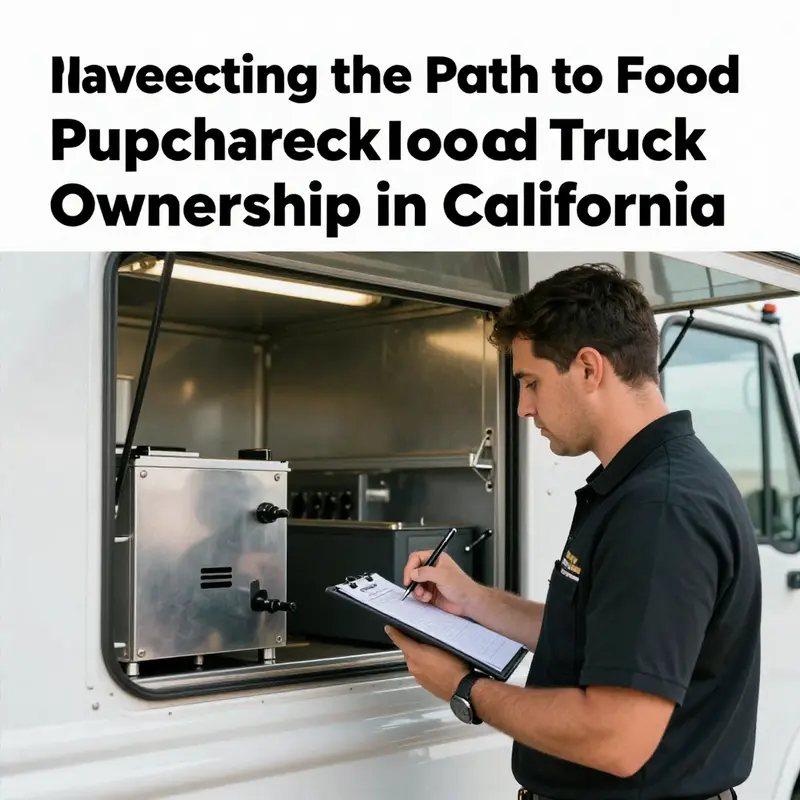
When you set out to buy a food truck in California, you embark on a journey that blends business acumen with mechanical due diligence and regulatory clarity. The road can feel winding, with local ordinances, health department expectations, and the realities of vehicle condition all playing a part. But when you approach the process as a cohesive, stage-by-stage authentication of value, the purchase becomes less a leap of faith and more a strategic acquisition. The chapter that follows stitches together the practical steps of inspecting a vehicle, confirming legal groundwork, and weighing branding and location potential into a seamless narrative of smart investing in a mobile kitchen that will stand up to California’s competitive landscape. The aim is not merely to acquire a truck but to secure an asset that can reliably generate revenue while meeting the stringent standards that govern mobile food operations across the state.
From the outset, the emphasis is on a rigorous, all-encompassing diligence that starts with history and title and extends to the heart of the truck’s current operation—its mechanical health, its compliance with health and safety codes, and the integrity of its permitting framework. You will hear a careful rhythm: verify, assess, confirm, and plan. Each beat informs the next and reduces the risk that a promising-looking purchase unravels under the weight of hidden liabilities or regulatory misalignment. California’s regulatory environment rewards this disciplined approach. A truck with a clean title, verifiable maintenance records, a properly issued health facility permit, and a clear path to local permits is not just a vehicle; it is a compliant, service-ready platform for whatever cuisine you intend to serve, whether that means traditional street favorites, fusion concepts, or a neighborhood-focused culinary identity.
The starting point is history, not just of the truck in the abstract but of its concrete story on the road. A thorough vehicle history check should become as routine as a pre-purchase inspection. While you won’t rely on a single source for the complete truth, you can assemble a mosaic of information: title status, past ownership, reported incidents, mileage patterns, and lien activity. The aim is to confirm a clean title and to uncover no unresolved debts attached to the vehicle. A commercial vehicle carries a different weight than a passenger car; the title and lien status have practical consequences for financing and registration, and they matter at the moment you file for insurance and for DMV registration. If a seller hesitates or provides an opaque history, that is a clear red flag to pause and reassess. In California, where a truck’s commercial use frames many regulatory steps, the importance of a transparent history compounds with every permit you will need to obtain.
Beyond the paperwork, the mechanical core of the truck demands disciplined scrutiny. A professional inspection by a mechanic who understands mobile commercial kitchens can illuminate issues that ordinary eyes miss. The engine and transmission must show even, robust performance under load; brakes should respond predictably; tires must have adequate tread and no signs of uneven wear that could signal alignment problems or axle issues. A mobile unit has unique stresses—repeated startup and shutdown cycles, harsher operating environments near heat, steam, and grease, and the constant demand of running kitchen equipment while on the move. These realities translate into a checklist with a tactile dimension: listening for unusual engine noises, feeling for vibrations, checking electrical and battery systems for stability, and inspecting the plumbing and refrigeration lines for leaks or corrosion. A well-executed mechanical review yields more than a verdict on current condition; it also reveals potential maintenance costs and the timeline for anticipated upkeep, which in turn informs price negotiations.
Inside the truck, the health and safety lens becomes particularly sharp. The kitchen’s interior must be evaluated not as a staged or cosmetic space but as a living system that supports food safety, worker safety, and consistent service. Kitchen equipment—grills, fryers, refrigerators, sinks, water systems, ventilation—needs to meet local health department standards and be installed in a way that mitigates cross-contamination, ensures proper drainage, and maintains cleanable surfaces. When you inspect, you’re not merely judging whether the equipment works; you’re assessing whether the installations align with the state’s expectations for mobile facilities. That means checking secure mounting of heavy appliances, verifying the integrity of water lines, confirming the effectiveness of the exhaust system, and ensuring there is adequate space and workflow for food preparation that reduces risk of accidents. The difference between a functional-looking layout and a truly compliant kitchen can be the passage from a promising truck to a consistently permitted operation.
Permits and licenses represent the governance framework that turns a vehicle into a legally operating kitchen. The truck should arrive with its current permits outlined and transferable, or at minimum accompanied by a clear, actionable path to reissue or reapply for the necessary authorizations. A valid CDPH or local health permit is essential, as is a business license for the city or county where you intend to operate. Insurance remains another non-negotiable element; a comprehensive package that covers general liability and commercial auto risk is indispensable for the street-level realities of a California food truck. The permitting ecosystem can differ from city to city, and even within counties you may encounter variations in required documents and inspection schedules. That is why early conversations with the local health department and the city’s business licensing office are not optional steps but essential parts of the due diligence cadence. Some jurisdictions will require a mobile vendor permit, others might impose zoning constraints on where you may operate, or they may demand additional compliance checks related to signage, waste disposal, or permitted hours. The prudent buyer maps out these regulatory paths before the purchase closes, so there is a practical, executable route to launch rather than a speculative promise that never materializes.
A crucial, often underestimated dimension of the process is branding and market demand associated with the truck. If you are purchasing a unit that has been operating under a particular brand or concept, you should assess its current identity, customer base, and online footprint. The value of a brand in the mobile food market is not purely aesthetic. It translates into repeat customers, predictable demand during peak hours, and the opportunity to leverage a pre-existing following. Even if you intend to rebrand after purchase, an honest appraisal of the present branding and its resonance with local audiences reveals how well the truck has performed in its lane and how much you would gain by aligning it with your own culinary vision. The sales trajectory, frequency of events, and the nature of the truck’s locations are material factors in forecasting profitability. If a truck has demonstrated popular appeal in certain neighborhoods or at recurring events, those signals provide a benchmark for your post-purchase strategy. You’ll want to consider whether the branding aligns with your cuisine, target demographic, and the logistics of your daily route. In many cases, the optimal outcome is a vehicle that already carries a credible brand, paired with your menu concept and a clear path to expansion through additional permits and locations.
Location remains a decisive variable in the value of any food truck. The most meticulously inspected vehicle or the most carefully permitted operation can still struggle if its operating footprint is misaligned with demand. As you examine a prospective purchase, visualize the truck in your chosen markets and assess traffic flow, proximity to events, and the feasibility of securing high-traffic sites. A well-conditioned truck with a solid permit profile and a track record of popular service in strategic locations can be a rare asset in California’s competitive scene. The long-term viability of your venture is shaped by how smoothly the truck can be positioned in peak windows, how effectively it can adapt to seasonal shifts, and how your branding translates to customer loyalty across different neighborhoods. If the vehicle’s history and condition support a plan to capitalize on these opportunities, you have not merely acquired a mode of cooking but a platform for growth.
The narrative of inspection and purchase must also acknowledge the practical realities of financing and risk management. The path from inspection to ownership often intersects with strategies for funding. Small business loans and equipment financing are common routes, and the precise terms hinge on the vehicle’s history, its current condition, and the regulatory clarity surrounding permits. Buyers should be prepared to negotiate with a clear understanding of the truck’s condition and the anticipated costs of bringing it into full compliance. A credible inspection report, coupled with a documented permit status and a realistic maintenance plan, strengthens your negotiating position and reduces the chance of post-purchase friction. In California, where the cost of entry can be considerable, maintaining a disciplined approach to budgeting for initial permits, inspections, and potential retrofits is as important as the price tag on the truck itself.
As you weave together these threads—the vehicle’s history, its mechanical health, its health and safety alignment, its permit status, its branding, and its location strategy—you begin to see how each facet underpins the overall value of the purchase. A truck without a clean history is a risk; a truck with a health code-compliant interior is an opportunity; a truck with robust branding and a proven traffic footprint is a catalyst for revenue. The synthesis of these elements determines not only whether you should buy a particular unit but how you should negotiate the price, how you structure any needed repairs or refurbishments, and how you stage the transition from seller to owner in a way that minimizes downtime and regulatory gaps.
In practical terms, you should approach the purchase as a tightly sequenced process: confirm the history and title, complete a thorough mechanical and interior health check, verify permits and licensing readiness, evaluate branding and market potential, and assess location fit and financing options. Each phase informs the next, allowing you to build a comprehensive picture of the unit’s current value and its future cash-flow potential. It is also worth noting that the journey does not end at closing. The moment you take ownership, you must implement a robust plan for obtaining or transferring all permits, aligning the kitchen layout with your menu concept, and integrating the truck into your local operating strategy. A well-planned transition ensures you hit the ground running, with a compliant, dependable platform that can support consistent service from day one.
To support this holistic approach, consider consulting resources that compare vehicle configurations while you weigh the practical implications of your choice. For a deeper discussion on how different van types influence service efficiency, durability, and local compliance, you can explore a detailed comparison of step vans and cargo vans for food trucks. This comparison is especially relevant in a state where urban environments and street-packed neighborhoods demand flexibility and reliability in a mobile kitchen. The conversation around vehicle type intersects with the inspection and purchase process, shaping decisions about space, workflow, and long-term maintenance. This is not about a single feature but about a system—how the vehicle supports your business model in California’s dynamic markets.
Finally, the regulatory framework that governs mobile food operations in California is not static. As you move from due diligence to deployment, stay attuned to updates from health departments, the state’s regulatory agencies, and your local jurisdiction. Permits can shift, inspections can evolve, and the conditions for operating in high-demand areas can change with new policies and public health considerations. A disciplined buyer remains engaged with these developments, ensuring that their purchase remains aligned with the latest requirements. This ongoing vigilance is the backbone of sustainable success in a sector where taste, reliability, and compliance converge in the daily rhythm of service on California’s streets.
For additional guidance on permitting and operational standards, you can consult the official state resource that outlines the application process and requirements for mobile food vendors. Taking this step reinforces a commitment to legality and safety, which, in turn, supports smoother operations and better long-term outcomes. As you move forward, anchor your decisions in the reality of your local market, the condition of the unit, and the feasibility of turning the purchase into a thriving enterprise—that is the essence of buying a food truck in California. And as you navigate the path from inspection to launch, remember how each piece of due diligence feeds the confidence you need to invest where it counts: in a reliable, compliant mobile kitchen that can meet California’s distinctive tastes and busy schedules.
Internal link note: When weighing the specifics of vehicle configurations and their impact on operations, you may find it helpful to review one comparative resource that discusses step vans versus cargo vans for food trucks. This can provide practical context as you plan space usage, workflow, and maintenance considerations in the months ahead.
External resource: For a broader regulatory reference, consult the California Department of Public Health’s Food Truck Permitting page before finalizing any permit-related steps or scheduling inspections. https://www.dph.ca.gov/Programs/CFH/DivisionofFoodSafety/Pages/FoodTruckPermitting.aspx
Final thoughts
Owning a food truck in California offers an exciting opportunity to merge culinary passion with mechanical expertise. By fully understanding the various regulations, selecting the right truck, securing the necessary financing, and performing exhaustive inspections, you set yourself up for success in this competitive market. With every step taken, you’re not only preparing for a new venture but also creatively expressing your automotive skills through the lens of mobile cuisine. The road ahead may be winding, but with these insights, you are well-equipped to navigate it confidently.