
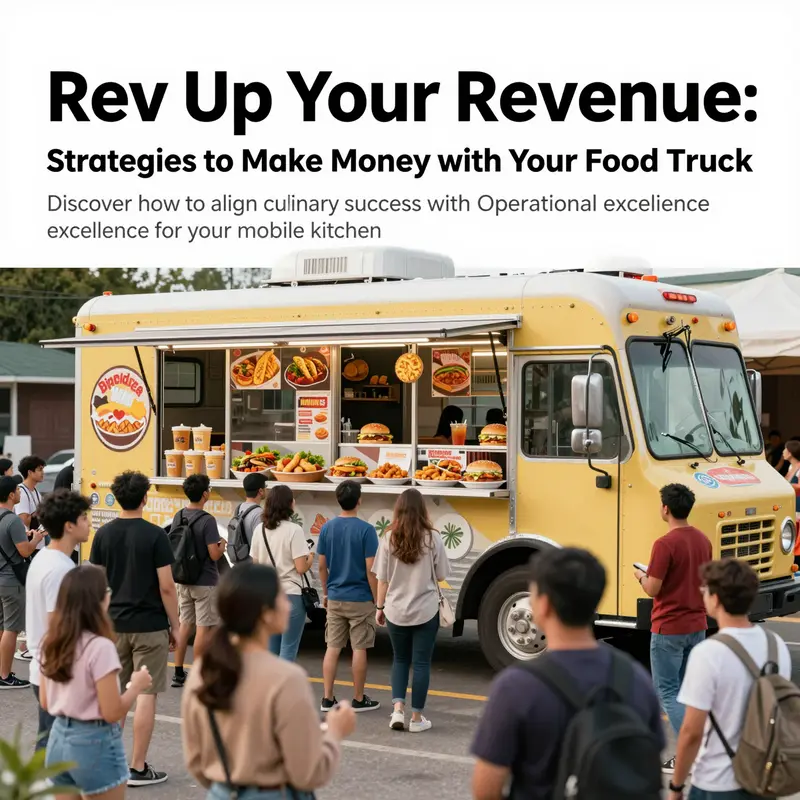
The food truck industry has exploded in popularity, attracting individuals from all walks of life—especially those with a love for cars and customization. For hobbyist car modifiers, professional tuners, and classic car restoration enthusiasts, starting a food truck can be an exhilarating way to blend passion with profit. This article unveils essential strategies for making money with your food truck, emphasizing the importance of a profitable menu, efficient operations, strategic location and marketing, as well as cost control. Each chapter navigates aspects vital to your entrepreneurial journey in the mobile food business while harmonizing with your automotive passion.
Menu Mastery for the Mobile Kitchen: Designing a High-Margin, In-Demand Offering That Drives Cash Flow
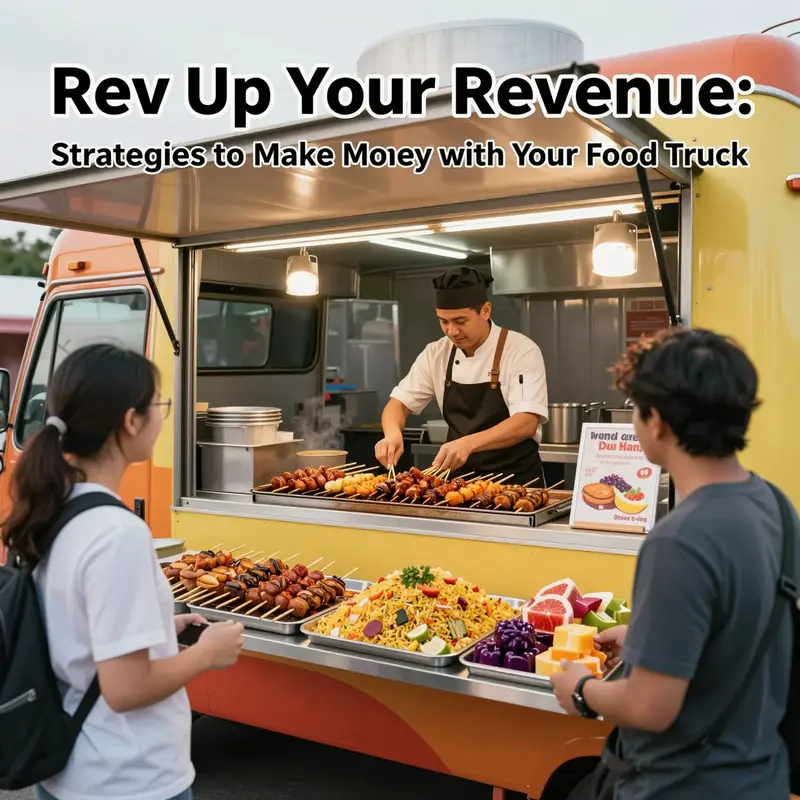
Choosing a profitable and in-demand menu is not a guesswork exercise. It is a disciplined process that blends market signals with kitchen discipline. In a food truck business, your menu becomes the engine that powers every other decision—pricing, prep, equipment, staffing, and location. The core premise is simple: pick items that customers crave, that can be produced quickly and consistently, and that carry a wide margin between low ingredient cost and high selling price. When you knit these elements together, you create a menu that moves, even during slow shifts, and scales as demand grows. The challenge is to translate that premise into a practical, repeatable system you can live with on the street. The research you’ve reviewed points in a clear direction: start with high-demand, high-margin items; optimize every step of production for speed; and build a menu that can flex with seasons, trends, and local preferences without breaking your cash flow. This is not a shop window of flashy dishes, but a thoughtfully curated set of offerings that you can execute flawlessly, day after day, in a mobile kitchen.
To begin, look outward first, then tune inward. Local trends are the first compass. Spend time observing what successful outlets nearby are doing and, more importantly, where they are not meeting a need. What gaps exist in the neighborhood, at the campus, near office clusters, or in weekend markets? The most telling signal is not what’s selling at the moment but what is missing for the people you want to serve. This exploration helps you avoid chasing fleeting fads and instead point you toward items with enduring appeal. When a truck in your area lands on a popular profile—recipes built around a core protein or a shared base that can be varied with different toppings—notice whether customers are returning for a familiar core and a new twist, or for a consistently comforting bite. Those patterns guide you in shaping a menu that can evolve without sacrificing speed or margin.
A practical approach is to emphasize customizable, handheld offerings that can be assembled quickly and reconfigured to meet different tastes. Instead of locking into a long list of single-use items, design a small set of adaptable components: a reliable protein base, a flexible starch or grain, a handful of crisp vegetables, a handful of sauces, and a handful of seasonings. When customers can choose from a few core elements, you simplify procurement, inventory, and prep. You also reduce waste because ingredients are shared across multiple builds. The result is a menu that feels broad and exciting while remaining tightly controlled behind the scenes.
The margin story matters as much as the demand story. Favor ingredients that are affordable, have a long shelf life, and can be used across several dishes. Bulk purchases from local markets, especially in the early hours when prices are lowest, amplify savings. Cross-utilization is your friend: sauce bases, pickled vegetables, and protein marinades that can flavor multiple items, rather than a handful of one-off components. This approach lowers the per-item cost and reduces the complexity of your kitchen. It also makes it easier to train staff and maintain consistency during peak hours. A kitchen that runs like a hydraulic system—where each component feeds into several final products—can push throughput without sacrificing quality.
Seasonality and regional flair are not distractions; they are strategic advantages. A rotating lineup anchored by a few staple items allows you to refresh the menu with seasonal produce and regional flavors. The key is to price seasonal specials in a way that highlights their freshness while preserving margin. If you lean into ingredient seasonality, you create marketing opportunities that are easy to communicate via social channels and in-person promotions. People love novelty, especially when it’s tied to something they can recognize as fresh and local. Yet the novelty must remain anchored to a dependable core so you never drift into a menu that’s hard to execute or easy to waste.
Testing and iteration are essential, not optional. A small pilot phase at local events or markets can reveal what resonates before you commit to large inventory. Run quick surveys or informal conversations after customers try a sample. Use this feedback to refine the menu—dropping underperformers and sharpening winners. Even a subtle shift, such as adjusting the balance of protein-to-vegetable ratios or tweaking a sauce’s acidity, can elevate perceived value and drive repeat purchases. The aim is to learn fast and adapt quickly, not to chase perfection from the outset. The data you gather—what sells, what underperforms, and how customers react to pricing—should inform every revision you make.
Another layer to consider is the value proposition you offer beyond the plate. People buy from food trucks because they value speed, consistency, and a sense that they are part of a shared experience. A menu built around predictable portions and clear labeling helps customers make quick decisions, which accelerates throughput in peak hours. Standardized recipes and precise portions—like using a fixed size scoop for sauces—control costs and ensure that a busy cook can reproduce the same dish every time. This standardization is not rigidity; it is the backbone of reliability, and reliability is a competitive advantage when you’re serving lines of hungry customers.
The concept of fusion or niche concepts can be a powerful differentiator if handled thoughtfully. Small, focused twists that connect to broader culinary traditions can attract curious eaters without overwhelming the kitchen. Think of combining a familiar integral with a new cultural perspective in a way that remains approachable and affordable. The key is to maintain a balance: the idea should feel fresh enough to attract attention, but your execution should be simple enough to scale. A fusion concept that relies on one or two signature components, used across multiple builds, tends to travel well and translates easily to events, pop-ups, and fixed-location routes alike. By rooting your fusion concept in a few adaptable elements, you preserve speed and control while offering a sense of novelty.
An important but sometimes overlooked factor is the social proof you generate around your menu. The most cost-effective way to amplify demand is to showcase how a dish is assembled in real time, with high-quality visuals that emphasize freshness and speed. Social media can turn meal-prep into a performance, letting you narrate the build and invite customers to try new combinations. The visual appeal of a well-executed build, captured in a short clip or a bright photo, creates a density of impressions that translates into foot traffic. A robust online presence is not a substitute for great food, but it is the multiplier that can turn a steady stream of customers into a growing stream of repeat business.
In planning your menu, consider the practical realities of your operation. A compact, well-organized kitchen benefits from limiting the different components you must stock at once. This is where the concept of a core menu with a few seasonal offshoots shines. It keeps inventory lean, reduces waste, and makes it easier to train staff quickly. It also makes it easier to scale. If you decide to expand, you can incrementally add a couple of new elements that align with the core framework rather than overhauling your entire menu. The broader your base components, the more flexible you become in response to changing customer preferences, weather, or event type.
As you sharpen your menu, keep an eye on your pricing logic. High-margin items often involve a simple but robust formula: keep the ingredient cost low relative to the final price, protect against spoilage with careful inventory management, and bundle complementary items—such as a main, a side, and a beverage—at a value-optimized price. This approach encourages higher average tickets while maintaining a pleasant sense of value for customers. A well-priced menu can also support occasional promotions that drive traffic during slower periods. The promotions should be crisp and clearly tied to the core menu so they reinforce your brand rather than confuse guests.
For a practical inspiration, consider how a well-curated menu can be presented to the public. A strong brand, a vivid truck design, and a memorable name help communicate what you offer at a glance. You can reinforce your menu by highlighting a few signature components—each with a simple, repeatable preparation method—and by presenting options that enable customers to customize without complicating the kitchen workflow. A memorable, coherent menu radiates confidence to customers and creates an expectation of speed, quality, and value. When customers trust that, they are more likely to return and to tell friends about their experience.
In the realm of strategic menu selection, there is always value in looking outward to proven catalogs of ideas. A well-curated resource of menu concepts can spark ideas without dictating your path. For those seeking specific menu inspirations and a sense of what has resonated with diners, a curated collection of popular menu items can be a helpful reference. That resource can supplement your internal testing and market research without replacing the hard work of sourcing locally and tuning your own operation. If you want a concise compilation of standout ideas from the broader field, you can explore a well-regarded collection that highlights top-performing, customer-loved dishes in the truck world. It can serve as a springboard rather than a prescription.
Ultimately, your menu is the foundation of your profitability because it anchors every other decision you make. The high-margin, fast-prep items you choose should be easy to source, easy to prep in bulk, and easy to present with clarity. They should promote repeat visits through consistent taste and value, while offering enough variety to keep customers engaged. A menu built on these principles becomes less a fixed list and more a dynamic plan you can adjust with weather, season, location, and community tastes. And as you iterate, you’ll build a reputation for reliability and speed that makes your mobile kitchen a dependable fixture in the local food scene.
To see how other operators translate these ideas into concrete menu choices, explore the practical examples in the resource page focused on menu adaptability and dish construction. For more ideas on menu execution that resonates with local audiences, consider perusing the collection of top Latino food truck dishes, which presents a wide range of approaches and solutions that have proven effective in diverse markets. Top Latino Food Truck Dishes.
Finally, the overarching message remains consistent: your menu should be designed for speed, repeatability, and value. It should leverage affordable, long-lasting ingredients, and be structured so you can train staff quickly and maintain high quality under pressure. It should offer a bit of excitement through seasonal tweaks or tasteful fusion ideas, but never at the cost of reliability. When you balance these elements, your menu does more than satisfy appetite—it becomes a financial engine for your mobile business. The street is both a kitchen and a marketplace, and a menu built with clarity and discipline is what turns the money you chase into money you keep.
External reference: For a broader framework on planning and strategy that supports menu decisions, consider the U.S. Small Business Administration’s Developing Your Business Plan guide, which offers practical context for aligning your menu with a sustainable business model. https://www.sba.gov/business-guide/plan-your-business/develop-your-business-plan
Lean, Fast, Profitable: The Operations Playbook That Lets Your Food Truck Turn Speed Into Margin
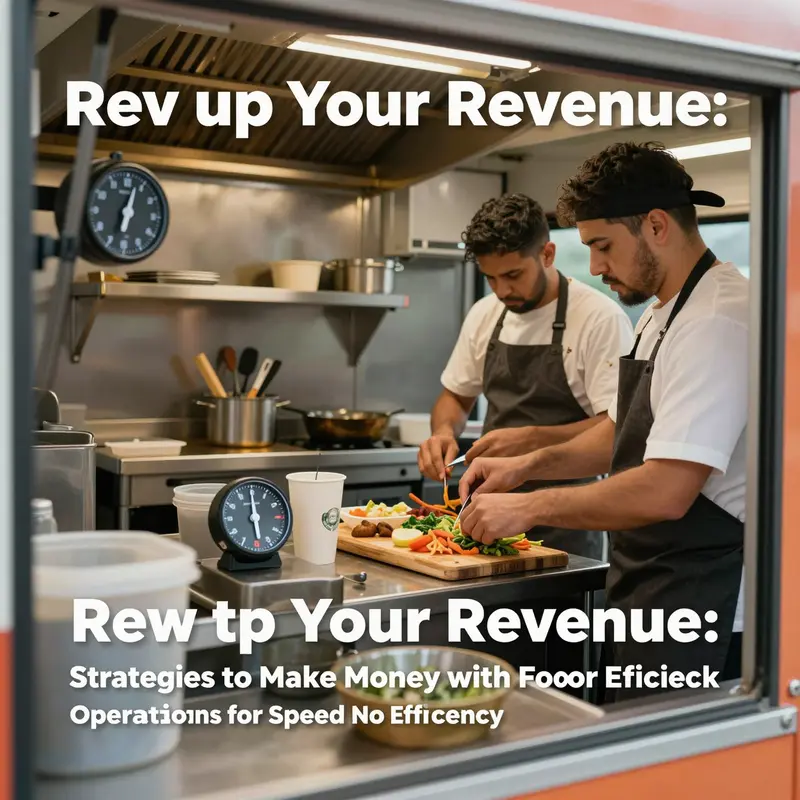
A food truck that wins money is rarely a flashy novelty; it is a finely tuned machine where every inch of counter space, every second of motion, and every bite you serve reinforce a simple truth: speed costs nothing but time, and time saved translates directly into more orders and bigger margins. When you view profitability through the lens of throughput, the operation stops feeling like a mobile kitchen and starts to resemble a precision system. The core gains come from three intertwined forces: a compact, thoughtful kitchen layout that minimizes motion; a menu engineered for speed and predictability; and a tech-driven discipline that keeps inventory, orders, and cash flow in constant harmony. Begin with the kitchen as the stage where every movement is choreographed, then move outward to how you approach the menu, the people, and the location that turn speed into consistent revenue.
First, the kitchen is the anchor of speed. A compact, well-organized layout is not a luxury; it is a prerequisite for meeting the 3-minute service promise that keeps lines moving and customers satisfied. Designers in this space think assembly-line, not improvisation. The goal is to shrink the distance between stations and to place the heaviest, most used equipment within a few steps of each other. A mobile line that looks efficient but requires a customer to wait behind a stack of pantries or a tangle of cords will collapse as soon as demand peaks. The practical moves are simple but powerful: arrange mise en place so every ingredient has a dedicated, clearly labeled place; designate a single finishing area where products are plated, dressed, or finished; and create a defined path for orders that minimizes backtracking. The result is a kitchen that feels almost robotic in its flow, with cooks who can anticipate what comes next rather than react to what just happened. This is not about clever tricks; it is about eliminating friction at the moment of truth.
Equipment choices reinforce this flow. Space-saving, high-performance gear is not a luxury in a mobile kitchen; it is survival gear. A commercial induction setup, for instance, can outperform gas on energy efficiency and heat control, reducing both fuel cost and the risk of delays caused by uneven heating. A compact grill that delivers quick sears without occupying a sprawling footprint can be a game changer during lunch rushes. Efficient refrigeration and cold storage that minimize door openings preserve temperature and cut spoilage, while multi-task appliances—such as a single unit that can braise, steam, or sauté with precise heat control—limit the number of exchanges your staff must perform between stations. Every piece of equipment should earn its place by contributing to speed, consistency, and the ability to handle volume without compromising quality. The aim is that a single cook can push a queue forward while another finishes a batch without looking overwhelmed.
Behind the scenes, the menu is engineered with the same principle of minimal waste and maximum margin. A lean menu reduces decision fatigue for customers and operational complexity for the crew. High-margin, quick-to-prepare items become the backbone of daily profitability, while standardized recipes ensure that every order is identical in weight, texture, and taste. Pre-portioned ingredients and precise portions mean price control can be maintained with little cognitive load from the team. The value of standardization isn’t only in cost control; it also shortens training time and reduces variability during peak periods. A six-ounce scoop for sauces or a fixed gram weight for each protein portion becomes the norm, not an exception. Beyond the core lineup, there is room for seasonal tweaks that can be executed quickly and with minimal risk—items that can be pre-cooked, pre-marinated, or pre-sliced in bulk and finished in a rapid final step. This approach produces higher velocity on the line because cooks aren’t guessing about quantities or facing surprises in the middle of service.
Technology, when combined with discipline, begins to extend the kitchen’s precision into inventory and cash flow. A digital point-of-sale (POS) system that talks to inventory is not a luxury; it is the hand that keeps the entire operation honest. Real-time sales data reveal which items fly off the window and which languish in the cooler, allowing you to align prep with demand rather than chase yesterday’s preferences. Automatic alerts for low-stock items prevent last-minute scrambles that disrupt service, and built-in reorder points help you avoid both waste and stockouts. The dashboard becomes a practical daily coach, showing you when to push a popular item during peak hours, or when a slower item should be paused to conserve labor and ingredients. The integration matters most during city events, rainy days, or campus turnovers when the rhythm of demand shifts quickly. With a cohesive POS-to-inventory loop, you gain a granular eye on waste, enabling you to trim daily loss toward a target well below the 5% benchmark mentioned in practical playbooks. In addition to stock management, the data supports staffing decisions. Real-time sales curves indicate when to bring in extra hands or pull back on labor during slower windows, ensuring that wage costs stay aligned with actual demand.
The human element is the second pillar of speed and efficiency. Training is not about rehearsing a single shift; it is about instilling a service protocol that travels with you from one street corner to another. Fast-paced service protocols emphasize clear communication, precise order handling, and a calm tempo that keeps a queue moving without sacrificing accuracy. A build-to-order approach, supported by technology, can dramatically reduce on-site preparation time. Customers can place orders in advance via a mobile app or kiosk, allowing your kitchen to move from “making to order” to “finishing in anticipation.” This shift requires a culture where team members anticipate the next steps and manage the pass with a near-telepathic sense of timing. It also means that the front of house and kitchen work as a single unit rather than two separate silos. When a customer checks in, the order is already in motion, ingredients are portioned, and the finishing touches are prepared to hit the window as the customer arrives. The payoff is not just speed; it is consistency and the confidence that a page of orders will translate into a single, perfect bite every time.
The operational cadence extends to location strategy and day-to-day planning. Location is not merely about foot traffic; it is about the predictable rhythm of a neighborhood or campus community. High-traffic spaces—office parks, event venues, transit hubs, and busy intersections—offer the kind of sustained demand that makes a lean operation add up to real profit. Yet the best location is not static; it is informed by data. Simple foot-traffic analytics, coupled with weather forecasts and event calendars, can guide where the truck should be on a given day. A few minutes of planning each morning, matched to a predicted crowd, can ensure the kitchen is scaled for the expected turnover. You can also leverage social media to sculpt demand in real time. A limited-time “special” or a lunch-hour incentive can shift a crowd toward your window just when you need it most. The brand becomes more than a logo; it is a signal that draws a reliable, returning audience with the promise of value delivered quickly.
An important note ties all these strands together: the operation’s speed must never undercut quality or safety. Efficient throughput hinges on consistent prep standards, sanitation, and recipe control. Inventory discipline prevents last-minute substitutions that sting margins. The goal is a loop of continuous improvement, where real-time data drives small, repeatable adjustments across the entire system. In practice, this means daily pre-shift checks, a morning prep plan aligned with yesterday’s sales, and a closing routine that preserves freshness while preserving cash. It also means staying attuned to the vehicle itself. The choice between different truck configurations—Step Vans versus cargo vans, for example—can influence workflow, storage, and ergonomic layout. For a deeper look into how vehicle form affects operation, see the discussion on step vans vs cargo vans for food trucks. This kind of reference helps you design a lean setup that matches your local market and your own team’s rhythm. Step Vans vs Cargo Vans for Food Trucks.
As you embed these practices, the business begins to reveal its true law of motion: speed is not a sprint; it is a drumbeat you sustain across every shift. A well-designed kitchen, standardized recipes, smart equipment, and a data-informed staff are the instruments. The outcome is predictable throughput, controlled costs, and a customer experience that feels fast, flawless, and friendly. When the line moves cleanly, when orders land in a predictable window, and when waste stays tucked away in the margins, profitability follows as a natural consequence rather than a hard-fought exception. The aim is not smashing a single peak but sustaining a steady, profitable cadence from early morning through the last call of the night. This approach doesn’t rely on gimmicks; it relies on disciplined design and disciplined execution. It is the practical craft behind the possibility of turning a mobile kitchen into a durable, scalable source of income.
For readers seeking a broader, official resource that maps out the fundamentals of starting and running a food truck business, including operational benchmarks and compliance basics, the U.S. Small Business Administration offers a comprehensive overview. The guidance there complements the on-the-ground playbook described here by providing structure for planning, budgeting, and growth as your truck moves from a local storefront on wheels to a recurring fixture in your community. In practice, applying these principles means you will be able to forecast demand, allocate labor without overcommitting, and adapt quickly to market signals. The result is a lean, able operation that can weather fluctuations in weather, events, or campus calendars, while continuing to deliver consistent taste, speed, and value. For more detailed guidance on food truck operations and efficiency best practices, refer to the SBA resource: https://www.sba.gov/business-guide/plan-your-business/starting-food-truck-business
The Proximity Advantage: Mastering Location and Local Marketing to Turn a Food Truck into a Profitable Mobile Kitchen
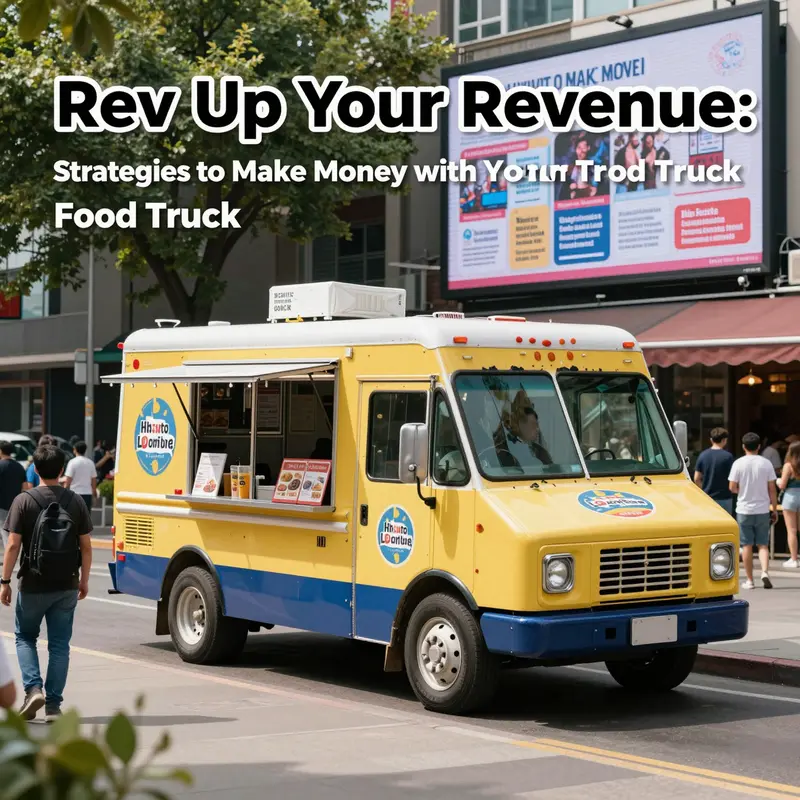
Profit in the food truck world hinges on more than the plate you serve. It rests on a simple, relentless truth: you must be where the hungry people are, when they are hungry, and you must be seen and remembered while you serve. This chapter threads together two pillars that determine that visibility and throughput: strategic location and deliberate, local marketing. When these elements align, a small kitchen on wheels becomes a steady stream of foot traffic, repeat customers, and scalable growth. The most successful operators treat location not as a backdrop but as a dynamic, living part of the business model, one that you plan, monitor, and adjust with discipline.
First, consider location as a multiplier of your effort. Research across markets shows that proximity accounts for a large share of customer traffic. Your truck’s position is not just about being busy; it is about being in the right place at the right time. There are windows when demand spikes. The morning rush, roughly 7:00 to 9:00 a.m., often brings a steady line for breakfast staples. A midday peak follows, with quick, affordable options catching the attention of workers, students, and shoppers during lunch. A thoughtful approach places you at the edge of these demand pockets, near residential clusters before people head to work, near office parks during lunch, and near busy transit hubs where passersby form a natural queue for a quick bite. In practical terms, this means planning a route that alternates between high traffic zones and predictable time blocks, rather than wandering from one spot to another without a clear schedule.
You can translate this intuition into a simple framework. One rule of thumb that guides many operators is that location determines a large portion of your customer base; in fact, it can drive as much as seventy percent of your traffic. This highlights why smart route planning matters as much as the recipe on your board. Start by identifying your daily operating costs, then map those costs against the probable traffic in a given zone during peak hours. The math can be surprisingly clarifying. If your daily costs are, say, a certain amount for fuel and labor, your average ticket price sits around a predictable figure, and your gross profit margin sits at a healthy level, you can estimate how many customers you need to reach breakeven in a given location. For example, with daily operating costs of £280, an average ticket price of £15, and a 50% gross margin, you need to serve around 37 customers to cover costs. This tangible target helps you judge whether a spot with decent foot traffic is actually profitable once you layer in the cost of travel, staff, and supplies.
A crucial corollary is flexibility. Real-time data, customer feedback, and even the weather all influence demand. When a site underperforms on a given day, you should be able to shift gears quickly. That could mean moving to a different corner of a campus during a lunch rush or leveraging a nearby weekday market after the morning crowd winds down. The capacity to pivot is a constant advantage for food trucks, which join the street economy rather than a fixed storefront. You don’t need a fancy dashboard to make this work; a simple routine of daily check-ins with your team, plus a way to communicate changes to your potential customers, suffices. A small, reliable GPS-enabled device can help you monitor traffic patterns and adjust your route in near real time, while a calm social presence that announces a new stop keeps people informed and ready to buy when you arrive.
Among the most valuable questions you can ask is simply this: where is demand concentrated, and when? Not every high footfall area will yield consistent profits for your menu. A busy university square may be rich in potential, yet if your core items are slow to serve or expensive to prepare, your margins suffer. This is why you must marry site choice with menu strategy and speed. Preparation ahead of time becomes your friend here. If you can cut vegetables, marinate proteins, pre-cook components like noodles or dumplings, and assemble sauces in bulk, you move the actual cooking into a final, rapid step on service. The goal is a three-minute or faster experience that keeps lines moving and customers satisfied. In other words, speed and proximity must play off each other like two gears in a well oiled machine.
Another powerful lever is the vehicle itself. The truck or van you choose sends a message to customers and affects how swiftly you can operate. Many operators debate between different chassis options, yet the most important outcome is speed, cost, and branding compatibility. A compact, nimble vehicle lets you reach more sites and park discreetly without drawing a large overhead. You also want a space that accommodates once you have prepped ahead, but still allows a clean, efficient cooking area. The vehicle decision should flow from your route strategy and your typical peak-hour destinations, not the other way around. The ability to park in tight spaces near your ideal customer is often more valuable than a flashy kitchen that can’t reach a key corner of the market.
Location, however, gains its real power when paired with deliberate, hyper-local marketing. The aim is to turn passersby into regulars who know you by name and look for your truck each week. Localized tactics capture the trust that mass advertising rarely earns at a street-level business. Start by speaking directly to the communities you serve. Use neighborhood forums, campus groups, office-worker networks, and community boards to announce where you will be and when you will be there. The most successful strategies avoid broad, generic campaigns and instead lean into the specifics of place and time. A prime example from a modest market is a vendor who set up a recurring stop pattern—pre-order, fixed-stop schedule—and built a small ecosystem around it. By coordinating orders within neighborhoods and aligning delivery or pickup stops with local routines, waste fell significantly and profits rose as predictable demand translated into repeat purchases. The lesson is clear: your messaging should acknowledge the rhythms of the place you serve and reflect the needs and expectations of that community.
The content here also invites a simple, practical reminder about how you talk to customers. Your branding should be clear and memorable in crowded streets and markets. A vibrant, readable sign, a coherent color scheme, and a name that sticks in people’s minds matter as much as the food itself. The sensory cues—the sight of steam, the sizzle of a grill, the warmth of a friendly greeting—draw customers in and keep them coming back. In this context, the branding work is not a cosmetic touch but a strategic asset. It creates trust and familiarity, so your next stop feels like a known, reliable option rather than a lottery on the curb.
The marketing plan must also acknowledge the value of personal, in-person interactions. While the digital world offers powerful tools, the street is where you build relationships. A team that greets customers with a smile, explains the menu succinctly, and remembers a regular’s favorite item can turn a one-time visitor into a loyal customer. A loyalty approach built around a simple, tangible reward is often more effective than a complex digital program. Even without tying every bite to a digital badge, you can create a sense of belonging around your truck—an understanding that you are a familiar flavor on a regular path through the city. Such a presence can amplify your sales, since regulars tend to visit on predictable days, reinforcing the pattern that makes your location choice pay off.
In practice, location and marketing feed into one another. Your ability to forecast demand influences where you stand and for how long. Your choice of stand time and proximity impacts how your marketing messages land. If you know a site tends to fill up with a steady stream of office workers from 12:00 to 2:00 p.m., you tailor your pre-order and pickup system to reduce wait times, offer a fixed pick-up window, and promote that window through your local channels. The result is a smoother operation and a higher probability that your customers will return. The more you refine your location plan, the easier it becomes to shape your menu and service model around the predictable traffic you’ve chosen to chase. When this happens, the business becomes less a gamble and more a disciplined routine that scales with you.
A practical detail that often gets overlooked is how to reach the exact people you want in the exact places you want to be. Your route planning should include a simple, constant feedback loop. Track where you parked, for how long, the items that sold best there, and the customer feedback you heard most often. Compile these notes in a straightforward ledger and look for patterns across weeks and months. Do certain spots produce peaks in sales for your fried skewers or your rice bowls? Do certain neighborhoods prefer spicy wraps, or do they lean toward milder flavors? The answers help you decide where to allocate your time and how to price or adjust portions without eroding margins.
To illustrate how this blends into a coherent strategy, consider a small operator who uses a fixed schedule with a rotating set of nearby spots. This operator knows that in a given block, there is a reliable lunch crowd and a later evening crowd near a student housing district. By aligning the menu with the audience and adjusting preparation steps accordingly, they minimize waste and maximize throughput. They leverage a simple, consistent look so that the truck becomes instantly recognizable even in a crowded lot. Then they reinforce this presence with locally targeted communications—signs, flyers, and micro-mpons that announce the next stop and the time window. The synergy of an intentional location plan with a disciplined local marketing approach creates momentum that compounds—more people know where to find you, more people order ahead, and more people tell their friends about their favorite stop on the street.
A note on vehicle choice once more surfaces here because the vehicle amplifies or constrains your location strategy. A nimble van or compact truck can negotiate crowded markets and fits more easily into narrow curbside holds, enabling you to service the peak windows you have targeted. You want to minimize the friction between the moment hunger hits and the moment you deliver the hot, flavorful meal. The smallest friction is a customer’s decision to stop, look at the menu, and order. The largest friction is a slow cook line and a long wait. Every element of your location plan, your branding, and your team’s behavior should minimize that friction while maximizing the choice and speed your customers experience.
In sum, the mobile kitchen thrives not because it offers a perfect dish every time, but because it offers a dependable, fast, visible, and locally tuned experience. Location is the compass; marketing is the map. The better you read the map and adjust your compass, the more predictable and profitable your route becomes. The future of the food truck rests in delivering services directly to where demand occurs, and the most successful operators treat proximity as a core resource, not an afterthought. If you can cultivate a rhythm that pairs a thoughtful stop schedule with a tight, locally resonant marketing message, you will convert passersby into regulars and days into repeatable weeks of revenue.
For readers who want to dive deeper into the practical questions of vehicle choice and its impact on route efficiency, you can explore a focused comparison of different van types that many operators consider essential when expanding their street footprint. Step Vans vs Cargo Vans for Food Trucks
External resource: https://www.brixx.co.uk/food-truck-business-guide
Profit on Wheels: Controlling Costs and Mastering Cash Flow in Your Food Truck Venture
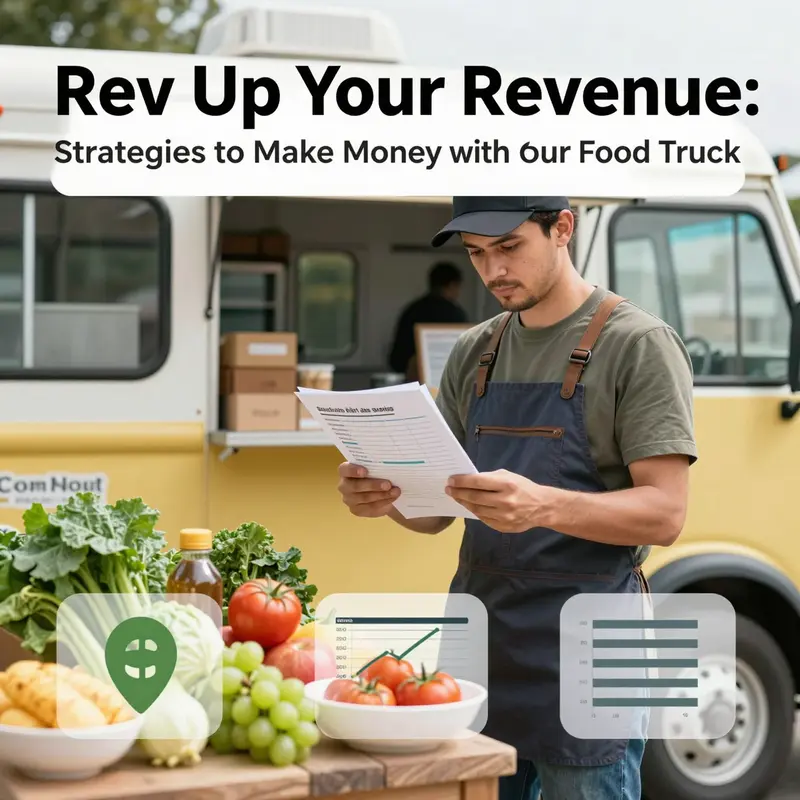
Profit on wheels is not just about the sizzle of a hot grill or the novelty of a clever concept. It hinges on disciplined money management so the business remains solvent, scalable, and genuinely profitable as it moves from one busy corner to the next. The food truck sector is expanding—the market is growing at a steady pace, with competition intensifying as more aspiring operators enter the scene. In this environment, profitability is less about flash and more about timing, cost discipline, and cash cadence. What separates sustainable winners from one-offs is the ability to convert high-margin dishes into steady daily revenue while keeping the cost machine well-oiled and predictable. This chapter traces a practical path to that outcome by anchoring every decision in lean cost control and proactive cash management, tying together planning, procurement, operations, and a strategic lens on pricing and resilience.
Controlling operational costs begins with a realistic budget that respects the realities of street commerce, where weather, foot traffic, and event calendars can swing demand in unpredictable ways. The starting line is not a dream of oversized equipment or luxurious interiors; it is a tight, realistic plan that identifies must-have tools and reserves for contingencies. In many markets, the initial investment for a mobile kitchen could stretch from a few thousand dollars for a well-prepared, used setup to fifty thousand dollars or more for a fully outfitted, new truck. The research landscape also recognizes the possibility of launching with minimal capital by acquiring a used or refurbished vehicle and pre-owned equipment. That lean approach is not a compromise; it is a strategic lever that preserves cash for working capital, inventory turns, and early marketing. In practice, this means prioritizing essential cooking equipment, reliable refrigeration, and a durable point-of-sale system, while avoiding premium add-ons that do not directly impact throughput or quality in the first 90 days.
Efficient inventory management is the backbone of cost control. A disciplined system for ordering, storing, and using ingredients prevents waste from eroding margins and helps forecast daily cash needs with confidence. Modern operators increasingly rely on software to track inventory in real time, alert when stock is low, and flag discrepancies between theoretical and actual usage. Local sourcing in bulk is another essential tactic, not merely for price savings but for consistency and freshness that sustain customer trust. First light in the morning is often the best time to buy—when markets are stocked and prices are at their seasonally lowest level. The goal is to minimize waste, and the metric to watch is daily food loss; best-in-class operators target losses under 5 percent and adjust prep volume in response to weather forecasts and anticipated demand.
Negotiating with suppliers is a skill every lean operator must cultivate. The aim is to secure favorable pricing without sacrificing quality or reliability. Longer-term contracts with local wholesalers, where feasible, can yield cost reductions and priority on critical items. Price protection clauses, favorable freight terms, and predictable lead times reduce the volatility that gnaws at margins. The most effective buyers treat suppliers as partners who have a vested interest in the truck’s success, aligning incentives around steady volume, quality, and timely deliveries. When prices fluctuate, the ability to pivot to alternative cuts, seasonal specials, or different storage strategies without sacrificing taste is a competitive advantage. The overarching message is clear: smart sourcing lowers the cost base, protects margins, and stabilizes cash flow.
Cash flow management is the heartbeat of a mobile kitchen. Revenue may surge on weekends or festival days, while stalls and slow weekdays can strain liquidity if expenses outpace inflows. A daily tracking system is non-negotiable. Record every dollar spent and earned, from fuel and maintenance to payroll and card fees. Accounting software—whether QuickBooks, Xero, or a trusted local alternative—serves as the cockpit of the business, providing live visibility into sales, costs, and profit margins. Real-time dashboards reveal where money is flowing and where waste lurks, enabling nimble decisions rather than reactive firefighting.
A prudent cash reserve acts as a financial shock absorber. Building a cushion from daily revenue helps cover slow periods, planned maintenance, and unexpected repairs without resorting to costly debt or emergency financing. The precise size of the reserve depends on location, operating hours, and seasonality, but a practical target is several weeks of fixed and semi-variable costs. In practice, this means carving out a portion of every day’s sales into a separate reserve fund, then protecting it from the temptation to spend on nonessential gimmicks. The discipline of a reserve is what keeps a truck on the road when a sudden rainstorm or a council permit delay hits cash flow.
Pricing is the bridge between costs and profitability. Menu pricing must cover all costs—food, labor, permits, fuel, and maintenance—while providing a robust margin that sustains growth. Strategic pricing is about clarity and consistency as much as it is about value. Simple, well-communicated pricing with clearly defined portions reduces the risk of last-minute discounting and discount-driven profit erosion. When demand spikes or segment opportunities arise, consider dynamic pricing carefully—seasonal items, limited-time specials, and high-margin addons can lift average order value without eroding baseline margins. For many operators, careful aggregation of cost data makes the difference between a 20 percent gross margin and something significantly higher.
Regular financial reviews are the compass checks that keep the business on course. A monthly profit-and-loss review, paired with a rolling forecast, helps identify inefficiencies and opportunities for adjustment. Trends—such as rising ingredient costs, labor pressure, or maintenance wear—can be anticipated and mitigated through preventive action. These reviews also validate or challenge forecasts tied to events, new locations, or marketing campaigns. The discipline to adapt pricing, adjust prep quantities, or recalibrate menu mix ensures that the business remains profitable under real-world conditions rather than only in theory.
Operational speed and consistency amplify financial performance. The principle that customers won’t wait long translates into a design that emphasizes speed without sacrificing quality. Prep-ahead strategies become essential: chopping vegetables in bulk, marinating meats in batches, pre-cooking components like noodles or dumplings, and preparing sauces in bulk so the final assembly is a rapid, one-step finish. Standardizing recipes and portions—with precise measurements such as a six-ounce scoop for sauces—reduces variability, helps control costs, and makes it possible for a single seasoned cook to manage a crowded line. Efficient equipment choices—such as a commercial induction cooker that uses less energy than a gas stove and a compact hand-held grill for fast grilling tasks—also contribute to throughput, reliability, and lower operating costs. In tandem, these practices increase table turnover and raise daily revenue without raising the price tag of the operation.
The social and spatial dimension of profitability should not be overlooked. Location remains a decisive driver of sales, and a well-chosen site can offset a lean cost structure with high volumes. High-traffic zones such as campuses, office corridors, night markets, and industrial parks are repeatedly cited as lucrative. The blend of proximity to demand with a brand that is easy to spot helps increase impulse purchases, which in turn stabilizes cash flow through predictable peak periods. Marketing depth complements physical location. A strong social media presence—sharing vibrant, mouth-watering visuals of the food being prepared—drives foot traffic and creates a loyal following that sustains revenue even when a particular location is temporarily quiet. Limited-time specials or exclusive discounts can convert casual viewers into repeat customers, reinforcing predictable cash inflows. A memorable truck design and brand identity are not cosmetic; they are a practical instrument for attracting repeat customers who become part of a steady revenue stream.
To bring these threads together, consider the practical matter of compliance and risk management. The operational choices—from choosing a cost-conscious vehicle to negotiating supplier terms—intersect with regulatory requirements, permits, and safety standards. This is a domain where the cumulative effect of careful planning pays dividends over time. For a broader view on navigating these aspects, you can explore the legal considerations for Latino food-truck startups. This resource, among others, helps ensure that your financial discipline is matched by a solid compliance foundation, reducing the risk of costly disruptions in the future.
As you scale, the integration of cost control and cash flow management becomes a competitive advantage. Lean cost structures free capital for growth—whether you plan to add a second truck, expand to new neighborhoods, or invest in better equipment that further reduces cooking time and extends service windows. The key is a continuous loop: clear budgeting, disciplined inventory, smart supplier negotiation, precise pricing, and rigorous financial review, all aligned with a customer experience that remains fast, friendly, and consistent. When these elements cohere, the mobile kitchen transforms from a clever venture into a sustainable enterprise with predictable margins and resilient cash flow, capable of weathering the ebbs and flows of a bustling urban food economy.
For readers seeking a deeper dive into practical, low-cost starting points and a framework for ongoing financial discipline, this chapter aligns with the broader research that highlights the value of lean operations, smart procurement, and cash discipline as the core engine of profitability. By anchoring every move in cost awareness and cash-conscious practices, you can transform a simple food truck into a reliable, scalable source of income that travels with your ambition rather than being pinned to a single street corner.
To explore additional perspectives on cost considerations and long-term planning, see the detailed guidance on regulatory and startup considerations in the linked resource: legal considerations for Latino food-truck startups. And for a comprehensive, external framework on building a food truck business, consider Shopify’s structured startup guide, which offers a roadmap for launching and growing a mobile kitchen venture. Shopify’s guide to launching a food truck.
Final thoughts
To carve a niche in the competitive food truck industry, pairing your passion for vehicles with culinary prowess opens up exciting entrepreneurial pathways. By thoughtfully selecting a profitable menu, optimizing operations, strategically marketing your business, and controlling costs, your food truck can thrive and drive significant revenue. With a mix of creativity, efficiency, and practical management, you’ll not only feed hungry customers but also satisfy your entrepreneurial spirit.