

The food truck industry is a dynamic realm filled with creativity and passion, yet it is fraught with risks that can lead to devastating legal repercussions. For enthusiasts and industry professionals alike—whether you’re involved in car modification, tuning, or restoration—protecting your business from lawsuits, accidents, and external events is crucial. Establishing a well-rounded risk management strategy not only promotes a safe operational environment but also enhances your reputation in the culinary community. Each chapter of this article delves into integral pillars for safeguarding your food truck business, from securing comprehensive insurance coverage to prioritizing employee well-being, ensuring that you are equipped with the essential tools needed to thrive and protect your passion.
Safeguarding the Skillet on Wheels: A Holistic Shield Against Lawsuits for Food Truck Entrepreneurs
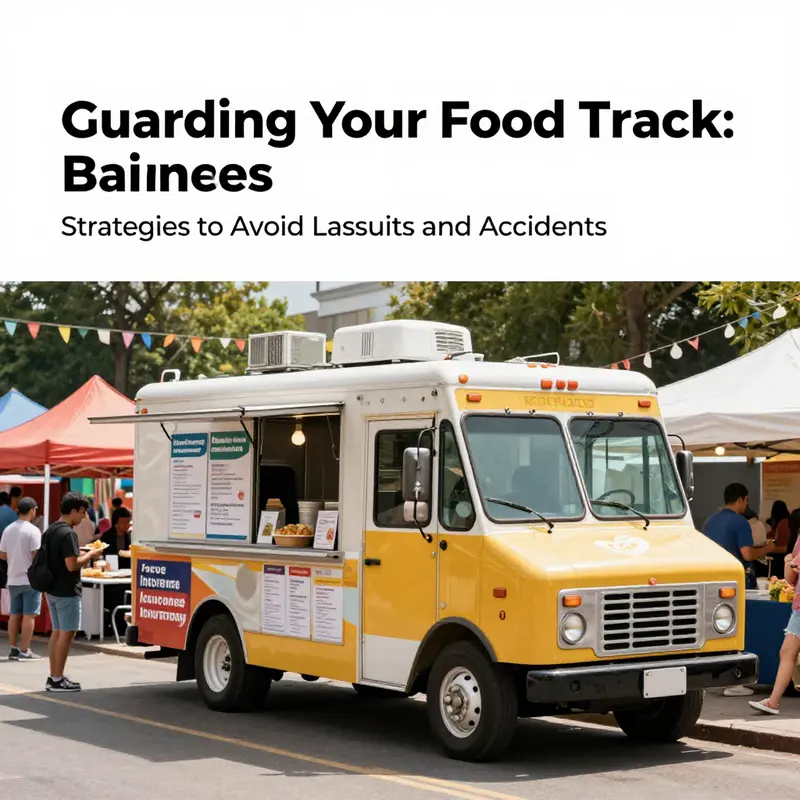
The aroma of sizzling peppers and the hum of a well-tuned generator tell only part of the story behind a successful food truck. The other half lives in a more silent discipline: systems, contracts, and safeguards that protect your business when accidents, illness, or unexpected events strike. Insurance is not a luxury; it is the backbone of responsible entrepreneurship on wheels. When you build a plan that pairs robust coverage with meticulous safety practices, you do more than protect finances—you cultivate trust with customers, lenders, and regulatory bodies. This is not about fear, but about predictability. A well-constructed safety and liability framework turns what could be a disruptive crisis into a manageable setback and keeps your wheels turning toward growth rather than debt.
At the core sits comprehensive insurance, a multi-layered shield designed to absorb the financial shocks that can arise in every facet of mobile food service. General liability insurance offers a broad cushion against third-party claims for bodily injury or property damage that can occur at your stand or while you’re parked in a public space. Picture a slip and fall near your serving window or a spill that soaks a customer’s clothing. The costs aren’t just medical bills; they include legal fees, potential settlements, and the reputational impact of a negative incident. General liability helps you meet those costs and keeps your cash flow intact while you defend or settle a claim.
Commercial auto insurance is the next layer. Your truck is your workplace, and its road life introduces risks unique to mobile operations. Accidents, whether collisions with other vehicles, damage to a neighboring storefront, or injuries to pedestrians, carry the risk of substantial liability. This coverage not only handles damages to your vehicle but also covers injuries or property damage involving others, which could otherwise jeopardize your business and savings. It’s the practical acknowledgment that your kitchen moves—and with that movement comes responsibility.
Product liability insurance addresses the heart of your business: the food you serve. If a customer experiences foodborne illness or an adverse reaction, product liability helps cover medical expenses, defense costs, and settlements. The stakes here are high, and the costs can escalate quickly, especially in a food service environment where temperature abuse, cross-contamination, or allergen exposure can be alleged. Your response to potential contamination starts long before a claim arises. A culture of safety and traceability acts as your strongest defense, because it shows customers and regulators that you take food safety seriously and that you have the records to back it up.
For teams with employees, workers’ compensation insurance is another essential pillar. Beyond meeting legal obligations in most states, this coverage supports workers who suffer an on-the-job injury or illness. It provides medical care and wage replacement, reducing the likelihood that an employee will pursue litigation as a remedy for what was, in many cases, an unfortunate accident. When your crew feels protected, their focus remains on safe operations and consistent service, which in turn reduces error and liability. A modern business also increasingly faces cyber risks as guest data flows through apps and loyalty programs. Cyber liability insurance, though sometimes overlooked, protects you against data breaches, notification costs, and legal defense should customer information be compromised. In a world where even a single data incident can shutter a truck’s reputation, cyber coverage is not optional but part of prudent risk management.
The practical value of these protections becomes clearer once you anchor them to the daily rhythms of a mobile kitchen. But insurance is only one piece of the puzzle. The other equally vital piece is a rigorous commitment to food safety and hygiene that aligns with the insurance you carry. A robust Food Safety Plan, rooted in HACCP principles, provides the theory and the practice for preventing contamination across every stage of handling—from receiving ingredients to serving hot meals. The plan must be living: reviewed, updated, and exercised regularly through drills and audits. You should implement a clear map of critical control points and maintain documentation that shows you’ve identified hazards, defined corrective actions, and verified that controls work. When auditors or health inspectors arrive, this discipline translates into confidence that your operation is not merely following guidelines but actively protecting customers and staff.
Temperature control sits at the center of safe execution. Perishable items demand precise, verified temperatures at every touchpoint. Calibrated thermometers, TTIs, and consistent refrigeration records are not decorative add-ons; they are the evidence that your cold chain remains intact. A few degrees of drift can compromise an entire batch, and the cost of that error multiplies quickly in food safety investigations and lawsuits. The operational discipline should permeate shift routines: every batch logged, every probe read, every discrepancy flagged and corrected in real time. This is how you demonstrate due diligence in the eyes of customers, regulators, and insurers alike.
Cleanliness and sanitation are equally non-negotiable. Surfaces should be non-porous and easy to sanitize, with utensils and equipment cleaned to the highest standard before, during, and after service. Detailed cleaning logs are not mere paperwork; they are the narrative of day-to-day vigilance. In recent cases where sanitation lapses were alleged, the absence of traceable cleaning records often becomes the hinge on which liability swings. Your team should be trained to maintain strict hygiene protocols, including allergen awareness and emergency procedures for potential contamination. Staff training is a long arc, not a one-off checklist. It creates a shared language about safety, makes safe handling second nature, and reduces the likelihood of human error that can invite lawsuits.
The vehicle itself is a working environment, and its safety extends beyond driving skills. Regular, documented maintenance keeps the truck reliable and predictable. A pre-operational inspection should be a ritual at the start of every shift: check fluid levels, tire treads, lights, brakes, and especially the refrigeration unit. When a 2025 case highlighted the consequences of temperature control failures, it underscored the cost of neglect: a substantial judgment tied to preventable loss. Adopting a maintenance schedule with detailed logs is not merely preventive care; it is risk transfer in action. If you have drivers, their qualifications deserve scrutiny that mirrors the care you give your equipment. Valid licenses, clean driving records, and targeted training on safety procedures should be standard.
All these elements—insurance and safety practices—link through contracts and documentation. Clear vendor agreements with stipulated quality standards, delivery timelines, and liability for defective goods set expectations before problems arise. An employee handbook that defines duties, safety procedures, and disciplinary policies creates a shared framework for safe conduct. And when incidents do occur, having a robust system for recording customer complaints, illness reports, and near-misses becomes invaluable evidence. It shows that you did not ignore warning signs but addressed them promptly and transparently, which can dramatically reduce the likelihood of protracted disputes or punitive judgments.
This integrated approach extends to how you treat your team. Employee wellbeing translates directly into safer service and fewer mistakes. A simple policy that requires reporting of any illness and staying home when unwell protects both staff and customers from cross-contamination. An ergonomically sound workspace minimizes fatigue and accidents, while a culture that prioritizes safety over speed reduces the odds of a costly error during peak service times. When people feel protected and valued, they act with greater care on the job, which lowers exposure to liability across the business.
The most effective paths forward come from combining insurance with ongoing education and access to expert advice. Legal counsel who specializes in small business or food law can review your policies, contracts, and operating procedures to ensure they meet current standards and evolving regulations. Industry associations are valuable for staying current with best practices, model contracts, and training resources. They can help you compare coverage options, understand exclusions, and tailor products to the mobile, high-velocity realities of a food truck. And it is worth noting the utility of a focused, practical resource on the legal side of running a Latino food-truck startup. For deeper guidance on that area, see the resource on legal considerations for Latino food-truck startups.
By weaving insurance, food safety, vehicle stewardship, and clear documentation into a single, coherent fabric, you create a business that is resilient in the face of accidents, illnesses, and unforeseen events. This resilience is not a luxury; it is a strategic imperative that communicates reliability to customers and partners. When regulators inspect a truck that carries a comprehensive insurance portfolio, up-to-date HACCP records, meticulous maintenance logs, and clear employee protocols, they see a business that treats risk as part of the cost of doing business rather than as an unpredictable force to be endured. In practice, this means your food truck can recover quickly from a mishap, maintain service, and preserve cash flow, enabling you to reinvest in better safeguards and stronger relationships with the communities you serve.
For readers seeking a structured starting point, remember that a well-chosen policy suite should align with your actual risk exposure, the scale of your operation, and the regulatory environment you navigate. Insurance is not one-size-fits-all; it grows with your business as you expand to new locations, hire more staff, or introduce digital ordering and loyalty programs. The work of risk management is continuous, iterative, and collaborative, requiring input from agents, lawyers, health inspectors, and the crew on the truck. In the end, the purpose is straightforward: to maintain the integrity of your brand while delivering great food, reliably and safely, wherever your wheels take you. For a foundational external reference on insurance requirements for small businesses, you can consult the SBA resource on understanding insurance requirements: https://www.sba.gov/business-guide/plan-your-business/understand-insurance-requirements
Guarding the Street Kitchen: Building Ironclad Food Safety to Shield Your Food Truck from Lawsuits
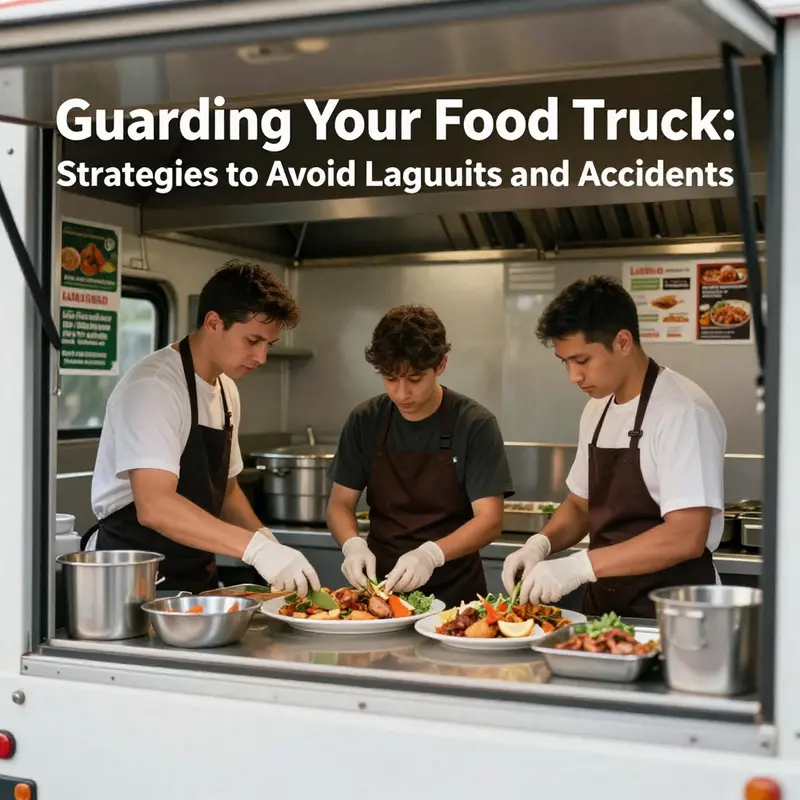
When a food truck sets up on a corner or a festival lot, the kitchen finally meets the street—and so do the risks. The way you protect your business from lawsuits, accidents, and unpredictable events is not a single shield but a layered defense hinged on rigorous food safety, precise recordkeeping, disciplined maintenance, and thoughtful people practices. The core idea is simple: if you can show consistent diligence in how you handle food, how you maintain your vehicle, and how you treat your team, you create a durable moat against liability. This isn’t about fear of lawsuits; it’s about creating a reliable, repeatable system that serves customers well, protects employees, and reassures lenders, insurers, and regulators alike. In practice, the most effective path blends science, law, and everyday discipline, with food safety sitting at the heart of the legal defense.\n\nThe foundation begins with an emphasis on hygiene and contaminant control that permeates every action around the truck. The disciplined mind-set of safe handling is less glamorous than a fancy new gadget, but it changes outcomes in measurable ways. A food service operation that treats sanitation as non-negotiable is more likely to prevent outbreaks, avoid recalls, and minimize the risk of costly litigation. This is especially true for mobile vendors where space is limited, airflow can be compromised, and tempers can flare during peak service. To build that foundation, start with a robust system that translates into everyday practice. A clear daily rhythm—clean surfaces, sanitized utensils, and assigned responsibilities—creates a self-enforcing culture of safety. When a team member knows exactly what to do and when to do it, the chance of deviations fades, and a potential hazard is caught before it becomes a problem.\n\nCentral to this approach is a formal HACCP plan tailored to the realities of a mobile kitchen. Hazard Analysis and Critical Control Points is not a dusty document; it is a live map of where hazards can arise at every stage—from receiving ingredients to cooking, cooling, holding, and serving. The plan identifies critical limits, monitoring procedures, and corrective actions. For a food truck, that means specifying temperatures at every stage, ensuring there is no cross-contamination between raw and cooked foods, and setting rules for allergen handling. A HACCP system works best when it sits under a broader umbrella of standard operating procedures that staff actually follow. It becomes a living guide that informs training, shifts, and supplier choices. And because it is inherently evidence-based, it strengthens your position if a claim ever arises. Courts and regulators tend to look favorably on operations that have demonstrably reduced risk through methodical procedures.\n\nTemperature control is the quiet backbone of food safety on the move. Calibrated thermometers and time-temperature indicators provide real-time assurance that perishables stay within safe ranges. The fridge and freezer aboard a food truck must be reliable, with stable temperatures at all times. Recording these readings regularly creates a documentary trail that can be critical in defending against allegations of improper storage or contamination. The practice is not merely about compliance; it is about trust. When a customer retrieves a meal that has been kept within the safe window, the likelihood of a complaint drops sharply. Documentation of checks—who performed them, when, and what the readings were—becomes tangible evidence that you followed due process. This is particularly important given public health scrutiny in the wake of outbreaks linked to improper handling. The CDC’s data on improper handling as a driver of foodborne illness is a clear reminder that prevention through precise temperature control is both public health protection and legal protection.\n\nCleanliness and sanitation deserve a devoted section because they touch every surface, every utensil, and every container that enters the truck. Materials matter. Non-porous, easy-to-clean surfaces reduce harboring places for bacteria and make routine cleaning far more effective. A thorough sanitation routine—cleaning and sanitizing before, during, and after service—needs to be logged with timestamps and initials of the staff who performed the task. The big picture is not just cleanliness; it is traceability. If a customer later reports a symptom or if a routine check reveals a deviation, you can point to documented hygiene practices and reassure inspectors and claim handlers that you acted promptly and properly. The narrative around cleanliness, supported by logs and standard procedures, makes a strong case that you are a responsible steward of public health. And it should be connected to supplier integrity as well. Using only certified suppliers and maintaining records of lot numbers, delivery temperatures, and quality checks creates a chain of custody that is hard to challenge in court or negotiations.\n\nStaff training anchors all technical measures into human behavior. Ongoing education about proper handwashing, safe food handling, allergen awareness, and emergency protocols is not optional. It is a line of defense that reduces human error and clarifies expectations. In fast-paced service, missteps can happen; a well-trained crew recognizes when to escalate a potential issue and how to respond without panic. Training should be reinforced with simple cues, checklists, and visual reminders that travel with the truck—pocket cards, laminated posters, and a quick-reference procedure for suspected illness. Moreover, the policies around illness reporting and stay-at-home rules should be crystal clear and consistently enforced. A culture that prioritizes employee health protects both staff and customers, and it positively influences legal outcomes by showing that the business takes responsibility for safety rather than ignoring warnings or relying on luck.\n\nIn parallel with the food safety program, a rigorous discipline around vehicle maintenance and safety checks is indispensable. The truck is a moving kitchen, and mechanical failure, especially in critical systems like brakes, tires, or refrigeration, can precipitate accidents that invite liability. A maintenance schedule that aligns with manufacturer recommendations and a pre-operational inspection routine should be non-negotiable. Document every check, every repair, and every replacement part. The human factor—drivers and crew—also deserves careful attention. If you employ drivers, ensure licensing and driving records are up to date, and provide targeted safety training for mobile operations. The legal history underscores that lapses in vehicle temperature control or driver compliance can lead to meaningful judgments, underscoring the necessity of meticulous oversight and continuous improvement.\n\nThe chain of protection extends beyond food and vehicle. Clear contracts and thorough documentation protect you when disputes arise. Vendor agreements should spell out quality standards, delivery schedules, and liability for defective goods. An up-to-date employee handbook clarifies duties, safety procedures, and disciplinary policies, reducing the chance of conflicting interpretations that can fuel lawsuits. Meanwhile, customer interaction records—comments, complaints, and incident reports—provide a factual basis for defending your actions if someone questions your handling of a claim. Even well-intentioned operations can face litigation, and the presence of consistent records of preventive measures, corrective actions, and timely responses can tilt outcomes in your favor.\n\nNo discussion of risk management is complete without addressing the human aspect of risk. Prioritizing employee well-being translates into safer work practices, which in turn lowers the probability of accidents and injuries. A simple policy requiring sick employees to stay home, a workspace redesigned to minimize trips and strains, and access to basic safety equipment create a healthier, more stable work environment. In the cargo of mobile food service, ergonomic design matters. A well-organized kitchen layout reduces the chance of tool mishaps or burns during busy service. When staff feel supported and safe, they are more likely to follow procedures consistently, which preserves both brand quality and liability protection.\n\nTaken together, these layers of safety—HACCP-guided controls, strict temperature management, sanitation discipline, comprehensive staff training, vigilant vehicle maintenance, and robust documentation—form a coherent defense that protects the business and elevates customer trust. The beauty of this approach is that it yields tangible benefits beyond liability management. Consistent safety practices improve product quality, reduce waste, and sharpen operational efficiency. They also align with regulations and industry standards, which, in turn, strengthens your credibility with insurers, regulators, and partners. As you build this system, remember that risk management is not a one-time project but an ongoing practice that adapts to seasons, new menu items, and evolving public health guidance. The result is a resilient operation that can weather shocks—whether a sudden spike in demand, a supply disruption, or an unforeseen regulatory change—without compromising safety or service.\n\nFor readers seeking deeper context on how these principles intersect with local and niche considerations, explore resources focused on specific startup and operational realities. For example, the discussion on legal considerations for Latino food truck startups provides practical perspectives on governance and risk in a culturally rich and dynamic market. legal considerations for Latino food truck startups. This material complements the safety framework by illustrating how contracts, supplier relationships, and staff policies play out in real-world settings, especially when working with diverse teams and communities.\n\nThe science and the law converge in the recommendation to reference official public health and regulatory guidance. The U.S. FDA Food Code offers comprehensive standards for mobile food vendors, including temperature control, cross-contamination prevention, personal hygiene, and recordkeeping. Relying on this code—not as a checklist alone but as a living set of principles—helps ensure your operation stays within federal expectations and strengthens the defense in case of a lawsuit. For formal guidance, see the FDA’s updated Food Code. External reference: https://www.fda.gov/food/fda-food-code/food-code-2023
Guarding the Road: Essential Vehicle Maintenance and Safety Checks for Food Truck Liability Protection
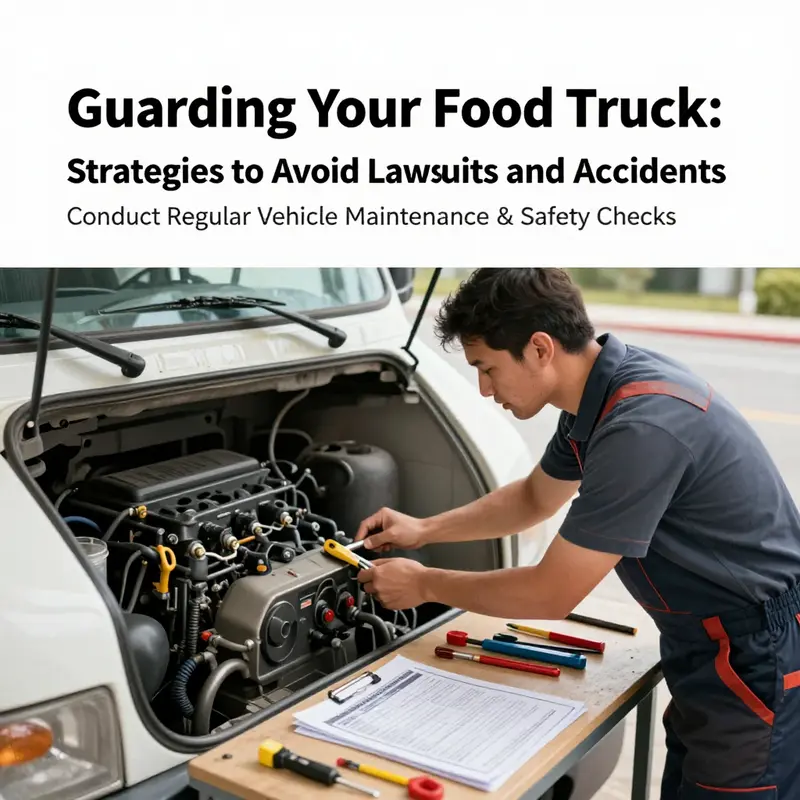
On the road, your food truck is more than a mobile kitchen; it is a moving business. Its performance, safety, and reliability directly shape your liability exposure. The risk landscape—accidents, breakdowns, and service interruptions—can surge quickly when a mechanical failure or a safety lapse occurs. The path to resilience begins under the hood: regular vehicle maintenance and safety checks protect customers and preserve your brand’s trust. This discipline blends practical vigilance with clear records, strengthening your defense if a claim arises. A culture of proactive care translates into smoother operations, fewer closures, and a sharper competitive edge in busy markets.
Maintain a daily pre-trip inspection: brakes, tires, lights, steering, fluids. A log entry documenting condition and minor anomalies helps prove you addressed issues promptly and supports insurance and potential disputes. A scheduled maintenance program aligned with manufacturer recommendations covers engine, cooling, electrical, and crucial refrigeration components to prevent temperature excursions.
Temperature control matters: use calibrated thermometers, log temperatures, and ensure refrigeration stays below 40°F (4°C) with checks at start, during, and arrival. Documentation creates an evidentiary trail that supports food safety and liability defenses.
Interior cleanliness and sanitation protect both food safety and brand integrity. Use non-porous surfaces, clean regularly, and maintain sanitation logs.
Driver safety training reinforces these practices: defensive driving, fatigue management, and clear reporting of vehicle concerns.
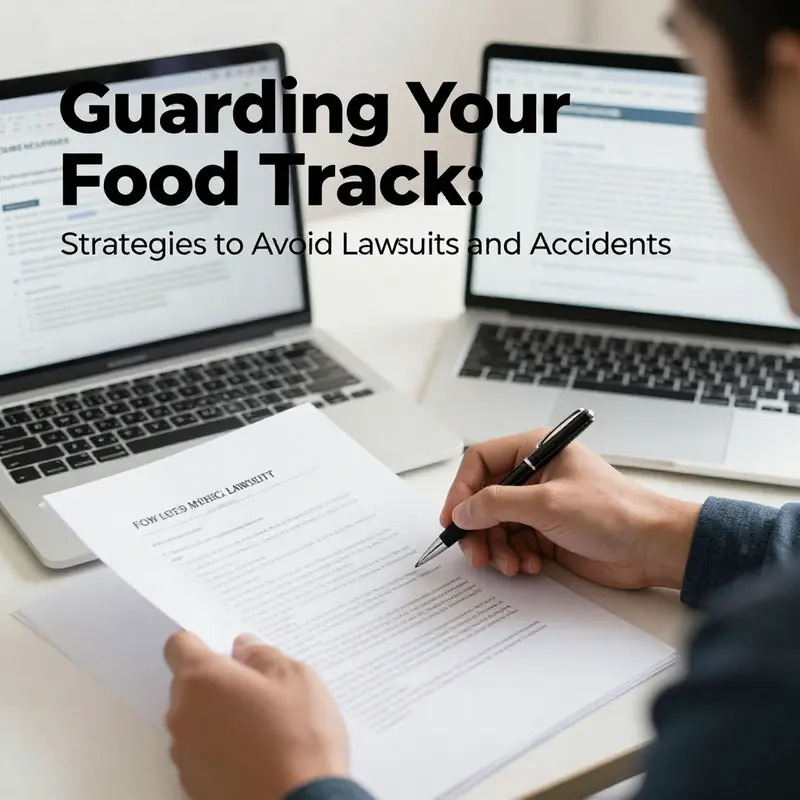
Documentation is the backbone of liability resilience: service receipts, parts, inspection checklists, and corrective actions. Telematics and onboard diagnostics can alert to brake wear, tire pressure, or coolant spikes and integrate with your maintenance calendar.
Human factors matter: busy service periods and weather can tempt shortcuts; establish non-negotiable maintenance expectations and proper rest. Your vehicle choice affects maintenance complexity and cold-chain capabilities; compare step vans versus cargo vans for your operation.
Regulatory context matters: consult resources such as the U.S. Department of Transportation guidelines on commercial motor vehicle safety to stay compliant.
null
null
Safeguarding the Roadside Kitchen: Building a Culture of Safety and Well-being to Shield Your Food Truck from Lawsuits and Disruptions
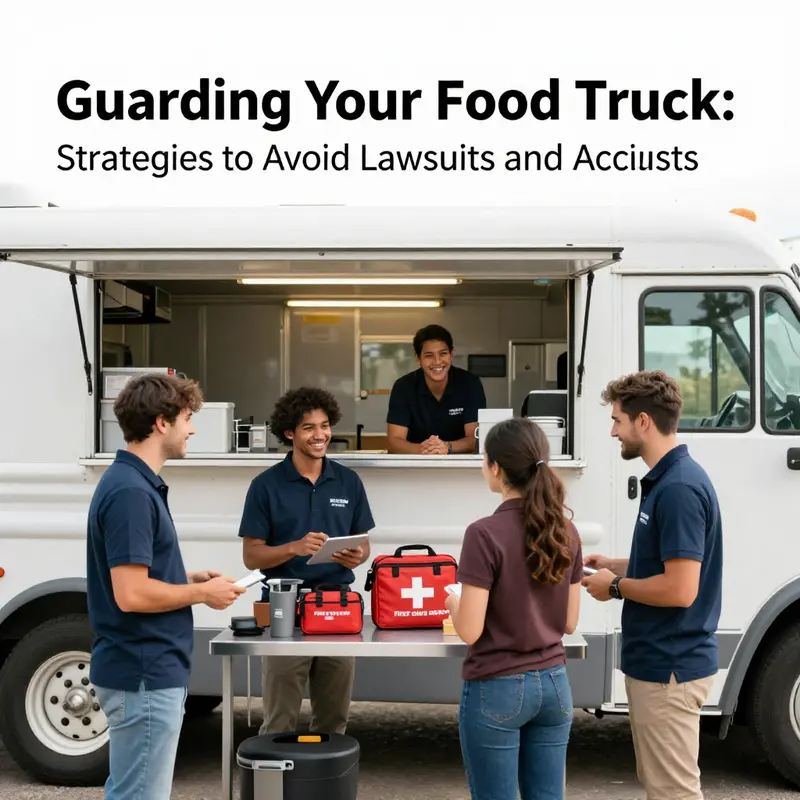
Every successful food truck rests on a carefully balanced equation: great food, loyal customers, capable staff, and a system that preempts trouble before it becomes trouble’s worst-case. The chapter ahead treats employee well-being and safety not as optional luxuries but as the central engine of risk management. A culture that values people and procedures reduces accidents, curtails mistakes, and strengthens defenses against lawsuits and unforeseen events. It is through this culture that a mobile kitchen becomes not just a business with a license to cook, but a resilient operation capable of weathering storms, from equipment failures to health scares to supplier hiccups.
The heartbeat of protection is comprehensive training that travels with every shift and across every role. Training cannot be a one-and-done event. It must cover the essentials of HACCP principles so every team member understands how hazards are identified, controlled, and verified at each stage of handling—from receiving ingredients to storage, preparation, cooking, cooling, and serving. But training should extend beyond food safety. It should include safe vehicle operation, proper lifting techniques, and emergency procedures. A clumsy lift in a crowded truck can end in a broken leg or a shaken customer, and both outcomes invite liability. Regular refresher courses help maintain a sharp edge; complacency is the quiet liability.
Health and hygiene protocols require clear expectations and accessible resources. Staff should observe strict personal hygiene standards: frequent handwashing, appropriate use of gloves, hair restraints, and the immediate reporting of illness. The environment must support these standards—ample hand-sanitizing stations, clean restrooms, and a culture that prioritizes cleanliness without stigma. This is not merely about compliance; it is about a visible commitment to customer safety that translates into trust and fewer grounds for legal action.
A safe work environment begins with the physical design of the truck itself. Non-slip flooring, securely fastened equipment, unobstructed walkways, and ample lighting are not decorative details but risk controls. Regular inspections should be woven into daily operations, not scheduled as a separate, burdensome task. A small electrical fault or a gas leak, if unchecked, can cascade into a severe accident and a costly liability. Pre-operational inspections aren’t bureaucratic box-ticking; they are a daily shield that detects issues while they remain manageable. Maintenance logs become a living history of a vehicle’s safety trajectory, proving diligence in the event of a dispute.
When drivers or crew members operate the truck, qualifications matter. Valid licenses, clean driving records, and targeted safety training reduce the likelihood of an accident on the street or in a crowded event space. In the wake of recent cases, the lesson is clear: human error at the wheel often becomes the fulcrum of liability, especially if temperature control, product safety, or incident reporting were compromised. A rigorous approach to driver selection and ongoing coaching is not merely prudent; it is essential risk management.
The legal and operational backbone rests on contracts, documentation, and traceability. Every relationship—whether with a driver, a supplier, or a venue—benefits from clear expectations codified in written agreements. These agreements should spell out safety protocols, performance standards, and the allocation of responsibility for defects, injuries, or delays. Documentation is the quiet workhorse of liability defense. Detailed training records, vehicle maintenance logs, cleaning schedules, and incident reports create a credible narrative if a dispute arises. In practice, this means cultivating a discipline of record-keeping that feels matter-of-fact rather than bureaucratic; it demonstrates a business that pays attention to the smallest details because those details matter to customers and regulators alike.
Cross-contamination prevention is a practical, daily discipline. A policy that begins with color-coded containers and dedicated equipment for different food types is more than a preference; it is a risk-reduction mechanism that minimizes the chance of misloading or cross-contact. An operational motto—if it’s not clean, it’s not loaded—can be enforced by simple, real-time checks and a digital or smart monitoring system that records cleaning history. The IoT-enabled traceability recommended in recent guidelines is not an abstract tech fantasy; it is an actionable way to demonstrate compliance, to pinpoint when a lapse occurred, and to correct it before customers are affected. Such systems also provide a powerful counter to claims that a defect was due to an unknown, unfixed cause. They create a clear chain of responsibility that can deter frivolous or unfounded lawsuits by showing that the business acted promptly and transparently when issues arose.
Beyond the shop floor, the workplace culture matters as much as the truck’s chassis. Mental health and work-life balance are not soft perks; they are risk management tools. High-stress schedules, fatigue, and unaddressed burnout increase the likelihood of mistakes, miscommunication, and accidents. A flexible approach to scheduling, where feasible, shortens the path from high-stress periods to safer operations. Support resources, open channels for discussing workload concerns, and practical accommodations foster a team that can maintain performance without compromising well-being. A rested, engaged crew makes fewer errors, communicates more clearly under pressure, and is more likely to report problems early—preventing smaller issues from spiraling into lawsuits.
The chapter’s practical core intersects with legal readiness. Insurance coverage remains foundational, but it must be understood and integrated into daily practice. General liability, commercial auto, product liability, and workers’ compensation all play specific roles in a risk mosaic. Policies should be reviewed annually to ensure their limits are adequate and exclusions are understood by both owners and staff who interact with them. This is not about scare tactics but about arming the business with clarity so it can act quickly should a claim arise. It is also wise to couple insurance with contract clarity when hiring drivers or independent contractors. Detailed contracts that specify safety obligations and the consequences of noncompliance protect both sides and set expectations ahead of any dispute.
Documentation becomes the backbone of both safety and liability defense. Keep meticulous training records, vehicle maintenance logs, cleaning schedules, and customer feedback or incident reports. A well-documented operation has verifiable evidence of due diligence, which can dramatically shift liability outcomes in court or in settlement negotiations. The precise, chronological sequencing of actions—when a problem was detected, what remedies were applied, who was informed, and what follow-up was performed—forms a compelling narrative of responsible management. The value of this approach was underscored by cases where the absence of clear records led to outcomes that could have been far more favorable to the business.
The operational blueprint for safety and liability also includes design choices that facilitate both compliance and efficiency. Use color-coded containers and dedicated storage for different food categories to limit cross-contact. Implement a “if it’s not clean, it’s not loaded” policy, reinforced by a smart monitoring system that logs cleaning and loading status. IoT-enabled traceability can verify that every step—from washing to loading to serving—complies with internal standards and external regulations. These measures not only reduce risk but also demonstrate to customers and regulators that the business takes safety seriously in tangible, auditable ways.
To tie these threads together, consider the social and organizational aspects of risk management. Align the team around a shared mission: to protect customers, colleagues, and the business. A healthy work culture lowers error rates, improves communications during busy service times, and supports quicker, more accurate incident reporting. This alignment, in turn, reduces the probability of accidents and the likelihood of costly disputes. It also strengthens relationships with event organizers, venues, and customers who see a business that treats its people with respect and its processes with seriousness.
For readers seeking a concrete, ongoing touchstone, a practical anchor is the integration of work-life balance principles into daily operations. The following resource offers a gateway to applying these principles in a food-truck context and can serve as a model for dialogue within your team: Work-Life Balance for Food Truck Entrepreneurs. This link provides ideas on scheduling, communication, and support structures that contribute to a safer, more efficient operation, aligning employee well-being with bottom-line resilience.
Finally, preparing for the unexpected—whether a supplier disruption, a regulatory inspection, or a sudden health concern—requires more than a checklist. It demands a living plan that evolves with the business. Establish incident response roles, a clear communications protocol, and a business continuity mindset that prioritizes safety and reliability. Regular drills, quick-response teams, and pre-arranged supplier contingencies can turn potential chaos into a manageable event rather than a catastrophic failure. In practice, this means rehearsing how to handle a temperature excursion, a contamination concern, or an equipment outage without compromising customer safety or triggering needless legal exposure. A resilient operation does not wait for a crisis to reveal its weaknesses; it anticipates and mitigates risk in advance, continually refining how people, processes, and policies work together.
For readers seeking further guidance on overarching food-safety practices and regulatory expectations, the Centers for Disease Control and Prevention offer a comprehensive resource on food safety that complements this chapter’s emphasis on preventive measures and robust documentation: https://www.cdc.gov/foodsafety/index.html
Final thoughts
Protecting your food truck business from lawsuits and accidents is not merely about compliance; it’s a commitment to excellence and care for your employees and customers. By implementing comprehensive insurance coverage, rigorous food safety practices, regular vehicle maintenance, clear documentation, and prioritizing employee health, you position your business for success. Each measure not only mitigates risk but fosters goodwill within your community. As you navigate through the challenges of operating a food truck, remember that preparation and diligence can pave the way to a resilient and thriving business.