
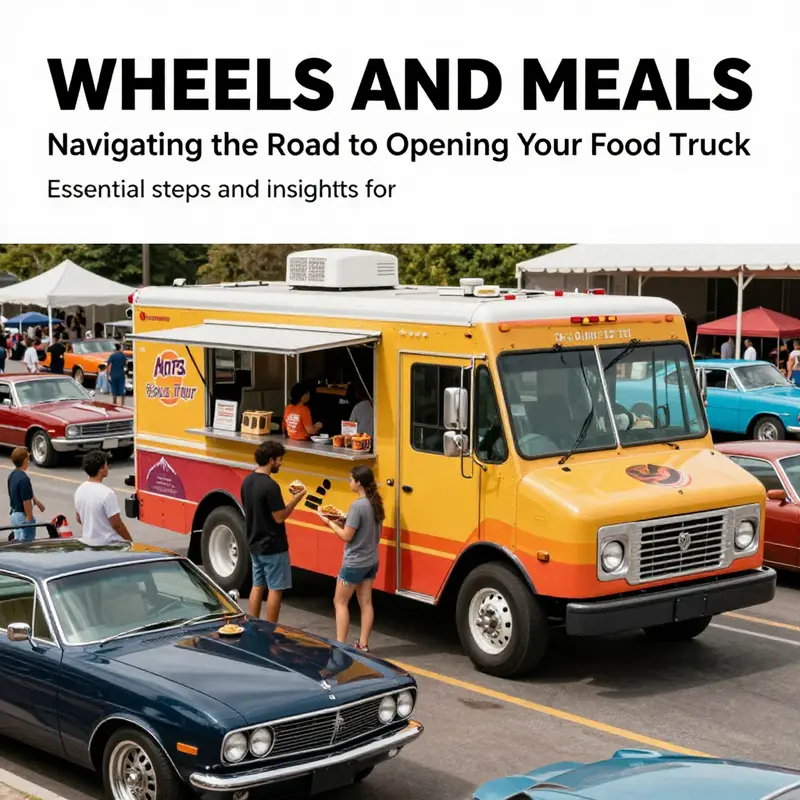
Opening a food truck is not just about serving gourmet meals on wheels; it’s an expedition where the love for cars and culinary arts meets enterprise. For hobbyist car modifiers to professional tuners, understanding the legal groundwork is paramount. Each step from business registration to ensuring vehicle compliance resonates with both car enthusiasts and aspiring restaurateurs. This article will delve into the vital requirements starting with business registration, the essential permits necessary for food service, the critical health and safety guidelines, and finally, how to make sure your vehicle and equipment are up to par with health regulations. The fusion of mechanical precision and culinary creativity begins here!
From Registration to Road: Building the Legal Foundation for a Successful Food Truck
The path from an idea to a rolling kitchen begins long before a sizzle marks the first test fry. It starts with the legal scaffolding that keeps a mobile food business upright, protects the owners, and sets a clear route to sustainable operation. In many markets, the difference between a truck that thrives and one that stalls lies not in the recipe but in the choice of business structure and the speed with which you secure the right registrations. While recipes and branding attract customers, the law organizes your enterprise, limits personal exposure, and shapes how you fund growth, hire staff, and manage taxes. This chapter unpacks the core legal steps that form the foundation of any food-truck venture, emphasizing that decisions made at this stage reverberate through every shift, every permit renewal, and every financing discussion for years to come.
At its core, the first major fork in the road is choosing a business entity. The simplest route is a sole proprietorship, where you own and run the business by yourself. It minimizes upfront paperwork and regulatory complexity, which can be appealing for a one-person operation testing a concept. Yet it offers no shield against personal liability. If a customer claims a slip-and-fall, or a supplier dispute turns sour, your personal assets may be at risk. Tax reporting in a sole proprietorship also flows directly to your personal return, which can complicate bookkeeping as the enterprise scales.
A partnership introduces shared responsibility and resources but brings its own set of liabilities. Partners can be a great way to pool capital and skills, yet disagreements or uneven contributions can fracture operations and complicate tax filings. In many partnerships, personal liability exposure remains a concern unless you adopt a more protective structure.
The popularity of the LLC—limited liability company—reflects a shift toward balancing flexibility with safety. An LLC separates personal assets from business debts and lawsuits while offering pass-through taxation in most cases. This means profits and losses can flow to members’ personal returns without the double taxation of some corporations. An LLC tends to strike a pragmatic middle ground for a food-truck startup: limited personal risk, manageable compliance relative to a corporation, and adaptability as the business grows or changes partners.
Corporations, by contrast, provide robust liability protection and a clear path to investment, but they come with more oversight, formalities, and regulatory requirements. A corporate structure can simplify issuing stock or attracting outside investors, and it can streamline certain contracts. However, corporations face more complex tax rules and ongoing obligations such as annual reports, shareholder meetings, and formal governance. For a food-truck operator eyeing rapid expansion, a corporation may make sense, but it also requires more disciplined systems from day one.
With a structural choice in mind, the next essential step is to register the business with the appropriate authorities. In the United States, this typically means filing with the state Secretary of State and confirming your entity type. Even before you slip a decal on the truck, your business must exist as a recognized legal entity. Registration legitimizes your operation in the eyes of customers, suppliers, and lenders, and it is the base upon which all other licenses and permits are built. In many jurisdictions, you’ll also need to register your trade name if you intend to operate under a name different from your legal business name. Securing a distinct name avoids confusion and helps protect brand identity.
Alongside formal registration, you’ll usually pursue an Employer Identification Number (EIN) from the Internal Revenue Service. The EIN functions like a Social Security number for your business. Even if you do not plan to hire employees right away, an EIN is often required to open a business bank account, file tax returns, and process payroll if staff soon follows. Treat the EIN as a critical infrastructure asset—one that keeps your finances organized and auditable as the business grows and as you interact with vendors, landlords, and lenders.
As you solidify your legal framework, you’ll encounter a set of practical, always-on considerations that extend beyond one-off filings. A DBA, or doing-business-as name, may be necessary if you want to operate under a trade name that differs from your legal entity. This is common in the street-vending world, where a memorable brandName can be a competitive advantage on menus and signage. The DBA process is usually straightforward but varies by jurisdiction, so you’ll want to align it with your entity registration to avoid conflicts and ensure consistent branding.
Another essential dimension is how your chosen structure affects liability, insurance needs, and financial management. An LLC, for instance, often makes it easier to obtain business loans or lines of credit because lenders view the entity as a separate legal player. This separation helps protect personal savings and assets, a factor many operators weigh heavily when evaluating equipment costs, vehicle upgrades, or expansion plans. Insurance decisions typically align with the structure as well. Even with strong liability protections, you’ll still need coverage that reflects the realities of a mobile kitchen: commercial auto insurance for the truck, general liability insurance for the risk of foodborne illness claims or customer injuries, and property insurance for equipment and stock. Some operators also pursue umbrella coverage to address extraordinary events. In short, your legal structure is not just a tax or paperwork decision; it’s a mortgage on risk and a lever for growth financing.
A crucial link between registration and daily operations is the recognition that the landscape of permits and licenses sits atop your entity choice. The entity you select informs how you apply for and maintain these permissions, but it does not replace them. Most markets require a baseline of permits that cover health compliance, safety, and street presence. A mobile-food permit or a street-vending license is typically non-negotiable if you plan to operate in public spaces. The health and safety permits—often issued by a city or county health department—ensure the truck’s food-handling practices meet hygiene standards. Those standards encompass not just the preparation of food but also the cleanliness of surfaces, handwashing facilities, and the training and health certification of employees who handle food. In many places, every worker who touches food must hold a health certificate, underscoring the shared responsibility for a safe, sanitary operation. This is the moment where your internal systems—sanitation schedules, food safety training, and cleaning protocols—must harmonize with your legal framework.
Water, waste, and the plumbing of a mobile kitchen introduce another layer of compliance. If you prepare on the truck, you usually must demonstrate adequate water supply and waste management. Rules vary widely, but common standards require a potable water tank of a specific minimum capacity and a wastewater tank sized to accommodate the needs of the operation with a buffer above water capacity. These requirements are not just about water usage; they are about preventing contamination and ensuring that the truck’s systems can handle peak service without compromising health regulations. In some jurisdictions, these specifications are tied to inspections that occur when you first register or when you renew permits, so plan ahead and budget for these elements as you design your mobile workspace.
When considering licenses and the day-to-day realities of compliance, it helps to view the process as a single, evolving system rather than a series of discrete tasks. The vehicle itself must meet safety and sanitation standards, and those standards mesh with your choice of entity, your insurance coverage, and your operating permits. Food-grade materials for contact surfaces are a non-negotiable baseline, and the truck should be equipped with reliable refrigeration, a hygienic handwashing station, proper sinks, and surfaces that are easy to clean and sanitize. Maintenance, too, is part of compliance: routine cleaning, calibration of equipment, and secure storage of cleaning chemicals all contribute to a safe operation and help you avoid penalties or shutdowns that interrupt revenue.
Legal structure decisions ripple into financing and contracts as well. If you plan to hire staff, an LLC or corporation generally simplifies the payroll, benefits, and liability landscape. It also clarifies ownership stakes and decision-making authority, which becomes critical as partners or investors join the venture. Even in the early stages, contracts with suppliers, landlords, and event organizers benefit from a clear, well-drafted entity. A strong legal footing reduces friction with partners and helps you negotiate favorable terms for space in markets, commissaries, and festivals. In fact, your chosen structure can become a competitive advantage, signaling to customers and vendors that you are a serious, organized operator rather than a spontaneous venture that could collapse under a minor dispute or a sudden cost, such as a permit renewal.
One of the reasons this topic deserves careful attention is that the rules can vary significantly by location. A framework that works beautifully in one city might require additional licenses in another. This variation affects both the initial setup and ongoing compliance. It also means that operators who intend to scale geographically must plan for jurisdictional differences from the outset. The best approach is to map out a jurisdiction-by-jurisdiction plan during the concept phase, identifying the entity type you intend to use, the registration steps, and the licenses you’ll need. In many cases, speaking with a local accountant or attorney who understands mobile food operations can prevent costly missteps or unnecessary delays.
For operators who are building businesses within specific cultural or community contexts, the legal path can intersect with considerations that extend beyond general business planning. For example, there are communities where particular regulatory patterns and licensing rhythms are more navigable when the enterprise is structured in a certain way or when partners bring additional community ties and credentials to the project. In these cases, the decision about how to structure the company might be influenced by goals such as local collaboration, access to community programs, or partnerships with nonprofits and schools. A thoughtful approach to structure and compliance enables an operator to align legal choices with mission, values, and community impact. For those exploring these angles, a deeper dive into sector-specific considerations—such as legal risks, licensing peculiarities, and opportunities for community benefit—can help shape a plan that is not only compliant but also resilient and purpose-driven. To learn more about such considerations in Latino food-truck startups, you can explore a focused discussion on legal considerations for Latino food-truck startups.
As you finalize your structure and begin applying for permits, keep in mind a practical truth: the legal framework is a living system. It requires ongoing attention—renewals, audits, updates to licenses when you change the menu or expand to new locations, and continual training for staff. The more proactive you are in maintaining filings, updating safety protocols, and documenting compliance, the less likely you are to face shocks that can derail a busy night service. A disciplined approach to registration and structure yields dividends in the form of smoother inspections, faster permit renewals, and greater confidence from lenders, partners, and customers. In that sense, the act of registering and choosing a structure is not merely a box to check; it is a strategic investment in reliability and growth.
Ultimately, the journey from a blank sheet of paperwork to a bustling street corner is inseparable from the legal architecture you build at the start. Your choice of entity informs tax treatment, liability protection, and the ease with which you can attract capital. Registration gives you lawful access to operations, branding, and formal relationships with suppliers and landlords. Permits and health approvals ensure that your kitchen on wheels is safe, compliant, and trusted by the communities you serve. Water and waste systems, vehicle standards, and insurance round out the infrastructure that makes your truck a legitimate, reliable, and competitive business. When done thoughtfully, the process creates a foundation that supports a thriving operation night after night, season after season, while you focus on the art of cooking, the joy of service, and the growth of your brand.
External guidance and region-specific details are essential as you translate this framework into action. The guidance from official government resources provides up-to-date requirements for street trading, mobile vendors, and the broader regulatory landscape. For a comprehensive, practical starting point, you can consult resources that outline Street Trading obligations or Mobile Food Vendor regulations in your area. These references serve as a reliable compass as you navigate local nuances and ensure your legal foundation remains rock-solid as you roll toward your first service and beyond. As you plan, consider looping in a community of peers and mentors who have tread similar ground. Their experiences with licensing timelines, renewal rhythms, and unexpected hiccups can be invaluable as you set up your operations and design your growth path.
To connect this chapter to practical, regionally grounded guidance, explore the linked resource on legal considerations for Latino food-truck startups, which offers field-tested perspectives on structuring the business for community impact and operational resilience. This link is intended to complement the broad framework laid out here with a lens that reflects diverse ownership experiences and regulatory realities. Legal considerations for Latino food-truck startups.
As you move forward, keep the big picture in view: a sound legal and structural foundation is not an obstacle to be endured but a platform on which you can build your culinary dream. The better you understand the implications of each option—the entity type, the registration steps, the licenses, and the ongoing compliance—the faster you can turn curiosity into a steady, scalable business. And when you approach the road with that clarity, the truck isn’t just a vehicle; it’s a carefully engineered enterprise with predictability, protection, and potential baked into every service window. For operators who want to cross-regional boundaries, this approach also creates a transferable framework—one that can adapt as you bring your menu, your crew, and your brand to new neighborhoods and new crowds. The street, in short, becomes a stage for a legally grounded, financially sound, and culturally vibrant food business that can endure the inevitable twists of startup life.
External resource for further guidance: https://www.fda.gov/food
The Permit Passport: Navigating Licenses, Inspections, and the Legal Road to a Food Truck
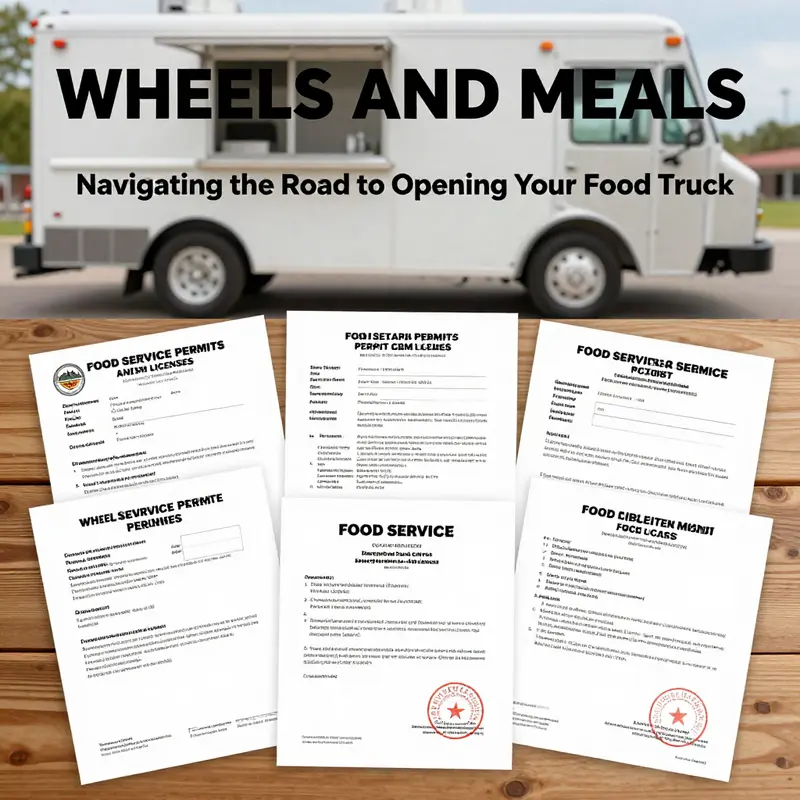
A food truck is more than a kitchen on wheels; it is a mobile business that must pass through a gauntlet of permits, licenses, and inspections before it can safely roll into a city street. The paperwork may seem tedious, but it is the framework that ensures food safety, protects the public, and keeps the operation running smoothly across different neighborhoods and markets. The exact requirements vary by country, state, county, and even by individual city, but there is a recognizable through-line. Start with the fundamentals of legal structure and business registration, then layer on health and safety permits, vehicle and water systems, and a mosaic of zoning, fire, and tax considerations. The path is a curated sequence rather than a single checkbox, and understanding how the pieces fit helps prevent costly delays and hard-won corrections after you have invested time and money into the concept and equipment.
First comes the legal backbone: how you register the venture you intend to operate. Most aspiring operators choose a legal structure that balances personal liability with administrative simplicity. A sole proprietorship might be the easiest start, but many owners migrate to an LLC or a corporation as the business grows. This decision informs the kind of business license you apply for and how you report income, pay taxes, and open a bank account. In parallel you secure a local business license or trade license, which is often the umbrella authorization to operate in your jurisdiction. Some places require an additional street vendor or individual business permit, especially if you plan to operate in crowded urban cores or parks. The sequence matters: you cannot merely operate a truck without these foundational registrations in place, and many municipalities require proof of a business license before issuing any food-related permit.
With the entity in place, the focus shifts to food service and the health of your operation. A health department permit or a food establishment permit is not a mere formality; it represents the city’s assessment that your truck, your kitchen layout, and your procedures meet sanitation and safety standards. This typically involves a facility inspection that scrutinizes how food is stored, prepared, cooked, held, and cooled, as well as how you manage temperatures, cross-contamination, and cleanliness. In practice, this means you will present a floor plan of the truck, describe equipment capabilities, and show you have a dedicated handwashing station or access to one that meets code. Employees who handle food generally must hold health certificates or food handler licenses, underscoring the shared responsibility of everyone who touches ingredients to maintain hygiene and safe handling practices.
In parallel to the health permit, many cities require a mobile food vendor permit or a mobile food facility permit. This license acknowledges the unique mobility and location-specific considerations of a food truck. It often includes expectations about waste disposal, vehicle mobility, and designated operating zones. In places with centralized licensing systems, you may apply for multiple permits in one application window, but the review timelines and inspection cadence can differ among agencies. For operators who intend to sell alcohol or to cook in certain ways, there may be additional permits tied to licensing alcohol service or to particular cooking methods. In the United States, for example, a seller’s permit or sales tax permit is commonly needed so you can collect and remit tax on food sales. An Employer Identification Number (EIN) from the IRS is typically pursued to support tax reporting and to open a business bank account. These tax-related registrations are not merely bureaucratic hurdles; they enable you to operate within the formal economy and to build the financial foundation for growth.
The practical realities of operating a mobile kitchen also demand careful attention to water and waste. If your truck involves on-board food preparation, you must demonstrate adequate water supply and waste management. A water tank size that ensures safe food preparation is often specified, and the accompanying wastewater tank must be proportionate to the water capacity. A common scenario used in big cities features a water tank of 40 gallons and a wastewater tank that holds at least 15 percent more than the drinking water capacity, which yields a 46-gallon waste reservoir in a 40-gallon system. These figures matter not only for compliance but for the daily rhythm of service: reliable water for handwashing, cleaning, and sanitizing surface areas, paired with appropriate disposal of gray water in approved facilities. Even in contexts where the same standards are not codified with the same exact numbers, the principle remains the same: maintain continuous, safe water use and prevent contamination through proper waste management.
The vehicle and equipment you bring to the street must themselves be compliant. Your truck has to meet safety and sanitation standards that reflect its purpose as a food preparation and service vehicle. Surfaces that contact food should be made of food-grade materials, and critical appliances—refrigerators, grills, ice machines, sinks—need regular maintenance, cleaning, and certification where required. The gear should be installed in a way that minimizes clutter, preserves airflow, and adheres to fire safety rules when open flames or gas appliances are used. In some global contexts, there are idiosyncratic rules about how liquids are transported. For example, certain jurisdictions have special transport permits for liquid foods if you rely on external transport services; conversely, if you carry your own containers that meet safety standards, some local authorities relax certain transport requirements. The underlying theme across these rules is that the vehicle and its systems must not introduce risks to food safety or public health, and they must be verifiable upon inspection.
Insurance is another essential layer. A comprehensive package typically includes commercial auto insurance for the truck itself and liability insurance to cover claims related to foodborne illness, accidents, or property damage. Many municipalities require proof of insurance before issuing licenses or permits, and lenders or partners may insist on the coverage before underwriting equipment purchases. The cost and scope of insurance are often dictated by vehicle type, operation scale, and the markets you intend to serve. While insurance can feel like a protective afterthought, it is, in practice, part of the risk management that enables you to operate in more places, at more events, and with greater confidence.
Zoning and location permissions are a recurring hurdle for mobile food vendors. Local zoning laws shape where you can park, how long you can stay, and whether you can operate near brick-and-mortar restaurants, schools, or hospitals. Some cities create designated zones or events—farmers’ markets, street fairs, or park locations—where mobile vendors can gather. Even if you win the right to park in a popular zone, you may confront competition and evolving development plans that threaten long-term viability. The more you know about the locality’s planning documents, the better you can anticipate changes and negotiate stable operating agreements. Additional location-related permits may come into play for noise, environmental impact, or street closures during special events. In aggregate, these location provisions determine your market footprint and your schedule, influencing everything from seasonality to the cadence of pop-up collaborations with other vendors.
Beyond these core licenses, a roster of supplementary permits can appear depending on where you operate. Environmental permits or noise permits may be required in noise-sensitive areas or near protected habitats. Fire safety permits are common when you use open flames or high-heat equipment, and fire extinguishers, proper ventilation, and emergency shutoff protocols are part of the expected standard. You will also encounter tax-related registrations such as sales tax collection and, in some cases, a local business tax or business privilege tax. The array of requirements can feel daunting, but each item serves a protective purpose for the community and for the operator alike. The process is iterative: you submit applications, pay fees, complete inspections, and then demonstrate ongoing compliance through periodic re-inspections and record-keeping.
As you navigate this landscape, the most reliable strategy is to consult official sources for the exact rules in your area. Government portals, health departments, and licensing agencies publish step-by-step processes, fee schedules, required forms, and inspection checklists. In some jurisdictions, you may find it helpful to engage a small business development center or a licensing consultant who understands how to assemble a compliant package efficiently. The valuable part of this preparation is not just ticking boxes; it is building a durable foundation for operations that can scale across multiple venues and seasons with fewer surprises. You will also establish a routine for maintaining records, renewing licenses on time, and tracking changes in regulations that could affect your permit status. Keeping a proactive stance on compliance tends to yield smoother startup phases and steadier risk management down the road.
To connect the dots between these formal requirements and practical day-to-day operations, it helps to anchor your planning in real-world guidance. For leaders who want a deeper dive into the legal considerations specific to Latino food truck startups, a targeted resource provides context and nuance that can sharpen decision-making and risk assessment. legal considerations for Latino food truck startups offers a perspective that complements the general framework described here, illustrating how local rules shape menus, branding, and collaboration opportunities while remaining rooted in compliance. This kind of targeted exploration can illuminate the intersections between culture, cuisine, and licensing in markets that value authentic experiences alongside robust safety practices.
The journey through permits and licenses is not just a checklist; it is a strategic planning exercise. You begin by validating the legal structure and securing the essential business credentials, then you layer in the health and safety approvals that certify your kitchen on wheels can operate without compromising public health. You account for water and waste management to ensure sanitation remains uncompromised during service. You select a vehicle and equipment setup that meet safety codes and food-contact standards. You secure insurance that underwrites risk, and you design a location strategy that respects zoning while offering access to customers. Along the way you prepare for possible environmental and fire safety considerations, and you budget for taxes and ongoing compliance obligations. Together, these pieces create a dependable operating platform rather than a fragile set of ad hoc arrangements.
As you move from planning to execution, you will likely encounter a rhythm of applications, inspections, and renewals. The timeline can stretch across weeks or months, depending on the complexity of your jurisdiction and the demand on local offices. Patience helps, but so does organization: maintain a centralized repository of permits, licenses, inspection reports, training records, supplier invoices, and equipment maintenance logs. A well-organized filing system reduces the back-and-forth with inspectors and clarifies what you need to address if a review reveals gaps. It also communicates to partners and lenders that you are serious about compliance, which can open doors to opportunities that demand a higher level of credibility.
In the broader sense, the permit process teaches a foundational business literacy. It trains you to think about risk, process, and governance as necessary components of growth rather than as obstacles to creativity. The food you serve becomes inseparable from the reliability of the operation: customers trust that the truck they choose to support is safe, properly licensed, and accountable for its practices. The municipal officials who review your documents are not adversaries but stewards of the shared public space where your culinary concept finds its audience. When you approach them with thorough documentation, transparent procedures, and a demonstrated commitment to safety, you are more likely to receive a favorable path forward that supports quick ramp-ups to service and manageable scaling.
For readers who want to verify guidance or tailor it to a specific locale, official resources remain the most dependable compass. In the United States, for instance, the Office of Health and local health departments provide explicit steps for the health permit and the mobile vendor permit, while city finance departments explain sales tax obligations and seller’s permits. In the United Kingdom, street trading licenses govern the permission to operate in public spaces and the associated conduct requirements. The exact forms, fees, and inspection schedules can differ widely, so always start with your city or county government’s website and work downward through the agencies that regulate food handling, sanitation, and commerce. These portals are designed to be navigable and are updated to reflect changes in policy, priorities, and public health guidance.
The path to a legally compliant food truck is not a one-size-fits-all itinerary. It is a tailored blueprint built from the facets described above. The core idea is to align your business plan with the regulatory expectations from day one, anticipate the inspection timeline, and maintain rigorous standards in food safety, equipment maintenance, and financial administration. In doing so, you establish a resilient platform that supports both short-term launch goals and long-term growth across markets and events. The permit passport you assemble becomes the passport to broader opportunities, including collaborations with organizers, participation in vendor networks, and the ability to operate across diverse neighborhoods with confidence that every required credential is in order.
External resource for broader regulatory context: https://www.fda.gov/food
Navigating Health and Safety Permits for a Mobile Kitchen
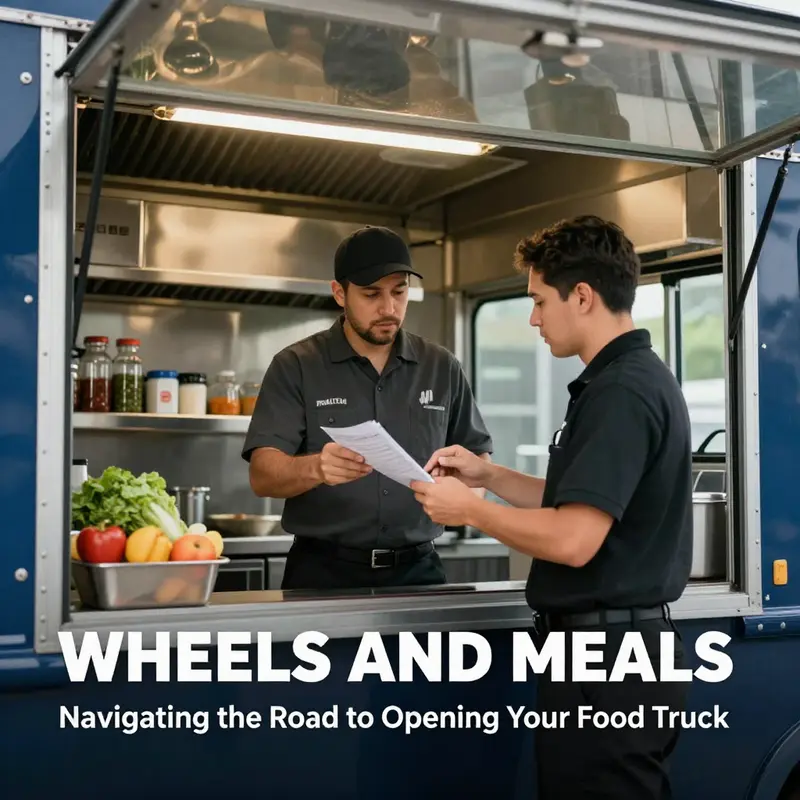
Health and safety permits are the backbone of a responsible mobile food operation. They ensure that food is produced, stored, and served in a way that protects customers and staff. The exact permits vary by country, state, city, and even neighborhood, but the core pattern remains similar: establish your business legally, demonstrate safe food handling, and prove that your vehicle, equipment, and facilities meet hygiene standards.
First, register your business and secure the basic licenses. This usually includes a business license or trade permit and a tax registration. If you hire staff, you may need an Employer Identification Number (EIN) and workers’ compensation coverage. These steps formalize your operation and lay the groundwork for further permits.
Next, obtain health and food service approvals. Local health departments will typically require a vehicle inspection, verification that food storage and preparation areas meet sanitation requirements, and proof of sanitary facilities such as a handwashing sink and cleanable surfaces. Some jurisdictions issue a dedicated mobile food vendor permit or a food truck license, often with location or routing restrictions. Understand and respect these constraints, because they influence where and when you can operate and help you plan your routes with less friction.
Water, waste, and transport safety are recurring themes. Plan for safe water supply, proper wastewater storage, and adequate drainage. Many regulators require specific tank sizes and containment measures to prevent leaks or contamination. Designing your kitchen layout around easier cleaning and proper separation of raw and ready-to-eat foods reduces risk and simplifies inspections.
Insurance protects you and your customers. General liability insurance is commonly advised, and commercial auto coverage is typically required for the vehicle itself. Some locations also mandate workers’ compensation and equipment coverage. Be prepared to provide proof of insurance during permit applications and renewals.
Ongoing compliance means watching renewal dates, maintaining records, and updating procedures as your menu or operations evolve. Keep inspection reports, supplier invoices, and training logs organized. When regulators or venue managers ask about safety practices, you should be able to demonstrate clear, documented procedures for handwashing, sanitizing, temperature control, and cross-contamination prevention.
Finally, build a culture of safety from day one. Train staff on proper food handling, monitor food temperatures with reliable thermometers, and communicate your safety standards to customers. A strong safety program isn’t just a requirement; it’s a competitive advantage that reinforces trust and repeat business.
Rigged for Flavor: How Vehicle and Equipment Compliance Sets a Food Truck on a Safe, Savory Course
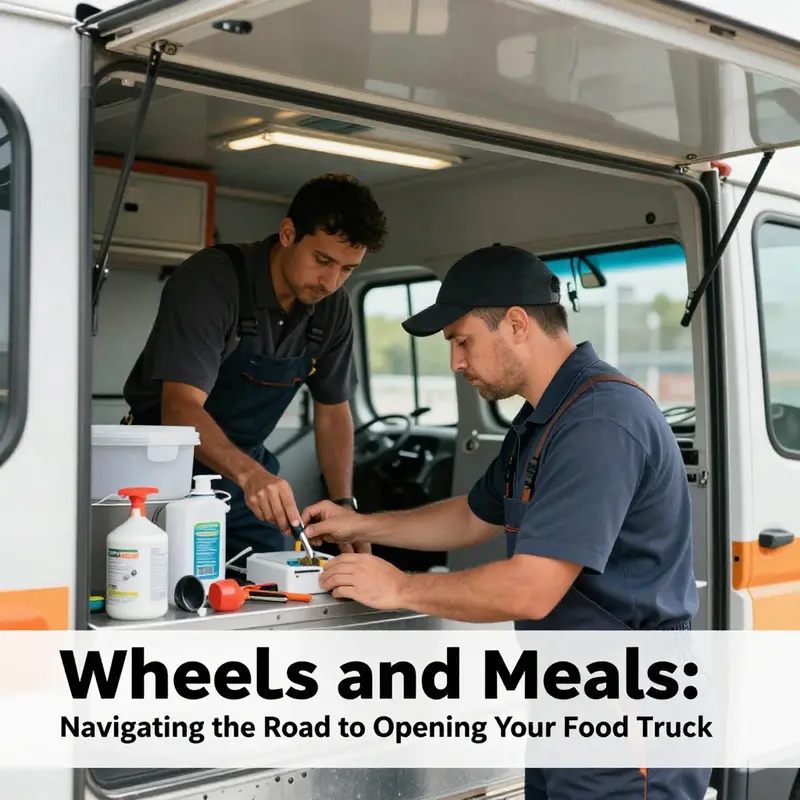
When you chart a path toward freedom on four wheels and a stove, the road you must travel first is regulatory. Vehicle and equipment compliance isn’t a decorative layer; it’s the engine that keeps a mobile kitchen legal, safe, and capable of delivering consistent quality wherever you pull up. The moment you commit to open a food truck, you are entering a system of standards that blends public health, roadworthiness, and operational practicality. This is not merely about passing inspections; it’s about designing a moving kitchen that prevents contamination, preserves energy and water, protects your team, and earns the trust of diners who expect the same hygiene and taste no matter where they find you. The challenge is to translate codes and guidelines into a vehicle you can buy, adapt, and maintain without turning the process into a bureaucratic maze. In practice, the path is consultative and iterative: you begin with a clear model for your truck’s role, then verify it against local, regional, and national expectations, and finally embed continuous compliance into daily operations.
First, the vehicle itself must exist as a dedicated, purpose-built or properly modified unit. The baseline is a carriage-type configuration: a vehicle that is recognized, by the governing framework in your region, as a mobile food facility rather than a generic van. In many places, the distinction matters as much as the exhaust system and the electrical service because it governs inspections, certifications, and access to regulated zones. The emphasis is on a verifiable identity. A truck or trailer marketed as a food vehicle should be seen as a compliant source of food preparation, not a repurposed passenger vehicle. This clarity helps streamline approvals and reduces the risk of later retrofits.
Next comes the reality of food safety inside the moving kitchen. The interiors of the vehicle—especially surfaces that contact food—must be built from food-grade materials. Standards such as GB 4806 provide benchmarks for materials that resist corrosion, do not shed harmful substances, and remain safe under kitchen temperatures and cleaning regimes. The choice of materials is about preventing leachates from reaching ingredients. The goal is a cleanable, non-porous environment that can be scrubbed quickly between customers.
Identification of the vehicle is more than branding; it is a regulatory signal. The truck should bear clear, legible identification. In some jurisdictions, this takes the form of a high-contrast label with a minimum height so inspectors can recognize the vehicle’s function from a distance. The labeling must align with permitted zones for operation, which often include waste rules and equipment standards. A well-marked truck reduces misunderstandings and supports smoother market access.
With the chassis and surfaces addressed, the licensing framework follows as a practical necessity. The vehicle must be registered and insured, and it typically requires a dedicated operation permit. The process usually unfolds through a layered system: a basic business license, a vehicle-specific permit, and then more specialized approvals tied to the kitchen’s configuration, such as ventilation, fire safety, and water use. The layering ensures that changes can be updated without disrupting the entire business model.
Beyond identity and paperwork, the vehicle must be equipped for safe, compliant food production. A fully functional kitchen outside a brick-and-mortar premise means reliable cooking equipment, refrigeration, handwashing facilities, and appropriate storage. The equipment list is a safety protocol. A cooking range must maintain temperatures with easy-to-monitor controls. Refrigeration units must hold safe temperatures, and the sink must deliver hot and cold water for cleaning hands and utensils. A robust waste stream, separate from potable water, should include space for disposables and recycling, aligned with local rules.
Water and waste systems require careful planning. On-board preparation requires a potable water source and an appropriate waste management strategy. Local guidance often specifies minimum capacities to prevent mixing waste with drinkable water or with food-contact surfaces. A typical reference is a water tank of tens of gallons, with a waste-water reservoir larger to accommodate cleaning cycles. This supports a predictable kitchen supply while avoiding stops for refills or dumps. The water system and waste containment become part of an auditable loop regulators inspect.
Safety equipment is non-negotiable. Fire extinguishers and basic safety devices must be accessible, with clear evacuation paths and maintenance routines. In many jurisdictions, safety measures dovetail with fire codes, ventilation, grease management, and noise regulations. The aim is to prevent accidents and equip the team to respond quickly.
The equipment and facility landscape is not static. Hygiene and sanitation must be an ongoing practice. The truck should include a system for regular cleaning and disinfection of all food-contact surfaces, with dedicated tools for prep and cleaning. The daily routines should include traceability of ingredients and proper waste disposal in line with local rules. The architecture is designed to prevent gaps where safety could slip.
This broader regulatory frame is a living ecosystem that includes local zoning, licensing, environmental oversight, and health administration. In some places, measures require registration of the vehicle with a Food Business License, Carriage-Type Food Truck Permit, or similar public-facing credentials. Understanding this ecosystem helps plan to minimize retrofits and avoid friction from incompatible permits or outdated specifications. In practice, the journey to readiness is anchored by careful research and proactive engagement with authorities. Map out the exact requirements, align every choice—vehicle type, materials, signage, plumbing, and electrical layout—with those conditions, and build flexibility into your plan for growth or changing service patterns.
To integrate these ideas, operators begin with a site-centric mindset. They identify typical service environments—markets, events, and street corridors—where checks and balances can be applied, couple their equipment plan with a sanitation schedule, water inventory, and waste protocol, and verify signage complies with local visibility rules. The result is a mobile kitchen that is safe, auditable, accessible, and adaptable, so you can concentrate on cooking rather than chasing permits. When inspectors drop in, you should feel confident that the environment supports safe cooking, easy cleaning, and efficient service, while the legal framework supports operation in chosen locations.
For readers applying theory, consider the practical differences between platform configurations. A vehicle choice that balances maneuverability, space, and compliance can ease operations and site access. A concise comparison and considerations tied to vehicle selection can be found in general guidance resources. This helps translate regulatory expectations into tangible decisions about footprint, kitchen layout, and placement of essential systems such as the water tank, sinks, and waste compartments. While specifics vary by jurisdiction, the overarching discipline remains universal: build a mobile kitchen that is safe, auditable, accessible, and adaptable, so you can concentrate on feeding people rather than chasing permits.
Ultimately, the journey to opening a food truck begins with careful alignment of vehicle design, equipment choices, and regulatory requirements. You are constructing a regulated, mobile platform that upholds food safety, protects your team, and delivers consistent quality to your customers. The path requires diligence, collaboration with authorities, and ongoing maintenance and documentation. When these elements come together, the truck is not merely street-legal—it is a reliable stage for culinary innovation on wheels, able to travel from neighborhood rollouts to festival lines while keeping safety and sanitation at the heart of every service.
External reference for regulatory guidance and up-to-date information remains essential. Operators should consult official resources and local ordinances to ensure accuracy, as standards evolve. For jurisdiction-specific guidance, refer to official portals and documentation that illustrate how a region structures its carriage-type food truck oversight and the expectations for risk control and traceability. Access to these materials helps ensure that the design and operation of a mobile kitchen stay aligned with public health standards while supporting growth of a food-truck business in a changing regulatory landscape.
Final thoughts
Incorporating a food truck into your automotive journey requires diligence, passion, and the right knowledge. Each phase, from legalities to health inspections, symbolizes a pivotal point blending culinary excellence with automotive flair. By registering your business properly, acquiring the necessary permits, ensuring your food truck adheres to health standards, and maintaining compliance with vehicle regulations, you are setting the groundwork for success. The wheels of opportunity are turning, and soon, your food truck could be the next sought-after stop for foodies across town!