
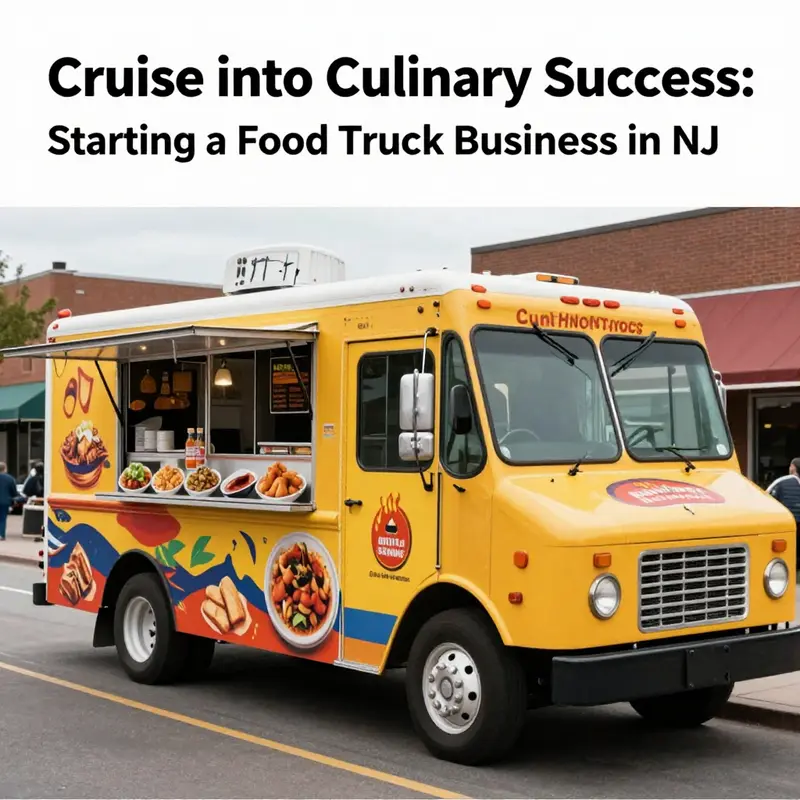
Starting a food truck business in New Jersey offers an exciting opportunity to marry a love for food with the freedom of mobile entrepreneurship. This guide is engineered for car enthusiasts and modifiers, providing keen insights into launching a food truck. Each chapter connects the nuts and bolts of business planning, legal structures, permits, design specifics, and marketing strategies to the distinct flavor of New Jersey’s vibrant street food culture. Whether you envision serving gourmet burgers or artisanal tacos, this guide will drive you towards your culinary adventure on wheels.
Chapter 1: Charting a Garden State Path—Crafting a Bulletproof Business Plan for a New Jersey Food Truck
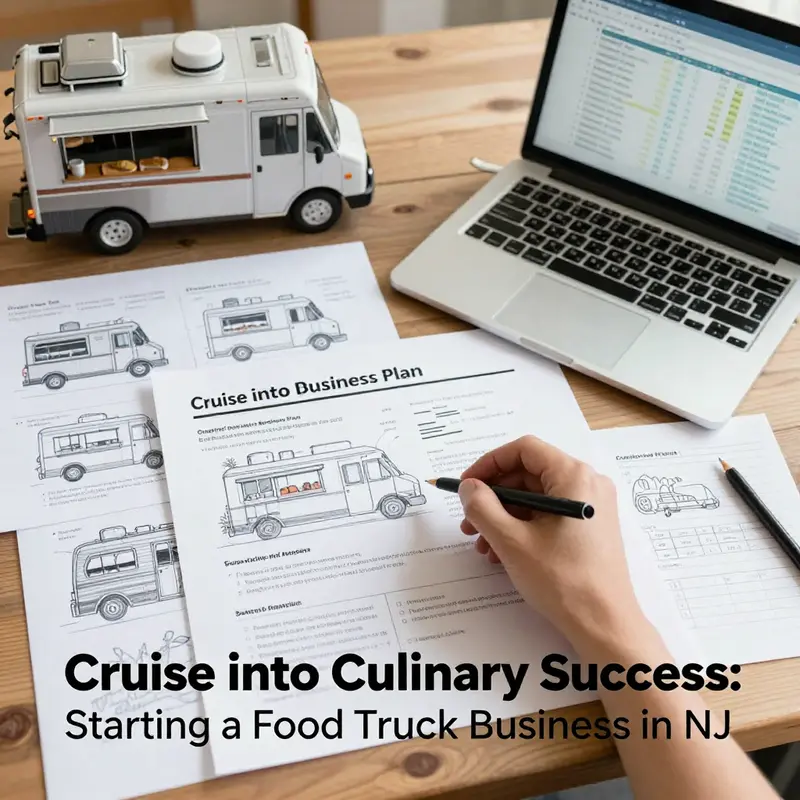
A great food, a compelling concept, and a friendly storefront on wheels are only part of what makes a food truck endure. In New Jersey, where competition is fierce and the regulatory landscape is intricate, the engine that keeps a mobile kitchen running smoothly is a meticulously crafted business plan. This plan functions as both blueprint and compass, translating your culinary idea into a practical route from concept to cash flow. It starts with a crisp executive summary that distills your vision into a few sentences: the concept, the mission, and your unique selling proposition. Will your truck showcase gourmet burgers with a twist, slice through the crowded pizza on wheels with a signature crust, or bring plant-based comfort food to busy urban pockets? The essence of your niche matters because New Jersey’s markets reward clarity. A well-defined concept helps you allocate kitchen space, design a menu that fits a truck’s constraints, and speak to a target audience with a consistent voice.
But a plan is not merely a dream document. It is a living tool grounded in evidence. Thorough market research becomes the backbone of your projections, revealing who buys what, where, and when. In a state as diverse as New Jersey, you’ll discover that demand patterns shift by neighborhood, season, and event calendar. Some neighborhoods bustle with office workers who crave quick, high-quality lunches; others surge with festival crowds demanding novelty and shareable bites. Local trends—such as consumer interest in locally sourced ingredients, sustainable packaging, and responsible sourcing—can influence your menu design and supplier choices. You’ll also want to map the competitive terrain: what price points other trucks hit, what menus they offer, and how you can differentiate without spreading your operations too thin. This isn’t imitation; it’s an informed stance—one that positions you to own a distinct slice of the market.
A robust business plan then translates insights into a practical operational model. You’ll need to decide early on the vehicle that will carry your dreams and the equipment that will turn your concept into a consistent product. The vehicle choice affects kitchen layout, speed of service, and the kinds of menu items you can deliver. A compact, highly efficient setup suits lighter menus and higher turnover, while a larger configuration might accommodate more complex preparations and a broader menu. Your plan should outline the configuration you intend to purchase or lease, the timeline for retrofitting, and the standards you will uphold to pass health inspections. In New Jersey, health and safety rules are not optional hurdles; they are the baseline that determines which menus travel the state and which neighborhoods welcome your truck. Alongside the vehicle, your supplier network forms the arteries through which ingredients flow. Establish relationships with reliable farms, wholesalers, and local producers who share your commitment to freshness and quality. Your procurement approach, whether you emphasize locally sourced components or seasonal specialties, should align with your branding and pricing strategy.
Financial planning anchors everything. Start with a transparent map of startup costs—your vehicle or trailer, equipment upgrades, initial inventory, licensing fees, insurance, and branding. Costs in New Jersey can vary widely depending on truck size, equipment quality, and your chosen market. The plan should present a realistic breakout of capital expenditures and a detailed operating budget that includes ongoing costs such as staff wages, fuel, maintenance, and consumables. Pricing strategy is not simply about what customers are willing to pay; it’s about ensuring margin after food costs, packaging, labor, and overhead. A common aim is to target a healthy food cost percentage—often in the realm of 28–32 percent of menu price for many concepts—while keeping portions satisfying and consistent. The financial section should also include revenue projections built on sensible assumptions: expected daily covers, average order value, peak days, and a credible growth trajectory that accounts for seasonality and event-driven traffic. A well-prepared forecast demonstrates to lenders or investors that you have done your homework and can translate appetite into sustainable profit.
In a market like New Jersey, where permits and permits again shape what you can do and where you can operate, the legal scaffolding must be embedded in the plan from day one. Your plan should list the necessary permits and licenses, map out the timeline for obtaining them, and assign responsibilities to team members or partners. You will almost certainly need a local business license from the municipality where you operate, plus a Food Service Establishment Permit from the state’s health authority, and a mobile food vendor license to run on the move. A Sales Tax Permit is essential to collect and remit tax, and an EIN is required for tax reporting and banking. Zoning and parking considerations also matter; some towns restrict where a food truck can park, when, and for how long. Each of these regulatory steps must be acknowledged in a practical sequence—so your plan reads not as a theoretical concept, but as a regulatory-friendly itinerary that keeps your truck on the streets rather than in limbo.
The operational plan is where your plan begins to answer the question: how will you deliver a consistent, high-quality product every day? It requires a clear menu design that balances novelty with practicality. In a food truck, every square foot and every minute counts, so your menu should emphasize items with high food-cost efficiency, manageable prep, and quick assembly. A few signature items with strong visual appeal can become your anchors, while seasonal specials can draw in customers and keep your team engaged. Your plan should also establish vendor routines—delivery schedules, inventory checks, and waste management practices that align with health and sanitation standards. Quality control becomes a daily discipline, from what goes into the truck’s kitchen to how it’s presented to the customer. Implementing standardized recipes, portion control, and temperature monitoring helps protect customer safety and brand consistency, especially in a state where inspections and enforcement are part of the everyday operating rhythm.
Another essential thread in the plan is branding and customer experience. New Jersey’s food scene rewards trucks that tell a story and cultivate a dependable presence. Your brand identity should echo across signage, packaging, and the menu board, reinforcing your promise of flavor and reliability. Marketing strategy is not an add-on; it is interwoven with operations. A thoughtful plan allocates budget and tactics for social media engagement, a simple website, and listing in local directories that festival organizers and office parks consult when booking vendors. The goal is not only to attract customers but also to convert first-time visitors into repeat patrons. A practical path to this end is to establish a predictable schedule—consistent locations during weekdays, a rotating presence at popular weekend markets, and proactive outreach to event organizers and employers who host regular on-site meals. The plan should also address how you will handle peak times, line management, and customer feedback. Your response to feedback—adjusting menu items, tweaking portion sizes, or shifting locations—signals adaptability and long-term resilience.
To weave these strands together, your business plan should include a clear milestones timeline. Short-term milestones might cover the completion of licensing, securing a prep kitchen space or commissary, and the first round of supplier agreements. Mid-term goals could involve adding a second truck, expanding to additional markets, or refining your digital ordering and delivery strategy. Long-term success in New Jersey often hinges on how well you balance growth with compliance; expansion should come with scale-ready operations, standardized training, and robust insurance coverage that protects staff and assets as you multiply locations. Insurance in particular—general liability, property, vehicle, and workers’ compensation—forms a protective layer that makes lenders comfortable and, more importantly, safeguards your team and customers as risk naturally grows with expansion.
Candidly, a strong plan does not pretend that the road will be perfectly smooth. It acknowledges contingencies—seasonal fluctuations, weather interruptions, supplier hiccups, and permit delays—and outlines practical responses. It may propose a contingency fund for unplanned maintenance or a flexible staffing plan to adapt to sudden demand spikes. It also considers community and regulatory relationships. Building goodwill with local health officials, municipal leaders, and neighborhood associations can smooth permitting processes and create favorable operating environments. The chapter that follows in your publishing schedule will build on this foundation by turning compliance into capability and opportunity. Yet the core of this chapter remains simple: the clearer your executive summary, the sharper your market understanding, the more precise your financials, and the more thoughtful your regulatory plan, the more likely you are to turn a bold idea into a thriving, legible business that serves communities across New Jersey.
As you refine your plan, you may find it useful to examine broader discussions within the industry. For instance, a resource focused on legal considerations for Latino food truck startups offers perspectives on navigating permits, licensing timelines, and compliance practices that cross-cut demographic lines and emphasize practical workflows. You can explore that discussion here: legal considerations for Latino food truck startups.
With your plan drafted, you’ll be ready to move into the heart of licensing, vehicle design, health compliance, and the actual launch. The document you’ve created becomes your compass and steering wheel: it points you toward the neighborhoods where your flavor is most needed, the times when demand is strongest, and the partnerships that can accelerate your growth. It also aligns your day-to-day operations with a regulatory framework that must be respected to keep your doors open. In New Jersey, that alignment is not optional; it is the practical threshold between a dream and a durable business that can ride the waves of changing tastes and market conditions. The next steps will translate this plan into action, from securing permits and choosing an appropriate commissary to outfitting your truck with the right equipment and formalizing your supplier relationships. As you prepare to move forward, remember that the quality of your plan will be reflected in every customer interaction, every mile traveled, and every successful event or shift completed in the Garden State.
For official state guidance on business registration and licensing, consult the resources provided by New Jersey’s state agencies. This external reference offers a comprehensive framework as you narrow your plan into practical steps that keep you compliant while you grow: https://www.state.nj.us/revenue/business/registration.shtml
Choosing a Legal Framework in New Jersey: How Legal Structures Shape Your Food Truck Venture
Selecting a legal structure for a food truck in New Jersey is more than a filing task; it sets the tone for liability, taxes, financing, and how you scale in a crowded market. The state’s regulatory environment makes this choice consequential from day one, even before you fire up the first grill. The right structure gives you protection when the road gets bumpy, clarity for investors or lenders, and a framework that aligns with your growth plans. This chapter threads together the principal options—sole proprietorship, partnership, limited liability company (LLC), and corporation—so you can weigh risk, reward, and complexity in a practical way. The goal is to illuminate how your choice affects everyday decisions, from welcoming a new partner to negotiating a lease for a commissary, to securing a line of credit to buy a second truck as your brand expands. In New Jersey, as in many markets, the decision about structure also nudges you toward or away from certain administrative steps, including how you file names, how you handle taxes, and how you document internal governance. While a consumer-facing menu and a compelling brand are essential, the legal frame you adopt can either smooth operations or complicate them as you grow. The guidance below draws on common practice and official pathways, focusing on how each structure translates into liability protection, tax treatment, and day-to-day management for a mobile kitchen on New Jersey streets. When you’re launching a venture, simplicity can be compelling, but sustainability often requires protection, predictable taxation, and scalable governance. The structure you settle on should be chosen with both your immediate needs and your longer horizon in mind, because the same choice that protects you now can become a constraint later if you let it. For many operators, the sweet spot is a balance that preserves agility while providing a shield for personal assets and a clear mechanism for earnings and reinvestment. This balance is especially important given the unique exposure of mobile food service: vehicle risks, employee safety, food safety compliance, and the potential for partnerships that multiply both the menu and the footprint. The discussion that follows anchors these concepts in the practical realities of New Jersey markets and the regulatory web you must navigate as you move from concept to street corner. A solid footing begins with understanding the four core paths and how they map to your business narrative, your funding strategy, and your operational roadmap. As you read, consider not only where you are today but where you intend to be in two, five, or ten years. Your chosen structure should serve that trajectory, not just your present appetite for risk.
Sole proprietorship is the most straightforward route for a single operator dipping a toe into the food truck world. It minimizes paperwork and speeds you to market. You can operate under your own name or file a business name with the New Jersey Division of Revenue and Enterprise Services if you want to present a distinct brand. The simplicity comes with a cost: there is no legal separation between you and the business, so personal assets—savings, home, car—could be at risk in a worst-case scenario. Taxes flow through to your personal return, which keeps accounting simple but can complicate budgeting if you experience rapid growth or encounter a lawsuit. If you start as a sole proprietor, obtaining an EIN from the IRS is still wise, because it separates business banking and payroll from personal finances and supports your ability to hire staff, collect sales tax, and manage workers’ compensation requirements. Health and safety obligations remain the same regardless of the form; you must meet the NJDOH’s requirements, including ServSafe certifications for staff and robust temperature control, but the legal framework around liability remains a differentiator between you and a future partner or investor. A sole proprietor can later convert to an LLC or a corporation; the transition can be strategic as you add partners, seek outside funding, or expand to multiple trucks. The decision to stay solo is personal, but the potential costs of insufficient liability protection can be high if the business hits a rough patch. In practice, many first-time operators start as sole proprietors and use the early phase to test the concept, refine the menu, and prove the concept to lenders before converting to a more protective structure that scales.
Partnerships introduce shared responsibility and, with it, shared liability risk. If you’re launching with a co-owner or several partners, a partnership can be a flexible and transparent way to divide duties and profits. Like the sole proprietorship, pass-through taxation applies, so profits and losses flow to the partners’ personal tax returns, avoiding corporate-level taxation. But partnerships carry the weight of joint and several liabilities, meaning each partner may be personally liable for business debts and obligations incurred by the venture. The practical upshot is clarity about who handles what—one partner may focus on recipe development and supplier relationships, another on branding and marketing, and a third on daily operations and compliance. A well-drafted partnership agreement becomes worth its weight in savings and security, outlining profit splits, decision-making protocols, dispute resolution, buy-sell arrangements, and what happens if a partner wants out or a dispute arises with a city or health inspector. When a partnership is formed in New Jersey, it’s not just a matter of signing a document; you should align it with the broader framework of permits, licenses, and health compliance that govern the truck. Even in a partnership, each owner will likely still need an EIN, and the business may require a separate bank account and tax filings to reflect the flow-through structure. Partnerships can be a powerful engine for growth when the participants share a common vision and complementary skills, but they demand disciplined governance and clear alignment with your operational strategy.
For many food truck operators in New Jersey, an LLC offers a compelling middle ground between simplicity and protection. An LLC combines the ease of a small business with a shield against personal liability. Members of an LLC are not personally liable for the company’s debts or legal claims, which is a significant consideration when you’re operating a mobile kitchen that travels to busy city centers, large office campuses, and event hubs where a misstep could trigger substantial costs. In New Jersey, forming an LLC involves filing Articles of Organization with the Division of Revenue and Enterprise Services. This formalizes the business as a distinct legal entity, which can make it easier to open a business bank account, sign contracts, and secure contracts with event organizers or venues. One of the strongest appeals of the LLC structure is tax flexibility. Members can elect how the LLC will be taxed—whether as a sole proprietorship (for single-member LLCs), a partnership (for multi-member LLCs), or even as a corporation in some cases—allowing you to shape tax outcomes to your advantage as profits, distributions, and reinvestment needs evolve. An LLC also lends itself to establishing an operating agreement that codifies governance rules, ownership percentages, and dispute resolution mechanisms. This can be especially valuable if you later bring on additional partners or investors and want a clear, written framework to prevent friction. In the context of a mobile food business, an LLC often strikes a balance between protecting personal assets and preserving agility. It can still be relatively straightforward to manage day-to-day operations, while the liability shield helps when delivery partners, employees, or vendors are involved in a health or safety incident. Keep in mind that even after you form an LLC, you must comply with health and safety regulations and obtain all required licenses and permits. The LLC structure does not replace the need for a health inspection, a mobile food vendor permit, or sales tax registration; rather, it provides a robust vehicle for managing those obligations without risking personal assets.
Corporations, and specifically S Corporations, present a longer view of growth and governance. A corporate structure can deliver strong liability protection and, in some cases, tax advantages through the separation of salary and profit distributions. This path tends to be more complex and costly to maintain, with formalities such as board meetings, minutes, and more rigorous record-keeping. For a multi-owner operation or a business expecting substantial profits, an S-Corp can offer some tax efficiencies by reducing self-employment taxes through salary and distribution planning. However, the administrative burden, compliance costs, and regulatory oversight are higher. In New Jersey, choosing a corporate form requires careful planning around governance, equity issuance, and the ability to scale across multiple trucks or markets. An S-Corp can be attractive when you anticipate bringing in investors or issuing stock to key players, but it requires disciplined administrative discipline and ongoing accounting. If you pursue a corporate path, you should engage a knowledgeable attorney or accountant to navigate issues such as compensation plans, shareholder agreements, and state and federal tax filings. Regardless of the route you choose, the driving constraint remains the same: the structure must support risk management, financial clarity, and a scalable model that can endure the fast pace and regulatory demands of mobile food service. The best choice aligns with your risk tolerance, the number of owners, your capital strategy, and your long-term ambitions for locations, routes, and brand partnerships. A thoughtful approach also keeps open the option to pivot later—many operators transition from a sole proprietorship or partnership to an LLC or corporate form as they prove the concept, attract funding, and expand to additional trucks. When evaluating these options, it’s prudent to consult with a local attorney or accountant who understands New Jersey licensing constraints and the interplay between entity formation and regulatory compliance. For broader insights on how legal considerations intersect with ownership strategy in Latino food-truck startups, you can explore resources such as the article on legal considerations for Latino food-truck startups. legal considerations for Latino food-truck startups.
Ultimately, the choice of structure should map to your business goals and the practical realities of operating in New Jersey. It influences how you finance equipment purchases, how you insure the venture, and how you negotiate leases for commissary space or performance venues. It affects the ease with which you can bring on a partner or hire a broader team, and it shapes your liability landscape in a way that can determine whether a misstep becomes a personal setback or a corporate concern. As you plan, anchor your decision in the demand you’ve identified, the neighborhoods you plan to serve, and the operational model you want to sustain. The licensing and permitting requirements—such as the NJDOH’s mobile food vendor program, health inspections, and sales tax registration—exist independently of the entity choice, but your structure will determine how smoothly you navigate them and how you document compliance. In practice, many operators start with a simple structure and migrate as the brand grows and the revenue model matures; others lock in a protective framework from day one to prevent future complications. Whichever path you choose, the essential aim is to create a solid, defendable foundation that lets you focus on what you do best—crafting a compelling menu, delivering consistent quality, and building a loyal following across New Jersey’s dynamic food scene. The right legal framework is not a barrier to creativity; it is a platform that enables it, letting you scale thoughtfully while keeping risk in check as you hit the street with confidence.
External resource: https://www.nj.gov/health/environmental/food/safety/mobilefoodvendor.shtml
Navigating New Jersey’s Permitting Maze: Licenses, Permits, and Compliance for Your Food Truck
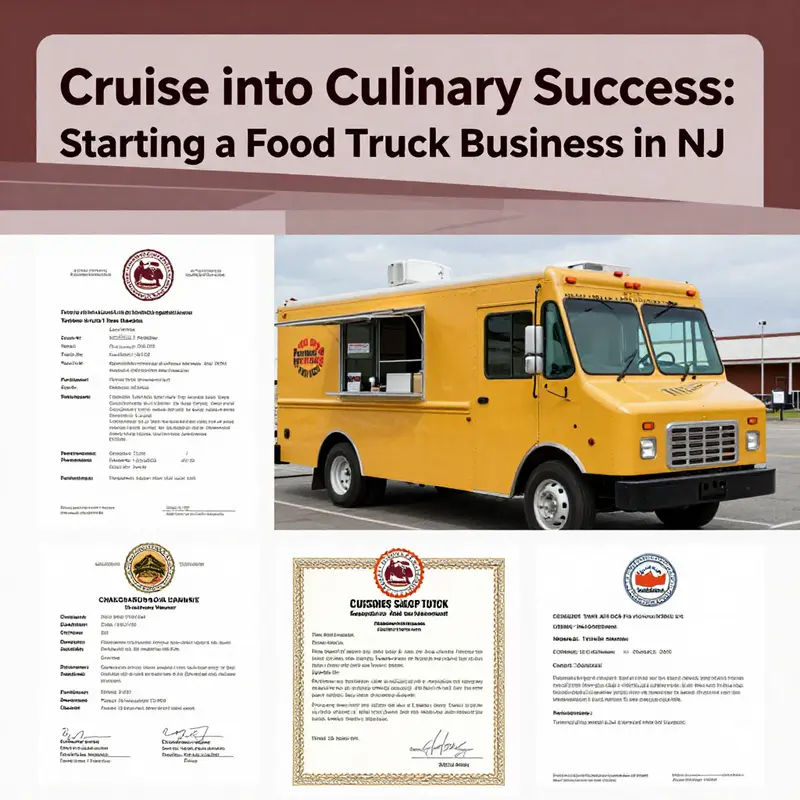
In New Jersey, turning a kitchen-on-wheels into a legally operating business begins with something less glamorous than a sizzling grill yet far more decisive: licenses, permits, and a clear sense of jurisdiction. The path is not a straight line, but a layered map that weaves state health standards, tax obligations, and local ordinances into a roadmap you must follow. The journey starts with the state’s health framework, then folds in tax and municipal rules, and finally intersects with the places you intend to park, the people you hire, and the events you want to attend. This chapter unpacks the permitting landscape in a way that feels navigable rather than numbingly bureaucratic. It is about building a foundation you can rely on as you serve your first customers, scale your operation, and weather the occasional regulatory surprise with confidence. The goal is not to overwhelm you with forms but to illuminate the sequence, the expectations, and the safeguards that keep food safe, businesses compliant, and you focused on crafting great food and a memorable service experience.
The centerpiece of lawful operation in New Jersey is the state-level Food Service Permit issued by the New Jersey Department of Health (NJDOH). This permit is a recognition that your mobile kitchen meets essential health and safety standards. The application process begins with a detailed submission that outlines your concept, the layout of your truck, and the equipment you plan to use. You will be asked to provide a menu, technical specifications for appliances, plans for water supply and waste disposal, and proof that your facility can maintain safe temperatures for perishable ingredients. A facility inspection follows the technical review. An inspector will evaluate how your kitchen handles cleaning, sanitation, storage, handwashing, and cross-contamination controls. The inspector checks whether there are adequate surfaces easy to clean, proper separation of raw and ready-to-eat foods, and a reliable plan for maintaining cold and hot holding temperatures. When the facility passes, you receive the permit; when it fails, you address the deficiencies and rebook the inspection. The echo of this process should be that the permit signals readiness to operate in a manner that protects public health, not a hurdle to be hurdled. And because safety is not a one-time win, the permit must be renewed, especially when you make significant changes to your menu or kitchen layout.
Alongside the health permit, you must tend to tax and employment registrations that quietly govern every sale and payroll. In New Jersey, the Sales Tax Identification number is essential for collecting and remitting sales tax on all food and beverage sales from your truck. The process is straightforward but exacting: you register your business, indicate your structure, and prepare to maintain consistent records of daily revenue, exemptions, and any taxable items. If your operation grows to include staff, you will typically need a federal Employer Identification Number (EIN) from the IRS. An EIN is more than a bookkeeping convenience; it is a gateway to opening a business bank account, hiring employees legally, and presenting a professional, compliant image to lenders and partners. The EIN is free and can be obtained quickly online, and it anchors your financial and legal identity across federal and state programs. Taken together, the state health permit, the sales tax identification, and the EIN form a triad of authority that legitimizes your enterprise and equips you to manage taxes, payroll, and growth with clarity.
Municipal authority often feels more immediate because it governs where you can operate and how you interact with the neighborhood you serve. Most towns and cities in New Jersey require some form of local business license or a mobile vendor permit. The cost and process vary widely—from modest filing fees to more elaborate licensing regimes that include background checks, fees for each location, or seasonal caps on the number of permits issued. It is common to need separate documentation for each municipality where you plan to set up, and some areas might require a temporary event permit for each location you intend to serve. The practical upshot is this: you begin with a clear list of every jurisdiction where you plan to operate, then systematically contact the appropriate offices—city hall, the clerk’s office, or the health department—to obtain the correct applications and schedules. Don’t assume that a permit in one town covers another; each jurisdiction maintains its own boundaries and rules. The local layer, though potentially tedious, protects the character and safety of the area you’re serving and ensures predictable conditions for your teams and customers.
Beyond the core permits, there is a layer of optional and situational licenses that reflect your menu, your events calendar, and your business ambitions. If your plan includes serving alcohol, a liquor license introduces a separate, highly regulated process with its own authority and oversight. If you intend to participate in festivals or large community events, a special events permit may be required, often tying you to event organizers and sanitation standards specific to those venues. Charitable or nonprofit operations might navigate distinct permits designed to accommodate fundraising or community meals. The overarching lesson here is not to chase every possible permit at once, but to anticipate the ones that will matter given your concept and target markets. This approach requires a disciplined planning rhythm: draft a master permit calendar that covers state, local, and event-related licenses, and align it with your menu, footprint, and schedule. That calendar becomes part of your business blueprint, ensuring that a busy season does not become a season of compliance headaches.
A steady, safety-first mindset anchors every licensing decision. The health regulations are not merely about passing an inspection. They shape daily practices in your truck—from the way you store ingredients to how you defend against cross-contamination, how you calibrate thermometers, and how you train staff in hygiene and safe food handling. The ServSafe program—or an equivalent certification—captures this knowledge and translates it into practical routines for your crew. When you invest in staff training, you are not just meeting an obligation; you are building a culture of safety that resonates with customers who want to trust what they eat and with inspectors who expect consistent practice. Cleanable surfaces, clearly labeled storage, and a reliable system for time-temperature control become ordinary under this discipline. The routine inspections then become not a trap, but a natural checkpoint that confirms you are maintaining the standards your customers expect and your regulators require. Ongoing compliance, including daily cleaning logs, temperature charts, and supplier invoices, is not negotiable. It’s the backbone that keeps your operation resilient in the busiest markets and the most crowded events.
The sequence of steps to secure and maintain licenses is best approached with preparation, not improvisation. Start by assembling the core documents you’ll need for most submissions: proof of business registration, ownership or lease agreements for your truck, a detailed equipment list, a floor plan showing the kitchen layout, and a plan for water, drainage, waste disposal, and handwashing facilities. You may encounter insurance requirements that insist you name the local government as an additional insured on certain policies. If you plan to operate at multiple locations, you’ll want to present a consistent picture of your hours, routes, and contingency plans for grease and waste management. The clarity you bring to these early conversations reduces back-and-forth time and accelerates approvals.
As you align your corporate structure with licensing needs, an LLC often emerges as a practical choice for food trucks. It delivers liability protection, simplifies tax handling, and keeps ownership and management straightforward as you scale. Registering the business name with the New Jersey Division of Revenue and Enterprise Services is a parallel, essential step that signals your intent to operate as a distinct legal entity rather than a sole proprietor. The choice of structure influences everything from how you sign contracts to how profits and losses flow through the books, and it should be revisited as you add a second truck, expand to new markets, or seek external funding. In short, licensing and corporate structure are not mutually exclusive decisions—they are interdependent elements of a sustainable foundation.
To stay oriented through the maze, lean on the people and resources that help you navigate the rules without losing focus on the craft that drew you to the food truck world in the first place. Local boards of health, city clerks, and reputable business-development centers are useful allies, offering up-to-date checklists, contact information, and even examples of successful permit applications. Reading the official pages gives you a reliable baseline, while conversations with inspectors can save you weeks of avoidable delays. If you want context that bridges licensing with broader business considerations—especially for operators with a Latino-inspired concept or community focus—there are resources that discuss legal considerations for Latino food-truck startups. These perspectives can enrich how you approach compliance, insurance, and partnerships in your own operation. See the linked resource for more details on how different operators navigate licensing, insurance, and partnerships in the food-truck space. legal considerations for Latino food-truck startups.
As you finalize your licensing plan, it becomes clear that timing matters as much as paperwork. Ask prospective health inspectors about expected wait times for inspections and plan to have your truck prepared in a single, decisive pass. If your operation is seasonal, map out the regulatory calendar to anticipate peaks in permit activity and the likelihood of renewals or re-inspections during busy months. Treat licensing as an ongoing practice rather than a box to check. The renewals, updates to equipment, or changes in your geographic footprint are all opportunities to review and refine your compliance posture. A proactive owner who treats licenses and permits as part of the continuous product you deliver will minimize disruption, maintain customer trust, and build lasting relationships with regulators, vendors, and partners alike.
For those who want to verify the current requirements and explore the official steps, the state health department’s Mobile Food Vendor Program site is the authoritative resource. It provides the latest forms, inspection checklists, and contact information needed to navigate the process with confidence. The official guidance is available here: https://www.nj.gov/health/environmental/food/safety/mobilefoodvendor.shtml
Design in Motion: Building a Durable, Compliant, and Customer-Ready Food Truck for New Jersey
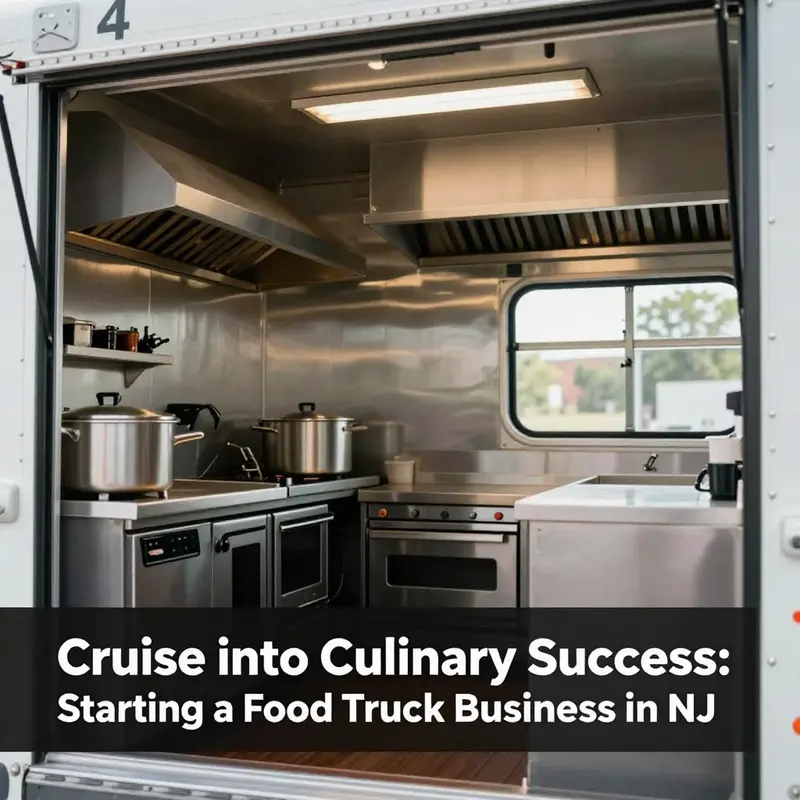
Designing a food truck for New Jersey is a discipline that blends engineering discipline with culinary artistry. It begins long before the first meal is plated, when the shell and systems of the vehicle are laid out to endure rough weather, heavy daily use, and the scrutiny of health inspectors. A successful truck in this state is not just a kitchen on wheels; it is a compact, carefully planned operation that supports reliable throughput, easy sanitization, and a brand presence that draws people in from busy streets and bustling event lines. The design choices you make—materials, layout, equipment, and safety features—will ripple through every shift, influencing efficiency, food safety, and the ability to scale as demand grows. In New Jersey, where regulations coexist with a diverse and dynamic food scene, your truck must be a mobile studio that can be inspected, approved, and trusted by both city health departments and hungry customers alike.
Durability starts with the vehicle and the surfaces you choose. High-grade stainless steel for countertops, cooking surfaces, and workstations is more than a hallmark of quality; it is a practical choice rooted in cleanability and resistance to corrosion. Stainless surfaces stand up to repeated washdowns and frequent contact with acidic or salty ingredients that can corrode other materials. Equally important is the interior finish, where easy-to-clean walls and non-porous flooring help prevent the subtle creep of bacteria and odors. Insulation plays a critical role, not only in keeping temperatures stable during hot service hours but also in reducing the energy load on your power system. In a climate as variable as New Jersey’s, a well-insulated box keeps cold and hot zones steady, protecting both food safety and equipment longevity. Ventilation, too, cannot be treated as an afterthought. A properly sized hood, an effective exhaust system, and back-draft protection are essential so heat, steam, and smoke are kept away from customer sightlines and from the truck’s electrical and mechanical components. NFPA guidelines provide a broad framework for fire safety in mobile kitchens. While state inspectors will verify compliance during inspections, you can advance readiness by aligning with those standards from the outset, not as an afterthought.
The equipment mix you select should be compact yet capable, optimized for the menu you plan to run. A commercial-grade range or griddle forms the core of most NJ food trucks, providing the versatility needed for a tight menu that still delivers on flavor. A refrigerated storage unit is indispensable for maintaining product integrity during back-to-back events, while a sink with both hot and cold water is non-negotiable for sanitation and food safety. Shelving must be sturdy and thoughtfully arranged so ingredients and tools are within easy reach, minimizing cross-traffic around the prep and cooking zones. A modular prep station is a worthwhile investment, offering adaptability for different events and menus. The flexibility to detach or reposition modules can translate into more usable space at crowded venues and simpler storage when the vehicle is parked. Yet modularity brings its own set of considerations. Each detachable component adds weight, potential points of failure, and the need for secure mounting in transit. This means you must plan for a tow vehicle with sufficient towing capacity and perform routine checks before every trip to ensure everything is fastened, aligned, and ready to roll. When you design with this mindset, you create a kitchen that not only serves efficiently but also travels with confidence through New Jersey’s varied landscapes—from Bergen County street corners to Atlantic City boardwalks.
A successful layout begins with a practical flow. The kitchen should mirror a worker’s natural motions: a clear path from raw preparation to cooking to plating and service, with clean-in-place areas that keep waste streams separate from ready-to-serve items. Cross-contamination prevention is built into the layout, from color-coded cutting boards to clearly delineated handwashing and utensil zones. In addition, wastewater management and water supply require deliberate planning. A truck’s plumbing system must accommodate a reliable hot-water supply, a sanitary wastewater line, and an accessible handwashing station. The logistics of water and waste influence every other decision—from the placement of the sink to the routing of the drain lines and the size of the fresh-water tank. The goal is a seamless operation where staff can work quickly and cleanly without stepping over hoses, cords, or food debris while maintaining the clean, bright aesthetic customers associate with quality experiences.
For operators weighing vehicle options, the chassis is more than a frame; it is the foundation of daily operations. You may come across a spectrum of choices from compact step vans to larger cargo vans, and each option carries distinct advantages and constraints. When mapping your vehicle, understanding the trade-offs between step vans and cargo vans is wise, as these decisions affect layout, weight distribution, and maneuverability in tight NJ streets. A practical guide to this decision is often found in discussions of mobility, interior space, and service windows. Step Vans vs Cargo Vans for Food Trucks provides a concise way to compare how those forms influence your kitchen’s ergonomics and service speed. Beyond the vehicle itself, your design must account for the realities of operating in a state that blends dense urban cores with suburban corridors. Some municipalities regulate where you can park or operate and prescribe hours of operation, which means your interior layout should be flexible enough to adapt to different sites without requiring substantial reconfiguration.
The design once guided by practicality begins to tell your brand story through form and texture. The exterior presentation—paint, signage, lighting, and window design—draws customers in before you even turn on the burners. The interior should echo that brand identity while staying within safety and sanitation parameters. Lighting is not a cosmetic choice alone; it influences both worker visibility and the perceived cleanliness of the kitchen. A bright, glare-free work area helps prevent slips and accidents during busy service periods. Ventilation is equally a branding element, contributing to the operation’s comfort level for staff and the overall dining experience for customers who glance inside from the queue. Ventilation, heat management, and noise reduction are not merely technical concerns; they shape customer impressions and staff endurance over long shifts, especially during outdoor events where outside temperatures intensify.
In this design journey, accreditation and blueprint submission matter as much as aesthetics. New Jersey’s health department expects a detailed layout that demonstrates compliance with sanitation standards when a Mobile Food Vendor Permit is sought. This means plans should clearly show the sequence of activities in the kitchen, sanitary zones, equipment clearances, and cleanable surfaces. Blueprints are more than paperwork; they are a narrative of how your operation prevents contamination, manages waste, and maintains temperature integrity across every service window. A thoughtful approach to blueprints reduces delays and helps you navigate inspections with confidence. The NJ Department of Health outlines the pathway for mobile vendors, and working with a vendor or consultant familiar with those requirements can help translate your practical design choices into compliant documentation. The result is a kitchen that not only works on the road but also stands up to the scrutiny of inspectors who are dedicated to protecting public health.
Power management is a pragmatic thread that runs through every design decision. Your energy plan must support peak service periods while remaining mindful of fuel consumption, noise, and generator sizing. Efficient lighting, energy-conserving equipment, and smart scheduling of hot and cold cycles can make a dramatic difference in daily operating costs. You’ll want to assess whether a generator suffices for your electricity needs or if dedicated shore power at certain sites is feasible. Battery and inverter options may play a role for smaller menus or for intermittent service at farmers’ markets and festivals. All these considerations tie back to the core requirement of maintaining safe temperatures and clean conditions for every item you serve. As you optimize the electrical backbone, you should also think about the water system. A robust water supply with adequate storage and a reliable method of wastewater disposal ensures you can serve consistently without repeated stops to recharge or empty tanks. This is not merely a matter of compliance; it’s a driver of steady service and good reviews in a state where customers value reliability almost as much as flavor.
Beyond the practicality, the design should invite customers to linger, even if only for a moment, and then move on to the next encounter with momentum. The menu’s brevity can be a boon here: a tight, well-executed lineup can scale across events when combined with a kitchen designed to optimize speed and consistency. The tactile feel of the workspaces—the cool sheen of stainless, the reassuring click of secure fasteners, the clean lines of shelving—translates into confidence for the staff and trust for customers. The branding elements—color schemes, signage placement, and service window design—should be cohesive with the interior and exterior so that the truck communicates your concept at a glance. In a competitive NJ food scene, this coherence helps you stand out among a crowd and stay memorable long after the last bite.
As you finalize the physical build, the imperative to align with regulatory expectations remains constant. You are not simply constructing a kitchen; you are constructing a compliant, safe, and efficient mobile operation that can traverse local zoning rules and state health directives. The process invites ongoing collaboration with health officials, municipal planners, and your operational team. Even before the truck hits the road, you should be rehearsing workflows, testing equipment under load, and validating sanitation protocols. Staff training, with ServSafe-certified practices as a baseline, ensures that temperature control, cross-contamination prevention, and sanitization routines are second nature. When the truck arrives at events, it will be not just a place to eat but a symbol of professional discipline and culinary ambition in New Jersey’s vibrant landscape.
Internal linking and practical navigation are part of the chapter’s ecosystem. The vehicle choice and interior layout are deeply connected to how you operate in different environments. Exploring the distinctions between vehicle types can save you from costly missteps, and a well-considered blueprint can turn a potential stumbling block into a source of operational resilience. For more context on vehicle selection, see the discussion linked above about Step Vans versus Cargo Vans for Food Trucks, which provides practical comparisons based on real-world operation and space utilization.
Finally, no chapter on design would be complete without acknowledging the broader landscape of safety standards that govern mobile kitchens. The NFPA serves as a critical touchstone for fire safety and related equipment requirements in mobile environments. While your local inspector will verify specifics, designing with NFPA guidance in mind helps ensure you’re ready for both routine checks and unexpected situations. These standards are not merely theoretical; they are templates for real-world reliability, shaping the layout, the installation of fire suppression systems, the placement of extinguishers, and the clearances around heat-producing equipment. With thoughtful design grounded in both health requirements and safety norms, your New Jersey food truck can deliver consistent, safe, and delicious meals from the first service to many seasons ahead.
External resource: https://www.nfpa.org/
Branding on the Move: Marketing and Growth for Your New Jersey Food Truck
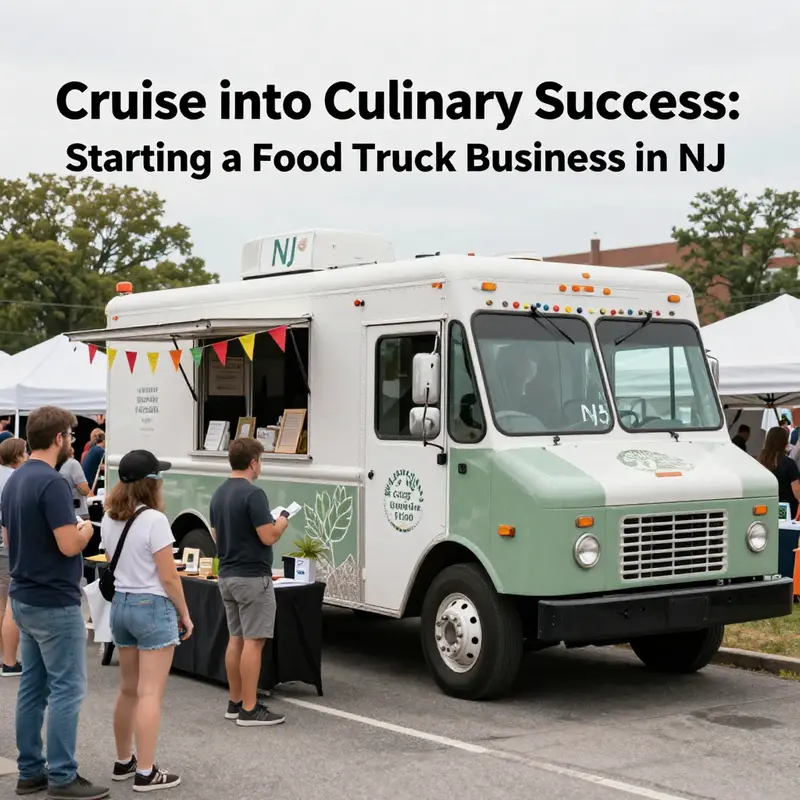
Marketing your food truck in New Jersey isn’t about a single clever post or a temporary burst of hustle. It’s about building a living, moving brand that travels with you from Newark’s neon arteries to Jersey City’s waterfront winds to Atlantic City’s boardwalk buzz. In a state where food culture is as diverse as the map, the smartest operators blend a clear promise with a steady presence. Your brand should feel authentic the moment someone catches sight of your truck, and it should carry that same texture into every touchpoint—from signage and packaging to the way you speak on social media and how you engage at local events. The result is more than novelty; it’s trust, familiarity, and a predictable expectation that keeps customers coming back even when your schedule changes. The marketing discipline here is less about one viral moment and more about consistent storytelling that translates into daily visits, repeat conversations, and loyal advocates who carry your name through neighborhoods they frequent every week. In practice, that means a brand story rooted in place: a concept that reflects your cuisine, your values, and the community you serve, stitched across your truck wrap, your website, and your customer interactions. This is not mere window dressing. It’s a strategic asset that helps you stand out in a market dense with options and ever-evolving tastes. Customers in New Jersey are looking for authenticity, speed, and a sense that the crew behind the food truck cares about the same things they do—their families, their workday lunches, and the local economy that supports small businesses like yours. A compelling brand story makes that connection quickly and plausibly. It can be as simple as a lineage you want to honor—perhaps a family recipe, a commitment to local farms, or a focus on a particular regional flavor profile. The narrative should be present in every element of the operation. The color palette chosen for the truck should reinforce the mood of the story; the font should be legible from a distance in busy streets; the packaging should echo the same tone so a customer who grabs a takeout box feels the same warmth as someone who orders at an outdoor market. Consistency isn’t vanity; it’s a guarantee. When people see your logo, they should instantly recognize a promise of quality, speed, and a connection to New Jersey’s communities. And because New Jersey is a state of neighborhoods, your branding must feel approachable rather than distant or glossy. That balance—professional polish with a sense of neighborhood familiarity—will help you navigate the crowded landscape of urban cores and weekend festival circuits without losing the personal touch your customers expect. Beyond the visuals, your marketing should illuminate your menu’s value proposition. If you source locally, highlight that explicitly. If you feature a comforting, familiar recipe with a modern twist, tell the story of the original cook, the inspiration from a seaside town, or a family gathering that sparked the concept. This kind of storytelling creates emotional resonance that is durable in social feeds and short in person encounters alike. It also invites customers to participate in the story, which is where the most durable marketing happens. Invite them to share photos of their favorite meals, to vote on a daily special, or to post a memory tied to a dish that represents a local tradition. The more you involve customers in the narrative, the more likely they are to advocate for you when a new event comes to town or when a coworker asks for a lunch place with a real sense of place. A well-executed social presence becomes the backbone of growth in a dense market like New Jersey. The channels you choose should reflect how often people are looking for you and how they want to engage. Short-form videos that show a sizzling grill, a pour of a signature sauce, or a line of locals waiting in a sunlit plaza can be more persuasive than a long paragraph on a menu. Real-time updates about your location, weather considerations, and daily specials create a sense of immediacy that makes a street corner feel like a temporary festival every day. Use geotags to draw in passersby who are near your current location and leverage stories to remind followers where you will be next. Encourage customers to tag your truck in their photos and to use a branded hashtag. The act of user-generated content is especially potent in New Jersey, where communities curate local feeds that celebrate small, vibrant businesses. A simple call to action—snap a pic, tag us, and we’ll feature your shot—can transform casual diners into ambassadors who spread your message far beyond the block you’re parked on. Partnerships form another durable lever for growth. New Jersey’s municipalities, chambers of commerce, and event organizers constantly curate opportunities for food vendors. Partnering with local businesses, farms, and venues can yield steady foot traffic and a loyal following. For example, corporate campuses, after-work neighborhoods, and community centers are often receptive to rotating lunch programs and pop-up collaborations. Festivals, farmers’ markets, and outdoor markets are equally valuable, particularly when you complement other vendors rather than compete with them. These collaborations extend your reach, deepen your roots in the community, and provide a steady pipeline of new customers who discover you through networks that already trust the organizers of the event. Local agriculture associations and agricultural extension offices can be allies, offering guidance on sourcing, branding that highlights local produce, and sometimes co-promotional opportunities that align your brand with community agricultural initiatives. To maximize these relationships, invest in a strategy that checks the boxes of visibility and convenience. The NJ market, with its density of transit routes, business districts, and tourist zones, rewards brands that can be both highly visible and easy to access. A key tactic is to design a robust online ordering and pickup experience that feels native to your brand. Whether customers want a quick bite between meetings in a downtown corridor or a family dinner after a weekend outing, you should present a seamless, branded process. If you don’t yet offer online ordering, consider a straightforward system that integrates your menu, confirms times clearly, and supports a predictable pickup workflow. And while the lure of third-party aggregators exists, think about how to pair them with your own direct channels. Direct channels cultivate loyalty and reduce reliance on commissions, which is a critical factor as you scale across neighborhoods and municipalities in New Jersey. Another axis of growth rests in the practical discipline of listening. Collect customer feedback through simple surveys on receipts, comment cards, or quick digital polls. Analyze which dishes spark the most enthusiasm, which locations generate the most repeat visits, and how price sensitivity shifts across neighborhoods. Use that data to refine your menu thoughtfully, adjust operating hours to match demand, and time promotions around community events and popular local dates. Growth comes not from chasing every trend but from adapting to where you already have traction. You might discover that a small tweak—such as offering a plant-based option that aligns with local dietary conversations or adding a lighter daytime snack during commuter peaks—can broaden your appeal without erasing the brand voice customers already trust. For operators with ambitions beyond a single truck, the growth plan should be built into your brand narrative from the start. A clear, repeatable system for onboarding new crew, standardizing recipes, and aligning quality control across units becomes a competitive advantage. When a second truck enters the scene, your branding should scale without losing the intimate, local feel that drew people to you in the first place. Consistency remains essential, but so does flexibility—the ability to tailor location-specific menus or feature limited-time items tied to regional tastes while keeping overall brand DNA intact. The repackaging of your story for new neighborhoods can be a delicate act: you want to honor local flavor while preserving a recognizable core that ties back to the Jersey roots you celebrate. In this landscape, digital tools play a crucial role in enabling growth without sacrificing personal connection. Location-based updates, real-time tracking, and easy online ordering create a frictionless path from discovery to purchase. When done right, customers feel that your truck has a stable, reliable presence even as it moves from one hotspot to another. The more you make the journey predictable and joyful, the more customers will seek you out—knowing that a familiar favorite could be waiting wherever you park next. It’s about turning every street corner into a stage where your brand unfolds, a stage where locals recognize you not just by your plate but by the way you show up: on time, consistent, and genuinely excited to serve the community. As you build toward expansion, consider the communities you aim to serve and how your brand can reflect their identities. The state’s urban centers offer rich, diverse customer bases with distinct rhythms, cuisines, and schedules. Embrace that diversity in your marketing approach while maintaining a cohesive, easy-to-understand value proposition. If you’re considering connections outside your core neighborhood, plan a launch itinerary with a few steady stops that gradually widen your reach, collecting feedback at each step and refining your approach. A thoughtful growth curve protects your brand from overextension while giving you concrete data to inform decisions about new permits, staffing, and the logistics of rising production capacity. In short, marketing and growth are not separate tracks but a continuous loop: tell a compelling story, invite participation, deepen partnerships, leverage digital tools, listen to customers, and scale with care. From the perspective of broader industry dynamics, the landscape for Latino food trucks and other ethnic and regional concepts in major cities underscores the importance of locality in branding. The neighborhood becomes a co-creator of the experience, and your branding must accommodate and celebrate that participation. For readers exploring comparable growth trajectories in different markets, you can find relevant discussions under the topic of Latino food trucks major cities. This broader lens confirms what you already sense on your busiest block: success is built on a brand that feels earned, not manufactured, and on growth that mirrors the pace and soul of the communities you serve. As you move forward, keep your core promise visible, your partnerships active, and your story alive—on the sidewalk, in people’s feeds, and across every handshake with a customer who chooses you again and again. External guidance can further ground your strategy. For official, up-to-date guidance on mobile food vendors in New Jersey, consult the state health department’s mobile food vendor program, which documents inspection requirements, permits, and safety standards that shape how you market a compliant and trusted operation. See the official resource here: https://www.nj.gov/health/environmental/food/safety/mobilefoodvendor.shtml
Final thoughts
With the right combination of passion, planning, and perseverance, starting a food truck in New Jersey can become a rewarding venture. Each pivotal step—from drafting a robust business plan to navigating complex licensing and marketing your unique offerings—serves as a foundation for your culinary dreams. As you reflect on this guide and chart your course, remember that your food truck isn’t just about serving meals; it’s about building connections, sharing flavors, and bringing your automotive spirit to life in the vibrant streets of New Jersey.