
Powering a food truck efficiently requires a solid understanding of wiring and electrical needs, especially when integrating a generator for outdoor cooking. Hobbyist car modifiers, professional tuners, and enthusiasts recognize the importance of blending custom electrical setups with safety protocols. Each component of your power solution—from assessing your overall power needs to selecting the right hardware, installing transfer switches, and adhering to best wiring practices—matters in ensuring your food truck doesn’t just run, but thrives. In the upcoming chapters, we’ll delve deeply into these topics to equip you with practical knowledge and confidence in wiring your generator to the food truck electrical panel.
Power on Wheels: A Thorough Start-to-Finish Assessment of Needs Before Wiring a Generator to Your Food Truck Panel
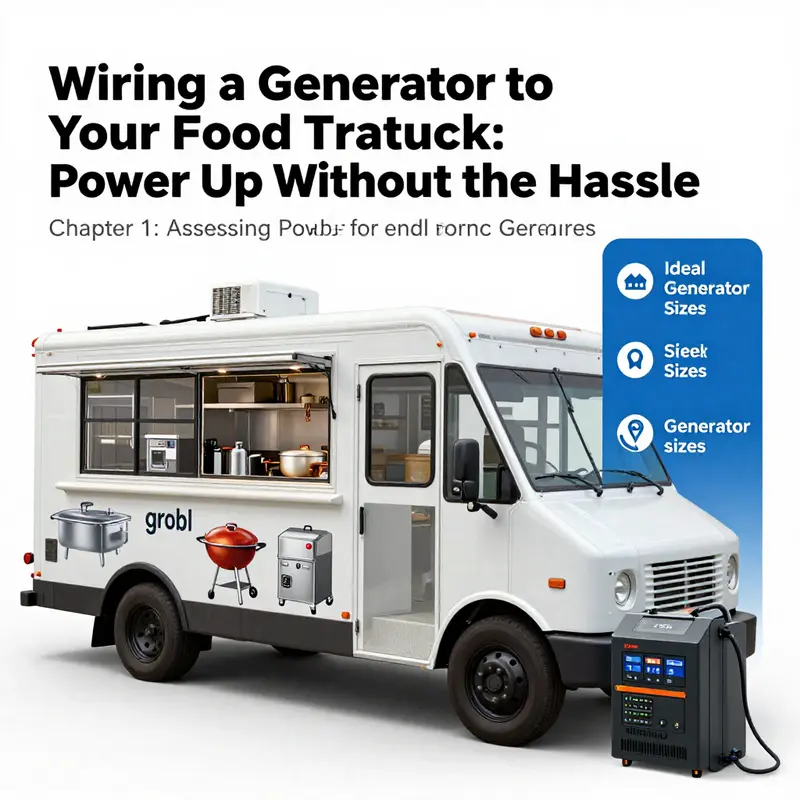
Power on wheels begins with a precise reckoning of what the truck must run and when that power is required. This chapter centers on the most fundamental step in any generator-to-panel project: understanding your load so you can size the system with confidence. Too many operators fixate on the biggest appliances first and forget that the way equipment starts up matters almost as much as how much it runs. Motors surge, compressors kick in, and a lump sum of startup watts can overwhelm an undersized generator, trigger nuisance trips, and risk starving critical devices of power just when timing is at its peak. The goal, therefore, is to forecast both running and startup demands across all gear in the truck, then translate that picture into a generator and a safety framework that can endure the busiest service window from prep to service.
To begin, distinguish between running watts and surge or startup watts. A commercial griddle may list running watts in the ballpark of 3,500 to 5,000 watts, while a fryer can run 4,000 to 6,000 watts under continuous operation. Yet these numbers do not tell the full story. When the unit powers on, it often requires a surge that can be substantially higher than its running load. Refrigeration is a classic example: a typical refrigerator might run at about 800 watts but can surge to 1,800 watts or more when the compressor starts. The same pattern appears with vacuum pumps, beverage compressions for cold storage, and even some lighting or fan circuits that briefly spike as equipment cycles. The consequence of neglecting these surges is not merely a minor hiccup; it is the potential for the generator to overload, trip, or shut down mid-shift, leaving a wake of spoiled food, cold chains broken, and stressed staff.
The practical antidote is a disciplined, comprehensive inventory of every electrical device that will operate during peak service. This is not a casual list. It must include not only cooking gear—griddles, fryers, steam tables, and microwaves—but also the components that keep the business running smoothly, such as refrigerators, beverage coolers, indicator lights, interior and exterior lighting, fans, POS terminals, printers, and any small electronics powering digital displays or scanners. A precise tally helps you capture both the steady draw and the startup bursts. For example, a typical peak operation might include a griddle drawing 5,000 watts, a fryer drawing 4,500 watts, a stainless steel mixer or blender in the 1,000-watt range, a 1,800-watt refrigerator startup twice in a busy hour, and a POS system plus lighting totaling another 1,000 to 1,500 watts. Add a generous buffer for safety and variability, and you begin to see how quickly the math compounds.
A key insight from seasoned operators is that dual-voltage equipment can complicate sizing but also clarifies how you should distribute loads. Some devices run on 120 volts, while larger, more capable pieces may run on 240 volts. In these cases, you want a generator capable of delivering a stable 120/240-volt split-phase output with enough headroom to handle both the base load and any surge. A generator that cannot maintain voltage stability during surges risks affecting sensitive electronics, including POS systems and digital displays, which rely on clean, stable power. Inverter generators add a layer of sophistication here. They are designed to deliver cleaner power and adjust engine speed to match demand, improving fuel efficiency and reducing noise. This can be a meaningful benefit in an urban setting where noise and fuel costs are part of the customer experience. However, as the surge demands rise with heavy cooking loads, you cannot rely solely on an inverter unit if it is undersized for the peak demand—there will be times when it simply cannot sustain multiple high-draw devices simultaneously.
From a planning perspective, the next step is to translate these wattage profiles into a sizing strategy that aligns with both performance needs and safety realities. The rule of thumb is straightforward: your continuous wattage rating should exceed your total running load by a comfortable margin, and your surge capacity should comfortably absorb startup peaks without tripping breakers. If your running load sums to 6,000 watts, you might target a generator with 7,500 to 8,000 watts of continuous rating to cover startup demands and provide some buffer for unexpected spikes. For more complex setups—those with dual-voltage equipment, steam tables, multiple electric stoves, or a large refrigeration ensemble—the total running load might climb into the 5,000 to 8,000-watt range, while startup requirements could push the needed capacity to the 8,000 to 12,000-watt territory. In such scenarios, an 8,000–12,000-watt generator is a practical starting point, with some operators opting for models closer to the upper end to ensure reliability under peak conditions.
Choosing between a conventional, high-wattage unit and an inverter-based system is not simply a matter of price or brand preference. It is a judgment about power quality, runtime, and how you balance quiet operation with capability. Inverter generators often provide excellent power quality and are well-suited for sensitive electronics, but their continuous wattage ceiling can lag behind heavy-duty cooking equipment. If your arcade-like cooking line includes multiple electric stoves, hot holding cabinets, and steamers, you may require a larger, non-inverter generator or a hybrid approach that uses an inverter for lights, POS, and electronics and a larger, non-inverter unit for the heavy cooking loads when demand spikes. The bottom line is to map the load in detail, understand how much surge you can absorb, and then pick a power source that remains stable as the demand shifts through the day and into rush periods.
As you refine the numbers, you also need to account for voltage compatibility and power quality. Some mobile setups use 120V throughout, while others leverage a 120/240V split phase to handle higher-draw appliances. In any case, you should design a plan that ensures a clean transfer of power from generator to panel without creating backfeed into the grid or the risk of backfeeding into supply lines. This is the juncture where the concept of a transfer switch begins to emerge as a safety necessity rather than a luxury or afterthought. The transfer switch isolates the generator from the utility grid, preventing dangerous backfeed that could injure line workers or create hazardous conditions at the service disconnect. It also makes it possible to switch sources smoothly, either manually or automatically, depending on the installation and local requirements. While the transfer switch is a topic for the next chapter of the guide, your load assessment should be designed with the transfer switch in mind from the outset. The correct transfer switch size and configuration depend directly on the planned load and the distribution scheme within the truck’s panel.
Documenting your load is a practical discipline that pays dividends in reliability and safety. Create a detailed list with two columns: device and running watts, device and startup watts. For each item, record the typical running draw and the startup surge. Sum the running watts to estimate continuous demand, and sum the startup watts to bracket the maximum brief demand. Then add a 20 to 30 percent safety margin to the running total so that minor inefficiencies or a slightly larger surge do not push the system to its edge. This margin is not merely comfort; it is insurance against a single device pulling more than expected, a compressor that starts twice in rapid succession, or a lighting circuit that briefly spikes when all interior lights illuminate at once.
To illustrate, imagine you operate eight essential devices during a peak shift: griddle, fryer, steamer, refrigerator, freezer, microwave, POS terminal, and interior lighting. If the running watts add up to around 6,200 watts, and startup demands push through 9,000 watts when multiple units kick in together, you would size your system with a continuous rating comfortably above 6,200 watts and an abrupt surge capacity that exceeds roughly 9,000 watts. A practical approach is to target a generator in the 8,000–12,000-watt range, with the understanding that you may not need the upper end of that range every day. For those with more complex layouts or more cooking power, the upper end becomes a prudent hedge against variable operating conditions and event-specific demands.
Another layer to consider is how to manage power for dual-voltage equipment. If you rely on appliances that demand 240 volts, you should recognize that the generator’s ability to sustain balanced two-pole loads matters. A generator and distribution setup that maintains equal loading on L1 and L2, where possible, reduces voltage drop, minimizes overheating of components, and improves overall efficiency. In practice, this means you should pair heavy loads across both legs of the split-phase system and avoid concentrating most of the high-draw devices on one leg. The transfer switch will route these loads appropriately once installed, but your initial load calculation should anticipate how they will distribute across the panel to prevent localized overloading.
The process of sizing is not just about a number; it is about risk management and operational resilience. You should view the measurement as a living document, updating it as you add or remove devices, as your menu evolves, or as you change fans, displays, or lighting configurations. A food truck is a dynamic environment, and its electrical needs mirror that dynamism. The goal of this chapter is to leave you with a clear sense of the load envelope and the confidence to select a generator, a panel, and a switch system that work together with reliability and safety. After you establish a robust load profile, you move to the next critical decisions: picking a suitable weather-resistant, mobile-specific distribution panel; planning for a rigorous, code-conforming transfer-switch installation; and then executing the wiring with an emphasis on secure, weatherproof connections, proper grounding, and meticulous labeling. The journey from load to panel is not a sequence of isolated steps but a cohesive design problem where each decision reinforces the others.
To connect the dots between regulatory realities and practical execution, consider the broader regulatory landscape as you finalize the plan. For a broader view of regulatory considerations in mobile food businesses, see the legal considerations page. This resource offers context on inspections, permit requirements, and the way local jurisdictions interpret safety standards in mobile settings. It helps ensure that the load assessment aligns with expectations outside the shop, which can save time and prevent rework later in the process. When you bring these pieces together, you create a foundation that supports not just a safe and reliable power system, but a compliant one with respect to the local codes and fire safety expectations for a mobile kitchen environment.
The path from assessment to installation is anchored by a commitment to safety, precision, and professional oversight. Even with a carefully prepared load calculation, the actual wiring and integration must conform to electrical codes and best practices. The transfer switch, the method of wiring the generator to the switch, the route of conductors, and the grounding scheme all demand careful planning and precise execution. An experienced, licensed electrician should review and sign off on the installation, especially if the operation plans to run commercially. The assessment described here informs that professional review, providing engineers and electricians with a complete, transparent picture of the expected electrical load and the safeguards required. As you move toward the wiring phase, keep your load profile ready, staying mindful of how surge and running watts interplay and how different devices contribute to the whole. The objective is clarity: a generator size that can reliably handle startup spikes, a panel and transfer switch configured to permit clean, safe source switching, and a grounding plan that protects both the truck crew and the surrounding environment. And while the numbers guide your choices today, the real test comes with steady operation under real-world conditions, where weather, traffic, and demand patterns can shift in ways that no worksheet can predict. Maintaining this readiness—documented loads, validated calculations, and a collaborative relationship with a licensed electrician—will pay dividends in safety, reliability, and long-term operational success.
External resources and standards provide a backdrop for this work. For governing standards and detailed mobile electrical system guidance, consult the NFPA guidelines at https://www.nfpa.org/.
From the perspective of ongoing learning and practical alignment with local practices, you may also find value in emphasizing regulatory considerations within your crew communications and site operations. For a deeper dive into regulatory and startup implications, you can explore related topics through the broader content channels that discuss startup logistics, local compliance, and safety best practices. Such resources help ensure your plan remains responsive to changes in regulations and the evolving landscape of mobile food service.
In sum, the creation of a safe, reliable power system for a food truck starts with a disciplined load assessment. By calculating both running and surge watts, planning for dual-voltage needs, and incorporating a realistic margin for safety, you set the stage for a well-mimensioned generator, an appropriately rated panel, and a transfer-switch solution that keeps the truck powered without compromising safety. This chapter establishes the foundation for the engineering decisions to come, guiding you toward a setup that can withstand busy service hours while meeting the highest standards of electrical safety and code compliance. The next chapter will translate this load picture into concrete wiring choices and the selection and installation of a transfer switch, the critical safety interface that prevents backfeeding and ensures seamless power transfer from grid to generator.
Chapter 2: The Heartbeat of a Mobile Kitchen — Choosing the Right Electrical Panel to Interface a Generator with a Food Truck
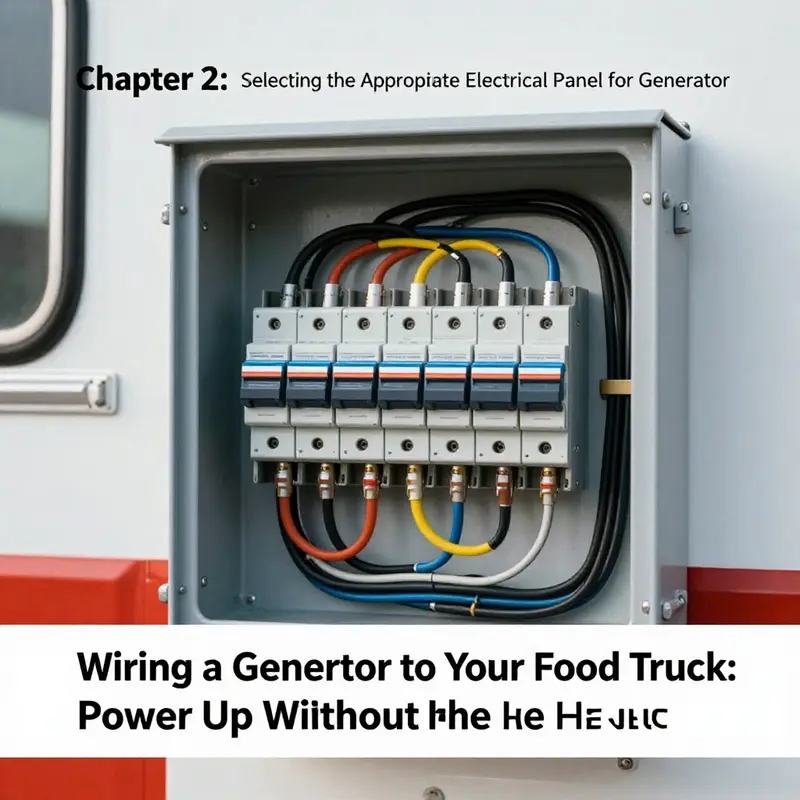
The electrical panel in a food truck is more than a compartment with breakers; it is the heartbeat of a mobile kitchen. It governs how every appliance—from the fryer that sizzles at peak service to the refrigerator that keeps perishables safe, and from the POS terminal to the track lighting that creates the right mood—receives power. In the rough-and-tumble environment of street vending, where vibrations, weather, and shifting loads are part of the daily routine, selecting the right panel is a decision that affects safety, reliability, and compliance as surely as any recipe or permit. The panel you choose and how you wire it to a generator set the stage for smooth operations, predictable downtime, and a professional image that keeps customers coming back. The selection process should be approached with the same care a chef gives to sourcing ingredients: detail-oriented, standards-driven, and oriented toward long-term performance rather than quick fixes.
The core purpose of the panel in this context is to act as a dedicated distribution hub between the generator and the truck’s main power demands. In a food truck, the operating environment is inherently more demanding than a stationary kitchen. Temperatures swing, moisture can drift in the open-air setup, and the generator itself may cycle on and off with changing loads as the business ebbs and flows through the day. Because of these realities, the panel chosen for a generator connection must be purpose-built for mobile or temporary power applications. A dedicated sub-panel, positioned between the generator output and the truck’s main load center, is the most reliable approach. It centralizes circuit protection and distribution, making it much easier to isolate issues, troubleshoot, and maintain the system without disturbing the entire electrical backbone of the vehicle.
Sizing follows the same discipline any kitchen manager would apply to a fridge or grill: you start by calculating the total load and then build in a safety margin. The rule of thumb is to determine the wattage of every appliance and device that will draw power simultaneously. People often underestimate the heat of a busy service window or the surge of a high-wattage appliance when it kicks on, like a compressor starting up in a refrigerator. A prudent practice is to add a 20–30 percent buffer to the calculated continuous load. This buffer provides headroom for startup surges, seasonal variations in appliance use, and the occasional burst of lighting during an unplanned rush. With this total in mind, you then choose a generator whose continuous wattage rating exceeds the load with the buffer in place. If the calculated total lands around 6,000 watts, for instance, a generator rated for at least 7,500–8,000 watts is a sensible choice. Size matters not only for capability but also for longevity; a generator that’s consistently run near its limit tends to experience more wear and shorter service life.
Once the load and generator size are set, the panel design must align with practical realities of a mobile business. The safest and most adaptable option is a weather-resistant, dedicated sub-panel engineered for outdoor or mobile use. This panel should feed the main load center from a clean, protected point, and be equipped with a sufficient number of circuit breakers to accommodate the truck’s circuits—typically, breakers in the 20A and 30A range suit most kitchen and lighting circuits when combined with a robust transfer switch. The configuration should reflect the truck’s voltage, commonly 120V/240V split-phase in many setups, while also accommodating the unique layout of the kitchen space. The design should emphasize secure terminations, reliable torque, and sturdy connections that resist vibration. In this regard, the terminations must be tight, clean, and insulated to prevent arcing or loose connections that could become ignition sources or power losses during service.
A central concept in this chapter is the transfer switch: the device that safely bridges the generator and the main panel while keeping the two power sources from backfeeding into the utility lines. This is not optional in a commercial or heavy-load food truck. Backfeeding can endanger line workers and create dangerous fault conditions, so a properly installed transfer switch—manual or automatic—isolates the generator from the grid and provides a clean, instantaneous switchover when utility power is interrupted. The transfer switch sits between the generator output and the food truck’s main panel, and it performs the crucial job of isolating sources. An automatic transfer switch can monitor utility power and switch to generator power seamlessly; a manual transfer switch requires an operator to trigger the change. In either case, reliability and correct wiring are non-negotiable. The goal is to prevent any moment where the generator could energize lines or equipment that are still connected to the utility, which is a fundamental safety principle underpinning every compliant installation.
With the transfer switch in place, the next focus is the actual wiring from the generator to the transfer switch, and from the transfer switch to the food truck’s panel. Conductors chosen for outdoor and mobile installations must be heavy-duty and outdoor-rated, capable of withstanding temperature extremes, moisture, and physical movement. Cables such as those with L1, L2, Neutral, and Ground connections are typical in a mobile, 120/240-volt setup. The connections between the generator output and transfer switch should be tight and clean, with secure insulation and appropriate protection from moisture and physical damage. The terminal points must be properly rated for the current they are expected to carry, and all connections should be safeguarded against corrosive elements and accidental contact. When you run the cables from the transfer switch to the truck’s main panel, you’ll typically use a dedicated cable of suitable gauge—often 6/3 or 8/3 copper wiring, depending on the anticipated load and distance—installed in conduit to protect it from the environment. The careful routing of these lines reduces risk and makes future maintenance simpler.
Labeling is one of those practical chores that saves time and prevents mistakes during a busy service. Each circuit should be clearly identified—“Fryer,” “Refrigerator,” “Vent Hood Lights,” “POS,” “Exterior Lighting,” and so on—so technicians know exactly what each breaker serves. This labeling becomes especially important in emergencies, where quick power isolation can prevent injury and equipment damage. The modern approach to panel design recognizes the value of clear labeling not only for safety but also for serviceability. In addition to labeling, the neutral and ground conductors must be properly separated in a sub-panel configuration. Keeping neutrals and grounds apart at the sub-panel level prevents potential ground faults and circulating currents that can compromise safety and measurement accuracy. The bonding between neutral and ground should be made only at the main service point, ensuring there is no unintended current path that could confuse a fault indication or lead to nuisance tripping.
The environmental and regulatory context cannot be ignored. The panel and its enclosure should be weatherproof and rugged enough to withstand the demands of mobile operation. Enclosures rated for outdoor or vehicle-mounted use—such as weatherproof, dust-resistant, and moisture-protective enclosures—are essential. In parallel, the installation must respect the relevant electrical code provisions for mobile or temporary structures. The National Electrical Code, particularly Article 530, forms the backbone of these requirements. While professional electricians assess the specifics for each jurisdiction, this framework provides a clear map for safe practices and predictable outcomes. The overall message is that a well-chosen panel is a cornerstone of both safety and compliance, not a decorative afterthought.
A forward-looking dimension of panel selection involves the growing availability of modern smart control panels. These panels, often equipped with microprocessor-based control and diagnostic capabilities, offer real-time monitoring, load management optimization, and startup sequencing that can reduce wear on the generator and protect sensitive kitchen equipment from abrupt voltage fluctuations. While these advanced panels can represent a higher initial cost and require more initial setup, their capacity to prevent downtime and extend generator life can be a compelling ROI for busy, high-demand food truck operations. The choice between a traditional, robust panel and a smart control option should consider the operation’s scale, service hours, and the level of automation the owner wants to support. Even when choosing a sophisticated panel, it remains essential to integrate protective devices such as GFCI outlets and surge protection to safeguard equipment and personnel against line faults and transient events.
All these considerations lead to a practical verdict: prioritize safety, durability, ease of maintenance, and scalability when selecting an electrical panel for generator integration. A well-chosen panel should accommodate the truck’s current and near-future needs, allow straightforward maintenance, and align with the operator’s risk tolerance and regulatory obligations. Once the panel and transfer switch are properly installed, the system should be tested methodically. Visual inspections uncover obvious issues such as loose connections or damaged insulation. A multimeter verification confirms voltage levels and polarity, and a controlled transfer between utility and generator power should be conducted to observe voltage stability and switch timing. It is important to verify that no circuit is overloaded and that all breakers respond as expected under simulated overload conditions. These steps are not merely boxes to check; they are essential for preventing heat buildup, electrical arcing, and equipment damage that could jeopardize the business and the people working around it.
In the spirit of shared learning, food truck operators who are building or revising their electrical systems can draw on a broader ecosystem of knowledge and safety practices. A family of considerations—system layout, wiring practices, transfer switch selection, enclosure integrity, and documentation—works together to deliver a robust, code-compliant, and reliable power backbone. For those who want more context on the regulatory side and how it translates into practical wiring decisions, there are resources that discuss the broader implications of mobility, safety, and compliance. As you assess the options for your own setup, you may find it helpful to consult related guidance that covers safety and regulatory considerations in the food truck space. legal considerations for Latino food truck startups.
Beyond the immediate installation, there is value in envisioning the system as a modular platform. A well-designed panel installation leaves room for future expansion, such as adding a larger kitchen, more refrigeration units, or enhanced lighting for late-night service. A modular approach helps avoid a complete rebuild when growth occurs and supports consistency in electrical performance across different service scenarios. This mindset is especially important in markets with seasonal demand, where a truck may encounter tight service windows followed by slower periods. The panel, in this sense, becomes not just a safety device but a strategic enabler of flexibility and reliability. When the design anticipates growth, the operator can upgrade components with minimal disruption, preserving continuity of service and customer experience.
To close the loop, consider the availability of external technical resources that provide diagrams and detailed installation guidance. For a deeper dive into the exact wiring diagrams, compatibility considerations, and model-specific instructions, consult the official installation resources from the generator manufacturer. This external reference offers model-specific details, troubleshooting tips, and safety instructions tailored to mobile applications like food trucks. The guidance emphasizes verifying compatibility between the generator, transfer switch, and panel, and it reinforces the safety principle of never bypassing a transfer switch. Access to these diagrams and instructions supports precise planning, accurate wiring, and confident execution on site.
In sum, the right electrical panel for a generator connection in a food truck is not an afterthought but a cornerstone of operational excellence. It is the centralized nervous system that coordinates power delivery across a busy kitchen, accommodates the unpredictable rhythms of street commerce, and upholds the highest safety standards required for a mobile business. Through careful sizing, the prudent use of a dedicated sub-panel, a correctly installed transfer switch, robust and weather-resistant enclosures, and disciplined testing and documentation, operators can build a power system that is as dependable as the food they serve. The result is not only healthier equipment life and greater energy efficiency but also a calmer, more professional working environment where staff can focus on serving customers with confidence, knowing their power backbone is solidly in place.
Chapter 3: Ready, Switch, Go: Installing a Transfer Switch to Safely Tie a Generator into Your Food Truck Panel
Power inside a food truck is a lifeline. Lights that guide a line of customers, a fridge that keeps perishable ingredients fresh, fryers and grills that turn raw products into meals, and a POS system that makes every order count — all depend on clean, reliable electricity. In this chapter, we move from the basics of generator sizing and panel selection to the moment that makes a mobile kitchen truly possible: the transfer switch. This device acts as a gatekeeper, a deliberate gate that keeps two power sources from colliding and turning a working kitchen into a risk crucible. The transfer switch prevents backfeeding into the utility grid, a hazard not simply theoretical but a real danger to line workers and nearby equipment. It ensures that only one power source feeds the truck at any moment, so the generator and the grid never try to push current through the same bus in parallel. In a long, busy day, that single decision to install and properly wire a transfer switch can save time, money, and safety headaches while keeping your service consistent and compliant with local rules. The journey to a safe, dependable setup begins with careful selection, precise preparation, and disciplined testing, all guided by the realities of a mobile operating space where vibration, weather, and space restrictions shape every choice.
Choosing the right transfer switch is a balance between capacity, control, and practicality. For many food trucks, a manual transfer switch is sufficient. It requires you, the operator, to physically switch the load from utility to generator when the grid fails or when you’ve determined that the generator should take over. An automatic transfer switch offers hands-free operation: it detects a power interruption, starts the generator, and moves the load to the generator automatically. The decision hinges on how critical it is for the operation to continue without manual intervention and the reliability of the generator under load. Either choice must be rated for the same voltage as your main panel—typically 120/240 volts in North American mobile installations—and sized to handle the total amperage drawn by your truck’s essential circuits. The NEC, along with local codes for mobile food units, guides this sizing, and a contractual obligation to safety means you should confirm these details with a licensed electrician if there is any doubt about the correct rating. It isn’t enough to pick a device that can carry the math; it must also fit the physical space you have available and withstand the vibration, weather, and rough handling that come with road service.
Preparation is more than turning off breakers; it is a focused clinical process. Before you touch anything, shut off the main breaker in the truck’s panel and disconnect the utility service. Use a multimeter to confirm that every conductor you plan to touch is truly de-energized. Labeling is not just a courtesy but a safety practice; plan to mark which terminal is Line (utility), which is Generator, and which leads go to the Load on the main panel. Mapping the route from the transfer switch to the main panel is essential. You’ll want a dedicated conduit path and shielded, outdoor-rated cabling robust enough to survive vibration and weather. The transfer switch will have clearly labeled terminals: Line for the utility feed, Load for the panel, and Generator for the generator feed. The exact layout may vary by model, so consult the installation guide that comes with your switch and ensure you understand the labeling before you begin.
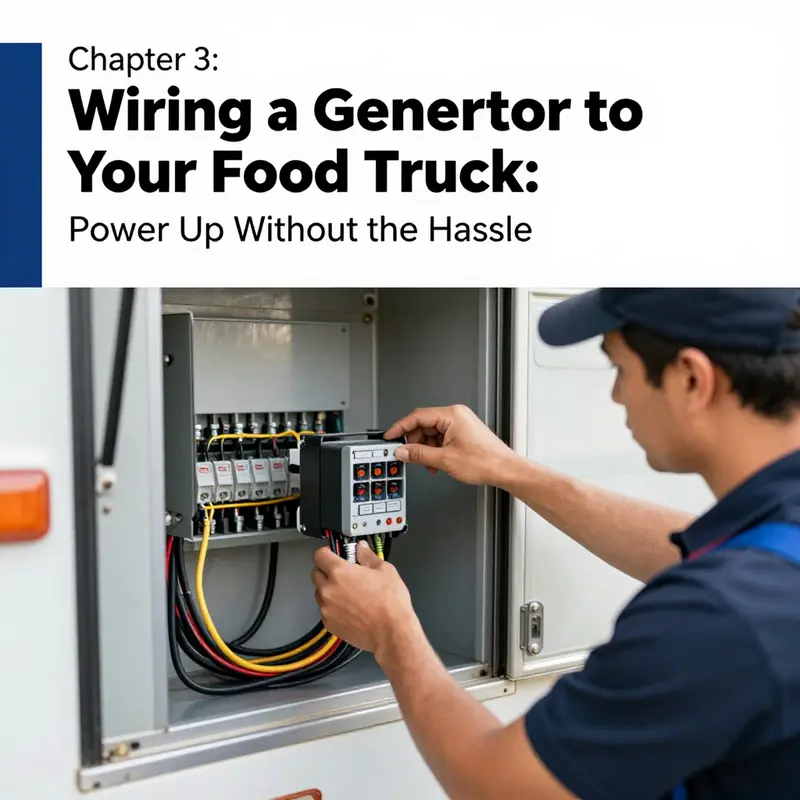
Wiring the transfer switch is a careful sequence, not a rough splice. The utility feed comes into the “Line” terminal, the generator feed into the “Generator” terminal, and the path to the food truck’s main bus goes from the “Load” terminals to the panel. Use heavy-duty, outdoor-rated cables appropriate for the current you expect to carry. The permitted connector types and plug styles should fit not only the generator and panel but also the transfer switch, ensuring a clean, tight connection that won’t loosen with vibration. For many installations, this means using large, secure connectors and color-coded conductors to minimize the chance of misconnection. Tighten every connection to the manufacturer’s torque specification and verify that there are no nicked insulation or exposed conductors. When the wires are connected, the next step is to secure the transfer switch in a weatherproof enclosure or on a wall mount that’s accessible to operators but shielded from the worst elements. The enclosure should provide space for cable entries, grounding, and a straightforward path to the main panel. It’s not just about keeping water out; it’s about making it easy to inspect and service without dismantling the system.
Mounting the transfer switch is a practical exercise in fit and finish. It should be placed where it’s protected from the elements and where the cables can enter at clean, right-angle bends rather than sharp twists. A sturdy mounting surface is essential; weak brackets allow the switch to flex under movement, which can loosen terminals or damage wiring over time. The enclosure should be large enough to accommodate the switch and the terminations, yet compact enough to leave room for future maintenance. With the switch mounted, you can finalize the wiring by bridging from the switch’s Load terminals to the main panel’s input lugs, ensuring that the panel’s bus bar is fed only by one source at a time. It is equally important to label the switch’s positions clearly—Utility, Off, Generator—so that during a frantic service period, there is no confusion about which source is active. A single, well-labeled switch position is a safeguard against accidental backfeed and misoperation that can occur during busy service periods.
Testing the system is the moment of truth. Re-energize the utility line and perform a careful, staged test of the transfer switch. Confirm that the truck’s main panel registers the utility voltage in the load position, and then switch to the generator position while monitoring voltage and frequency. A healthy transfer will show stable voltage with minimal drop as the load shifts, and the generator should come online without a surge that trips breakers. The generator’s startup sequence should align with the switch’s timing, so you don’t see a momentary overload as the load shifts. It’s wise to test not just a single circuit but the common critical circuits—refrigeration, cooking, and the POS system—to confirm that there is sufficient headroom for startup transients. If you have an automatic transfer switch, you’ll also want to trigger a simulated outage in coordination with the system’s control logic to ensure the automatic sequence begins correctly and completes its transfer without human intervention.
A rigorous approach to grounding and bonding further supports safe operation. The generator’s ground should be connected to a grounding rod driven into the earth outside the truck, or bonded to the chassis if it is already properly grounded. The neutral and ground must be bonded only at the main panel, not at the generator or transfer switch. This arrangement prevents ground loops that can cause stray currents, nuisance shocks, or equipment damage. On a mobile platform, it’s essential to maintain clean, logical grounding practices that survive the movement, vibration, and weather typical of a food truck.
Compliance and documentation anchor the practical work in a framework of safety. Mobile food units must align with local building codes and fire department regulations, in addition to the National Electrical Code provisions that govern such installations. While a transfer switch can be a straightforward device, its integration with a panel in a mobile environment magnifies the stakes: a small wiring mistake or an overlooked requirement can become a costly failure or a regulatory violation. If the job is outside your comfort zone, engaging a licensed electrician is not a mark of weakness but a prudent risk-management step that protects your team and your customers. As you navigate the regulatory landscape, you may want to consult resources focused on the broader context of mobile food unit compliance. For example, you can explore Legal considerations for Latino food truck startups to understand how regulations intersect with daily operations.
Beyond safety and compliance, practical documentation helps sustain a reliable power system. Record the model and rating of the transfer switch, the main panel, the generator, and the protective devices such as circuit breakers. Note the wire sizes, insulation types, and routing plans used in the installation so future technicians can diagnose issues without guesswork. Create a simple, visual diagram that maps line, load, and generator connections from the switch to the panel. This living document can be updated whenever you upgrade equipment or adjust circuits. It also helps when you need to obtain permits or inspections because you can clearly show what was installed and how it operates. The goal is not to create a dossier of paperwork but to build a straightforward, reliable baseline that supports safe operation and easy maintenance.
In the end, the transfer switch is more than a box with screws and terminals. It embodies a disciplined approach to power that respects the realities of a mobile kitchen: limited space, exposure to the elements, high demand during service, and the critical need to avoid energy hazards that could endanger staff or customers. The operation hinges on correct rating and clean wiring, careful grounding, and deliberate testing. It also depends on knowing when to call in a professional and when a well-planned DIY approach suffices. As you refine the installation, keep in mind that the goal is continuity of service without compromising safety. A well-executed transfer switch installation is the quiet backbone of a kitchen that moves with the day’s demands, hosting events, festivals, and street-side hours with confidence.
If you’re seeking broader guidance on the regulatory aspects that touch mobile food operations, you can consult resources linked within the regulatory context of mobile food businesses. For instance, you may want to explore Legal considerations for Latino food truck startups to understand how local ordinances, fire codes, and electrical requirements intersect with daily operations. Legal considerations for Latino food truck startups.
For more technical diagrams and model-specific wiring guidance, refer to the official installation manuals from transfer switch manufacturers. The specifics of the lines, loads, and generator connections can vary between devices, so consulting the manufacturer’s documentation ensures you’re following the exact sequence for safe operation. While the core principles remain constant—isolate the generator from the grid, feed the panel through a properly rated switch, and ground everything correctly—the precise terminal labels and wiring colors will reflect the chosen equipment. The general approach outlined here provides a solid framework, but the exact wiring details must align with the equipment you install.
As you finalize the project, remember that the most important outcomes are safety, reliability, and compliance. A transfer switch that’s properly sized, correctly wired, and thoroughly tested will deliver power with confidence when you need it most. It will reduce the risk of dangerous backfeed, protect utility workers, and enable a smoother, more professional operation for your mobile kitchen. And while the path from planning to operation may feel technical, it is a journey that rewards careful preparation with steady service and a safer workspace for your crew. If in doubt, take the extra step to involve a licensed electrician who understands the unique demands of mobile installations. The equipment may seem like a small box, but its impact on safety, performance, and regulatory standing makes it one of the most important investments in your food truck’s electrical system.
External resource: For more detailed guidance and diagrams, consult the transfer switch product page from a major electrical components manufacturer, which offers in-depth technical specifications and installation notes relevant to 120/240V mobile applications. https://www.example.com/transfer-switch-product-page
Power on Wheels: Best Practices for Wiring a Generator Into Your Food Truck’s Electrical System
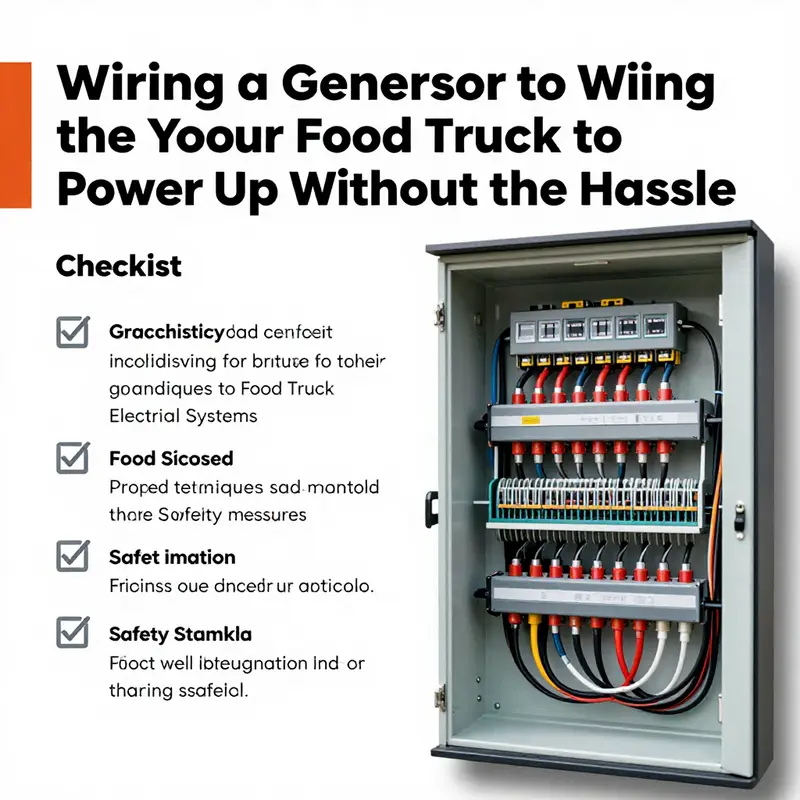
Wiring a generator into a food truck’s electrical system is less a hobby project and more a compact engineering challenge. It blends reliability with safety, mobility with stability, and speed with compliance. In the confined and often harsh environment of a traveling kitchen, a careful, methodical approach makes the difference between a smooth service and a cascading sequence of power interruptions, equipment damage, or safety incidents. The goal is simple in theory: supply every appliance and system—grills, fryers, refrigeration, lighting, and point-of-sale equipment—without backfeeding, nuisance nuisance tripping, or dangerous voltage surges. The path to that goal is laid out by a set of best practices that recognize the truck as a mobile electrical workspace with its own rules, rhythms, and risks. This chapter stitches those practices into a cohesive narrative, emphasizing planning first, execution with care, and ongoing vigilance that keeps the system reliable across the long haul of service days, events, and changing loads.
Begin with a clear picture of the load. A food truck’s electrical backbone is hungry and diverse: refrigeration cycles that run continuously or on a demand basis, hot equipment that draws large currents at startup, and a constellation of lights and electronics that must stay on for safety, branding, and transaction processing. The first actionable step is to calculate total load and anticipate startup surges. It’s not enough to total running watts; you must also account for peak demand when motors start, compressors engage, and burners ignite. A practical rule, echoed across mobile applications, is to size for a buffer above peak demand. Operators often target a generator with capacity well beyond the continuous running load to accommodate startup spikes and future growth. This planning mindset helps prevent overheating cables, nuisance tripping, and voltage sag that can affect equipment performance and food safety.
From there, the selection of the power source and distribution hardware follows. The design typically centers on a dedicated, weather-resistant distribution panel tailored for mobile environments. Such panels are rugged enough to stand up to vibrations, rain, and road grime, yet compact enough to fit behind the service window or under the counter without impeding workflow. The panel should accommodate the type of power you use—most food trucks operate on 120V or a 120/240V split-phase arrangement—and provide a sufficient number of breakers for critical circuits: 20-amp and 30-amp breakers are common, with room for expansion as the menu evolves. The panel is not a passive component; it is the hub where safety, accessibility, and serviceability converge. A well-chosen panel makes routine maintenance straightforward and reduces the temptation to improvise during a rush.
Before any cables are laid or lugs tightened, a transfer mechanism must be in place. A transfer switch is not optional in a professional mobile kitchen. It isolates the generator from the utility grid and ensures that power flows from only one source at a time. Without a transfer switch, the main panel can be backfed, creating a dangerous situation for utility workers and bystanders, and potentially causing costly damage to equipment. Transfers can be manual, where the operator physically toggles power sources, or automatic, where sensors and relays switch seamlessly in response to a utility outage. In a business that depends on uninterrupted service, an automatic transfer switch offers the best balance of reliability and ease. The transfer switch becomes the gatekeeper between the generator and the food truck’s main panel, and its proper installation is central to overall safety.
The physical pathway from generator to panel is governed by robust, outdoor-rated cabling. Heavy-duty cables designed for outdoor use should be selected to withstand moisture, temperature variations, and the abuse of a mobile venue. The connectors—commonly NEMA configurations that match both the generator and the transfer switch—must be compatible with the equipment and rated for the expected current. The wiring from the generator to the transfer switch is a critical safety corridor; loose connections, corroded terminals, or undersized conductors create heat and risk arc faults in a setting where people may be moving around equipment on a busy day. The emphasis is on clean, tight connections and insulation that remains dependable in damp or dusty conditions. The transition from the generator to the transfer switch should be treated as a critical installation, with attention paid to routing, strain relief, and protection from physical damage during transport and operation.
Following the transfer switch, a dedicated feeder cable runs to the food truck’s main electrical panel. This cable must be sized for the actual distance and current, and it needs to be installed in a conduit that protects it from impact, moisture, and abrasion. In a mobile context, conduit choices range from rigid metal to flexible metal conduits, selected to suit the vehicle’s configuration and the installer’s preferences. The run should be organized so that every conductor, from hot lines to neutral and grounding conductors, is clearly identified and terminated with care. Once the feeder reaches the main panel, the installation aligns with standard electrical practices: each circuit is fed from a dedicated breaker, circuits are allocated to specific equipment or zones, and labeling is thorough enough to allow quick troubleshooting and safe shutoffs in an emergency.
Grounding and bonding are not afterthoughts; they are the foundation of electrical safety in a mobile kitchen. The generator’s ground conductor should connect to a single grounding point, which may be a driven grounding rod or the truck’s chassis if it is reliably bonded and earth-referenced. Neutral and ground should be bonded only at the main panel, not at the generator or transfer switch, to avoid ground loops that can confuse protection devices and create stray currents. In kitchens and wet areas where equipment like sinks and dishwashing stations operate, ground fault protection devices (GFCIs) become essential. GFCIs guard against electric shock by detecting imbalances between hot and neutral conductors, tripping the circuit before a person can be exposed to a dangerous fault. The combination of proper grounding, bonding, and GFCIs creates a safety envelope that protects staff and customers while preserving system reliability.
With safety and structure in place, the topic shifts to protection and reliability. Each branch circuit should be protected by appropriately sized breakers or fuses that correspond to the type of load—motor-driven equipment, heating elements, or resistive lighting—so that a fault on one branch doesn’t cascade into the entire system. A main disconnect near the generator allows an emergency shutdown that is quick and deliberate. Regular inspection of protective devices ensures that they function when needed and that age or vibration hasn’t degraded their performance. In a mobile environment, where circuits can experience rapid heating and cooling, periodic testing of overcurrent protection is a prudent habit, not a one-time checklist item. The overarching aim is to keep the system within its rated capabilities while preserving the ability to shed nonessential loads during peak demand without compromising critical equipment.
Testing is the bridge between theory and practical operation. After installation, a comprehensive test under load conditions is essential. Voltage stability, phase balance (in the rare case of three-phase configurations in certain configurations), and the proper operation of safeties—transfer switch interlocks, main disconnects, and GFCIs—must be verified. Testing should also confirm that no circuits are overloaded and that breakers trip cleanly when a fault occurs. Documentation of test results, maintenance intervals, and any component replacements becomes part of the truck’s operating manual. Keeping a running log supports insurance requirements, simplifies troubleshooting for future service calls, and provides a defensible record during inspections by fire or health authorities.
Compliance and documentation anchor the practical work in the realities of mobile operation. Local building codes and fire department regulations can differ from place to place, especially for mobile food service units that operate in public spaces or events. In many jurisdictions, a licensed electrician’s sign-off on the installation adds a level of assurance that the wiring meets safety and code standards. Beyond regulatory compliance, operators should consider the broader governance of their business—how the electrical system scales with menu changes, how it handles seasonal demand, and how fatigue and high-pressure service days may tempt improvisation. A useful anchor in these discussions is to consult resources that address the legal and regulatory landscape for Latino food-truck startups, which often highlight how safety, licensing, and community standards intersect with daily operations. For a focused discussion on these considerations, see the internal resource on legal considerations for Latino food-truck startups, which provides practical context for aligning electrical work with local rules and business requirements.
As equipment lists grow and menus evolve, the wiring plan should remain flexible enough to accommodate new loads without compromising safety. A modular mindset—having spare breaker space, room for future feeders, and clear labeling—helps keep the system maintainable. Clear labeling also reduces the risk of accidental disconnections during service and makes routine maintenance less disruptive. In practice, this means labeling every circuit with its dedicated purpose, such as “Fryer,” “Refrigerator,” or “POS,” and keeping a current schematic on site for reference during events or in the shop’s back office. The chapter’s guiding principle remains the same: design for reliability, protect personnel, and document decisions so that the system can be inspected, tested, and trusted across seasons and service demands.
The broader takeaway is not merely the sum of components but the disciplined process of integrating them. A well-wired generator-to-panel system in a food truck transcends the moment of installation; it becomes part of the business’s backbone. It supports consistent food safety by maintaining stable voltages for refrigeration and heating equipment, ensures staff safety through proper grounding and backfeed protection, and preserves customer experience by reducing the risk of power outages during peak service. It also creates space for growth—new equipment, new staff, or new menus—without triggering a redesign of the electrical backbone. In short, the best practice is to treat generator integration as a core operation, not an afterthought, and to approach it with the same care you apply to calibrating a grill for even searing, or sourcing fresh ingredients for a signature dish.
For operators seeking a concise framing of the sizing decisions underpinning these choices, a widely respected guideline is the generator sizing framework published by a national energy authority. It offers detailed calculations and real-world examples tailored to mobile commercial setups like food trucks. The guide emphasizes matching generator output to load while accounting for startup surges and the practical realities of day-to-day operation. To explore those calculations, consult the official sizing guide for mobile applications.
External resource: https://www.energy.gov/eere/vehicles/generator-sizing-guide-mobile-applications
If you want to connect this topic to broader industry discussions or your own planning notes, you may also wish to read about related operational considerations for mobile food enterprises. For example, pathways and perspectives on licensing, compliance, and business growth can provide a fuller picture of how electrical decisions intersect with your overall strategy. And for readers seeking to explore how other operators balance risk and success in the field, a broader set of case studies and expert analyses can offer practical lessons drawn from real-world experiences.
Final thoughts
Successfully wiring a generator to a food truck panel involves careful planning and execution. By assessing your power needs, selecting the right components, installing transfer switches, and adhering to best practices, you can ensure a safe and efficient electrical system that meets the demands of your mobile kitchen. Embrace these guidelines, and you’ll not only enhance your operational efficiency but also safeguard against electrical hazards, allowing you to focus on what you do best—serving delicious food to your customers!