
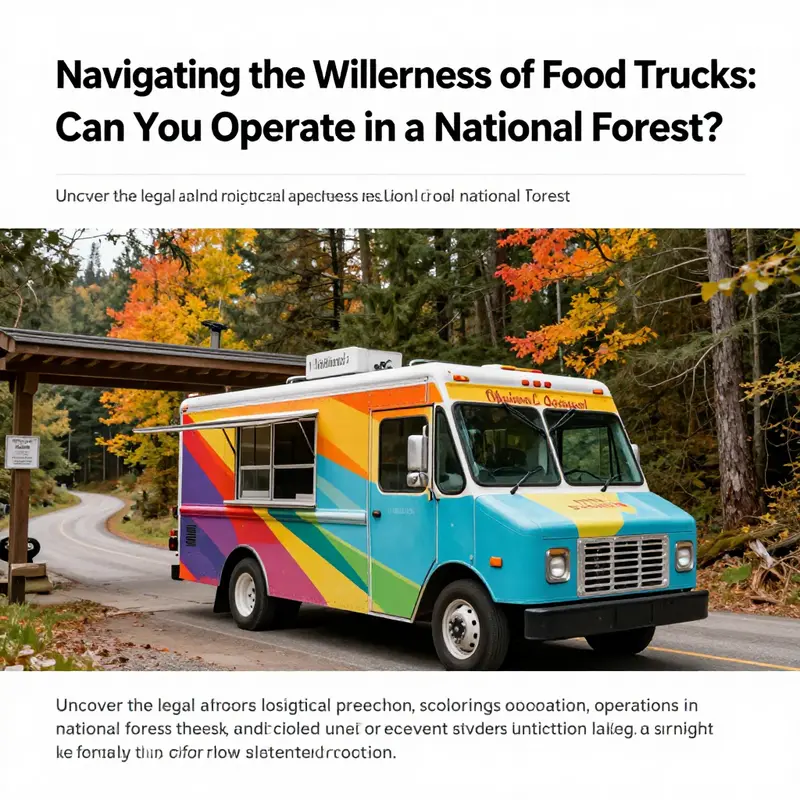
For enthusiasts of automotive culture, the thrill of mobility often extends beyond vehicles; it intertwines with unique business aspirations like operating a food truck. However, once the wheels of a food truck desire to roll into a national forest, the landscape shifts dramatically. National forests, unlike bustling urban streets or festival grounds, present a set of strict land use regulations that isolate food truck operators from these picturesque locales. This exploration will dissect the rationale behind these regulations, focusing on land use restrictions, permit complexities, and infrastructure challenges that inhibit food truck operations in these protected spaces. By the end, readers will gain a comprehensive understanding of the barriers faced when considering the allure of serving food amidst nature’s grandeur.
Between Pines and Permits: Navigating the Terrain of Operating a Food Truck in a National Forest
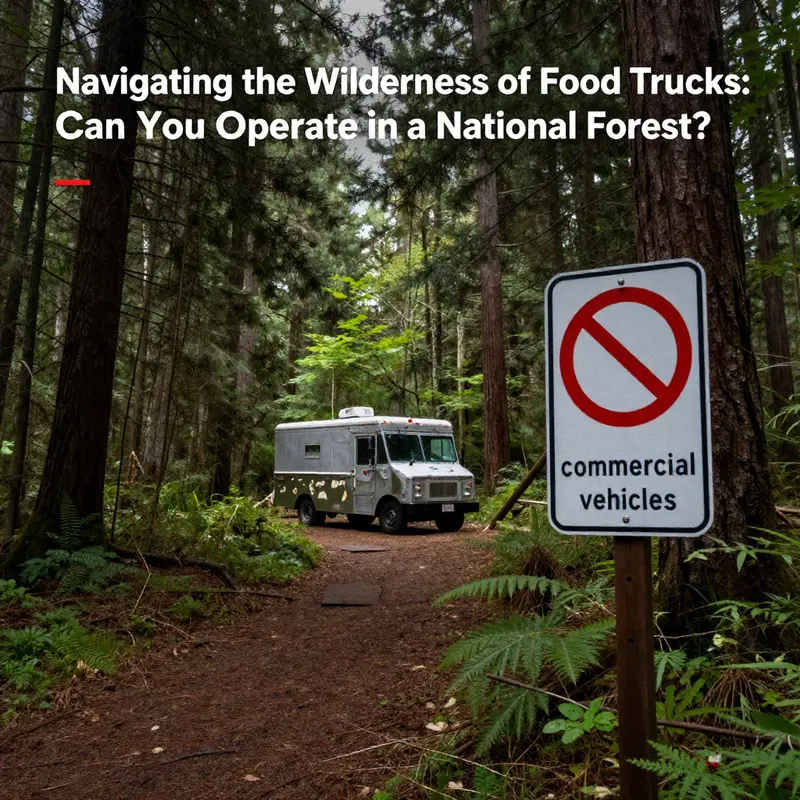
The scent of pine and damp earth lingers as a morning wind ruffles the banners of a forest trail. In that quiet, a food truck would feel like a bright intrusion, a pop of color and sound against the slow rhythm of nature. Yet the reality of operating a mobile kitchen in the heart of a national forest is seldom about appetite and aroma. It is about land use, governance, and the stubborn integrity of protected spaces that belong to everyone and to no one at once. This tension—between opportunity and stewardship—frames a central question for aspiring operators: can a food truck legally live inside a national forest, serving hikers and campers, while still respecting the forest’s ecological mission? The short answer, grounded in policy and practice, is that direct, permanent, or regular food-truck operations are not permitted within national forest boundaries. The longer answer reveals a landscape of rules designed to balance access, safety, and conservation, with only rare, tightly controlled exceptions that arise not from casual desire but from formal processes, intensive assessments, and public interest that clearly aligns with the land’s purpose.
National forests, managed by the U.S. Forest Service and other analogous agencies in different jurisdictions, exist to safeguard ecosystems, sustain recreational opportunities, and support scientific study. They are shared spaces where food—though welcome in many contexts—must coexist with wildlife, water quality, soil integrity, and the visual experience that visitors seek when they step onto a trail or into a clearing. When a business idea involves a vehicle, a structure, or ongoing operations that could alter resource conditions or visitor experiences, it falls under the category of commercial use. In federal lands, commercial activities are not a given; they require explicit authorization through a framework of permits, contracts, or concessions that is rarely granted for mobile vendors in forest interiors. The core logic behind this stance rests on several interlocking concerns: how land is used, what kind of permit scrutiny is applied, whether the necessary infrastructure and safety measures exist or can be created, and what the broader environmental protection goals require.
First, there are land use restrictions that are more than bureaucratic roadblocks. National forests are designated for a set of purposes that include recreation, conservation, wildlife habitat, scientific research, and, in some cases, limited use for education and outreach. The character of these landscapes matters as much as their utility. A food truck represents a commercial enterprise that uses significant space, generates traffic, and introduces waste streams—things that can change how a forest is experienced. The mere presence of a mobile kitchen can shift crowd dynamics, affect parking patterns, and alter the way sensitive habitats near water bodies are navigated by hikers, bikers, and anglers. Regulators assess whether such an operation would impede public access or threaten resource protection. When the forest management plan emphasizes quiet recreation, habitat resilience, and minimal human footprint, the calculus becomes even stricter. The aim is not to refuse opportunity for all commercial activity but to preserve the land’s intended uses and its capacity to absorb human presence without compromising ecological integrity.
Second, the permit framework is real and rigorous. If any commercial activity is contemplated on federal land, an operator must contend with a special permit regime, typically centered around a Special Use Permit (SUP) or a concession contract. These instruments are designed to ensure that the activity aligns with the land’s management goals, integrates with public use, and adheres to environmental safeguards. The SUP process examines environmental impact, traffic management strategies, waste disposal plans, and compliance with health and safety codes in a forest context. In practice, winning an SUP for a mobile food operation inside a national forest is unusual; competition is intense, and the review is thorough. Applicants must show how the venture will protect water quality, minimize disturbance to wildlife, prevent litter and waste from entering streams or soil, and ensure that vehicle movements do not damage trails, roads, or fragile soils. Environmental impact assessments may be required, even for temporary events, to demonstrate that the food truck’s activities will not create disproportionate harm to sensitive zones or seasonal wildlife migrations. The permitting process is not merely a formality. It represents a careful negotiation among public access, commercial interest, and the forest’s long-term health.
Third, infrastructure and safety present practical barriers. National forests typically lack the paved parking, reliable power, potable water supply, large-scale waste management facilities, and robust septage handling capabilities that conventional food trucks rely on in urban or developed settings. A forest environment intensifies logistical challenges: how to park a large vehicle without obstructing trails or emergency access, how to source clean water without compromising watershed integrity, and where to dispose of grease, oil, or wastewater without contaminating soils or watercourses. The safety equation also grows more complex when a mobile kitchen operates amid uneven terrain, steep grades, wildlife corridors, and fluctuating weather. The combination of vehicle maneuverability, fuel storage, hot equipment, and immediate proximity to flora and fauna demands a level of operational discipline and emergency readiness that many small, independent operators across urban streets do not routinely implement. In forest settings, regulators expect a plan that anticipates not just today’s service, but the potential for heavy rains, wildfire risk, or sudden crowd surges near a trailhead. The absence of infrastructure that would normally support a safe, sanitary, and compliant operation becomes part of the reason why remote, regular food truck service is not sanctioned.
Fourth, the overarching objective of environmental protection colors every decision. Forests are living laboratories for ecological processes, and human activities must be weighed against potential pollution, noise, wildlife attractants, and habitat disturbance. A food truck inevitably introduces noise, exhaust, and a stream of waste—both solid and liquid—that requires careful handling to preserve soil and water quality. The presence of a food service operation could attract wildlife to human food sources, encouraging behavior that could jeopardize safety for both animals and visitors. When such risk is perceived to be elevated, the agencies responsible for stewardship will treat an ordinary food truck as a poor fit for the forest’s core mission. The protective emphasis is not punitive for its own sake but a reflection of a land-use ethic that prioritizes continued access to pristine natural experiences for future generations.
Given these pillars, the standard condition is clear: permanent or semi-permanent food truck operations inside national forests are effectively prohibited. There are exceptions, but they are narrow and highly regulated. Some developed campgrounds or visitor centers may host a concessionaire operating a small food service kiosk under a formal contract. This is not the same as an autonomous, mobile food vendor driving a truck into the woods and setting up shop on a whim. The concession model presupposes a designed, limited footprint, predictable visitor flows, and a contractual framework that includes waste management, cleaning, and post-event restoration of the site. Even in these cases, the operation is functionally integrated into a managed area rather than standing as an independent commercial venture asserting locational autonomy. The distinction matters for anyone hoping to translate the freedom of a street-food truck into a forest context. It signals that the forest’s regulatory architecture favors controlled, compatible, and time-bound food service rather than continuous, self-directed activity.
Those who want to sell food in a forest-related setting should instead pursue the path that the system envisions: engage with the forest service proactively, seek opportunities around the edges of the forest, or pursue events where temporary permits govern the vendor presence. The first move is to contact the local forest service office that administers the forest you have in mind. A face-to-face conversation can illuminate whether there are any concession programs, pilot projects, or occasional special events where a vendor might participate under an SUP or contract. It also provides insight into the administrative cadence—the timing of permit cycles, the kinds of environmental checks that are typically required, and the standards for waste handling and site restoration that would accompany any approved operation. Even if the official stance is that a full-fledged food truck inside the woods is not feasible, there may be sanctioned settings within the forest where a kiosk or pop-up service operates under careful governance.
Another route is to watch for authorized events. Forests frequently host festivals, trail races, interpretive programs, and partner-led gatherings that include food vendors on a temporary basis. In these contexts, a vendor might participate under a formal event permit, with specific boundaries around site placement, power supply, and waste disposal. The advantage of this path is that it aligns with public access and resource protection goals, while still allowing a chef or entrepreneur to share meals with visitors in a controlled environment. The limitations are real: opportunities are sporadic, competition for them can be stiff, and the vendor’s presence is bounded in time and space.
A third path centers on adjacent areas where the regulatory framework is more permissive but still mindful of conservation. Nearby towns, gateway communities, or state parks may welcome food service operations that complement forest visitation without directly intruding into protected forest interiors. In many cases, these venues offer a better alignment of business goals with the demands of sustainability and community engagement. The forest’s boundary becomes less of a barrier and more of a planning horizon, guiding an operator toward opportunities that leverage proximity to the forest while respecting its boundaries. The difference between selling at the forest edge and operating inside the forest is subtle but meaningful: proximity versus intrusion, accessibility versus fragmentation, and an emphasis on stewardship versus unconstrained commercial activity.
For operators who remain curious about what it takes to navigate this regulatory terrain, a useful point of reference is a broader conversation about legal considerations in the food-truck startup ecosystem. While the forest context is distinct, some of the same regulatory sensibilities apply—permits, environmental responsibility, traffic management, and waste discipline. In that spirit, resources that discuss the legal and ethical dimensions of starting a Latino-focused or other specialized food-truck enterprise can illuminate how to present a credible, compliant business plan, even when the forest is not the final destination. For instance, readers might explore discussions on legal considerations for Latino food truck startups to understand how vendors articulate permits, multi-stakeholder approvals, and community impact assessments in a way that can translate to forest-permitted environments. Legal considerations for Latino food truck startups offers a window into how these conversations unfold, including how operators frame environmental safeguards, health and safety compliance, and community engagement in the permit review process. This is not a blueprint for operating inside a forest, but it is a reminder that credible, risk-aware planning matters wherever a mobile kitchen seeks a place to serve.
The practical takeaway for aspiring operators is clear: do not chase a fantasy of a free-standing food truck staking a long-term claim inside a national forest. Instead, calibrate expectations to the regulatory terrain, prepare for a formal process, and pursue opportunities that respect the forest’s purpose while still offering value to visitors. Documented planning matters. A robust plan would detail how the operation would minimize environmental impact, how waste would be segregated and disposed of without contaminating soil or waterways, how traffic would be directed to avoid congestion on narrow forest roads, and how emergency response would be coordinated with forest staff. It would also explain how the vendor would operate safely in a forest setting, including hygiene standards, water management, fuel-handling procedures, and a contingency plan for extreme weather or fire risk. In short, the forest agency’s evaluation hinges on whether the enterprise enhances the visitor experience without compromising habitat integrity or resource quality. The more transparent and rigorous the proposal, the better the chance that a reviewer can see a path toward compatibility.
Even as these realities shape the horizon for forest-based food service, it remains essential to maintain a broader sense of purpose in both business and public land stewardship. A food truck can be a welcome addition to a community when positioned thoughtfully, with a product that respects local needs and environmental limits. The forest context, however, invites a different sort of entrepreneurship—one that blends culinary craft with ecological literacy, community partnership, and a long view of impact. The forest’s guardianship invites operators to ask not only whether a permit is obtainable, but whether the venture, in its configuration and footprint, honors the healthy functioning of ecosystems and the safety of visitors. That inquiry, more than any single permit, defines whether the project belongs in the woods at all.
If your passion for food and the outdoors remains undiminished, consider channeling that energy into adjacent opportunities: create a mobile unit that serves nearby communities outside the forest’s core, develop a pop-up program for seasonal events in towns near the forest, or partner with a concessionaire on a pilot project that operates within a designated, permitted site. Build your business plan around compliance, sustainability, and community benefit, not merely proximity to the forest. And if you ever feel the pull of the woods again, remember that the forest’s governance is not a barrier to good ideas, but a framework that ensures the ideas endure without eroding what makes these spaces special. In the end, the question is not simply whether a truck can roll into a national forest; it is whether a business can contribute to a landscape that must be preserved, enjoyed, and preserved again for generations to come.
External resource: For official guidelines and the formal permit framework that underpins these decisions, see the Forest Service’s guidance on Special Use Permits and related land-use policies. USFS Special Use Permits
Permits and Perimeters: Understanding Why National Forests Don’t Welcome Food Trucks—and Where to Find Legal Pathways
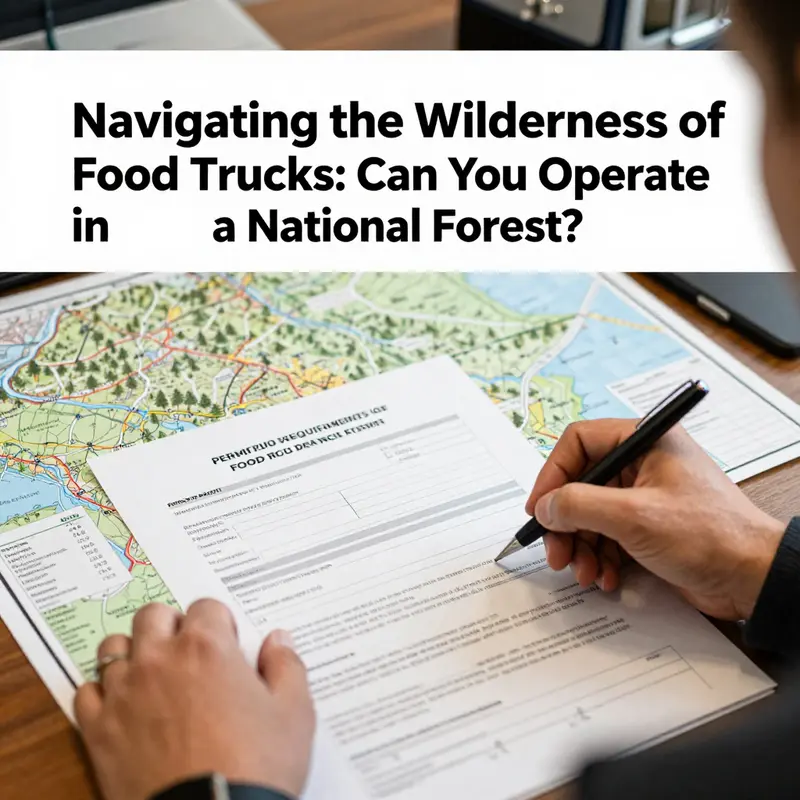
The question of whether a food truck can operate inside a national forest arrives with a quick, almost instinctive answer: no. The forest is not only a landscape of trails and trees but a carefully managed system of lands protected for wilderness, watershed health, wildlife habitat, and the safety of visitors who come seeking quiet, curiosity, or escape. The policy landscape behind that stance is grounded in land-use planning, environmental stewardship, and a set of practical constraints that together make independent mobile food service inside a forest unlikely to pass muster. Yet the same forests welcome people, and they frequently host a variety of food concessions, events, and educational programs. The distinction between a roaming food truck and a sanctioned, limited-access concession is not merely semantic; it is the difference between a regulated partnership with a land manager and a private commercial enterprise that could alter resources, safety, and the overall visitor experience. To understand where these lines are drawn—and how someone might still bring food to forest-adjacent communities—it helps to move through the permit requirements with a steady, almost cautious pace.
A national forest is a mosaic of land uses. Hiking and camping are primary activities, yes, but so are watershed protection, wildlife management, scientific study, and cultural interpretation. When a private business proposes to operate a food service vehicle within that mosaic, it triggers a special use that must be reviewed through the lens of environmental impact, resource management, and visitor safety. The Forest Service, which administers national forests, treats commercial activities as a distinct category known as a Special Use. This designation is not a mere formality. It signals that the activity is not a normal activity of the forest and requires special considerations, coordination, and assurances that any impact is minimized and offset where possible. The documents involved—the Special Use Permit (SUP) among them—are designed to ensure that a vendor’s presence would not degrade water quality, disturb wildlife during sensitive periods, clog trails, or create confusion or hazards for visitors touring the area in search of a natural experience rather than a commercial gathering. In practice, the permit process asks for a meticulous accounting of how the proposed operation will fit into the forest’s rhythms, from the flow of foot traffic on a popular trailhead to the seasonality of wildlife presence and the fragility of nearby streams.
The SUP is a gateway document. It requires a detailed description of the operation: what food will be served, how it will be prepared, and the precise location and duration of the activity. It also demands a robust plan for waste management, including how trash will be collected, stored, and removed, and how recycling and composting will be handled to prevent litter and odor issues that could disturb the forest environment or attract wildlife. The applicant must delineate emergency procedures—evacuation routes in case of wildfire danger, for example, or medical response plans if a patron experiences a serious allergic reaction. The broader objective here is not to shroud commerce in red tape but to align any commercial use with the forest’s overarching mandate: protect natural resources and ensure a safe, high-quality experience for all visitors.
Processing an SUP is neither quick nor routine. The Forest Service evaluates applications on several fronts. First, there is an assessment of the potential impact on natural resources. Will the truck’s location, parking, fuel usage, or waste streams affect water quality, soil compaction, or vegetation? Is there a reasonable plan to minimize noise and light pollution, especially in areas close to night-sky viewing or quiet zones? Traffic flow is another critical factor. A food truck must not create congestion on narrow forest roads or impede access for emergency vehicles. The service also considers compatibility with existing uses. If a site is already a popular camp zone or a base for guided interpretive programs, the introduction of a commercial vehicle could complicate schedules, reduce space for visitors, or undermine the intended educational or recreational goals.
Beyond the forest-specific checks, many operators encounter state or local health department requirements. Food safety does not become optional simply because the setting is federal land. A mobile vendor may need to hold a valid health permit, follow strict hygiene practices, and comply with local standards for food handling, sanitation, and waste disposal. The intersection of federal land rules and state or local health regulations creates a layered regulatory landscape. In practice, this means a potential applicant must walk through both the Forest Service process and the relevant public health authority’s requirements. The outcome depends on the specific forest district, the time of year, and the characteristics of the proposed operation. It is rare for a mobile vendor to secure an SUP that would authorize routine, everyday operation inside a forest; the more common landscape is limited, site-specific concessions within pre-approved facilities such as visitor centers or developed campgrounds, where the operation is integrated into a formal contract with the forest service.
An important nuance often misunderstood is the difference between operating inside a forest versus operating near one. The boundary line matters. Some concessions exist at entrances, in official parking areas, or within larger, purpose-built visitor facilities where infrastructure supports basic service delivery—restrooms, waste management, electricity—and where the concessionaire agreement is tightly controlled, periodically inspected, and aligned with seasonal visitor demand. These arrangements are not the same as a roaming food truck that might park anywhere and operate with minimal notice to park staff or land managers. The forest’s goal in those situations remains consistent: to facilitate a safe and enjoyable visit while protecting ecological integrity. A vendor may provide a service to visitors, but only within a framework that ensures environmental safeguards and predictable management.
If a reader still wonders whether there is any possible route for a food-focused enterprise within or adjacent to a national forest, the answer is nuanced but clear: the main path is not a private, independently operated truck roaming along a forest road. Instead, savor the possibility of a concession-operated kiosk within an established, permitted facility, or consider events held within forest boundaries that are scheduled, approved, and managed under a formal agreement. In practice, this means looking for opportunities tied to specific forest events—such as festivals, educational programs, or community celebrations—where a temporary vendor presence can be coordinated with forest staff, safety protocols, and environmental plans. It also means exploring opportunities outside the core forest itself, in adjacent towns, at park entrances, or in state parks that can have different regulatory environments and more flexible commercial frameworks.
For those who want a more practical, community-oriented approach, a good starting point is to reach out to the local Forest Service office that oversees the forest you have in mind. They can provide current guidance on any existing concession agreements, the feasibility of proposals, and the kinds of events or facilities that might permit a contracted food service. If you are hoping to participate in a festival or a temporary event, you will often find that the application window is short, and the required documentation is substantial. The process tends to require a clear demonstration of environmental stewardship, including waste mitigation strategies, as well as a clear plan for traffic control, safety, and coordination with park rangers or forest officers. These requirements reflect the forest service’s mission to protect resources while still offering meaningful experiences to visitors.
The precise wording of the rules can vary by district and forest, which adds a layer of complexity for anyone thinking about getting into the food business within a forest setting. The Forest Service’s official guidance emphasizes that commercial activities on federal land require a special permit and are subject to environmental and safety standards. A crucial point to internalize is that a Special Use Permit is not a general permission to operate anywhere, anytime; it is specific to a location, a duration, and a defined set of conditions that the operator must meet and maintain throughout the term of the permit. The applicant must be prepared to show that their operation would not undermine the forest’s resources, visitor experience, or safety. And if the operation is not compatible with the forest’s current needs or if the environmental review reveals unacceptable impacts, the SUP may be denied.
This is where the discussion often meets a crossroads for would-be operators. The forest is not simply a stage for commerce; it is a living system that responds to how people use it. The SUP is designed to protect the staging of human activity to ensure that it harmonizes with ecological reserves, wildlife corridors, water quality, and the quiet enjoyment of others seeking solitude or learning experiences. It is not a barricade against small business; it is a carefully calibrated tool that allows for meaningful partnerships when they are properly designed and responsibly managed. When viewed through that lens, the forest becomes a venue where vendors can contribute positively—offering a sanctioned, well-managed food experience to visitors who are already engaged in outdoor recreation and exploration—without compromising the environment or user safety.
For readers who want to glimpse the broader regulatory framework and the practical steps involved in pursuing an SUP, a visit to the official U.S. Forest Service site is recommended. The site consolidates guidance on special-use permits, the evaluation criteria, and the typical documentation required to begin the process. While the information is comprehensive, it is also district-specific and time-sensitive, so direct contact with the local forest office is essential for up-to-date instructions, forms, and contact points. This is not a one-off form submission; it is a process that often involves multiple rounds of questions, revisions to the plan, and possibly site-specific environmental assessments. In many cases, the decision hinges on the perceived balance between public benefit and ecological risk, and the forest service expects a transparent dialogue with applicants about how the proposed operation will maintain or enhance visitor safety and enjoyment while protecting natural resources.
In the practical reality of entrepreneurship, the SUP requirement signals two important realities. First, it confirms that serving food inside a national forest is not a routine business venture; it is a regulated activity that must be justified within a public-interest framework. Second, it invites operators to reframe their business model around collaboration with land managers, rather than competition with them. Those who pursue a path that emphasizes community engagement, environmental responsibility, and adherence to safety standards are more likely to find opportunities—like serving visitors at a sanctioned kiosk within a developed campground, or participating in a carefully scheduled forest festival—where the experience is still meaningful, sustainable, and compliant with the forest’s mission.
The broader implication for readers who are exploring the feasibility of opening a food truck aligned with forest-adjacent audiences is to be pragmatic about the boundaries. If your goal is to feed people who are visiting a forest context, consider starting with venues and formats that genuinely fit the landscape and the management framework. A kiosk-based arrangement within a visitor center or a designated campground, with the proper concession contract, can deliver a reliable, high-quality customer experience while respecting the forest’s ecological and experiential goals. If you are drawn to the idea of mobility and the romance of the open road, a more suitable path may be to organize events tied to forest themes in community locations outside the forest’s core boundaries, while keeping your core business aligned with health, safety, and environmental stewardship.
As a practical next step, those interested in pursuing any form of forest-related food service should schedule a conversation with the local forest district office. Present a clear, well-documented plan that covers location, duration, waste management, emergency procedures, and a risk assessment. Demonstrate how you will minimize environmental impacts and how you will coordinate with forest staff to protect wildlife and visitor safety. It may also be worthwhile to explore partnerships with non-profit organizations or educational programs that operate within forests. These collaborations can offer valuable opportunities to contribute to forest literacy and conservation while respecting the land’s character and the rules that govern it.
For readers who want to frame this topic within a broader professional context, consider examining the legal and regulatory dimensions of running a food-truck business in mobile or non-traditional settings. A chapter focusing on such considerations—grounded in the realities of forest regulations but applicable to broader markets—can provide useful perspectives on compliance, risk management, and community engagement. The landscape is complex, but with careful planning, you can align your entrepreneurial goals with the forest’s obligations and approach the forest environment not as a barrier, but as a partner in responsible stewardship.
If you are seeking a concise overview of the legal considerations facing Latino food-truck startups—particularly in regions where cultural foods meet mobile service models—explore the discussion available at the linked resource. It offers a perspective that can help you think through licensing, permits, and compliance in a broader, culturally informed business context. legal-considerations-latino-food-truck-startups.
In sum, operating a food truck directly inside a national forest is not permitted under standard circumstances, because of land-use restrictions, permit requirements, infrastructure gaps, and environmental protections. The recommended route is to pursue sanctioned concessions within developed facilities or to participate in authorized forest events, or to focus on adjacent zones where forests meet communities. The regulations exist not to stifle entrepreneurship but to safeguard ecological health, ensure visitor safety, and preserve the forest experience for current and future generations. The path to a legally compliant, ethically sound business that serves forest visitors lies in deliberate alignment with land managers, transparent environmental planning, and a willingness to partner with the very institutions that steward these remarkable lands. For those who want to see the path clearly spelled out, the official Forest Service resources remain the most reliable compass, guiding prospective operators toward permissible, constructive, and well-managed opportunities in forested landscapes.
External resource for further reading: https://www.fs.usda.gov/main/forest-service
null
null
Final thoughts
In summary, while the dream of operating a food truck in the tranquil and breathtaking setting of a national forest may entice many, the reality is fraught with legal and practical challenges. Land use restrictions aim to protect these valuable ecosystems while the stringent permit requirements deter many potential operators. Moreover, the lack of necessary infrastructure further complicates the feasibility of such ventures. It is crucial for aspiring food truck owners to seek suitable locations that respect the sanctity of nature while thriving in their culinary ambitions.