
Operating a food truck is an exhilarating venture that unites culinary passion with entrepreneurship. However, before your culinary creations can hit the streets, understanding the licensing landscape is crucial. Each step—from obtaining a food service license to ensuring compliance with local regulations—serves as the foundation for a successful food truck business. This comprehensive guide will explore the essential licenses needed for food truck operations, covering food service requirements, business registration, sales tax regulations, and necessary permits from local authorities. By grasping these components, aspiring food truck owners can confidently navigate the bureaucratic terrain, paving the way for a popular and legally compliant mobile kitchen.
Licensing a Mobile Kitchen: A Practical Guide for Food Trucks
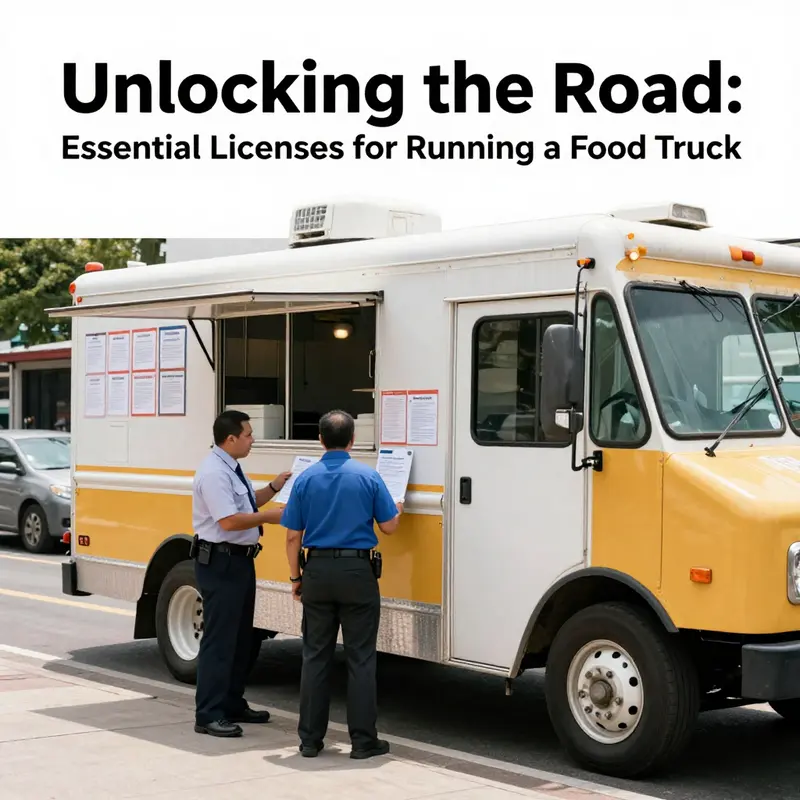
A mobile kitchen operates under a gatekeeping system of permits and inspections. The core license is the Food Service License, which confirms compliance with hygiene and safety standards set by local health authorities. The exact requirements vary by city and state, so start by checking your local health department’s website. You’ll typically submit an application with details about your business, your menu, planned operating locations, and hours. Proof of liability insurance is commonly required, along with possibly a business plan or sanitation procedures. After the application comes the health inspection, where refrigeration, temperature control, handwashing facilities, waste handling, and cleanliness are evaluated in practice. Regulators may also review pest control, cleaning schedules, and layout for cross contamination prevention. Some jurisdictions require additional training or certifications, such as food safety courses. Beyond the Food Service License, you may need a general business license, a sales tax permit, and permits related to parking or street vending. Liability insurance is often verified during licensing or renewal. Local rules may impose extra certifications depending on the foods you serve. The most reliable path is to consult your city or state health department for forms, fees, and required courses. Planning and documentation are key: gather formation documents, insurance, a clear sanitation plan, and records of temperature and cleaning. Prepare for the health inspection with a pre inspection checklist. Finally, licensing is an ongoing discipline, not a one time hurdle, requiring renewals, staying updated on rules, and seeking professional guidance when changes arise.
Licensing the Mobile Kitchen: A Practical Roadmap to Launching a Food Truck
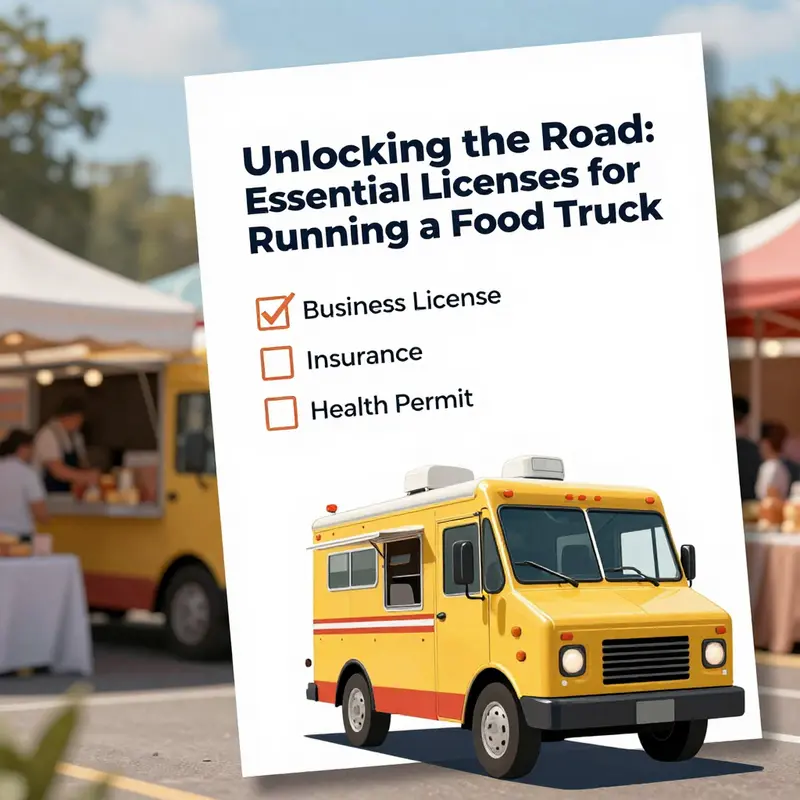
A food truck is a business on wheels, but it is also a regulated space where health, safety, and public accountability travel with every mile. The licenses and permits required to legally operate a mobile kitchen form a roadmap, not a single signpost. The exact names, numbers, and steps will differ by city, county, and country, yet the core framework tends to stay remarkably similar across many jurisdictions. At the heart of this framework are six essentials that most operators will encounter in some form: a business registration, a food service or mobile food vendor license, a food handler’s certification or permit, an employer identification number (EIN) for tax and banking purposes, local permits and zoning approvals, and appropriate insurance. Beyond these essentials, locations may layer on location-specific certificates, vehicle safety standards, and periodic inspections. Reading the landscape with this structure in mind helps founders see how each piece fits the bigger picture, from concept to storefront on wheels to festival booth in a busy district. The practical consequence is clear: licensing is not a formality to breeze through, but a design constraint that influences everything from truck layout to menu planning, staffing, and even the times you choose to roll into a market.
The first cornerstone, business registration, is the legal foundation of the operation. Before you can secure any health or permit credentials, you typically register the venture as a distinct legal entity or at least as a formal business—whether as a sole proprietorship, an LLC, or a corporation, depending on risk tolerance, financing plans, and how you want to address personal liability. This step creates a recognized business identity, opens doors to business banking, and clarifies ownership structure for future investors or partners. Because the registration process is handled at the state or provincial level, the precise forms and timelines vary, but the underlying objective remains constant: you are declaring to the state that your mobile kitchen is a legitimate business entity with a defined structure and a path to compliance.
Following registration, the food service or mobile food vendor permit takes center stage. This license is the gatekeeper for any place where food is prepared, handled, and sold to the public. The health authority or the local licensing bureau uses it to confirm that the truck’s operations meet hygiene and safety standards. The review typically hinges on the truck’s layout and equipment: how cold storage is maintained, how heat is applied, how handwashing is facilitated, where waste goes, and how surfaces are cleaned and sanitized. Expect to submit a detailed floor plan of the truck, with a clear flow from raw ingredients to finished products, plus documentation of insurance and the estimated operational plan. Some jurisdictions require a sanitation inspection or a pre-opening evaluation before the permit is granted. This is where the practical realities of daily service start to shape the design: the placement of a handwashing station, the ease of cleaning in a compact space, and even how customers will be served to minimize cross-contact and contamination.
No matter the location, staff who handle food typically must carry a food handler’s permit or an equivalent certification. This training covers safe food preparation practices, cross-contamination prevention, proper temperature control, and general hygiene protocols. The exact certification name and the passing requirements vary by region, but a shared principle runs through all programs: everyone who touches food has received baseline training to protect customers. In a multi-person operation, one or two staff members may be designated as supervisors and expected to oversee ongoing adherence to safety standards. Even when your team is small, having certified handlers reduces liability and demonstrates a proactive commitment to safety, which can influence inspectors’ evaluations and customers’ confidence.
An EDUCATION-related necessity often paired with these operational permits is the Employer Identification Number (EIN). In many places, you must obtain an EIN from the federal or national tax authority to open a business bank account, file taxes, and manage payroll if you hire employees. Even solo operators sometimes benefit from an EIN, especially if you want to separate personal and business finances or if you plan to scale into a larger fleet of trucks. The EIN is not a license to operate, but it is a vital administrative credential that helps keep records clean and audits straightforward. The process is usually straightforward and online, but it is easy to overlook during the startup sprint, so it’s worth prioritizing early in the build phase.
Beyond the national or state-level licenses, local permits and zoning approvals are equally important. Local authorities determine where a food truck can park, how long it can stay in a given space, and whether special permissions are needed to operate in parks, markets, or festival grounds. Zoning rules prevent obstruction of sidewalks and traffic while balancing the public’s access to food vendors with the city’s planning goals. In some places, this means obtaining a rotating or seasonal permit to operate in specific districts, while in others, it may require a more formal mobile vending permit tied to a business license. The city’s approach often reflects the balance between vibrant street economies and street safety, so you may find that certain blocks or events demand additional permits or pre-approval. The process is typically managed by a city or county department that handles commerce, licensing, and transportation, and it often has online portals where the application steps, fees, and renewal timelines are posted.
The insurance layer, while not a license per se, is essential for protecting the business and the people it serves. General liability insurance is a common minimum, covering common risks from slips and falls to property damage. Product liability coverage may be prudent if you serve high-risk foods or specialty preparations. Depending on the jurisdiction, insurers may also require proof of compliance with health and safety standards as a condition of coverage. For operators who hire staff or work with a paid crew at events, workers’ compensation insurance becomes another critical element. Insurance delivers tangible protection but also signals to lenders, landlords, and event organizers that you are serious about risk management—a factor that can ease other licensing steps and improve opportunities for partnerships.
Some locations supplement the standard package with location-specific certifications or training requirements. For example, a city might require operators to complete a formal food safety course or to renew a hygiene certification after a set period. In other contexts, there may be unique requirements tied to specific cuisines, or to the handling of particular ingredients that demand extra care. The takeaway here is practical and simple: always check for location-specific certifications and updates. Keeping a calendar of renewal dates, inspection windows, and evolving standards helps prevent last-minute surprises that can delay opening or curtail operations at peak times.
How all of these pieces fit together is easier to grasp when you imagine the lifecycle of a typical truck. Conceptualization leads to business formation, which leads to the submission of the food service permit and health plan, which in turn triggers space allocation and equipment compliance. As you prepare for inspections and plan the layout, you’ll see how every choice—where you place your refrigeration, how you route waste streams, or how you design the order flow—affects the likelihood of approvals and the smoothness of daily service. The process can feel iterative: you may revise a floor plan after a pre-inspection critique, or you may need to adjust a menu if certain ingredients require specialized handling. The point is not rigidity but readiness. Being prepared for the permit review helps you move from concept to kitchen-on-wheels with fewer stalls and fewer round trips to government offices.
A useful way to frame this landscape is to think about the licensing journey as a conversation with the local government about the kind of business you intend to run in the public realm. You are explaining what you will cook, how you will cook it, where you will park, how you will keep customers safe, and how you will keep the streets clear for everyone. This is where cross-referencing with broader business law and regulatory considerations becomes valuable. For readers who want a more industry-focused lens, there is a broader discussion on legal considerations for Latino food truck startups that highlights the interplay between cultural cuisine, licensing, and community engagement. legal considerations for Latino food truck startups. Understanding these perspectives can illuminate how cultural cuisine interacts with licensing norms, helping you anticipate questions inspectors may ask and how to frame your operations in a way that respects both tradition and safety.
The practical impulse, then, is to start with the official sources that govern licensing in your area. If you are aiming for a nationwide perspective, you can align state health departments, revenue or taxation authorities, and local licensing offices to assemble a complete picture. In some regions, this means visiting a single portal that aggregates all relevant agencies; in others, it means navigating multiple websites and a few in-person visits. Either way, the discipline is the same: map the required licenses, identify the timelines for submission, plan for inspections, and secure the necessary plans, equipment, and financial documentation before you launch. It also helps to keep a small show-docket of your permits and certificates in the truck or in a mobile app, so you can display proof of compliance quickly if an officer or event organizer asks for it.
Finally, the licensing journey is not a one-time hurdle but an ongoing discipline. Permits require renewal, equipment may need periodic calibration or re-inspection, and staff certifications must be kept current with continuing education. You will encounter seasonal market calendars and city events that demand additional permits or temporary operation approvals. The capacity to adapt—without compromising safety and quality—helps sustain a food truck business through growth, competition, and changing regulations. As you grow, the same logic applies whether you expand to another truck, open a brick-and-mortar kitchen, or explore new neighborhoods. By anchoring every expansion in the same licensing disciplines, you maintain consistent compliance, reduce risk, and protect your customers as your fleet grows.
For readers seeking a practical, location-aware starting point, consult the official health and licensing resources for your city and state. While this chapter outlines the typical licenses most operators encounter, the exact names and steps will differ. A thorough, proactive approach—reviewing requirements early, coordinating timelines, and maintaining organized documentation—ensures that your mobile kitchen can roll into any market with confidence rather than stumbling on a last-minute permit snag. The licensing path is, in the end, less about a stack of forms and more about building trust with customers, communities, and regulators. When you approach it with that mindset, the road to launching a food truck becomes not a barrier, but an integrated part of your entrepreneurial journey.
External resource: https://www.fda.gov/food
Collecting and Remitting Sales Tax: A Practical Guide for Food Truck Operators
Understanding Sales Tax Obligations for Your Food Truck
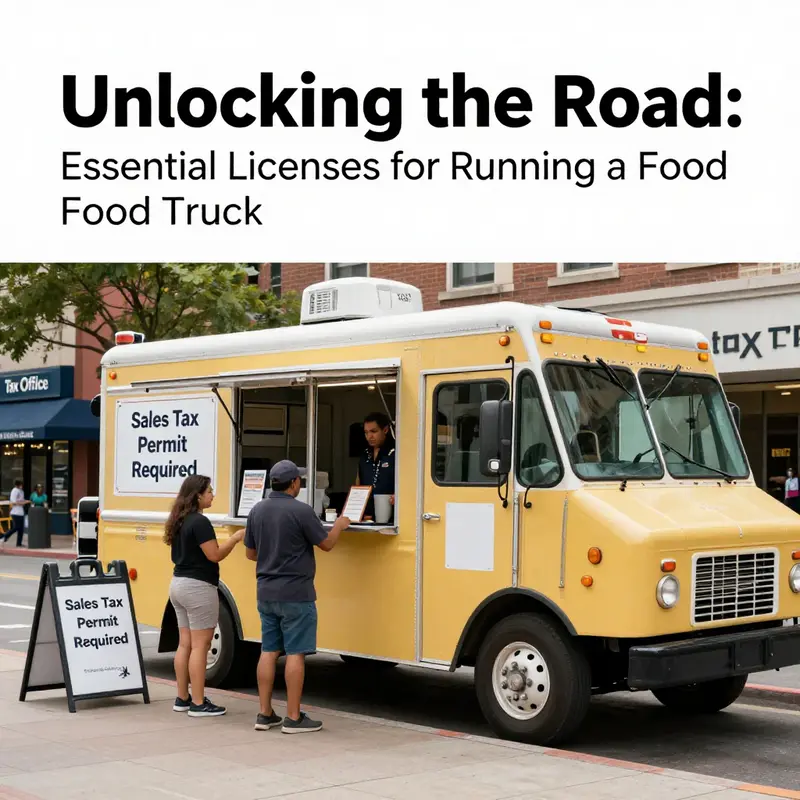
Navigating sales tax is one of the most practical, ongoing responsibilities a food truck owner faces. Sales tax is not just a single annual filing; it is a daily operational requirement that affects pricing, point-of-sale systems, bookkeeping, and where you choose to park. Every jurisdiction treats taxable sales differently, so the first principle is simple: know the rules where you sell. Most states tax prepared food sold by mobile vendors, and many localities layer additional rates on top of state tax. That means a taco sold in one county may carry a different tax rate than the same taco sold down the street.
Start by registering for a sales tax permit. Most states require businesses that make taxable sales to obtain a permit from the state department of revenue before beginning operations. This permit authorizes you to collect tax and creates an account for filing returns. If your truck plans to operate in multiple cities or counties, you might need to register in each jurisdiction that requires separate registration. Registration deadlines and processes vary, so apply early—many authorities allow online registration and will issue a permit number you must display on invoices or receipts.
A central concept to grasp is taxability: what you sell and how it is sold determine whether tax applies. Prepared meals and hot or ready-to-eat foods are generally taxable. Cold, unprepared groceries sometimes receive an exemption or lower rate. Drinks can behave differently depending on whether they are fountain beverages, bottled drinks, or alcohol. Some states carve out exceptions for certain nonprofit events or for food sold as part of a catering contract. Understand your menu line by line and classify items accordingly. If an item is exempt, document why—exemptions can be specific and require proof during a tax audit.
Location matters. Sales tax rates and rules are geographically driven. Many states use destination-based sourcing for sales tax, meaning the tax rate is determined by where the customer receives the goods. For a food truck, that typically means where the food is handed to the customer. Other states use origin-based sourcing, where the tax rate is set by the business location. Mobile vendors must track where each sale occurs because county and city rates often differ. Modern POS systems can tag transactions with GPS or location codes to ensure accurate rate application. If you travel across city boundaries during service, make sure your system updates rates in real time or that you manually select the correct tax jurisdiction for each sale.
Collecting tax correctly requires the right point-of-sale processes. Electronic POS systems that calculate and apply tax by location reduce human error. Many systems allow you to define exempt items, split tax vs. non-tax items on a single ticket, and produce reports by jurisdiction. Keep receipts or digital transaction logs that clearly show taxable items, tax collected, and the location of sale. Daily sales reports should reconcile with cash and inventory to make sure nothing is missed. For trucks that accept phone orders, apps, or third-party platforms, ensure those platforms either collect tax on your behalf or provide tools to report taxable sales accurately.
Third-party sales channels introduce additional complexity. If you sell through food ordering platforms or event organizers, confirm who is responsible for collecting and remitting sales tax. Some platforms collect tax for you and remit it to tax authorities; others pass the collection responsibility to the vendor. Contracts and platform terms should be reviewed before you sign on. If a platform collects tax and remits it, keep documentation of those transactions to substantiate your filings and to avoid double-collecting or reporting mistakes.
Multi-jurisdictional operations create nexus considerations. Nexus is the connection between your business and a taxing jurisdiction that gives the state or locality the right to require collection of sales tax. Operating physically in a state typically creates nexus, but there are additional triggers such as having employees, owning property, or reaching certain sales thresholds in remote sales. For food trucks, nexus analysis is often straightforward—selling within a state means you must register there—but it becomes more complex if you frequently cross state lines for festivals, cater events in other states, or maintain regular routes into neighboring jurisdictions.
Remittance and filing frequency depend on your tax authority. New businesses often file monthly, while established vendors with smaller liabilities may file quarterly or annually. Filing frequency is usually set by the revenue department based on your projected tax liability. Missing filings or payments leads to penalties and interest, so mark filing deadlines on your calendar and set reminders. If you collect tax and later learn an adjustment is necessary, file amended returns as required and correct records promptly.
Recordkeeping is your safety net. Maintain sales journals, deposit records, copies of permits, exemption certificates, and sales tax returns. If you serve food at events where organizers issue exemption certificates—such as sales for charitable causes—collect and retain those certificates. During an audit, clear, organized records make the process faster and reduce exposure to assessments. Retain records for the period required by your state—typically three to seven years.
Noncompliance carries real consequences. Penalties and interest accrue on unpaid tax. Audits can assess additional tax for periods not properly reported, and in severe cases, repeated noncompliance triggers criminal charges. Treat sales tax as a liability you collect for the government rather than revenue you own. Separate tax funds from operating cash to avoid accidental use; many operators maintain a dedicated bank account or ledger line for tax collections.
Practical strategies help keep sales tax manageable. Automate where possible. Choose a POS that supports multi-jurisdiction rates and reports. Train staff to handle exempt sales and cater orders properly, and create clear procedures for events and private catering where tax rules differ. Use rounding rules consistent with state guidance and clearly list tax on receipts so customers see the breakdown. For items with mixed tax status (for example, food plus service), decide how to present them on the ticket to ensure accurate tax application.
When planning expansion, factor sales tax into route planning and pricing. If you plan to operate regularly in high-tax jurisdictions, incorporate that into menu pricing or create location-specific menus. For one-off events in other states, research local tax rates and registration requirements ahead of time; many communities require temporary vendor permits or provide event organizers with specific registration processes for out-of-state vendors.
Resources are available to reduce uncertainty. State department of revenue websites provide guidance, rate lookups, registration portals, and downloadable forms. The U.S. Small Business Administration offers a practical guide for small business sales tax obligations that helps with registration, collection, and filing processes. For targeted legal and startup concerns related to mobile food operations, consider reviewing industry-focused resources that discuss permits, compliance, and how tax interacts with other licensing requirements; these practical guides can help new owners avoid common pitfalls.
Tax rules evolve. States periodically update rates, change sourcing rules, and adopt new definitions of taxable items. Stay subscribed to revenue department alerts and review policies annually. When in doubt, contact the state or local tax authority directly. If your operation expands or your sales channels change, consult a tax professional for nexus analysis and filing strategy.
Managing sales tax correctly transforms a compliance burden into a routine business function. With proper registration, accurate point-of-sale systems, careful recordkeeping, and an understanding of location-based rules, food truck operators can keep tax compliance from eating into profits. For a focused look at legal and licensing considerations that tie into tax compliance, see this practical resource on legal requirements for startup vendors: Legal considerations for Latino food truck startups.
External Resource: For federal-level guidance and practical steps on sales tax registration and collection for small businesses, consult the U.S. Small Business Administration’s guide: https://www.sba.gov/business-guide/running-a-business/sales-tax-for-small-businesses
Local Authority Permits: Navigating Germany’s Rules for Food Truck Operations
Operating a food truck means more than a well-tuned stove and a catchy menu; local permits shape where you park, how you sell, and which rules you must follow. In Germany, municipalities hold much of the power over mobile food vending. That means the permits you need — and the steps to get them — change from one town hall to the next. Understanding the typical local-authority requirements, how they interact with health and vehicle rules, and how to plan for temporary event approvals will help you avoid fines and lost operating days.
Start by recognizing the two parallel tracks of local oversight: trade and public health. The local trade office (Gewerbeamt) handles the registration and business-side approval of a mobile food operation. It issues the mobile food service license (Mobiler Verkaufslizenz) or confirms your business registration if your activity fits existing commercial categories. The public health department (Gesundheitsamt) enforces food safety, hygiene, and staff training standards. Both offices will expect documentation, inspections, and fee payments before you start serving the public.
A typical sequence begins at the Gewerbeamt. You register the business and apply for the mobile vending license. The application usually requires vehicle details, a description of your food operations, and identity and tax information. You will need to state the vehicle type — a van-based unit often falls under standard vehicle registration with a declared commercial use, while a larger converted trailer may require additional approvals and inspections. Vehicle classification matters because it affects parking permissions and technical checks by traffic authorities.
Parallel to trade registration, the Gesundheitsamt examines your food-handling systems. Expect an inspection of the truck’s layout, hand-washing facilities, refrigeration, waste storage, and the materials used in food-contact surfaces. Local health authorities follow national and EU food hygiene rules but interpret and enforce them locally. That is why two cities can ask for different documentation or require slightly different equipment. Some jurisdictions insist on a specific layout plan before issuing a permit; others will run an on-site inspection after the truck is built.
Temporary sales permits (Verkaufserlaubnis) are a second critical element. Wherever you plan to sell at markets, festivals, or in public spaces, many municipalities require a separate permit for each event or location. These permits allow authorities to control vendor density, ensure fair use of public space, and maintain pedestrian and traffic flow. Event organizers often coordinate with local authorities and may supply vendor slots, but as the vendor, you remain responsible for obtaining any municipal permission that the organizer does not cover.
Parking and location rules are where local variation becomes most visible. Some cities create designated food truck zones to concentrate street food activity and simplify permit administration. Other places limit food trucks near brick-and-mortar restaurants, restrict operation during certain hours, or ban vending on specific streets. In cities with tourist hotspots or heavy pedestrian flows, you may need an additional permit from the local transport authority or explicit approval for roadside vending. The Fahrzeugzulassungsstelle may also require that your vehicle meet technical safety standards and be registered for commercial use.
Timing and seasonality matter. Several municipalities impose seasonal restrictions on vending sites. Popular parks or waterfronts might allow food trucks only during warm months, while Christmas markets and summer festivals require timed permits and often come with higher fees. Plan your calendar around these windows. Applying early pays off: many events award vendor spots on a first-come or competitive basis.
Staff food-safety training is often non-negotiable. Many German cities mandate that at least one person in the food preparation chain holds a certified food safety qualification, such as the Level 2 or Level 3 food hygiene training commonly required in other countries. Local health departments will specify accepted courses and may require proof before issuing a permit. This is not just bureaucracy: proper training reduces foodborne illness risk and protects your brand.
Insurance and liability are not issued by local authorities, but they matter to them. You will typically need public liability insurance to obtain space at municipal events. Authorities may ask for proof of coverage before issuing a permit. Liability coverage protects you against claims arising from accidents, property damage, or food-related illness, and event organizers often list insurance as a condition of participation.
Fees and enforcement practices vary. Permit fees typically cover application processing and periodic inspections. Cities sometimes levy daily or annual fees for vending in public spaces. Noncompliance can lead to fines, immediate shutdowns, or confiscation of goods. Inspectors may issue corrective orders that must be addressed before you resume operation. The safest path is to maintain an open line of communication with your local Gewerbeamt and Gesundheitsamt and to keep documentation current and accessible.
Preparing a complete application package streamlines approval. Include: vehicle registration documents, a detailed floor plan showing food prep and hand-wash stations, appliance specifications, refrigeration capacity and temperature controls, waste disposal plans, proof of staff hygiene training, and public liability insurance certificates. If you sell at specific event venues, attach the organizer’s permission or contract. Providing clear, professional documentation reduces back-and-forth and can hasten inspections.
Consider the practical differences between vehicle types. A compact step van or converted cargo van often benefits from simpler vehicle registration and greater ease finding parking. However, that compactness limits kitchen equipment and storage, which can affect how health departments view your setup. A larger trailer or custom-built truck may offer a full kitchen but triggers more stringent inspections and may require different parking permits. Understand how your chosen vehicle size will influence both operational flexibility and bureaucratic requirements.
Engaging with local bodies early is wise. Visit the municipal website and call the Gewerbeamt and Gesundheitsamt to confirm forms, fees, and any unique local rules. Many municipalities publish vendor guides that outline acceptable vending locations, permit types, and event application timelines. If you plan to operate across multiple cities, map out the requirements in each jurisdiction; some states offer regional guidance, but cities often maintain final authority.
When you target festivals and markets, coordinate with event organizers. Good organizers know local permitting pathways and sometimes offer vendor orientation sessions. Still, you are responsible for any municipal permits not handled by the organizer. Keep a calendar of renewals and inspection dates. Many local permits require renewal or reinspection annually or when the vehicle undergoes significant modifications.
One often-overlooked area is waste management and environmental compliance. Municipalities expect vendors to manage waste responsibly: separate recyclables, prevent oil and grease discharge, and maintain cleanliness around their parking spot. In areas with strict environmental rules, you may need documented waste disposal agreements with licensed waste handlers. Failing to manage waste properly can lead to fines and loss of site privileges.
Networking with other mobile vendors can speed your learning curve. Local vendor associations or informal groups often share practical tips about which municipal officials are helpful, the timing of permit cycles, and recent enforcement trends. They may also point you to local consultants who specialize in food-truck compliance.
Finally, keep a habit of checking for regulatory changes. Municipal policies evolve: zones shift, fees change, and new environmental or health rules can be adopted. Subscribe to your municipal newsletter and maintain direct contact with the Gewerbeamt and Gesundheitsamt. This prevents surprises and keeps your operation legal and profitable.
For more detail about Germany’s national guidance on mobile food vending and links to municipal resources, consult the Federal Ministry of Food and Agriculture’s official guide on mobile vending. For practical legal considerations tailored to small and culturally focused food truck entrepreneurs, see this resource on legal considerations for Latino food truck startups.
External reference: https://www.bmel.de/DE/Themen/Lebensmittel/Vermarktung/MobilerVerkauf/mobiler-verkauf.html
Internal link: legal considerations for Latino food truck startups – https://latinosfoodtrucks.net/legal-considerations-latino-food-truck-startups/
Final thoughts
Understanding the intricate web of licenses and permits necessary for operating a food truck is essential for any aspiring food entrepreneur. By securing a food service license, registering your business, adhering to sales tax regulations, and obtaining the necessary permits from local authorities, you are establishing a solid foundation for your food truck venture. Each step not only protects your business but also enhances your credibility in the eyes of the customers and regulators alike. Navigating these requirements may seem daunting, but armed with the right knowledge and preparation, your mobile culinary dream can become a successful reality.